
Hobbies and interests
Football
Lacrosse
Business And Entrepreneurship
Cars and Automotive Engineering
Coding And Computer Science
Computer Science
Cybersecurity
Gaming
Weightlifting
Baseball
Artificial Intelligence
Architecture
Basketball
Beach
Community Service And Volunteering
Human Rights
Information Technology (IT)
National Honor Society (NHS)
Snorkeling
Politics and Political Science
Student Council or Student Government
Reading
Action
I read books multiple times per week
patrick walker
1x
Finalist1x
Winner
patrick walker
1x
Finalist1x
WinnerBio
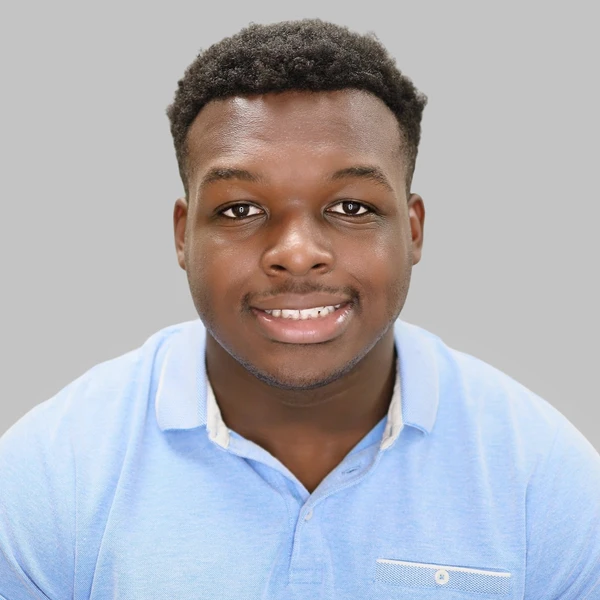
I am a Mechanical Engineering student at Tennessee State University, Division I football player, and Undergraduate Research Assistant with a passion for solving real-world problems through engineering and innovation. I previously competed in the 3DE by Junior Achievement program, where my teams won first place for developing an AI-based education solution and EnviroCup, a biodegradable product designed to reduce waste. Outside the classroom, I serve as Vice President of the St. Petersburg NAACP Youth Council, where I am committed to leadership, mentorship, and community service. My long-term goal is to become a Mechanical Engineer who develops innovative, sustainable products while creating opportunities for young people from underserved communities through STEM education, mentorship, and hands-on engineering programs.
Education
Tennessee State University
Bachelor's degree programMajors:
- Engineering, Other
- Mechanical Engineering
- Engineering, General
Florida Agricultural and Mechanical University
Master's degree programMajors:
- Engineering, General
St. Petersburg High School
High SchoolMiscellaneous
Desired degree level:
Bachelor's degree program
Graduate schools of interest:
Transfer schools of interest:
Majors of interest:
- Business, Management, Marketing, and Related Support Services, Other
- Architecture and Related Services, Other
- Architectural Engineering
- Computer Science
- Security Science and Technology
- Computer Engineering
- Engineering, General
- Mechanical Engineering
Career
Dream career field:
Mechanical or Industrial Engineering
Dream career goals:
mechanical engineer
IT Solutions Specialist
Pinellas county schools and DELL2023 – 20241 yearConsulting Intern
Pinellas county Schools2023 – 20241 yearAcademic Mentor
Pinellas County Schools2022 – 20242 yearsteam member
Portillo's2024 – 20251 yearOwner/CEO
Walker Digital Solutions2023 – Present3 yearsyouth development specialist
Boys and girls club2024 – 20251 year
Sports
Soccer
Varsity2021 – 20243 years
Lacrosse
Varsity2024 – 2024
Baseball
Varsity2021 – 20232 years
Football
Varsity2020 – 20244 years
Awards
- all county first team
- all county second team
Research
Education, General
Pinellas county schools — group idea maker2024 – Present
Arts
pinellas county schools
Performance Art2016 – 2020
Public services
Public Service (Politics)
NAACP — Vice President of the St. Petersburg youth chapter2022 – Present
Future Interests
Advocacy
Politics
Volunteering
Philanthropy
Entrepreneurship
J&Y Law Yahouda Yahoudai Service Scholarship
Growing up, I learned that a strong community is built by people who are willing to invest their time, energy, and talents into helping others. My parents taught me that success is not measured by what you accomplish for yourself alone, but by the opportunities you create for those around you. That lesson has shaped my commitment to leadership, service, and giving back throughout my life.
One of the most meaningful ways I have served my community has been through the St. Petersburg NAACP Youth Council, where I serve as Vice President. This position has allowed me to participate in community service projects, youth outreach initiatives, educational programs, and events that promote civic engagement and equal opportunity. I have learned that leadership is much more than holding a title—it means being willing to step forward, work alongside others, and serve wherever you are needed. Whether helping organize community events or encouraging younger members to become involved, I have seen firsthand how one person's willingness to serve can inspire many others.
My commitment to service has continued during my time at Tennessee State University. Balancing Mechanical Engineering coursework, Division I football, undergraduate research, and leadership has taught me discipline, accountability, and perseverance. These experiences have shown me that leadership is demonstrated through actions, not words. Whether supporting teammates, helping classmates, or volunteering in my community, I strive to lead by example and encourage others to reach their full potential.
Community service has also shaped my career goals. While working as an Undergraduate Research Assistant in the Mining Engineering Department, I realized that engineering has the power to solve problems that improve people's lives. That realization inspired me to pursue Mechanical Engineering, not only because I enjoy designing and solving problems, but because I want to use those skills to create opportunities for others.
Growing up in St. Petersburg, I was not always exposed to engineers who looked like me or understood the many career paths available in STEM. Because of that, one of my long-term goals is to establish mentorship programs and hands-on engineering workshops that introduce students from underserved communities to STEM careers. I hope to partner with local schools, community organizations, and engineering professionals to connect students with mentors, internships, scholarships, and educational opportunities that can change the course of their lives.
I believe the greatest impact we can make is investing in people. A scholarship may help one student today, but mentorship and education can influence generations. My goal is to become a Mechanical Engineer who not only develops innovative and sustainable solutions but also helps build stronger communities by opening doors for others. By continuing to serve, mentor, and lead, I hope to leave every community I am part of better than I found it and inspire others to do the same.
Learner Tutoring Innovators of Color in STEM Scholarship
I chose to pursue a degree in STEM because I have always been curious about how things work and how they can be improved. Ever since I was young, I have been the person asking "why" and taking things apart to understand how they function. While some people saw a broken object, I saw a puzzle waiting to be solved. That curiosity eventually led me to Mechanical Engineering, where I can combine creativity, critical thinking, and problem-solving to design solutions that improve people's lives.
When I first enrolled at Tennessee State University, I was a Computer Science major because I enjoyed technology. Everything changed when I became an Undergraduate Research Assistant in the Mining Engineering Department. I used Python programming and data analysis to support engineering research, but I quickly realized that what excited me most was the engineering behind solving real-world problems. That experience gave me the confidence to switch my major to Mechanical Engineering, where I found a field that truly matched my interests.
Another experience that strengthened my passion for engineering was repairing my car with my father after it was involved in an accident. My father has always been able to fix almost anything, from vehicles and HVAC systems to appliances around our home. Working beside him taught me how mechanical systems work together and showed me that engineering is about much more than formulas—it is about improving the things people depend on every day.
As a person of color, I understand the importance of representation in STEM. Growing up in St. Petersburg, Florida, I was not often exposed to engineers who looked like me or who came back to share their experiences with students. Because of that, many young people never realize the opportunities available in engineering and other STEM careers. I want to help change that.
My goal is not only to become a Mechanical Engineer but also to become a mentor and advocate for STEM education. I hope to create hands-on engineering workshops, mentorship programs, and partnerships with local schools that expose students from underserved communities to engineering, scholarships, internships, and career opportunities. I want young people to see someone with a similar background succeeding in STEM so they know those careers are possible for them too.
I also hope to contribute to the engineering profession by developing innovative and sustainable products that improve people's lives. I admire the Japanese philosophy of *Monozukuri*—building products with pride, precision, and long-term quality rather than simply reducing costs. That mindset reflects the type of engineer I want to become: someone who values excellence, innovation, and integrity.
To me, STEM is about more than science and technology. It is about solving problems, improving communities, and creating opportunities. I hope my career allows me to develop innovative solutions while opening doors for others. If I can inspire the next generation of engineers while leaving behind products and ideas that make people's lives better, I will know I have made a meaningful impact both as an engineer and as a person of color.
Champions Of A New Path Scholarship
I do not believe I deserve this scholarship because I am better than anyone else applying. I believe I deserve consideration because I have consistently taken advantage of every opportunity I have been given and have worked hard to create opportunities for others along the way.
I am currently pursuing a degree in Mechanical Engineering at Tennessee State University, where I balance rigorous coursework with undergraduate research, leadership, and Division I football. I began college as a Computer Science major but had the courage to change directions after discovering my passion while working as an Undergraduate Research Assistant in the Mining Engineering Department. That experience taught me that success is not about staying on the easiest path—it is about finding the one that aligns with your purpose.
Outside the classroom, I have challenged myself to think beyond grades. Through the 3DE by Junior Achievement program, I helped develop two first-place projects: one that explored how artificial intelligence could improve learning outcomes for students and another, EnviroCup, a biodegradable cup designed to reduce environmental waste. Those experiences showed me that engineering and innovation can solve real problems facing our communities.
Leadership and service are equally important to me. As Vice President of the St. Petersburg NAACP Youth Council, I have worked to support my community and encourage young people to pursue opportunities they may not have believed were possible. Growing up, I was not always exposed to engineers who looked like me. That is one of the reasons I hope to mentor students and create hands-on engineering workshops that introduce young people to STEM careers, internships, and scholarships.
Financially, this scholarship would make a meaningful difference. Like many students, I continue to balance the costs of tuition, books, housing, transportation, and other educational expenses while working to minimize student loan debt. Receiving this scholarship would allow me to focus more on my education, research, and professional development while reducing financial stress.
What gives me an advantage is not that I have faced more challenges than anyone else—it is that I have turned each opportunity into another step toward my goals. I am committed to becoming a Mechanical Engineer who builds innovative, sustainable solutions while investing in the next generation of engineers. This scholarship would not simply support my education; it would help me continue building a future where I can create opportunities for others, just as others have created opportunities for me.
Learner Math Lover Scholarship
For me, math is much more than numbers and equations—it is a way of thinking. I love math because it challenges me to solve problems logically while encouraging creativity at the same time. Every problem has a solution, but there are often multiple ways to reach it. That process of analyzing, experimenting, and discovering the best approach is what makes math so rewarding.
One of the reasons I enjoy math is that it explains the world around us. Whether it is calculating the forces acting on a bridge, designing a vehicle, or understanding how machines operate, math is the language that makes engineering possible. As a Mechanical Engineering student at Tennessee State University, I have learned that every innovation begins with a mathematical foundation. Equations are not just symbols on a page—they become engines, buildings, medical devices, and technologies that improve people's lives.
I also enjoy the challenge that math provides. It has taught me patience, persistence, and critical thinking. There have been many times when I struggled with a difficult calculus or physics problem, but the satisfaction of finally understanding the solution made the effort worthwhile. Those moments taught me that success often comes from perseverance rather than immediate answers.
Math has also changed the way I approach problems outside the classroom. Instead of becoming frustrated when something does not work, I naturally begin breaking the problem into smaller pieces, looking for patterns, and testing different solutions. That mindset has helped me in engineering research, while repairing my car with my father, and in everyday life.
Most importantly, I love math because it never stops growing. There is always another concept to learn, another problem to solve, and another application to discover. Math has taught me to stay curious and continue asking questions. As I pursue a career in Mechanical Engineering, I know the problem-solving skills and logical thinking that math has given me will allow me to design innovative solutions and make a positive impact on the world.
Learner Online Learning Innovator Scholarship for Veterans
As a Mechanical Engineering student at Tennessee State University, I have learned that some of the most valuable education happens outside the classroom. While my professors provide the foundation, online platforms and digital resources have allowed me to deepen my understanding, strengthen my problem-solving skills, and apply what I learn to real-world situations. These tools have become an essential part of my education and have helped me become a more independent learner.
One of the online resources I use most is YouTube. When I encounter a difficult engineering concept or want to better understand how a mechanical system works, I often watch demonstrations and breakdowns created by engineers and industry professionals. Seeing concepts applied visually helps me connect classroom theory to practical engineering applications.
I also use Khan Academy and other online learning platforms to reinforce mathematics and physics concepts that are essential to engineering. Working through additional practice problems and reviewing lessons at my own pace has helped strengthen my understanding of topics that are critical to my coursework.
As an Undergraduate Research Assistant in the Mining Engineering Department, I relied on Python documentation, online programming forums, and technical resources to solve coding and data analysis challenges. Learning how to research solutions independently taught me that engineering is not about memorizing every answer but about knowing how to find reliable information and apply it effectively.
Artificial intelligence has also become a valuable learning tool. I use AI to explain difficult engineering concepts, generate practice problems, review my writing for grammar and clarity, and explore different approaches to solving technical problems. Rather than replacing my learning, these tools challenge me to ask better questions and think more critically about the material I am studying.
Beyond academics, online resources have influenced my personal interests as well. After my car was involved in an accident, my father and I repaired it together. Throughout the process, we used repair manuals, instructional videos, and online forums to better understand specific repairs. That experience strengthened my passion for engineering by showing me how digital resources can bridge the gap between theory and hands-on experience.
These online tools have made me a more confident learner because they encourage curiosity and lifelong learning. Engineering is constantly evolving, and the ability to continue learning beyond the classroom will be essential throughout my career. My goal is to become a Mechanical Engineer who develops innovative and sustainable solutions while mentoring young people interested in STEM. The skills I have developed through online learning—research, adaptability, and independent problem-solving—will continue to help me achieve that goal and make a meaningful impact in my community.
STLF Memorial Pay It Forward Scholarship
Leadership through service means using your abilities to improve the lives of others rather than focusing only on yourself. Throughout my life, I have learned that some of the most meaningful leadership happens behind the scenes—planning events, organizing volunteers, and creating opportunities that benefit an entire community. My experiences as Vice President of the St. Petersburg NAACP Youth Council have taught me that true leaders do not simply tell others what to do; they serve alongside them.
During my time with the Youth Council, I helped organize and participate in community service projects, educational events, and volunteer initiatives that supported families and young people throughout St. Petersburg. Whether assisting with community outreach, helping organize events, or volunteering my time at service projects, I learned that successful community service requires planning, communication, and teamwork long before the event begins. Watching an idea become a successful event that positively impacted others showed me the value of servant leadership.
One of the most rewarding parts of volunteering has been working with younger students. I understand how important it is for young people to see leaders who invest in their success. By volunteering at community events and supporting youth-focused programs, I hope I have encouraged students to believe in themselves and recognize the opportunities available to them. Sometimes the greatest impact comes from simply showing up consistently and letting someone know they matter.
My commitment to service extends beyond the NAACP Youth Council. As a student-athlete at Tennessee State University, I have learned that leadership means setting an example through your actions every day. Balancing engineering coursework, Division I football, research, and community service has taught me responsibility, accountability, and the importance of giving back even when life becomes busy.
Leadership through service is important because it creates lasting change. A title alone does not make someone a leader. Leadership is demonstrated by the willingness to serve others without expecting recognition in return. Communities become stronger when people invest their time, talents, and energy into helping those around them.
My long-term goal is to become a Mechanical Engineer while continuing to serve my community. I hope to create mentorship programs and hands-on engineering workshops that introduce students from underserved communities to STEM careers, scholarships, internships, and educational opportunities. I want to use both my engineering career and my leadership experiences to create opportunities for young people who may not otherwise have access to them.
Volunteering has taught me that every act of service, no matter how small, has the potential to inspire someone else to give back. That ripple effect is what makes servant leadership so powerful. My goal is to continue leading through service for the rest of my life, using my education, leadership, and experiences to create opportunities that positively impact my community and future generations.
Emerging Leaders in STEM Scholarship
My interest in STEM comes from a simple question that I have been asking for as long as I can remember: "Why?" While most people are satisfied knowing that something works, I have always wanted to understand how it works and how it can be improved. That curiosity eventually led me to Mechanical Engineering, where I can combine creativity, critical thinking, and problem-solving to design solutions that make people's lives better.
When I first enrolled at Tennessee State University, I was a Computer Science major because I enjoyed technology. Everything changed when I became an Undergraduate Research Assistant in the Mining Engineering Department. My work involved using Python programming and data analysis to support engineering research. While I appreciated learning programming, I became fascinated by the engineering concepts behind solving real-world problems. That experience helped me realize my true passion and gave me the confidence to change my major to Mechanical Engineering.
Outside the classroom, one of the experiences that strengthened my passion for STEM was repairing my car with my father after it was involved in an accident. My father has always been someone who can fix almost anything, from vehicles to HVAC systems and appliances around our home. Working alongside him taught me how mechanical systems function and showed me the satisfaction that comes from diagnosing problems and finding solutions. It confirmed that engineering was more than a career choice—it was something I genuinely enjoyed.
Like many students, my journey has not been without challenges. I have had to balance the demands of Division I football, engineering coursework, undergraduate research, leadership responsibilities, and financial pressures while managing ADHD and dysgraphia. Those experiences forced me to become disciplined, organized, and resilient. I also learned that asking for help and adapting to challenges are signs of strength, not weakness. Every obstacle has helped me become a better student and a stronger future engineer.
My goal is to use engineering to create products and systems that are efficient, reliable, and sustainable while also giving back to my community. Growing up in St. Petersburg, Florida, I was not always exposed to engineers who looked like me or understood the many opportunities available in STEM. Because of that, I want to create mentorship programs and hands-on engineering workshops that introduce young people to STEM careers, scholarships, internships, and educational opportunities. I want students to understand that engineering is not just something they learn about—it is something they can become part of.
STEM has the power to solve some of the world's greatest challenges, but its greatest impact comes from the people who use it to serve others. My goal is to become not only a successful Mechanical Engineer but also a mentor, leader, and role model who opens doors for the next generation. I hope to use my education, experiences, and passion for engineering to create innovative solutions while inspiring others to believe that they, too, can build a better future.
Charles B. Brazelton Memorial Scholarship
Growing up, people often thought I was a little weird because I saw things differently than they did. While most people were satisfied with knowing that something worked, I always wanted to know *why* it worked. If something broke, I didn't immediately think about replacing it—I wanted to take it apart, understand what failed, and figure out how to fix it. While others saw a broken car, I saw a puzzle waiting to be solved. While most people wanted the quickest answer, I wanted to understand the entire process. For a long time, I thought my curiosity made me different in a bad way. As I've gotten older, I've realized it's one of my greatest strengths.
That curiosity probably came from my dad. Around our house, if something stopped working, he rarely called someone else to fix it. Whether it was the HVAC system, a television, a vehicle, or even one of his RC cars, he would grab his tools and start troubleshooting. Instead of watching from a distance, I was usually right beside him asking questions. I probably asked "why" so many times that it became annoying, but he always took the time to explain what he was doing.
One experience that changed me was repairing my own car after it had been in an accident. Most people saw a damaged vehicle. I saw hundreds of mechanical systems working together that could be understood, repaired, and improved. Spending hours diagnosing problems, replacing parts, and learning how every component fit together didn't feel like work to me—it was fun. That was when I realized I didn't just enjoy fixing things; I enjoyed understanding them.
That curiosity even changed my college career. I started at Tennessee State University as a Computer Science major because I enjoyed technology. But while working as an Undergraduate Research Assistant in the Mining Engineering Department, I realized I was far more interested in the engineering behind solving problems than programming alone. I switched to Mechanical Engineering because it aligned with the way my mind naturally works.
Sometimes my curiosity still makes me the person asking one more question after everyone else is ready to move on. I've learned that what some people once thought was "weird" is actually one of my greatest strengths. Engineering has shown me that the people who ask the most questions are often the ones who create the best solutions.
Today, I still ask "why" about almost everything. I believe curiosity is the beginning of every innovation. It pushes engineers to improve products, scientists to make discoveries, and leaders to challenge old ways of thinking. The thing that once made me stand out is now the reason I know I chose the right career. My curiosity has become my greatest advantage, and I hope to use it to solve problems that improve people's lives.
Lotus Scholarship
Coming from a low-income household has taught me that success is not determined by what you have but by what you do with the opportunities you are given. My family has worked hard to support my education, and seeing the sacrifices they have made motivates me to make the most of every opportunity. Because I understand the financial burden of college, I actively apply for scholarships, work when possible, and carefully manage my expenses to reduce student debt while earning my Mechanical Engineering degree at Tennessee State University.
These experiences have also taught me resilience. I have balanced the demands of engineering coursework, Division I football, undergraduate research, and leadership while remaining focused on my long-term goals. As Vice President of the St. Petersburg NAACP Youth Council, I have learned that true success is measured by how much you help others along the way.
My goal is to become a Mechanical Engineer who develops innovative and sustainable solutions while creating opportunities for young people from underserved communities. I hope to establish mentorship programs and hands-on engineering workshops that introduce students to STEM careers, scholarships, and internships. Growing up, I did not always see engineers who looked like me, and I want to help change that for the next generation. By using my education, leadership, and experiences, I hope to create opportunities that empower others to pursue their own dreams.
Learner Mental Health Empowerment for Health Students Scholarship
Mental health is important to me because I have experienced firsthand how it can influence every part of a student's life. College is often viewed as an exciting new chapter, but behind the scenes many students are balancing academics, finances, athletics, work, and family responsibilities while trying to maintain their own well-being. I have learned that taking care of your mental health is just as important as taking care of your physical health because you cannot perform at your best when you are struggling internally.
As a Division I football player and Mechanical Engineering student at Tennessee State University, I understand the pressure that comes with trying to succeed in multiple areas of life. There have been times when balancing demanding coursework, practices, leadership responsibilities, financial concerns, and personal expectations felt overwhelming. I also have ADHD and dysgraphia, which have required me to develop better organizational habits, ask for help when needed, and learn how I perform best academically. Those experiences taught me that seeking support is not a sign of weakness—it is a sign of maturity and strength.
One of the biggest lessons I have learned is that many students struggle silently because they fear being judged. I believe changing that culture begins with open conversations. Whether talking with teammates, classmates, or friends, I try to be someone who listens without judgment and encourages others to speak honestly about what they are experiencing. Sometimes simply asking someone how they are doing or checking in after noticing they seem different can make a meaningful difference.
My leadership experiences have also shaped how I advocate for mental health. As Vice President of the St. Petersburg NAACP Youth Council, I have learned that serving others begins with understanding their experiences. Every person carries challenges that may not be visible, and showing empathy creates stronger communities. I try to lead by example by promoting balance, encouraging healthy habits, and reminding others that asking for help is a sign of courage, not failure.
Mental health is also closely connected to academic success. Students who receive support are better able to focus, learn, and reach their potential. That is why I believe colleges should continue investing in counseling services, peer support programs, and educational efforts that reduce the stigma surrounding mental health. Every student deserves to feel supported while pursuing their education.
As I continue toward a career in Mechanical Engineering, I hope to carry these values with me. Whether mentoring younger students or working alongside future colleagues, I want to help create environments where people feel respected, supported, and comfortable asking for help when they need it. Success should never come at the expense of someone's well-being. By encouraging open conversations, leading with empathy, and supporting those around me, I hope to contribute to a culture where mental health is treated with the same importance as physical health.
Arthur and Elana Panos Scholarship
My faith has been one of the greatest sources of strength throughout my life. It has given me hope during difficult times, reminded me to stay humble during moments of success, and encouraged me to trust that God has a purpose for my life even when I cannot see the entire path ahead. My relationship with God has taught me that success is not measured only by achievements or financial gain but by the way we treat others and use our talents to serve them.
Throughout college, there have been moments when I questioned whether I was on the right path. I originally enrolled at Tennessee State University as a Computer Science major, but over time I realized that my true passion was engineering. Changing majors was a difficult decision because it meant stepping into the unknown. Through prayer and faith, I found the confidence to trust that God was leading me toward the career He had prepared for me. Looking back, changing my major to Mechanical Engineering was one of the best decisions I have ever made.
My faith has also shaped the way I approach challenges. Whether balancing engineering coursework, Division I football, leadership responsibilities, or financial pressures, I have learned that perseverance comes from trusting God even when circumstances are uncertain. Rather than allowing setbacks to discourage me, I try to see them as opportunities to grow in character, patience, and resilience.
One of the greatest lessons my faith has taught me is that every ability I have is a gift that should be used to help others. That belief is why I have dedicated myself to leadership and service through the St. Petersburg NAACP Youth Council and why I hope to mentor young people throughout my career. I believe God blesses us not simply so we can succeed ourselves but so we can become a blessing to others.
As I pursue a career in Mechanical Engineering, I want my faith to guide the decisions I make. I want to be known as an engineer with integrity—someone who values honesty, quality, and doing what is right even when it is not the easiest or most profitable choice. I believe my work should reflect excellence because it ultimately reflects my character. I also want to build products and systems that improve people's lives while treating coworkers, clients, and everyone I meet with respect and compassion.
In the future, I hope to combine my engineering career with service by mentoring students, supporting STEM education, and creating opportunities for young people from underserved communities. My faith reminds me that success is not about what I accumulate but about the impact I leave on others. I trust that God has given me both the opportunity and the responsibility to use my education, talents, and leadership to make a positive difference. Whatever career He leads me into, I hope people will remember not only the work I accomplished but also the way I lived—with integrity, humility, and a heart for serving others.
Adrin Ohaekwe Memorial Scholarship
My career goal is to become a Mechanical Engineer who designs innovative, reliable, and sustainable products while using my career to create opportunities for others. I want to work on projects that improve people's lives, whether through manufacturing, automotive engineering, or product design. Beyond my career, I hope to mentor young students and expose more Black and Brown youth to STEM careers so they can see engineering as a future they can pursue.
One of the biggest lessons I have learned from playing chess is that every move matters. Success in chess is rarely determined by one brilliant move. Instead, it comes from careful planning, patience, discipline, and the ability to think several steps ahead. Those same skills are essential in engineering and in life.
Chess has taught me to analyze problems before reacting. Instead of making emotional decisions, I have learned to evaluate different options, consider the consequences, and choose the best course of action. Engineering follows a similar process. Engineers must analyze data, test different solutions, and understand how one decision affects an entire system. Whether I am solving a technical problem or making an important life decision, I try to think strategically rather than impulsively.
Another lesson chess has taught me is how to respond to failure. Every chess player eventually loses games or makes mistakes. The important part is learning from those mistakes instead of becoming discouraged by them. That mindset has helped me throughout college. I originally entered Tennessee State University as a Computer Science major before discovering that Mechanical Engineering was a better fit for my interests. Rather than viewing that change as a setback, I saw it as an opportunity to better align my education with my goals.
Chess has also reinforced the importance of preparation. A player who studies openings, practices consistently, and reviews past games is more likely to succeed than someone who relies on talent alone. I approach my education the same way. As an Undergraduate Research Assistant in the Mining Engineering Department, a student-athlete, and a leader in my community, I understand that preparation and consistent effort are what create long-term success.
Looking ahead, I want to apply these lessons throughout my career. Engineering projects require strategic thinking, collaboration, and long-term planning, just like a game of chess. I also hope to use my career to mentor young people, teaching them that success comes from patience, perseverance, and thoughtful decision-making.
Chess has taught me that every move shapes the outcome of the game. Likewise, every decision I make today—working hard in school, serving my community, and pursuing engineering—is helping build the future I want to create. By continuing to think strategically, learn from setbacks, and stay committed to my goals, I believe I can make a lasting impact through both my career and my service to others.
Bright Lights Scholarship
Going to college means far more to me than earning a degree. It represents opportunity, growth, and the chance to build a future that extends beyond my own success. College has challenged me to think differently, step outside of my comfort zone, and discover what I am truly passionate about. It has also shown me that education is one of the most powerful tools for creating opportunities—not only for yourself but also for the people around you.
When I first enrolled at Tennessee State University, I planned to study Computer Science because I enjoyed technology and believed it would provide a stable career. However, college exposed me to experiences that changed my perspective. While working as an Undergraduate Research Assistant in the Mining Engineering Department, I used Python programming and data analysis to support engineering research. Through that experience, I realized I was most passionate about solving engineering problems rather than programming alone. That realization led me to change my major to Mechanical Engineering, a decision that gave me confidence that I was pursuing the career I was truly meant for.
Outside the classroom, repairing my car with my father after it was involved in an accident strengthened my passion for engineering even further. Working together to diagnose problems, replace parts, and understand how mechanical systems function showed me that engineering is about much more than equations. It is about solving problems that improve people's everyday lives.
College has also helped me grow as a leader. As Vice President of the St. Petersburg NAACP Youth Council and a student-athlete on the Tennessee State University football team, I have learned discipline, accountability, teamwork, and the importance of serving others. Balancing academics, athletics, leadership, and research has challenged me to become more organized and resilient while teaching me that success requires consistency and perseverance.
As an African American engineering student, I understand how important representation is. Growing up, I was not always exposed to engineers who looked like me or understood the many opportunities available in STEM. Because of that, one of my biggest goals is to change that for future generations. After earning my degree, I want to create mentorship programs, hands-on engineering workshops, and partnerships with local schools that introduce students from underserved communities to STEM careers, internships, scholarships, and educational opportunities.
My goal is to become a Mechanical Engineer who develops innovative and sustainable solutions while giving back to my community. I want my education to provide more than a career—I want it to become a platform for service. By combining engineering, leadership, and mentorship, I hope to inspire young people to believe in themselves and pursue opportunities they may never have thought possible.
To me, college is not simply about earning a diploma. It is about gaining the knowledge, experiences, and perspective needed to create a better future. I hope to use everything I learn to build innovative solutions, strengthen my community, and leave opportunities behind for the next generation.
Hines Scholarship
Going to college means far more to me than earning a degree. It represents opportunity, growth, and the chance to build a future that extends beyond my own success. College has challenged me to think differently, step outside of my comfort zone, and discover what I am truly passionate about. It has also shown me that education is one of the most powerful tools for creating opportunities—not only for yourself but also for the people around you.
When I first enrolled at Tennessee State University, I planned to study Computer Science because I enjoyed technology and believed it would provide a stable career. However, college exposed me to experiences that changed my perspective. While working as an Undergraduate Research Assistant in the Mining Engineering Department, I used Python programming and data analysis to support engineering research. Through that experience, I realized I was most passionate about solving engineering problems rather than programming alone. That realization led me to change my major to Mechanical Engineering, a decision that gave me confidence that I was pursuing the career I was truly meant for.
Outside the classroom, repairing my car with my father after it was involved in an accident strengthened my passion for engineering even further. Working together to diagnose problems, replace parts, and understand how mechanical systems function showed me that engineering is about much more than equations. It is about solving problems that improve people's everyday lives.
College has also helped me grow as a leader. As Vice President of the St. Petersburg NAACP Youth Council and a student-athlete on the Tennessee State University football team, I have learned discipline, accountability, teamwork, and the importance of serving others. Balancing academics, athletics, leadership, and research has challenged me to become more organized and resilient while teaching me that success requires consistency and perseverance.
As an African American engineering student, I understand how important representation is. Growing up, I was not always exposed to engineers who looked like me or understood the many opportunities available in STEM. Because of that, one of my biggest goals is to change that for future generations. After earning my degree, I want to create mentorship programs, hands-on engineering workshops, and partnerships with local schools that introduce students from underserved communities to STEM careers, internships, scholarships, and educational opportunities.
My goal is to become a Mechanical Engineer who develops innovative and sustainable solutions while giving back to my community. I want my education to provide more than a career—I want it to become a platform for service. By combining engineering, leadership, and mentorship, I hope to inspire young people to believe in themselves and pursue opportunities they may never have thought possible.
To me, college is not simply about earning a diploma. It is about gaining the knowledge, experiences, and perspective needed to create a better future. I hope to use everything I learn to build innovative solutions, strengthen my community, and leave opportunities behind for the next generation.
Joe Gilroy "Plan Your Work, Work Your Plan" Scholarship
My goal is to become a Mechanical Engineer who designs innovative, reliable, and sustainable products while using my career to create opportunities for others. I do not simply want a job—I want to build a career that combines engineering, leadership, and service. Achieving that goal requires careful planning, and I have learned that success comes from creating a plan and consistently following it.
My first objective is to graduate from Tennessee State University with my bachelor's degree in Mechanical Engineering. Over the next two years, I plan to maintain a strong GPA while gaining as much hands-on experience as possible. I intend to continue participating in undergraduate research, complete at least two engineering internships, and remain involved in organizations such as the National Society of Black Engineers (NSBE). These experiences will strengthen my technical skills while allowing me to build relationships with professors, engineers, and recruiters.
Financially, my plan is to minimize student loan debt by combining scholarships, work, and careful budgeting. I actively apply for scholarships throughout the year because every scholarship I earn reduces the amount I will have to borrow. I also work when possible to help pay educational expenses. My largest annual expenses include tuition and fees, books and supplies, housing, transportation, and food. Scholarships like this one directly reduce those costs and allow me to spend more time focusing on academics and professional development instead of worrying about finances.
During college, I plan to earn practical engineering experience through internships in manufacturing, automotive, or product design. These internships will help me apply what I learn in the classroom while preparing me for full-time employment after graduation. They will also allow me to begin building a professional network that will be valuable throughout my career.
After graduation, my short-term goal is to secure a Mechanical Engineering position with a company known for innovation and quality. I am particularly interested in companies that value long-term engineering excellence over short-term cost cutting. I admire the Japanese philosophy of *Monozukuri*, which emphasizes craftsmanship, continuous improvement, and taking pride in building products that last. I want to design systems that are efficient, sustainable, and thoughtfully engineered rather than simply inexpensive.
Long-term, I hope to combine my engineering career with community service. Growing up in St. Petersburg, Florida, I was not always exposed to STEM careers or engineers who looked like me. I want to change that by creating mentorship programs, hands-on engineering workshops, and partnerships with local schools that introduce students to STEM careers. I also hope to support scholarships, internships, and educational opportunities for students from underserved communities.
Every goal I have builds on the one before it. Graduate with as little debt as possible. Gain real engineering experience. Build a successful engineering career. Then use that career to create opportunities for others. My plan is detailed because I know success rarely happens by accident. Like Joe Gilroy's philosophy, I believe the key is simple: plan your work, work your plan, and stay committed to the process even when challenges arise.
Christian Fitness Association General Scholarship
If I had to describe myself with one word, it would be opportunistic. Every opportunity I’ve had throughout my life, whether it be academic, athletic, leadership, research, or service-based has allowed me to grow into the person I am today. That person is someone who is always striving to learn new things, help others, and find better ways to make a difference in people’s lives. If awarded this scholarship, I would be able to place less financial stress on obtaining my degree and continue seeking out opportunities that allow me to better my community.
My name is Patrick Walker and I am currently studying Mechanical Engineering at Tennessee State University. I pride myself on being a well-rounded student. As a Division I football player, student leader, researcher, and employee I have learned how to stay ahead in my classes while balancing outside activities. My academic career has been a journey of self discovery. I started college as a Computer Science major, quickly learned that I enjoyed engineering, and used my programming knowledge to assist the Mining Engineering Department as an Undergraduate Research Assistant. As an assistant, I utilized Python programming to analyze data that helped assist engineering researchers with their projects. While I enjoyed programming, I found myself spending more time learning about how the actual engineering worked to create a solution to certain problems. That’s when I knew I had found my calling and enough confidence to switch my major to Mechanical Engineering and pursue a career I enjoyed.
In my free time I have always sought out opportunities to better my creative thinking skills and use what I learn to solve real life problems. Participating in two entrepreneurship based competitions through 3DE by JA taught me that lesson. In 3DE, I was able to place first in two separate competitions by my team and myself. The first project allowed us to create an Artificial Intelligence concept that aided in helping students in Pinellas County Schools learn more efficiently. For the second competition, we created a biodegradable cup made with corn-based plastic that could help decrease the amount of waste on Earth. EnviroCup was my first look into the world of sustainability and how engineering can help create a better world. What these projects taught me is that innovation is fantastic, but being able to use that innovation to better the lives of others is what matters most.
Leadership and service are two aspects of life I have made a priority. As the Vice President of St. Petersburg NAACP Youth Council, I have been able to help provide equal opportunities for all people while engaging in service events that better the youth in my community. Serving has allowed me to understand that we aren’t truly successful until we allow others to have the same opportunities we have.
As a student athlete, I have learned many life lessons that have helped mold me into who I am today. From football, I have gained valuable lessons of discipline, being accountable for your actions, resilience, and how to be a team player. Managing the responsibilities of being a Division I athlete and student who wishes to learn engineering has taught me how to manage my time and push through when situations are difficult. These are qualities I will use throughout my college career and professional career.
College is expensive, and my family and I have had to make sure we plan for me to attend school each year. My parents work hard to provide for my tuition, books, and household expenses, but with tuition, rent, and prices of textbooks continually rising it can be difficult. That is why I always search for available scholarships, work when I am able, and budget my money. I understand the importance of receiving a degree with as little student debt as possible.
I hope to one day be a Mechanical Engineer that can create new and innovative sustainable solutions that help our world. I also want to give back to my community by creating mentorship programs, hands-on engineering workshops, and coalition with local schools to help introduce young aspiring minds to the world of STEM. I want people who come from underserved communities to be exposed to careers in STEM. I was not always able to meet engineers who look like me while growing up and I want to help change that.
This scholarship would allow me to lessen the load of college expenses and continue seeking out new opportunities to better my education, grow as a leader, and allow me to help others. I take every opportunity I’m given and make the best of it because I know someone is watching me. I want to inspire others to chase their dreams as I have been able to.
Mark A. Jefferson Teaching Scholarship
I have always believed that education is one of the most powerful tools for creating opportunity. While I plan to pursue a career as a Mechanical Engineer, I also hope to become an educator in a different way—by mentoring students, teaching engineering concepts, and helping young people discover opportunities they may not have known existed. I want to show students that education can change the trajectory of their lives, just as it has changed mine.
Growing up in St. Petersburg, Florida, I was not always exposed to engineers or STEM professionals who looked like me. Although my parents valued education and encouraged me to work hard, I rarely saw Black engineers visiting classrooms or speaking to students about careers in STEM. Because of that, I understand how important representation can be. Sometimes seeing someone who shares your background succeed is all it takes to believe that you can succeed too.
My educational journey has taught me the value of persistence. I began college as a Computer Science major before realizing that my true passion was engineering. While working as an Undergraduate Research Assistant in the Mining Engineering Department at Tennessee State University, I discovered that I enjoyed solving engineering problems far more than programming alone. That experience gave me the confidence to change my major to Mechanical Engineering and pursue the career that truly fits my interests.
Outside the classroom, I have also learned the importance of leadership and service. As Vice President of the St. Petersburg NAACP Youth Council and a student-athlete on the Tennessee State University football team, I have developed discipline, teamwork, and a commitment to helping others succeed. Those experiences reinforced my belief that leadership means creating opportunities for those who come after you.
My goal is to use my engineering career as a platform for education. I hope to create mentorship programs, hands-on engineering workshops, and partnerships with local schools that introduce students to STEM careers at an early age. I want students to understand that engineering is not just something they read about in textbooks—it is a career they can pursue themselves. By connecting students with mentors, internships, scholarships, and real-world experiences, I hope to help build a stronger pipeline of diverse engineers and innovators.
Education does not only happen in classrooms. It happens through mentorship, encouragement, and exposure to new possibilities. I want to use my career to teach, inspire, and create opportunities for the next generation. If I can help even one student believe in their potential and pursue a future they never imagined possible, I will know I have made a meaningful impact as both an engineer and an educator.
AROC AI/ML Scholarship
My hands-on experience with artificial intelligence began long before AI became one of the biggest topics in technology. I have always been interested in how technology can be used to solve real-world problems, and throughout high school and college I have had opportunities to apply AI and programming in meaningful ways. Those experiences have shown me that artificial intelligence is not simply about writing code—it is about creating solutions that improve people's lives.
One of my most meaningful experiences came through the 3DE program by Junior Achievement. My team developed an artificial intelligence concept designed to improve learning outcomes for students in Pinellas County Schools. We explored how AI could personalize educational experiences by identifying where students struggled and providing additional support based on their individual learning needs. Our project was selected as the first-place winner in the competition, showing me how technology can be used to address challenges beyond the classroom and into the community.
After beginning college at Tennessee State University, I continued developing my technical skills as an Undergraduate Research Assistant in the Mining Engineering Department. My work involved Python programming and data analysis to support engineering research projects. Although my responsibilities focused more on engineering research than machine learning, I strengthened my programming, analytical thinking, and problem-solving skills that serve as the foundation for artificial intelligence applications.
These experiences also influenced my academic journey. I originally pursued Computer Science before realizing my passion was Mechanical Engineering. Although I changed majors, I never lost my appreciation for programming and artificial intelligence. Instead, I now see AI as a powerful engineering tool that can improve manufacturing, product design, predictive maintenance, robotics, and sustainable engineering solutions.
As an African American engineering student, I also recognize the importance of diversity within AI and machine learning. The people designing these technologies influence how they are used and who benefits from them. Diverse perspectives help reduce bias, encourage inclusive innovation, and ensure that technology addresses the needs of all communities rather than only a select few.
In the future, I hope to combine Mechanical Engineering with artificial intelligence to create smarter and more efficient systems. Whether developing AI-assisted manufacturing processes, predictive maintenance systems that reduce equipment failures, or intelligent design tools that help engineers build more sustainable products, I believe AI will become an essential part of engineering.
Beyond my career, I want to use my experiences to mentor students from underserved communities and expose them to careers in STEM, artificial intelligence, and engineering. Growing up, I was not always aware of the opportunities available in these fields. By sharing my experiences and encouraging the next generation to pursue technology, I hope to help create a future where innovation is driven by people from every background.
Kyle Lam Hacker Scholarship
One of the most rewarding times I used my tinkering skills to help others came after my car was involved in an accident. The damage was extensive, and many people assumed it would never be the same again. Instead of immediately giving up on it or paying someone else to do the work, my father and I decided to repair it ourselves. What started as a necessity became one of the most valuable learning experiences of my life.
My dad has always been the type of person who can fix almost anything. Whether it is a vehicle, an HVAC system, a television, or even one of his RC cars, he enjoys taking things apart, understanding how they work, and putting them back together. Growing up around him taught me to be curious instead of intimidated when something breaks. Instead of asking, "Who can fix this?" he always asked, "How can we fix this?"
Working on my car required patience, creativity, and persistence. We spent hours diagnosing problems, researching repairs, replacing damaged parts, and troubleshooting unexpected issues. Every completed repair taught me something new about mechanical systems and reinforced the importance of careful observation and problem-solving. I learned that engineering is often less about having all the answers and more about asking the right questions until you find the solution.
After completing the repairs, I found myself helping friends and family members understand basic vehicle maintenance and troubleshoot mechanical problems. Even if I could not solve every issue myself, I enjoyed explaining how systems worked and helping others think through the problem. Seeing someone gain confidence because I shared what I had learned was just as rewarding as fixing the vehicle itself.
That experience also influenced my academic journey. I originally entered Tennessee State University as a Computer Science major, but working as an Undergraduate Research Assistant and developing my hands-on mechanical skills helped me realize that Mechanical Engineering was where my passion truly belonged. I discovered that I enjoy building, improving, and understanding physical systems just as much as solving technical problems.
Tinkering has taught me that every challenge is an opportunity to learn something new. Whether I am repairing a vehicle, working on an engineering project, or helping someone solve a problem, I enjoy the process of experimenting, learning from mistakes, and finding creative solutions. As a future Mechanical Engineer, I hope to continue using that mindset to develop innovative products, improve existing technologies, and mentor others who are curious about how things work. For me, the greatest reward is not simply fixing something—it is helping others realize that with patience, curiosity, and persistence, many problems can be solved.
Ruthie Brown Scholarship
As a Mechanical Engineering student at Tennessee State University, I understand that earning a college degree is one of the best investments I can make in my future. At the same time, I recognize that the rising cost of higher education can create financial burdens that last long after graduation. Rather than allowing student debt to control my future, I have made it a priority to actively reduce the amount I will owe through hard work, careful planning, and seeking every opportunity available to me.
One of the ways I have worked to reduce my future debt is by maintaining strong academic performance and consistently applying for scholarships. Every scholarship I receive is one less loan I will have to repay after graduation. I view scholarship applications as an investment of my time that can provide long-term financial freedom while allowing me to focus more on my education.
I also work while attending school to help cover educational and personal expenses. Through positions such as serving as an Undergraduate Research Assistant in the Mining Engineering Department and other part-time employment opportunities, I have earned income while gaining valuable professional experience. These jobs have allowed me to contribute toward my expenses instead of relying entirely on loans.
As someone with dysgraphia, I have also had to overcome academic challenges that required additional effort and perseverance. Learning to adapt, advocate for myself, and develop effective study habits has strengthened my work ethic. Rather than allowing my disability to limit me, it has motivated me to become more disciplined and determined to achieve my goals despite the obstacles I face.
Financial responsibility has also become an important part of my life. I have learned to budget carefully, prioritize essential expenses, reduce unnecessary spending, and seek additional sources of income whenever possible. These habits have helped me become more intentional about managing my finances while preparing for the responsibilities that come after graduation.
Looking ahead, I plan to continue reducing my future debt by pursuing engineering internships, paid research opportunities, and scholarships while completing my degree. My goal is to graduate with as little student loan debt as possible so I can focus on building my career instead of spending years paying off large financial obligations.
Becoming a Mechanical Engineer will provide me with the opportunity to build a stable career while giving back to my community. I hope to mentor students from underserved backgrounds, encourage more young people to pursue STEM careers, and create opportunities for others who may not have had the same access to higher education. This scholarship would significantly reduce my financial burden and allow me to devote more time to my education, leadership, and service. It would not only help me graduate with less debt but also bring me one step closer to creating a future where I can invest in others instead of being limited by financial obligations.
Sloane Stephens Doc & Glo Scholarship
The impact I want to make extends far beyond designing machines or solving engineering problems. I want to use my education to create opportunities for others, especially young people who may not realize the possibilities that exist in STEM. I believe engineering is one of the most powerful ways to improve lives, and I hope to use my career to build both innovative solutions and stronger communities.
My vision was shaped by experiences that helped me discover my passion for engineering. When I first enrolled at Tennessee State University, I was a Computer Science major. While serving as an Undergraduate Research Assistant for the Mining Engineering Department, I used Python programming and data analysis to support engineering research. Although I enjoyed learning technical skills, I realized I was most passionate about the engineering concepts behind solving problems. That experience gave me the confidence to change my major to Mechanical Engineering and pursue a career where I could design solutions that make a difference.
Another person who has inspired me is my father. He has always been the person who can fix almost anything, from vehicles and HVAC systems to appliances around our home. After my car was involved in an accident, he worked alongside me to repair it instead of giving up on it. Through that experience, he taught me patience, perseverance, and the value of understanding how things work. More importantly, he showed me that knowledge is most meaningful when it is shared with others. His example continues to inspire the type of engineer and mentor I hope to become.
Growing up in St. Petersburg, Florida, I was not always exposed to engineers or STEM professionals who looked like me. Because of that, I understand how important representation and mentorship can be. As Vice President of the St. Petersburg NAACP Youth Council, I have had the opportunity to advocate for equal opportunities and participate in service initiatives that positively impacted local youth. Those experiences reinforced my belief that success is measured not only by personal achievements but also by the opportunities we create for others.
After earning my degree, I plan to combine engineering with community service by creating mentorship programs and hands-on engineering workshops for students in underserved communities. I want to partner with local schools, community organizations, and STEM professionals to expose students to engineering careers, internships, scholarships, and college opportunities. I want young people to see that careers in STEM are attainable and that they have the ability to succeed in them.
Ultimately, I hope to leave a legacy of service, innovation, and opportunity. Whether I am designing sustainable engineering solutions or mentoring the next generation of students, my goal is to make a lasting impact that extends beyond my own career. If my education allows me to inspire even one young person to believe in themselves and pursue opportunities they never thought possible, then I will know I have helped shape a better future.
WCEJ Thornton Foundation Low-Income Scholarship
Attending college is more than earning a degree to me—it is the foundation that will allow me to turn my passion for engineering into a career that positively impacts others. Higher education provides the technical knowledge, problem-solving skills, and hands-on experiences needed to solve complex challenges while preparing me to become a leader in my profession. My goal is not only to become a successful Mechanical Engineer but also to use my education to create opportunities for others and strengthen my community.
When I first began college, I was a Computer Science major because I enjoyed technology and believed it would provide a rewarding career. However, everything changed when I became an Undergraduate Research Assistant for the Mining Engineering Department at Tennessee State University. While supporting engineering research through Python programming and data analysis, I discovered that I was most interested in the engineering concepts behind the work rather than programming itself. That experience gave me the confidence to change my major to Mechanical Engineering, where I found a field that truly matched my interests and strengths.
Outside the classroom, repairing my vehicle with my father after it was involved in an accident further confirmed my career choice. My father has always been someone who can fix almost anything, whether it is a vehicle, an HVAC system, or appliances around the house. Working alongside him taught me how mechanical systems function and showed me the satisfaction that comes from solving problems with your own hands. That experience inspired me to pursue a career designing products and systems that improve people's everyday lives.
Higher education will provide opportunities that extend far beyond the classroom. Through internships, research projects, engineering organizations, and collaboration with faculty and industry professionals, I will continue developing the technical and leadership skills necessary to become an innovative engineer. I want to build solutions that are efficient, sustainable, and built with long-term quality in mind. I am inspired by the Japanese philosophy of *Monozukuri*, which emphasizes craftsmanship, continuous improvement, and taking pride in creating products that are built to last rather than focusing only on reducing costs.
Just as important as my professional goals is my commitment to serving others. As Vice President of the St. Petersburg NAACP Youth Council and a student-athlete at Tennessee State University, I have learned that leadership is about creating opportunities for others. Growing up in St. Petersburg, I was not always exposed to STEM careers or professionals who looked like me. Because of that, I want to help bridge that gap for future generations.
After earning my degree, I plan to mentor students, partner with local schools, and create hands-on engineering workshops that introduce young people to STEM careers. I want students to understand that engineering is not only a career they can pursue but also a way to solve problems within their own communities. By connecting students with mentors, internships, scholarships, and educational opportunities, I hope to inspire more young people—especially those from underrepresented communities—to pursue careers in STEM.
Higher education will give me the knowledge and opportunities to build a meaningful career, but its greatest value is the ability to multiply my impact. My goal is to use engineering not only to create innovative solutions but also to open doors for others. If I can inspire the next generation to believe in themselves and pursue opportunities they never thought possible, then my education will have created an impact far greater than my own success.
SigaLa Education Scholarship
I chose Mechanical Engineering because I enjoy understanding how things work, solving problems, and creating solutions that improve people's lives. Growing up, I was always curious about how systems and machines functioned. That curiosity grew even stronger when I became an Undergraduate Research Assistant for the Mining Engineering Department at Tennessee State University. While working on engineering research projects involving Python programming and data analysis, I realized that what interested me most was not the coding itself but the engineering concepts behind solving problems. That experience ultimately led me to change my major from Computer Science to Mechanical Engineering.
Another experience that influenced my decision was repairing my vehicle with my father after it was involved in an accident. My father has always been able to fix almost anything, whether it was a vehicle, an HVAC system, or an appliance around the house. Working alongside him taught me how mechanical systems operate and strengthened my desire to pursue a career where I could design, improve, and innovate.
My short-term goal is to successfully complete my Mechanical Engineering degree while gaining hands-on experience through internships, research opportunities, and engineering projects. I want to continue developing the technical skills and practical knowledge necessary to become a successful engineer. My long-term goal is to work as a Mechanical Engineer designing efficient, reliable, and sustainable systems while continuing to serve my community through mentorship and leadership. I hope to eventually help create pathways that expose more students to STEM careers and educational opportunities.
Being an underrepresented minority in engineering has had a significant impact on my career goals. Growing up, I did not often see engineers who looked like me or came from backgrounds similar to mine. Because of this, many students in my community are unaware of the opportunities available in STEM fields. This has motivated me to not only pursue success for myself but also to serve as an example for others. I want young students to see someone who shares a similar background succeeding in engineering and understand that they can achieve those goals as well.
This scholarship would provide valuable financial assistance as I continue my education at Tennessee State University. Like many college students, I face expenses that extend beyond tuition, including textbooks, academic supplies, housing, transportation, and other educational costs. Receiving this scholarship would reduce the financial burden on my family and allow me to focus more of my time and energy on academics, research opportunities, leadership activities, and professional development. It would bring me one step closer to achieving my educational and career goals while allowing me to continue serving my community. I am committed to using my education to create opportunities for others and make a positive impact through engineering, leadership, and service.
Our Destiny Our Future Scholarship
I want to pursue a career in STEM because I enjoy solving problems, understanding how things work, and creating solutions that improve people's lives. STEM fields give people the opportunity to turn ideas into reality, whether that means designing safer products, developing new technologies, or improving the systems that society relies on every day. Through my experiences both inside and outside the classroom, I discovered that engineering provides the perfect combination of creativity, innovation, and problem-solving, which is why I chose to pursue a degree in Mechanical Engineering.
My interest in STEM developed through several experiences. One of the most influential was serving as an Undergraduate Research Assistant for the Mining Engineering Department at Tennessee State University. In this role, I used Python programming and data analysis to support engineering research projects. While I enjoyed learning technical skills, I became fascinated by the engineering concepts behind the work. I enjoyed understanding how problems were analyzed and how solutions were developed. This experience helped me realize that my true passion was engineering and ultimately led me to change my major from Computer Science to Mechanical Engineering.
Another experience that strengthened my interest in STEM was repairing my vehicle with my father after it was involved in an accident. My father has always been someone who can fix almost anything, from cars to household appliances. Working alongside him taught me how mechanical systems function and gave me a greater appreciation for engineering. Seeing how individual components work together to create a functioning system inspired me to pursue a career focused on design and innovation.
I also participated in the 3DE program through Junior Achievement, where I worked on projects that combined engineering, entrepreneurship, and creativity. My teams won first place in two competitions. One project used artificial intelligence to improve educational outcomes for students, while the other focused on creating EnviroCup, a biodegradable cup made from corn-based plastic to help reduce waste. These experiences showed me how STEM can be used to solve real-world problems and improve communities.
After earning my degree, I plan to use my education to help uplift my community by increasing awareness of STEM opportunities among young people, especially students from underserved communities. Growing up in St. Petersburg, Florida, I was not always exposed to STEM careers or professionals working in technical fields. Because of that, I want to help create pathways that connect students to STEM education, internships, scholarships, and career opportunities.
Through mentoring programs, community workshops, and partnerships with local schools, I hope to encourage more students to pursue careers in engineering and technology. I want young people to see that STEM careers are achievable and that they have the ability to succeed in these fields. By combining my engineering knowledge with my passion for service, I hope to create opportunities for others while helping develop innovative solutions that improve people's lives. My goal is not only to become a successful engineer but also to use my education to make a lasting impact on my community.
Stephan L. Daniels Lift As We Climb Scholarship
I want to pursue a career in STEM because I enjoy solving problems, understanding how things work, and creating solutions that improve people's lives. STEM fields give people the opportunity to turn ideas into reality, whether that means designing safer products, developing new technologies, or improving the systems that society relies on every day. Through my experiences both inside and outside the classroom, I discovered that engineering provides the perfect combination of creativity, innovation, and problem-solving, which is why I chose to pursue a degree in Mechanical Engineering.
My interest in STEM developed through several experiences. One of the most influential was serving as an Undergraduate Research Assistant for the Mining Engineering Department at Tennessee State University. In this role, I used Python programming and data analysis to support engineering research projects. While I enjoyed learning technical skills, I became fascinated by the engineering concepts behind the work. I enjoyed understanding how problems were analyzed and how solutions were developed. This experience helped me realize that my true passion was engineering and ultimately led me to change my major from Computer Science to Mechanical Engineering.
Another experience that strengthened my interest in STEM was repairing my vehicle with my father after it was involved in an accident. My father has always been someone who can fix almost anything, from cars to household appliances. Working alongside him taught me how mechanical systems function and gave me a greater appreciation for engineering. Seeing how individual components work together to create a functioning system inspired me to pursue a career focused on design and innovation.
I also participated in the 3DE program through Junior Achievement, where I worked on projects that combined engineering, entrepreneurship, and creativity. My teams won first place in two competitions. One project used artificial intelligence to improve educational outcomes for students, while the other focused on creating EnviroCup, a biodegradable cup made from corn-based plastic to help reduce waste. These experiences showed me how STEM can be used to solve real-world problems and improve communities.
After earning my degree, I plan to use my education to help uplift my community by increasing awareness of STEM opportunities among young people, especially students from underserved communities. Growing up in St. Petersburg, Florida, I was not always exposed to STEM careers or professionals working in technical fields. Because of that, I want to help create pathways that connect students to STEM education, internships, scholarships, and career opportunities.
Through mentoring programs, community workshops, and partnerships with local schools, I hope to encourage more students to pursue careers in engineering and technology. I want young people to see that STEM careers are achievable and that they have the ability to succeed in these fields. By combining my engineering knowledge with my passion for service, I hope to create opportunities for others while helping develop innovative solutions that improve people's lives. My goal is not only to become a successful engineer but also to use my education to make a lasting impact on my community.
Brett Brakel Memorial Scholarship
Baseball was the first sport that truly challenged me, and although I eventually stopped playing, the lessons I learned on the field continue to shape who I am today. Looking back, baseball was much more than a game. It taught me perseverance, mental toughness, accountability, and how to handle failure—lessons that continue to influence my education, leadership, and future goals.
What made baseball unique was the mental aspect of the game. Unlike many sports, success in baseball often means failing more than succeeding. Even the best hitters in the world make outs most of the time. As a young athlete, that was difficult for me to understand. I remember putting in countless hours of practice only to strike out during a game or make a mistake in the field. Those moments were frustrating, but they taught me one of the most important lessons of my life: failure is not the end unless you allow it to be.
Baseball taught me how to remain confident after setbacks. I learned that one bad game, one strikeout, or one mistake did not define who I was as a player or a person. Instead, success came from showing up every day, working hard, and continuing to improve. That lesson has carried over into every area of my life. Whether it was adjusting to college, balancing athletics and academics, or changing my major from Computer Science to Mechanical Engineering, I learned that growth often comes from overcoming challenges rather than avoiding them.
The coaches and mentors I encountered throughout baseball also had a lasting impact on me. They taught me discipline, accountability, and the importance of being a good teammate. They expected me to give my best effort regardless of the circumstances and helped me understand that character is built when nobody is watching. Their guidance helped shape the values that I carry with me today.
Although I no longer play baseball, the mindset it gave me remains a part of who I am. Today, I am a student-athlete at Tennessee State University pursuing a degree in Mechanical Engineering. The resilience I developed through baseball helps me face difficult coursework, overcome obstacles, and continue pushing toward my goals. It has also influenced my leadership and community service efforts by teaching me the importance of encouraging others through their own challenges.
As I pursue my future career, I hope to carry those values forward. I want to approach engineering with the same persistence and work ethic that baseball taught me. I also hope to mentor younger students and athletes, helping them understand that setbacks do not define their future. Baseball taught me that success is not about never failing—it is about learning from failure, growing through adversity, and continuing to move forward. That lesson has shaped the person I am today and will continue to guide me throughout my life.
ESOF Academic Scholarship
My educational goal is to earn a degree in Mechanical Engineering from Tennessee State University and develop the technical knowledge and problem-solving skills necessary to become a successful engineer. I am passionate about understanding how things work, designing solutions to real-world problems, and creating systems that improve people's lives. Through my education, I hope to gain experience in engineering design, manufacturing, sustainability, and innovation while preparing myself for a career where I can make a meaningful impact.
My path to Mechanical Engineering was not a straight line. When I first enrolled at Tennessee State University, I was a Computer Science major. While working as an Undergraduate Research Assistant for the Mining Engineering Department, I utilized Python programming and data analysis to support engineering research projects. Although I enjoyed learning technical skills, I realized that I was most interested in the engineering concepts behind the work rather than programming itself. This experience helped me better understand my interests and ultimately led me to change my major to Mechanical Engineering.
Outside of academics, repairing my car with my father after it was involved in an accident further strengthened my interest in engineering. Working together to diagnose problems, replace parts, and understand how different systems function gave me a greater appreciation for problem-solving and design. That experience showed me how engineering can have a direct impact on people's lives and inspired me to pursue a career where I can develop innovative and sustainable solutions.
Professionally, my goal is to become a Mechanical Engineer who develops products and systems that are efficient, reliable, and environmentally responsible. I am particularly interested in manufacturing, automotive systems, and product design. I hope to work on projects that improve efficiency, reduce waste, and create long-term value for society. I am inspired by the Japanese concept of Monozukuri, which emphasizes craftsmanship, quality, and pride in creating products that are built to last. Rather than focusing only on costs, I want to create solutions that balance performance, sustainability, and quality.
Equally important to my educational and professional goals is my commitment to civic and public service. Throughout my life, I have learned that success is not measured solely by personal accomplishments but also by how much we help others. As Vice President of the St. Petersburg NAACP Youth Council, I have had the opportunity to advocate for equal opportunities, participate in community service projects, and help organize initiatives that positively impact local youth. These experiences taught me the importance of leadership, service, and giving back to the community.
I am also a student-athlete on the Tennessee State University football team, where I have learned discipline, teamwork, accountability, and perseverance. Balancing athletics, academics, leadership responsibilities, and community involvement has taught me how to manage competing responsibilities while remaining committed to my goals.
In the future, I hope to combine my engineering career with service by mentoring students and increasing awareness of STEM opportunities in underserved communities. Growing up, I was not always exposed to engineering careers or role models in STEM fields. Because of that, I want to help create pathways that connect young people to educational opportunities, internships, scholarships, and careers in engineering. My goal is not only to succeed professionally but also to use my education, leadership, and experiences to create opportunities for others and leave a lasting impact on my community.
Khalil Mack 52 Scholars Program
Every story has a turning point, and mine came when I realized that the path I originally chose was not the one I was meant to follow. When I first arrived at Tennessee State University, I was a Computer Science major. I enjoyed technology and believed it would lead to a successful career. However, through experiences both inside and outside the classroom, I discovered that my true passion was engineering.
One of the most important opportunities I received was serving as an Undergraduate Research Assistant for the Mining Engineering Department. My work involved Python programming and data analysis for engineering research projects. While I enjoyed learning technical skills, I found myself most interested in the engineering concepts behind the work. For the first time, I realized that what excited me was not simply writing code but understanding how things worked, solving problems, and designing solutions. That experience gave me the confidence to change my major to Mechanical Engineering, a decision that completely changed the direction of my future.
Another turning point came after my car was involved in an accident. Instead of immediately giving up on it, my father and I spent time repairing it together. My dad has always been the person who can fix anything, whether it is a vehicle, an HVAC system, a television, or even one of his RC cars. Working alongside him taught me more than mechanical skills. It showed me the value of patience, perseverance, and problem-solving. Seeing how individual components worked together to create a functioning system strengthened my passion for engineering and confirmed that I had chosen the right path.
These experiences also shaped my commitment to serving others. As a student-athlete on the Tennessee State University football team, I have learned the importance of discipline, accountability, teamwork, and perseverance. Balancing the demands of Division I football with academics has taught me how to manage my time, overcome adversity, and remain committed to long-term goals. In addition, as Vice President of the St. Petersburg NAACP Youth Council, I have had the opportunity to advocate for equal opportunities and participate in service initiatives that positively impact local youth. Through football, leadership, and community service, I learned that success is not measured solely by personal achievements but by the opportunities you create for others.
Today, I am committed to building a future that combines engineering, leadership, and service. My goal is to become a Mechanical Engineer who develops innovative and sustainable solutions while helping expose more young people to STEM careers. Growing up, I did not always have access to those opportunities or role models in technical fields. Because of that, I want to help bridge that gap for future generations.
The experiences that shaped me taught me that growth comes from stepping outside of your comfort zone, embracing challenges, and remaining open to new possibilities. They showed me who I am, what motivates me, and the impact I hope to leave on my community and the world around me.
Ultrafabrics Inc. Scholarship Award
I am currently pursuing a degree in Mechanical Engineering because I enjoy solving problems, understanding how systems work, and creating solutions that improve people's lives. I am particularly interested in automotive, manufacturing, and product design because these fields combine creativity, innovation, and technical problem-solving.
Sustainability is an important consideration in modern engineering, and I plan to prioritize it throughout my career. I believe engineers have a responsibility to design products and systems that are efficient, durable, and environmentally responsible. Too often, decisions are made solely around short-term costs. While cost is important, I do not want to become the type of engineer who simply looks at numbers on a spreadsheet. I am inspired by the Japanese concept of Monozukuri, which emphasizes craftsmanship, quality, and taking pride in creating products that are built to last. Rather than focusing only on cutting costs, I want to focus on designing solutions that are reliable, sustainable, and thoughtfully engineered.
My interest in sustainability was strengthened through my participation in the 3DE program, where my team developed EnviroCup, a biodegradable cup made from corn-based plastic designed to reduce waste. This experience showed me how engineering and innovation can be used to address environmental challenges while still meeting consumer needs.
In my future career, I hope to design products and systems that balance performance, sustainability, and quality. By combining technical knowledge with the principles of Monozukuri, I want to create solutions that not only solve problems today but continue providing value for years to come.
Anthony McPherson Memorial Automotive Scholarship
Driving under the influence is one of the most dangerous and irresponsible choices a person can make. Every year, thousands of lives are lost because someone decided to get behind the wheel while impaired. While many people focus on the legal consequences of a DUI, the true cost is measured in the lives changed forever, the families left behind, and the dreams that are never fulfilled.
From a moral perspective, driving under the influence is selfish because it places innocent people at risk. A driver who is impaired by alcohol or drugs is not fully aware of their surroundings and cannot react as quickly or make sound decisions. Choosing to drive while intoxicated means knowingly putting passengers, other drivers, and pedestrians in danger. No celebration, convenience, or personal decision is worth risking another person's life.
The effects of drunk driving are personal to me. My girlfriend was hit by a drunk driver. Thankfully, her injuries were not life-threatening, but her car was totaled, and the long-term effects of the accident are still unknown because of concerns about her back. Watching someone I care about deal with the consequences of another person's poor decision reinforced my belief that impaired driving affects far more than just the person behind the wheel. Victims and their families can face physical injuries, emotional trauma, lost income, medical expenses, and years of uncertainty.
From a technical standpoint, alcohol and drugs impair the exact skills required to operate a vehicle safely. Intoxicated drivers often have slower reaction times, poor judgment, reduced coordination, and difficulty recognizing hazards. These impairments significantly increase the likelihood of a crash. To help prevent DUIs, automotive engineers and technology companies are developing advanced safety systems. Built-in driver monitoring systems use cameras to track eye movement, head position, and alertness to detect signs of impairment and warn the driver. Alcohol-detection technology is also being developed that uses sensors in the steering wheel, start button, or cabin air to detect alcohol levels and prevent a vehicle from starting if the driver is over the legal limit. Other technologies such as ignition interlock devices, automatic emergency braking, lane departure warnings, and driver assistance systems can provide additional layers of protection. While technology can help reduce impaired driving, it cannot replace personal responsibility and good decision-making.
The impact of a DUI extends far beyond the crash itself. Families may lose loved ones, friends may lose lifelong companions, and communities may lose individuals who had the potential to make a positive difference in the world. Anthony McPherson was only twenty-six years old and had dreams of opening his own automotive business. Because of one intoxicated driver's decision, those dreams were cut short. His family and friends were left not only with grief but also with the loss of the future memories, accomplishments, and experiences they would have shared with him.
Preventing DUIs requires both personal responsibility and technological innovation. Drivers must make the choice not to drive while impaired, and society must continue developing tools and programs that promote safe transportation. By combining education, accountability, and technology, we can reduce the number of DUI-related crashes and protect families from experiencing tragedies that could have been prevented.
Brian Moore Memorial Scholarship
One experience that solidified my decision to pursue a career in engineering was repairing my car with my father after it was involved in a serious accident. At first, I thought the damage was too extensive to fix ourselves. However, my father approached the challenge with confidence and determination. Together, we diagnosed problems, replaced damaged parts, and worked through each issue step by step. Watching the vehicle slowly come back to life was one of the most rewarding experiences I have ever had.
My father has always been the person everyone turns to when something breaks. Whether it is the HVAC system, a television, a car, or even one of his RC cars, he has an incredible ability to understand how things work and find solutions to problems. Growing up, I watched him repair and improve countless things around our home. He never saw a problem as an obstacle; he saw it as something that could be understood and fixed with patience, knowledge, and effort.
Working alongside him on my car allowed me to see engineering in a new way. I became fascinated by how different components worked together and how problem-solving could turn a broken system into a functioning one. That experience showed me that engineering is more than math and science—it is about creativity, perseverance, and improving people's lives through practical solutions.
My father inspired me to pursue Mechanical Engineering because he showed me the value of curiosity and hands-on problem-solving. In my career, I hope to pay that inspiration forward by becoming an engineer who develops innovative solutions and mentors others who are interested in STEM. Just as my father took the time to teach and encourage me, I hope to help young people discover their potential and inspire them to pursue careers where they can solve problems and make a positive impact on the world.
Ja-Tek Scholarship Award
I consider myself a person who always strives to be better. I think some of the best lessons you learn in life are when you step out of your comfort zone and challenge yourself, whether it be stepping up to lead or taking a difficult class.
I have always been very curious. How does this operate? Why does this work? These questions have led me down the many paths I’ve encountered. Eventually helping me discover my passion and love for engineering.
I have learned to never give up on myself. Whether I think I can’t do something or things don’t go my way, I have learned a lot about myself when things like that happen. I developed so much when I switched majors, learned how to balance being a college football player with school, and learned how to adapt to situations that were hard to me. Those struggles taught me to continue pushing forward when things get tough.
I enjoy helping others. I have learned how much of a difference it can make when you encourage, mentor, and support others. That is why I want to continue to better others and create more opportunities for those around me.
What sets me apart is my desire to leave everything better than I found it. I do not think you can be successful at something without helping others along the way. That is what will continue to drive me as a student, a leader, and most importantly, a person.
7023 Minority Scholarship
Hello, my name is Rasheem Williams and I am a Mechanical Engineering student at Tennessee State University. I love working with people to solve problems and better the situations around me. Throughout my academic, athletic, research, and service career I have learned that education is one of the most influential means of creating change. I try to push myself to new limits and learn from my failures in order to help others succeed.
Growing up, I wasn't sure I wanted to be an engineer. I actually began my college career as a Computer Science major at Tennessee State University. In the spring semester, I was given the opportunity to become an undergraduate research assistant for the Mining Engineering Department. My job entailed using Python programming and data analysis to assist the department with their research. While I enjoyed programming and developing my technical skillset, I realized that I did not have an interest in sitting at a computer all day. I much rather enjoy engineering design and hands on problem solving. Once I changed my major to mechanical engineering, I felt my drive and confidence that I could be a successful engineer grow.
My interest in wanting to be an engineer who can solve real-world problems also stemmed from outside of school. My father and I were in a car accident and we ended up repairing most of the car ourselves. Through that experience I learned to appreciate how some of the mechanical systems work in a car. I enjoyed figuring out what was wrong with the car and coming up with solutions to fix it. Because of that, I want to be an engineer that can use my knowledge to help people and solve problems they encounter.
By furthering my education in Engineering, I hope to better serve others by creating efficient and effective solutions. There are so many ways that engineering can change the world and develop new technology. Engineers can help improve transportation, energy, manufacturing, and many more things. I want to be able to be part of the solution and help change the world for the better. One way I hope to do this is by being a positive role model for children and young students who are looking into STEM fields.
Community service and youth development are issues very close to my heart. I was Vice President of the St. Petersburg NAACP Youth Council. We pushed for equal treatment of people in my community and got many policies enacted. We also helped set up many things to better the lives of youth. I am proud to say that we held a school supply drive that allowed us to provide school supplies to over 200 youth. Additionally, I have completed over 150 hours of volunteer service. Through these leadership and service activities I learned how important it is to help others.
This scholarship would help me lessen the financial burden that school gives and allow me to focus more on my education. It would also allow me to work towards my dream of using education, knowledge, and leadership to serve others. By furthering my education, I hope to show others what you can accomplish by working hard and wanting to better yourself and others.
Byte into STEM Scholarship
From my experiences and values I have come to find that if you work hard and take everything in stride, help others, and never stop learning you will be successful no matter where you came from. While I grew up in public housing and faced many struggles as a minority in today’s society, I believe that my past has shaped me into a great leader and will allow me to positively impact others.
My undergraduate major not being well-suited for my long term goals has taught me that it is okay to not have your whole life figured out when you enter college. I came as a Computer Science major. During my spring semester, I was given the opportunity to be a research assistant for the Mining Engineering Department. As an assistant, I utilized Python coding and data analysis to help conduct research. Although I enjoyed programming and applying my technical knowledge to real world applications I found that I did not enjoy the coding aspect of my work. I quickly realized that I enjoyed learning and working on the engineering portion of my work rather than getting caught up in the programming itself. Changing my major to Mechanical Engineering was one of the hardest decisions I’ve had to make but I learned that it is important to know yourself, be open to change, and follow your passions.
Hands-on experience with machines and cars also helped fuel my passion for Mechanical Engineering. Growing up my father and I fixed most of our car problems after our brakes were badly damaged in an accident. After learning how everything worked in that car I fell in love with how mechanical units work. It was satisfying to see something that was once broken run as if it was never damaged. Through this experience I knew that I wanted to have a career where I can design, improve, and figure out how things work.
Servicing my community and being a leader have greatly impacted who I am. I was the Vice President of St. Petersburg NAACP Youth Council where I helped raise awareness for equality and completed many actions to help the youth in my community. One of my biggest accomplishments was coordinating a school supply drive that provided school supplies to over 200+ youths. I have also completed over 150 hours volunteering in my community. Through these acts of service I learned that leadership does not require a title and everyone can be a leader by allowing others to win.
Being an athlete and member of a professional organization has taught me how to be a team player. As a member of the National Society of Black Engineers (NSBE) and college football player, I learned how to hold my teammates accountable and lead by example. Learning how to balance school, football, leadership roles, and volunteering has allowed me to improve my time-management skills and work with all types of people.
The Mechanical Engineering degree will allow me to reach my short and long term goals. With the knowledge I will gain from earning my degree I can truly help better my community and reach my career goals. I plan to become a well-known engineer that not only creates innovations that change lives but an individual that helps others better theirs. My passion for service and helping others will allow me to be a great mentor and role model to the next generation of engineers. When thinking about my legacy, I want people to remember me as someone who used his education to better not only his life, but others around him as well.
William A. Lewis Scholarship
One obstacle that I have encountered while working towards my goals for higher education was determining my academic path. During my freshman year of college at Tennessee State University, I originally declared Computer Science as my major. I had always been interested in technology and felt as if computer science would open up many career opportunities for me. After taking general education classes and growing in the professional working world, I realized that computer science was not where my passions lied.
I was given the opportunity to be an undergraduate research assistant for the Mining Engineering Department. As a part of my responsibilities, I utilized Python programming and data analysis to aid in their research. While I gained many useful skills and enjoyed helping with the research, I found that I enjoyed learning about the engineering concepts behind the projects more than the programming itself. This was very challenging for me to realize because I had already put many years into school for my original major.
It initially made me feel like I was going backward. I was concerned that I would fall behind in classes by changing my major. I wondered if I was making the right choice by deciding to switch. But I did not want to continue on a purely academic path that I did not know I enjoyed. I knew that if I did not change my major, it would be more difficult to reach my long-term goals. I decided that it would be best for me to change my major to Mechanical Engineering.
I had many people help me through this obstacle. My professors, research mentors, academic advisors, and family all gave me advice and insight that helped me realize it was okay to change my mind. Nobody is perfect, and we all change our minds sometimes about our education. My father played a big role in this because he always told me that I should choose a career that I would enjoy driving to and be proud to tell others about. When I was growing up my dad and I fixed a lot of my cars ourselves after a wreck. Seeing how all the components worked and how I was able to fix them gave me a new perspective on engineering.
Now I feel prepared to continue my education and work towards my goals. This obstacle has taught me to know myself and stay persistent when it comes to decisions about my education and career. I have also learned that it is okay to ask for help when you need it. No matter what obstacle gets in your way, know that your path to success may change, and that is okay.
Learner Calculus Scholarship
Calculus is arguably one of the most useful subjects in STEM. The basis of science, technology, engineering, and mathematics all come down to change and motion, which is why calculus is important. Calculus teaches us about systems that can change from one moment to the next, and how we can use mathematics to better understand those systems. Without calculus many of the technologies we use today would not be possible.
Calculus is used to model continuous change. Algebra allows us to work with numbers that stay the same or change at fixed rates, but calculus allows us to deal with systems that change by any amount at every moment. Calculus does this using two distinct fields.
Differential calculus is used to find rates of change. If you know a set of data that is changing, you can use a derivative to figure out how quickly it is changing at any given moment. This has many uses in STEM because it allows you to find instantaneous quantities such as velocity, acceleration, growth rates, and heat transfer. If you know the speed of something is changing, you can use a derivative to calculate how fast it is accelerating at that moment.
Integral calculus is used to analyze accumulations. If you have a quantity that is constantly changing, you can use an integral to figure out how much of that quantity you have accumulated over time. Integrals can be used to find how far something has traveled if you know its speed at every moment, find the volume of an irregular object, and figure out how much energy was used by a system. Engineering often requires these types of calculations to ensure that systems are operating within desired limits.
I believe calculus to be extremely important because I’m a Mechanical Engineering student, and calculus has direct application to my field. Engineering is the use of math to design and build things, and calculus allows us to calculate forces, energy, velocity, acceleration, fluid flow, and much more. Engineering helps design cars, creates manufacturing processes for making products, and allows us to make machines more efficient. Calculus is the foundational mathematical subject that makes all of these things possible.
Calculus is also useful because it can help you think more critically. Many calculus problems can be difficult, requiring you to break down a situation into smaller parts. Outside of STEM, being able to think about problems logically and break them down into smaller pieces can be a great skill to have. Calcuclus also teaches you not to give up on problems after the first try. While not every calculus concept can be applied to your everyday life, the thought process that you develop will help you.
Calculus is used in many STEM fields other than engineering. Physics uses calculus to predict how rockets will fly, Electrical engineers use calculus when they design circuits, and data scientists use calculus to create machine learning algorithms. You can see why calculus is so important because nearly every new discovery or innovation is based off of these concepts.
Calculus is important to the STEM field because it allows us to understand how things change. Without knowledge of calculus, we would not be able to accurately model many systems around us. Derivatives and integrals allow us to calculate rates of change and make predictions. I think calculus is the most useful subject in all of STEM because it teaches us how to learn more about the world around us.
Jessie Koci Future Entrepreneurs Scholarship
Hi, my name is Patrick Walker and I am a Computer Science major at Tennessee State University. I went into computer science because I knew that there was always a level of problem-solving, creativity, and innovation. I have always enjoyed using technology to build solutions and as a platform to create, but more than anything to make change. Through my degree, I hope to use a combination of computer science technical know-how and my own business acumen to create a business that will create opportunities and have an impact on the communities and organizations around me.
I’ve always been entrepreneurial at heart. I like the fact that entrepreneurship provides the space and ability to take ideas and make them real solutions that can create value for others.
was a part of the 3DE program for two years and won both years. In the first year, I built a biodegradable cup, along with my team, which won the Best Invention Award, and for the second year, I was on the consulting team for Pinellas County Schools. We developed a series of AI-fused solutions that could be used to enhance learning and success for the school district. I think winning both years of 3DE validated to me that I can apply innovation, teamwork, and leadership to solve real-world problems, which is a key part of entrepreneurship.
I currently operate my own SaaS company in which I create websites and workflows for small businesses. Through the process of running my own company, I have already learned entrepreneurial skills like project management and client communication as well as overcoming business challenges quickly. I think I will be successful in my business pursuits because I approach each and every project with excellence, creativity, and persistence. I have the discipline to manage my time between many responsibilities and the curiosity to research new solutions and learn from others’ work. Lastly, I have the persistence to not give up when I run into setbacks or dead ends along the way, and these are traits that I believe are essential to being a good entrepreneur.
To me, living a successful life would look like being able to have impact while also having the space to build and grow with the things I am most passionate about while continuing to grow both personally and professionally. To me, success is more than financial stability or career milestones. To live a successful life means being able to make a positive impact, build things that solve people’s problems, and open doors for those around me. I want to build businesses that create innovative solutions that create real value and empower people. I also hope to be an example for other young entrepreneurs, especially young people of color and Black people, as I see people like me reaching my goals and building things I never thought were possible for me.
Education is a part of building those types of successes because of the technical know-how, critical thinking skills, and professional networks that I gain to develop scalable and sustainable solutions. From my own education, as well as my hands-on experience in entrepreneurship, including being a 3DE alumnus, running my own SaaS company, and conducting AI consulting, I believe I have the skills necessary to both navigate and grow a business that will have a real impact in a way that is lasting.
Stephan L. Wolley Memorial Scholarship
My name is Patrick Walker, and I am a college athlete attending Tennessee State University, pursuing a Bachelor of Science degree in Computer Science. I was born and raised in Roanoke, Virginia, and have been involved in athletics since a very young age. Sports have played a pivotal role in my life, teaching me discipline, leadership, and a strong work ethic. On the other hand, my education has provided me with the knowledge and skills necessary to build a solid foundation for the future. Football, in particular, has taught me perseverance, teamwork, and how to balance various aspects of life. These lessons have been invaluable and have guided me in every endeavor I pursue.
I come from a family that values hard work, integrity, and support for one another. My parents have always encouraged me to be diligent, resilient, and responsible in all aspects of life, and my extended family has been a great source of guidance and support as well. I learned at a young age the importance of being accountable to myself and to those around me and have always sought to give back to my community in any way that I could.
In terms of my education, I have always sought to make the most out of the opportunities available to me academically and athletically. As a student athlete, I have had to juggle intensive training and practices with challenging coursework, which has helped me to develop excellent time management and organizational skills. I have also had the opportunity to mentor and serve the youth in my community through programs such as the Boys & Girls Club and volunteer work with the NAACP. These experiences have only furthered my belief that leadership, guidance, and encouragement can truly change lives.
In the future, I hope to continue to combine my passion for athletics with my dedication to education and service to others. In the short term, I plan to continue to work hard in my football career and to complete my degree in Computer Science. In the long term, I hope to use my education and leadership skills to develop programs that can provide opportunities and mentorship for youth in my community and beyond. I want to create avenues for young athletes to have access to sports and to pursue opportunities in STEM fields, while also inspiring them to work hard, overcome obstacles, and achieve their goals with integrity and determination.
The opportunity to receive this scholarship would allow me to further pursue my academic and athletic goals while also providing an opportunity to continue to give back to my community and to be a positive example for others. It would truly honor Stephan Laurence Wolley’s values of family, faith, and competition as I would be able to use it to push myself to be the best student, athlete, and person that I can be and to encourage others to do the same. I am committed to working hard to achieve my goals and to make a positive impact on the lives of those around me while creating a lasting legacy of leadership, service, and determination.
I look forward to continuing to grow and develop as a student, athlete, and member of my community by combining the values instilled in me by my family with my education and experiences as a football player. I hope to honor Stephan’s legacy by working hard to achieve success on and off the field while also helping to unlock the potential in others and creating a ripple effect of impact that can extend far beyond myself.
Priscilla Shireen Luke Scholarship
My name is Patrick Walker and giving back to my community has always been a personal goal. I want to live with intention and invest my abilities, time, and energy into helping others. Organizations such as the Boys & Girls Club (BGC) and the NAACP have allowed me to mentor, coach, and serve community members and youth.
While at BGC, I was a basketball coach and mentor for young athletes. Many of the youth I coached were dealing with off-the-court struggles and I wanted to use this opportunity to make a difference in their lives outside of teaching them sports skills. I focused on teamwork, perseverance, and overcoming obstacles, teaching them that failure is an opportunity to learn, not a reason to quit. Through this experience, I was able to create an environment where kids gained confidence, relied on each other, and learned how to develop skills and learn outside of athletics. It was very gratifying to see the youth grow not just as players but as young people who were able to approach adversity with determination and a positive mindset.
I have also worked through the NAACP to aid in their youth development, community outreach, and empowerment programs. Volunteering in these settings helped instill within me the importance of advocacy, representation, and community service. I was able to work with younger grade students, mentor, and organize events that supported education, leadership, and community awareness. Serving in these spaces taught me that there are many ways to serve, whether that is through teaching, mentoring, or speaking out on issues of fairness and equality, and that even small acts can create a big difference.
In the future, I hope to continue serving my community and expanding the impact I can make. I hope to create more opportunities for youth to experience mentorship, athletics, and educational programs that support their growth, resiliency, and leadership. In addition, I am passionate about technology and would like to help bridge the gap for underrepresented students and create more access to STEM education and resources. I hope to use both mentorship and technology to help young people gain the tools and confidence to succeed academically, athletically, and as young adults.
The example Priscilla Shireen Luke has set for me is that service is as much about giving to others as it is about encouraging others to act with compassion, integrity, and intention. I hope to honor her memory by devoting my time and talents to assist those in my community, empowering and amplifying other voices that need to be heard, and helping to create opportunities for future generations to be successful.
Jimmie “DC” Sullivan Memorial Scholarship
Hello my name is Patrick Walker. I am currently a student-athlete at Tennessee State University. Sports have always been a big part of my life as a competitor, and also as an outlet to give back to my community. One way that I’ve been able to do that was being a coach for the Boys & Girls Club teaching kids basketball. I’ve had the privilege of coaching youth that have dealt with problems on and off the court and it really made an impact on my coaching style. I always wanted the kids to have fun while learning from mistakes, and knowing that they can always be better. I knew from the start that basketball was not the only thing I was teaching them, it was also teaching them how to be tough mentally and how to be a team. One of the first things I told them every year was that they were my team. We are going to have ups and downs as a team and I want them to know that. I wanted them to know that they are never alone in anything they do and it doesn’t have to be just about basketball. If someone was having a bad game, or they were down on themselves, I wanted them to know that I have their back and I have the rest of the team in the back. I wanted them to feel like they could come to me if they had any problems on and off the court, or even if they just needed some motivation.
I have a lot of great memories from coaching the youth. I loved when they had to work together to improve on something and they were all motivated. It was also nice to see them when they learned something new. I made sure that we took breaks to talk and I helped them win those small victories. Another great thing about the team was that they all knew each other’s strengths, but also were more than willing to help each other when needed. Even if it was something small, they made sure they were there to help each other out and never leave a teammate behind. The best feeling was when they realized that they had each others backs. It taught them how to be more confident in themselves and each other. There were a lot of times when they came to me feeling defeated or like giving up, and it was an even better feeling to see that determination and will to fight back come back. It not only showed them that it was ok to make mistakes, but they were never alone in anything they did. They taught me a lot as well. I learned how to be a leader for a lot of different types of people. I learned how to be positive and find ways to get every individual kid to improve in ways that they wanted to. I also learned how to be more of a father figure to them. I am very proud that I was able to provide that for them as a coach and someone they can trust. One of the things I pride myself on is being able to influence the youth around me and I plan on continuing to do that in my community through athletics. I also plan to build off the leadership skills I’ve gained as a coach on and off the field and in the classroom and help guide future generations of young people.
Lyndsey Scott Coding+ Scholarship
I’m a Computer Science major at Tennessee State University on my way to becoming a thoughtful software engineer who only creates technology that is secure, ethical, and accessible. I’m interested in computer science because it is a field of logic, creativity, and impact. Code can scale ideas and impact, protect people and data, or rewrite entire systems and processes—and I want to be the kind of person who wields that power with care.
My main computer science goal is to learn programming, data structures, and systems fundamentals, while gaining practical application and experience through projects and internships. In particular, I’m most drawn to software development and cybersecurity-adjacent systems that center on how to keep users and organizations safe from digital threats. As tech increasingly shapes and infiltrates our healthcare, finances, schools, and government, I believe it’s more important than ever to design digital systems that value safety, fairness, and reliability over profit.
Athletics and leadership are two of my non-computer science passions, which make me who I am. I am a collegiate football player, and being a student-athlete has fundamentally defined my work ethic, resilience, and style of leadership. Football has taught me team collaboration, communication under pressure, and long-term focus—characteristics that directly strengthen my capacity to thrive in a technical space. I also value mentorship and community service, particularly with young students who don’t see people who look like them in STEM fields.
Ideally, I’d like to tie my computer science goals with my love for sports and mentorship. In the long run, I want to help create platforms, tools, or programs that use tech to empower student-athletes, expand STEM access, or promote digital literacy in communities that are typically underserved. Whether that means building educational software, developing secure systems for athletic organizations, or crafting mentorship initiatives powered by technology, my goal is to use code as a tool for connection rather than division.
I am also a Black person in tech, and I recognize that there is a lack of diversity not only in who builds technology, but whose problems and challenges are prioritized and solved. I am intentional about my presence in computer science, and I hope to center experiences shaped by teamwork, community service, and my own lived experience in a field that typically lacks these qualities. My non-technical goals strengthen my computer science focus because they give my work a purpose, and conversely my technical skills expand my potential impact in those spaces.
The Lyndsey Scott Coding+ Scholarship is perfectly aligned with my computer science vision. This funding would allow me to continue growing as a technical candidate while putting time into projects, leadership, and professional development without monetary constraints. I am dedicated to not only excelling in computer science, but using my other passions to ensure the technology I build is innovative, human-centered, inclusive, and most importantly, impactful.
Joe D. Martin, Jr. North Star Scholarship
My name is Patrick Walker, and I am a computer science major on track to receive a bachelor’s degree at Tennessee State University. As a student-athlete, my academic and professional goal is to have a measurable impact on the communities that I work in, as well as the community that I am from. In athletics, community service, and other areas of my life, I have been taught the values of discipline, resiliency, and serving those around me. This degree will both reinforce those lessons and teach me more tools that I can apply to benefit Nashville and those in it throughout my professional career.
Cybersecurity has a significant, often underappreciated role in both the corporate world and people’s everyday lives. As a football player, I know the value of being accountable to others, of leadership, of teamwork, and the responsibility of having to execute complex tasks at a high level consistently and with mental toughness in high-stakes situations; I have also gained a strong work ethic, ability to perform under pressure, and great appreciation for my coaches and support network. Cybersecurity is no different it can be quite complex, requires attention to detail and constant learning, and can feel high-stakes, as clients need to protect people, businesses, and critical infrastructure from harm. Having the responsibility of managing security for people’s sensitive data and helping businesses to keep their workers, customers, and other users safe is incredibly meaningful to me, and I love the unique opportunities I am given to help people and companies thrive.
In addition to being one of the top cities in the country for sports, healthcare, education, and business, Nashville is also a growing hub for technological solutions in these fields. I would like to use this degree to be able to help organizations in and around Nashville to improve their digital security and reduce attack surfaces, train and educate people and prevent both data breaches and actual cybercrime. This will improve individual lives and have a positive impact on economic activity, stability, and trust across the city.
Community engagement is also an important part of my life, and I have previous experience with working with youth and coaching in local community settings. Nashville is a large, growing city that has a variety of outreach and youth organization programs that I would like to get involved with, particularly to help introduce younger people and young adults to careers in technology. Representation matters, and the more students from underserved communities are able to see themselves succeeding and thriving in STEM careers, the more likely they are to know that success is possible and have access to the help that they need to get there.
This scholarship would provide me with the resources to continue honing both the technical and leadership skills needed to pursue these goals after graduation. I plan on dedicating my time to both professional development and maintaining the kind of character and attitude that will allow me to make a positive impact on Nashville with integrity, creativity, and a real purpose. I will be able to use my background as an athlete, cybersecurity training, and a commitment to public and community service to be a meaningful and constructive force in Nashville for many years to come.
No Essay Scholarship by Sallie
Bulkthreads.com's "Let's Aim Higher" Scholarship
My name is Patrick, and I’m a cybersecurity major at Florida A&M University. I play on a football team here. I’ve always been passionate about technology and helping others. I started my own software company in high school, making websites and helping struggling companies. I chose cybersecurity as a career path because I can protect people and systems from online threats while making a difference.
I plan to make a positive impact through my degree and future career in three main ways by
First, I want to help schools, small businesses, and nonprofits from cyber threats by offering cheap and reliable security protection. These are the most essential and needed for this type of protection because without them, future generations and communities will be left at the mercy of the wolves.
Second, I plan to create opportunities for young people, especially Black youth, by teaching tech and cybersecurity skills that can lead to strong careers that aren’t usually shown or encouraged in our spaces. I plan to host workshops, mentor students again, and eventually build a program introducing kids to cybersecurity early. I even found out about cybersecurity because of a black woman promoting and publicising her journey in the government tech space, and helping others achieve similar careers. Without it, I would probably not know what to do, but I clicked on this technology, and it could save many lives and open greater horizons.
Third, I want to raise awareness about online safety to make the internet safer for everyone, especially those who do not know much about technology. In the future, this knowledge will help because of all the past events that have gone on, predicting that the future will have just as many advancements, if not more, and since everyone pretty much uses it, why not make sure people are using it safely, because many people on the internet are good. Still, some people will leverage the technology against others who don’t know better.
Byte into STEM Scholarship
My name is Patrick, and I’m a cybersecurity major at Florida A&M University. I play on a football team here. I’ve always been passionate about technology and helping others. I started my own software company in high school, making websites and helping struggling companies. I chose cybersecurity as a career path because I can protect people and systems from online threats while making a difference.
I was raised in St. Petersburg, Florida, and from a young age, I saw how many young Black kids weren’t exposed to their full potential.
That’s why I’ve dedicated myself to leadership roles that allow me to make a real impact, not just academically, but personally and socially.
As Vice President of my local NAACP Youth Chapter, I led initiatives that focused on uplifting and educating young people in my community, especially Black youth. I organized events that taught leadership, civic engagement, and self-worth. That experience helped me grow into my voice as a leader, not just someone who speaks up, but someone who takes action. At the Boys & Girls Club, I worked as a Youth Development Professional, mentoring kids every day and helping them with everything from schoolwork to personal struggles. I wasn’t just supervising them, I was guiding, encouraging, and being a consistent role model. I showed them that where you come from doesn’t define where you can go. That’s a lesson I live by and one I plan to carry with me at FAMU.
I also served as a peer mentor for African American freshmen and sophomores who were close to being off track to graduate. I helped them academically, but more importantly, I listened. I reminded them that they mattered and that there were people who wanted to see them win. That’s what caring looks like.
As a future cybersecurity analyst, my goal is not only to break barriers in the tech world but to open the door for others. I want to create a pipeline that exposes young Black students to tech careers they didn’t even know existed. Cybersecurity isn’t just a job for me, it’s a path I want to use to empower the community. By studying at FAMU, I’ll be surrounded by Black excellence, and I plan to carry that standard into everything I do, with integrity, pride, and a heart for service. FAMU’s legacy of excellence with caring already lives in me. I’m ready to carry it forward.
William "Bill" Scotti Memorial Football Scholarship
The score was 52-0. How? Well, Jesuit High was the reigning state champions. However, their old quarterback went to a new school, and the new quarterback was a kid I played with in Pop Warner back in the day. I expected some drop-off from them. I was ready, I was one of the top 4 D-Ends(2nd team) in Pinellas County as a 16-year-old junior. I played my heart out. I sped around, made tackles, and gave constant pressure to the offense, but the defensive backs didn’t play to the best of their abilities.
It was a barrage of touchdowns attacking the secondary. I was a 6-foot-2 inch, 230-pound, but walking off the field I felt like a small child who just had my toy taken by a bully. It was the first winning season since 2018 at St. Petersburg Senior High we went 7-3. Jesuit ended it on November 11, 2022, like it didn’t even matter.
My most meaningful commitment outside of the classroom is one most wouldn’t pick. You guessed it …football. Since I was 3, I have played many sports: soccer, baseball, basketball, etc. but they are different. Only in football do you look people in the eye play after play and know you must go through them. Football is something that I must show up for every day during the season, whether I feel like doing it or not. It requires me to take on leadership roles. Many people think football is simple, but when I play football, it's like a portrayal of life. Like a chess game, the quarterback is the king that must be taken down. My passion for football is glorious, I feel like a gladiator in the arena, hearing cheers from the crowd. I love the sensation of putting on my shoulder pads and helmet. Sometimes the sweat burns your eyes, and your vision is blurred like mace in your face. Sometimes, it’s grass and dirt in your mouth and in other places they shouldn’t be. Even with all of that, it’s a mental game, I use logic and reasoning to succeed. I have fun playing football, I love the challenge and I embrace the pain. Football has helped me get to know more people and how they operate during challenging situations. We came from different backgrounds and had to learn how to work together and mesh as a team within a few days.
I have played football since I was four. Football helped me achieve many of my goals. For example, I had to participate in team workouts, change my diet, and commit to better health to stay in shape. Even with that, the mental aspect football has taught me is where I see the most progress. I have learned how to prioritize my time and give additional effort in the areas where I am the weakest. I’ve learned to accept constructive criticism. Football has humbled me too. Sometimes I get hurt, do not stay hydrated enough, or fail to make a play, but I get back up and keep going. Although I don’t succeed in every moment, football will essentially prepare me for college and life. It gives me, “GRIT”, that never give-up mentality when things get rough.
Chadwick D. McNab Memorial Scholarship
Hello, my name is Patrick Walker. I’m a student-athlete who has an interest in business and cybersecurity. I would like to have a career in these two fields when my playing days are over. Currently, I’m involved with junior achievement through 3DE.
My interests going into high school were originally to make my own company or to make money. Ever since I was little, I always knew I had great ideas to produce. It’s kind of ironic how 3DE popped into my school that same year I started going to Saint Petersburg High School. Before I joined, I thought 3DE was just basic entrepreneurial skills and learning about companies. It took me going to a 3DE event with my friend at the end of sophomore year to learn about the reality of 3DE and ever since I was hooked. I didn’t start 3DE until my junior year. I’m bittersweet that I didn’t join earlier.
In my first year with 3DE, the junior class had a yearlong assignment to make a product that would help our community solve a problem. This one was a little difficult at first because many of the ideas my group had weren’t designed to solve a whole community problem, just individual needs like athletic performance or locating items. Then I came up with a great idea. It sprouted from living in St. Pete surrounded by water. We are one of the cities that recycle the most in the state. But what if I told you doing the exact opposite could help too? Our product was called the Envirocup and the cool thing about the Envirocup is that it was made of 100% biodegradable corn plastic with endangered seeds in the bottom of the cup local to where the cup was sold so when people disposed of it would grow a plant out of the litter. Our group won the Most Innovative Company award.
In my second year of 3DE, the senior class had to do a consultancy with local companies to solve their problems and present solutions. This was also a yearlong assignment. My class had to help Pinellas County schools figure out how we can help them utilize Artificial intelligence to make a better learning experience for the students. Out of all the groups, the county superintendent chooses our group to come back and help inform the whole county about AI use in a meeting.
Simon Strong Scholarship
The score was 52-0. How? Well, Jesuit High was the reigning state champions. However, their old quarterback went to a new school, and the new quarterback was a kid I played with in Pop Warner back in the day. I expected some drop-off from them. I was ready, I was one of the top 4 D-Ends(2nd team) in Pinellas County as a 16-year-old junior. I played my heart out. I sped around, made tackles, and gave constant pressure to the offense, but the defensive backs didn’t play to the best of their abilities.
It was a barrage of touchdowns attacking the secondary. I was a 6-foot-2 inch, 230-pound, but walking off the field I felt like a small child who just had my toy taken by a bully. It was the first winning season since 2018 at St. Petersburg Senior High we went 7-3. Jesuit ended it on November 11, 2022, like it didn’t even matter.
My most meaningful commitment outside of the classroom is one most wouldn’t pick. You guessed it …football. Since I was 3, I have played many sports: soccer, baseball, basketball, etc. but they are different. Only in football do you look people in the eye play after play and know you must go through them. Football is something that I must show up for every day during the season, whether I feel like doing it or not. It requires me to take on leadership roles. Many people think football is simple, but when I play football, it's like a portrayal of life. Like a chess game, the quarterback is the king that must be taken down. My passion for football is glorious, I feel like a gladiator in the arena, hearing cheers from the crowd. I love the sensation of putting on my shoulder pads and helmet. Sometimes the sweat burns your eyes, and your vision is blurred like mace in your face. Sometimes, it’s grass and dirt in your mouth and in other places they shouldn’t be. Even with all of that, it’s a mental game, I use logic and reasoning to succeed. I have fun playing football, I love the challenge and I embrace the pain. Football has helped me get to know more people and how they operate during challenging situations. We came from different backgrounds and had to learn how to work together and mesh as a team within a few days.
I have played football since I was four. Football helped me achieve many of my goals. For example, I had to participate in team workouts, change my diet, and commit to better health to stay in shape. Even with that, the mental aspect football has taught me is where I see the most progress. I have learned how to prioritize my time and give additional effort in the areas where I am the weakest. I’ve learned to accept constructive criticism. Football has humbled me too. Sometimes I get hurt, do not stay hydrated enough, or fail to make a play, but I get back up and keep going. Although I don’t succeed in every moment, football will essentially prepare me for college and life. It gives me, “GRIT”, that never give-up mentality when things get rough.
Delories Thompson Scholarship
I want to help schools, small businesses, and nonprofits from cyber threats by offering cheap and reliable security protection. I want to raise awareness about online safety to make the internet safer for everyone, especially those who do not know much about technology. In the future, this knowledge will help because of all the past events that have gone on, predicting that the future will have just as many advancements, if not more, and since everyone pretty much uses it, why not make sure people are using it safely, because many people on the internet are good. Still, some people will leverage the technology against others who don’t know better.
As a future cybersecurity analyst, my goal is not only to break barriers in the tech world but to open the door for others. I want to create a pipeline that exposes young Black students to tech careers they didn’t even know existed. I plan to host workshops, mentor students again, and eventually build a program introducing kids to cybersecurity early. Cybersecurity isn’t just a job for me, it’s a path I want to use to empower the community. By studying at FAMU, I will be surrounded by Black excellence, and I plan to carry that standard into everything I do, with integrity, pride, and a heart for service. Being a purposeful, responsible, productive community member lives in me.
Kyle Lam Hacker Scholarship
I’ve always been curious about how things work, especially technology. Whether taking apart random items around the house or junkyard cars with my dad, I enjoyed figuring out problems and finding solutions. One of the times I delighted others with my tinkering skills was during high school, when I helped bring dozens of broken school laptops back to life.
My school had a room full of computers that weren’t being used because they had software issues or wouldn’t power on. Our tech coordinator was overwhelmed and didn’t have time to fix them. Over the summer, our school collaborated with Dell Tech. My teacher, who was running the program, told me about it, and I was hooked. I joined instantly, got certified, and got to work. I spent hours researching common issues, learning how to reset BIOS settings, update firmware, and replace bad charging ports or batteries. One by one, I started fixing them. I used my toolkit, created a system to track each device’s needs, and taught myself how to reimage the drives so the software would run smoothly. Over time, I fixed more than 50 Dell computers. The county could reuse them in classrooms, and students who didn’t have access to technology now had working laptops. I even got to fix my friend’s computer in front of them. Seeing how something I did with my hands and knowledge helped so many people felt amazing. Teachers thanked me, and struggling students now had a tool that made learning easier. It reminded me that even small tech skills can have a significant impact.
Outside of school, I also enjoyed tinkering with my dad. I could recall and differentiate car brands and models ever since I could speak. It first started with Hot Wheels, then we would play with RC cars, fix them, and upgrade them when they got dull or broken. A few years later, my dad won a Roush Mustang in a car auction, and we knew that the quarter panel was broken, so it would be a project car that would need lots of work to be street legal. That moment stuck with me.
Those experiences made me realize I wanted to do more than fix tech. Whether through hacking problems to find solutions or helping build things again, I love using my skills to make life a little easier for others. That’s the kind of impact I want to keep pushing.
Willie Mae Rawls Scholarship
My name is Patrick, and I’m a cybersecurity major at Florida A&M University. I play on a football team here. I’ve always been passionate about technology and helping others. I started my own software company in high school, making websites and helping struggling companies. I chose cybersecurity as a career path because I can protect people and systems from online threats while making a difference. I plan to make a positive impact through my degree and future career in three main ways by
First, I want to help schools, small businesses, and nonprofits from cyber threats by offering cheap and reliable security protection. These are the most essential and needed for this type of protection because without them, future generations and communities will be left at the mercy of the wolves.
Second, I plan to create opportunities for young people, especially Black youth, by teaching tech and cybersecurity skills that can lead to strong careers that aren’t usually shown or encouraged in our spaces. I plan to host workshops, mentor students again, and eventually build a program introducing kids to cybersecurity early. I even found out about cybersecurity because of a black woman promoting and publicising her journey in the government tech space, and helping others achieve similar careers. Without it, I would probably not know what to do, but I clicked on this technology, and it could save many lives and open greater horizons.
Third, I want to raise awareness about online safety to make the internet safer for everyone, especially those who do not know much about technology. In the future, this knowledge will help because of all the past events that have gon on, predicting that the future will have just as many advancements, if not more, and since everyone pretty much uses it, why not make sure people are using it safely, because many people on the internet are good. Still, some people will leverage the technology against others who don’t know better.
I’m already working toward these goals by serving in my community. I’m a vice president of the NAACP St. Petersburg chapter, spreading the word and advocating for equality and justice. I also work at the Boys & Girls Club, where I mentor young kids and help them build confidence and discipline. Both roles allow me to lead by example and invest in the next generation. And help fight to nurture and rewire the next generation from negative things to positive outcomes.
Larry Joe Gardner Memorial Scholarship for Public Policy
My name is Patrick, and I’m a cybersecurity major at Florida A&M University. I play on a football team here. I’ve always been passionate about technology and helping others. I started my own software company in high school, making websites and helping struggling companies. I chose cybersecurity as a career path because I can protect people and systems from online threats while making a difference.
I plan to make a positive impact through my degree and future career in three main ways by
First, I want to help schools, small businesses, and nonprofits from cyber threats by offering cheap and reliable security protection. These are the most essential and needed for this type of protection because without them, future generations and communities will be left at the mercy of the wolves.
Second, I plan to create opportunities for young people, especially Black youth, by teaching tech and cybersecurity skills that can lead to strong careers that aren’t usually shown or encouraged in our spaces. I plan to host workshops, mentor students again, and eventually build a program introducing kids to cybersecurity early. I even found out about cybersecurity because of a black woman promoting and publicising her journey in the government tech space, and helping others achieve similar careers. Without it, I would probably not know what to do, but I clicked on this technology, and it could save many lives and open greater horizons.
Third, I want to raise awareness about online safety to make the internet safer for everyone, especially those who do not know much about technology. In the future, this knowledge will help because of all the past events that have gon on, predicting that the future will have just as many advancements, if not more, and since everyone pretty much uses it, why not make sure people are using it safely, because many people on the internet are good. Still, some people will leverage the technology against others who don’t know better.
I’m already working toward these goals by serving in my community. I’m a vice president of the NAACP St. Petersburg chapter, spreading the word and advocating for equality and justice. I also work at the Boys & Girls Club, where I mentor young kids and help them build confidence and discipline. Both roles allow me to lead by example and invest in the next generation. And help fight to nurture and rewire the next generation from negative things to positive outcomes.
Sarah F. Watson and James E. Dashiell Scholarship
To me, charity is needed and essential because I’ve seen firsthand how small acts of kindness can significantly impact. Growing up, I benefited from mentors, coaches, and community programs that believed in me, and that support helped shape who I am today. My parents instilled in me the idea of giving back to the community whenever possible. Giving back is not just something I want to do; it’s something I feel responsible for.
In the future, I plan to give back by mentoring youth through programs like the Boys & Girls Club, where I already serve as a positive role model. I also want to use my cybersecurity knowledge to teach and protect underserved communities, helping people stay safe online and opening doors for others in tech. I also want to be around after playing at FAMU. I want to help through volunteering, coaching, or being a resource to those who need help. I’m committed to using my time and skills to uplift others just as others once did for me, because it takes a village to raise the youth.
Brett Brakel Memorial Scholarship
Baseball has always been a part of my life, even before I really understood it. I first picked up a bat at three years old. I was great at hitting the ball but I’d cry when I couldn’t carry the bat with me as I ran the bases. I ended up stepping away from the sport and focused on football, soccer, and basketball instead. Even though I had success in those sports, I always regretted not sticking with baseball during that time.
At 13, I decided to return to the game and joined a travel baseball team led by retired MLB pitcher Seth McClung. His team traveled the country playing in tournaments, and I got the chance to play on college fields like Marshall University, Savanah state university, and Glenville State. That experience opened my eyes. I wasn’t playing up like I did in other sports I was playing catch-up. The learning curve was steep, and I had to work harder than ever to compete.
I realised to get good i need to train daily, I had to drive 45 minutes just to hit in a batting cage where 75 mph fastballs came at me constantly. My hands would blister, callous, and bleed. I struggled. But I didn’t quit. Baseball forced me to develop grit, patience, and a strong work ethic. It was the most mentally demanding sport I ever played. While I could easily pick up the pace and rhythm in other sports, baseball made me slow down and think. That shift taught me how much focus and discipline it takes to succeed, especially when things aren’t going your way.
On the field, I played first base and outfield. I actually preferred games where the pitcher allowed a lot of hits. In a perfect world thats not what you want but it gave me more chances to make plays. My coach instilled in us the importance of character, teamwork, and leadership. We were expected to clean the dugout after games and carry ourselves with discipline on and off the field. He reminded us often that the energy of one player could impact the entire team.
I carry those lessons with me today at Florida A&M University in the football team, in my role mentoring kids at the Boys & Girls Club. Whether it’s in the classroom, on campus, or in the community, I strive to lead by example and push those around me to be their best. Baseball didn’t just teach me how to play it taught me how to live life.
CEW IV Foundation Scholarship Program
To me, “Purposeful, Responsible, and Productive Community member ” means using your strengths not just to succeed, but to lift others up along the way, Especially those who come from the same place you did. I was raised in St. Petersburg, Florida, and from a young age, I saw how many young Black kids couldn’t see their hands in front of their faces. not because they lacked ability, but because they lacked a vision for the future. That’s why I’ve dedicated myself to leadership roles that allow me to make a real impact, not just academically, but personally and socially. As the Vice President of my local NAACP Youth Chapter, I led enrollment and focused on uplifting and educating young people in my community, especially Black youth. I organized events that taught leadership, civic engagement, and self-worth. That experience helped me grow into my voice as a leader, not just someone who speaks up, but someone who takes action. At the Boys & Girls Club, I worked as a Youth Development Professional, mentoring kids every day and helping them with everything from schoolwork to personal struggles. I was not just supervising them, I was guiding, encouraging, and being a consistent role model. I showed them that where you come from does not define where you can go. That is a lesson I live by and one I plan to carry with me throughout my life. I also served as a peer mentor for African American freshmen and sophomores who were close to being off track to graduate. I helped them academically, but more importantly, I listened. I reminded them that they mattered and that there were people who wanted to see them win. That’s what purposeful looks like. As a future cybersecurity analyst, my goal is not only to break barriers in the tech world but to open the door for others. I want to create a pipeline that exposes young Black students to tech careers they didn’t even know existed. Cybersecurity isn’t just a job for me, it’s a path I want to use to empower the community. By studying at FAMU, I will be surrounded by Black excellence, and I plan to carry that standard into everything I do, with integrity, pride, and a heart for service. Being a purposeful, responsible, productive community member already lives in me. I’m ready to continue showing these qualities in the future.
Julia Elizabeth Legacy Scholarship
My name is Patrick Walker, and my journey through high school has been a testament to the transformative power of diverse representation in STEM careers. As a student-athlete with a passion for business and cybersecurity, my experiences have shaped my understanding of the importance of inclusivity and its profound impact on innovation and societal progress.
when I was younger careers in stem weren't as popular as they are now. where I live if you wanted to participate in these jobs or activities you would have to have lots of money or connections. but in my primary school local businesses wanted diversity so bad they started holding women-only STEM clubs, along with using the new technology early in our education to prepare us for the future. At my school it was a melting pot of people from different races and cultures that were all valued equally because everyone at school could learn from people who looked different and had unique point of views. I feel that going through that for 9 years really helped me when it came to transitioning into high school.
During my time in high school, I had the opportunity to participate in programs like 3DE, where I discovered the connections of my interests and the potential, they hold for driving positive change. Through 3DE, I delved into entrepreneurial ventures and community-focused projects that broadened my perspective on the role of technology in addressing real-world problems.
One such project was the development of the Envirocup—a biodegradable cup with endangered seeds in the bottom, designed to promote environmental sustainability. This endeavor not only showcased my team's innovative thinking but also underscored the value of diversity in problem-solving. By bringing together individuals with diverse backgrounds and perspectives, we were able to conceive and execute a solution that resonated with our community's needs.
In addition to my experiences with 3DE, my journey into the world of cybersecurity further emphasized the importance of diversity in STEM. Through hands-on tech support and the establishment of my own software company, I gained insight into the intricacies of technology and the diverse challenges it presents. From optimizing system efficiency to enhancing data protection, I learned firsthand how inclusive perspectives drive meaningful innovation and ensure that technological solutions are accessible to all.
Looking ahead, I am eager to continue my pursuit of excellence in STEM at Florida Atlantic University. With its comprehensive program in cybersecurity, FAU offers the perfect platform for me to expand my knowledge and skills in a field that merges my passion for problem-solving with my desire to make a tangible impact. By embracing diversity and fostering inclusive environments, institutions like FAU play a crucial role in shaping the future of STEM and empowering individuals from all walks of life to contribute to innovation and progress.
To Conclude, my journey through high school has reinforced my belief in the power of diverse representation in STEM careers. From entrepreneurship to cybersecurity, I have witnessed firsthand how inclusivity drives innovation, fosters creativity, and ensures that technology serves the needs of all. As I start on the next chapter of my academic and professional journey, I am committed to championing diversity and making meaningful contributions to the STEM community and for those kids who don’t have access to stem yet.
Inflow Digital Marketing Scholarship
Ever since I was little, I have been drawn to the world of business and entrepreneurship. My interest in these fields has only grown stronger over the years, leading me to pursue a career in Digital Marketing. The dynamic nature of Digital Marketing, with its constant evolution and innovation, excites me. I believe that this field offers endless opportunities for creativity and growth, allowing me to use my entrepreneurial skills and passion for technology. One example that inspired me is the success story of Neil Patel, a renowned Digital Marketing expert who has built a thriving career by leveraging the power of online marketing strategies. Neil Patel's showcases the immense potential of Digital Marketing in reaching a global audience and driving business success. By studying his strategies and techniques, I have gained valuable insights into the power of digital platforms in today's business landscape.
The ability to connect with customers on a personal level through targeted campaigns and data-driven analytics is what sets Digital Marketing apart from traditional marketing methods. when I was in my sophomore year I started my shopify dropshipping business and I learned how to use paid ads and social media to make my reach for customers easier than other methods like emailing and Seo. it allowed me to be able to touch certain demographics In areas I wanted. I also used these skills in my software as a service company. For example, using Facebook ads I could target older women in a 15-mile radius for med spas and men in a 10-mile radius for hardware shops.
As I continue to learn the field of Digital Marketing, I am constantly amazed by the innovative tools and technologies that are reshaping the industry. From AI-powered marketing automation to immersive virtual reality experiences, the possibilities are endless. By staying ahead of the curve and embracing new trends, I hope to carve out a niche for myself in this competitive field to help those who aren’t reached the most. Looking ahead, my ideal future role in Digital Marketing would involve leading strategic marketing campaigns for a cutting-edge tech company. I envision myself working closely with a teams to develop and execute innovative marketing strategies that drive customer engagement to the most needed communities that are not catered to already. One company that embodies the kind of innovative culture I aspire to be a part of is Google.
Google's commitment to pushing the boundaries of technology and creativity aligns with my own values and aspirations. By working for a company like Google, I would have the opportunity to collaborate with some of the brightest minds in the industry and contribute to groundbreaking projects that shape the future of digital advertising. Furthermore, I see myself specializing in data analytics and consumer behavior research, leveraging insights to optimize marketing campaigns and drive measurable results. By combining my passion for technology with a deep understanding of consumer psychology, I aim to create impactful marketing strategies that resonate with target audiences and drive business growth. To build a successful career in Digital Marketing, I know the importance of continuous learning and professional development. One key aspect of my career development plan is to pursue certifications in digital marketing, such as Google Analytics and HubSpot Inbound Marketing.
Additionally, I plan to attend networking events to stay updated on the latest trends and best practices in Digital Marketing.
Bright Minds Scholarship
In high school, I earned a Dell Tech certificate and spent three years diving into tech support. Through facing diverse challenges directly, learning to solve issues efficiently, and seeing how fulfilling requirements with useful answers is key, those situations honed my abilities while demonstrating the value of a hands-on mindset. My aim to impact cybersecurity led me to start a software company in St. Petersburg; this venture allowed me to solve tech challenges for local businesses, from making systems run smoother to boosting data protection.
At Florida Atlantic University, I look forward to diving deeper into cyber defense strategies and playing a part in protecting online spaces as they grow more connected. FAU's program stands out for its excellence and broad coverage of topics like network security and ethical hacking.
From gaining certification in high school to creating my own software company—my dedication to technology, especially cybersecurity has only grown stronger. Florida Atlantic University is where I see myself next; there, I'll enhance my skills further toward a degree and career that merges my love for solving problems with the desire to make an impact.
"The Summer I Turned Pretty" Fan Scholarship
Team Conrad vs. Team Jeremiah
Jeremiah is nice yet, Conrad's side pulls me stronger. It's crucial to note first is Belly’s role as our lens. A classic case of an unreliable narrator she is noted widely across literary circles. We're pushed beyond her view to grasp the full picture. Even Han in the Amazon adaptation hints at layers some might miss.
Now, onto why Jeremiah and Belly seem a match because Jeremiah's emotional trauma and need for attention repeatedly highlighted Jeremiah’s deep hurt from his dad’s favoritism towards Conrad as "the chosen one". His tactic? Outshine whatever holds Conrad's interest, seeking approval he lacks at home; a theme we revisit often - through his eyes too. His chase? To outdo Conrad by any means. In the narrative, Jeremiah's sunny disposition, like a golden retriever, mostly serves as a facade. This guise aids in fulfilling his deep-seated desire for attention and shields him from potential rejection. He possesses a chameleonic ability to dynamically alter his outward presentation through adeptly modifying his behavior, mannerisms, and conversations to fluidly accommodate whomever he transiently finds himself alongside at any particular point in time. Belly catches glimpses of the complexity beneath his easygoing exterior; yet, her youth and lack of experience prevent her from fully grasping these nuances. She perceives only the joy he brings her most times and believes she ought to reciprocate with love. Rarely does she ponder his true intentions behind these actions. Consequently, their bond proves far less stable than hers with Conrad.
Conrad's genuine love and unreciprocated feelings for Belly's longstanding infatuation with Conrad since their younger years—are evident throughout the tale. Less obvious is Conrad’s own profound affection for Belly; recognizing her as an individual beyond superficial attractions amplified by summer transformations witnessed in TSITP (The Summer I Turned Pretty). Such physical changes merely added layers to an already complex dynamic between two individuals rooted deeply within a shared familial setting—and his being somewhat older didn't simplify matters either. This situation lends significant weight to the repeated emphasis on infinity symbolism within the series—an element not as pronounced in its written counterpart—to underscore that what seems like unreciprocated feelings from Belly’s perspective is indeed a misinterpretation on her part. Jeremiah comes across as more broken than one might initially suspect due to this intricate dance between portrayed confidence versus actual vulnerability—a truth potentially obscured until growth forces it into light. Conrad's sentiment towards Belly transcends mere adolescent whimsy or visual allure post-"glow up." His emotions are grounded in something much deeper—the essence of who she genuinely is—which remains constant regardless of time or external change: thus giving real substance to their intertwining fates hinted through symbolic threads far stronger than first apparent through youthful misunderstanding or wishful thinking.
The known love story and Jeremiah's role truly, when one stops to mull over it, things get way more tangled. This depth of chaos often gets glossed over. Yet, the essence remains stark; an odd blend of reality and fiction marks the tale's core as profoundly messed up. At its heart lies a narrator whose words we can't trust; this unreliable guide pulls us through twists and turns that seem designed just to confuse.
Anthony Bruder Memorial Scholarship
WinnerMy most meaningful commitment outside of the classroom is one most wouldn’t pick. You guessed it …football. Since I was 3, I have played many sports: soccer, baseball, basketball, etc. but they are different. Only in football do you look people in the eye play after play and know you must go through them. Football is something that I must show up for every day during the season, whether I feel like doing it or not. Football taught me commitment. It requires me to take on leadership roles and teaches me that I am bonded to my word, and I must stay disciplined no matter the circumstances during games, class, and my personal time. Many people think football is simple, but when I play football, it's like a portrayal of life. Like a chess game, the quarterback is the king that must be taken down. My passion for football is glorious, I feel like a gladiator in the arena, hearing cheers from the crowd. I love the sensation of putting on my shoulder pads and helmet. Feeling the hollow clicks of the cleats on concrete is like nothing else in the world. Football hurts. Sometimes the sweat burns your eyes, and your vision is blurred like mace in your face. Sometimes, it’s grass and dirt in your mouth, and in other places, they shouldn’t be. Even with all of that, it’s a mental game, I use logic and reasoning to succeed. I have fun playing football, I love the challenge and I embrace the pain. Football has helped me get to know more people and how they operate during challenging situations. We came from different backgrounds and had to learn how to work together and mesh as a team within a few days.
I have played football since I was four. Football helped me achieve many of my goals. For example, I had to participate in team workouts, change my diet, and commit to better health to stay in shape. Even with that, the mental aspect football has taught me is where I see the most progress. I have learned how to prioritize my time and give additional effort in the areas where I am the weakest. I’ve learned to accept constructive criticism. Football has humbled me too. Sometimes I get hurt, do not stay hydrated enough, or fail to make a play, but I get back up and keep going. Although I don’t succeed in every moment, football will essentially prepare me for college and life. It gives me, “GRIT”, that never give up mentality when things get rough. The knowledge and mental strength from football will help me with my entrepreneurial goals for a business major.