user profile avatar

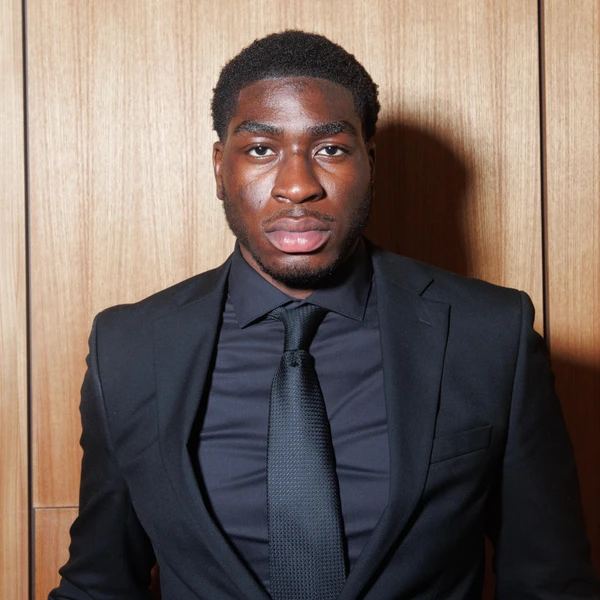
Patrick Kamdem Kamdem

2x

Finalist

Bio

I’m Patrick Valery Kamdem Kamdem, a first-generation college student, immigrant, and nonprofit founder. I’ve faced homelessness, loss, and financial instability—but I’ve never let those challenges define me. I’ve turned my pain into purpose, my struggle into service. I recently graduated from Suitland High School and am proud to begin my next chapter as a freshman at Morgan State University, majoring in Information Systems. But long before college, I was already working to change lives. I’m the founder of Destined For $uccess, a nonprofit that empowers underserved high school juniors and seniors with tools for college readiness, leadership development, financial literacy, and mentorship. Our mission is to ensure no student feels unseen or unsupported the way I once did. I’ve logged over 200 hours of service, led my school’s wrestling team as captain, and participated in professional innovation programs like the Volkswagen Group of America Future Leaders in Mobility. My goal is to combine my tech education at Morgan with my lived experiences to create data-driven solutions that uplift communities like mine. I’m not waiting for opportunity—I’m building it. And I’m here not just for support, but to connect with people who believe in the power of resilience, youth leadership, and turning adversity into action.

Education

Suitland High School

High School
2021 - 2025

Miscellaneous

  • Desired degree level:

    Bachelor's degree program

  • Majors of interest:

    • Data Science
    • Law
    • Finance and Financial Management Services
    • Management Information Systems and Services
  • Not planning to go to medical school
  • Career

    • Dream career field:

      Technology

    • Dream career goals:

      1. Found and lead a national data consulting firm that helps nonprofits, schools, and small community organizations leverage data to make smarter, mission-aligned decisions—boosting funding, impact, and efficiency. 2. Scale Destined For $uccess into a nationwide platform with chapters at schools and universities, a tech-powered system to match students with scholarships, mentors, and opportunities—and ultimately, a self-sustaining youth pipeline for success. 3. Build technology that closes opportunity gaps —platforms that use machine learning, real-time feedback, and AI-powered insights to help young people navigate career paths, college funding, and life choices in ways traditional systems fail to provide.

    • Future Leaders in Mobility Intern

      Volkswagen Group of America
      2024 – 2024
    • Volunteer

      Greater Washington Urban League
      2024 – Present2 years
    • Volunteer

      Islam Relief Chicago
      2023 – 2023

    Sports

    Wrestling

    Varsity
    2019 – Present7 years

    Awards

    • Regional Championship

    Research

    • Community Organization and Advocacy

      Learn serve — Social entrepreneurs
      2024 – Present

    Public services

    • Public Service (Politics)

      Black Student Union - Downers Grove South — President
      2023 – 2024
    • Volunteering

      Greater Washington Urban league — Hands on volunteer
      2024 – Present
    • Volunteering

      Islam Relief Chicago — Volunteer
      2023 – 2023
    • Advocacy

      Learn Serve — Social entrepreneurs
      2024 – Present

    Future Interests

    Advocacy

    Politics

    Volunteering

    Philanthropy

    Entrepreneurship

    Ethel Hayes Destigmatization of Mental Health Scholarship
    Nobody in my family used the words "mental health" when I was growing up. In our Cameroonian household, you were either strong or you were failing. There was no vocabulary for the space in between, the place where you are holding everything together on the outside while quietly unraveling on the inside. I spent years in that space before I understood what it was, and even longer before I understood that I was not the only one. When my family immigrated to the United States, we arrived with a single, non negotiable expectation: I would succeed. Not because success was optional, but because our entire family's sacrifice depended on it. My parents left behind careers, community, and familiarity so that I could have opportunities they never did. That kind of love is real. But so is the pressure that comes with it. Every grade, every application, every financial decision carried the weight of an entire family's future. I was not just a student. I was the proof that leaving Cameroon was worth it. For years, I did not talk about the toll that took. In African and immigrant communities, struggle is expected to be silent. You are supposed to push through, pray harder, work longer. Admitting that you are overwhelmed feels like admitting that you are ungrateful. So I kept it to myself. I did not tell my parents that I spent nights awake trying to decode financial aid forms that no one in our household had ever seen. I did not tell my friends that the constant pressure to perform made me question whether I belonged at Morgan State University at all. I smiled, stayed busy, and carried it. The turning point came during my sophomore year. I was president of Brave Bears, an organization supporting first generation and immigrant students, and during a peer mentorship session, a freshman broke down. She described the exact isolation I had felt: the guilt of struggling when your family has sacrificed everything, the fear of asking for help because it might confirm that you do not belong, the exhaustion of performing confidence you do not feel. Hearing my own experience reflected back to me by a student I was supposed to be helping changed something fundamental. I realized that the silence I had been practicing was not strength. It was a cycle. And if I did not break it, I would pass it on to every student who looked to me as an example. That realization reshaped my goals entirely. I had already founded Destined for Success, a nonprofit serving over 50 underserved high school students in the D.C. area, but I began to rethink what "serving" actually meant. Teaching financial literacy was important. College readiness workshops mattered. But none of it would stick if students were too overwhelmed, too anxious, or too burned out to absorb it. I started building mental wellness check ins into every program I ran. Before we talked about FAFSA, we talked about how students were actually doing. Before we reviewed resumes, we acknowledged that the job search is emotionally brutal, especially when you are the first in your family to navigate it. The response was immediate. Students opened up about things they had never said out loud: the anxiety of translating for their parents at meetings where the stakes were life changing, the depression that comes from working two jobs and still falling behind, the shame of needing food assistance. At Morgan State, I had already built an inventory database using Python and SQL for the Food Resource Center, saving over four hours of daily labor and reducing food waste. But hearing these conversations made me understand that the system I built was not just about efficiency. It was about dignity. Students who are food insecure carry a specific kind of stress that eats at their ability to focus, to show up, to believe they deserve to be in college at all. My understanding of the world shifted permanently. I used to believe that success was about individual achievement: the GPA, the internship, the degree. I now understand that success is structural. It depends on whether the people around you have the support to keep going when everything in their environment tells them to stop. Mental health is not separate from academic performance, financial stability, or career outcomes. It is the foundation underneath all of them. This is why I am pursuing dual degrees in Information Systems and Finance with a 3.6 GPA, and why I co founded Market Pulse, a finance media brand. Every system I build, whether it is a database, a curriculum, or a media platform, is designed with the same principle: reduce the invisible weight that causes people to give up before they ever get the chance to succeed. I want to build financial tools and educational infrastructure that account for the whole person, not just their productivity. The Ethel Hayes Destigmatization of Mental Health Scholarship represents exactly what I am working toward. Mental health will never improve in communities like mine through awareness campaigns alone. It will improve when the systems we build, the organizations we lead, and the conversations we normalize make it impossible to ignore. I am not just advocating for mental health. I am engineering the support structures that make it accessible, practical, and permanent.
    Tawkify Meaningful Connections Scholarship
    Option 3: Purpose & Connection The first time I watched someone's life change because of a relationship I helped build, I was standing in a high school classroom in Southeast D.C. A junior named Marcus had just finished a financial literacy workshop I designed through Destined for Success, the nonprofit I founded. He stayed after to tell me he had opened his first savings account that morning. His mom had never had one. He learned how from our program, and then he taught her. That moment crystallized something I had been feeling since my family immigrated to the United States from Cameroon: the most powerful technology in the world is not software or algorithms. It is the relationship between someone who knows something and someone who needs to know it. My long term professional goal is to build systems that make financial knowledge and opportunity accessible to people who have been excluded from both. I am pursuing dual degrees in Information Systems and Finance at Morgan State University because I believe the intersection of technology and finance is where the greatest impact can be made. But every system I want to build is rooted in a relationship. Destined for Success exists because of relationships. It started as a conversation with students who told me they had never learned how credit worked, how student loans accumulated interest, or how to compare financial aid packages. Those conversations became workshops. The workshops became a structured program serving over 50 high school students. I raised more than $10,000 through grant writing, community partnerships, and direct fundraising, but the real currency was trust. Students showed up because they trusted me. Parents supported the program because they saw their children coming home with knowledge they themselves had never received. That same relational instinct shaped my work at Morgan State. When I learned that the Food Resource Center was losing four hours every day to manual inventory tracking, I did not just build a database. I sat with the volunteers, watched their process, asked questions, and then designed a system in Python and SQL that matched how they actually worked. The project succeeded not because of the code but because I understood the people using it. My partnership in building Market Pulse taught me a different dimension of connection. Together, we produce institutional grade market analysis across YouTube, a podcast, and a newsletter, making the kind of financial insight that used to live behind expensive paywalls available to everyday investors. I engineered a 28 deliverable weekly content pipeline using Python, API integrations, and AI automation. But the reason people subscribe is not the automation. It is the trust we have built by showing up consistently, explaining complex ideas clearly, and treating our audience as intelligent people who deserve better than clickbait. As the president of Brave Bears at Morgan State, an organization supporting first generation and immigrant students, I see every day how isolation undermines ambition. Students who feel disconnected drop out. Students who find community persist. The relationships we build in that organization are not extracurricular. They are infrastructure. They are the reason students stay enrolled, apply for internships, and believe they belong in rooms where people do not look like them. Every professional goal I have depends on my ability to build and sustain authentic human connection. I want to create financial technology products that serve underbanked communities. I want to scale the kind of mentorship I provide through Destined for Success using technology that amplifies rather than replaces the human element. I want to prove that the best companies are built by people who understand their users not as data points but as human beings with real needs and real relationships. The scholarship from Tawkify would help me continue pursuing these goals without the financial pressure that forces so many first generation students to choose between their education and their obligations. It would be an investment not just in my degrees but in every relationship I will build and every community I will serve because of them.
    Ruthie Brown Scholarship
    When I moved to the United States from Cameroon, my family did not have a roadmap for how to pay for college. There was no generational wealth, no 529 plan, no relative who had navigated the American higher education system before me. I am a first generation college student, and from the moment I set foot on Morgan State University's campus as a sophomore pursuing dual degrees in Information Systems and Finance with a 3.6 GPA, I made a decision: I would build my way out of debt rather than borrow my way through school. My primary strategy is entrepreneurship. I co founded Market Pulse with Patrick Kamdem, a finance media brand that publishes institutional grade market analysis across YouTube, a podcast, and a newsletter. What makes this more than a side project is the infrastructure behind it. I engineered a 28 deliverable weekly content pipeline using Python, API integrations, AI automation, and cloud services. The system collects macroeconomic data, runs analysis, generates visualizations, and publishes finished content across platforms on a consistent schedule. This operation generates revenue through sponsorships and advertising, and every dollar earned is a dollar I do not need to borrow. My second strategy is scholarships. I treat the scholarship application process with the same rigor I apply to building software. I research opportunities systematically, match my experiences to prompts, and submit consistently. This scholarship from the Ruthie Brown fund represents exactly the kind of support that keeps students like me in school without compounding debt. My third strategy is skill based income. My technical proficiency in Python, SQL, JavaScript, and data analysis has allowed me to build real tools that solve real problems. I built an inventory database for Morgan State's Food Resource Center using Python and SQL that eliminated over four hours of daily manual tracking. I have also built trading bots that execute algorithmic strategies and an e commerce platform. These projects sharpen my skills while generating income, and they position me for high paying internships and full time roles in technology and finance after graduation. Beyond my own situation, I am working to ensure other students from underserved communities do not face the same financial barriers. I founded Destined for Success, a nonprofit that has served over 50 high school students in the Washington, D.C. area with financial literacy workshops and mentorship. I raised more than $10,000 in funding through grant writing, community partnerships, and direct fundraising. Teaching young people about credit, budgeting, and college financing is how I pay forward the knowledge I had to learn on my own. I also serve as president of Brave Bears at Morgan State, an organization that supports first generation and immigrant students navigating systems that were not designed for people like us. Every conversation I have with a fellow first gen student about FAFSA, work study, or scholarship deadlines is part of my broader mission to make higher education financially accessible. My plan to address student debt is not a single action. It is a system: earn through entrepreneurship, reduce costs through scholarships, build marketable skills, and lift others along the way. I refuse to let debt define my trajectory, and I am building the tools and the community to make sure it does not define anyone else's either.
    Mikey Taylor Memorial Scholarship
    The first time I sat alone in my dorm room at Morgan State University, three hundred miles from home, I felt a weight I could not name. It was not homesickness exactly. It was the quiet, persistent belief that I did not belong — that every other student had arrived with a roadmap I had never been given. I know now that what I was experiencing was anxiety, compounded by the isolation of being a first-generation college student from an immigrant family with no blueprint for this journey. Growing up in a Cameroonian immigrant household, mental health was not something we discussed. My mother, who had sacrificed everything to bring our family to the United States, carried her own burdens silently. Struggle was expected, not examined. When I began feeling overwhelmed during my first semester — losing sleep, withdrawing from classmates, questioning whether I had made the right decision — I did not have the language or the cultural permission to call it what it was. I thought resilience meant enduring pain alone. That belief nearly cost me my education. My grades slipped. I stopped attending office hours. I convinced myself that asking for help was a sign of weakness, a betrayal of my mother's sacrifices. It was a professor who noticed my absence and pulled me aside — not to lecture me, but to listen. That conversation was the first time an adult in an academic setting told me it was acceptable to not be fine. She connected me with campus counseling, and slowly, I began to understand that strength is not silence. Strength is choosing to be honest about what you are carrying. That experience changed my beliefs about vulnerability and community. I had been raised to see independence as the highest virtue, but I learned that meaningful growth happens in connection. Therapy taught me that the pressure I felt — to succeed for my family, to represent my community, to prove that my mother's sacrifices were worthwhile — was real and valid, but it did not have to be carried alone. I began building relationships rooted in honesty rather than performance, and those relationships became the foundation of everything I have accomplished since. My mental health journey also reshaped my career aspirations. Before college, I saw my future in purely economic terms: get a degree, get a job, provide for my family. Now I understand that true success requires systems that support the whole person. This is why I founded Destined for Success, a nonprofit serving underserved high school students with not only academic preparation but also mentorship that acknowledges the emotional realities of being first-generation. When I lead workshops, I make space for conversations about stress, imposter syndrome, and the mental toll of navigating institutions not designed with us in mind. Today, as I pursue dual degrees in Information Systems and Finance at Morgan State, I carry a different understanding of what it means to be strong. I want to build technology that makes financial systems accessible to immigrant communities — but I also want to build cultures where asking for help is normalized. As president of Brave Bears, I have created programming addressing the mental health needs of first-generation students, because I know from experience that a degree means little if the person holding it is silently falling apart. My mental health challenges did not define me, but they refined me. They taught me that the most important systems we build are not technological — they are human.
    Pierson Family Scholarship for U.S. Studies
    The first time I understood what higher education could mean, I was sitting on the floor of our apartment in Washington, D.C., listening to my mother describe the village in Cameroon where she grew up. She spoke about walking miles to reach a school with no electricity, about teachers who taught under trees when the roof leaked, and about the day she decided her children would have every opportunity she did not. Her journey from Cameroon to the United States was not just a change of geography — it was a declaration that education could rewrite our family's story. Growing up as a first-generation student in a Cameroonian immigrant household, I saw firsthand how language barriers, cultural differences, and financial strain shaped every decision my family made. My mother worked multiple jobs, often navigating systems she barely understood — tax forms in a language that was not her first, school enrollment processes that assumed familiarity with American institutions. Yet she never wavered in her belief that a college degree was the key to a different life. That belief became mine. The greatest challenge I have faced is building something from nothing while straddling two worlds. When I arrived at Morgan State University, I carried the weight of being the first in my family to attend an American university. I did not have parents who could guide me through FAFSA applications or explain what office hours were for. Every step was a first. During my initial semester, I struggled academically and socially, unsure whether I belonged. But instead of retreating, I leaned into the discomfort. I sought mentors, joined organizations, and built a community reflecting the values my mother instilled: resilience, service, and the belief that knowledge is meant to be shared. The person who has inspired me most is my mother. She never earned a college degree, yet she is the most determined educator I know. She taught me that sacrifice without purpose is just suffering, but sacrifice for the next generation is legacy. Every workshop I lead through my nonprofit, Destined for Success, every first-generation student I mentor through Brave Bears, every hour I spend building database systems at the MSU Food Resource Center — all of it traces back to her example. She showed me that you do not need a title to be a leader; you need conviction. Today, I am pursuing dual degrees in Information Systems and Finance at Morgan State University, one of the nation's most distinguished HBCUs. I chose this path because I want to sit at the intersection of technology and economic empowerment — two forces that can dismantle the barriers my mother faced. Through Destined for Success, I have served over fifty underserved high school students with financial literacy workshops. As president of Brave Bears, I have secured over ten thousand dollars in funding to support first-generation and immigrant students navigating the same uncertainties I once faced. After graduation, I plan to pursue a career in financial technology, building tools that make financial systems accessible to immigrant and underserved communities. I envision platforms that translate complex financial processes into multiple languages, simplify credit-building for newcomers, and democratize the knowledge my mother had to fight for. Eventually, I want to expand Destined for Success into a national organization, reaching thousands of students who, like me, are the first in their families to dream of a degree on American soil. Higher education in the United States gave my family a new chapter. I am determined to make sure it is not the last one we write.
    Jessie Koci Future Entrepreneurs Scholarship
    The moment I watched a 16-year-old from Southeast DC calculate compound interest for the first time and whisper, "So my money can make money?"—I knew entrepreneurship was not just a career path for me. It was a responsibility. I am currently pursuing dual degrees in Information Systems and Finance at Morgan State University, an HBCU that grounds my education in both technical excellence and cultural purpose. I chose this intersection deliberately. Information Systems gives me the tools to build scalable solutions—databases, automation, data-driven platforms—while Finance equips me to understand the capital structures and investment strategies that determine who gets access to opportunity and who does not. Together, these fields form the foundation of every venture I plan to launch. I have planned an entrepreneurial career because I have already started living one. At nineteen, I founded Destined for Success, a nonprofit that has served over 50 underserved high school students across the DC metropolitan area through financial literacy workshops, college readiness programming, and mentorship. I built the curriculum from scratch, secured over $10,000 in funding through grant writing and pitch competitions, and forged cross-sector partnerships with organizations like the Greater Washington Urban League. Through the LearnServe International Fellowship, I refined my venture design skills—learning to validate impact, build sustainable models, and pitch with precision. Entrepreneurship chose me before I chose it. Why will I succeed where so many fail? Because I combine three qualities that most aspiring entrepreneurs lack simultaneously: technical capability, financial literacy, and deep community roots. I do not just have ideas—I build systems. When Morgan State's Food Resource Center struggled with inventory tracking, I did not write a proposal. I built a database in Python and SQL that saved the staff over four hours of manual work every single day. That is the entrepreneurial mindset Jessie Koci embodied: see the problem, build the solution, measure the impact. I also understand failure intimately. As a first-generation college student from a Cameroonian immigrant household, I have navigated systems that were not designed for people like me—financial aid processes with no safety net, academic environments where I had no blueprint to follow. Every obstacle taught me resourcefulness, and resourcefulness is the one skill no business school can teach. A successful life, to me, is not measured by revenue alone. It is measured by reach. I envision scaling Destined for Success into a national platform serving 500 students across 10 cities by 2030, combining my technical skills with my passion for equity to create a financial education ecosystem that transforms generational wealth patterns in underserved communities. Success means my younger cousins in Cameroon see a model of what is possible. Success means the next first-generation student at Morgan State has a roadmap because I built one. Success means building businesses that solve problems for the people who need solutions most. Jessie Koci carved her own path with determination and ingenuity. I am carving mine with code, capital, and community—and I am just getting started.
    Edna McGrowder Memorial Scholarship
    The first time I truly understood the power of education, I was sitting at our kitchen table in Washington, DC, watching my mother calculate whether we could afford both groceries and my school supplies that week. She had immigrated from Cameroon with a fierce belief that education was the one thing no one could take from her children — yet the path to that education felt lined with invisible barriers she could not always see, let alone remove. Growing up in a first-generation, low-income household meant that college was spoken about like a distant promise rather than a concrete plan. No one in my immediate family had navigated the American higher education system before. There were no blueprints for financial aid applications, no uncles who could explain the difference between a subsidized and unsubsidized loan, and no family savings earmarked for tuition. What we did have was my mother's unwavering conviction that knowledge changes trajectories — and her willingness to work double shifts so her children could focus on school. That conviction became my own during my junior year of high school, when I volunteered with the Greater Washington Urban League at a back-to-school event serving over 100 families. I watched parents who reminded me of my own mother — exhausted, determined, and unsure how to translate their sacrifices into opportunity for their kids. Many of them asked the same questions: How do I help my child get to college? How do we pay for it? Where do we even start? Their questions echoed through me because they were the same ones my family had wrestled with in private. That experience planted a seed that grew into Destined for Success, a nonprofit I founded to bring financial literacy and college readiness programming to underserved high school students in the DC area. Through more than ten workshops and partnerships across multiple sectors, I have worked with over fifty students, teaching them budgeting fundamentals, how to search for scholarships, and how to build a plan for post-secondary education. Each session reinforced what I had learned at that Urban League event: the gap between aspiration and achievement is often not talent or motivation — it is information and access. Launching Destined for Success also taught me that solving community problems requires both heart and skill. To manage our programming budget, I taught myself Excel modeling. To track the food resources we connected students with, I built an inventory database using SQL that saved our partner organization over four hours of manual work per day. These experiences showed me that data and technology are not abstract academic subjects — they are tools for equity. That realization is why I chose to pursue dual degrees in Information Systems and Finance at Morgan State University, where I can merge technical capability with financial understanding to serve communities like mine. As president of Brave Bears, Morgan State's organization supporting first-generation and immigrant students, I continue the work that began at my family's kitchen table. We have secured over ten thousand dollars in funding and connected dozens of students with legal services, financial aid resources, and mentorship. Every student I help reminds me of the teenager I once was — uncertain about the path but certain about the destination. My decision to pursue a college education was not a single moment. It was the accumulation of watching my mother sacrifice, hearing families ask for help, and discovering that I could be part of the answer. Education is how I honor her belief and extend it outward.
    Our Destiny Our Future Scholarship
    The moment I watched a 16-year-old from Southeast DC realize she could actually afford college changed everything for me. She had been sitting in my financial literacy workshop, arms crossed, convinced higher education was for "other people." By the end of our session, tears streaming, she whispered, "Nobody ever showed me this before." That was the day Destined for Success stopped being a project and became my life's mission. I founded Destined for Success to dismantle the invisible walls that keep underserved students from economic mobility. Growing up in a Cameroonian immigrant household, I watched my parents navigate a system designed without them in mind — no generational wealth, no college playbook, no financial safety net. I realized that the gap between potential and opportunity was not about intelligence or ambition. It was about access to information that wealthier families pass down like inheritance. Through Destined for Success, I have served over 50 high school students across the DC metropolitan area, delivering workshops on budgeting, credit building, student loan navigation, and scholarship strategy. I have secured over $10,000 in funding through cross-sector partnerships and built a program model that transforms how young people see their financial futures. But the numbers only tell part of the story. The real impact lives in the student who opened her first savings account at 15, the young man who negotiated his first job offer using skills from our workshops, and the families who now discuss money openly instead of in whispers of anxiety. My plan to make a positive impact extends far beyond one city. As a dual major in Information Systems and Finance at Morgan State University, I am building the technical and analytical foundation to scale Destined for Success into a national platform. I envision a digital ecosystem where any first-generation student can access personalized financial literacy curricula, connect with mentors who share their background, and receive real-time guidance on scholarships, FAFSA, and career planning. By 2028, I aim to reach 500 students across 10 schools in the DC-Baltimore corridor, with a digital platform serving thousands more nationwide. As President of the Brave Bears at Morgan State, I lead initiatives supporting first-generation and immigrant students — researching access to legal services, financial aid, and scholarship opportunities. I built an inventory management database for the MSU Food Resource Center that saves over four hours of manual work daily, directly addressing food insecurity among my peers. These experiences taught me that systemic change requires both heart and hard skills — empathy to understand what communities need, and technical expertise to build solutions that actually work. My service with the Greater Washington Urban League reinforced this conviction. Mentoring K-12 youth and organizing back-to-school events for over 100 families, I saw how a single intervention at the right moment can redirect a young person's trajectory. Through the LearnServe International fellowship, I refined my ability to design ventures that create measurable social impact — validating ideas, building pitch decks, and proving that entrepreneurship can be an engine for equity. The world I am building is one where your zip code does not determine your financial future. Where a student in Anacostia has the same financial knowledge as a student in Georgetown. Where first-generation students do not just survive college — they thrive, graduate, and return to lift their communities. I do not just plan to make an impact. I have already started, and I will not stop until financial literacy is treated as the fundamental right it should be.
    Simon Strong Scholarship
    The morning my mother sat me down and told me we were moving to America, I did not feel excitement. I felt terror. I was leaving behind every friend, every familiar street corner, every person who had ever spoken my name with the right accent — and I was thirteen years old. Arriving in Washington, DC from Cameroon meant more than learning a new school system. It meant learning a new version of myself. I spoke fluent French but stumbled through English conversations. I understood calculus but could not decode the social hierarchies of an American middle school. I knew who I was at home, but in the hallways, I was invisible — the quiet kid with the accent who ate different food and did not understand the jokes. The adversity was not a single dramatic moment. It was the slow, grinding weight of feeling perpetually out of place. I watched my parents work jobs far below their qualifications because their Cameroonian credentials did not transfer. I saw my mother study for American certifications at the kitchen table after working twelve-hour shifts. Nobody in my family had navigated the American college system before. There was no older sibling to call, no family friend who had done this already. Every form, every deadline, every decision was a puzzle I had to solve alone. I overcame this adversity by refusing to let confusion become defeat. I became obsessively resourceful. I spent hours in the school library researching financial aid, scholarships, and college pathways. I taught myself to code in Python because I realized that technology could be an equalizer — it did not care about your accent or where you were born. I sought out every mentor, every program, every opportunity that would teach me what my family could not. But the turning point came when I realized that surviving was not enough — I needed to build something so that the next kid who arrived terrified and invisible would not have to figure it out alone. I founded Destined for Success, a nonprofit providing financial literacy workshops and college readiness mentoring to over fifty underserved high school students in the DC area. I became President of Brave Bears at Morgan State University, creating a community for first-generation and immigrant students and securing more than ten thousand dollars in funding for resources they desperately needed. I built a database system for Morgan State Food Resource Center that saved four hours of daily manual work, because I knew that when institutions run efficiently, vulnerable students eat. This adversity shaped me into someone who sees barriers as blueprints. Every system I could not navigate became a system I now help others decode. My advice to someone facing similar circumstances is this: your discomfort is not a weakness — it is data. Every moment you feel lost is teaching you exactly what needs to change. Do not waste your energy trying to fit into a system that was not designed for you. Instead, study it, understand it, and then redesign it for everyone who comes after you. The world does not need you to assimilate. It needs you to transform.
    Maurice Geyen Business Scholarship
    The night I watched a sixteen-year-old girl realize she could actually afford college was the night I knew business was not just a career path — it was my weapon against inequity. I am Patrick Kamdem, a sophomore at Morgan State University pursuing dual degrees in Information Systems and Finance. Born in Cameroon and raised bilingual in French and English, I grew up watching my family navigate the financial barriers that disproportionately affect immigrant communities. When I arrived in Washington, DC, I realized that the gap between those who build wealth and those who remain trapped is not about intelligence — it is about access to financial knowledge that nobody teaches you. That realization is exactly why I chose to major in business. During my freshman year, I founded Destined for Success, a nonprofit providing financial literacy education and college readiness workshops to underserved high school students across the DC area. What began as weekend sessions in a borrowed classroom has grown into a program serving over fifty students through ten structured workshops, with partnerships that helped secure more than ten thousand dollars in funding for students who had no guidance navigating the path to higher education. Business is the language of systems change. As President of Brave Bears at Morgan State, I lead an organization supporting first-generation and immigrant students — researching access to legal services, financial aid, and scholarships most students do not even know exist. I have watched students shift from confusion to confidence when they finally understand how FAFSA works or receive their first scholarship award letter. My technical skills amplify this mission. I designed an inventory management database for Morgan State Food Resource Center using Python and SQL, automating a process that consumed over four hours of manual labor daily. That project showed me that business is about designing systems that serve people more efficiently and equitably. Although I have not personally experienced the foster care system, I deeply understand the isolation of navigating unfamiliar institutions without a safety net. As a first-generation college student from a Cameroonian immigrant family, every milestone required me to forge my own path without a roadmap. That experience fuels my determination to build bridges for others facing similar uncertainty. After graduation, my plan is specific: scale Destined for Success to five hundred students across ten DC-area schools by 2028, while building a career in social enterprise consulting. I will leverage my dual expertise in finance and information systems to create data-driven solutions that make social programs not just impactful, but sustainable. The girl who discovered she could afford college? She is now a freshman at Howard University. She texts me updates about her classes every week. That is what business means to me — not transactions, but transformations.
    Shepherd E. Solomon Memorial Scholarship
    The first time I stood in front of a classroom in Southeast DC, a quiet student in the back row looked up and said, "Nobody ever taught us this before." She was sixteen, and she had never heard anyone explain what a credit score was or how student loans worked. That moment changed the trajectory of my life — it showed me that giving back is not charity; it is the act of filling gaps that systems have left wide open. I give back to my community by building bridges between underserved students and the knowledge they deserve. As the Founder and President of Destined for Success, a nonprofit I launched to bring financial literacy education to high school students across the DC metropolitan area, I have personally developed and led over twelve workshops reaching more than fifty young people. These sessions cover budgeting, saving, investing, and navigating the college financial aid process — topics that are rarely taught in under-resourced schools but fundamentally shape a student's future. Through cross-sector partnerships with local organizations, I have expanded the program's reach and secured sustainable support to ensure its long-term impact. My commitment to community extends beyond financial literacy. As President of the Brave Bears student organization at Morgan State University, I advocate for first-generation and immigrant college students — a population I belong to as the son of Cameroonian immigrants. I led research initiatives examining access to legal services, financial aid, and scholarships for underrepresented students, and I secured over ten thousand dollars in funding to directly support those who needed it most. Growing up in a household where no one had navigated the American higher education system before me, I understand the isolation and confusion that first-generation students face. Brave Bears exists because I refuse to let another student navigate that journey alone. At the MSU Food Resource Center, I confronted another dimension of inequity: food insecurity among college students. I designed and built an inventory management database that streamlined operations, saving the center over four hours of manual work every single day. That system now allows staff to focus on what matters — serving students — rather than drowning in spreadsheets. I witnessed firsthand how hunger undermines academic performance, and I channeled my technical skills in Python, SQL, and data analysis into a solution that made an immediate, measurable difference. Through my ongoing volunteer work with the Greater Washington Urban League since 2023, I have supported K-12 youth mentorship programs and back-to-school initiatives serving over one hundred families. Every backpack distributed and every mentoring conversation reinforces my belief that community impact is not measured in grand gestures but in consistent, dedicated presence. Giving back matters to me because I have lived on both sides of the gap. I know what it feels like to lack resources, guidance, and representation. I also know the transformative power of someone showing up and saying, "I see you, and I am here to help." My ambition is to scale this impact — to build systems, organizations, and policies that ensure no community is left without the tools to thrive. As a dual major in Information Systems and Finance at Morgan State, I am equipping myself with the analytical and technical foundation to drive change not just locally, but systemically. Every workshop I teach, every database I build, and every student I mentor brings me closer to that vision.
    Hearts on Sleeves, Minds in College Scholarship
    The room was silent except for the shuffle of feet. Twenty high school juniors from Southeast DC sat in folding chairs, arms crossed, waiting for me to prove I was not wasting their Saturday morning. I was seventeen, standing at the front of a community center with a whiteboard marker trembling in my hand, about to teach my first financial literacy workshop. I opened my mouth, and nothing came out. That silence became the most important moment of my life. Growing up in a Cameroonian immigrant household in Washington, DC, I learned early that certain conversations did not happen. My parents worked tirelessly, but we never discussed credit scores, investing, or compound interest. Money was something you earned, stretched, and prayed over. It was never something you understood. When I arrived at Morgan State University as a first-generation college student, I realized this silence was not just my family's. It was systemic. Entire communities were locked out of financial knowledge that wealthier families passed down at the dinner table. That realization gave me my voice. I went back to that community center the following Saturday. This time, I did not just talk. I told my story. I shared how my family navigated financial uncertainty, how I once watched my mother count coins to cover a utility bill, and how that moment ignited a fire in me to ensure no student would graduate high school without understanding how money works. The crossed arms uncrossed. Students leaned forward. A sixteen-year-old raised her hand and said, "Nobody ever explained this to us before." That conversation became Destined for Success, the nonprofit I founded to deliver financial literacy and college readiness programming to underserved high school students across the DC area. What started as one nervous workshop has grown into a movement serving over 50 students through 10 workshops and cross-sector partnerships. I secured over $10,000 in funding to expand programming and ensure every session remained completely free. But finding my voice was not a single moment. It was a practice. As President of Brave Bears at Morgan State, I advocated for first-generation and immigrant students who, like me, arrived on campus without a roadmap. I researched access to legal services, financial aid, and scholarships, transforming my own confusion into resources that helped dozens of students navigate systems designed without them in mind. Through the Greater Washington Urban League, I mentored K-12 youth and served over 100 families, each interaction reinforcing that authentic communication, speaking from lived experience rather than textbooks, is what truly resonates. I learned that confidence is not the absence of fear. It is speaking anyway because the people in front of you deserve to hear what you have to say. Communication becomes powerful not when it is polished, but when it is honest. My voice will continue to grow louder. I plan to scale Destined for Success to reach 500 students across 10 DC-area schools by 2028, building a pipeline where financial literacy becomes as fundamental as reading and math. Every workshop I lead, every student I mentor, every partnership I forge is an extension of that trembling moment at the whiteboard, proof that the most important voice in the room is often the one that almost stayed silent.
    Willie Mae Rawls Scholarship
    My name is Patrick Valery Kamdem Kamdem, and my life has been a journey of turning adversity into action. I am a first-generation college student, an undocumented immigrant, and a young leader who has learned to build opportunity from the ground up. I lost my mother at nine years old. My father, who still lives in Africa, does what he can to support me, but for most of my life in the United States, I have had to rely on my own determination and the support of strangers who became lifelines. I faced instability, housing insecurity, and constant uncertainty about my future. Yet I never let those circumstances define me. Instead, I used them to shape a mindset rooted in grit, compassion, and service. I worked hard in school, graduating with a 4.2 GPA, a 1260 SAT score, and over 200 hours of community service. I became captain of my wrestling team, led my school’s Black Student Union, and mentored students through tutoring and peer programs. Most importantly, I founded Destined For Success, a nonprofit dedicated to equipping underserved high school students with leadership training, financial literacy, college preparation, and mentorship. I created the very support system I once needed. I am currently an incoming freshman at Morgan State University, majoring in Information Systems in the School of Business and Management. My studies will help me bridge two worlds that matter deeply to me: technology and equity. I believe data is one of the most powerful tools we have to make informed, compassionate decisions that drive real change. Unfortunately, too many nonprofits and schools do not have the resources or training to use data effectively. I plan to change that. My long-term goal is to build a data consulting firm that supports community-based organizations, small businesses, and schools in using their data to improve outcomes. I want to show a struggling nonprofit how to better serve their population. I want to help school districts track and close achievement gaps. I want to create tech solutions that are not only smart, but human-centered. At the same time, I will continue to grow Destined For Success into a national platform that supports students across the country. I am developing a student-led digital portal where young people can access mentorship, scholarships, real-time impact tracking, and tools to advocate for themselves. I believe that when students feel seen, supported, and equipped, they become unstoppable. I plan to make a positive impact by combining technical skills with lived experience. My journey gives me a deep understanding of what underserved communities truly need. My education will give me the tools to build systems that deliver those needs effectively. And my values, which are resilience, purpose, and service, will guide every decision I make. What drives me most is not the idea of personal success, but the responsibility to make sure others have a path too. I want to be the person who shows young students that their dreams are valid, even if their circumstances are difficult. I want to build a world where stories like mine are not the exception, but the beginning of something greater. Through my studies and career, I am not just chasing opportunity. I am creating it. For myself. For my community. And for everyone who deserves a chance to rise.
    Byte into STEM Scholarship
    My name is Patrick Valery Kamdem Kamdem. I am a first-generation college student, an undocumented immigrant, and a young man who has had to learn how to create stability in the midst of chaos. I lost my mother when I was nine years old. My father remained in Africa, sending what he could, while I navigated life in the United States mostly on my own. I experienced homelessness, moved between homes, and juggled school with survival. Yet through all of that, I held on to one belief: that I could turn pain into purpose. What shaped me most was not a single moment, but the journey of constantly rebuilding. I saw early on that many of the systems around me were not designed to support people like me. Instead of giving up, I decided to build what did not exist. I became a mentor, a leader, and eventually a founder. I established Destined For Success, a nonprofit that empowers underserved high school students through leadership development, financial literacy, mentorship, and college readiness. What began as a personal mission is now becoming a movement. I created the space I once needed. At the same time, I discovered my passion for business analytics and technology. I realized how powerful data can be in shaping better decisions, whether in a school, a nonprofit, or a business. My experiences taught me that many organizations want to serve their communities but lack the insights to do so effectively. I want to change that. That is why I am now pursuing a degree in Information Systems at Morgan State University. This program is the next step in helping me build a bridge between data and social change. It will equip me with the technical and strategic skills I need to launch a data consulting firm that helps mission-driven organizations use their information wisely. I want to show schools how to better support at-risk students. I want to help small nonprofits understand their impact and improve their services. Most of all, I want to ensure that decisions affecting underserved communities are informed by real needs and not just assumptions. Education is the engine behind my mission. It gave me the knowledge to lead and the language to advocate. It gave me the confidence to walk into rooms where no one looked like me and speak with clarity and conviction. Now, I want to use that education to uplift others. Whether it is by mentoring younger first-generation students, offering free workshops in data literacy, or expanding Destined For Success into more high schools, I see every opportunity as a chance to multiply impact. Leadership, to me, means using your story to unlock someone else’s. Service means meeting people where they are and walking with them as they grow. Mentorship means sharing your roadmap so someone else does not have to walk blind. These are the values I carry with me into every project, every classroom, and every future plan. What drives me is not just ambition, but accountability. I owe it to the people who believed in me when I had nothing. I owe it to my younger self who kept going even when no one was watching. And I owe it to the next generation who deserve to see what is possible. Through my education, my work, and my story, I intend to build a legacy that shows that greatness can come from struggle, and that real impact begins with the decision to lead with heart.
    First Generation College Scholarship
    My identity as an undocumented, first-generation immigrant has shaped every part of how I see the world and my place within it. I have never had the luxury of assuming anything is guaranteed. From losing my mother at nine to navigating life in the United States with limited support, I have learned that the systems meant to provide opportunity often leave people like me behind. But instead of seeing that as a reason to give up, I have used it as a reason to lead. Growing up with uncertainty taught me empathy. Moving between homes taught me resilience. Living without access to basic opportunities taught me to create my own. These experiences did not just inform my perspective. They became the fuel behind my actions. I do not want to succeed only for myself. I want to open doors for others too. That is why I founded Destined For Success, a student-led nonprofit that equips underserved youth with mentorship, leadership training, and financial literacy. It is also why I plan to build a data consulting firm that helps nonprofits and schools make smarter, more equitable decisions. My identity has shown me what is broken in the world, but it has also shown me how powerful it is to rebuild. I see the world not just as it is, but as it could be. And I see myself as someone who will not just rise, but bring others with me.
    American Dream Scholarship
    To many, the American Dream means achieving wealth, owning a home, or climbing the social ladder. But for me, the American Dream has always meant something deeper, freedom through purpose, opportunity through service, and legacy through resilience. I didn’t grow up with a front-row seat to the traditional American Dream. I grew up with uncertainty, after losing my mother at age nine, navigating life in the U.S. as an undocumented immigrant, and often not knowing where I’d sleep next. My father, still in Africa, sent what he could, but much of my journey has been self led. I’ve experienced the American Dream not as a guarantee, but as a fight for education, for stability, and for the chance to not just survive, but to lead. Through all of this, I’ve come to define the American Dream not as a destination, but as a responsibility. It’s about building a life rooted in purpose, not just for yourself, but for others who are still finding their way. It’s about creating doors where there were once only walls, and lifting others through the very obstacles that tried to hold you down. Education has been my path toward that dream. It gave me structure when my life lacked stability. It gave me a vision when my circumstances felt overwhelming. And it gave me a platform to lead. I’ve earned a 4.2 GPA, completed over 200 hours of community service, led my school’s Black Student Union, and captained my wrestling team, all while working to make ends meet. But my proudest accomplishment has been founding Destined For $uccess, a nonprofit that equips underserved students with leadership skills, mentorship, financial literacy, and college prep. I created it because I needed something like it growing up. And now, I’m helping others dream bigger and walk bolder. To me, the American Dream is about turning hardship into help, and turning opportunity into impact. It’s about using what you’ve learned, not just to rise, but to lift others. My dream is to graduate from Morgan State University with a degree in Information Systems, build a data consulting firm that supports nonprofits and small businesses, and continue growing Destined For $uccess into a national movement. This vision isn’t about personal success alone, it’s about giving others the tools to chase their dreams too. The American Dream also means refusing to let your status, your zip code, or your past limit what’s possible. As an undocumented, first-generation student, I’ve had to navigate closed doors and unanswered questions. But those same challenges taught me how to push forward with creativity, persistence, and empathy. They shaped me into someone who builds systems when none exist and believes that no story is too small to matter. Ultimately, the American Dream is not a one size fits all narrative. It’s a living, breathing pursuit of something better. For some, it’s about entrepreneurship. For others, safety, healing, or freedom. For me, it’s about leaving a legacy of courage, service, and transformation—a legacy that says, 'I was here, and I made a difference.' That’s the America I believe in. Not one of perfection, but of possibility. Not one of arrival, but of purpose. And I’m committed to walking that path with heart, with vision, and with the belief that united, we are stronger.
    Cyrilla Olapeju Sanni Scholarship Fund
    When my family came to the United States, we carried little more than hope and each other. But soon after, even that changed. At nine years old, I lost my mother—the heart of our family. Her passing didn’t just leave a personal void; it shattered the foundation we were trying to build in a new country. That loss marked the beginning of my greatest challenge: navigating life in the U.S. as an undocumented, first-generation student without stable family support. After my mother’s death, I moved often—staying with extended family or anyone willing to offer shelter. My father remained in Africa, sending $200 a month when he could. I quickly learned that survival required more than love and good intentions—it demanded resilience, self-reliance, and adaptability. I juggled school, part-time work, and constant uncertainty while trying to appear as though everything was fine. The absence of stability forced me to grow up fast. I couldn’t rely on a consistent home, secure finances, or even equal access to the opportunities my peers had. Still, I refused to let my circumstances define me. Instead, they pushed me to define myself. Through these struggles, I discovered the power of education—not just as a way out, but as a way forward. School became my sanctuary. Whether in the classroom, wrestling room, or leadership programs, I found spaces where I could grow, challenge myself, and contribute. I seized every opportunity I could, earning a 4.2 GPA, scoring 1260 on the SAT, and completing over 200 hours of community service. I became captain of my wrestling team, led my school’s Black Student Union, and tutored peers in French and academics. But the most meaningful step I took was founding Destined For $uccess—a student-led nonprofit that equips underserved students with leadership skills, mentorship, financial literacy, and college prep. I created what I once needed: a space for students like me to feel seen, supported, and empowered. Losing my mother and facing instability in a new country taught me how to build something from nothing. I’ve learned to lead not with perfection, but with purpose. I now know that impact isn’t about where you come from—it’s about what you do with what you’ve lived through. These challenges taught me empathy, accountability, and how to stand for something greater than myself. Today, I’m proud to be an incoming freshman at Morgan State University, studying Information Systems in the School of Business and Management. My dream is to launch a data consulting firm that helps nonprofits and small businesses make informed, strategic decisions. At the same time, I plan to expand Destined For $uccess nationwide so that more students can access the tools they need to thrive—especially those, like me, who didn’t grow up with a roadmap. The greatest challenge my family faced wasn’t just adapting to a new country—it was enduring unimaginable loss and still choosing to rise. That challenge shaped every part of who I am. It taught me to lead with grit, serve with heart, and dream beyond survival. It reminded me that while the future is never guaranteed, the present is always ours to shape. And I intend to shape it with purpose.
    American Dream Scholarship
    The American Dream has long been a beacon of hope and possibility, defined as the belief that anyone, regardless of background, can achieve success through hard work and determination. For me, the American Dream is about more than material wealth or social status; it represents the freedom to pursue one’s passions, the opportunity to build a better life, and the responsibility to uplift others along the way. Growing up as an undocumented student, the concept of the American Dream felt both inspiring and elusive. On one hand, I was surrounded by stories of people who had overcome immense challenges to achieve their goals. On the other, I faced barriers that made the dream seem out of reach whether it was limited access to scholarships, uncertainty about my family’s future, or navigating a world that often didn’t see my full potential. Despite these obstacles, I’ve come to see the American Dream as not just a destination but a journey shaped by perseverance and purpose. For me, the American Dream is rooted in education and opportunity. Education has been my pathway to resilience and growth. It’s where I’ve learned to embrace challenges, whether on the wrestling mat or in the classroom, and where I’ve discovered my passion for business analytics. My dream is to one day use my education to create a data consulting firm that empowers others to make informed decisions while also providing stability for my family. This vision isn’t just about personal success; it’s about creating opportunities for others and giving back to my community. The American Dream also carries the responsibility to pay it forward. As I strive to achieve my goals, I aim to mentor other first generation and undocumented students, showing them that their aspirations are valid and achievable. I want to be a source of guidance and encouragement, helping them navigate the same hurdles I’ve faced. The dream is not just about individual success; it’s about lifting others and building a more inclusive society where everyone has the chance to thrive. To me, the American Dream isn’t a one size fits all ideal. It looks different for everyone because it’s shaped by personal values and circumstances. For some, it’s about owning a home or starting a business. For others, it’s about creating a safe and supportive environment for their family. What binds these dreams together is the belief in the possibility of progress of building a life better than the one you were born into and leaving a legacy of hope for future generations. In the end, the American Dream is about resilience, opportunity, and community. It’s about believing in the power of hard work and determination while recognizing that none of us achieve our dreams alone. By striving for personal growth and helping others along the way, I believe I can contribute to a vision of the American Dream that is inclusive, enduring, and meaningful.
    Simon Strong Scholarship
    Adversity has been a constant presence in my life, shaping my character and teaching me lessons I carry to this day. One of the most defining challenges I’ve faced is being undocumented. Growing up, I had to balance the typical struggles of adolescence with the unique obstacles of navigating life without the security of citizenship. From worrying about my family’s future to confronting societal misconceptions, the weight of my status was ever-present, affecting my opportunities and dreams. The most challenging moment came during high school when I realized how limited my college and scholarship options would be due to my status. It felt as though a ceiling was being placed over my aspirations despite my hard work and determination. Watching my peers celebrate their college acceptances and financial aid offers, I couldn’t help but feel isolated and discouraged. However, I refused to let my circumstances define me. Instead, I used this adversity as fuel to push myself further. I threw myself into academics, raising my GPA from 1.9 in freshman year to 3.7 by junior year, showing my resilience and determination to succeed. I also became deeply involved in extracurricular activities, such as leading my wrestling team, mentoring peers, and working on community focused projects with organizations like LearnServe International. These activities gave me a sense of purpose and reminded me that I could still make a meaningful impact, no matter the barriers. This journey taught me the power of perseverance and resourcefulness. I learned to advocate for myself, seeking out resources and opportunities tailored to undocumented students. I also became more empathetic, understanding that adversity is universal, even if its forms vary. This empathy drives me to support others, whether by mentoring younger students, participating in community service, or working to create opportunities for those who face similar struggles. To anyone facing the weight of undocumented status or any other significant challenge, my advice is simple: Do not let fear or frustration diminish your dreams. It’s easy to feel defeated when the odds are stacked against you, but remember that you are not alone. Seek out mentors and allies who can guide and support you. Break your goals into smaller steps and celebrate each victory, no matter how small. Most importantly, focus on what you can control your effort, your attitude, and your determination to rise above. Adversity has shaped me into a person who values resilience, community, and hope. It has shown me that while I may not be able to change my circumstances overnight, I can change how I respond to them. I’m proud of the person I’ve become because of these challenges, and I’m committed to using my experiences to inspire and uplift others who face similar struggles.
    Sammy Meckley Memorial Scholarship
    Throughout my high school journey, my involvement in extracurricular activities has been a cornerstone of my personal development and my contribution to the community. Each activity I’ve participated in has not only shaped my character but has also allowed me to create a positive impact on those around me. Wrestling, in particular, stands out as a passion that has profoundly influenced my life and my community. Wrestling is more than just a sport to me it’s a lifestyle and a sanctuary for peace. The rigorous discipline, teamwork, and resilience required in wrestling have taught me life lessons that extend far beyond the mat. As a team captain, I’ve embraced the responsibility of leading and mentoring younger teammates. I’ve organized practices, provided encouragement, and fostered an environment where everyone feels valued and motivated. Wrestling has shown me that perseverance in the face of adversity can lead to incredible growth, and I strive to pass that lesson on to my peers. Beyond wrestling, my role as president of the Black Student Union (BSU) has fueled my passion for fostering inclusivity and unity within my school. Through the BSU, I’ve organized events that celebrate Black culture and history, creating a safe space where students can feel seen and heard. This work has not only strengthened our school community but has also deepened my commitment to advocating for equity and representation. Additionally, my involvement with organizations like LearnServe International has allowed me to work on social justice projects that directly address community needs. Collaborating with peers to develop innovative solutions has shown me the power of collective action. These initiatives have helped underserved communities while teaching me how to apply my skills to make a tangible difference. These activities have benefited my community by inspiring others to find their own passions and work toward shared goals. Wrestling has taught younger athletes the value of commitment and resilience, while the BSU has provided a platform for dialogue and understanding. My community work has instilled hope and driven change in areas where it’s needed most. Looking ahead, I plan to carry the lessons I’ve learned into my college experience and beyond. I’m committed to continuing my advocacy work and using my voice to uplift others. I also hope to start programs that encourage youth to pursue their dreams, whether in athletics, academics, or community leadership. Extracurricular activities have given me a purpose and a way to contribute meaningfully to my community. They’ve shown me that passion, when combined with action, can create lasting change.
    Dreamer Scholarship by Lolah Alva Boutique
    Growing up undocumented has profoundly shaped my life, presenting challenges that have tested my resilience and determination but also deepened my gratitude and ambition. Being undocumented often felt like living in the shadows, knowing I had to work harder for opportunities others might take for granted. Simple milestones, like getting a driver’s license or applying for financial aid, became sources of anxiety instead of celebration. Yet, these obstacles have motivated me to persevere, shaping the person I am today. One of the most significant impacts of being undocumented is the uncertainty that has surrounded my education. From a young age, I understood that I would need to excel academically to create opportunities for myself. This realization pushed me to embrace every chance to learn, grow, and contribute to my community. Despite the challenges, I earned leadership roles in school, like serving as the captain of my wrestling team and president of the Black Student Union, where I worked to foster inclusion and provide a voice for underrepresented students. These experiences have not only prepared me for college but have also fueled my passion for helping others overcome adversity. College represents a gateway to a future I’ve dreamed about for years. Morehouse College is where I hope to pursue a degree in date analytics. I am drawn to morehouse not only for its academic excellence but also for its emphasis on faith and community, values that resonate deeply with me. With this education, I plan to open a data consulting firm, helping organizations make sense of complex information while using part of my success to give back to my community. I want to create opportunities for other undocumented and underserved youth, showing them that their status does not define their potential. Winning this scholarship would be transformative for me and my family. Financial barriers have always loomed large in my college aspirations, as undocumented students have limited access to federal aid and most state-based scholarships. This scholarship would not only ease the financial burden but also serve as a powerful affirmation of my efforts and my dreams. It would allow me to focus on my education and community involvement without the constant worry of how to afford tuition. Ultimately, I want my story to be one of resilience and hope. Being undocumented has taught me to value hard work, empathy, and the power of education. I want to inspire others facing similar struggles to believe in their potential and pursue their dreams, just as I am doing. By attending college, I aim to break the barriers that have limited my family for generations and create a legacy of opportunity for those who come after me. This scholarship is more than financial support it is an investment in my future and the countless lives I hope to impact.
    Sunshine "DC" Memorial Scholarship
    Giving back to my community has been a guiding principle in my life. As someone who has benefitted from the support and encouragement of others, I see community service not just as an obligation, but as a way to honor those who have helped me grow. From volunteering with local organizations to mentoring peers, I’ve sought out opportunities to make a positive impact, and these experiences have shaped my character and goals. One of the ways I give back is through mentorship. As the captain of my high school wrestling team, I’ve taken pride in guiding younger teammates, helping them build confidence and resilience both on and off the mat. Wrestling has been my sanctuary, teaching me discipline, perseverance, and teamwork, and I strive to pass these values on to others. Additionally, as president of my school’s Black Student Union, I’ve worked to foster a sense of belonging and empowerment for students of all backgrounds. Organizing events and discussions that celebrate our identities has been a rewarding way to give back to my peers and create lasting change within our school community. Outside of school, I volunteer with organizations like the Greater Washington Urban League, where I assist in programs aimed at providing educational resources and career guidance to underserved youth. These experiences have shown me the power of community-led initiatives and the importance of addressing systemic inequalities. They have also solidified my commitment to making a difference wherever I go. After graduating from college, I plan to continue this responsibility by leveraging my education in data analytics to create meaningful change. My dream is to start a data consulting firm that not only helps organizations solve complex problems but also invests in the community. I envision using my resources to support mentorship programs, scholarships, and educational workshops for underprivileged youth. By providing opportunities and resources, I hope to help others realize their potential and achieve their goals. In addition to my professional aspirations, I intend to remain actively involved in community service. I want to partner with local schools and nonprofits to mentor students, especially those who, like me, come from immigrant or first generation backgrounds. I believe that representation matters, and I want to be a role model who shows young people that success is possible with hard work and determination. Giving back to my community is not a one time effort but a lifelong commitment. The values I’ve developed through service empathy, resilience, and a desire to uplift others are central to who I am and who I strive to be. With the support of this scholarship, I will be one step closer to achieving my goals and continuing to give back in even greater ways. Together, we can build stronger, more equitable communities and inspire others to do the same.
    Aserina Hill Memorial Scholarship
    My name is Patrick Valery Kamdem Kamdem, a senior at Suitland High School, where I have spent my high school junior and senior year before so Downers Grove South High school balancing rigorous academics, extracurricular commitments, and a passion for making a positive impact in my community. Despite the challenges I’ve faced as a first-generation student and recent immigrant, I’ve worked hard to build a well-rounded high school experience that reflects my drive and determination. At school, I am deeply involved in extracurricular activities. As the captain of my wrestling team, I’ve honed leadership skills by mentoring younger teammates and fostering a culture of resilience and unity. I also serve as the president of my school’s Black Student Union, where I lead initiatives to promote inclusion and celebrate cultural identity. Outside of school, I volunteer with organizations like the Greater Washington Urban League, where I support underserved communities through educational and entrepreneurial programs. I am particularly passionate about business analytics and plan to pursue a degree in this field after high school. My dream is to one day establish a data consulting firm that provides innovative solutions to organizations while fostering a supportive work environment. Beyond professional aspirations, I envision creating opportunities for future generations, especially those from underrepresented backgrounds, to thrive in their chosen careers. If I could start my own charity, its mission would center on bridging educational and career gaps for underserved youth. I would establish a program focused on equipping students with the skills, resources, and mentorship they need to succeed academically and professionally. The charity would serve young people from low income and immigrant communities, helping them overcome systemic barriers to higher education and career advancement. Volunteers in this organization would play vital roles, such as tutoring students in subjects like math, science, and language arts, and assisting with college applications, scholarship searches, and career counseling. Additionally, they would host workshops on topics like financial literacy, technology skills, and interview preparation. The charity would also partner with local businesses to provide internships and hands-on experiences for students, ensuring they are well-prepared for the workforce. Creating such a charity would be a reflection of my own journey a way to give back and ensure that no young person feels limited by their circumstances. I’ve experienced firsthand the transformative power of mentorship and community support, and I want to pass that forward. Education has been my gateway to opportunities, and I believe it can be the same for others. In everything I do, whether it’s leading a team, volunteering in the community, or pursuing my education, I aim to make a meaningful difference. With this scholarship, I will be one step closer to achieving my goals and using my experiences to inspire and uplift others.
    Coach "Frank" Anthony Ciccone Wrestling Scholarship
    Throughout my life, I have often found myself cast as the underdog, particularly in my journey as a wrestler. Wrestling is not just a sport to me; it is a lifestyle, a passion, and a sanctuary for peace. While others may view the mat as a place of competition, I see it as a space where I can escape life’s challenges, test my limits, and grow as both an athlete and an individual. Embracing the underdog role has not always been easy, but it has taught me perseverance, humility, and the importance of never underestimating myself. One of the most defining moments of my wrestling career came during my junior year. I transferred to a new school in the middle of the season, entering a wrestling program where I was unknown and underestimated. My teammates had already formed bonds, and I was seen as an outsider with much to prove. To make matters more difficult, I was placed in a weight class with some of the toughest opponents in the district. Every match felt like an uphill battle, with spectators and competitors alike assuming I didn’t stand a chance. Instead of allowing doubt to consume me, I embraced the challenge. I leaned into the underdog role, using it as motivation to outwork and outperform expectations. I poured my energy into every practice, staying late to perfect my technique and pushing myself beyond my physical and mental limits. Wrestling became more than a competition it became a discipline that demanded focus, grit, and a relentless drive to improve. One match, in particular, stands out. I faced the district’s top ranked wrestler, someone who had consistently dominated the competition. I remember stepping onto the mat and hearing whispers of disbelief from the crowd. But as the whistle blew, I blocked out the noise and focused on everything I had trained for. While I didn’t win that match, I held my own, surprising not only the spectators but also myself. That match earned me respect from my teammates and coaches, proving that I belonged on the mat with the best of them. This experience taught me that being an underdog is not a disadvantage but an opportunity. It allowed me to grow stronger and more resilient, to rise above expectations and show others and myself that hard work and determination can level any playing field. Wrestling has taught me that the greatest victories are not always about winning but about giving your absolute best and refusing to back down. As I look toward college, I am determined to continue this journey. Wrestling is more than a sport for me; it is a sanctuary that has helped me navigate life’s struggles, channel my energy productively, and find peace amidst chaos. With the opportunity to wrestle at the collegiate level, I hope to inspire others to embrace their own underdog stories and use them as fuel for growth. College is the next step in my journey, where I can further develop as an athlete, student, and leader. Wrestling has shaped who I am, and I am ready to embrace every challenge ahead, just as I have always done.
    Breast Cancer Awareness Scholarship in Memory of Martha Dickinson
    Breast cancer has profoundly impacted my life, reshaping my perspective on resilience, health, and the importance of early detection. When my grandmother who I lived with were diagnosed with breast cancer, her journeys left an indelible mark on me. Witnessing her strength during treatment and the love and support she received from family and friends taught me invaluable lessons about perseverance, the importance of early detection, and the necessity of proactive healthcare. Living with her during her battle with breast cancer made the reality of the disease deeply personal. I saw her balance the emotional weight of her diagnosis with the determination to maintain a sense of normalcy for her family. Her courage inspired me to support her in every way possible whether through small acts of kindness, helping around the house, or simply being there to listen. Similarly, with breast cancer she brought my extended family closer, uniting us in support of her recovery. These experiences made me realize the critical role of community and compassion in helping individuals navigate such challenges. Prevention and early detection are key to combating breast cancer. Through these personal experiences, I have become an advocate for regular screenings and self-examinations, especially within my family. I actively encourage open conversations about health and the importance of addressing concerns early, ensuring that loved ones understand the resources available to them. I have also educated myself about lifestyle changes, such as maintaining a healthy diet and exercising regularly, to reduce risk factors associated with the disease. Genetic testing has been a pivotal tool in my family’s approach to breast cancer prevention. After my grandmother’s diagnosis, some family members underwent genetic testing to assess their risk factors. This knowledge empowered them to take preventive measures, such as enhanced surveillance, lifestyle changes, and in some cases, preventative medical interventions. Genetic testing provides critical insights that can save lives, helping individuals make informed decisions about their health. I have seen firsthand how this knowledge can transform fear into action and uncertainty into preparedness. I believe I deserve this scholarship because I am deeply committed to using these experiences to make a meaningful impact. My family’s journey with breast cancer has inspired me to pursue a career in data analytics, where I aim to combine data-driven strategies with healthcare initiatives to improve early detection and patient outcomes. With access to better resources, I hope to contribute to the development of systems that make genetic testing, screenings, and preventive care more accessible, particularly for underserved communities. This scholarship would allow me to continue my education and turn these aspirations into reality. By combining my personal experiences with professional expertise, I aim to honor the resilience of my loved ones and contribute to the fight against breast cancer. Through awareness, education, and innovation, I hope to empower others to take control of their health and prevent the devastating impact of this disease on future generations.
    One Chance Scholarship
    My name is Patrick Valery Kamdem Kamdem, and my journey has been defined by resilience, ambition, and a drive to make a meaningful impact on both my life and the lives of others. As a first-generation student in my family, I understand the value and transformative power of education. Coming from a background where opportunities are limited, I have faced challenges that have tested my perseverance, adaptability, and determination. However, these obstacles have only strengthened my commitment to achieving my goals and inspiring others from similar backgrounds to pursue their own dreams. One of my greatest passions lies in the field of business analytics. I am captivated by the power of data and its ability to uncover insights, drive innovation, and solve complex problems. I dream of one day building my own data consulting firm, where I can empower organizations to make informed decisions by providing them with clear, actionable insights. Through this work, I hope to create a positive impact on the world around me, from helping businesses thrive to fostering a better understanding of data-driven decision-making across various industries. This path is not only about my personal success; it’s about giving back to my community and opening doors for others in similar situations. In addition to my professional aspirations, I am deeply passionate about mentoring and supporting young people, especially those who may feel limited by their circumstances. I know firsthand how it feels to face the uphill battle of balancing school, work, and extracurricular commitments while navigating college applications and scholarship searches. I want to be able to share my experiences, guiding others through these challenges so they too can find their footing and pursue their dreams with confidence. Giving back in this way is part of what drives me and keeps me grounded as I continue my journey. This scholarship would significantly impact my path toward achieving these goals. As I work toward a college degree, the financial relief provided by this scholarship would allow me to dedicate more of my focus to academic success and professional development rather than worrying about the burden of expenses. This support would also empower me to continue my work in community service and mentorship, giving me the flexibility to spend time helping others without the constant strain of financial pressure. In receiving this scholarship, I would be able to invest more deeply in both my studies and my community efforts, maximizing the impact I can have now and in the future. This investment would ultimately allow me to create a pathway to success not only for myself but also for those who come after me, demonstrating that background and circumstance do not define potential. Thank you for considering my application, and for supporting students who are determined to turn their aspirations into reality.
    Rick Levin Memorial Scholarship
    Navigating challenge and difficulty has been a defining part of my journey, deeply influencing my goals, mindset, and drive to pursue higher education. Growing up as a first-generation student in a family with limited experience in the American educational system meant that I faced numerous hurdles in understanding how to navigate both academics and the path to college. Every step of the way, I encountered obstacles that tested my resilience, adaptability, and determination. These experiences not only shaped my ambitions but also fueled my desire to uplift others facing similar challenges. One significant influence on my development and understanding of service has been my involvement with LearnServe International. This program exposed me to social entrepreneurship and the power of community-based solutions. Through LearnServe, I learned to see problems as opportunities for innovation and impact. For the first time, I felt empowered to create change, not just for myself but for others. LearnServe showed me that even though I might come from a background without the typical resources, I have the tools and insight to make a difference. This realization motivated me to view challenges in a new light—not as barriers, but as opportunities for growth and contribution. As part of the LearnServe program, I worked on projects that tackled local issues, such as access to educational resources in underrepresented communities. Our initiatives involved collaborating with community members, brainstorming sustainable solutions, and learning how to pitch our ideas effectively. Through these experiences, I gained invaluable skills in leadership, communication, and strategic thinking. More importantly, I discovered that many of the obstacles I faced weren’t unique to me. Others in my community were struggling with similar difficulties, particularly in finding pathways to education and personal growth. This awareness strengthened my commitment to higher education, knowing that it could provide me with the tools to effect change on a larger scale. The mentors and support system I found within LearnServe, combined with the encouragement of dedicated educators in my special education program, made all the difference. These individuals believed in my potential and taught me the value of persistence, patience, and community. They didn’t just guide me academically; they helped me see my own value and understand that my experiences, both the struggles and the successes, could be a source of strength for myself and others. Their faith in my potential was a turning point that made me realize that, with the right mindset and support, higher education was not only achievable but a powerful platform for change. These experiences led me to commit to using my education as a way to bridge gaps for others. I want to advocate for students from underrepresented backgrounds, helping them see the possibilities that education can open up. I am particularly passionate about addressing the financial, social, and informational barriers that often prevent students from marginalized communities from pursuing higher education. Too often, talented and motivated individuals are held back simply because they lack access to resources and guidance. I want to be part of the solution, working to create systems of support that make educational and career goals accessible to all. Pursuing higher education is, for me, about more than personal success. It’s about equipping myself with the knowledge and skills to build meaningful change in my community. Through my studies and future career, I intend to focus on creating initiatives that address the educational disparities that exist in low-income and immigrant communities. I want to provide mentorship, resources, and a roadmap for students who may feel isolated or uncertain about their future, just as I once did. In reflecting on my journey, I recognize that challenges have shaped my purpose and inspired me to help others overcome their own obstacles. Programs like LearnServe International and my experiences in special education taught me that resilience, compassion, and community are the cornerstones of meaningful impact. My goal is to use my education not only to advance my career but to create spaces where others feel empowered to pursue their dreams and contribute positively to society. I am committed to paying forward the support, guidance, and encouragement that helped me navigate my own path.
    Elevate Mental Health Awareness Scholarship
    My experience with mental health has shaped who I am, my relationships, and my career aspirations in profound and transformative ways. From navigating my own struggles to witnessing the effects of mental health issues in those close to me, I have learned just how crucial mental wellness is to living a balanced, fulfilling life. These experiences have not only helped me cultivate empathy and resilience but also driven me to want to make a meaningful difference in the mental health field. Mental health challenges have been a part of my life from an early age. I saw close family members and friends struggle with anxiety, depression, and the aftermath of traumatic events, which made me acutely aware of how common these issues are—and how deeply they can impact lives. Growing up, I often found myself acting as a listener and a source of support, and that role helped me recognize the gaps in our mental health care system. Seeing others feel misunderstood or unsupported has driven me to be someone who listens deeply and without judgment, qualities I now bring into all of my relationships. My own journey with mental health has taught me that seeking help is both a strength and a necessity. At first, I was reluctant to acknowledge or address my feelings, out of fear of stigma or not wanting to seem “weak.” Over time, however, I came to understand that prioritizing mental health is essential and that healing isn’t something anyone should go through alone. This journey has helped me connect more authentically with others, as I’ve learned the power of vulnerability and openness. I’ve seen how honest conversations about mental health can break down barriers and foster deeper, more supportive relationships. This personal journey has also deeply shaped my career aspirations. I realized early on that I wanted a career that would enable me to make a difference in the lives of others, especially in a way that promotes mental well-being. My interest in mental health has fueled my desire to pursue a career in business analytics, with a focus on health care or social impact. By leveraging data, I hope to uncover insights that could improve access to mental health resources and identify areas where support is lacking. I believe that a data-driven approach could provide new ways of making mental health care more accessible and affordable for people in underserved communities, breaking down some of the very barriers I’ve encountered or observed in others. The stigma surrounding mental health remains a significant challenge, particularly in certain communities. Because of my own experiences, I’m passionate about reducing that stigma and encouraging people to seek the help they need without shame. I believe that mental health should be treated as a universal priority, and I want to use my career to advocate for that message. I see data as a powerful tool for driving this change by enabling decision-makers to make more informed choices that improve mental health care on a broad scale. In addition to working toward systemic change, my mental health journey has motivated me to stay involved in community work. I volunteer with local organizations that focus on mental health awareness and support, and I’ve facilitated peer groups for individuals who are navigating similar challenges. These experiences have been invaluable in teaching me how small actions can create positive change and have reaffirmed my desire to use my professional skills to advocate for better mental health care. Ultimately, my experience with mental health has left me with a strong belief in the value of empathy, openness, and resilience. It has taught me that everyone, regardless of their background or struggles, deserves access to the care and support they need to thrive. My goal is to combine my technical skills with my commitment to mental health advocacy to create a world where mental wellness is treated as a basic human right, not a luxury. In the future, I hope to work with organizations that prioritize mental health as part of their mission and aim to make resources more widely available to everyone. I envision contributing to research initiatives, community-based projects, and policy changes that promote mental well-being. My journey has shown me that no one should have to struggle alone, and through my career, I hope to provide the support, understanding, and resources that people need to lead healthier, more fulfilling lives. In summary, my experience with mental health has profoundly shaped my beliefs, relationships, and career aspirations. It has taught me empathy, resilience, and the importance of advocating for change. I am committed to using my skills and experiences to make a lasting impact in the mental health field, ensuring that others have access to the support and resources that everyone deserves. Through my career and personal journey, I aim to honor the value of mental wellness and help create a world where no one has to face mental health challenges alone.
    Healing Self and Community Scholarship
    I believe that one of the most impactful contributions I could make to mental health care is through developing accessible digital tools that deliver affordable, quality support to underserved communities. With a background in data analytics and a passion for community service, I envision creating an app that leverages data to connect individuals with tailored mental health resources, including virtual support groups, self-help modules, and affordable counseling services. The app could prioritize multilingual support and culturally sensitive content, breaking down barriers for those who often feel overlooked by traditional mental health systems. I would also partner with nonprofits and schools to provide subsidized or free access to ensure equity. Using analytics, the app could track user feedback and adapt resources based on real-time needs, making it as responsive as possible to diverse communities. By integrating technology and community-centered design, my goal would be to close gaps in mental health care access and provide an approachable, affordable pathway to wellness for all.
    Eco-Warrior Scholarship
    Living sustainably has become a central part of my daily life, as I believe that even small choices can make a big impact in reducing our collective carbon footprint. By consciously shifting my habits, I aim to live in a way that is both mindful of the planet and respectful of future generations. Making intentional choices in my daily routines, such as reducing waste, conserving resources, and being mindful of energy consumption, allows me to contribute to a larger environmental effort and encourages others around me to consider their own impact on the earth. One of the main ways I strive to live sustainably is by reducing waste, especially plastic. I always carry a reusable water bottle, avoid single-use plastics whenever possible, and choose reusable shopping bags and containers over disposable options. By being conscious of the amount of waste I create, I aim to decrease the number of items that end up in landfills and oceans, which has a ripple effect on ecosystems and wildlife. Additionally, I try to minimize food waste by planning meals ahead, buying only what I need, and composting scraps whenever possible. These choices might seem small, but they build up over time, creating a habit of sustainability that can have a significant positive impact. Transportation is another area where I make intentional choices to reduce my carbon footprint. I walk or use public transportation whenever possible, avoiding unnecessary car trips. For longer trips, I try to carpool with friends or family to cut down on emissions. Not only does this reduce my personal carbon emissions, but it also gives me a deeper appreciation for the resources I am saving. Every mile walked or shared means less pollution and less energy consumed, and over time, these small decisions can make a significant difference. In addition to these daily habits, I am mindful of my energy usage at home. I make a habit of turning off lights, unplugging electronics when they’re not in use, and using energy-efficient appliances. I also adjust my thermostat to save on heating and cooling, especially during peak seasons. By reducing my energy consumption, I am directly decreasing my environmental impact and contributing to a reduced demand for fossil fuels, which play a large role in climate change. Reducing our carbon footprint is crucial to the health of our planet. Every action we take has a direct or indirect effect on the environment, and climate change is a reality that requires collective responsibility. I believe that living sustainably is a way to respect and protect natural resources, ensuring they are preserved for future generations. The planet has provided us with incredible resources, but it’s up to us to use them wisely. Through these small, intentional choices, I hope to inspire others to consider their own actions and make decisions that align with a sustainable future. In the long run, I hope to expand my efforts by encouraging those around me—friends, family, and even my community—to adopt similar practices. By embracing sustainable living, I am not only reducing my impact but also joining a movement dedicated to preserving the world for generations to come.
    Hines Scholarship
    To me, going to college represents the opportunity to redefine my future and break new ground for myself, my family, and my community. As a first-generation college student and recent immigrant, college is more than an academic pursuit—it’s a chance to unlock doors that were previously out of reach. I grew up understanding that education is not something to be taken for granted, and I’ve seen firsthand the sacrifices my family has made to give me this chance. For me, going to college means honoring those sacrifices by working toward a brighter, more secure future, not only for myself but also for the people around me. My goal in college is to earn a degree in business analytics, which will allow me to work with data to solve real-world problems and inform decision-making. I have always been drawn to the logical structure of mathematics and the potential of science to create positive change. Business analytics combines these strengths and provides the tools to make a difference in areas that need it the most. In today’s world, data holds the power to shape policies, guide business strategies, and spotlight community needs. My aim is to use this power responsibly and effectively, helping to make informed decisions that can drive sustainable improvements. Beyond academic achievement, I see college as a place where I can build the skills and networks necessary to realize my dream of founding a data consulting firm. I want to provide support to businesses, nonprofits, and community organizations by helping them understand and utilize their data. This firm would not only support economic growth but also address social issues by offering affordable consulting to community-focused organizations, helping them better serve underrepresented populations. Going to college also means proving to myself and others that hard work and resilience pay off. Navigating the challenges of being an immigrant and a first-generation student has taught me how to adapt, persevere, and seek out resources to reach my goals. My college journey is a testament to the belief that, regardless of one’s background, ambition combined with opportunity can lead to extraordinary outcomes. Ultimately, going to college means contributing to something larger than myself. By completing my education and pursuing my goals, I hope to inspire others who share my background to believe in the possibility of higher education. I want to show that with persistence, anyone can defy limitations and create new paths. In the long run, I envision myself not only as a data analyst but as a mentor, using my experiences to guide others toward their own success in college and beyond. College is the first step in a journey that I hope will create lasting, positive change. It’s my chance to build a future where I can give back, elevate others, and contribute meaningfully to the world.
    Hilliard L. "Tack" Gibbs Jr. Memorial Scholarship
    My journey as a first-generation student and recent immigrant has been shaped by a passion for problem-solving and a drive to make a meaningful impact in the world. Growing up, I faced numerous challenges adapting to a new culture and learning a new language, but these experiences taught me resilience, resourcefulness, and the value of hard work. My love for science and mathematics emerged early on, as I was drawn to the ways they provide concrete solutions to complex questions and offer a path to understanding and improving the world around us. For me, science and math represent the tools I can use to help solve real-world problems, make informed decisions, and build a better future for my community and beyond. I chose to pursue a degree in business analytics because it combines my passion for mathematics with practical applications in the world of data. As data becomes an increasingly vital part of every industry, I see an incredible opportunity to use data analytics to make a positive impact, especially for underrepresented communities. My dream is to start my own data consulting firm that not only supports businesses in making data-driven decisions but also works with nonprofits and community organizations to tackle issues like educational inequality, health disparities, and access to resources. However, pursuing higher education comes with its own set of challenges, especially as a first-generation student. Financially, my family has limited resources, and I am working to balance school, extracurricular activities, and part-time jobs to support my education. Receiving this scholarship would help alleviate some of the financial burden, allowing me to focus more on my studies and community involvement. It would also bring me one step closer to achieving my dream of a college degree, which would open doors for me to continue my journey in the field of analytics. Post-graduation, I plan to use my degree in business analytics to empower communities and organizations by making data accessible, understandable, and actionable. By using data to highlight trends and needs, I can provide insights that help organizations make informed decisions that benefit their communities. I hope to mentor other students from similar backgrounds and inspire them to pursue careers in STEM fields, showing them that with hard work and determination, they too can make a difference. This scholarship is not just a financial award but a validation of my goals and hard work. It would allow me to continue pursuing my passion for science and math, build on the skills I’ve developed, and ultimately give back to others as I grow in my career. My dream is to bridge the gap between data and real-world impact, using analytics as a tool for positive change and making a lasting difference in the world.
    Maida Brkanovic Memorial Scholarship
    Applying for the Maida Brkanovic Memorial Scholarship feels especially meaningful to me, as her spirit of selflessness and dedication to others closely resonates with my own journey as a first-generation student and recent immigrant. My experience has been deeply shaped by the struggles and resilience that come with building a life in a new country, and it has fueled my commitment to giving back to my community in meaningful ways. I was born in a different country, where life was often challenging. Moving to the United States offered hope and new opportunities, but it also came with immense pressure and responsibility. Navigating a foreign education system, learning a new language, and adapting to a different culture was not easy. I often felt torn between my roots and my desire to embrace the new possibilities around me. Yet, through every challenge, I found strength in my purpose — to succeed for myself and my family and to help others who face similar difficulties. As a first-generation student, I quickly realized that higher education is not just an opportunity but a powerful means of creating change. I became involved in community service programs, volunteering to help other young immigrants and first-generation students overcome the barriers we often face. Whether through helping students apply for college, finding scholarships, or simply providing mentorship, I am committed to being a resource for others who may feel lost or overwhelmed, as I once did. In high school, I became involved in several community initiatives, including volunteering at local food drives, supporting elderly neighbors, and mentoring younger students from immigrant families. I wanted to be the helping hand I once wished for when I was new to this country. Through these experiences, I learned the power of community and the difference one person’s support can make. It was rewarding to see the confidence grow in the students I mentored or the gratitude in the eyes of an elderly neighbor who received a weekly check-in. These moments reinforced my belief in kindness and the impact it can have on someone’s life. Maida Brkanovic’s legacy of helping others — from supporting health causes to caring for animals — resonates with my own dreams of service. I, too, believe in uplifting others and making a difference, even in small ways. My experiences as a first-generation student and recent immigrant have given me a unique perspective on life. They have taught me to be grateful, compassionate, and resilient, to see obstacles as growth opportunities, and to hold on to hope in difficult times. My goal is to use my education to create a positive impact, both for myself and for the community that has supported me. I aim to pursue a career where I can continue advocating for immigrant rights, mental health resources, and equal educational opportunities. I believe this is the best way to honor my own journey and, in a small way, keep Maida’s legacy of selflessness and care for others alive. Receiving this scholarship would not only support my education but also empower me to extend my reach, to keep giving back, and to inspire others to pursue their dreams. I am committed to using the knowledge and skills I gain to make the world a kinder, more inclusive place, one act of service at a time.
    Jean Ramirez Scholarship
    Losing someone to suicide changes you in ways that are difficult to describe. The pain, confusion, and guilt that follow feel insurmountable, especially in the beginning. When my family and I lost a loved one to suicide, I found myself grappling with questions that had no answers. The days that followed were a blur of emotions: disbelief, anger, sadness, and, most prominently, a hollow sense of helplessness. Coming to terms with the idea that someone so close could feel such despair was one of the hardest parts of my journey as a survivor. The initial challenge was simply navigating life without them. Everyday moments felt heavier, like trying to carry on conversations without breaking down or pretending to focus on school and work. I also had to confront my own guilt — the “what ifs” and “should haves” that echoed in my mind. I questioned if there were signs I missed or things I could have done differently. It was exhausting to carry that weight, and it took time to accept that this tragedy wasn’t mine to bear alone, nor was it within my control to prevent. Over time, I began to understand that surviving this kind of loss isn’t just about moving forward; it’s about learning to hold space for grief while still allowing joy and purpose to grow. I found that sharing my story with others who had experienced similar losses brought a sense of comfort and connection that I desperately needed. By listening to others’ experiences and seeing that they, too, were finding ways to heal, I realized that resilience was possible, even in the face of deep loss. In seeking resilience, I also learned a valuable lesson about compassion. Losing someone to suicide taught me to be more understanding of the silent battles people face, often hidden beneath the surface. It deepened my empathy and made me more intentional in reaching out to others. I no longer take mental health for granted, nor do I overlook the importance of checking in with loved ones regularly. Hope came gradually, emerging as I let go of the need for answers. I learned to embrace the memories of my loved one as a source of strength rather than sorrow. I began to honor their life by finding ways to support mental health awareness and being an advocate for compassionate listening. Today, I find solace in knowing that I can help others by sharing my journey and offering them a sense of solidarity. This journey as a suicide loss survivor has taught me resilience and deepened my sense of purpose. Though the loss has shaped me, I am determined to channel the lessons I’ve learned into a life filled with understanding, compassion, and hope — for myself and for others who might be struggling.
    Joe Gilroy "Plan Your Work, Work Your Plan" Scholarship
    For as long as I can remember, I’ve been surrounded by dreams that demand hard work and careful planning. As a child, I moved alone to the U.S, searching for stability and opportunity. From Cameroon, pushed through unimaginable odds, instilling in me a mindset of resilience and focus. Inspired by their journey, I’ve developed a vision to create a path in business analytics and data consulting that would not only provide me with a fulfilling career but also serve others, particularly under-resourced communitie. My plan to achieve this dream starts with my education. I am preparing to pursue a degree in Business Analytics, with the goal of developing the technical skills and knowledge necessary to understand and interpret complex data. For me, data is more than just numbers; it’s a way to tell stories, answer questions, and, most importantly, drive change. I envision using data to help small businesses in underserved communities make informed decisions, optimize their operations, and become more competitive. This vision became clear to me during my internship at the Greater Washington Urban League, where I assisted with community initiatives and saw how impactful data-driven strategies could be. During my time there, I helped research local economic challenges and found that many minority-owned businesses faced hurdles due to a lack of actionable data and guidance. Witnessing these challenges firsthand confirmed the need for accessible consulting services focused on small business growth and sustainability. Inspired, I started to draft a business plan for my own consulting firm, which would provide affordable and tailored data solutions for small businesses. To achieve this, my journey is laid out in careful steps, much like the way Joe Gilroy approached his day with a to-do list. First, I am working to earn a degree in Business Analytics, with plans to focus on data management, visualization, and statistical analysis. Alongside my studies, I am building my skills through hands-on experience. Currently, I assist in managing logistics at Glory Global Logistics, my family’s freight business, where I help optimize container loading and manage shipping data. This experience has been invaluable, showing me how data can enhance efficiency, cut costs, and drive informed decision-making. Once I’ve completed my degree, I plan to work as a data analyst, ideally in a setting where I can further develop my consulting skills by learning from experienced professionals. I believe that to truly support small businesses, I need a foundation that combines technical expertise with real-world insight, so gaining industry experience is crucial for me before venturing out independently. My hope is to then establish my consulting firm in the DMV area, specifically serving minority-owned small businesses by providing accessible data solutions, workshops, and one-on-one consulting. However, the journey to achieving my dreams isn’t without its challenges. As a first-generation, undocumented student, finding scholarships and financial aid opportunities is essential. Balancing schoolwork with family responsibilities and part-time jobs has been demanding, but every challenge reinforces my dedication to my goals. I’ve come to understand that the dream of becoming an entrepreneur requires resilience, grit, and the ability to adapt. These lessons are the heart of my plan: to take setbacks in stride, learn continuously, and maintain focus on the impact I hope to make. This scholarship would be a stepping stone in making this vision a reality. With your support, I could afford to focus more on my studies, build my experience, and follow the well-thought-out path I’ve mapped to reach my dream. Like Joe Gilroy, I live by the belief that careful planning and relentless work can bring even the loftiest dreams within reach
    Patrick Kamdem Kamdem Student Profile | Bold.org