Hobbies and interests
Advocacy And Activism
African American Studies
Animals
Acting And Theater
Anime
Anthropology
Art History
Art
Babysitting And Childcare
Blogging
Child Development
Writing
Volunteering
Ethnic Studies
History
Gender Studies
Geography
Liberal Arts and Humanities
Reading
Reading
Academic
Adult Fiction
Adventure
Biography
Book Club
Classics
Cultural
Epic
Education
Fantasy
Women's Fiction
Sociology
Social Issues
I read books daily
Patricia Washington
1x
FinalistPatricia Washington
1x
FinalistBio
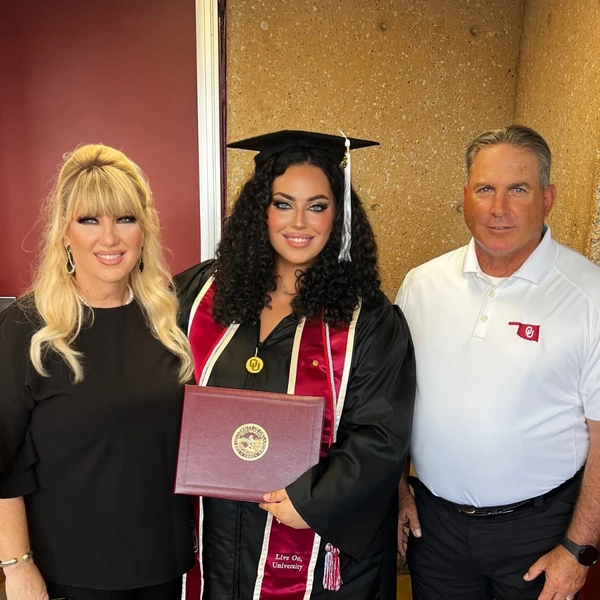
I am an Educator, Historian, Museologist, and community advocate dedicated to making education accessible, inclusive, and empowering for all students. I am currently pursuing a Master's Degree in Educational Administration, Curriculum, and Supervision and serve as a Special Education Teacher at Dove Science Academy. In this role, I support a diverse caseload of students with individualized education plans, while also sponsoring Student Council and the Multi-Cultural Student Union to foster leadership, representation, and belonging on campus.
Beyond the classroom, I am a Graduate Research Assistant of the Oklahoma Black Homesteader Project, Policy and Advocacy Intern with CAIR Oklahoma, winner of the William H. Maehl Jr. Fellowship, and member of the Phi Alpha Theta National Honor Society. I am also active in family entrepreneurship, helping launch and brand Mint To Be, a community-focused gourmet ice cream parlor in Wynnewood, Oklahoma.
My passion lies in creating spaces—whether in classrooms, archives, or communities—where people feel seen, valued, and inspired to pursue their potential. Through continued education and service, I hope to amplify voices that have been historically marginalized, while modeling resilience and creativity for the next generation.
Education
University of Oklahoma-Norman Campus
Master's degree programMajors:
- Educational Administration and Supervision
University of Oklahoma-Norman Campus
Master's degree programMajors:
- Museology/Museum Studies
University of Oklahoma-Norman Campus
Bachelor's degree programMajors:
- History
Norman High School
High SchoolWestchester Acad Intl Studies
High SchoolMiscellaneous
Desired degree level:
Doctoral degree program (PhD, MD, JD, etc.)
Graduate schools of interest:
Transfer schools of interest:
Majors of interest:
Career
Dream career field:
Higher Education
Dream career goals:
Graphic Designer/Owner
Self Owned LLC2016 – Present10 yearsGraduate Research Assistant
University of Oklahoma2024 – 20251 yearSpecial Education Teacher
Dove Science Academy2025 – Present1 yearSpecial Education Teacher
Epic Charter Schools2023 – 20241 yearSpecial Education Teacher
Norman High School2017 – 20236 years
Research
History
University of Oklahoma — Graduate Research Assistant2024 – 2025
Arts
Self Employed LLC
Graphic Art2016 – Present
Public services
Advocacy
CAIR Oklahoma — Policy and Advocacy Intern2024 – 2025
Future Interests
Advocacy
Volunteering
Philanthropy
Entrepreneurship
Reimagining Education Scholarship
If I could create a class that every student, from kindergarten through twelfth grade, was required to take, it would be called “Threads of Humanity: Empathy, Justice, and Community.” This course would weave together history, culture, and self-reflection to show students that their presence in the world matters and that they are part of a larger human story. It would ask them not only to learn facts, but to develop wisdom: to see how the past shapes the present, how narratives are constructed, and how each of us can choose to resist injustice and build belonging.
At its core, the class would begin by cultivating empathy. Students would engage with stories from across time and cultures—stories of oppression, resilience, invention, and hope—and they would reflect on their own identities in relation to these broader human experiences. They would examine how systems of power, whether in the form of segregation, forced assimilation, or economic inequality, have shaped society. But equally, they would discover the brilliance of communities who survived and resisted, preserving memory, language, and creativity against erasure.
The second thread of the course would be justice. Students would not only learn to identify inequities, but to practice imagining alternatives. Through dialogue, problem-solving projects, and civic engagement, they would explore how to confront bias, speak truth, and advocate for change—skills that transcend academic knowledge and prepare them for responsible citizenship.
The final thread would be community. This class would be a place where every voice is invited into the circle, where collaboration is practiced across lines of difference, and where students develop the courage to see themselves as essential contributors. It would not matter whether a student’s gift is storytelling, scientific reasoning, art, or leadership—each would be shown that their presence has weight, that their story belongs, and that their choices ripple outward.
As a special education teacher, I have seen how transformative it is when a student recognizes their own presence—when a young person, who may have been labeled or underestimated, discovers that their voice carries meaning. I believe that if every child in K–12 education experienced a class like this, we would graduate young people who are not only academically prepared but morally grounded. Its impact would be generational: students would grow into adults who understand complexity, value diversity, and act with empathy and courage in a fractured world.
In short, “Threads of Humanity” would teach not just information, but formation. It would remind each student that they are a vital thread in a vast human tapestry, capable of carrying forward memory, justice, and hope.