user profile avatar

Patrice Crosby

1x

Finalist

Bio

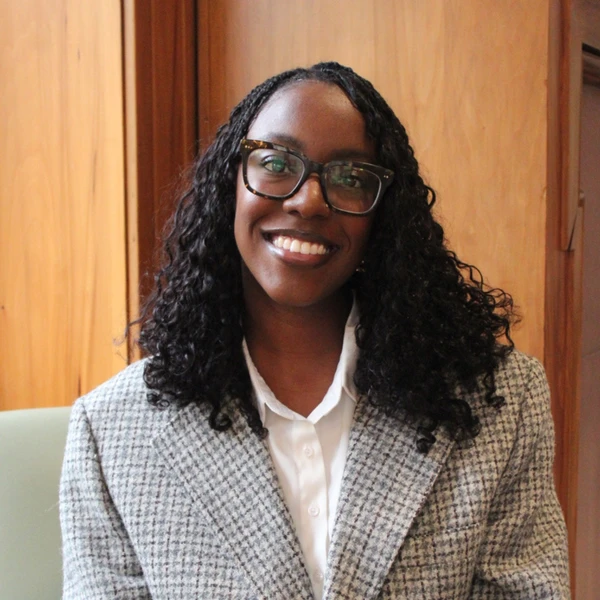
Patrice Crosby is a third-year Ph.D. student in Microbiology at Cornell University whose research integrates chemistry, fiber science, and microbiology to develop sustainable, microbially derived materials. She began her journey in Fashion Merchandising at FIT with the goal of creating her own fashion brand, a passion that continues to inspire her mission: developing innovative ways to process, utilize, and dispose of materials responsibly. Patrice earned her B.S. in Chemistry at The Ohio State University, gaining extensive research experience in materials science, and her M.S. in Fiber Science at Cornell, where she focused on biobased, biodegradable, and non-toxic composites. Before pursuing her doctorate, she worked at a San Francisco biotech startup using microbes to engineer materials for the textile industry, an experience that solidified her commitment to microbiology as a tool for sustainable innovation. At Cornell, Patrice has also mentored undergraduates for the past three years and is committed to building inclusive academic communities in STEM. She is excited to continue merging her expertise in science and design to advance sustainable solutions in the materials field. She is planning to launch a business in biotech in the upcoming years as she completes her PhD.

Education

Cornell University

Doctoral degree program (PhD, MD, JD, etc.)
2023 - 2027
  • Majors:
    • Materials Engineering
    • Microbiological Sciences and Immunology
    • Biological/Biosystems Engineering

Miscellaneous

  • Desired degree level:

  • Graduate schools of interest:

  • Transfer schools of interest:

  • Majors of interest:

    • Environmental Design
    • Materials Engineering
  • Not planning to go to medical school
  • Career

    • Dream career field:

      Apparel & Fashion

    • Dream career goals:

      Design, Engineering, Entrepreneurship

    • Research Associate

      Bolt Threads
      2022 – 20231 year

    Research

    • Biological/Biosystems Engineering

      Cornell University — Graduate Researcher
      2024 – Present

    Public services

    • Volunteering

      Graduate Student Mentoring Undergraduates — Student Mentor
      2021 – 2025

    Future Interests

    Entrepreneurship

    Michele L. Durant Scholarship
    For some reason, growing up, it felt like the world longed to see us kids create a better future for this world, as if we held the keys in our hands. I took this charge quite literally when I decided to switch my college major from fashion to chemistry to make fashion fabrics more sustainable and less harmful to the environment. I saw how wasteful the fashion industry was firsthand during freshman year in college, going to a top fashion school and working for a high-fashion brand in New York City. Textile waste currently makes up 10% of the global carbon emissions and is a leading cause of waste in the world. Further, I am from the Akron, OH area: the home of polymers, where toxic chemical spills superfluously flow into our fresh water and agricultural systems. So, this environmental issue hit close to home. With the help of my mentor, I would begin a scientific career of redesigning textile materials from the molecular level. However, I would have to undergo a personal evolution to become a woman who could recreate the way materials are made. The process of becoming a scientist and engineer would be rigorous, filled with classes in calculus, physics, organic chemistry, physical chemistry, and biology. Throughout this process, I would develop a tenacious vision for myself and learn to believe in myself as a scholar, scientist, and future leader for environmental justice. Environmental justice requires that we provide a safe and equitable living environment for everyone on earth and for the generations to come. I believe that we as humans are to be stewards of this earth, and as stewards, we must rethink the way we consume, utilize, and dispose of the materials we create. The production of plastics and synthetic textiles is a major contributor to climate change. We see the devastating effects of climate change on communities around the world, many of which do not often have a seat at the table when production and manufacturing decisions are being made. For my master’s, I would push the frontiers of sustainable material development by innovating fully biobased, non-toxic fibers. I decided in graduate school that I wanted to start a company to take biobased material innovations from the lab-scale to large-scale manufacturing. After obtaining my master’s, I would get industry experience in the biotechnology industry in the San Francisco Bay Area, before returning to Cornell to complete my PhD in Microbiology, with the hope of engineering microorganisms to create biobased alternatives to textiles. Now, as I complete my PhD program, I am actively working toward launching a company to drive material innovation and sustainable textile manufacturing. I am working to build an interdisciplinary team to help address this global problem between the University of California, Berkeley, and Cornell University campuses. This scholarship would give me the financial support to focus on my scholarship and entrepreneurial endeavors without needing to obtain a second job this summer. My dream is to develop a scalable processing system that could completely revolutionize the way materials are made by making bio-based alternatives to harmful, synthetic textiles that are cost-effective. I can imagine future generations living in freedom, experiencing this earth the way it was intended: enjoying nature and enjoying food grown on their soil, without the fear of chemical leaching into their ecological systems from the toxic waste. I also imagine a world where we can all feel good about the clothes we wear, knowing they were developed with our world in mind. That is how I hope to make an impact on my community and this world.
    Learner Tutoring Innovators of Color in STEM Scholarship
    As a fashion student starting college in New York City at the Fashion Institute of Technology, I could never have imagined myself earning a PhD in microbiology from Cornell University. To be honest, in secondary school I did not like science. It wasn’t until I was introduced to the world of textile engineering in college that my interest in STEM blossomed. While working at Ralph Lauren on 5th Avenue, one of the busiest shopping areas in the world, I noticed how wasteful fashion trends could negatively impact society, specifically our environment. My mentor recommended textile engineering: a scientific career that would allow me to redesign these materials from the molecular level. However, I would have to undergo a personal evolution to become a woman who could recreate the way materials are made. The process of becoming a scientist and engineer would be rigorous, filled with classes in calculus, physics, organic chemistry, physical chemistry and biology. I would fail many classes due to a combination of complex constraints such as low income/lack of access to educational resources, my non-traditional learning style and underlying systemic oppression/discrimination at my undergraduate institution. During this time, I developed a tenacious vision for myself and believe in my capacity to become this a scholar, a scientist and future leader in this field. In critical moments throughout my undergraduate education, I would cross paths with mentors who were professors, scientists, academic advisors that overwhelmingly affirmed my capacity to learn science at a high-level and apply this understanding to complex, interdisciplinary scientific problems, despite my failures in the classroom. With courage and determination, I would persevere through the rest of my undergraduate studies with a strong belief in myself, graduating with a Bachelor of Arts in chemistry with a 2.7 GPA and go on to earn my master’s at Cornell University in fiber science, merging my two interests: fashion and chemistry. In graduate school, I would push the frontiers of sustainable material development by innovating “green” (biobased, nontoxic and biodegradable materials) and publishing a review to serve as a tool guide for future researchers. I would then work at a biotechnology company in San Francisco Bay area for a year to get industry experience, before returning to academia to gain skills in microbiology and bioengineering, so I could innovate a solution that could eventually replace petroleum-based plastics. Today, I am working to finish up my PhD in microbiology before preparing to launch my career. Mentorship has been vital to my success as an underrepresented student with a non-traditional learning style. Currently, I strive to mentor students who struggle to see themselves as future scientists. As a graduate student, I support emerging scientists and engineers at my university by helping them overcome systemic barriers and mental roadblocks to success. I also assist with reviewing graduate school and fellowship applications, offering both practical guidance and encouragement as they pursue advanced education. These students have consistently inspired me with their tenacity, diligence and dedication, despite their circumstances. I aspire to continue this innovative work on a broader scale for my career by working toward social change through environmental justice, designing and engineer sustainable materials to replace existing petroleum-based polymers, and education reform, fostering academic success and equitable opportunities at the local and national level. By designing innovative curricula and implementing evidence-based learning techniques, I aim to enhance academic performance, particularly for underrepresented minorities (communities underserved by an education system historically shaped without their needs in mind). The Learner Tutoring Innovators of Color in STEM scholarship would provide funding for me to continue this work in academia and beyond.
    Andrea Worden Scholarship for Tenacity and Timeless Grace
    Nervously looking down at my watch to make sure I wouldn’t be late, I plowed my way to an open seat on a crowded subway car, sweating through my designer Ralph Lauren uniform and clutching my worn, pleather tote bag from H&M: holding this dichotomy of a low-income student forging through an industrious world. As an aspiring fashion designer starting her first year of college at the Fashion Institute of Technology, I cherished the opportunity to help open the new Polo Ralph Lauren Flagship Store on Fifth Avenue in New York City. However, I would soon come to learn that my fashion dreams would surpass what I originally envisioned. New York City taught me that kindness may not always serve you, but it always serves others. As a gentle-hearted 17-year-old girl from the Midwest, I quickly learned that I was an easy target for my 20 and 30-something colleagues who, raised in grind and grit of New York, would take my sales as their own commission. In a moment of frustration, I remember a conversation I had with an older, wiser man who encouraged me to maintain my kind, gentle spirit which was a rare treasure in this world. I noticed the beauty of kindness when colleagues would send their most complicated and disgruntled clients to me and the clients would leave feeling a greater sense of belonging and pride in the brand because of their experience shopping with me. These moments served as a reminder that compassion, though not always awarded, was an invaluable quality worth cultivating. I stored up these words in my heart as I contemplated an incongruency between this career in fashion and my personal values: fashion, though alluring, prioritized fleeting trends and overconsumption over civic duty and environmental justice contributing to a growing waste problem. As I started to realize fashion and retail would not be a suitable career path for me, I had a mentor suggest that I consider textile engineering: a scientific career of redesigning textiles from the molecular level. However, I would have to undergo a personal evolution to become a woman who could recreate the way materials are made. Math and science were never subjects that I particularly enjoyed, and although I was placed in gifted classrooms throughout grade school, exhibiting a high IQ (capacity to learn) the subjects, I did not learn easily in the classroom or score well on standardized tests. Yet, I would embark on this journey, transitioning from a career in fashion to a career in chemistry. The process of becoming a scientist and engineer would be rigorous filled with classes in calculus, physics, organic chemistry, physical chemistry and biology. I would fail many classes due to a combination of complex constraints: 1) I had a non-traditional learning style 2) The university undervalued teaching leading to failure rates of up to 50% of the class 3) I experienced discrimination by teaching assistants and advisors who refused to help support me. Being a low-income student that worked jobs throughout school to help pay for my living expenses and support her family, I was unable to afford $90/hr private tutor rate and my academic standing suffered. At one point, I was placed on academic probation. During this time, I would have to develop a tenacious vision for myself and believe in my capacity to become this a scholar, a scientist and future leader in this field. After failing some courses, I remember accepting this research opportunity at Columbia University to work in an electrical engineering lab. In the first week, they handed me a book on quantum mechanics and semiconductors. I remember the deep feeling of overwhelm and “what did I get myself into”. However, that summer I found myself learning quantum mechanics with ease, applying physical equations to my research in the lab. This taught me that I have a very high capacity to learn science and excel in research settings. When I questioned if I should dare apply to graduate school of my mentors at the time, a professor of chemistry at Columbia, encouraged me: you are an innovative, non-traditional student from a creative background that approaches the problem from a nuanced lens, academia needs you. With courage and determination, I would apply for graduate school, against the advisement of my Ohio State advisors who noted that I would never get into any graduate school due to my low GPA. I would persevere through the rest of my studies with a strong belief in myself, graduating with a Bachelor of Arts in chemistry with a 2.7 GPA and go on to earn my master’s at Cornell University in the field of fiber science, merging my two interests’ fashion and chemistry. Here, I developed a new fiber using only biobased, non-toxic and biodegradable materials! After earning my master’s, I would go to work at a biotechnology company in the San Francisco Bay Area, making vegan leather materials out of mushrooms (so cool!). At this point, I knew I wanted to start my own start-up company to push sustainable materials into market, but I was missing one final piece of the puzzle: a PhD in bioengineering. I would return to Cornell to work on my PhD in microbiology, where I am currently a 3rd year student. Here at Cornell, outside of research and classwork, I spend much of my time mentoring and encouraging students, especially those from low-income or minority who are also considering careers in research, to recognize their full potential. Many students are like me, and it is difficult to reconcile perceived academic weaknesses and glaring socioeconomic pressures while cultivating their dreams for the future. With compassion, I encourage students with the lessons from my life: your journey may not be linear, or you may be pursuing a career path in a field that doesn’t exist yet, but continue to forge your own path and your passion, tenacity and desire to change the world for the better will surely light the way. Never give up!