user profile avatar

Parsa Sarviha

1x

Finalist

General information

Hobbies & Interests

  • Aviation
  • Baking
  • Business And Entrepreneurship
  • Chess
  • Community Service And Volunteering
  • Finance
  • Exercise And Fitness
  • Writing
  • Volunteering
  • Travel And Tourism
  • Psychology
  • Photography and Photo Editing
  • Foreign Languages
  • Swimming

Reading

  • Travel
  • Business
  • Academic
  • Leadership
  • Social Issues
  • History

I read books multiple times a month.

Bio

I am a 22 year old based in McLean, Virginia, driven by a simple belief that the most meaningful things in life live just on the other side of what scares you. I earned Dean's List honors and the Presidential Scholar distinction two consecutive semesters at Northern Virginia Community College before transferring to George Mason University to complete my degrees in Finance and Business Administration. I achieved this while simultaneously building my family's business from nothing into something worth being proud of, handling finances, marketing, and operations alongside people twice my age who expected real results. Someone who was afraid of heights choosing aviation is not a contradiction. It is a decision. I made that decision, stepped into the cockpit, and realized the fear had no place up there. I am now pursuing my Private Pilot Certificate with a long-term goal of a career in corporate aviation, where my business background, bilingual skills in English and Persian, and genuine passion for connecting with people across cultures become an asset at 35,000 feet. I believe in earning everything I have and giving back to those who come after me. The opportunity I seek today is exactly the kind I intend to create for someone else tomorrow.

Education

George Mason University

Trade School

2026 – 2026

Majors:
  • Air Transportation
Minors:
  • Air Transportation

George Mason University

Bachelor's degree program

2024 – 2026

Majors:
  • Business Administration, Management and Operations
  • Finance and Financial Management Services

Northern Virginia Community College

Associate's degree program

2021 – 2024

Majors:
  • Business Administration, Management and Operations

James Madison High School

High School

2017 – 2021

Miscellaneous

Desired degree level:
Trade School
Majors of interest:
Air Transportation
Desired degree modality:
In-Person
Medical school interest:
No

Career

  • Student Services Associate

    Education · Northern Virginia Community College - Counseling Center

    Jan 2022 – Jan 2023

  • Director of Financial Services

    Financial Services · Gandoum Bakery

    Jan 2023 – Present

Miscellaneous

Dream career field:
Airlines/Aviation
Dream career goals:
Corporate aviation pilot
Work experience:
6 years
Has nursing license:
No

Future Interests

  • Volunteering
  • Philanthropy
  • Entrepreneurship
Adrin Ohaekwe Memorial Scholarship
Chess taught me something that most people spend their entire lives trying to figure out. Every piece on the board exists for one purpose. Not to accumulate points, not to capture as many opponents as possible, not even to survive. Every piece exists to protect the king. The pawns, the bishops, the knights, the rooks, every move, every sacrifice, every strategy ultimately answers one question. Is the king safe? Because if the king falls, everything falls. It does not matter how many pieces you have left. The game is over. I think about that principle constantly, not just at the chessboard but in everything I do. The king, in my life, is my soul. The core of who I am. My values, my integrity, my genuine sense of purpose. Everything else, every decision I make, every opportunity I pursue, every sacrifice I accept, is a move designed to protect that. Because I have watched what happens when people lose sight of that. When they chase money without meaning, or status without substance, or success without soul. The pieces start falling one by one. The career, the relationships, the sense of self. Not all at once, but slowly, the way a chess position collapses when you have been ignoring the real threat for too long. My career goal is to become a corporate pilot. Not because it was the most obvious path from where I started, but because it is the one that protects the king. Aviation combines everything that genuinely matters to me, freedom, leadership, precision, connection, and a life spent moving toward something rather than sitting still. I graduated with degrees in Finance and Business Administration and watched the predictable path stretch out in front of me. Chess taught me to look further ahead than the obvious next move. I looked further and chose aviation instead. The second thing chess taught me is that you fight until the very last second. A position that looks lost can still be saved with the right move. I have seen it at the board and I have lived it in real life. I built a family business from nothing at 18 while maintaining Presidential Scholar honors in college. I navigated financial barriers that would have stopped most people from even starting flight training. I lost both of my grandmothers within two months of each other and found a way to keep moving. Every one of those situations felt like a losing position at some point. Chess taught me that a losing position is not the same thing as a lost game. Those two lessons, protect the king and never resign, are not strategies I apply occasionally. They are the foundation of every significant decision I have made and every goal I am working toward. Therefore, corporate aviation is the next move. And I intend to make it count.
TOMORROW X TOGETHER (TXT) MOA Scholarship
1. I found TXT this year. I came across Beautiful Strangers and something about it made me stop scrolling and actually watch. I was not expecting to connect with it the way I did, but that is how it started. I have been exploring their music more ever since and the more I listen the more I want to keep going. 2. I think the most important characteristic of a MOA is genuine connection. Not just knowing the lyrics or streaming the numbers, but actually feeling what the music is saying and letting it mean something to you personally. The fans who connect with TXT on that level are the ones who make the community feel real. 3. My bias is Taehyun. Every time I watch a performance or a music video I find myself paying attention to him. His lines hit differently and there is a quality to the way he delivers them that stands out from the rest of the group. Something about his presence just draws you in. 4. My ult bias outside of TXT is Justin Bieber. I grew up listening to him and the way he connected with people across the world regardless of language or background reminds me of what TXT does. That kind of universal reach through music is rare and I respect it deeply. 5. My favorite song is Beautiful Strangers. It was the first one I heard and it still hits the same way every time. There is something about the feeling of it, the way it builds, that stays with you long after it ends. 6. I have not had the chance to see TXT live yet. That is genuinely something I want to experience at some point. 7. What draws me most to TXT is their approach to visual storytelling. They make real music videos, not just recorded lyrics with a camera pointed at the group. Every visual element, whether it is nature, rain, city streets, or the expressions on their faces, connects directly to what the song is saying. It makes the music easier to imagine, easier to feel, and easier to remember. That is a form of art that most artists do not take seriously enough. TXT does. 8. I am currently funding my education through a combination of personal savings, aviation-specific loans, and active scholarship applications. I am pursuing flight training toward a Private Pilot Certificate as my next step in building a career in corporate aviation. 9. This scholarship would directly close a financial gap that is very real for me right now. Flight training is expensive and every dollar of support I receive goes toward reducing the time between where I am today and where I am going. It would not just help financially. It would give me the momentum to keep moving without slowing down. 10. TXT has influenced me by making me feel less alone in the experience of navigating a world that does not always make sense. Their themes of finding yourself, pushing through confusion, and refusing to give up on who you are resonate with my own life in ways I did not expect when I first found their music. Sometimes you stumble across something and realize it was saying exactly what you needed to hear. 11. I plan to use my education to build a career in corporate aviation and eventually create scholarship and mentorship opportunities for aspiring pilots who face the same financial barriers I am navigating today. The opportunity I am seeking right now is exactly the kind I intend to create for someone else tomorrow. TXT talks about building something meaningful and leaving the world better than you found it. That is exactly what I intend to do.
Calvin C. Donelson Memorial Scholarship
Some people can point to one moment that changed everything. One person who said the right thing at the right time. One experience made the path suddenly clear. My inspiration does not work that way. It never has. I came to aviation through a series of moments that built on each other quietly until the decision became undeniable. A fear of heights I carried since childhood after falling from significant distances more than once. A family business I helped build from nothing, starting at 18, managing finances, handling operations, and holding my own alongside people twice my age who expected real results. Two degrees in Finance and Business Administration that pointed toward a predictable future I kept looking away from. And then last summer, losing both of my grandmothers within two months of each other, oceans away, unable to say goodbye to either of them. That last one changed something permanently. Life stopped feeling like something with unlimited runway. It started feeling like something that demands to be lived deliberately toward the things that actually matter. And when I looked honestly at what mattered to me, aviation had everything. The freedom of movement. The prestige of being trusted with something that demands your absolute best. The leadership of being the one in command when it counts most. The privilege of seeing the world not as a tourist but as someone whose profession takes them there. No other path had all of that together. The trade I am passionate about is aviation. Not because it was easy or obvious, but because it is the most honest one. Flying is a skilled trade in the truest sense of the word. It cannot be faked, automated, or learned halfway. Every hour in the cockpit is earned through discipline, focus, and a commitment to doing things right because the alternative is not acceptable. Calvin had a rare ability. If he could envision it he could build it. I understand that ability is not a talent but a choice. The willingness to hold an image of something that does not yet exist and work toward it anyway, through doubt, through setbacks, through every reason the world gives you to stop. I held the image of myself in a cockpit long before I ever sat in one. Through the fear, through the financial pressure, through the uncertainty of choosing a path most people in my community had never taken. I held it because some things you simply cannot let go of, no matter how hard you try. I am planning to enroll at Aviation Adventures in Northern Virginia to pursue my Private Pilot Certificate under their FAA Part 141 program. My long-term goal is a career in corporate aviation where everything I have built, every skill, every experience, every lesson, comes together in the cockpit and carries forward into something worth being proud of. Calvin turned passion into purpose and talent into legacy. That is not a story about carpentry or barbering. That is a story about what happens when a person refuses to build anything less than their best. I intend to live that story in the sky.
Bright Lights Scholarship
Growing up Persian in America means learning early that most rooms were not originally built with you in mind. You enter anyway, earn your place, and make sure the room looks different by the time you leave. That is the philosophy I have carried into everything I have done, and it is the philosophy driving me toward a career in corporate aviation. My plans are specific because vague dreams do not get you anywhere. I am pursuing my Private Pilot Certificate, followed by my Instrument Rating, Commercial Certificate, and Flight Instructor Certificate, which allows me to build the flight hours needed for professional aviation while earning income and giving back simultaneously. From there, corporate aviation. A career where my bilingual skills in English and Persian, my degrees in Finance and Business Administration, and my ability to build genuine connections across cultures become real assets in the cockpit rather than things separate from it. I came to this country as a young person with a different language, a different culture, and a family still finding their footing in a system none of us fully understood yet. My parents were educated in another country, and while they gave me everything they possibly could, navigating the American college system was something I had to figure out largely on my own. No family connections in academia. No one who had been through it before to show me the way. I earned Dean's List honors and the Presidential Scholar distinction twice at Northern Virginia Community College before transferring to George Mason University to complete my degrees, and I did it while simultaneously helping run my family's business to keep things financially afloat. That combination of circumstances shaped everything about how I approach obstacles. Not with the assumption that someone will clear the path, but with the understanding that you figure it out, you keep moving, and when you make it through, you hold the door open for the next person. The financial barrier to flight training is real, and it is significant. Training costs tens of thousands of dollars, and for someone from a low-income household without generational wealth or family connections in the industry, accessible funding is extremely limited. I am piecing together personal savings, aviation-specific loans, and scholarship applications just to get started. Every dollar of support I receive goes directly toward closing the distance between where I am today and where I am going. But beyond my own journey, there is something larger at stake. Persian Americans are genuinely underrepresented in aviation. Not just in numbers but in visibility. There is almost no one in a corporate cockpit who looks like me, who grew up between the two worlds I grew up between, who carries the cultural background I carry. That absence is not because the talent does not exist. It is because the path has never felt accessible to people from my community. Therefore, this scholarship would not just help me get there faster. It would become part of a story I intend to tell for the rest of my career. Lastly, the most powerful thing I can offer the next generation is not advice or encouragement. It is proof. Proof that someone who came from where I came from, who grew up between two worlds, who was never supposed to end up in a cockpit, chose the sky anyway and made it there. That proof does not exist yet in aviation for someone with my background. I have spent my entire life building things that did not exist before I got there. The cockpit is next.
Craig Huffman Memorial Scholarship
I was afraid of heights for most of my life. Not in a vague, general way. I had fallen from significant distances more than once growing up, enough times to give that fear a very specific and legitimate reason to exist. Most people who fall that way learn to stay closer to the ground. I chose to fly instead. That decision did not happen overnight. It happened after years of building something real, carrying weight that most people my age were not yet carrying. I graduated with degrees in Finance and Business Administration, and from the outside, the path forward looked obvious. A career in finance, a steady climb, a predictable future. Instead, I found myself drawn to aviation in a way I could not explain away. The first time I sat in a cockpit during a discovery flight, something settled in me that I had not expected. The focus required, the precision, the weight of responsibility sitting quietly in your hands. I understood in that moment that this was not a passing interest. What draws me to aviation is not just the flying. It is the kind of person aviation demands you become. I think about that often, especially when I read about leaders like Craig Huffman, whose legacy reflects exactly the qualities that the best pilots carry beyond the cockpit. Skill alone does not make someone a chief pilot. Leadership does. The ability to mentor others, to earn trust through consistency and character, and to navigate difficult situations with composure and diplomacy. Those are the qualities I have been building my entire life, long before I ever thought about a pilot certificate. At 18, I was managing finances, vendor relationships, and daily operations at my family's business alongside people twice my age who expected real results. I learned quickly that authority without genuine respect means nothing. You earn the room by showing up and delivering on what you say you will do. I founded a soccer club at Northern Virginia Community College, not because I needed a leadership title, but because I saw an opportunity to bring people together and took it. I mentored incoming students who needed someone to show them the way. I brought two close friends along on my discovery flights, shared my research, my excitement, and my reasoning, and today both of them are seriously considering pursuing aviation themselves. That is not something I planned. It happened because when something genuinely changes you, the people around you feel it. I am planning to enroll at Aviation Adventures in Northern Virginia to pursue my Private Pilot Certificate under their FAA Part 141 program, with a long-term goal of building a career in corporate aviation where my business background and my passion for genuine human connection become assets in the cockpit rather than things separate from it. I want to be the kind of pilot who leads a crew the way Craig Huffman led his. Not by demanding respect but by earning it, every single day, one decision at a time. Craig Huffman spent his career proving that the best leaders are not the ones who never struggled. They are the ones who refused to let the struggle define the limit. I fell more than once growing up. I crossed an ocean. I built a business before I could legally rent a car. And I chose to fly anyway. The limit was never the problem. Believing it existed was the only thing ever standing in the way. I intend to spend my career making sure the next generation never has to figure that out alone.
Aviation Excellence Scholarship
There is a problem in aviation that does not get talked about enough, and it is not the one most people expect to hear. Everyone knows about the pilot shortage. Everyone has read about the financial burden of flight training, the aging workforce, and the demand that is coming as retirements accelerate. But the issue that frustrates me most sits underneath all of that, quietly creating friction that the industry keeps trying to address from the wrong angle. The gap in understanding between the people making strategic decisions in aviation and the people executing those decisions in the cockpit is real, it is growing, and both sides feel the weight of it in ways that rarely get addressed openly. I came to aviation from a business and finance background. I spent years helping run a family business, managing cash flow, overseeing operations, building financial systems, and making decisions that affected real people and real outcomes. When I started seriously pursuing my pilot certificate and researching the aviation industry, something struck me almost immediately. Aviation is unique in that it asks two very different worlds to function as one. The business side carries enormous pressure around costs, scheduling, fleet decisions, and profitability. The operational side carries enormous responsibility around safety, execution, and the realities of what actually happens at 35,000 feet. Both sides are doing their best. But without enough people who genuinely understand both perspectives, decisions made with good intentions on one end can create real challenges on the other. The impact shows up in ways that are easy to miss until you know what to look for. Scheduling decisions that make financial sense on paper can create fatigue situations that pilots have to navigate carefully. Cost considerations that are completely reasonable from a business standpoint sometimes conflict with operational preferences on the ground. Route and fleet decisions get made with limited input from the people who will execute them daily. None of this comes from bad intentions. It comes from two groups of highly skilled professionals who speak slightly different languages and do not always have enough people in the middle to translate between them. The encouraging part is that this is actually a solvable problem. It does not require new technology or massive investment. It requires a generation of aviation professionals who genuinely understand both sides of the equation. Pilots who understand business. Managers who understand operations. People who have sat in both worlds and can build bridges between them naturally. That is exactly what I am building myself into. I am planning to enroll at Aviation Adventures in Northern Virginia to pursue my Private Pilot Certificate under their FAA Part 141 program. My long term goal is a career in corporate aviation, specifically because the corporate environment sits closest to the intersection of business decision making and professional flying. My Finance and Business Administration degrees are not separate from my aviation goals. They are the foundation of them. I want to be the kind of pilot who understands the pressures on both sides, can communicate across departments with genuine credibility, and can help close the gap between the cockpit and the corner office in a way that makes the whole operation stronger. In the end, I believe the aviation industry does not just need more pilots. It needs people who have lived in both worlds and refuse to let them stay separate. I have spent my entire life learning how to build bridges between places that do not always understand each other. Aviation is the next one I intend to build.
Our Destiny Our Future Scholarship
Impact is not something I plan to make one day. It is something I have been building toward my entire life, one decision at a time. I grew up between two cultures, two languages, and two very different understandings of what it means to belong somewhere. Coming to the United States as a young person with everything unfamiliar around me taught me something early that most people spend years trying to learn. That the most powerful thing you can offer another human being is the feeling that someone genuinely sees them and is willing to show up for them. That belief has shaped every significant decision I have made since. During my time at Northern Virginia Community College, I founded a soccer club not because I needed another activity on a resume but because I looked around and saw students from completely different backgrounds passing each other every day without ever connecting. Soccer gave them a reason to stop. I also participated in a student mentorship program that worked alongside school counselors to support incoming students who were navigating a new academic environment without much guidance. Those students reminded me of myself. Showing up for them was not something I had to think about. It was instinct. My path toward corporate aviation is a direct extension of that same drive. People often assume aviation is about the aircraft or the destination. For me it has always been about the connection. A corporate pilot sits at the center of someone's professional world for hours at a time, earning trust through competence, composure, and genuine human presence. As someone fluent in English and Persian with lived experience across two very different cultures, I intend to use that position to make every person who boards that aircraft feel genuinely valued and understood regardless of where they come from or what language they think in. Beyond the cockpit, I have a longer vision. Flight training is one of the most financially inaccessible pursuits that exists. I am living that reality right now, piecing together savings, loans, and scholarship applications just to get started. I know exactly what it feels like to have the drive and the capability but not the resources. That is why one of my clearest long term goals is to create scholarship and mentorship opportunities for aspiring pilots who face the same barriers I am facing today. The opportunity I am seeking right now is exactly the kind I intend to build for someone else tomorrow. Compassion without action is just a feeling. I have never been someone who stops at the feeling. I show up, I build something real, and I bring others along with me. That is how I have always operated, since the very first day I had to figure out a world that was completely unfamiliar to me. It is how I intend to make my impact, not through one defining moment but through a lifetime of consistent, genuine choices to close the distance between myself and the people who need someone in their corner. That is my plan. And I have already started.
Harry & Mary Sheaffer Scholarship
I have spent most of my life living between two worlds. I grew up in one country and came of age in another, carrying a language, a culture, and a way of seeing the world that most people around me did not share. That experience, as difficult as it was, gave me something no classroom ever could. The ability to step into someone else's perspective before forming my own. Being fluent in both English and Persian is not simply a communication advantage. Language is the way a culture expresses its values, its humor, its pain, and its hopes. When I speak with someone in their native language, something shifts. The conversation becomes more honest, more personal, and more human. I have used that ability throughout my life, from building relationships with customers and vendors at my family's business to connecting with students from entirely different backgrounds during my years in college. That skill does not just open doors. It changes what happens inside the room. My path toward corporate aviation is where those skills become most powerful. A corporate pilot does not simply operate an aircraft. He enters the most intimate professional space his clients occupy, sits at the front of their world for hours at a time, and earns their trust through competence, composure, and genuine human connection. As someone fluent in two languages with deep roots in two very different cultures, I am uniquely positioned to bridge those worlds in ways most professionals in this field cannot. Every flight becomes an opportunity to humanize the space between cultures for the people sitting behind me. Beyond my career, I actively create the conditions for empathy rather than waiting for it to happen naturally. I brought friends along on discovery flights and watched their understanding of what was possible shift in real time. I founded a soccer club at Northern Virginia Community College to bring students from different backgrounds together around something universal. I participated in student mentorship programs supporting incoming students who had no one else showing them the way. These were not grand gestures. They were small, consistent choices to close the distance between people. Empathy is not built through declarations. It is built by individuals who choose every single day to show up in someone else's world with genuine curiosity and respect. I have been making that choice since I was twelve years old. I intend to keep making it, from the ground and from 35,000 feet.
Brattican Scholarship
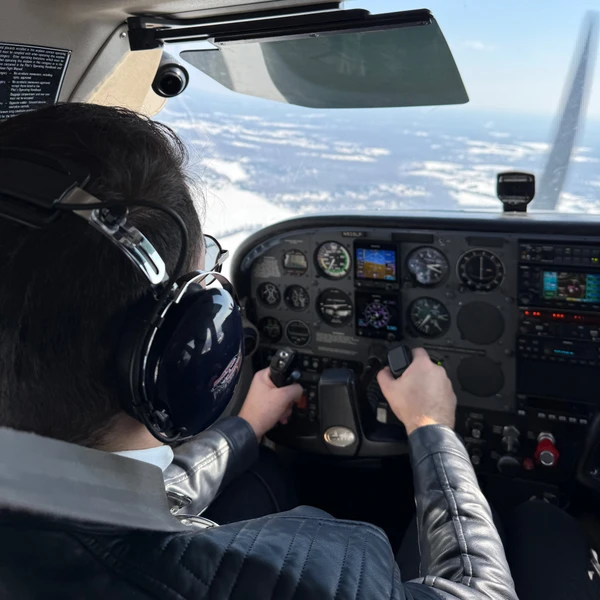
There is a version of success that looks good on paper. A degree, a title, a desk, a salary. I earned the degrees. I understood that path well. And I chose a different one. I chose aviation. Not because it was easier or more prestigious, but because it is real. Flying is not something you can fake, delegate, or outsource. Every landing is either good or it is not. Every decision in the cockpit either serves the people on board or it does not. There is no hiding behind a spreadsheet or a meeting when you are responsible for lives at 35,000 feet. That kind of accountability, the kind that skilled tradespeople understand better than anyone, is exactly what drew me to aviation as my career. I moved to the United States at 12 years old with nothing figured out. A new country, a new language, a new school, a new everything. By 18 I was helping my family build their business from scratch while earning Presidential Scholar honors in college. Nobody handed me a roadmap. I figured it out the same way every tradesperson figures out their craft, by showing up every single day, doing the work, and refusing to quit until it was done right. That is not an office skill. That is a trade skill. Aviation demands exactly that. The FAA written knowledge test is not multiple choice trivia. It is weather systems, navigation, aerodynamics, aircraft systems, and emergency procedures that you must understand deeply enough to act on in seconds. The flight training is hundreds of hours of hands on work in actual aircraft, building muscle memory, developing judgment under pressure, and earning instincts that only come from doing something over and over until your body knows it before your brain does. There is no shortcut. There is no algorithm that flies the plane. It is you, your training, your hands, and your decision. I have already started. My FAA Class 1 Medical Certificate is done. My Student Pilot Certificate application is submitted. I have completed discovery flights and selected Aviation Adventures in Northern Virginia as my flight school where I train under their FAA Part 141 program flying three times per week. The photo attached to this application was taken during one of those flights, the first time I sat in a cockpit and understood in my body, not just my mind, that this was exactly where I was supposed to be. The trades are built by people who are not afraid to do the hard work, who take pride in real skill, and who show up every single day committed to getting better. I am one of those people. Aviation is my trade. And I intend to master it.
Slater Miller Memorial Scholarship
I did not choose aviation because it was the obvious path. After earning Presidential Scholar honors two consecutive semesters while simultaneously helping my family build their business from nothing, I graduated with degrees in Finance and Business Administration and faced a real choice. I could take the safe route that my degrees pointed toward. Instead I chose aviation, not because it was easy or affordable, but because it was the first thing I chose entirely for myself. A hidden capacity I had not yet tested. A version of myself I had always suspected existed but never given a chance to show up. The trades represent something that most traditional career paths cannot offer. The first time I truly imagined myself as a pilot, it was not a dramatic scene. It was quiet. Methodical. Running through checklists carefully, everything in order, and smiling before a beautiful takeoff. That image captured everything I was looking for, precision, discipline, real responsibility, and the calm confidence of someone who has prepared for everything and is ready for anything. Someone who was afraid of heights choosing aviation is not a contradiction. It is a decision. I made that decision, stepped into the cockpit, and realized the fear had no place up there. The social causes closest to my heart are the ones I have lived personally. The first is access. Flight training costs between sixty and eighty thousand dollars from start to finish. I know this because I am living it right now, piecing together personal savings, loans, and scholarship applications just to get started. There are thousands of people with the passion, the intelligence, and the discipline to become excellent pilots who never get the chance simply because the financial barrier is too high. I want to be part of changing that, not just by succeeding myself but by creating real opportunities for the next person who stands where I am standing today. The opportunity I am seeking right now is exactly the kind I intend to create for someone else tomorrow. The second is immigrant families finding their way in a new country. I moved to the United States at 12 years old, navigating a new country, a new language, a new education system, and a new culture largely on my own, while simultaneously watching my family build their life here from scratch. Many families like mine never fully access the opportunities available to them simply because nobody showed them the door. Last summer, I lost both of my grandmothers within two months of each other while my parents had to travel back during a period of regional conflict, leaving me behind to hold things together, working, supporting my younger brother, and continuing to move forward. That experience taught me something permanent. Life is shorter than we think, the people around us need more from us than we often give, and showing up for others is not optional. It is who you are. Slater Miller stood up for what was right and spent his life helping others. Those are not values I admire from a distance. They are values I have been living since I was twelve years old. This scholarship would not just fund a lesson. It would invest in someone who understands exactly what it means to be supported, and who will spend their entire career making sure others feel that same support.
Ethel Hayes Destigmatization of Mental Health Scholarship
I would start by stating the fact that some lessons arrive quietly. Others arrive all at once, twice, within two months of each other, from halfway around the world. Last summer I lost both of my grandmothers. My father's mother and my mother's mother, gone within two months of each other. I was in Virginia. They were in Iran. I never got to say goodbye to either of them. My grandmothers were not distant figures in my life. They were my childhood. Growing up in Iran, my earliest and most vivid memories are built around them, the smell of their cooking, the trips to the park and the market, the way they made ordinary afternoons feel like something worth remembering. When my family came to the United States, that chapter closed. I never saw them again. Not once. And then they were gone. When I found out, I did not know what was real and what was not. I was deeply hurt, but trying to hold onto my faith at the same time. In the weeks that followed, I lost my focus and my motivation in ways I had never experienced before. It took time to find myself again. But what made it harder was watching what it did to the people around me. My mother was devastated in a way I had never seen. She says she always feels something empty inside herself now, no one left to call mom anymore. That emptiness does not go away. She works, she cooks, she talks to friends, but something is missing and I see it every single day. My father lost his mother at the same time. It felt like being shot twice in the same place. Watching both of my parents carry that kind of grief while trying to be strong for them, there is a limit to what you can do as a young son. I learned that limit the hard way. What made it even more overwhelming was the timing. This was happening during an active conflict in the region. My parents had to travel back to Iran to be with family during this period, and I stayed behind in the United States with my younger brother, waiting and worrying every single day about whether my parents would make it back safely. I was grieving my grandmothers, frightened for my parents, trying to stay calm enough to be there for my brother, and at the same time continuing to work to cover the family's expenses and keep things running while my parents were away. There are moments in life that age you beyond your years. That was one of them. And somehow you just keep going, not because it is easy, but because the people you love are counting on you. What stayed with me most was a thought that arrived a few months later, quietly but permanently. Life is not as long as we tell ourselves it is. My grandmother from my mother's side was only 68. In the blink of an eye she was gone. All I have left are memories, photographs, and faith that she is somewhere peaceful. But what about us? What about the ones still here? Especially my mother, where every second of her life reminds her of her own mother. That question changed something in me. I stopped treating time like it was unlimited. I started pushing the people I love to spend more time together, not as a slogan but as a real commitment. Go see the world. Visit the people who matter. Do not wait for the right moment because the right moment is now. That shift in how I see life directly shaped the path I am on today. I chose aviation not just for a career but because it represents everything that realization taught me, movement, connection, the world made smaller and more reachable, and a life spent going toward things rather than waiting for them to come to me. Every flight is a reminder that this world is worth exploring and the people in it are worth reaching. I carry my grandmothers with me in that belief. And I intend to honor them by living the kind of full, intentional, connected life they never got enough time to finish.
Joe Gilroy "Plan Your Work, Work Your Plan" Scholarship
My name is Parsa Sarviha and I am 22 years old. I am not someone who stumbled into a dream. I am someone who built toward one deliberately, the same way Joe Gilroy showed up every single day with that index card in his pocket. I live by a simple principle. Every meaningful goal deserves an equally serious plan. This is mine. My goal is to build a career in corporate aviation, starting with earning my Private Pilot Certificate and working steadily through my Instrument Rating, Commercial Certificate, and Flight Instructor Certificate before entering professional aviation at the highest level. The plan is already in motion. I have completed my FAA Class 1 Medical Certificate, the highest medical standard in aviation. I have submitted my Student Pilot Certificate application through IACRA. I have completed discovery flights and selected Aviation Adventures in Northern Virginia as my flight school, where I will train under their FAA Part 141 program, flying three times per week on an accelerated schedule. I have researched and selected my ground school for the FAA written knowledge test. Every step has been deliberate and documented. The timeline is specific. Private Pilot Certificate within three to four months. Instrument Rating and Commercial Certificate within the following year. Flight Instructor Certificate shortly after, which allows me to begin building the flight hours needed for professional aviation while generating income simultaneously. Total time from zero to a professionally qualified pilot, approximately two to three years. The budget is realistic and fully thought through. Flight training runs approximately fifteen to eighteen thousand dollars for the Private Pilot Certificate alone, with total costs estimated between sixty and eighty thousand dollars over the full training period. I have planned my funding through a combination of personal savings, aviation-specific financing, and active scholarship pursuit. I chose a pay as you go flight school specifically to manage costs incrementally rather than taking on one overwhelming financial burden upfront. Every financial decision in this journey has been made with the same discipline I applied to managing finances at my family's business for the past several years. But beyond the numbers, this journey is about something larger than a certificate or a career. I want to become the kind of pilot who serves, who carries passengers safely, mentors the next generation of aviators who cannot afford to start, and gives back to the communities that supported him along the way. Servant leadership is not a concept I learned in a classroom. It is something I watched my family practice every single day, and it is something I carry with me into everything I do. I have also considered the angles most people overlook. I hold a Class 1 medical rather than the minimum required because I am not planning for just a PPL, I am planning for a career. I chose a school that trains under FAA Part 141, which has a lower hour minimum and built-in accountability through stage checks. I have applied for multiple scholarships simultaneously rather than depending on any single source. Joe Gilroy kept a to-do list in his shirt pocket every single day. I keep mine in a spreadsheet, a logbook, and a scholarship portal. The tools are different, but the philosophy is identical. Plan your work. Work your plan. I am genuinely grateful for the opportunity to honor that philosophy, and I hope that in some small way, supporting someone who refuses to quit on their plan is exactly the kind of legacy Joe's family had in mind.
Parsa Sarviha Student Profile | Bold.org