Hobbies and interests
Anatomy
Boxing
Soccer
Weightlifting
Health Sciences
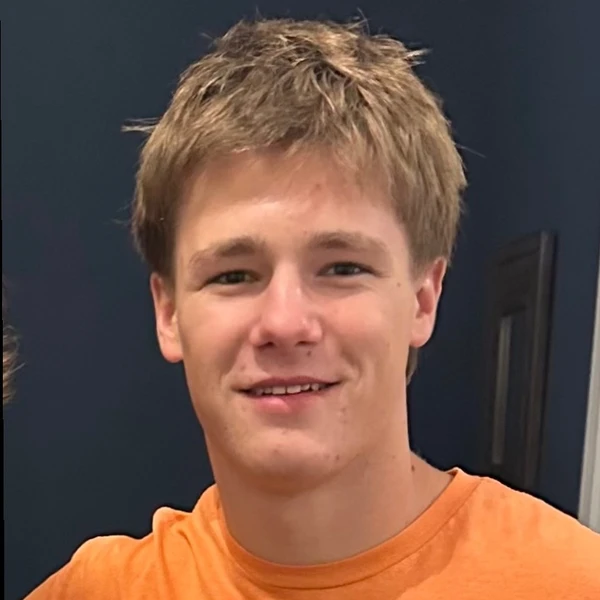
Parker Treadaway
1x
Finalist
Parker Treadaway
1x
FinalistBio
My name is Parker Treadaway, I am a devoted christ-follower, I am a part of my church's Student Leadership Team, I am the captain of the back-to-back boys district champion varsity soccer team, and I was the lead bus-boy at the Butchers Cellar steakhouse.
Education
Midway High School
High SchoolMiscellaneous
Desired degree level:
Doctoral degree program (PhD, MD, JD, etc.)
Majors of interest:
- Sports, Kinesiology, and Physical Education/Fitness
- Health Professions and Related Clinical Sciences, Other
Career
Dream career field:
- Health, Wellness, and Fitness
Dream career goals:
Sports
Soccer
Varsity2023 – Present3 years
Awards
- "Super-Centex" Waco tribuine-herald and all-district awards for AAAAAA soccer
Public services
Volunteering
Harris Creek Baptist church — 3rd-4th grade Leader2023 – PresentVolunteering
Harris Creek Baptist church — Student Leader2024 – Present
Future Interests
Volunteering
Philanthropy
Entrepreneurship
#Nfinite8 Legacy Scholarship
Responding to prompt #6:
I have loved and played soccer my entire life, but for nearly five years I played through a pain no one else could see or fully understand. I have pushed myself to my limit despite feeling like my own body was working against me.
I fell in love with training in seventh grade, during the COVID-19 shutdowns. With so much free time, I devoted myself to lifting and running, and by the time my first school soccer season arrived, I felt stronger than ever. But during a weight-room workout before our first game, I felt a sharp pain in my left knee. I brushed it off as another growing pain, something I had dealt with plenty of times before. But this pain didn’t fade. Instead, it slowly grew worse.
By tenth grade, it had become unbearable. Still, I pushed through the season, performed well enough on JV to earn a varsity spot, and ultimately became a starter, helping lead our team to our first district championship in eleven years. On the outside, it looked like everything was going right; inside, my knee felt like it was breaking down. By the end of that summer, I couldn’t run, lift, or play at all.
I finally went to the doctor and the X-rays showed that the cartilage under my kneecap had essentially shredded, and the exposed bone had begun grinding into my femur. The only solution was a very difficult surgery. Hearing that devastated me. The season I had been preparing for since I was a freshman was suddenly slipping away.
The doctors told me that if I could endure the pain, I might still be able to play. That was all I needed to hear. I committed myself to doing everything possible to survive the season. Every practice and every game that year brought pain that felt impossible to explain to anyone else. But I refused to give in. I was named captain, and despite being predicted to finish last in the district, our team won back-to-back district championships. I earned all-district honors and a Super Centex award. It was the most successful, and the most painful, season of my life.
After the season, I underwent surgery and spent seven long months in recovery. I was told after this period that I would be able to play my senior season.
I was named Capitan again and had very high expectations and goals for myself, and my coach told me that this year they were relying on my impact to go far in playoffs. But I sit here writing this in May of 2026, after my soccer season, looking back having missed the entire season. My knee never fully recovered and I still feel excruciating pain every single day, now a full year post-operation.
Despite all this, God has shown me already that he has a plan for my pain, through physical therapy I learned what it felt like to be guided, supported, and pushed by someone who understood pain like mine. That experience inspired me to pursue a career as a physical therapist so I can help young athletes facing what I faced, both physically and mentally.
After reading DJ's obituary I learned that we share a lot in common. A love for soccer, fitness, and our families. I will be studying at Texas A&M in the fall, and after reading about DJ's story I am truly saddened that I will be missing what could have been a friendship, because with as much as we had in common I am sure our paths would have crossed.
Shanique Gravely Scholarship
As I considered my high school years, I have experienced several different challenges that have made me who I am today. I believe the greatest challenge has been walking closely with a friend through grief and pain from tragic loss.
My best friend's father passed away unexpectedly just before our freshman year in high school. I remember I was fishing that Saturday morning when my mom called and told me to meet her on the main road because she needed to talk to me. When I got to her car she told me that my best friend's dad had just unexpectedly died while he was on a run that morning. Being only 14, and not having experienced anything like this before, my mom let me choose whether or not to go with her to their house to be with him. My immediate reaction was it was the right thing to do to go be there with him. I arrived at a home flooded with grief. The air was heavy and I experienced a silence louder than words. I spent that entire day just being in the presence of my best friend and his family experiencing incredible grief and sorrow. The last few years have been filled with supporting my best friend through tears, anger, questioning, and grief, and this matured me far beyond my years.
From the day Mr. Martin died, my eyes have been opened to all of the things that average high schoolers don’t realize. Average school days are filled with painful reminders that someone is missing, and these are completely overlooked by the average student. For instance, the amount of times that the word 'dad' is used is overlooked by most. The way students can jokingly say, “I’m gonna die if I don’t get an “A” on this assignment” is completely harmless to someone who hasn’t experienced tragic loss. How teenagers can be annoyed when their parents want them home more, or want them to check in with them when they’re driving around with friends. After being close to such tragic unexpected loss and grief, I learned that harmless comments such as these can send someone into a cycle of grief that is unbearable. I learned to be more aware of what I say, and how my words impact those around me. I learned to look out and care for others when most teenagers are oblivious or too self-focused.
I myself have been fortunate to not have experienced grief like this in my own family, but having been there for my friend has given me a unique perspective. This has changed the way I view people. Oftentimes I can find it easy to be judgmental of others based on their actions and develop preconceived ideas of who they are, but after walking alongside someone going through such hardship I have become more mature in the way I perceive others. Everyone's story is different and everyone has been through tough times that make them act the way they do, and I have known this, but my experience with my friend has deeply changed the validity of this statement. This deliberate choice to have patience with others that you disagree with or that frustrate you has become something that I am very passionate about. With this I have gained new priorities in life moving forward, even looking to the future when I have kids of my own. I will remember these times and teach my children about the importance of being aware and having patience with others because we have a limited perspective when simply observing someone.
Dream BIG, Rise HIGHER Scholarship
Education has shaped my goals and given me a sense of direction in ways I never expected. For years, I assumed that the most important lessons in my life would come from textbooks, teachers, or classrooms. And while school has played a central role in my growth, the most defining education I have received came from a source I didn’t anticipate: the toughest, most painful years of my soccer career. The combination of academic learning and lived experience has pushed me toward a future I am now deeply passionate about, using my education to help others overcome the same challenges I once faced.
I first discovered my love for training in seventh grade during the COVID-19 shutdowns. With classes online and entire days suddenly unstructured, I turned to lifting and running as a way to find stability. What began as a way to stay active quickly became a form of personal growth. I learned how to set goals, study technique, track progress, and understand the science behind strength and conditioning. By the time my first school soccer season arrived, I walked onto the field feeling stronger, physically and mentally, than I ever had before.
That confidence vanished during a weight-room workout just before the season opener. A sharp pain shot through my left knee, unexpected and alarming. But like many young athletes, I dismissed it as growing pains. I had felt aches before; they always went away. This one didn’t. Over the months, and eventually years, the pain slowly escalated from uncomfortable to constant to debilitating.
By tenth grade, the pain dominated everything. Lifting became nearly impossible. Running felt like my knee was being crushed from the inside. But I had goals I wasn’t ready to give up. I pushed through the season, performed well on JV, earned a varsity spot, and eventually became a starter. That year, our team won its first district championship in eleven years. To everyone else, it looked like I was thriving. Only I knew how deeply I was struggling.
When the pain became unbearable, I finally saw a doctor. I expected a strained tendon or mild inflammation, something a few weeks of rest could fix. Instead, the X-rays showed that the cartilage under my kneecap had shredded, and the exposed bone was grinding directly into my femur. The long-term solution was surgery with a 6-8 month recovery. Hearing those words devastated me. The season I had been preparing for since freshman year was on the line.
But my doctor also said something that changed everything: if I could handle the pain, I might still be able to finish the season.
That possibility, however slim, became the direction I needed. I threw myself into balancing school, training, and managing pain. My education in those months stretched far beyond academics. I learned time management when class assignments collided with ice baths, physical therapy exercises, and team practices. I learned discipline by studying late at night after painful games that left me drained. I learned leadership by becoming captain, even when I felt far from strong.
Despite predictions that we would finish last in the district, our team won back-to-back district championships. I earned all-district honors and a Super Centex award. It was the most successful season of my life, but also the most painful.
After the final whistle of that season, the long-delayed surgery finally happened. What followed was seven months of physical therapy that taught me more about science, resilience, and human anatomy than I ever imagined. I learned how muscles respond to strain, how joints recover, how scar tissue forms, and how patience is often the hardest form of strength. My physical therapist guided me through every setback and every milestone. He understood my frustration, validated my fears, and pushed me when I doubted myself. His knowledge gave me hope; his support helped me heal.
Those months clarified something I hadn’t realized before: I wanted to dedicate my life to doing for others what he had done for me.
This realization didn’t come suddenly but grew over time as I watched myself progress from barely bending my knee to walking, jogging, and finally training again. With each small victory, I understood the real impact of the work physical therapists do, not just on the body, but on a person’s confidence, identity, and future. Through this experience, my education gained direction. I no longer saw school simply as something I had to complete; I saw it as a pathway toward a career where I could make a meaningful difference.
Now, as I prepare for college, I hope to pursue a degree in kinesiology and later earn a doctorate in physical therapy. My goal is to work with young athletes battling injuries, fear, and uncertainty, just as I once did. I want to help them rebuild not only their strength but also their belief in themselves. I want to be the person who listens, who understands, and who guides them through challenges that cannot be seen from the outside.
A scholarship would allow me to pursue this path without placing a heavy financial burden on my family. It would help transform the hardest chapter of my life into a career devoted to creating better futures for others. My education has shaped my goals, given me direction, and taught me that setbacks are not endings, they are beginnings. And with the support of a scholarship, I hope to use my education to turn my own pain into purpose.
Be A Vanessa Scholarship
I plan using my education to help athletes who, like me, have experience great pain and set-backs that have hurt physically and weighed heavily on them mentally.
The biggest adversity I have faced has been the years of severe knee pain and setbacks that nearly ended my soccer career. For almost five years, I played through a pain no one else could see or fully understand, pushing myself to my limit despite feeling like my own body was fighting against me. That experience taught me about endurance and resilience, but it also shaped the way I want to use my education to make a lasting difference in the lives of others.
My journey started in seventh grade, during the COVID-19 shutdowns, when I fell in love with training. With so much extra time, I devoted myself to lifting and running. But during a weight-room workout before my first school soccer season, I felt a sharp pain in my left knee. At first, I dismissed it as another growing pain. But over the next few years, that pain quietly intensified until it reached the point where I could barely lift or run.
By tenth grade, despite excruciating pain, I pushed through the season, earned a varsity spot, and helped lead my team to our first district championship in eleven years. To everyone else, it looked like I was thriving; internally, I was battling something I couldn’t explain. Eventually, the pain was so severe I couldn’t train at all. I finally went to the doctor expecting a minor issue, but the X-rays showed that the cartilage under my kneecap had shredded, and the exposed bone had begun grinding into my femur. The only real solution was surgery with a 6-8 month recovery.
Learning this devastated me. The season I had looked forward to for years was slipping away. But when the doctors said I might still be able to play if I could endure the pain, I made up my mind. I would not let adversity win.
I worked harder than ever and fought through every practice and every game. The pain was constant and sometimes overwhelming, but my determination was stronger. I was named captain, and our team, predicted to finish last, won back-to-back district championships. I earned all-district honors and a Super Centex award. After the season, I underwent surgery and spent seven long months in recovery before finally being cleared to play again.
This journey was my greatest personal adversity, but I didn’t overcome it alone. My family supported me through every setback, driving me to appointments, encouraging me when frustration took over, and believing in my goals even when I doubted myself. Their strength taught me how powerful support can be during difficult times.
Because of what I went through, I now know exactly how I want to use my education to make the world a better place. Physical therapy didn’t just help me recover physically; it helped me stay hopeful and motivated during one of the hardest periods of my life. I want to give that same support to young athletes who feel broken, discouraged, or defeated. I want to be someone who understands their pain, not just academically, but personally.
Pursuing a degree in physical therapy will allow me to transform my adversity into service. A scholarship would help make this education possible, allowing me to focus on becoming a professional who can guide others through challenges that feel impossible. My goal is not just to heal injuries, but to strengthen people physically, mentally, and emotionally. So they can keep moving forward, just as I did.
Nasser Seconi Scholarship Fund
The worst time in my soccer career has been the years of knee pain and setbacks I’ve endured throughout middle and high school. For nearly five years, I played through a pain no one else could see or fully understand, pushing myself to my limit despite feeling like my own body was working against me. Those years taught me more about endurance, humility, and resilience than any victory ever could.
I fell in love with resistance training in seventh grade, during the COVID-19 shutdowns. With so much free time, I devoted myself to weight-lifting and running, and by the time my first school soccer season arrived, I felt stronger than ever. But during a weight-room workout before our first game, I felt a sharp pain in my left knee. I brushed it off as another growing pain, something I had dealt with plenty of times before. But this pain didn’t fade. Instead, it slowly grew worse.
By tenth grade, it had become unbearable. I could no longer lift without excruciating pain. Still, I pushed through the season, performed well enough on JV to earn a varsity spot, and ultimately became a starter, helping lead our team to our first district championship in 11 years. On the outside, it looked like everything was going right; inside, my knee felt like it was breaking down. By the end of that summer, I couldn’t run, lift, or play at all.
I finally went to the doctor expecting a minor tendon issue. Instead, the X-rays showed that the cartilage under my kneecap had essentially shredded, and the exposed bone had begun grinding into my femur. The only long-term solution was surgery with a 6-8 month recovery. Hearing that devastated me. The season I had been preparing for since I was a freshman was suddenly slipping away.
The doctors told me that if I could endure the pain, I might still be able to play. That was all I needed to hear. I committed myself to doing everything possible to survive the season. Every practice and every game that year brought pain that felt impossible to explain to anyone else. But I refused to give in. I was named captain, and despite being predicted to finish last in the district, our team won back-to-back district championships. I earned all-district honors and a Super Cen-tex award. It was the most successful, and the most painful, season of my life.
After the season, I underwent surgery and spent seven long months in recovery. I was cleared to play just last week.
The pain I experienced brought me to the lowest point in my career, but the success I achieved by pushing through brought me to the highest. These experiences taught me that setbacks are not excuses to quit; they are opportunities to grow in ways others may never see. My injury shaped my mindset, my discipline, and my understanding of perseverance. And it also shaped my future.
Through physical therapy, I learned what it felt like to be guided, supported, and pushed by someone who understood pain like mine. That experience inspired me to pursue a career as a physical therapist so I can help young athletes facing what I faced, both physically and mentally.
A scholarship would allow me to pursue this goal without placing a financial burden on my family. It would open the door for me to turn the hardest chapter of my life into a career dedicated to helping others through theirs.