Hobbies and interests
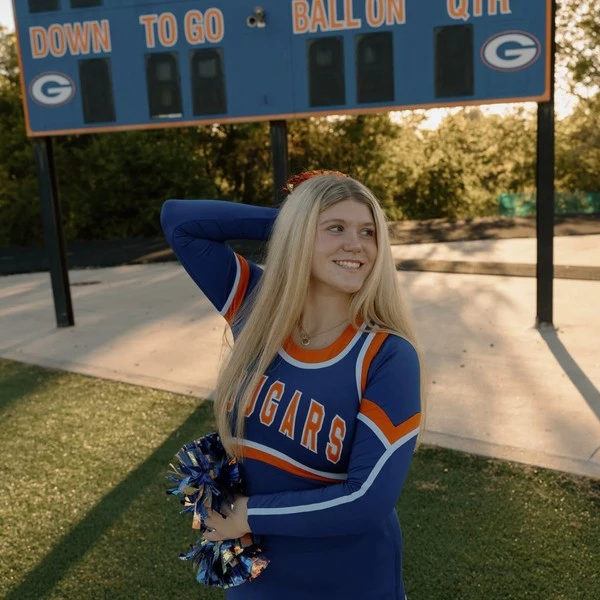
Cheerleading
Volleyball
Student Council or Student Government
Volunteering
Community Service And Volunteering
Education
Learning
Medicine
Pharmacy
Science
Sports
Reading
Romance
True Story
Novels
I read books multiple times per month
Paige Stone
1x
Finalist1x
Winner
Paige Stone
1x
Finalist1x
WinnerBio
Interested in furthering my education in pharmacy.
Education
Daniel J Gross Catholic High School
High SchoolMiscellaneous
Desired degree level:
Doctoral degree program (PhD, MD, JD, etc.)
Majors of interest:
- Pharmacy, Pharmaceutical Sciences, and Administration
- Biological and Physical Sciences
Career
Dream career field:
- Pharmaceuticals
Dream career goals:
My long-term career goal is to become a pharmacist. I want to work in healthcare, use science to help people, and make a positive difference in my patients’ lives.
Lifegaurd
City of Omaha Lifegaurd2024 – Present2 yearsCashier
Runza2022 – 20231 year
Sports
Volleyball
Junior Varsity2023 – 20241 year
Cheerleading
Varsity2023 – Present3 years
Public services
Volunteering
Bergan Mercy Hospital — Helping around the hospital with little jobs2024 – Present
Future Interests
Volunteering
Learner Mental Health Empowerment for Health Students Scholarship
Mental health is important to me because I think it is something that a lot of students deal with, even if they do not always talk about it. Being a student can be stressful for a lot of reasons. We have school, grades, college applications, jobs, family, friendships, and trying to figure out what we want to do with our lives. Sometimes it feels like there is pressure coming from everywhere at once.
As a senior, I definitely think about my future a lot. I want to go to college and become a pharmacist, so I know I have a lot of work ahead of me. Right now, I am taking a pharmacy technician certification course through UNMC, going to pharmacy camps, and volunteering at a hospital. I am excited about my future, but I also know that trying to reach a big goal can sometimes be stressful. There are times when I worry about whether I am doing enough or whether everything will work out the way I want it to.
I think one of the biggest things about mental health is that you cannot always tell when someone is struggling. Someone can be laughing with their friends, going to class, and getting their work done while still having a really hard time. That is why I think it is important to be kind to people and not assume that we know what someone else is going through.
In my own community, I try to support people by being someone they can talk to. If one of my friends is having a bad day, I try to listen instead of judging them or telling them that they should just get over it. Sometimes people just need someone to listen and let them know that they are not alone. I also try to check in on people if I notice that they seem different or more stressed than usual.
I think asking for help should not be embarrassing. There is nothing wrong with admitting that you are having a hard time. I would hope that if I were struggling, the people around me would be there for me, so I want to be that person for other people too.
Mental health is especially important to me because I know that college and my future career will bring new challenges. I want to be able to handle those challenges while also remembering to take care of myself and the people around me. Since I want to work in healthcare, I also want to remember that patients are people first. You never really know what someone is dealing with outside of what you see.
I believe mental health deserves just as much attention as physical health. Students should feel like they can talk about what they are going through without being judged. I may not be able to solve someone's problems, but I can listen, be supportive, and make sure they know that someone cares. To me, that is one of the easiest ways to make a difference.
RonranGlee Literary Scholarship
What We Can and Cannot Control
Selected paragraph — Epictetus, Enchiridion, Chapter 1:
“Some things are in our control and others not. Things in our control are opinion, pursuit, desire, aversion, and, in a word, whatever are our own actions. Things not in our control are body, property, reputation, command, and, in one word, whatever are not our own actions.”
When I first read this paragraph from Epictetus, I thought the meaning was pretty obvious. He is basically saying that there are things we can control and things we cannot control. But after reading it more than once, I realized he was talking about more than just control. I think he is saying that we need to understand what is actually our responsibility and what we need to let go of. We cannot control everything that happens to us, but we can control how we react to it. To me, the main point is that we should focus more on our own choices instead of constantly worrying about things we cannot change.
The first sentence, “Some things are in our control and others not,” is really simple, but I think that is what makes it stand out. Epictetus does not act like we can control everything if we just try hard enough. He understands that sometimes things happen that are completely out of our control. We cannot control what other people think about us, everything that happens in our lives, or what will happen in the future.
I think this is something that is easy to forget, especially as a student. There are so many things to worry about, like grades, college, money, jobs, friendships, and what other people think. Sometimes I find myself worrying so much about the outcome that I forget to focus on what I can actually do.
Epictetus says that our “opinion, pursuit, desire, aversion” and our own actions are things we control. This part stood out to me because these things all come from us. We can decide what goals we want to have. We can decide how much effort we put into something and how we treat other people. We cannot always control what happens after we make those choices, but we can control the choices themselves.
I can relate this to my goal of becoming a pharmacist. I know that getting through college and eventually becoming a pharmacist is going to take a lot of work. There will probably be classes that are difficult and times when I feel stressed or unsure of myself. I cannot control every challenge I will have. What I can control is whether I keep trying, ask for help when I need it, and continue learning.
This is one of the reasons I am interested in pharmacy. I want a career where I can use science to help people. I am currently taking a pharmacy technician certification course through UNMC, and I have also been able to attend pharmacy camps. These experiences have made me even more interested in pharmacy and have helped me realize that healthcare is something I really want to pursue.
Epictetus's idea also makes me think about working with patients. In healthcare, you cannot control everything that happens in a patient's life. Someone might have trouble getting to the pharmacy, paying for their medication, understanding their prescription, or remembering to take it. A pharmacist cannot solve every problem a patient has. However, they can control how they treat that patient.
A pharmacist can choose to listen instead of rushing someone. They can explain something again if a patient does not understand. They can be patient and respectful. They can also try to find solutions when something is not working. These things might seem small, but they could make a big difference to the person receiving care.
Another part of the paragraph that I thought was interesting was when Epictetus says that reputation is not something we control. I think that is especially true today. People care a lot about what other people think of them, and social media makes that even worse sometimes. It can be easy to worry about how other people see you or whether they are judging you.
Obviously, we should care about how we treat people and take responsibility when we do something wrong. But there is a difference between being responsible for our actions and trying to control everyone's opinion of us. We can be kind, honest, and hardworking, but we cannot make everyone like us. I think Epictetus is reminding us not to let other people's opinions control our lives.
This idea also connects to school and my future. As a senior in high school, college is something I think about a lot. I want to do well, get into college, and eventually become a pharmacist. I know I will have to work hard to reach those goals, but I also know that everything is not going to go exactly how I plan.
For example, I can study for a test, but I cannot completely guarantee what grade I will get. I can apply to colleges, but I cannot control every admissions decision. I can work toward becoming a pharmacist, but I cannot predict every challenge that will come along the way. Thinking about it this way makes my goals feel a little less overwhelming. Instead of worrying about every possible thing that could go wrong, I can focus on what I can do right now.
I also think this is why close reading is useful. If I had only read Epictetus's paragraph once, I probably would have just said, “He is saying to focus on what you can control.” That is true, but there is more to it than that. Reading it more carefully made me think about why he chose those examples and how his point actually applies to my life.
I think the paragraph is really about responsibility. Epictetus is not saying that we should stop caring when something bad happens. He is saying that we need to understand what is actually ours to deal with. We are responsible for our choices and actions, but we are not responsible for controlling everything around us.
That is a lesson I think I will use for a long time. There will always be things I cannot control, whether it is in college, my career, or just everyday life. Instead of letting those things stress me out, I want to focus on what I can actually do.
To me, the deeper meaning of Epictetus's paragraph is that our lives are not only about what happens to us. They are also about how we respond. We cannot control every situation, but we can control the effort we put in, how we treat people, and the decisions we make. That does not mean everything will always work out perfectly. It just means that when things do not go according to plan, we still have a choice about what we do next.
That is something I want to remember as I move from high school into college and eventually into pharmacy. I cannot control everything that will happen in my future, but I can control how hard I work toward it and what kind of person I want to be along the way.
Sabrina Carpenter Superfan Scholarship
I have been a fan of Sabrina Carpenter for a long time, and what I admire most about her is how much she has grown throughout her career. I remember her as Maya Hart on Girl Meets World, and it has been really cool watching her go from a Disney Channel actress to a successful singer and actress with a huge audience. Her career reminds me that you do not have to stay in one place or let people decide what you are capable of.
One thing I really admire about Sabrina is her confidence. She seems comfortable being herself, even when people have opinions about her. Her music can be funny and playful, but it can also be honest and relatable. Songs like “Espresso” and “Please Please Please” are fun to listen to, but I also like how her personality comes through in everything she does. She has created a career that feels like her own instead of trying to fit into one specific role.
Watching her career develop has also motivated me to think bigger about my own future. I am currently working toward becoming a pharmacist, and I know that getting there will take a lot of dedication and hard work. I am taking a pharmacy technician certification course, attending pharmacy summer camps, and volunteering at a hospital because I want to learn as much as I can before I start college. Sometimes having such a big goal can feel overwhelming, but seeing someone like Sabrina continue to work toward her goals reminds me that success does not happen all at once.
Sabrina Carpenter has impacted me by showing me the importance of being ambitious while still being yourself. She has taken opportunities, tried different things, and continued growing instead of being afraid of change. That is something I want to carry with me as I move into the next chapter of my life. I hope to build a career that I can be proud of and make a difference in people's lives, just as Sabrina has made a positive impact on so many of her fans. To me, being a fan is not just about enjoying her music or watching her performances. It is also about being inspired by her journey and believing that I can create my own.
Stewart Family Legacy Scholarship
Science and leadership both play a huge role in shaping our future. Science helps us find new ways to solve problems, improve healthcare, and make people’s lives better. Leadership is what brings those ideas to life by helping people work together, make good decisions, and create positive change. I believe we need both if we want to keep improving the world around us.
I’ve always been interested in science because I’ve wanted to work in healthcare for as long as I can remember. My goal is to become a pharmacist because I want to help people understand their medications and make sure they get the care they need. Right now, I’m taking a pharmacy technician certification course through the University of Nebraska Medical Center, and it has helped me learn more about medications. Patient safety, and how much responsibility comes with working in a pharmacy.
I also volunteer at Bergan Mercy Hospital on Saturdays. Being there has shown me what healthcare is really like. I’ve seen how important it is for everyone to work together and support one another. The people I look up to the most aren't just knowledgeable. They’re kind, patient, and willing to step up when someone needs help. To me, that's what real leadership looks like.
As science continues to grow, we’ll need leaders who use it to help others. New medicines and treatments can change lives, but they only make a difference when they’re used by people who truly care about their patients. That’s the kind of healthcare professional I hope to become someday.
Receiving this scholarship would help me continue working toward my goal of becoming a pharmacist. I know college will give me the education and experience I need to make a difference, I want to use my love of science and what I learn throughout my career to help others, improve patient care, and make a positive impact in my community.
Mad Genius Scholarship
The Boy Who Collected Impossible Ideas
Everyone in Grayville wore the same color.
The houses were gray. The sidewalks were gray. Even the dreams people talked about sounded gray.
There was only one rule:
Don't make a mess.
Ideas that seemed too strange were thrown away before they had a chance to exist.
At the edge of town sat an abandoned laboratory where people claimed a mad scientist once lived. Children dared each other to knock on the rusted door, but nobody ever went inside.
Except Milo.
Milo wasn't the smartest kid in school. He wasn't the fastest runner or the best artist either. What made him different was that he never stopped asking questions everyone else ignored.
Why can't umbrellas collect rainwater to water plants?
Why do sandwiches have to stay sandwiches?
What if mistakes are unfinished inventions?
Adults smiled politely and said, "That's... creative."
Which usually meant, "Please stop talking."
One rainy afternoon, Milo finally pushed open the laboratory door.
Dust floated through the air like tiny galaxies. Shelves overflowed with half-finished machines. A toaster had wings. A bicycle had six wheels. There was even a fish tank full of rubber ducks.
Nothing worked.
Or so it seemed.
On a workbench sat a notebook with one sentence written across the first page:
A Mad Genius never fears looking ridiculous.
Every other page was blank.
Confused, Milo picked up a broken screwdriver lying nearby.
"I guess I'll start," he whispered.
The first invention exploded into purple foam.
The second launched his backpack through a window.
The third somehow attracted every neighborhood squirrel.
Instead of giving up, Milo laughed.
Each disaster filled another page in the notebook.
Failure #1: Too much foam.
Failure #2: Backpack successfully launched. Aim needs work.
Failure #3: Squirrels surprisingly cooperative.
For weeks he returned after school.
He mixed pancake batter with chemistry experiments.
He built cardboard robots that danced but couldn't walk.
He invented shoes that squeaked different musical notes with every step.
None of it made sense.
None of it was practical.
But every failure taught him something unexpected.
One day he noticed that the dancing robot kept balancing itself whenever it nearly tipped over.
That tiny discovery inspired another idea.
And another.
And another.
Months later, Grayville experienced the biggest storm anyone could remember. Trees blocked roads. Power lines snapped. Floodwater filled the streets.
Everyone panicked.
Engineers couldn't reach town.
Electricians were hours away.
The same people who once laughed at impossible ideas suddenly had a very real problem.
Milo hurried back to the laboratory.
He didn't build one perfect invention.
He combined twenty imperfect ones.
The robot's balancing system helped stabilize damaged bridges.
The squeaky shoes became a warning system so rescue workers could hear one another in the dark.
The winged toaster's lightweight motor powered emergency fans.
Even the squirrel experiment turned out useful. The squirrels carried lightweight strings between broken buildings, helping rescue teams pull heavier ropes across dangerous gaps.
The town stared in disbelief.
"How did you think of all this?" the mayor asked.
Milo shrugged.
"I didn't."
"You didn't?"
"I just never threw my weird ideas away."
The mayor looked around at the bizarre collection of inventions.
None of them looked impressive alone.
Together, they solved problems no ordinary solution could.
From that day forward, Grayville changed.
Schools created "Failure Fridays," where students celebrated experiments that didn't work.
The abandoned laboratory became the Imagination Workshop.
People stopped asking, "Will this idea succeed?"
Instead they asked, "What could this idea become?"
Years later, visitors traveled from everywhere to see the town famous for impossible inventions.
They expected to meet a brilliant scientist wearing a white lab coat with wild hair.
Instead they found an older Milo sweeping the workshop floor.
"So," one visitor asked, "what does a Mad Genius look like?"
Milo smiled.
"A Mad Genius looks like anyone brave enough to be curious before they're confident."
He pointed toward a room filled with children building wonderfully strange creations.
One was designing edible crayons.
Another was making a backpack that unfolded into a hammock.
A third insisted he could invent shoes that helped plants grow.
Some ideas would fail.
Most would.
But a few would change someone's world.
Because being a Mad Genius isn't about having the highest IQ, the fanciest degree, or the perfect plan.
It's about refusing to believe that "normal" is the limit of what's possible.
Sometimes genius wears a lab coat.
Sometimes it wears paint-covered overalls.
Sometimes it carries a guitar, a camera, or a sketchbook.
And sometimes it looks like a kid standing in front of a pile of failed inventions, smiling anyway, because somewhere inside the chaos is the next impossible idea waiting to be discovered.
Michael Rudometkin Memorial Scholarship
I have learned that selflessness is not about doing something extraordinary once. It is about consistently choosing to help others, even in small ways that often go unnoticed. Whether I am volunteering, learning about healthcare, or simply offering my time to someone who needs it, I try to live by the idea that every act of kindness matters. Those experiences have shaped who I am and inspired my goal of becoming a pharmacist.
One of the most meaningful ways I serve my community is by volunteering at Bergan Mercy Hospital on Saturdays. Although I am not providing medical treatment, I have learned that helping people goes far beyond medicine. Many of the patients and families I see are already having a hard day. Sometimes all I can do is smile, help them find where they need to go, or take a minute to listen if they need someone. Those moments may seem small, but they've shown me that being kind can make a real difference.
My desire to help others has also motivated me to begin preparing for my future career while I am still in high school. I am currently earning my Pharmacy Technician Certification through the University of Nebraska Medical Center and have attended pharmacy summer programs to continue learning about healthcare. These opportunities require commitment and perseverance, but they remind me why I chose this path. Every lesson brings me closer to becoming a pharmacist who will educate patients, answer their questions, and help them feel confident about their health.
One lesson I have learned through volunteering and studying healthcare is that every person deserves to be treated with dignity and respect. People may be facing challenges that others cannot see, whether they are dealing with illness, financial hardship, or personal struggles. Because of this, I try to approach every interaction with patience and understanding instead of making assumptions. I believe that helping someone feel heard is one of the greatest gifts you can give.
The path toward my career has not always been easy. I know I will be responsible for paying for my college education, which means I must work hard to earn scholarships and continue creating opportunities for myself. Rather than allowing financial challenges to discourage me, they have motivated me to stay focused on my goals and continue serving my community whenever I can.
Michael Rudometkin believed that life is about more than grades. It is about relationships, purpose, and making the world a better place. That message reflects the way I hope to live my own life. As I continue my education and eventually become a pharmacist, I want to be known not only for my knowledge but also for my willingness to help others with kindness, compassion, and respect. If I can make even one person's day a little easier, then I know I am making a difference.
Kayla Nicole Monk Memorial Scholarship
Ever since I was young, I have been curious about how science improves people's lives. As I learned more about the human body and medications, I realized that pharmacy combines everything I enjoy: science, problem-solving, and helping others. That is why I chose to pursue a career in pharmacy. I want to use my education to make healthcare more accessible and to help patients understand and manage their medications with confidence.
To begin working toward that goal, I am earning my Pharmacy Technician Certification through the University of Nebraska Medical Center while still in high school. This program has introduced me to medication safety, pharmacy law, and the responsibility that comes with caring for patients. It has also shown me that being successful in healthcare requires more than scientific knowledge. It requires patience, empathy, attention to detail, and a genuine desire to serve others.
Outside the classroom, I volunteer at Bergan Mercy Hospital on Saturdays because I wanted to experience the healthcare environment firsthand. Volunteering has allowed me to see how every member of a healthcare team contributes to patient care. Even small acts of kindness, such as greeting patients with a smile or helping someone find where they need to go, can make a stressful situation a little easier. Those experiences have reinforced my decision to become a pharmacist and have taught me that compassion is just as important as knowledge.
I have also attended pharmacy summer programs to continue exploring my future career. Each opportunity has strengthened my confidence that I am choosing the right path. I enjoy learning about new medications, advances in healthcare, and ways pharmacists can educate patients so they can take an active role in improving their health. My long term goal is to become a pharmacist who not only dispenses medications but also builds trusting relationships with patients and helps improve health outcomes in my community.
As I prepare for college, I know I will be responsible for paying for my education. Receiving this scholarship would ease some of the financial burden of tuition, books, and other educational expenses. More importantly, it would allow me to continue pursuing opportunities that will prepare me for a successful career in healthcare without losing sight of my commitment to serving others.
Kayla Nicole Monk dreamed of building something meaningful that would leave a positive impact on others. I hope to honor that same spirit through my own career. By combining science with compassion, I want to help patients live healthier lives and inspire others to pursue careers that make a difference. This scholarship would not only support my education but also bring me one step closer to making a lasting impact in the communities I serve.
Nadia Ansari Design Award
One problem in healthcare that I refuse to accept as inevitable is that many patients leave the pharmacy without fully understanding the medications they have been prescribed. Too often, people are overwhelmed by medical terminology, afraid to ask questions, or unsure how to take their medications correctly. This can lead to missed doses, medication errors, preventable hospital visits, and poorer health outcomes. I believe no patient should have to struggle simply because healthcare information was too confusing or inaccessible.
My interest in solving this problem began as I explored the field of pharmacy. I am currently earning my Pharmacy Technician Certification through the University of Nebraska Medical Center while also attending pharmacy summer programs and volunteering at Bergan Mercy Hospital. These experiences have shown me that healthcare is not only about treating illness but also about helping people feel informed, respected, and confident in their care. Even small interactions can make a difference when someone is anxious or uncertain.
As I have learned more about medications and patient safety, I have become interested in improving the way patients receive information. I hope to help create pharmacy tools that explain medications in a way that is easier to understand. Instead of relying on long sheets of fine print that many people never read, I imagine using simple visuals, QR codes that connect patients to short instructional videos, multilingual resources, and digital reminders that explain how and when medications should be taken. These tools could make it easier for patients of all ages and backgrounds to manage their health with confidence.
To better understand this issue, I have intentionally sought opportunities to learn from healthcare professionals. My pharmacy technician education has introduced me to the importance of medication safety, while volunteering in a hospital has allowed me to see how stressful healthcare can be for patients and their families. I have learned that the best healthcare providers are not only knowledgeable but also compassionate communicators who take the time to ensure patients feel heard and understood.
In the future, I plan to become a pharmacist who combines patient care with innovation. Whether I contribute to developing better educational technology, improving pharmacy workflows, or advocating for clearer communication, I want my work to reduce confusion and improve patient outcomes. Every advancement in healthcare begins with someone asking why a problem continues to exist and believing it can be solved.
Nadia Ansari's story reminds us that personal experiences can inspire meaningful innovation. While my journey is different, it has taught me the same lesson: progress begins when we refuse to accept that patients must continue facing preventable challenges. I want to be part of creating a future where every patient leaves the pharmacy not only with the right medication but also with the knowledge and confidence to use it safely.
Kalia D. Davis Memorial Scholarship
Throughout high school, I have worked hard to become someone who is dependable, determined, and always willing to learn. Whether I'm in the classroom, volunteering in my community, competing in athletics, or preparing for my future career, I believe success comes from showing up every day and giving my best effort. My goal is to become a pharmacist, and every opportunity I have taken has helped me move one step closer to making that dream a reality.
One of the biggest steps I've taken toward my future is earning my Pharmacy Technician Certification through the University of Nebraska Medical Center. The program has challenged me to learn about medications, patient safety, and the responsibilities that come with working in healthcare. It has shown me that being a healthcare professional is about much more than science. It requires patience, compassion, attention to detail, and a commitment to serving others.
Outside of school, I volunteer at Bergan Mercy Hospital on Saturdays. Volunteering has allowed me to see firsthand how important kindness is in a healthcare setting. Every patient has a different story, and even the smallest act of respect or encouragement can make someone's day a little easier. These experiences have strengthened my desire to become a pharmacist who not only helps patients with their medications but also treats every person with dignity and compassion.
I have also challenged myself outside the classroom by participating in pharmacy summer programs and staying involved in athletics. Being part of a team has taught me discipline, accountability, and the importance of encouraging those around me. I've learned that success is never achieved alone. It comes from working hard, supporting others, and continuing to improve even when things become difficult.
As I prepare to begin college, I know that paying for my education will be my responsibility. While I am committed to working hard and pursuing every opportunity available to me, scholarships are essential in helping make higher education more affordable. Receiving this scholarship would reduce the financial stress of tuition and educational expenses, allowing me to focus on my studies, continue volunteering, and gain additional experience that will prepare me for a career in pharmacy.
The legacy of Kalia D. Davis is one of excellence, determination, kindness, and service. Her story is a reminder that a person's impact is measured not only by achievements but also by the way they encourage and uplift others. I strive to live by those same values every day. I hope to build a career where I can improve the lives of others through healthcare while continuing to serve my community with compassion and integrity. Receiving this scholarship would not only help me achieve my educational goals but would also inspire me to continue living a life defined by hard work, service, and purpose.
Matthew E. Minor Memorial Scholarship
When people ask me what I want to do in the future, my answer has always been the same: I want to become a pharmacist. I've always been interested in science and healthcare, but what really confirmed my decision was getting involved in my community. Right now, I'm earning my Pharmacy Technician Certification through the University of Nebraska Medical Center, attending pharmacy summer programs, and volunteering at Bergan Mercy Hospital on Saturdays. Every experience has taught me something new about helping people and treating everyone with respect.
Volunteering at the hospital has shown me that kindness can make a big difference. Patients are often nervous, stressed, or having one of the hardest days of their lives. Even though I'm not the one providing medical care, I can still make someone feel welcome by smiling, listening, or simply being patient. Those small interactions have helped me realize that people remember how you treat them just as much as what you do for them.
I believe that preventing bullying starts with the way we treat people every day. At school, I try to include people instead of leaving them out. If I notice someone sitting alone or feeling left out during group work or activities, I'll talk to them or invite them to join us. Nobody deserves to feel invisible. Sometimes the smallest act of kindness can completely change someone's day.
The same idea applies online. It's easy for people to hide behind a screen and say things they would never say in person. I think everyone has a responsibility to make social media a better place. I don't share hurtful posts, spread rumors, or join in when people are making fun of someone. If I see cyberbullying, I report it or encourage the person being targeted to tell a trusted adult instead of dealing with it alone. I think it's important to remind people that there is a real person on the other side of every screen.
As I get ready for college, I know I'll be paying for my education myself. While I'm willing to work hard, scholarships will help make my dream of becoming a pharmacist more affordable. Receiving this scholarship would allow me to spend more time focusing on school, gaining healthcare experience, and continuing to serve my community.
I hope to build a career where I can make people feel cared for, respected, and supported. Whether I'm helping a patient understand their medication or simply showing kindness to someone who needs it, I want to have a positive impact. I believe creating a safer community starts with everyday choices, and I will continue doing my part both in person and online.
Science and Advocacy Scholarship
Science has always fascinated me because it helps explain how the world works and provides solutions that improve people’s lives. My passion for science grew from my interest in healthcare and medicine. As I learned more about how medications are developed, how the human body functions, and how scientific discoveries improve patient outcomes, I realized that I wanted to build a career where I could use science to help others. This passion has inspired my goal of becoming a pharmacist.
I have pursued my interest in science both inside and outside the classroom. Currently, I am enrolled in a University of Nebraska Medical Center (UNMC) Pharmacy Technician Certification course, where I am learning about pharmacy law, medication safety, healthcare regulations, and the responsibilities involved in serving patients. This experience has given me a deeper understanding of how science directly impacts patient care and public health. In addition, I have attended pharmacy focused summer camps, including a pharmacy camp in Toledo, Kansas and Missouri. These opportunities have allowed me to explore pharmaceutical science, interact with healthcare professionals, and learn more about the role pharmacists play in improving lives.
My commitment to science extends beyond my own education. Every Saturday, I volunteer at Bergan Mercy Hospital, where I gain firsthand exposure to the healthcare environment. While volunteering, I observe how science, research, and evidence based decision making influence patient care. I often share what I learn with friends, classmates, and family members, helping them better understand healthcare careers and the importance of scientific knowledge in everyday life. By discussing my experiences and encouraging others to explore science related opportunities, I hope to inspire curiosity and interest in STEM fields.
I believe that advocating for science is more important now than ever. Scientific literacy helps people make informed decisions about their health, their communities, and the challenges facing society. When science is misunderstood or ignored, misinformation can spread and lead to harmful consequences. Whether it involves public health, new medical treatments, or technological advancements, society depends on people who trust evidence and understand the value of scientific research.
As I continue my education, I hope to become not only a healthcare professional but also a strong advocate for science. I want to help bridge the gap between scientific knowledge and the public by educating patients, promoting evidence based healthcare, and encouraging future generations to pursue careers in STEM. Through my studies, volunteer work, and future career as a pharmacist, I plan to use science to improve lives while helping others appreciate its importance. Science has given me a sense of purpose, and I am committed to sharing that passion with others for years to come.
Joe Gilroy "Plan Your Work, Work Your Plan" Scholarship
My goal is to become a pharmacist and make a positive impact on people’s lives through healthcare. I have always been interested in science and medicine, and pharmacy is a career that combines both while allowing me to help patients understand and use medications safely. Becoming a pharmacist requires years of education, dedication, and planning, but I have already begun taking important steps toward achieving this goal.
Currently, I am enrolled in a University of Nebraska Medical Center (UNMC) Pharmacy Technician Certification course. This program is helping me build a strong foundation in pharmacy practices, medication safety, and patient care. By earning my pharmacy technician certification, I will gain valuable knowledge and experience that will prepare me for future pharmacy education and employment opportunities.
In addition to my coursework, I volunteer at CHI Health Bergan Mercy Hospital on Saturdays. Volunteering in a hospital setting allows me to observe healthcare professionals, interact with patients and staff, and gain a better understanding of how hospitals operate. This experience has confirmed my desire to work in healthcare and has shown me the importance of teamwork, communication, and compassionate patient care. It has also helped me better understand the role pharmacists play as part of a healthcare team.
I have also actively sought opportunities to learn more about the pharmacy profession. Last year, I attended a pharmacy camp in Toledo, where I explored different aspects of pharmacy and learned from professionals in the field. This summer, I will attend pharmacy camps at the University of Kansas and the University of Missouri (Mizzou). These programs will provide hands on learning experiences, expose me to pharmacy school environments, and allow me to connect with pharmacists, faculty members, and students who share similar career goals.
My plan is to graduate from high school with strong grades, especially in science and mathematics courses that are essential for pharmacy school. After graduation, I plan to attend college and complete the prerequisite courses required for admission into a Doctor of Pharmacy (Pharma.D.) program. While in college, I hope to work as a certified pharmacy technician to gain real world experience and help cover educational expenses. This experience will strengthen my understanding of medications, patient interactions, and pharmacy operations.
The financial side of my plan requires careful preparation. College tuition, books, housing, transformation, certification fees, and pharmacy school expenses can be significant. To manage these costs, I plan to apply for scholarships, pursue grants and financial aid, work part time as a pharmacy technician, and save money whenever possible. Scholarships like this one help make higher education more accessible and allow students to focus more on learning and less on financial challenges.
My timeline is clear and realistic. During high school, I will complete my pharmacy technician certification, continue volunteering at Bergan Mercy Hospital, and participate in pharmacy camps and educational opportunities. During college, I will complete prerequisite coursework and gain pharmacy work experience. After earning admission to pharmacy school, I will work toward my Pharm.D. degree and prepare for licensure. Ultimately, my goal is to become a pharmacist who improves patient outcomes and serves as a trusted healthcare professional in my community.
Joe Gilory’s motto, “Plan Your Work, Work Your Plan,” perfectly reflects the path I am following. Through my certification training, volunteer work, pharmacy camps, and academic preparation, I have created a detailed plan to achieve my dream. I know becoming a pharmacist will require hard work and persistence, but I am committed to following that plan and making a meaningful difference in the lives of others.
Our Destiny Our Future Scholarship
At 17 years old, I've learned that making impact on the world doesn't always have to mean doing something huge. Sometimes, it's the small things that matter most. For the past two years, I've volunteered every Saturday ay CHI Health Bergan mercy, and that experience has changed the way I look at helping people and my community.
When I first started volunteering at the hospital, I was honestly nervous because I didn't know what to expect. Over time, though, I became more comfortable talking to patients, visitors, and staff. Even simple things like helping someone find where they needed to go, delivering items, or just smiling and being friendly made me realize how much small acts of kindness can help people. Hospitals can be stressful places, and I saw how being kind and helpful could make someone's day a little better.
Volunteering every Saturday for two years has also taught me a lot about responsibility and commitment. Balancing school, my personal life, and volunteering hasn't always been easy, but it's something I'm proud of. There were definitely weekends where I wanted to sleep in, but knowing I could help people motivated me to keep showing up. It taught me that making a difference takes consistency, not just good intentions.
One of the biggest things I've learned from volunteering is how important compassion is. Watching nurses, doctors, and hospital workers care for patients inspired me because they work hard every day to help others, even during difficult situations. It showed me the kind of person I want to be in the future. I want to become a pharmacist because I want to help people improve their health and feel better during difficult times. Pharmacists do more than just give out medicine, they help patients understand their medications, stay healthy, and feel supported. I want to be someone people can trust and rely on.
In the future, I plan to continue volunteering and giving back to my community while working toward my career goals. I also want to encourage other students my age to get involved in volunteering because it can really change your perspective on life. through my experience at Bergan Mercy hospital, I've learned that even small actions can make a big difference in someone's day.
Overall, volunteering has helped me grow as a person and understand the importance of helping others. Even though I'm still young, I know I want my future career and life to be centered around making a positive impact. By becoming a pharmacist and continuing to serve my community, I hope to help people feel cared for, supported, and healthier throughout their lives.
Women in Healthcare Scholarship
Healthcare influences individuals and communities every day, and the people who work in this field provide comfort, healing, and hope. My decision to pursue a career in healthcare, specifically pharmacy, comes from my own medical challenges, the experiences of my family, and the service opportunities that have shaped who I am. These experiences taught me resilience, responsibility, and compassion, all of which guide my passion for medicine and pharmaceutical care.
When I was four years old, I had a severe allergic reaction to peanuts. Doctors explained that I would depend on epinephrine for the rest of my life, and since then, I’ve had to read every label and stay aware of even the smallest risk of contamination. Living with a life threatening allergy has made me aware of how powerful and essential medications can be. Epinephrine is more than a prescription for me, it is a constant reminder that pharmacy saves lives. My curiosity about how medications work, how they are developed, and how they improve health grew out of this personal experience.
My interest in healthcare deepened when my dad was diagnosed with cancer when I was eleven. Watching him go through surgery, chemotherapy and radiation was terrifying, and I feared the possibility of losing him. Seeing those treatments help him recover made me deeply grateful for modern medicine and the people behind it, especially the pharmacists who ensured his medications were safe, effective, and tailored to his needs. My younger brother, who has severe non-verbal autism, has also shaped my understanding of healthcare. Growing up with him taught me patience, empathy, and an appreciation for the complexity of the human body and mind. These experiences showed me the power of pharmaceutical care not only to treat illness, but to give families hope.
My volunteer work at Bergan Mercy Hospital and my job as a City of Omaha lifeguard strengthened my interest in healthcare even more. At the hospital, I learned that compassion and kindness can ease someone’s fear during difficult moments. I was inspired by how healthcare workers balanced scientific skill with emotional support. As a lifeguard trained in CPR and first aid, I realized the importance of being prepared to save lives anywhere, not just on the job. These roles taught me that healthcare is a blend of science, accuracy, problem solving, and service to others.
As a woman pursuing a career in pharmacy, I hope to contribute not only through my education, but also by increasing representation in a field where women have historically faced barriers. I want to help advance treatments for conditions like anaphylaxis, cancer, and autism, whether through clinical pharmacy, medication safety, or research. I also hope to encourage young women to follow their interests in science confidently and to see themselves as leaders in healthcare. Women bring empathy, collaboration, and unique insight to pharmacy, and I am proud to be part of that growing representation.
The challenges I have faced in the past have given me strength, courage and understanding. While I cannot control every situation, I can control my response, my work ethic, and my determination. With this scholarship, I hope to continue climbing toward my goal of becoming a pharmacist and making a meaningful difference in the lives of others.