Hobbies and interests
Running
Fitness
Hiking And Backpacking
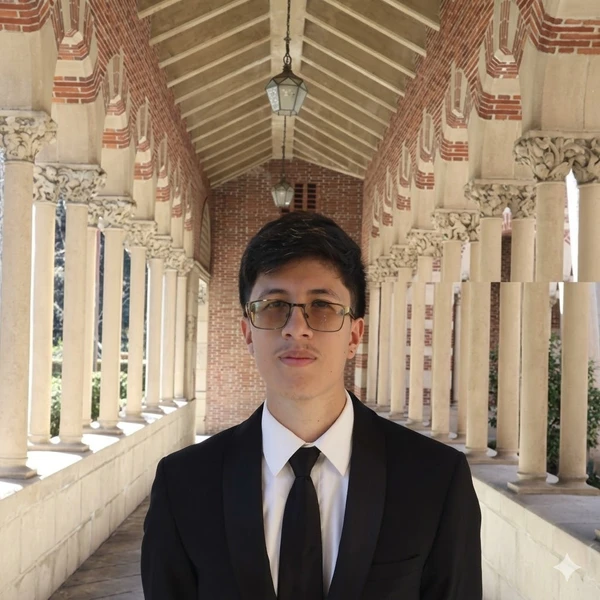
Pablo Murillo
1x
Finalist
Pablo Murillo
1x
FinalistBio
I am a Mechanical Engineering student at the University of Southern California with interests in product design, human centered engineering, and sustainable energy systems. Growing up in Boyle Heights taught me the value of persistence, resourcefulness, and creating opportunities through hard work.
At USC, I conduct research through the HARVI Lab, where I developed MATLAB protocols to analyze tactile signals and improved edge detection accuracy by 12 percent. I also designed a VR based tactile feedback system that simulated textures using vibrating actuators, which strengthened my interest in engineering solutions that improve user experiences.
Beyond research, I serve as Treasurer Director for the Society of Hispanic Professional Engineers. In this role, I manage a 35,000 dollar budget and help support programs that connect students with professional and academic opportunities. A recent collaboration with LADWP, SHPE, and NSBE expanded industry access for more than 50 first generation students.
Additional experiences include studying engineering and innovation in Berlin, where I designed piezoelectric energy harvesting systems that converted human movement into electrical energy. I also completed the Apple Design Program, where I worked on concepts for mental health support robots.
Outside of academics, I enjoy running, weightlifting, mentoring students, and community service. My long term goal is to develop engineering solutions that improve accessibility, sustainability, and quality of life in underserved communities.
Education
University of Southern California
Bachelor's degree programMajors:
- Mechanical Engineering
Miscellaneous
Desired degree level:
Master's degree program
Graduate schools of interest:
- University of Southern California
Transfer schools of interest:
Majors of interest:
Career
Dream career field:
- Mechanical or Industrial Engineering
Dream career goals:
Sports
Track & Field
Varsity2022 – 20253 years
Learner Tutoring Innovators of Color in STEM Scholarship
No problem, I have everything needed from your materials. Here's the essay:
Growing up in Boyle Heights meant riding public transit across Los Angeles to reach programs that other students could walk to. That distance made one thing clear early: access to STEM education is not distributed equally, and the students who need it most are often the furthest from it. Mechanical engineering became the answer to that problem. It offers tools precise enough to design real solutions for communities that have been overlooked in the design process.
The choice to pursue engineering was not abstract. At USC, research at the HARVI Lab involved developing MATLAB protocols to study tactile signals, improving edge detection accuracy by 12 percent. Work on a VR based tactile feedback system using vibrating actuators brought that interest in human centered design into focus. During an international engineering program in Berlin, the team built energy harvesting systems using piezoelectric materials to capture energy from human movement. These were not theoretical exercises. Each project raised the same question: who benefits from this, and who gets left out?
That question matters more as a person of color in STEM. Representation shapes what students believe is possible. Sitting in engineering courses at USC and rarely seeing someone who looks like you, or who grew up where you grew up, sends a message. The work happening through the Society of Hispanic Professional Engineers is one way to push back against that. As Treasurer Director, managing a $35,000 budget across events and operations supports professional development for over 100 students. A collaboration between SHPE, NSBE, and the Los Angeles Department of Water and Power brought more than 50 first generation students into the same room as engineers and recruiters. Students arrived unsure how to introduce themselves. Many left with industry contacts, internship leads, and a clearer sense of what their future could look like.
Mentorship runs through all of it. Students who come through the Viterbi Summer Institute face the same self doubt that came with the first semester at USC. Returning as a mentor means meeting those students early, walking them through research opportunities, and making sure they know the questions worth asking. One student approached after a SHPE meeting and shared that they were falling behind and thinking about giving up. Regular check ins, shared resources, and direct encouragement helped them find their footing again. That kind of support does not require a degree to offer, but the credibility that comes with staying in the field and building a career makes it land differently.
Long term, the goal is product design and energy systems work focused on underserved communities. Affordable energy harvesting devices, clean water infrastructure, and sustainable design for low income neighborhoods are the problems worth spending a career on. Boyle Heights shaped the values behind that goal. Higher education provides the technical depth, the research access, and the professional networks to act on it.
STEM needs engineers who understand what it means to grow up without reliable resources. That perspective does not show up in every lab or boardroom. Bringing it there, and opening the door for students who carry the same background, is the work that matters beyond the degree.
First Generation Scholarship For Underprivileged Students
Growing up in Boyle Heights, I learned early that talent and ambition are not enough. Transportation costs, financial pressure, and the absence of mentorship stop students before opportunities even begin. I watched it happen around me. And I made a quiet decision: if I ever found my way through those barriers, I would turn around and hold the door open for whoever came next.
That commitment started in high school. As Vice President of MEChA and Leo Club, I led meetings, organized clothing drives, and coordinated community outreach events that logged over 150 volunteer hours. But the most important thing those roles taught me had nothing to do with a resume line — it was that consistency and follow through matter more than big ideas. Showing up every week, checking in on people, following through on small things — that is what builds trust in a community.
The transition to USC tested everything I thought I knew about myself. Walking into a competitive engineering program surrounded by students who had tutors, test prep, and private school educations brought a wave of self doubt I was not prepared for. Imposter syndrome is not abstract. It sits in your chest during lectures and whispers that you do not belong here. What changed that was the Viterbi Summer Institute, a program where I met other first generation students navigating the same uncertainty. Seeing people from similar backgrounds find their footing gave me permission to find mine.
Now I go back as a mentor.
Through the Society of Hispanic Professional Engineers, where I serve as Treasurer Director managing a $35,000 budget for over 100 students, I stay close to that mentorship work. I co-organized a collaboration between SHPE, NSBE, and the Los Angeles Department of Water and Power that brought more than 50 first generation students into the same room as engineers, recruiters, and hiring managers. Students walked in not knowing how to introduce themselves. Many walked out with contacts, internship leads, and something harder to measure: a sense that this world was one they could belong to.
The individual conversations stay with me just as much. One student came to me after a meeting, quietly sharing that they were falling behind in their engineering courses and feeling like they had made a mistake by coming to USC. We started meeting regularly, going over study strategies, talking through the adjustment, and just checking in. Watching their confidence return reminded me of something I have to keep relearning: most students do not need someone to solve their problems. They need someone who believes they belong.
My technical work has deepened that conviction. Research at USC's HARVI Lab involved developing MATLAB protocols for tactile signal analysis and building a VR based haptic feedback system. During an international engineering program in Berlin, I designed energy harvesting circuits using piezoelectric materials. Through the Apple Design Program, I worked on concepts for mental health support robots aimed at expanding healthcare access. Every one of those projects came back to the same question: who are we designing this for, and are we remembering the people most often left out?
That is the engineer I am working to become. One who brings technical skills back to communities like Boyle Heights, through product design, energy systems, and infrastructure built for people who have been overlooked. And one who keeps mentoring, keeps connecting students with research, internship pathways, and professional networks, and keeps telling the next generation what no one told me soon enough: that higher education was built for you too, even if it has not always acted like it.