Hobbies and interests
Martial Arts
Music Composition
Music Production
Playwriting
Acting And Theater
Photography and Photo Editing
Graphic Design
Reading
Academic
I read books daily
Ozivell Ecford
1x
FinalistOzivell Ecford
1x
FinalistBio
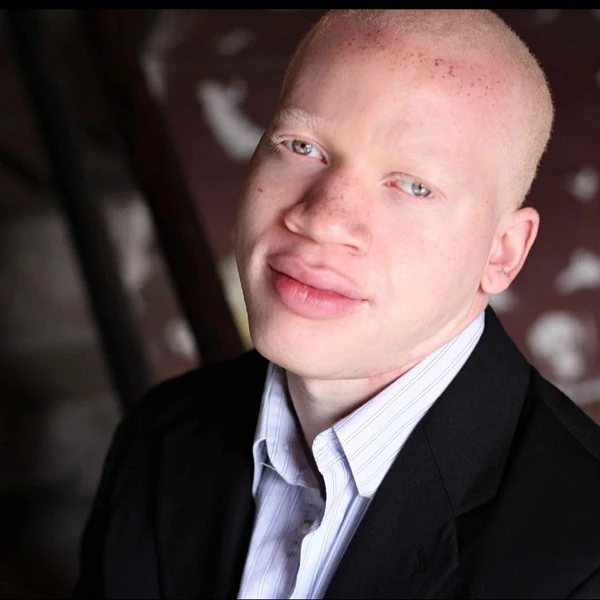
Ozivell is a third-year doctoral student in Learning Sciences at Northwestern University studying how interdisciplinary arts empower marginalized communities to heal from trauma and develop self-agency. With 20+ years working with incarcerated youth, he recently served as lead teaching artist and student researcher for Shakespeare Behind Bars at Illinois Youth Center Chicago, investigating the program's pedagogical impact. Ozivell discovered four new types of "Future Orientation" among incarcerated youth, presenting findings at ICLS 2025 in Helsinki. His paper will be published by the International Society of Learning Sciences and was nominated for Outstanding Student Paper. The same paper, "To Be or Not to Be: A Study on Shakespeare, Incarcerated Youth, and Future Orientation," won best paper at GSC 2025 at University of Illinois.
Ozivell has 20 years' experience as an award-winning educator in multimedia design, music, theatre, community outreach, curriculum development, and research. His work helped Storycatchers Theatre earn the PCAH National Arts and Humanities Youth Program Award, presented by Michelle Obama at the White House. He received American Family Insurance's Dreamers and Doers Award and ranked as one of Chicago's top three teaching artists by 3Arts.org.
This year, Ozivell co-authored "Observing Joy: An Observation Protocol to Assess Joyful Learning in STEAM Classrooms," accepted and presented at AERA 2025 in Denver.
Education
Northwestern University
Doctoral degree program (PhD, MD, JD, etc.)Majors:
- Visual and Performing Arts, General
- Education, General
- Social Sciences, General
- Behavioral Sciences
DePaul University
Bachelor's degree programMajors:
- Visual and Performing Arts, General
- Audiovisual Communications Technologies/Technicians
Schurz High School
High SchoolCareer
Dream career field:
Education
Dream career goals:
Artistic Manager
Storycatchers Theatre2003 – 202017 years
Sports
Karate
Varsity2005 – Present21 years
Awards
- I've won multiple first place trophies at tournaments in my division.
Rugby
Varsity2000 – 20022 years
Research
Social Sciences, General
Northwestern University — Lead Student Researcher2023 – Present
Arts
Third Dimension Productions
Acting1619: A Journey of a People2019 – Present
Public services
Volunteering
Tidal Lab at Northwestern University — Facilitator and Event Planner2023 – Present
Priscilla Shireen Luke Scholarship
*How do you give back currently and how do you plan to positively impact the world in the future?
I give back by meeting people at the margins—where education and justice intersect, where dignity is too often denied, and where traditional systems have failed. At the Illinois Youth Center, I work directly with incarcerated youth through Shakespeare Behind Bars, using theatre not as entertainment but as a tool for developing agency and hope. These young people aren't just research subjects; they're collaborators who've taught me as much about resilience and future-making as any academic text. Each week, I witness young people who society has labeled as disposable discover their capacity for eloquence, empathy, and complex thought through Shakespeare's language. I facilitate their performances, but more importantly, I bear witness to their transformation and carry their stories into academic spaces that desperately need to hear them.
At the Evanston Public Library, I co-facilitate the Grow/Share/Belong program for adults struggling with literacy. Too often, adult literacy programs treat learners as deficient, focusing solely on skill remediation while ignoring the shame and isolation that illiteracy creates. We've designed GSB to center dignity and humanity, recognizing that literacy is not just about decoding words—it's about belonging, community, and self-worth. Our participants don't just learn to read; they build relationships, share their wisdom, and reclaim their place in civic life. This work reminds me daily that education should never humiliate—it should liberate.
Through Northwestern's Cities Mentors Project, I train undergraduates to become mental health educational facilitators and researchers, equipping the next generation with tools to support youth mental health in under-resourced communities. These students will carry this training into classrooms, community centers, and policy spaces long after they graduate. With the D65 Coded Beats program, I help middle schoolers explore creative technology and music production, ensuring that STEAM education isn't reserved for the privileged. Watching young people from Evanston's most marginalized neighborhoods produce beats, code interactive projects, and perform at our annual showcase reminds me that access plus dignity equals transformation.
My future impact will be twofold. First, I plan to establish myself as a scholar-practitioner whose research legitimizes joy, arts, and community voice in academic spaces that have historically dismissed them. The Cross-Dimensional Future Orientation Framework is just the beginning—I intend to build a body of scholarship that fundamentally challenges deficit narratives and proves empirically what marginalized communities have always known: that healing, creativity, and hope are not luxuries but necessities for learning.
Second, I will create scalable, replicable models—frameworks like CDFO, protocols like our joy observation tool, and programs like GSB—that educators and community organizations can adapt to serve their own marginalized populations. I'm committed to open-access scholarship and practitioner-friendly resources because knowledge hoarding perpetuates inequality. I don't want to be the only one doing this work; I want to build movements that outlast me.
Ultimately, I envision leading a research center or institute dedicated to arts-based healing pedagogy, where formerly incarcerated individuals, community artists, and academic researchers collaborate as equals. I want to train teachers, social workers, and community organizers in methods that recognize marginalized people as knowledge-producers, not problems to be solved. My twenty years as an educator taught me that transformation is possible; my doctoral training is giving me the tools to scale that transformation. The Bouchet Society induction represents not an endpoint but a mandate: to use every privilege academia affords me to tear down the walls between ivory towers and the communities that need rigorous, joyful, liberatory education most.
Nabi Nicole Grant Memorial Scholarship
A Time When Faith Carried Me Through Fear
As a Black man born with albinism, I've spent my life defying expectations. Doctors told my mother I'd never drive. Society assumed my vision impairment made independence impossible. For years, I believed them. Every medical professional, every skeptical relative, every doubting employer had reinforced the same message: some dreams weren't meant for people like me.
But at twenty-six, after finally obtaining my driver's license against all odds, I faced my greatest test: highway driving. My employer, who had openly doubted my abilities, required me to follow her to our workplace in Warrenville, Illinois—a journey that demanded I navigate the expressway during rush hour for the first time.
That morning at 3 a.m., I woke up terrified. I had practiced on empty highways in the pre-dawn hours, but this was different. Real traffic. Real consequences. Real proof of whether I truly belonged behind the wheel or if everyone who doubted me had been right all along.
As I merged onto the expressway, my hands gripped the steering wheel and my heart pounded so hard I could hear it over the engine. The posted speed limit was sixty miles per hour—faster than I'd ever driven with other cars around me. I had no confidence in my ability, only faith. So I prayed—continuously, desperately, with all my heart. I repeated Philippians 4:13 like a lifeline: "I can do all things through Christ who strengthens me." I asked God to guide my hands, sharpen my focus, and protect everyone around me.
Prayer became my anchor as cars whizzed past at speeds I'd only practiced alone. When my employer sped ahead, changing lanes aggressively and disappearing from view, I didn't panic. I kept praying, trusting that the same God who had brought me this far, who had given me the courage to pursue my license when everyone said it was impossible, wouldn't abandon me now.
Fifteen minutes after she arrived, I pulled into the parking lot safely. She made a joke about my tardiness, but I had done it. Not through my own strength, but through Christ who strengthened me when fear could have paralyzed me.
That day proved that when we're called to do something that terrifies us, faith doesn't remove the obstacle—it carries us through it. Like Nabi Nicole, who used her faith to counsel and uplift others in her community, I learned that our relationship with God isn't just for Sundays—it's the foundation that helps us conquer what seems impossible.
I now drive confidently, having upgraded to a Lexus. But I'll never forget that every mile I travel is a testament to God's grace and a reminder that "Nothing is impossible if I'm possible."
RonranGlee Special Needs Teacher Literary Scholarship
Why I Am Passionate About the Special Education Teacher Profession
My passion for special education stems from a profound understanding that every child, regardless of their challenges or circumstances, possesses inherent worth and untapped potential. My 20 years of experience in special education as a special educator(SpEd) educator have revealed to me that children labeled as "difficult" or "problematic" are often simply waiting for an adult who sees beyond their behaviors to recognize their humanity and capabilities. I also speak to this subject as someone who was born with Albinism and a vision impairment, as someone who has benefited from excellent services for people with special needs, and someone who has had some unfortunate and harmful experiences as well.
1. Understanding "Sense of One's Own Presence" and My Mission
Professor Harold Bloom's statement that "the purpose of teaching is to bring the student to his or her sense of his or her own presence" speaks to the fundamental goal of education: helping students recognize their own value, agency, and potential for growth. To experience one's "sense of presence" means to develop self-awareness, confidence in one's abilities, and an understanding that one's thoughts, feelings, and contributions matter in the world.
For students with special needs, this concept takes on even greater significance. These children often arrive in our classrooms carrying the weight of repeated failures, negative labels, and diminished expectations from society. They may have internalized messages that they are "less than" or incapable of meaningful achievement. Again, because I can attest firsthand to the effects of a great or harmful service provider, my mission is to systematically dismantle these harmful narratives and replace them with experiences that affirm their worth and potential.
When I worked at Montefiore Special School, an all-male school for students with severe and profound emotional and behavioral disorders, I witnessed this transformation firsthand. When I chose to sit beside students at their computer stations, engaging with them as capable learners rather than problems to be managed, I saw them begin to experience their own presence. They moved from seeing themselves as troublemakers to recognizing themselves as students capable of learning and growth. This shift in self-perception was evident in how they carried themselves, approached challenges, and interacted with peers.
My mission in accomplishing this task involves several key strategies:
Creating Authentic Relationships: I believe that meaningful learning happens within the context of genuine human connection. By demonstrating that I value each student as an individual, I help them recognize their own worth. This means learning their names, understanding their interests, and showing genuine concern for their well-being and success.
Maintaining High Expectations: Rather than lowering standards, I maintain high expectations while providing the support necessary for students to meet them. When students at Montefiore realized I believed in their potential, they internalized these expectations and began to see themselves as capable learners.
Celebrating Growth and Effort: I focus on progress rather than perfection, acknowledging every step forward, no matter how small. This approach helps students develop confidence in their ability to learn and grow, fostering their sense of agency and self-efficacy.
Providing Voice and Choice: Students develop their sense of presence when they feel heard and valued. I create opportunities for them to express their thoughts, make decisions about their learning, and advocate for themselves, just as the students at Montefiore did when they spoke up to the principal about my impact on their education.
Through my current doctoral research on how interdisciplinary arts can empower marginalized communities, I continue to explore innovative ways to help students discover their own presence. My work with Shakespeare Behind Bars at the Illinois Youth Center builds on these foundational beliefs, using the power of literature and performance to help incarcerated youth envision positive futures for themselves.
2. A Brief Fairy Tale: The Teacher Who Saw Light
Once upon a time, in a school nestled within the heart of a bustling city, there lived a young teacher named Ozivell who possessed a rare gift – the ability to see light where others saw only darkness.
The school was home to young princes who had been forgotten by their kingdoms. These princes carried invisible crowns of pain, forged from the harsh realities of their young lives. The other adults in the castle whispered that these princes were cursed, destined to remain trapped in towers of anger and despair.
An aging wizard, fearful of the princes' power, had cast a spell of silence throughout the castle. "Do not speak to them," he commanded. "They are dangerous and beyond help." The princes, sensing the wizard's fear, began to believe they were indeed cursed and acted accordingly.
But Ozivell possessed ancient wisdom that told him otherwise. He knew that every prince, no matter how forgotten, carried within them a spark of magic that could illuminate the darkest corners of any kingdom. Armed with nothing but patience, compassion, and unwavering belief, he began to break the wizard's spell.
One by one, he approached each prince's tower. Instead of shouting instructions from below, he climbed the stairs and sat beside them. He spoke to them not as cursed beings, but as the royalty they truly were. He helped them solve the riddles that had long puzzled them, celebrated their victories, and reminded them of their inherent worth.
Slowly, the princes began to remember who they were. Their invisible crowns began to glow with newfound confidence. They started to help one another, sharing their unique gifts and talents. The entire castle was transformed by their light.
When the kingdom's council investigated this miraculous change, the aging wizard tried to claim credit for the transformation. But the princes, now confident in their own voices, spoke their truth. They told the council how Ozivell had seen their light when no one else could, how he had believed in their magic when they had forgotten it themselves.
The princes ruled their kingdoms with wisdom and compassion, never forgetting the teacher who had helped them remember their own presence. And Ozivell continued his quest, traveling to other forgotten castles, carrying the torch of belief to other lost princes and princesses, knowing that every child deserves to discover the light within themselves.
And they all lived not just happily, but purposefully ever after.
---
This fairy tale reflects my core belief that special education is not about fixing what's broken, but about helping students recognize the strength and potential that already exists within them. Like the princes in the story, many special needs students have simply been waiting for someone to see their light and help them remember their own magic.
B.R.I.G.H.T (Be.Radiant.Ignite.Growth.Heroic.Teaching) Scholarship
I chose to answer prompt #1: Tell us about a time when you had a positive impact on a child’s life.
During my time as a paraprofessional at Montefiore Special School in Chicago, I encountered a situation that would fundamentally shape my understanding of how meaningful human connection can transform a child's educational experience and sense of self-worth.
Montefiore served elementary-aged boys diagnosed with severe and profound emotional and behavioral disorders. These children carried heavy burdens – many were affected by gang violence, substance abuse, and family trauma that no child should have to endure. They arrived at school each day having already faced challenges that would test the resilience of adults, yet they were expected to learn and grow despite these overwhelming circumstances.
I had recently graduated with a degree in Multimedia Design when I was assigned to work alongside a veteran teacher who was counting down his final months before retirement. His approach to managing the classroom was rooted in fear and distance. He had established a rigid rule that prohibited paraprofessionals from directly interacting with students. When children struggled with their computer-based assignments and asked for help, his standard response was simply to tell them to "read the instructions on the screen." This hands-off approach created a sterile, unwelcoming environment where students felt isolated and unsupported.
The students sensed their teacher's fear and discomfort, and they responded accordingly. They acted out, showed little respect for authority, and seemed to fulfill every negative expectation placed upon them. The classroom atmosphere was tense and counterproductive, with students disengaged from their learning and increasingly frustrated with the educational process.
I couldn't reconcile this approach with what I believed these children needed. Despite explicit instructions not to engage directly with students, I made a conscious decision to prioritize their educational and emotional needs over institutional protocol. When a student raised their hand asking for help, I would walk over, pull up a chair, and sit beside them at their computer station. Together, we would work through whatever challenge they were facing.
The initial response from students was one of genuine surprise. They couldn't believe that an adult was willing to sit in close proximity to them, engage in conversation, and provide patient assistance. These children, who had been labeled as difficult and problematic, were simply hungry for human connection and academic support. As word spread throughout the classroom that I was available to help, more students began reaching out.
The transformation was remarkable. Students who had previously given up on assignments began taking pride in their work. They celebrated getting correct answers and started to see themselves as capable learners rather than troublemakers. I developed a system of incentives and recognition that acknowledged their efforts and achievements, no matter how small. The classroom environment shifted from one of tension and defeat to engagement and possibility.
Academic performance improved dramatically. Students who had been failing began earning passing grades, and those who were already passing pushed themselves to achieve even higher levels of success. The change was so significant that it caught the attention of the school principal, who launched an investigation to understand what had caused this remarkable turnaround.
When questioned about the improvements, the classroom teacher attempted to take credit for the students' success. However, the students themselves spoke up with a clarity and honesty that was both powerful and moving. They told the principal that I had made the difference by helping them with their work and treating them with respect and patience. More importantly, they articulated how my approach made them feel: supported, encouraged, seen, and heard.
What struck me most profoundly was their explanation of motivation. These children, who had been written off by many adults in their lives, expressed that they wanted to succeed because they didn't want to let me down. They had internalized my high expectations not as pressure, but as evidence that someone believed in their potential. They felt proud of their accomplishments and began to see themselves as students capable of learning and growth.
This experience taught me that behind every "difficult" child is often someone who has been failed by the systems and adults meant to support them. These students didn't need more rules, more distance, or more fear-based management. They needed what all children need: adults who see their humanity, believe in their potential, and are willing to invest time and energy in their success.
The impact extended beyond academic achievement. Students began to carry themselves differently, to interact more positively with peers, and to approach challenges with increased confidence. They had experienced what it felt like to be valued, and that experience began to reshape their understanding of their own worth and capabilities.
This experience at Montefiore planted the seeds for my current doctoral research in Learning Sciences at Northwestern University, where I study how interdisciplinary arts can empower marginalized communities. My recent work with Shakespeare Behind Bars at the Illinois Youth Center builds on these early lessons about the transformative power of believing in young people who have been written off by society.
The children at Montefiore taught me that positive impact often comes not from grand gestures or complex interventions, but from the simple act of showing up authentically, treating young people with dignity, and refusing to accept that any child is beyond hope. Their courage in advocating for themselves and their willingness to trust an adult who chose to see their potential rather than their problems continues to inspire my work with marginalized youth today.