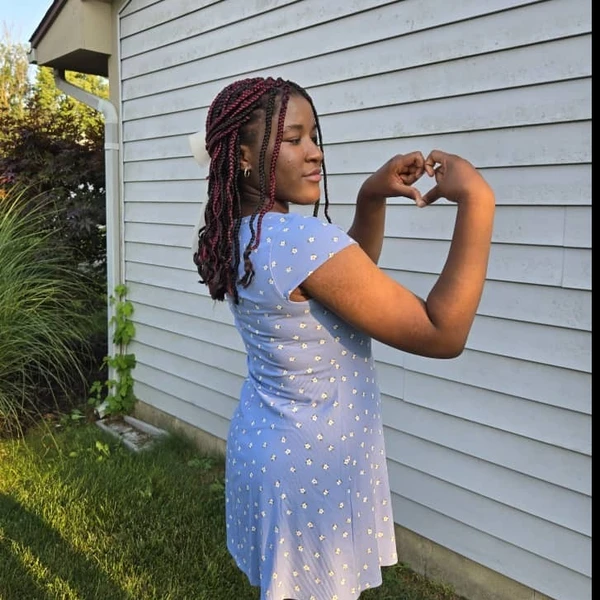
Hobbies and interests
Volunteering
Reading
Novels
Drama
Academic
Christianity
Health
I read books multiple times per week
Oluwatosin Tayo-Ayorinde
1x
Finalist
Oluwatosin Tayo-Ayorinde
1x
FinalistBio
I'm Oluwatosin Tayo-Ayorinde, a senior at Centerville High School with a deep passion for youth empowerment, advocacy, and service. As president of my school's chapter of Cancer Kids First and vice president of Sending Sunshine, I’ve led projects that support children facing illness and social isolation. These experiences have shaped my desire to create spaces where every young person feels seen, supported, and valued. I plan to pursue a career in medicine or psychology, with the long-term goal of improving mental and physical health outcomes for underserved youth. I'm especially drawn to science, empathy, and advocacy. What sets me apart as a scholarship candidate is my commitment to leading with purpose, learning with humility, and serving with heart. I approach every opportunity with drive, creativity, and the belief that small acts of service can spark meaningful change. I hope to use every resource available, including scholarships, to continue growing as a compassionate leader, student, and change-maker.
Education
Centerville High School
High SchoolMiscellaneous
Desired degree level:
Doctoral degree program (PhD, MD, JD, etc.)
Majors of interest:
- Neurobiology and Neurosciences
Career
Dream career field:
Medicine
Dream career goals:
Neurosurgeon
Tutor
Kumon2025 – Present1 year
Sports
Track & Field
Club2018 – 20224 years
Research
Medicine
Sinclair CAPSTONE Showcase — Research and Testing Pig Hearts2024 – 2026
Arts
RCCG Jesus Chapel
Music2017 – 2022
Public services
Volunteering
UCH - RCCG Jesus Chapel collaboration — Check people's blood pressures, temperature, give them food, etc.2017 – 2022Volunteering
Sending Sunshine — Vice-President2025 – PresentAdvocacy
Cancer Kids First — President2024 – PresentVolunteering
RMHC Dayton — Volunteer2024 – Present
Future Interests
Advocacy
Volunteering
Philanthropy
Richard Neumann Scholarship
Throughout high school, I have learned that some of the most important problems are not always physical. Many people face emotional challenges that often go unnoticed, especially those dealing with illness. Through my involvement as president of my school's Cancer Kids First chapter and vice president of Sending Sunshine, I became aware of how loneliness and emotional isolation can affect individuals who are already facing difficult circumstances.
To address this problem, I helped organize initiatives focused on spreading encouragement and support to people who were struggling. One project involved creating personalized messages and cards for individuals facing serious illnesses. While the solution itself was simple, the impact was meaningful. Many people facing medical challenges spend long periods of time feeling isolated, and receiving a thoughtful message reminds them that others care about them. Through this experience, I learned that solving a problem does not always require complex technology or large budgets. Sometimes it begins with identifying a need and creating a practical solution that improves someone's quality of life.
If I had the funding and resources to solve a larger problem, I would create a nationwide digital support platform that connects patients facing long-term illnesses with mentors, volunteers, healthcare professionals, and peer support communities. While modern medicine has made tremendous advances in treating disease, many patients continue to struggle with loneliness, anxiety, and a lack of emotional support during treatment and recovery.
My platform would combine technology, healthcare, and community service. Patients could be matched with trained volunteers, survivors of similar conditions, healthcare students, and support groups based on their needs and interests. The platform would include virtual mentoring, educational resources, mental health support tools, and opportunities for community engagement. Artificial intelligence could help identify patients who may be experiencing emotional distress and connect them with appropriate resources.
To implement this solution, I would first partner with hospitals, nonprofit organizations, and healthcare systems to identify patient needs. Next, I would assemble a team of software developers, healthcare professionals, mental health specialists, and volunteers to build the platform. Pilot programs would be launched in children's hospitals and cancer treatment centers before expanding nationally. Long-term funding would come from healthcare partnerships, grants, and philanthropic organizations focused on patient well-being.
What excites me most about this idea is that it addresses a problem that medicine alone cannot solve. Healthcare is about more than treating disease; it is about caring for people. Through my volunteer experiences, I have seen how powerful compassion can be. A support platform that combines technology with human connection could help thousands of patients feel less alone during some of the most difficult moments of their lives.
Richard Neumann believed that problem solving and creativity are forms of art. If given the opportunity and resources, I would use creativity, technology, and service to address a challenge that affects millions of people. By creating solutions that strengthen human connection, I hope to improve not only health outcomes but also the lives of the people behind every diagnosis.
Our Destiny Our Future Scholarship
Throughout my life, I have come to believe that the most meaningful impact we can make is through service to others. Whether through leadership, volunteering, or simply offering support to someone in need, small acts of compassion have the power to create lasting change. As I look toward the future, I plan to make a positive impact on the world by pursuing a career in medicine, advocating for underserved communities, and continuing to serve others through leadership and community involvement.
My commitment to service has already shaped many of my experiences. As president of my school's Cancer Kids First chapter and vice president of Sending Sunshine, I have had the opportunity to support initiatives that bring encouragement and assistance to others. One of the most rewarding aspects of these roles has been seeing how small acts of kindness can brighten someone's day and remind them that they are not alone. These experiences taught me that positive change often begins with empathy. When people feel seen, supported, and valued, they are more empowered to overcome challenges and reach their potential.
Through volunteering and community service, I have learned that making a difference is not always about solving large-scale problems. More often, it is about showing up consistently and helping wherever you can. Whether organizing service projects, supporting charitable initiatives, or encouraging others to get involved, I have seen how collective efforts can strengthen communities and inspire further acts of kindness.
These experiences have inspired my goal of becoming a physician. I am passionate about medicine because it combines science, problem-solving, and service in a way that directly improves people's lives. My interest in healthcare is not only academic; it is personal. Through my own experiences navigating health-related challenges and learning about the connection between physical and mental well-being, I developed a deeper appreciation for compassionate care. As a physician, I hope to provide that same sense of understanding and support to my future patients.
Growing up in Nigeria and later immigrating to the United States also shaped my perspective. Experiencing different cultures and communities helped me recognize that many people face barriers to opportunities, resources, and healthcare. Because of this, I want to work toward reducing healthcare disparities and ensuring that individuals from all backgrounds receive the quality care they deserve. I believe healthcare should be accessible, equitable, and centered on treating the whole person.
Beyond caring for individual patients, I hope to make a broader impact through mentorship and advocacy. As a Black woman pursuing a career in STEM and medicine, I understand the importance of representation. I want to encourage younger students, especially those from underrepresented backgrounds, to pursue their goals with confidence. Through mentorship, outreach, and community engagement, I hope to help create opportunities for others and demonstrate that success is attainable regardless of one's circumstances.
While I know I cannot change the world on my own, I believe meaningful change begins with a commitment to serving others. My goal is to use my education, skills, and experiences to improve lives, strengthen communities, and create opportunities for future generations. Through medicine, leadership, and service, I hope to leave the world better than I found it and continue the cycle of compassion and generosity that this scholarship seeks to honor.
Stephan L. Daniels Lift As We Climb Scholarship
As a Black immigrant from Nigeria and an aspiring physician, I view STEM as more than a field of study—it is a pathway to solving problems, serving others, and creating opportunities for communities that have historically been underserved. My decision to pursue a degree in biology on the pre-medical track stems from a deep curiosity about the human body, a passion for helping others, and a desire to use science to address inequities in healthcare.
My interest in STEM began with a fascination for understanding how things work, particularly the human body. Throughout high school, courses such as Anatomy and Physiology and Exercise Science transformed that curiosity into a clear career goal. I was amazed by the complexity of the body's systems and how science could be used to diagnose, treat, and prevent disease. As I learned more, I realized that medicine combines everything I value: critical thinking, lifelong learning, problem-solving, and service to others.
My passion for healthcare also became personal through experiences with anxiety that sometimes manifested through physical symptoms such as headaches, nausea, stomach issues, and a racing heartbeat. Learning about the connection between mental and physical health showed me how important it is for healthcare professionals to understand the whole person rather than just a set of symptoms. This experience strengthened my desire to become a physician who listens carefully, treats patients with compassion, and provides care that addresses both physical and emotional well-being.
As a member of the Black community, I have become increasingly aware of the disparities that exist within healthcare. Black Americans continue to experience higher rates of certain diseases, reduced access to healthcare resources, and worse health outcomes in many areas. Representation also remains limited in medicine and other STEM fields. These challenges motivate me to pursue a career where I can help bridge those gaps. I want to contribute to a future where all patients receive equitable, high-quality care and where young Black students can see themselves represented in STEM careers.
I also hope to uplift my community through mentorship and outreach. As president of my school's Cancer Kids First chapter and vice president of Sending Sunshine, I have learned the importance of leadership and service. In the future, I hope to mentor students from underrepresented backgrounds who are interested in STEM and healthcare careers. By sharing my experiences and encouraging others to pursue their goals, I hope to help create opportunities for the next generation of scientists, healthcare professionals, and innovators.
Ultimately, I am pursuing STEM because I believe science has the power to improve lives. A degree in biology will provide me with the knowledge and skills necessary to become a physician and advocate for healthier communities. Through medicine, mentorship, and service, I hope to use my education to help address healthcare disparities, increase representation in STEM, and empower others to pursue opportunities that may once have seemed out of reach. In doing so, I hope to embody the spirit of "Lift As We Climb" by using my success not only to achieve my own goals but also to help others rise alongside me.
Julie Adams Memorial Scholarship – Women in STEM
When people ask why I want to pursue a degree in a STEM field, my answer begins with curiosity. From a young age, I was fascinated by how the human body works. I wanted to know why people get sick, how treatments are developed, and what allows the body to heal. The more I learned, the more questions I had. Rather than becoming overwhelmed by what I did not know, I became excited by the opportunity to learn more.
My passion for pursuing a degree in biology on the pre-medical track grew stronger through both my academic experiences and personal journey. One of the most influential experiences was taking Anatomy and Physiology and Exercise Science courses in high school. These classes transformed science from something I studied in a textbook into something I could see applied to real life. Learning about the body's systems, how they interact, and how even small changes can affect overall health deepened my appreciation for medicine and strengthened my desire to pursue a healthcare career.
My interest in medicine also became personal when I experienced anxiety that manifested through physical symptoms such as headaches, nausea, stomach issues, and episodes of a racing heartbeat. At times, these symptoms made me worry that something was seriously wrong with my health. As I learned more about anxiety and somatization, I began to understand the powerful relationship between mental and physical health. This experience taught me that effective healthcare requires looking beyond symptoms and understanding the whole person. It sparked an even greater interest in medicine because I saw firsthand how scientific knowledge can improve lives and provide answers during times of uncertainty.
Beyond the classroom, my passion has been reinforced through healthcare-related experiences and physician shadowing opportunities. Observing physicians interact with patients showed me that medicine is not only about science; it is also about compassion, communication, and service. I watched healthcare professionals use their expertise to diagnose problems, educate patients, and provide reassurance during difficult moments. These experiences confirmed that medicine combines everything I value most: problem-solving, lifelong learning, and helping others.
As a Nigerian immigrant, I have also gained a unique perspective on the importance of equitable healthcare. Moving to the United States exposed me to different healthcare systems, communities, and challenges. I have become increasingly aware that access to quality healthcare is not equal for everyone. This understanding motivates me to pursue a career where I can help address disparities and advocate for underserved populations. I want to ensure that patients feel heard, respected, and cared for regardless of their background.
What excites me most about pursuing a STEM degree is that it will provide the foundation necessary to make a meaningful impact on people's lives. Science is constantly evolving, and I am energized by the idea of contributing to a field where discovery and innovation improve human health every day. Whether I am studying biology in the classroom, conducting research, or caring for future patients, I know that I will never stop learning.
A degree in biology is more than a pathway to a career for me. It is the next step in a lifelong commitment to understanding the human body, advancing healthcare, and serving others. My passion for STEM comes not only from a love of science but from a desire to use scientific knowledge to make a difference. As a future physician, I hope to combine curiosity, compassion, and expertise to improve the lives of the patients and communities I serve.
Rose Ifebigh Memorial Scholarship
My name is Oluwatosin Omolara Tayo-Ayorinde and I am a Yoruba Nigerian immigrant, student leader, and aspiring physician who believes deeply in the power of service, education, and community. Moving from Nigeria to the United States during high school was both exciting and challenging. I had to adjust to a new culture, a different educational system, and unfamiliar social environments while staying connected to the values that shaped me growing up. My Nigerian heritage instilled in me the importance of perseverance, hard work, respect for others, and the belief that education is one of the most powerful tools for creating opportunity. These values continue to guide me in my academic pursuits, leadership roles, and service to others.
Living and studying in the United States has broadened my perspective in ways I never expected. Experiencing two cultures has taught me how to adapt while remaining true to who I am. I have learned to appreciate different viewpoints, communicate with people from diverse backgrounds, and recognize the strength that comes from cultural diversity. As an immigrant, I have developed independence, resilience, and confidence through navigating unfamiliar situations and learning how to advocate for myself. These experiences have helped me become more empathetic toward others who are adjusting to new environments or overcoming challenges of their own.
My educational journey has taught me that growth often occurs outside of our comfort zones. Leaving behind the familiarity of home and starting over in a new country required me to embrace uncertainty and trust in my ability to adapt. Through this experience, I gained a deeper appreciation for the sacrifices immigrant families make in pursuit of greater opportunities. I also learned that success is not measured solely by personal achievements, but by the positive impact we have on the lives of others. This perspective has influenced the way I approach leadership and service.
As president of my school's Cancer Kids First chapter and vice president of Sending Sunshine, I have worked to support individuals facing difficult circumstances and encourage others to become involved in service. These experiences have shown me that meaningful change often begins with simple acts of compassion and a willingness to help. Whether supporting community initiatives or encouraging my peers to give back, I have learned that leadership is most effective when it is rooted in empathy and a genuine desire to serve others.
My experiences as an immigrant and student leader have inspired my goal of pursuing a career in medicine. I want to become a physician who provides compassionate, equitable care and advocates for underserved communities. Having experienced the challenges of adapting to a new environment, I understand how barriers can affect access to opportunities and resources. Through medicine, I hope to help reduce healthcare disparities, improve patient outcomes, and ensure that individuals from all backgrounds feel heard, respected, and supported.
Receiving the Rose Ifebigh Memorial Scholarship would help ease the financial burden of pursuing higher education and allow me to focus more fully on achieving my academic and professional goals. More importantly, it would represent an investment in my ability to give back to the communities that have shaped me. As a Nigerian immigrant, future physician, and lifelong learner, I am committed to using my education to create opportunities for others and make a meaningful difference in the world around me.
Peter and Nan Liubenov Student Scholarship
Growing up, I learned that being a positive force in society is not about having the loudest voice in the room. It is about using your abilities, experiences, and opportunities to uplift others. As a Black immigrant from Nigeria and a future physician, I have come to view service, leadership, and education as powerful tools for creating positive change in my community both now and in the future.
Today, I strive to make a difference through leadership and service. As the president of my school's Cancer Kids First chapter and vice president of Sending Sunshine, I work alongside other students to support individuals facing difficult circumstances and to spread kindness within our community. These experiences have taught me that meaningful change often begins with small actions. Whether organizing service initiatives, encouraging participation from others, or supporting people who are struggling, I have learned that compassion can have a lasting impact.
My volunteer experiences have also shaped how I view my role in society. Through healthcare-related opportunities and physician shadowing, I have witnessed how important it is for people to feel heard, respected, and cared for. These experiences reinforced my desire to pursue a career in medicine, not only because I enjoy science, but because I want to help improve the lives of others. In the future, I hope to become a physician who serves diverse communities and helps reduce disparities in healthcare access and outcomes.
Current social norms have played a significant role in shaping this thinking. Today, society places greater emphasis on inclusion, service, and advocacy than ever before. There is an increasing expectation that individuals use their knowledge and talents to contribute to the well-being of others. As someone who has experienced different cultures and perspectives, I appreciate the value of diversity and understand that progress happens when people are willing to learn from one another.
At the same time, social norms have encouraged me to think critically about how I can make a meaningful contribution. While achievement and success are often celebrated, I believe true success should also be measured by how much we help others grow. This perspective has influenced the way I approach leadership. Rather than focusing solely on personal accomplishments, I strive to create opportunities for others, support my peers, and contribute to causes that improve the lives of those around me.
My experiences as a student leader have shown me that positive change is not limited to large-scale movements or major accomplishments. It can be found in everyday actions: mentoring younger students, volunteering in the community, advocating for those whose voices are not always heard, and treating others with dignity and respect. These actions help create stronger communities and inspire others to do the same.
In the future, I hope to continue being a positive force through medicine, service, and lifelong learning. I want to use my education not only to build a successful career but also to address challenges facing underserved populations and improve access to quality healthcare. The values of empathy, integrity, and service that guide me today will continue to shape my actions in the years ahead.
Ultimately, I believe that society becomes stronger when individuals choose to use their talents in service of others. By continuing to lead, learn, and give back, I hope to make a meaningful difference in my community and contribute to a more compassionate and equitable world.
Ethel Hayes Destigmatization of Mental Health Scholarship
There were times when I genuinely thought something was wrong with my body. I experienced persistent headaches, nausea, stomach problems, and episodes where my heart would race unexpectedly. Each symptom felt real and alarming. I worried about what might be causing them, and the uncertainty often made me even more anxious. At the time, I did not realize that what I was experiencing physically was closely connected to what I was experiencing mentally.
My journey with anxiety began as I navigated major changes in my life, including moving from Nigeria to the United States. While I was excited about the opportunities that came with living in a new country, adapting was not always easy. I had to adjust to a different culture, a new school system, and the pressure of succeeding academically while finding my place in an unfamiliar environment. On the surface, I appeared to be handling everything well. Internally, however, I was carrying stress and anxiety that I did not fully understand.
As time went on, that anxiety began to manifest physically through headaches, nausea, stomach issues, and sensations that made me worry about my heart health. The symptoms often interfered with my ability to focus on school, enjoy activities, and feel at ease in my daily life. As someone who values understanding and solving problems, not knowing why I felt this way was incredibly frustrating. Eventually, I learned about somatization and discovered how emotional stress can produce physical symptoms. For the first time, I understood that mental and physical health are not separate—they are deeply connected.
This realization completely changed how I view health and wellness. Before my experiences with anxiety, I thought of health primarily in terms of physical well-being. Now, I understand that mental health is just as important. A person can look healthy on the outside while silently struggling on the inside. Because of my own experiences, I have become much more aware of the invisible challenges that people carry every day. I have learned not to make assumptions about what others may be going through and to approach people with greater empathy and understanding.
My experiences have also shaped my relationships. Anxiety taught me the importance of vulnerability and communication. For a long time, I felt that I needed to handle my struggles on my own. Over time, I realized that seeking support is not a sign of weakness but a sign of strength. I became more willing to open up to trusted people in my life and to listen when others shared their own challenges. These experiences have helped me build deeper and more meaningful relationships based on honesty, compassion, and mutual support.
Mental health has also influenced the way I serve others. Through my leadership roles as president of my school's Cancer Kids First chapter and vice president of Sending Sunshine, I have seen the importance of creating supportive communities where people feel valued and understood. Whether someone is facing a physical illness, emotional struggles, or personal challenges, feeling seen and supported can make a tremendous difference. These experiences have reinforced my belief that kindness and empathy are powerful tools for improving lives.
In addition, my experiences have made me more aware of the stigma surrounding mental health, particularly within some Black and immigrant communities. Mental health struggles are often misunderstood or left undiscussed, causing many people to suffer in silence. I have seen how stigma can prevent individuals from seeking help or sharing what they are experiencing. Because of this, I believe it is important to encourage open conversations about mental health and to create environments where people feel comfortable asking for support without fear of judgment.
Most importantly, my journey with anxiety and somatization has shaped my future goals. I aspire to become a physician, and my experiences have given me a deeper understanding of the connection between physical and mental health. I want to care for patients as whole individuals rather than simply treating symptoms. I hope to become a physician who listens carefully, recognizes the impact that emotional well-being can have on physical health, and ensures that every patient feels heard and respected.
Although anxiety has been one of the most challenging experiences of my life, it has also been one of the most transformative. It has made me more resilient, compassionate, and determined to help others. It has taught me that mental health deserves the same attention and care as physical health. Most importantly, it has shown me that healing begins when we are willing to talk openly about our struggles. By sharing my story, I hope to contribute to a future where mental health is discussed with honesty, understanding, and compassion, and where no one feels alone in their journey.
“I Matter” Scholarship
One of the most meaningful ways I have helped someone in need came through tutoring a younger student who was struggling not only academically, but also with confidence in their own abilities. At the time, I had recently gone through my own difficult adjustment after moving to the United States, where I experienced academic challenges and moments of self-doubt. Because of that experience, I understood how overwhelming it can feel when you are trying your best but still feel like you are falling behind.
The student I worked with was struggling in math and had begun to believe that they were simply “not good” at the subject. When we first met, they were quiet and hesitant to even attempt problems, often stopping before trying because they were afraid of getting the answer wrong. I recognized that the issue was not just academic; it was emotional. They had lost confidence in themselves.
Instead of immediately focusing on solving problems, I started by changing how we approached learning together. I encouraged them to talk through their thinking step by step, reassuring them that mistakes were part of the process and not a reflection of their intelligence. I shared my own experience of struggling after moving to a new educational system and how I had to rebuild my confidence over time. I wanted them to understand that difficulty does not mean inability.
Over time, I noticed a shift. The student began attempting problems without waiting for reassurance and slowly started correcting themselves. Even small successes, like getting a question partially right or explaining their reasoning clearly, became moments we celebrated. More importantly, their attitude toward learning changed. They became more willing to try, even when they were unsure.
By the end of our sessions, the student was not only performing better academically but also showing more confidence in their own voice. They began to say things like, “I think I can figure this out,” which was a major change from when we first started. For me, that transformation mattered more than any single grade or score.
This experience reinforced my belief that helping someone in need is not always about providing answers—it is about restoring confidence and reminding them of their potential. Many students struggle silently, not because they lack ability, but because they lack support and encouragement.
As someone who has experienced both sides of that feeling, I try to be the kind of support system I once needed. Whether through tutoring, mentorship, or future work in medicine, I hope to continue helping others regain confidence in themselves so they can succeed academically and personally.
Helping this student reminded me that small acts of encouragement can create meaningful change. It strengthened my commitment to using my education and future career to support others who may feel overlooked or discouraged, ensuring they know they matter and are capable of success.
Tawkify Meaningful Connections Scholarship
One of the most meaningful relationships in my life is not defined by a single person, but by the relationships I formed during one of the most difficult transitions I have experienced—moving to the United States. When I first arrived, I struggled to adjust academically, socially, and emotionally. I felt out of place in an unfamiliar environment, and I often kept my struggles to myself. During that time, I did not fully understand how deeply human connection could shape a person’s sense of belonging and identity.
Over time, small but meaningful connections began to shift my experience. Teachers who took extra time to explain concepts, classmates who included me in conversations, and mentors who encouraged me to keep going helped me slowly rebuild my confidence. These relationships taught me that connection is not always immediate or obvious—it is often built through consistent acts of understanding, patience, and care. I began to realize that even small moments of support can have a lasting impact on someone’s self-worth and direction in life.
This understanding changed the way I interact with others. I became more intentional about forming meaningful connections, especially with students who may feel overlooked or discouraged. Through tutoring younger students, I have seen how powerful encouragement and patience can be. Many students are not only struggling academically, but also emotionally, and I try to be someone who listens as much as I teach. I have learned that helping someone feel understood can sometimes matter just as much as helping them solve a problem.
My experience with human connection also extends to my interest in healthcare. Through volunteering and my CAPSTONE research project on xenotransplantation and pig heart transplants, I began to see how medicine is deeply connected to human relationships. Patients are not just cases or conditions; they are individuals with fears, families, and hopes. I became more aware of how important it is for healthcare professionals to not only provide treatment but also build trust and empathy with the people they serve. Especially in underserved communities, where individuals may already feel unheard or underserved, a meaningful connection can significantly affect health outcomes.
One of the most important relationships that continues to influence me is the relationship I have with my own growth. Reflecting on my transition to a new country, I recognize how much I have changed because of the people who supported me along the way. Those experiences taught me that connection is not passive—it is something we actively build, nurture, and choose to invest in. I carry that lesson into every interaction I have, whether in school, in service, or in everyday life.
In the future, I hope to become a physician who understands that healing is not only physical but also relational. I want to build meaningful connections with patients and their families, ensuring that they feel heard and respected in moments of vulnerability. I also hope to continue mentoring and supporting students who may be going through similar experiences of adjustment or self-doubt.
Ultimately, I believe that human connection is what allows people to grow, heal, and thrive. The relationships that shaped me have taught me that even in moments of isolation, connection can be rebuilt—and when it is, it has the power to transform lives.
Forever90 Scholarship
Service, for me, is not an isolated act; it is a way of living shaped by awareness of others’ needs and a responsibility to respond. My understanding of service deepened when I moved to the United States and experienced the challenges of adjusting to a new environment. I struggled academically and emotionally at times, and I often felt isolated as I tried to find my place. During that period, I learned how important support systems are, and how easily students and families can feel overlooked when they lack guidance. Those experiences shaped my commitment to being someone who helps others feel seen, supported, and capable.
This commitment has driven my involvement in community service and mentoring opportunities. Through tutoring younger students, I have worked to support their academic growth while also helping them build confidence in themselves. Many of the students I work with are not just struggling with school content; but also struggle with self-doubt. Having experienced similar feelings myself, I try to create a space where they feel uplifted rather than discouraged. I have learned that service is not only about teaching or assisting; it is also about listening, patience, and believing in someone until they can believe in themselves.
My dedication to service is also reflected in my involvement in outreach programs such as Operation Smile, where I have seen how healthcare disparities affect families across the world. In addition, my CAPSTONE research project on xenotransplantation and pig heart transplants into humans further strengthened my understanding of how innovation in medicine can serve underserved populations. Through this project, I explored how the shortage of donor organs continues to impact patients, especially those who already face barriers in accessing quality healthcare. It made me realize that service in medicine is not only about treating illness, but also about finding solutions that expand access and opportunity for survival.
Faith and purpose also influence the way I view service. While my faith is personal, it has shaped my belief that we are responsible for using our gifts to uplift others. I see service as a form of stewardship—taking what I have learned, experienced, and been given, and using it to make life better for someone else. Whether through tutoring, volunteering, or academic research, I try to approach each opportunity with that mindset.
In the future, I plan to pursue a career in medicine, specifically in a field where I can directly serve patients and address healthcare inequities. I want to become a physician who not only treats individuals but also advocates for communities that are often underserved or overlooked. My goal is to combine compassion with innovation, ensuring that more people have access to the care and resources they need.
Receiving the Forever90 Scholarship would not only support my educational journey it will allow me to continue building the skills and knowledge necessary to serve others effectively. I hope to honor the legacy of Mrs. Marion Makins by living a life centered on education, faith, leadership, and service, using every opportunity I have to make a meaningful difference in the lives of others.
Williams Foundation Trailblazer Scholarship
When I first moved to the United States, I struggled to find where I belonged. I went from being confident in myself academically and socially to feeling isolated and overwhelmed in an unfamiliar environment. I remember crying after receiving low test scores because I felt like I was failing not only in school, but also in adapting to a completely different culture and system. During that time, I realized how easily people can feel unseen when they lack support, guidance, or resources. Those experiences shaped the way I now view marginalized and underserved communities and inspired me to pursue projects focused on creating meaningful change.
One of the most impactful projects I pursued was my CAPSTONE Showcase Project on xenotransplantation and the use of genetically modified pig hearts in humans. While many people viewed the project as simply a scientific presentation, I saw it as an opportunity to explore how medical innovation could help address a major healthcare crisis. Thousands of patients die every year waiting for organ transplants because there are not enough human donors available. Many underserved communities are disproportionately affected by limited access to healthcare and life-saving treatment, making the shortage even more devastating.
I researched the science behind xenotransplantation, including how genetically modified pig hearts could potentially reduce transplant waiting lists and save lives in the future. As I studied the topic further, I became fascinated not only by the medical possibilities but also by the ethical and social implications surrounding healthcare access. I also saw that this surgery had been done on someone before, but I wanted my project to encourage others to think about medicine not only as treatment, but also as an innovation that can create more equitable opportunities for survival and quality of life.
Beyond academics, I have also worked to support underserved communities through service and mentorship. Through tutoring and outreach activities, I have helped younger students build confidence in themselves academically and personally. Because I understand what it feels like to struggle silently and doubt your own abilities, I try to create a supportive environment where students feel encouraged instead of discouraged. I have learned that sometimes the greatest impact comes from making people feel seen, valued, and capable of success.
My passion for helping others was also influenced by witnessing my grandmother’s battle with cancer. Watching someone I loved experience pain and uncertainty made healthcare feel deeply personal to me. It strengthened my desire to pursue medicine and advocate for patients who may feel overlooked by the healthcare system. I want to become a physician who not only treats illnesses but also works toward innovative and accessible solutions for underserved populations.
To me, being a trailblazer means using personal struggles, knowledge, and compassion to create opportunities for others. Whether through scientific research, mentorship, or community service, I hope to continue pursuing paths that challenge limitations and improve the lives of those who are often unheard. Receiving the Williams Foundation Trailblazer Scholarship would help me continue my education and further my goal of creating a more equitable future in healthcare and beyond.
Elijah's Helping Hand Scholarship Award
The first time I cried over a test, I didn’t recognize who I had become.
Moving to the US was supposed to be an opportunity for a better future, but it quickly became one of the most emotionally challenging periods of my life. The adjustment was not just about learning a new environment—it was about navigating unfamiliar expectations, cultural differences, and a version of myself I did not recognize.
I remember one test in particular. I sat at my desk, staring at the paper in front of me, my mind going blank as the clock ticked louder with every second. When the tests were handed back, I saw the grade and felt my chest tighten. I held myself together until the bell rang, but the moment I stepped into the hallway, I rushed to the bathroom and cried. It wasn’t just about the grade—it felt like everything I thought I was good at was slipping away.
Academically, I had always done well. School gave me confidence and a sense of identity. But after moving, everything felt different—the teaching style, expectations, even the way I was supposed to think. Each setback made me more anxious, and instead of asking for help, I kept everything inside.
The stress began to show in ways I didn’t fully understand. I started to somatize my emotions, feeling physically overwhelmed by anxiety. I became my own harshest critic, constantly telling myself I wasn’t good enough. I also developed unhealthy coping habits, including binge eating, as a way to deal with emotions I didn’t know how to express. Over time, I felt stuck in a cycle of stress, self-criticism, and silence.
One night, everything finally came out. I was sitting with my mom after another difficult day, trying to act like I was okay. She looked at me and asked, “What’s really going on?” At first, I hesitated, unsure how to explain what I was feeling. But then I started crying, and once I began, I couldn’t stop. I told her about the pressure, the grades, and how I felt like I was failing not just in school, but as a person.
That conversation was painful, but it was also the turning point. My mom didn’t judge me or dismiss my feelings—she listened. For the first time, I felt understood. She reminded me that struggling did not mean I was incapable; it meant I was adjusting. From that moment on, I began opening up instead of carrying everything on my own.
I started to approach challenges differently. Instead of seeing setbacks as proof that I wasn’t good enough, I began to see them as part of growth. I am still working on building healthier habits and managing stress in positive ways, but I am no longer trapped in that same cycle.
This experience has shaped my understanding of mental health in a deeply personal way. I have learned that struggles are often invisible and many people carry burdens silently. Because of this, I am more empathetic and intentional in how I support others. This influenced my desire to pursue a career in healthcare, where I can care for individuals not only physically, but also emotionally.
Perseverance, for me, means choosing to grow even when it is uncomfortable. It means asking for help, changing my mindset, and continuing forward despite setbacks. While my journey is still ongoing, I am proud of how far I have come.
Elijah’s Helping Hand Scholarship represents resilience through personal battles. My story reflects that resilience—not because I avoided struggle, but because I chose to face it, learn from it, and keep moving forward.
Julia Elizabeth Legacy Scholarship
Diversity in STEM is important to me because it shapes not only who gets to participate in innovation, but also who benefits from it. STEM fields influence nearly every part of daily life—healthcare, technology, engineering, and scientific discovery—and when certain groups are missing from those spaces, entire perspectives and needs can be overlooked.
As an African American student aspiring to enter a STEM-related medical field, I began to understand this reality early on in my academic journey. One moment that stayed with me was being in an advanced STEM class where I realized I was one of the only Black students. It wasn’t something anyone pointed out directly, but I felt it. That experience made me more aware of how representation or the lack of it can quietly shape how included someone feels in a space. It also made me question how many students might never even pursue STEM because they don’t see themselves reflected in it.
That awareness became motivation for me rather than discouragement. I started to see representation not just as something symbolic, but as something powerful enough to influence confidence, opportunity, and ambition.
Beyond personal impact, diversity in STEM leads to better solutions. People bring their lived experiences into how they think, solve problems, and design systems. Without that variety, innovation can unintentionally exclude the very people it is meant to serve. In healthcare, for example, differences in treatment outcomes across populations show why diverse perspectives are necessary in research and medical practice. When more voices are included, solutions become more accurate, more inclusive, and more effective.
I also believe diversity in STEM is essential for fairness and progress. The statistics showing underrepresentation and wage gaps are not just numbers; they reflect real barriers that limit access to opportunity. When students from underrepresented backgrounds are supported and encouraged to enter STEM, it helps break cycles of inequality while also strengthening the field as a whole. STEM should reflect the world it serves, not just a portion of it.
Seeing even small examples of representation has reinforced this belief for me. Whenever I come across professionals in STEM who share similar backgrounds to mine, it strengthens my sense of belonging and reminds me that I can be part of these spaces too. That feeling is powerful. It turns uncertainty into motivation and interest into purpose.
Ultimately, diversity in STEM matters because it improves outcomes for everyone. It ensures that innovation is not one-dimensional, but instead shaped by a wide range of perspectives and experiences. I want to be part of a future where STEM fields are not only more inclusive but also more responsive to the needs of all communities. By pursuing a career in STEM, I hope to contribute to that change and help create systems where everyone feels seen, heard, and served.
Patricia Lindsey Jackson Foundation - Eva Mae Jackson Scholarship of Education
During one of the hardest moments of my life, I relied on my faith to provide the strength to get through the difficult period. Through the strength received, I discovered a deeper purpose: to serve, to bring hope and compassion, and to make a meaningful difference in the lives of people within my circle of influence.
My parents and grandparents raised me to live by faith in God. However, it was not until a very challenging period of my life that I was compelled to exercise that faith. My beloved grandmother was battling leukemia, and I felt completely helpless. Watching someone I dearly loved suffering excruciating bone pains day in and day out was more than I could bear. A few months before her death, an event that further shattered my resilience occurred. My grandma had been rushed to the emergency room after a minor procedure. Yet, she waited for hours without urgent attention. I was not only afraid of losing her but also deeply troubled by the lack of urgency in her care.
Questions consumed me. Why would a loving God allow cancer to afflict someone so good? My grandmother had lived a life of service—caring for others, supporting those in need, and raising not only her own family but also children from less privileged backgrounds. In that moment at the hospital, I was more perplexed. Why was her life not valued even at the ER? Why her? Over the following days, despite trying to stay composed and strong for my family and friends, the weight of the situation became overwhelming. I was confused and completely powerless. One evening, while sitting out with my father, I broke down crying, and all I kept saying was, “Why, my grandma?” My father assured me that, despite the situation, God is good and He will help us! In tears, I turned to God and admitted something I had not done till then: “I cannot handle this on my own anymore, I need You.”
Although grandma’s situation did not improve, something within me did. My faith gave me a sense of peace, not because I had the answers, but because I knew God was in the situation. I shifted my focus from her pain to maximizing my time with her. I became more present, cherished our conversations, listened to her stories and songs, and created meaningful memories in her final days.
This experience reshaped not only my faith but also my academic and career goals. Witnessing both my grandmother’s suffering and the lack of urgency in her care inspired me to pursue a career in healthcare, where I can advocate for patients and treat them with dignity and compassion. I aspire to use my education to ensure that no patient feels overlooked or unheard in critical moments. My faith influences how I approach my studies, pushing me to work with discipline, integrity, and a purpose greater than personal success.
The people who have most influenced my pursuit of higher education are my parents and grandparents. They instilled in me the value of perseverance, faith, and service. My grandmother, in particular, demonstrated strength and selflessness even in her final days, leaving behind a legacy that continues to guide me. Her life motivates me to strive for excellence, not only for my own future but also to uplift others in meaningful ways.
Through this experince, I also found the strength to support my family. Even when I felt incapable, I learned how to be a source of stability and encouragement. I realized that faith does not remove challenges, but gives the strength to face them and find meaning within them. Scriptures like Job 8:21, “He will yet fill your mouth with laughter and your lips with shouts of joy,” and Revelation 21:3-4, “Look! God’s dwelling place is now among the people...He will wipe every tear from their eyes. There will be no more death or mourning or crying or pain, for the old order of things has passed away,” continues to give me comfort. Reminding me that pain is not permanent and that there is hope beyond what we can see. My faith does not remove challenges, but it gives me the strength to face them with resilience and purpose.
As I pursue higher education and a healthcare career, I carry with me the lessons from my grandmother’s life and my trust in God: to serve wholeheartedly, to lead with compassion, and to be a source of hope for others in their most difficult moments.
Julie Holloway Bryant Memorial Scholarship
My name is Oluwatosin Tayo-Ayorinde, and I am a high school senior with a deep interest in medicine, particularly neurosurgery. After graduation, I plan to attend college and pursue a pre-medical track that will prepare me for medical school. My long-term goal is to become a surgeon so I can contribute to improving patient care and work in a field where precision, empathy, and lifelong learning all matter.
My first language is Yoruba, a language I grew up speaking in Nigeria before moving to the United States. In addition to Yoruba and English, I also spoke French from a young age and later learned Igbo in school, which allows me to hold simple conversations. Moving to the United States was one of the most defining transitions of my life. It marked a critical period where I had to adjust not only to a new culture and school system, but also to strengthening my communication across multiple languages.
One of the biggest challenges I faced as a multilingual student was learning to fully express myself in academic English while balancing several other languages in my daily life. In school, I often understood concepts but struggled to communicate my thoughts quickly and confidently. That gap sometimes made it harder to participate in class discussions or form friendships right away. At home, I also found myself translating for family members in situations like medical visits, school meetings, and important paperwork. While I was proud to help, it also came with pressure, especially when I had to interpret complex or stressful information at a young age.
Despite these challenges, being multilingual has shaped me in powerful and positive ways. One of the greatest benefits is the ability to connect across cultures and perspectives. Speaking Yoruba, English, French, and conversational Igbo has allowed me to maintain strong ties to my heritage while also engaging with different communities. It has given me a sense of identity that bridges cultures and has taught me that communication is not just about words, but also about understanding meaning and context.
Being multilingual has also strengthened skills that are important for my future career in medicine. It has improved my listening skills, patience, and ability to think carefully before responding. Translating for my family taught me responsibility and empathy, especially in healthcare-related situations. Those experiences helped shape my interest in medicine, where clear communication can directly impact patient outcomes.
Over time, I have learned that language learning is deeply personal. I continue to maintain Yoruba, strengthen my English academic communication, and preserve my ability in French and Igbo. Balancing these languages has taught me discipline, adaptability, and cultural awareness.
In the future, I hope to use my multilingual abilities in the medical field to help patients who face language barriers, ensuring they feel understood and respected in healthcare settings. Being multilingual has not only shaped how I communicate but also who I am becoming as a future physician and global citizen.
David Foster Memorial Scholarship
When I first moved from Nigeria to the United States, I expected adjustment, but I did not expect how deeply it would affect my confidence in school. One of the first places that became overwhelming was my Honors Algebra 2 class with Mrs. Leslie Bair. At the time, I was still learning how to navigate a new educational system, new expectations, and a new version of myself.
Early in the year, I struggled more than I ever had in math. I remember one test where I scored a 13 out of 50. I went to the bathroom after class and cried to my mom, telling her I felt like a failure. That moment was not just about a grade—it felt like proof that I did not belong.
What I did not understand then was that Mrs. Bair was already paying attention to more than just my scores.
Instead of defining me by my performance, she saw the larger picture. She, my mom, and my school counselor had a conversation about how the transition from Nigeria was affecting me academically and emotionally. Rather than letting me continue to fall behind in silence, they made a decision that changed everything: I would move back to Algebra 1, with Mrs. Bair as my teacher.
At first, I saw this as a setback. But in her classroom, I discovered something unexpected.
Mrs. Bair did not treat me as someone who had failed—she treated me as someone who was rebuilding. She created an environment where I could ask questions without fear and make mistakes without shame. More importantly, she taught me how to slow down and understand concepts rather than rushing to keep up. In her class, learning stopped feeling like survival and started feeling like growth.
Over time, something shifted in me. My confidence returned slowly, not in one moment, but through consistent support, patience, and belief from a teacher who refused to give up on me. I began to realize that struggling did not mean I was incapable—it meant I was adjusting, learning, and still becoming.
Because of the foundation she helped me rebuild, I was able to return to Algebra 2 the following year with a completely different mindset. I was no longer the student who was afraid of a bad grade; I was a student who understood that progress matters more than perfection. Mrs. Bair continued to support me in Pre-Calculus as well, and even now, as a senior, I still go to her whenever I need help or guidance.
Over time, our relationship became more than teacher and student. She became someone I trust deeply—someone who understands my academic journey but also the personal growth behind it. I have even invited her to my Kente Stole Ceremony as the teacher who inspired me, because her impact on my life extends far beyond the classroom.
Mrs. Bair taught me that success is not immediate and that setbacks do not define identity. She showed me that asking for help is a strength, not a weakness, and that growth often begins in moments when you feel the most lost.
Her influence changed the way I approach every challenge in my life. Now, when I struggle, I do not see it as failure—I see it as part of becoming.
I do not know where I would be without her guidance, patience, and belief in me during one of the hardest transitions of my life. But I do know that because of her, I learned how to keep going—and how to believe that I belong in every space I enter.
Mark Caldwell Memorial STEM/STEAM Scholarship
Growing up in Nigeria, I was surrounded by familiarity—my culture, my community, and an educational system I understood. That sense of certainty changed abruptly when I moved to the United States. What was meant to be an opportunity quickly became one of the most challenging periods of my life. I had to adapt to a new environment, a different academic system, and an unfamiliar social landscape, all while trying to maintain the high expectations I had always set for myself.
On my first day in an American classroom, I sat quietly as students raised their hands and spoke with a confidence I didn’t yet have. I understood the words, but not the rhythm of the conversation. The teacher moved quickly through the material, and I hesitated to ask questions, afraid of standing out for the wrong reasons. For the first time, I felt invisible—not because I had nothing to say, but because I didn’t yet know how to say it in this new space.
The transition was overwhelming. Although I spoke English, the pace, accents, and classroom dynamics made it difficult to keep up. At the same time, I faced the pressure of adjusting socially, trying to find where I fit while feeling like I was constantly being compared or misunderstood. As a first-generation student with aspirations of pursuing a career in neurosurgery, I felt that failure was not an option. Instead of motivating me, that pressure initially led to self-doubt.
Recognizing that this mindset would hold me back, I made a conscious decision to take control of my situation. The first strategy I employed was adaptability. I treated my new environment as something to study rather than fear. I paid close attention to how teachers structured lessons, how students participated, and what academic success looked like in this system. By observing and adjusting, I gradually found ways to engage more confidently in class.
I also developed strong time management habits. To bridge the gap between where I was and where I needed to be, I broke down assignments into smaller, manageable tasks and created structured study schedules. This helped me stay organized and prevented me from becoming overwhelmed. Over time, this discipline became one of my greatest strengths.
Another critical step was learning to seek support. I began asking questions in class, attending extra help sessions, and collaborating with peers. Initially, this felt uncomfortable, but I realized that growth in STEM—and in life—depends on curiosity and the willingness to learn from others. This shift allowed me not only to improve academically but also to build meaningful connections.
Perhaps the most important change was internal. I worked to replace self-doubt with resilience, reminding myself that adapting to a completely new country was not a weakness but evidence of strength. Instead of viewing challenges as barriers, I began to see them as opportunities to grow.
Through persistence, adaptability, and a willingness to learn, I was able to overcome the obstacles that once felt insurmountable. I regained my academic footing and developed a confidence that extended beyond the classroom.
This experience continues to shape my approach to STEAM. Whether in engineering or medicine, success requires problem-solving, resilience, and the ability to adapt to new challenges. My journey from Nigeria to the United States taught me that innovation is not just about technical skill—it is about perseverance in the face of uncertainty.
As I pursue a future in neuroscience, I carry with me the lessons from that transition. I know that no challenge is too great if approached with determination, strategy, and the belief that growth is always possible.
Dream BIG, Rise HIGHER Scholarship
Education is more than my pathway to a diploma; it is the force that has given my life direction and purpose. It has taught me discipline, resilience, and service, the mindset of a high flyer. My next academic step is pursuing higher education, and I see it as an opportunity to continue growing into the person who will create impactful change for others and positively influence my community.
Looking back, I realized my passion for compassionate care began in elementary school. What I then considered an interest in helping others became more focused when I took high school classes in anatomy, biology, and exercise science. Studying the human body revealed both its complexity and the responsibility involved in caring for it. Later, during my clinical internship, I observed different surgeons working in the clinic and the operating room while applying what I learned in class to patient management. I was intrigued by how sound knowledge of body structure and function could translate into a good understanding of pathological processes and the provision of treatment that restores health, self-esteem, and good quality of life. By the end of my rotations, my interest in neurosurgery was established.
My decision for neurosurgery was informed by both my curiosity and caring nature. From my anatomy class, I learned that the brain is the coordinating center for essential body processes, movement, memory, and personality, making it one of the most intricate and vital parts of the human body. I am drawn to the challenge of understanding its structure and function, as well as to the responsibility of treating patients with life-altering conditions. Whether helping someone recover from trauma, navigate a neurological disorder, or face a serious diagnosis, I want to be part of the team restoring health and hope. Education is the instrument that has turned this ambition into a clear, achievable path, and it is my compass for navigating it.
The journey towards achieving a career in medicine has not been challenge-free. One of the most difficult challenges I faced in high school was balancing demanding academic work with leadership, service, and extracurricular commitments. There were times when long days turned into late nights as I worked to turn in excellent work and meet deadlines, while staying involved in activities that matter to me. Managing these responsibilities requires discipline, resilience, and a commitment to avoiding burnout. The experiences strengthened and taught me the importance of work-life balance, a principle that will be essential to my success as a surgeon.
Self-doubt was another challenge I overcame. Given the high expectations and intense competition, deciding to pursue a career in medicine can be overwhelming. I sometimes question whether my goal was realistic. However, every challenge I have faced and overcome, whether a difficult class, a complex team member, or a demanding responsibility, has kept me focused and built self-confidence. I appreciate that growth does not happen all at once, but through consistent effort. Believing in myself has not eliminated uncertainty; it has strengthened my resolve not to let it stop me.
I have also faced financial challenges, which were eye-openers about the need for well-planned strategies to fund college and medical school without incurring huge debts. There were moments when the reality of the huge financial commitment required for my training made the future feel like a mirage. Instead of being discouraged and giving up, I became resourceful by consulting my school counselor for guidance, researching local and national scholarships and grants, seeking a side job, learning to plan a budget, and reminding myself to stay focused and always have the end in mind.
Beyond personal success, when I qualify as a surgeon, I will use my training to help the people in my community. I hope to provide excellent and genuinely compassionate care, especially to patients who are disadvantaged. I would ensure that they are heard, respected, and valued. Healthcare is not only about treating disease, but also about building trust and preserving dignity.
I would also strive to inspire and mentor younger students who may question whether higher education is within their reach. I understand how powerful it can be to see someone with similar aspirations succeed. By sharing my experiences and offering guidance, I hope to encourage others to pursue their goals with confidence.
Lastly, I aim to advance medicine through research and innovation. Neurosurgery continues to evolve through new technologies and discoveries, which improve patient outcomes. I intend to be part of that move, helping to develop solutions that offer best-in-class treatment and advance the field.
The phrase “Dream BIG, Rise HIGHER” reflects the mindset education has instilled in me. Dreaming big means envisioning a future beyond present circumstances. Rising higher means committing to the effort and perseverance required to reach it. Through education, I have been empowered to turn uncertainty into purpose, challenges into strength, and goals into action.
I know the path ahead will require sacrifice and determination, but I am ready to meet those demands. With continued education, I will grow into the person I aspire to become: a skilled and empathic surgeon, a compassionate leader, and someone who uses success to uplift others. My journey is still unfolding, but education has already given me the direction and the confidence to move forward and make a lasting difference.
Ava Wood Stupendous Love Scholarship
“Kindness in Action”
When I began tutoring a 6th grader in math, I expected my role to be simple: explain fractions, review integers, and help with graphs. What I did not expect was how quickly confidence would become the real subject. He often apologized before attempting problems, convinced he was “just bad at math.” I realized that kindness in that space meant more than correct answers—it meant creating safety.
Each session, I slowed down my explanations and asked him to walk me through her thinking before correcting anything. I started celebrating small steps, like setting up a fraction problem correctly or identifying where she went wrong without fear. Over time, her hesitation shifted. She began attempting problems without waiting for reassurance, and one day, she even explained a concept back to me with pride in her voice.
That moment mattered because it showed me how deeply encouragement can shape self-belief. Kindness, in this case, was not passive—it was intentional patience, consistent reassurance, and refusing to let frustration define her experience.
Outside tutoring, I also saw this lesson reflected in my home when I supported my mom during outreach activities. Whether organizing materials or speaking with families, I noticed how small acts of attentiveness—listening and making space—could change someone’s entire interaction with a program.
These experiences taught me that kindness is not just about helping someone finish a task. It is about helping them believe they are capable of doing it in the first place.
“Creating Connection”
In school, I’ve been drawn to spaces where people from different backgrounds can feel included, especially in clubs where connection is intentional. In Cancer Kids First, I noticed early that some students spoke confidently while others stayed quiet, unsure of their pronunciation or place. I made it a point to sit with different people each meeting and encourage low-pressure participation through greetings or small group activities. Over time, the room felt less divided and more like a shared learning space.
That same mindset carried into my involvement with Operation Smile, where I supported awareness and outreach efforts. Helping organize activities and encouraging peers to get involved taught me that inclusion is often about invitation—making sure people know they are wanted, not just allowed. I saw how quickly people connect when they feel they belong in the mission.
Cancer Kids First and Ronald McDonald House Charities have also inspired me, especially from watching my grandmother go through cancer treatment. That experience taught me how isolating illness can feel, especially for young people. It pushed me to value efforts that restore joy and normalcy for children facing medical challenges. Even in small ways, like fundraising or spreading awareness, I learned that bringing people together can create hope where it feels limited.
Across these experiences, I’ve realized that connection is not accidental. It is built through consistent effort to notice who is missing, who is quiet, and who needs someone to make space for them.
Women in Healthcare Scholarship
As a Nigerian-American high school student and aspiring neurosurgeon, I have grown up understanding that healthcare needs more voices and faces that reflect the communities it serves. Patients deserve providers who understand their backgrounds, listen to their concerns, and make them feel seen. With two Black physician parents as role models, I have witnessed the difference representation can make. Their work showed me that medicine is not only about diagnosing illness, but also about building trust, offering reassurance, and treating every patient with dignity. I want to continue that legacy while helping create a healthcare system that is more inclusive and responsive to all people.
My desire to pursue healthcare became deeply personal when my grandmother was diagnosed with cancer and later passed away. During her final days in the emergency room, I watched how vulnerable patients can become and how greatly compassion matters. I saw that technical skill alone is not enough. Patients and families also need empathy, communication, and comfort, especially during painful and uncertain moments. That experience changed me. It made me realize I want to be the kind of physician who not only treats disease, but also eases fear and provides hope to families facing some of life’s hardest moments.
As a woman entering healthcare, I hope to make an impact through both excellence and advocacy. Historically, women have had to fight for opportunities in medicine, particularly in highly specialized and male-dominated fields like neurosurgery. I want to challenge those barriers by proving that women belong in every corner of healthcare, including leadership positions, operating rooms, and research labs, because those positions are not defined by gender. Beyond that, I want to inspire younger girls, especially Black girls, to see medicine as a space where they belong, not something beyond their reach or capabilities.
Outside the classroom, I have committed myself to serving others in ways that reflect my future goals. Through Operation Smile, I advocate for children in need of cleft palate surgeries. Through Sending Sunshine, I write letters to senior citizens so they feel remembered and valued. As a tutor, I help students strengthen or build their confidence in math and science. In HOSA, I am developing practical healthcare skills such as CPR and First Aid while exploring medical careers. Together, these experiences have taught me that healthcare extends far beyond hospitals. It is present in advocacy, education, prevention, small acts of kindness, and everyday acts.
My long-term goal is to become a neurosurgeon who serves underserved communities with compassion and skill. I hope to provide specialized care to patients who may otherwise lack access, while also mentoring students from underrepresented backgrounds who dream of entering medicine. I want patients to feel heard, respected, and safe in my care. I want young women to see someone who looks like them succeeding in medicine and know they can succeed in this field too.
Healthcare is not where science is applied-it is where humanity is practiced and shown, and that is why I have chosen this path. As a woman coming up in this field, I hope to heal, lead, and expand access by ensuring that the doors I walk through remain open for those who follow.
Scorenavigator Financial Literacy Scholarship
Building a Debt-Free Future Through Financial Guidance
My first exposure to financial responsibility came from my parents, though they are not financial experts. On my fourth birthday, they gave me a piggy bank and encouraged me to save. When it broke, they opened a savings account in my name and matched every deposit I made. That early lesson shaped my mindset about money. Years later, as a rising junior, I attended a financial literacy class that introduced me to platforms offering financial guidance, and my financial institution was among the most impactful.
My credit union is committed to supporting the financial health of diverse members, including young adults. Its support matters to me because it equips me to make informed decisions and build a secure future. Too many students enter adulthood without understanding budgeting, credit, or loan management. In this area, ignorance leads to costly mistakes and long-term stress. My financial institution does more than safeguard my money; it teaches me how to use it wisely and prepare for major life goals. With its support, I can develop the knowledge and confidence necessary to avoid financial hardship and build stability.
One way my credit union can deepen its impact is by providing clear, accessible financial education. Financial terminology can be overwhelming, especially for young people. Workshops, webinars, interactive apps, and online resources can simplify key topics such as budgeting, saving, credit scores, student loans, and investing. Equally important is personalized financial mentorship. Because each member has unique goals and challenges, one-on-one meetings with financial advisors can provide confidential, tailored advice on spending, saving, and long-term planning. This support should evolve as members’ circumstances change, demonstrating a continued investment in their success.
Another effective strategy is using mobile tools to track financial activity and provide timely alerts. Apps can monitor spending, notify users as they approach set limits, and send reminders for bills and savings goals. These tools promote accountability, encourage discipline, and make financial management more accessible. By using them, members are empowered to take ownership of their financial habits and make informed adjustments.
At this stage in my life, I need resources on avoiding debt while pursuing my undergraduate education. After earning my first degree, I plan to attend medical school, which will require additional years of study and will not provide a steady income. Before beginning my freshman year at the University of Dayton this August, I want to learn how to cover tuition, housing, and personal expenses responsibly. Guidance on creating and maintaining a strict budget, minimizing unnecessary expenses, and avoiding excessive borrowing would be invaluable. I am also eager to learn how to use credit responsibly so I can begin building a strong financial foundation early.
Looking ahead, I will need advice on financing medical school, managing student loans, building emergency savings, and planning for health and retirement needs. Over time, I will also seek guidance on purchasing a car and eventually a home. Understanding how to build credit, manage payments, and develop long-term savings strategies will be essential to achieving financial independence.
Overall, financial guidance is essential to my academic and personal success. It will empower me to make responsible financial decisions, avoid unnecessary debt, and pursue my long-term goals with confidence. The Scorenavigator Financial Literacy Scholarship would help me begin college with confidence and continue building the knowledge needed to achieve lifelong financial stability and independence.
Sunshine Legall Scholarship
Higher education, for me, is a responsibility and not a destination. It is the point where curiosity will no longer be enough, and knowledge must begin to serve. My goal is to pursue a career in neurosurgery, a field that requires precision, discipline, and unwavering focus, where I am responsible for ensuring that my skill, compassion, and decision-making align perfectly to restore function and my patients’ sense of self.
My path toward medicine was shaped in a hospital room, where I watched a loved one confront illness with quiet strength. Beyond the diagnosis, what stayed with me was the uncertainty, the waiting, and the need for reassurance that treatment alone could not provide. In those moments, the physicians became more than providers; they were translators of fear and guides through the unknown. The experience redefined my perspective on medical care – supporting patients in the face of helplessness!
Yet not everyone has access to this quality of care. In many communities, patients’ circumstances often define the quality of healthcare accessible. I am, therefore, committed to addressing disparities in access, especially among underserved and vulnerable populations. I want to contribute to improving the way medicine is practiced in such populations.
Through community service, I have demonstrated a commitment to supporting others. As a member of Operation Smile and Cancer Kids First, I have engaged with children facing serious medical challenges by raising awareness and contributing to efforts that help bring comfort and hope during difficult times. These experiences have taught me that service is less about recognition and more about responsibility. The impact is not always loud or immediate; it is often found in consistency - in showing up, listening, and choosing to care when it is easier not to.
I have also provided leadership and mentorship by working alongside my family on community outreach activities and tutoring younger students. I have discovered that positive change often begins with small acts of kindness. Some of my students became more confident in their math class after a few encounters. In addition, by providing regular food supplies and medical services to orphanages in Nigeria, my family has helped many children recover from malnutrition and return to school, where they are empowered to succeed in life.
I consider my community contributions so far to be a tip of the iceberg. I look forward to a medical career that will equip me with the insights to make more tangible differences to populations with unmet healthcare needs. I am committed to a future in which patients and communities have unlimited access to a standard of care that is both excellent and equitable.
Beyond providing financial assistance for my college education, the Sunshine Legall Scholarship is an investment in purpose. It would enable me to stay on track in pursuing my goal of becoming a surgeon who provides care that reaches beyond privilege into possibility.
Sarah Eber Child Life Scholarship
As I sat on my bed, knees pulled to my chest, I stared at the "submit" button, unable to click it. There was something about this assignment that made it different from the others. The short video I had created for class wasn’t just a project; it was a window into my thoughts, feelings, and fears. It revealed my voice, accent, and face, exposing me to judgment from people who didn’t know me. That vulnerability felt overwhelming.
Through the slight crack in the door, I could hear my mother moving around the kitchen. I focused on the clanking of pots, the music playing from her phone, and the familiar scent of jollof rice filling the house to ground myself, but the fear threatened to drown me. “Oluwatosin, se o ti se ise e tan?” (Are you done with your work?) she called. Grateful for the distraction, I shut my laptop and went downstairs. Tears welled up as I tried to explain why a seemingly simple assignment felt so impossible.
She wiped her hands and pulled me into a hug. “Is it the video? Did you miss the deadline?” she asked gently. I shook my head, whispering that I was afraid—afraid of what people might say, and how they might see me differently.
“You used to be outspoken when you were little,” she said. “You’d correct people if they mispronounced your name. Now you whisper it. You used to do things because you wanted to, not because of what others thought.”
"I just don’t want people to think I’m weird," I admitted. She turned off the stove and looked me in the eyes.
“Ajá ti yó pa kiniún, yó kókó pa ibèrù..” (The dog that wants to kill a lion must first overcome its fear).
“If you disappear every time you think someone won’t understand you, you’ll never be seen or heard.”
Her words stayed with me. I had allowed fear of judgment to silence me. I had forgotten how to embrace being different—and why my voice mattered.
With a shaky breath and a hesitant smile, I returned to my room, reopened my laptop, and submitted the video. Later, I checked the comments: some compliments and heart emojis, and one message from a girl I barely knew— “Thanks for sharing this. It made me feel less lonely.” I hadn’t expected that.
That moment changed everything. I began speaking more confidently in class, reintroduced myself with pride, and joined Lunch Buddies, where I spent time with elementary students needing a friend. I took leadership roles in clubs like Cancer Kids First, supporting children facing challenges far greater than my own. Each step built on the last, helping me realize that my voice could uplift others—and create space where they felt seen and valued.
This journey wasn’t about grades or accolades, but about rediscovering who I am when it was easier to fade into the background. Resilience isn’t always loud; it’s steady. That quiet strength now shapes how I present myself in classrooms, in relationships, and within my community.
As I look ahead, I know I won’t shy away from challenges or differences. I’ll bring my whole self—my name, my story, and the strength I’ve gained from learning to stand tall while asking for help when needed.
Even now, I remind myself that being different isn’t a weakness, it’s my strength. That moment in the kitchen helped me reclaim something I didn’t know I’d lost. And I’ll carry that lesson into every new space, with confidence in who I am and the steady support of those who helped me find my voice.
New Beginnings Immigrant Scholarship
Growing up in Nigeria, my life was defined by stability and security. My parents were established physicians, and I rarely questioned how financial hardship shapes opportunity. That perspective shifted when my family immigrated to the United States and later faced the reality of caring for my terminally ill grandmother.
In the United States, my family encountered the challenges faced by foreign-trained physicians. Despite their expertise, my parents’ credentials were not recognized, forcing them to begin again. I watched them work long hours in low-paying jobs while studying late into the night, determined to reclaim their place in medicine. We adjusted to a smaller home and strict financial limits. For the first time, I experienced uncertainty, not just about comfort, but about opportunity.
During this period of transition, my grandmother was diagnosed with leukemia. As I grappled with the emotional weight of her illness, I became aware of a deeper issue: access to quality healthcare was not guaranteed. Decisions about her care extended beyond medical need to include cost, availability, and systemic inequities. I began to question why the quality of care a person receives should depend on their circumstances. What began as helplessness evolved into a sense of purpose.
Yet, it was not hardship alone that shaped me; it was my parents’ resilience. Their quiet perseverance, even in the face of exhaustion and uncertainty, redefined my understanding of strength. They showed me that resilience is not passive endurance, but an intentional commitment to move forward with purpose.
These experiences have shaped my academic and career aspirations. I intend to pursue pediatric neurosurgery, a field that demands both technical precision and deep compassion. Beyond clinical practice, I am committed to addressing disparities that limit access to care for underserved populations by advocating for equitable care and expanding outreach initiatives.
Through my involvement in the career tech program Exercise Science, which includes hospital volunteering, community service, and a capstone project exploring the suitability of pig hearts for human transplantation, I have begun to translate this commitment into action. These experiences have strengthened my interest in medicine while grounding my ambitions in service.
As a young Black woman in STEM, I recognize the importance of representation. Being one of the few in these spaces has challenged me to grow in confidence and purpose, while inspiring me to mentor others and expand opportunities for those who follow.
My journey as an immigrant has reshaped my understanding of resilience, equity, and purpose. It has taught me that adversity may alter one's path, but it does not define one’s future; response does. Guided by resilience and a commitment to equity and service, I am determined to use my experiences to create meaningful and lasting impact.
Valerie Rabb Academic Scholarship
Growing up in Nigeria, my life was defined by stability and security. My parents were established physicians, and I rarely questioned how financial hardship shapes opportunity. That perspective shifted when my family immigrated to the United States and later faced the reality of caring for my terminally ill grandmother.
In the United States, my family encountered the challenges faced by foreign-trained physicians. Despite their expertise, my parents’ credentials were not recognized, forcing them to begin again. I watched them work long hours in low-paying jobs while studying late into the night, determined to reclaim their place in medicine. We adjusted to a smaller home and strict financial limits, and for the first time, I experienced uncertainty. During this period of transition, my grandmother was diagnosed with leukemia.
As I grappled with the emotional weight of her illness, I became aware of a deeper issue: access to quality healthcare was not guaranteed. Decisions about her care extended beyond medical need to include cost, availability, and systemic inequities. I began to question why the quality of care a person receives should depend on their circumstances. What began as helplessness evolved into a sense of purpose.
Yet, it was not hardship alone that shaped me; it was my parents’ resilience. Their quiet perseverance, even in the face of exhaustion and uncertainty, redefined my understanding of strength. They showed me that resilience is not passive endurance, but an intentional commitment to move forward with purpose.
These experiences have shaped my academic and career aspirations. I intend to pursue pediatric neurosurgery, a field that demands both technical precision and deep compassion. Beyond clinical practice, I am committed to addressing disparities that limit access to care for underserved populations by advocating for equitable care and expanding outreach initiatives.
I have already begun to turn this goal into action. Through my involvement in the career tech program Exercise Science, which includes hospital volunteering, community service, and a capstone project exploring the suitability of pig hearts for human transplantation, I have begun to translate this commitment into action. These experiences have strengthened my interest in medicine while grounding my ambitions in service.
As a young Black woman in STEM, I recognize the importance of representation. Being one of the few in these spaces has challenged me to grow in confidence and purpose, while inspiring me to mentor others and expand opportunities for those who follow.
My journey has taught me that adversity does not define one’s future; response does. Guided by resilience and a commitment to equity, I am determined to create meaningful and lasting impact.
Robert F. Lawson Fund for Careers that Care
As I sat on my bed, knees pulled to my chest, I stared at the "submit" button, unable to click it. The video I had created for class wasn’t just a project; it was a window into my thoughts and fears. It revealed my accent and face, exposing me to judgment. That vulnerability felt overwhelming.
Through the slight crack in the door, I could hear my mother in the kitchen, the clanking of pots, and the familiar scent of jollof rice, grounding me, as fear threatened to take over. “Oluwatosin, se o ti se ise e tan?” (Are you done with your work?) she called. Grateful for the distraction, I went downstairs, tears welling up as I tried to explain why something so simple felt so impossible.
She pulled me into a hug and reminded me of who I used to be—outspoken, confident, and proud of my name. Then she said, “Ajá ti yó pa kiniún, yó kókó pa ibèrù.” (The dog that wants to kill a lion must first overcome its fear.)
“If you disappear every time you think someone won’t understand you, you’ll never be seen or heard.” Her words stayed with me. I realized how much I had allowed fear to silence me. With a shaky breath, I returned to my room and submitted the video. Later, I read the responses—kind messages and one that stayed with me: “Thank you for sharing this. It made me feel less lonely.” In that moment, I realized my voice could reach others.
That experience changed everything. I began speaking more confidently in class, reintroduced myself with pride, and joined Lunch Buddies, where I spent time with elementary students who needed a friend. I took leadership roles in clubs like Cancer Kids First, supporting children facing challenges far greater than my own. Each step built on the last, helping me realize that my voice could uplift others and create space where they felt seen and valued.
These moments shaped my understanding of what it means to serve others. Like Robert F. Lawson, who continued dedicating his life to helping others after his military service, I hope to use my own journey to make a meaningful impact. I have learned that resilience is not always loud; often, it is the quiet decision to keep going despite fear.
As I pursue a career in medicine with the intention of specializing in neurosurgery, I hope to make an impact on patients during some of the most vulnerable moments of their lives. Beyond treating physical conditions, I want to ensure that every patient feels heard, respected, and valued.
My experiences have taught me the importance of empathy, representation, and connection. I hope to use my education to create spaces where people feel both cared for and understood. In my own way, I hope to turn my voice into a source of strength for others– transforming my fear into strength, my voice into advocacy, and my experiences into a lifelong commitment to helping others.
Hester Richardson Powell Memorial Service Scholarship
As I sat on my bed, knees pulled to my chest, I stared at the "submit" button, unable to click it. There was something about the assignment that made it different from the others. The short video I had created for class wasn’t just a project; it was a window into my thoughts, feelings, and fears. It revealed my voice, accent, and face, exposing me to judgment by people who didn’t know me. That vulnerability felt overwhelming!
Through the slight crack in the door, I could hear my mother moving around the kitchen. I tried to focus on the clanking of pots, the music playing from her phone, and the familiar aroma of jollof rice she made, but instead, fear threatened to drown me. “Oluwatosin, se o ti se ise e tan?” (Are you done with your work?) she called. Grateful for the distraction, I closed my laptop and walked towards her. Tears welled up as I tried to explain why a seemingly simple assignment felt so impossible.
She wiped her hands and pulled me into a hug. “Is it the video? Did you miss the deadline?” she asked gently. I shook my head, whispering that I was afraid…afraid of what people might say, and how they might see me differently.
“You were very outspoken when you were younger,” she said. “You’d correct people if they mispronounced your name. Now you whisper it. You did things because you wanted to, not because of what others thought.”
"I just don’t want people to think I’m strange," I admitted. She turned off the stove and looked me in the eyes. “Ajá ti yó pa kiniún, yó kókó pa ibèrù.” (The dog that wants to kill a lion must first overcome its fear). “If you disappear every time, you think someone won’t understand you, you’ll never be seen or heard.”
Her words struck a chord with me. I had allowed fear of judgment to silence me. I had forgotten how to embrace being different and why my voice mattered.
With a shaky breath and a hesitant smile, I returned to my room, reopened my laptop, and submitted the video. Later, I checked the comments: a few compliments, some heart emojis, and a message from a girl I barely knew - “Thanks for sharing this. It made me feel less lonely.”
At that moment, I realized that my vulnerability had created a connection. By choosing courage, I had unknowingly given someone else permission to feel seen. This realization transformed how I show up. I began speaking more confidently in class and reintroduced myself with pride. I joined Lunch Buddies, where I spent time with elementary students who needed a friend but were often overlooked, and made a conscious effort to ensure they felt heard and valued. I also took on leadership roles in the Cancer Kids First club, supporting children facing challenges bigger than themselves. I have realized that by being courageous, I encourage others to be courageous too. As I move to college, I’ll take the whole me - my name, my story, and my voice - into every space I enter, so I can continue to inspire others.
Resilience, I've learned, isn’t always loud or dramatic. Sometimes, it's a quiet decision to be seen when it is easier to hide. It’s choosing to speak and to show up, even when fear lingers. It is not just about overcoming fear; it’s about transforming it into something that empowers others to rise alongside you.
Brooks Martin Memorial Scholarship
The most significant loss I have experienced was the passing of my grandmother to cancer. Watching someone I loved battle such a devastating illness was painful, but what stayed with me most was not just the disease; it was how she was treated in her final moment.
In the emergency room, as she lay on her deathbed, I expected urgency, care, empathy, and compassion. I witnessed firsthand how her doctors treated her. Instead, I was deeply disturbed by the lack of attention she received and what felt like indifference. The doctors seemed to offer little more than minimal treatment as she suffered. This experience opened my eyes to the profound impact that compassion and proper care, or the lack thereof, can have on a patient's experience, especially during their most vulnerable moments. In that moment, I realized that medicine is not only about diagnosing and treating illness, but it is also about how patients are seen, heard, and cared for. Losing my grandmother was devastating, but it also opened my eyes to the profound impact that compassion or the lack of it can have on a patient's experience. That loss changed me. It gave me a sense of purpose.
In response, I began seeking ways to support others facing similar challenges. That's why I joined organizations like Cancer Kids First, which helps children with cancer experience a sense of normalcy. And it's why I care so deeply about medicine. I want to be the kind of doctor who doesn't just treat an illness but also brings comfort and hope to the families navigating it. Through Sending Sunshine, I write letters to senior citizens to help them feel loved and remembered. As a tutor, I help younger students, especially those who struggle with math and science, build their confidence. In HOSA, I'm developing practical skills in CPR and First Aid, all while learning more about health careers. In Operation Smile, I advocate for children in need of cleft palate surgeries. These experiences have shown me that medicine is about more than science; it's about the people. Each of these experiences has reinforced what I learned from my grandmother: medicine is not just about science, it is about humanity.
My grandmother’s passing also shaped how I view disparities in healthcare. A Pew Research Center survey revealed that 31% of Black adults would prefer to see a Black healthcare provider for routine care, with younger Black women expressing this preference more strongly. That reality has motivated me even further. As a Nigerian-American student, I recognize the importance of representation in medicine, not just for diversity's sake, but for trust, understanding, and better outcomes.
This loss has ultimately guided my goals and the way I live my life. I try to approach others with empathy, to listen more closely, and to act with intention. It inspired me to become a neurosurgeon and give back to underserved communities by offering specialized care, mentorship, and advocacy. I hope I can also provide not only specialized care but also compassion to patients and their families during one of the most difficult moments of their lives. Most importantly, I want students, especially Black girls like me, to see that it's possible. I want them to know they belong in medicine, too.
Although losing my grandmother was one of the hardest experiences of my life, it shaped me into someone who is driven by purpose and compassion. Her memory continues to guide me, reminding me of the kind of doctor and person I aspire to become.
Eric W. Larson Memorial STEM Scholarship
Eric W. Larson's belief in perseverance and equal opportunity in STEM reflects a truth I have come to understand through experience: success is not always determined by ability, but often by access and opportunity. My journey has been shaped by witnessing what it means to lose stability and to rebuild it through resilience.
As a child, I did not have a name for financial struggle. In Nigeria, my parents had established careers in the medical field, and life felt secure. Our home was large and spacious, and comfort was something I rarely questioned. Stability was not something I recognized—it was simply something I lived in.
That awareness of hardship began even earlier in my life, when my grandmother was diagnosed with leukemia. Watching her battle illness was one of the most difficult experiences I had faced at a young age. In her final days, when she was on her deathbed in the emergency room, I was deeply disturbed by the lack of attention she received. I felt the emotional weight of her condition, but I also became aware of something I had not fully understood before: the financial burden that accompanies serious illness. Medical care was not just about healing; it came with costs that affected the entire family. I began to see how access to treatment is often influenced by financial stability, and how disparities in healthcare can shape outcomes in ways that go beyond medicine itself. At that moment, I felt helpless, but that feeling quickly transformed into curiosity. I began to question: Why are life-saving treatments so expensive? How can healthcare become more accessible? What role can science play in reducing these disparities?
It was shortly after this period that my family moved to the United States, another experience that deepened my understanding of instability and resilience. Although my parents had established careers in the medical field, their degrees were not recognized, and they were required to start over. They took jobs outside of their field while studying for certification exams, facing financial strain and uncertainty in order to rebuild their professional lives.
The shift was most visible at home. We moved into a smaller house, sharing space with my grandfather. The difference was undeniable. What once felt normal—space, comfort, and ease—was replaced with adjustment and awareness. For the first time, I began to recognize the weight of financial limitations. Things I had once taken for granted were no longer guaranteed.
Yet what stayed with me most was not what we lost—it was what my parents refused to give up. Late at night, after long and exhausting workdays, I would see them at the table surrounded by textbooks, notes scattered across the surface as they studied for the exams that stood between them and their careers. There was no certainty in their journey—no guarantee of when things would improve—but there was persistence. Even in moments of exhaustion, they chose to keep going. In those quiet moments, I learned that resilience is not always visible. It is built slowly, in discipline, in sacrifice, and in the decision to continue forward even when progress feels uncertain.
These experiences inspired my own drive and curiosity, particularly in health sciences. I am drawn to the complexity of the human brain—how it governs thought, identity, and function—and the profound impact neurological care can have on a person’s life. However, my passion extends beyond scientific curiosity. I am motivated by the possibility of using science not only to treat patients, but to address systemic barriers that limit access to care.
I have taken steps toward this goal through my involvement in HOSA (Health Occupations Students of America), where I competed in CPR and First Aid and became a regional qualifier. This experience strengthened my ability to think critically under pressure and reinforced my commitment to the medical field. Through community service and outreach, I have also witnessed the effects of healthcare disparities in underserved communities, further shaping my desire to create meaningful change.
As a young Black woman pursuing a career in STEM, I am aware of the importance of representation. There have been moments when I have found myself as one of the few individuals who look like me in academic and scientific spaces. While this can be challenging, it has also been empowering. It serves as a reminder that my presence matters—not only for my own aspirations, but for those who will follow.
In the future, I hope to contribute to both medical advancement and equity in healthcare. Whether through research or clinical practice, I want to be part of developing solutions that improve patient outcomes while also making care more accessible and affordable. I am particularly passionate about working with underserved communities, where financial barriers often prevent individuals from receiving the care they need.
Beyond my career, I aspire to mentor and uplift other young women of color pursuing STEM. Representation creates possibility, and I want to be part of expanding that possibility for others. By sharing my journey and supporting those who come after me, I hope to contribute to a future where diversity in science is not an exception, but an expectation.
Eric W. Larson’s legacy of advocating for equality in the sciences resonates deeply with me. His commitment to supporting women in STEM reflects the values that guide my journey. Receiving this scholarship would not only alleviate the financial burden of pursuing higher education but also affirm my commitment to using my education to create a meaningful and lasting impact.
If there is one thing this journey has taught me that adversity does not define a person—how they respond to it does. Through resilience, discipline, and purpose, I am determined to transform the challenges I have faced into a future that not only fulfills my ambitions but also creates opportunities for others.
Overcoming Adversity - Jack Terry Memorial Scholarship
While reading about Jack Terry's life, I was moved not only by the unimaginable loss he endured but also by his determination to rebuild. After surviving the Holocaust alone, he arrived in the United States with no family, limited education, and no knowledge of English. Yet, he went on to become a physician and dedicated his life to helping others. His story convinced me that the level of adversity does not determine resilience; rather, it is the courage to move forward despite fear and uncertainty that does. In my own life, I have learned that overcoming fear can be just as transformative.
As I sat before my laptop, knees pulled to my chest, I stared at the "submit" button, unable to click it. The video I had created for class wasn’t just a project; it was a window into my thoughts and fears. It revealed my accent and face, exposing me to judgment. That vulnerability felt overwhelming!
Through my door, I could hear my mother in the kitchen. The clanking of pots and the familiar aroma of jollof rice grounded me as fear threatened to take over. “Oluwatosin, se o ti se ise e tan?” (Are you done with your work?) she called. Grateful for the distraction, I approached her; tears welled up as I tried to explain why something so simple felt rather impossible.
She pulled me into a hug and reminded me of how I used to be bold, confident, and proud of myself. Then she said, “Ajá ti yó pa kiniún, yó kókó pa ibèrù.” (The dog that wants to kill a lion must first overcome its fear).
“If you disappear each time you think someone won’t understand you, you’ll never be seen or heard.” Her words stayed with me. I realized how deeply I had allowed fear to silence me.
I summoned courage, returned to my room, and submitted the video. I was surprised my classmates responded with kind messages. One particularly stayed with me - “Thank you for sharing this. It made me feel less lonely.” In that moment, I realized my voice could reach others.
That experience changed me. I began speaking more confidently in class, introduced myself with pride, and joined Lunch Buddies, where I spent time with elementary students who needed a friend. I took leadership roles in clubs like Cancer Kids First, supporting children facing challenges far greater than my own. Each step built on the last, helping me realize that my voice could uplift others and create space where they felt seen and valued.
Through this journey, I learned that resilience is often quiet. It is choosing to move forward even when fear tells me not to! Jack Terry's life inspires me to be resilient in everything I do, not only when facing personal challenges but also when serving others with empathy and purpose.
As I pursue a career in medicine, with the intention of specializing in neurosurgery, I hope to improve patients’ experiences during some of the most vulnerable moments of their lives. Beyond physical treatment, I would ensure that my patients feel heard, respected, and valued. My experiences have taught me the importance of empathy, representation, and connection, and I hope to use my education to create spaces where people feel both cared for and understood.
Jack Terry rebuilt his life by turning his suffering into service. In my own way, I hope to do the same, by transforming my fear into strength, my voice into advocacy, and my experiences into a lifelong commitment to helping others.
Nabi Nicole Grant Memorial Scholarship
During one of the hardest moments of my life, I relied on my faith to provide the strength to get through the difficult period. Through the strength received, I discovered a deeper purpose: to serve, to bring hope and compassion, and to make a meaningful difference in the lives of people within my circle of influence.
My parents and grandparents raised me to live by faith in God. However, it was not until a very challenging period of my life that I was compelled to exercise that faith. My beloved grandmother was battling leukemia, and I felt completely helpless. Watching someone I dearly loved suffering excruciating bone pains day in and day out was more than I could bear. A few months before her death, an event that further shattered my resilience occurred. My grandma had been rushed to the emergency room (ER) because of an acute episode of severe bleeding following a minor procedure, yet she waited for hours while being repeatedly told to wait for her turn. I was not only afraid of losing her but also very disappointed by the lack of urgency and attention critical to her care in such a moment.
Several questions were racing through my mind. Why would a loving God allow cancer to afflict someone so good? My grandma loved, served, and worshipped Him dearly. She raised her family in His way. She cared deeply about people, provided for the needy, and raised orphans and children of less privileged relatives and neighbors under her roof. In that moment at the hospital, I was more perplexed. Why was her life not valued even at the ER? Why her? Over the following days, despite trying to stay composed and strong for my family and friends, the weight of the situation became overwhelming. I was confused and completely powerless. One evening, while sitting out with my father, I broke down crying, and all I kept saying was, “Why, my grandma?” My father assured me that, despite the situation, God is good and He will help us! In tears, I turned to God and admitted something I had not done till then: “I cannot handle this on my own anymore, I need You.”
Subsequently, I stopped relying on my own strength and began looking to God for help getting through each day. Although grandma’s situation did not improve, something within me did. My faith in God gave me a sense of peace, not because I had the answers, but because I knew God was in the situation. I shifted my focus from her pain to maximizing my time with her. I became more present, cherished our conversations, listened to her favorite stories and songs, ate together, and made her last days memorable.
Through my faith, I also found the strength to support my family. Even when I felt incapable, I learned how to be a source of stability and encouragement. I realized that faith does not remove challenges, but gives the strength to face them, find meaning, and emerge victorious. Because of this experience, certain Bible passages like Job 8:21, “He will yet fill your mouth with laughter and your lips with shouts of joy,” and Revelation 21:3-4, “Look! God’s dwelling place is now among the people, and he will dwell with them. They will be his people, and God himself will be with them and be their God. ‘He will wipe every tear from their eyes. There will be no more death or mourning or crying or pain, for the old order of things has passed away,” continues to give me comfort.
Austin Hays All Your Heart Scholarship
I woke to the sound of sirens. As I came downstairs, three paramedics rushed past me. Minutes later, the ambulance carried my grandmother to the emergency department. I didn’t fully understand what was happening, but I felt the fear and uncertainty in the air. Later, I learned she had been bleeding significantly from a recent surgery site. She survived that morning, but three years into her battle with leukemia, she passed away from overwhelming sepsis. Could her untimely death have been prevented? Probably yes—with earlier diagnosis and more individualized care. As I’ve grown older, I’ve recognized how many Americans face similar struggles in accessing timely healthcare. I aspire to be a doctor who never lets a patient feel unseen in their most vulnerable moments.
Inspired by Ben Carson, my goal is to become a pediatric neurosurgeon—repairing the brain, the body’s most intricate organ, and restoring hope to families. I want to ensure no child has their potential or life cut short by a neurological condition that surgery could address.
This goal has shaped my academic and extracurricular choices. I have carefully selected courses to prepare for a strong pre-med program and focused my volunteer work on children with serious medical conditions. As President of my school’s chapter of Cancer Kids First, I have led initiatives to bring joy and comfort to children battling cancer through care packages, letters, and hospital visits. With Operation Smile, I have helped raise funds for life-changing cleft palate surgeries. At Ronald McDonald House Charities Dayton, I support families of hospitalized children by cooking, cleaning, and offering relief during their exhausting days at Dayton Children’s Hospital.
My commitment to service began in childhood, when I sang in the Children’s Choir at Redeemed Christian Church of God Jesus Chapel in Ibadan, Nigeria, and joined clothing, food, and fundraising drives for orphanages and mission homes. Babysitting and tutoring have further strengthened my ability to connect, care, and lead. Through these experiences, I have learned that true healing requires empathy as much as expertise.
To deepen my understanding of patient care, I will complete a two-month internship as part of my high school exercise science course. I am also scheduled for a summer internship with a pediatric practice in June 2026. By August 2026, I plan to begin an undergraduate degree in neuroscience on a pre-med track, followed by medical school, a residency in neurosurgery, and a fellowship in pediatric neurosurgery. I aim to serve at a children’s hospital, delivering both advanced skill and compassionate care.
The road ahead will be long and demanding, but my grandmother’s story remains my greatest motivation. Her life and loss remind me that timely, compassionate care can make all the difference—especially for children, one of the most vulnerable groups. This scholarship would not only support my education but also help transform a moment of childhood confusion into a lifetime mission. My grandmother’s story is where my journey began; the children I will one day save will be the legacy I leave behind.