Hobbies and interests
Volunteering
Studying
STEM
Science
Robotics
Piano
Engineering
Bible Study
Coding And Computer Science
Chess
Computer Science
Reading
Academic
Christianity
Literature
I read books multiple times per week
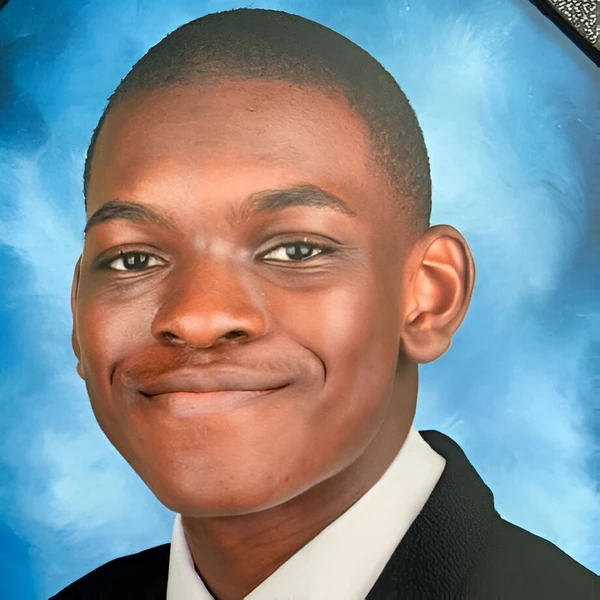
Oluwatosin Daudu
1x
FinalistOluwatosin Daudu
1x
FinalistBio
I believe technology has the power to transform lives—and I’m determined to be one of the minds behind that transformation.
My name is Oluwatosin Daudu, and I am an African American student
currently majoring in Computer Science at Florida A&M University (FAMU). I come from a family of African immigrants who have always emphasized the importance of education and resilience. As the youngest of four siblings and the child of two college-educated parents, I’ve been inspired by the example of hard work, perseverance, and service to others.
I am deeply passionate about technology and driven by a desire to understand both the hardware and software that power our digital world. My ultimate goal is to build a career that bridges these two areas—developing innovative, practical solutions that improve people’s lives. Whether it's designing efficient systems or coding meaningful applications, I’m excited by the endless potential of technology to solve real-world problems.
Beyond academics, I value compassion, empathy, and community. I believe in lifting others as I climb, and I strive to bring kindness and understanding into everything I do, both in and outside the classroom.
I am a strong candidate for scholarships because I combine academic dedication with a clear vision for my future. I bring not only technical potential but also a sense of purpose, cultural awareness, and a commitment to using my education to make a difference. Supporting me means investing in someone who is determined, community-minded, and ready to lead with both skill and heart.
Education
Florida Agricultural and Mechanical University
Bachelor's degree programMajors:
- Computer Science
Miscellaneous
Desired degree level:
Master's degree program
Graduate schools of interest:
Transfer schools of interest:
Majors of interest:
Career
Dream career field:
Computer Software
Dream career goals:
Sports
Basketball
Club2019 – 20201 year
Arts
DINAMICS ENTERPRISES, LLC
Design2023 – 2024
Public services
Volunteering
Metropolitan Ministries — Individual Volunteer in the Community2019 – 2023
Chadwick D. McNab Memorial Scholarship
Growing up, I always rushed to finish my classwork quickly so I could read the "coveted" science magazines in the classroom. These magazines showcased remarkable achievements by scientists and engineers worldwide, but one issue focused on DARPA robotics stood out to me. The idea that machines could operate autonomously, powered by decades of physics and technology, completely blew my 11-year-old mind. Seeing how these innovations impacted communities like mine sparked a deep desire to contribute to technological progress in meaningful ways. I realized I wanted to design accessible systems—especially in education, healthcare, and my own community—that could improve lives.
As a second-generation Nigerian, I’ve often been the only Black student in my computer science classes, navigating spaces where few share my cultural background. My parents, one Igbo and the other Yoruba, immigrated to the United States with the dream of providing a better future for their children. They instilled in me a deep respect for education and hard work. Carrying my heritage and dreams into these academic spaces is a responsibility I don’t take lightly. I want not only to succeed but also to change the narrative—mentoring others to ensure students like me don’t fall through the cracks due to a lack of representation or support.
One project that truly ignited my passion for technology was creating my own compiler and parser. While this might seem technical or abstract, for me, it was like building my own language—a set of rules to bring new programs to life. The process was challenging, and my first attempt was imperfect, but it opened my eyes to how programming is more than writing apps; it’s about constructing tools that empower creative expression and problem-solving at a fundamental level. Unlike many who focus on popular trends like AI, I found inspiration in building the foundational tools—those that make programming itself possible like compilers.
Since then, I’ve continued to develop projects related to parsers and compilers, including an Entity Component System (ECS) and a new version of my “MEEP” (Mathematical Expressions Evaluator Program) calculator program. These projects push me to deepen my technical skills while focusing on accessibility and innovation.
Working in technology inspires me because it offers limitless ways to impact the world. I want to use my skills to make educational tools affordable and accessible, breaking down barriers for students who face economic and social challenges like I once did. Whether through developing open-source software or mentoring others in STEM, I am driven by the goal of creating inclusive opportunities that empower communities like mine.
This journey—from reading those early science magazines, to building my own compiler, to mentoring others—fuels my passion and purpose in technology. It’s not just about what I create, but how those creations can help others find their place in the world of innovation.
Since then, I’ve continued to develop projects around these concepts, including an Entity Component System (ECS) architecture and an upcoming version of my “MEEP” calculator program. Each project deepens my understanding and challenges me to build more efficient and accessible tools.
Working in technology inspires me because it offers endless opportunities to solve real-world problems and create impact. I hope to use my skills to improve the education system by developing accessible and affordable technological tools, so students from all backgrounds can learn and thrive without barriers.
In essence, my journey from building a rudimentary compiler to working on complex systems fuels my passion for technology—it’s the thrill of creating new languages and tools that can empower others and shape the future.
CEW IV Foundation Scholarship Program
To me, being a Purposeful, Responsible, and Productive community member means using my abilities not just for personal gain, but to uplift others—especially those who face systemic barriers to opportunity. It means identifying problems that hold people back and actively working toward solutions that are sustainable, inclusive, and empowering. It’s about showing up, following through, and building something greater than yourself.
Growing up, I used to rush through my classwork just to read the “coveted” science magazines in the classroom. They were filled with stories of incredible innovations—robots, satellites, and life-changing devices powered by decades of engineering and scientific progress. At just 11 years old, I was mesmerized. But what struck me even more than the inventions themselves was how these technologies, created by people far away, were transforming lives in my own community. I knew then that I wanted to be part of that movement—to contribute to a better world through technology.
As a child, I began by taking apart old TVs and other broken electronics, trying to understand how they worked. My resources were limited, but my curiosity wasn’t. Eventually, I discovered programming, and with it, a way to turn ideas into reality—limited only by my imagination and effort.
Now, as a computer science major with a strong interest in math and physics, I’m putting that curiosity to work in a purposeful way. One issue I’ve committed myself to is educational inequality, particularly the lack of access to technological tools in underserved communities. Tools like the TI-84 calculator—still required in many schools—can cost over $100, pricing out many students. Coming from a working-class Nigerian immigrant family, I’ve felt this tension myself: the drive to succeed, and the challenge of doing so without placing more pressure on my parents. That’s why I’m developing a modern, open-source calculator system—completely free, intuitive, and accessible. I believe no student should be held back because they can’t afford the tools others take for granted.
But responsibility doesn’t stop at building software. It also means investing in people. I mentor students online in math, physics, and computer science—often those who share my background or struggles. I want them to see that they belong in STEM spaces, even when it doesn’t feel that way. I work to create more inclusive environments in every classroom or lab I enter, so others feel welcome, supported, and capable.
To be purposeful is to know why I do this. To be responsible is to follow through. To be productive is to create real impact in my community—whether through mentorship or technology. I plan to carry these values into every chapter of my life: as a student, a technologist, and a community member. My goal isn’t just to succeed in tech—it’s to transform it, so others like me don’t have to fight so hard just to belong.
West Family Scholarship
Growing up I used to rush to finish my classwork early in hopes of being able to read one of the “coveted” science magazines in the classroom. These captivating magazines depicted these amazing achievements from scientists and engineers around the world. The culmination of decades of physics and technology allowed for incredible inventions and machines I couldn't even dream of.
That alone blew my 11 year old mind, however when I saw how much of an impact these devices had and propagated throughout the world to the point that I was able to see such technology implemented in my own community I knew for certain that I needed to be a part of this technological movement. I wanted to contribute my own ideas to help the world in what would be in my mind the most fascinating way, technology. Although ambitious, there was very little I could actually do as a child so I started with what I could: taking apart broken devices. By taking things like old TVs apart analyzing their components, putting them back together, or even trying to fix them, I was able to build my knowledge of electronics. But limited by supplies I couldn’t necessarily bring my ideas into reality until I can across programming where the programs I wrote were only limited by my own creativity and skill.
Technological access in underserved communities has long been an obstacle to educational equity, especially in STEM fields. As a computer science major with deep interests in math and physics, I’ve experienced firsthand how costly educational tools—like the TI-84 calculator—can be a barrier to learning. Despite being a decades-old device, it still costs over $100, largely due to the monopoly held by Texas Instruments in educational standards. For many students, especially in low-income or marginalized communities, such expenses can create insurmountable gaps in their academic journey.
Coming from a working-class Nigerian immigrant household, I learned to value education and hard work, but also how to be resourceful. The pressure to succeed without overburdening my parents taught me just how expensive "success" could be when access to necessary tools isn't equitable. That realization planted the seed for a solution rooted in my own passions: I’m currently developing a modern, open-source calculator system that’s accessible and free to use. My aim is to eliminate unnecessary cost barriers by providing students with powerful, intuitive tools that don’t compromise on functionality. It’s more than a technical project—it’s a way to give students the same academic footing I fought hard to find.
In addition to this project, I mentor students online in math, physics, and computer science—subjects that are often intimidating without the right support. I serve as a guide and role model, particularly for students of color and immigrant backgrounds who may feel out of place in STEM spaces. I don’t just want them to succeed academically; I want them to feel like they belong. Every time I walk into a classroom or lab, I carry not only my GPA but the responsibility to create more inclusive, welcoming spaces in tech. I want to ensure students like me aren’t left behind—not because of talent, but because of tools.
Whether through building open-source educational software or mentoring others in STEM, I’m working to create a future where access isn’t a privilege—it’s a right. By uplifting my community through both code and connection, I hope to bridge the digital divide and expand what’s possible for students like me.
Marie Jean Baptiste Memorial Scholarship
Growing up, I always rushed to finish my classwork so I could get my hands on the "coveted" science magazines in the classroom. These magazines showcased remarkable achievements by scientists and engineers around the world, but the most unforgettable issue for me was one focused on DARPA robotics. The idea that machines could operate autonomously, powered by decades of advancements in physics and technology, completely blew my 11-year-old mind. Seeing these innovations—and understanding their global impact, especially in communities like mine—sparked a desire to contribute to the progress of technology. I realized I didn’t just want to marvel at the future—I wanted to build it. I became passionate about designing accessible systems that could improve lives.
As a second-generation Nigerian, I’ve often been the only Black student in my computer science classes and rarely share the same cultural background as my peers. My parents, one Igbo and the other Yoruba, immigrated to the United States with the dream of providing a better future for their children. They instilled in me a deep respect for education, resilience, hard work, and responsibility.
This sense of responsibility has shaped how I show up for others. At home, I support my family by helping with strenuous tasks my parents can no longer do and by managing technical needs—everything from troubleshooting devices to setting up home systems. These contributions might seem small, but they’re a meaningful way I give back to the people who gave me everything.
In my community, I’ve remained active through service and mentorship. I’ve logged nearly 130 volunteer hours at Metropolitan Ministries, where I helped distribute resources to those in need. I also serve on my church’s tech team, running audiovisual systems to ensure services are accessible to all, including remote viewers. Additionally, I tutor students online in subjects like computer science, math, and physics. Many of them are just beginning to explore these fields, and I’ve made it a mission to guide them through the same challenges I once faced.
Looking forward, I’m committed to expanding this impact. I plan to help underrepresented Black students enter and thrive in tech, using mentorship, advocacy, and outreach to create pathways that didn’t always exist for people like me. I also hope to develop systems that provide more equitable access to education—platforms that highlight underserved areas and optimize the delivery of resources to students in need. Whether it’s through nonprofit partnerships or tech-driven solutions, I want to build something that lasts beyond me—something that lifts others up.
As the youngest child in a working-class family, I’ve always tried not to place additional pressure on my parents, who’ve done everything they can to support me. This scholarship would give me the freedom to focus more on coursework and career-building opportunities at FAMU, without the constant worry of financial strain. It would open doors to internships, research, and networking opportunities I might otherwise have to pass up—allowing me to build the future I dreamed about all those years ago, flipping through those science magazines.
Private (PVT) Henry Walker Minority Scholarship
Growing up, I always rushed to finish my classwork quickly so I could read the "coveted" science magazines in the classroom. These magazines showcased remarkable achievements by scientists and engineers around the world, but the most unforgettable issue for me was one focused on DARPA robotics. The thought that machines could operate autonomously, powered by decades of advancements in physics and technology, completely blew my 11-year-old mind. Seeing these innovations and understanding their global impact, especially how they were integrated into communities like mine, sparked a deep desire to contribute to such technological progress. I realized I wanted to design accessible systems—especially in education, healthcare, and within my own community—that could improve lives.
As a second-generation Nigerian, I’ve often been the only Black student in my computer science classes, and rarely do I share the same cultural background as my peers. My parents, one Igbo and the other Yoruba, immigrated to the United States with the dream of providing a better future for their children. They faced many challenges, but they raised me with a deep value for education and hard work. However, no one could prepare me for the weight of carrying my dreams—and my heritage—into spaces where students who look like me are few and far between. When I walk into a classroom or lab, I don’t just carry my GPA; I carry the belief that students like me—especially those from immigrant backgrounds—belong in these spaces too. I don't just want to succeed; I want to change the narrative, to serve as a mentor, and to ensure that students like me don't fall through the cracks because of a lack of representation or support.
This sense of responsibility has driven me to give back. Despite being a student myself, I’ve taken the initiative to mentor others in my community—particularly helping students online with difficult subjects like programming, math, and physics. In doing so, I’ve been able to share the knowledge I’ve gained and help others navigate challenges that I once faced. Throughout my high school career I have logged nearly 300 services hours volunteering at Metropolitan Ministries, where I was able to meet and help many members of my community in unfortunate situations. When listening to their stories I so often heard how they were unable to obtain the resources they need. Whether it be due to living in food deserts or costly supplies costs, I hope one day to fix this through highlighting areas in need and optimize the system for delivery. Through these efforts, I hope to foster a sense of belonging and empowerment for other young people from immigrant backgrounds who might feel like they don’t have a place in STEM fields.
The Private Henry Walker Minority Scholarship would have a profound impact on my educational journey and career. Financially, it would ease the burden I’ve been carrying, especially after a particularly mentally exhausting semester. This scholarship would allow me to focus more on my coursework and career-building opportunities at Florida A&M University, without the constant worry of financial constraints. As the youngest child in a working-class family, I try not to place additional pressure on my parents, who have always done their best to support me. This scholarship would bring a sense of stability that would empower me to pursue opportunities that I might otherwise have to pass up—whether it’s internships, research, or expanding my network in STEM.
Carlos F. Garcia Muentes Scholarship
Growing up, I always rushed to finish my classwork quickly so I could read the "coveted" science magazines in the classroom. These magazines showcased remarkable achievements by scientists and engineers around the world, but the most unforgettable issue for me was one focused on DARPA robotics. The thought that machines could operate autonomously, powered by decades of advancements in physics and technology, completely blew my 11-year-old mind. Seeing these innovations and understanding their global impact, especially how they were integrated into communities like mine, sparked a deep desire to contribute to such technological progress. I realized I wanted to design accessible systems—especially in education, healthcare, and within my own community—that could improve lives.
As a second-generation Nigerian, I’ve often been the only Black student in my computer science classes, and rarely do I share the same cultural background as my peers. My parents, one Igbo and the other Yoruba, immigrated to the United States with the dream of providing a better future for their children. They faced many challenges, but they raised me with a deep value for education and hard work. However, no one could prepare me for the weight of carrying my dreams—and my heritage—into spaces where students who look like me are few and far between. When I walk into a classroom or lab, I don’t just carry my GPA; I carry the belief that students like me—especially those from immigrant backgrounds—belong in these spaces too. I don't just want to succeed; I want to change the narrative, to serve as a mentor, and to ensure that students like me don't fall through the cracks because of a lack of representation or support.
This sense of responsibility has driven me to give back. My parents have endured countless hardships and overcome relentless obstacles—not only to build a life for themselves as immigrants in this country, but also to earn college degrees and ensure that each of their four children had greater opportunities than they did. Their determination and sacrifices made it possible for all of us to attend college, a testament to their unwavering commitment to our future. Despite being a student myself, I’ve taken the initiative to mentor others in my community—particularly helping students online with difficult subjects like programming, math, and physics. In doing so, I’ve been able to share the knowledge I’ve gained and help others navigate challenges that I once faced. Through these efforts, I hope to foster a sense of belonging and empowerment for other young people from immigrant backgrounds who might feel like they don’t have a place in STEM fields.
The Carlos F. Garcia Muentes Scholarship would have a profound impact on my educational journey and career. Financially, it would ease the burden I’ve been carrying, especially after a particularly mentally exhausting semester. This scholarship would allow me to focus more on my coursework and career-building opportunities at Florida A&M University, without the constant worry of financial constraints. As the youngest child in a working-class family, I try not to place additional pressure on my parents, who have always done their best to support me. This scholarship would bring a sense of stability that would empower me to pursue opportunities that I might otherwise have to pass up—whether it’s internships, research, or expanding my network in STEM.
Hines Scholarship
The past semesters I was buried under my college responsibilities, mentally exhausted, and questioning if I still had what it took to pursue computer science. But even in the worst moments, I kept coming back to the same thing: “I like this work”. I like methodically analyzing programming bugs for hours. I like opening up a device to figure out why it’s not working. I like the feeling when the logic finally clicks into place. That stubborn curiosity—combined with the belief that I can build something meaningful—is why I chose this field and why I’m still here.
Growing up I used to rush to finish my classwork early in hopes of being able to read one of the “coveted” science magazines in the classroom. These captivating magazines depicted these amazing achievements from scientists and engineers around the world. The culmination of decades of physics and technology allowed for incredible inventions and machines I couldn't even dream of.
That alone blew my 11 year old mind, however when I saw how much of an impact these devices had and propagated throughout the world to the point that I was able to see such technology implemented in my own community I knew for certain that I needed to be a part of this technological movement. I wanted to contribute my own ideas to help the world in what would be in my mind the most fascinating way, technology. Although ambitious, there was very little I could actually do as a child so I started with what I could: taking apart broken devices. By taking things like old TVs apart analyzing their components, putting them back together, or even trying to fix them, I was able to build my knowledge of electronics.
Currently I am working on deepening my knowledge, gaining hands-on experience through internships, becoming confident in applying theory to real-world challenges, and graduating with a degree in Computer Science. In the long term, I want to work on designing systems that are both technically elegant and accessible, particularly in spaces like education, healthcare, and within my community—where smart design can have a real impact.
Being a Black student in computer science comes with an awareness that you’re often the only one who looks like you in the room. My parents, African American immigrants who went to college themselves, raised me to value education—but no one really prepared me for how isolating or heavy it can feel to carry your dreams and representation at the same time. There’s pressure, but there’s also purpose. When I walk into a lab or class, I carry more than just my GPA—I carry the possibility that others like me belong in this field too. That belief shapes my goals. I don’t just want to succeed—I want to be part of changing the environment I’m in. I want to mentor, to give back, and to help break the pattern where students like me fall through the cracks due to lack of support or representation.
That’s part of why this scholarship matters. Financially, it would ease the weight I’ve been carrying, especially after a mentally exhausting semester. It would allow me to focus more on coursework and career-building opportunities at FAMU without constantly worrying about money. My parents have always done their best to support me, but as the last born in a working-class family, I try not to place any extra burden on them. This scholarship would be a step toward stability, which would give me the freedom to pursue opportunities I might otherwise have to pass up.
Larry Joe Gardner Memorial Scholarship for Public Policy
Growing up, I always rushed to finish my classwork quickly so I could read the "coveted" science magazines in the classroom. These magazines showcased remarkable achievements by scientists and engineers around the world, but the most unforgettable issue for me was one focused on DARPA robotics. The thought that machines could operate autonomously, powered by decades of advancements in physics and technology, completely blew my 11-year-old mind. Seeing these innovations and understanding their global impact, especially how they were integrated into communities like mine, sparked a deep desire to contribute to such technological progress. I realized I wanted to design accessible systems—especially in education, healthcare, and within my own community—that could improve lives.
As a second-generation Nigerian, I’ve often been the only Black student in my computer science classes, and rarely do I share the same cultural background as my peers. My parents, one Igbo and the other Yoruba, immigrated to the United States with the dream of providing a better future for their children. They faced many challenges, but they raised me with a deep value for education and hard work. However, no one could prepare me for the weight of carrying my dreams—and my heritage—into spaces where students who look like me are few and far between. When I walk into a classroom or lab, I don’t just carry my GPA; I carry the belief that students like me—especially those from immigrant backgrounds—belong in these spaces too. I don't just want to succeed; I want to change the narrative, to serve as a mentor, and to ensure that students like me don't fall through the cracks because of a lack of representation or support.
This sense of responsibility has driven me to give back. Despite being a student myself, I’ve taken the initiative to mentor others in my community—particularly helping students online with difficult subjects like programming, math, and physics. In doing so, I’ve been able to share the knowledge I’ve gained and help others navigate challenges that I once faced. Throughout my high school career I have logged nearly 300 services hours volunteering at Metropolitan Ministries, where I was able to meet and help many members of my community in unfortunate situations. When listening to their stories I so often heard how they were unable to obtain the resources they need. Whether it be due to living in food deserts or costly supplies costs, I hope one day to fix this through highlighting areas in need and optimize the system for delivery. Through these efforts, I hope to foster a sense of belonging and empowerment for other young people from immigrant backgrounds who might feel like they don’t have a place in STEM fields.
The Larry Joe Gardner Memorial Scholarship would have a profound impact on my educational journey and career. Financially, it would ease the burden I’ve been carrying, especially after a particularly mentally exhausting semester. This scholarship would allow me to focus more on my coursework and career-building opportunities at Florida A&M University, without the constant worry of financial constraints. As the youngest child in a working-class family, I try not to place additional pressure on my parents, who have always done their best to support me. This scholarship would bring a sense of stability that would empower me to pursue opportunities that I might otherwise have to pass up—whether it’s internships, research, or expanding my network in STEM.
Zedikiah Randolph Memorial Scholarship
Growing up, I always rushed to finish my classwork quickly so I could read the "coveted" science magazines in the classroom. These magazines showcased remarkable achievements by scientists and engineers around the world, but the most unforgettable issue for me was one focused on DARPA robotics. The thought that machines could operate autonomously, powered by decades of advancements in physics and technology, completely blew my 11-year-old mind. Seeing these innovations and understanding their global impact, especially how they were integrated into communities like mine, sparked a deep desire to contribute to such technological progress. I realized I wanted to design accessible systems—especially in education, healthcare, and within my own community—that could improve lives.
As a second-generation Nigerian, I’ve often been the only Black student in my computer science classes, and rarely do I share the same cultural background as my peers. My parents, one Igbo and the other Yoruba, immigrated to the United States with the dream of providing a better future for their children. They faced many challenges, but they raised me with a deep value for education and hard work. However, no one could prepare me for the weight of carrying my dreams—and my heritage—into spaces where students who look like me are few and far between. With only 8% of the tech industry being made of African Americans, many don't get the opportunity to pursue such careers. When I walk into a classroom or lab, I don’t just carry my GPA; I carry the belief that students like me—especially those from immigrant backgrounds—belong in these spaces too. I don't just want to succeed; I want to change the narrative, to serve as a mentor, and to ensure that students like me don't fall through the cracks because of a lack of representation or support.
This sense of responsibility has driven me to give back. Despite being a student myself, I’ve taken the initiative to mentor others in my community—particularly helping students online with difficult subjects like programming, math, and physics. In doing so, I’ve been able to share the knowledge I’ve gained and help others navigate challenges that I once faced. Through these efforts, I hope to foster a sense of belonging and empowerment for other young people from immigrant backgrounds who might feel like they don’t have a place in STEM fields.
The Zedikiah Randolph Memorial Scholarship would have a profound impact on my educational journey and career. Financially, it would ease the burden I’ve been carrying, especially after a particularly mentally exhausting semester. This scholarship would allow me to focus more on my coursework and career-building opportunities at Florida A&M University, without the constant worry of financial constraints. As the youngest child in a working-class family, I try not to place additional pressure on my parents, who have always done their best to support me. This scholarship would bring a sense of stability that would empower me to pursue opportunities that I might otherwise have to pass up—whether it’s internships, research, or expanding my network in STEM.
Beyond the financial support, this scholarship would serve as a powerful reminder that our contributions to technology can shape the world. I aspire to create solutions that are both innovative and inclusive, ultimately benefiting communities like mine. Receiving this scholarship would help me get one step closer to that vision.
Dr. Soronnadi Nnaji Legacy Scholarship
Growing up, I always rushed to finish my classwork quickly so I could read the "coveted" science magazines in the classroom. These magazines showcased remarkable achievements by scientists and engineers around the world, but the most unforgettable issue for me was one focused on DARPA robotics. The thought that machines could operate autonomously, powered by decades of advancements in physics and technology, completely blew my 11-year-old mind. Seeing these innovations and understanding their global impact, especially how they were integrated into communities like mine, sparked a deep desire to contribute to such technological progress. I realized I wanted to design accessible systems—especially in education, healthcare, and within my own community—that could improve lives.
As a second-generation Nigerian, I’ve often been the only Black student in my computer science classes, and rarely do I share the same cultural background as my peers. My parents, one Igbo and the other Yoruba, immigrated to the United States with the dream of providing a better future for their children. They faced many challenges, but they raised me with a deep value for education and hard work. However, no one could prepare me for the weight of carrying my dreams—and my heritage—into spaces where students who look like me are few and far between. When I walk into a classroom or lab, I don’t just carry my GPA; I carry the belief that students like me—especially those from immigrant backgrounds—belong in these spaces too. I don't just want to succeed; I want to change the narrative, to serve as a mentor, and to ensure that students like me don't fall through the cracks because of a lack of representation or support.
This sense of responsibility has driven me to give back. Despite being a student myself, I’ve taken the initiative to mentor others in my community—particularly helping students online with difficult subjects like programming, math, and physics. In doing so, I’ve been able to share the knowledge I’ve gained and help others navigate challenges that I once faced. Through these efforts, I hope to foster a sense of belonging and empowerment for other young people from immigrant backgrounds who might feel like they don’t have a place in STEM fields.
The Dr. Soronnadi Nnaji Legacy Scholarship would have a profound impact on my educational journey and career. Financially, it would ease the burden I’ve been carrying, especially after a particularly mentally exhausting semester. This scholarship would allow me to focus more on my coursework and career-building opportunities at Florida A&M University, without the constant worry of financial constraints. As the youngest child in a working-class family, I try not to place additional pressure on my parents, who have always done their best to support me. This scholarship would bring a sense of stability that would empower me to pursue opportunities that I might otherwise have to pass up—whether it’s internships, research, or expanding my network in STEM.
Beyond the financial support, the legacy of Dr. Soronnadi Nnaji, an African pioneer in STEM, would serve as a powerful reminder that our contributions to technology can shape the world. I aspire to continue his work, using my knowledge and skills to create solutions that are both innovative and inclusive, ultimately benefiting communities like mine. Receiving this scholarship would help me get one step closer to that vision.
Chris Jackson Computer Science Education Scholarship
The past semesters I was buried under my college responsibilities, mentally exhausted, and questioning if I still had what it took to pursue computer science. But even in the worst moments, I kept coming back to the same thing: “I like this work”. I like methodically analyzing programming bugs for hours. I like opening up a device to figure out why it’s not working. I like the feeling when the logic finally clicks into place. That stubborn curiosity—combined with the belief that I can build something meaningful—is why I chose this field and why I’m still here.
Growing up I used to rush to finish my classwork early in hopes of being able to read one of the “coveted” science magazines in the classroom. These captivating magazines depicted these amazing achievements from scientists and engineers around the world. The culmination of decades of physics and technology allowed for incredible inventions and machines I couldn't even dream of.
That alone blew my 11 year old mind, however when I saw how much of an impact these devices had and propagated throughout the world to the point that I was able to see such technology implemented in my own community; I knew for certain that I needed to be a part of this technological movement. Although ambitious, there was very little I could actually do as a child so I started with what I could: taking apart broken devices. By taking things like old TVs apart analyzing their components, putting them back together, or even trying to fix them, I was able to build my knowledge of electronics.
Being a Black student in computer science comes with an awareness that you’re often the only one who looks like you in the room. My parents, African American immigrants who went to college themselves, raised me to value education—but no one really prepared me for how isolating or heavy it can feel to carry your dreams and representation at the same time. There’s pressure, but there’s also purpose. When I walk into a lab or class, I carry more than just my GPA—I carry the possibility that others like me belong in this field too. I don’t just want to succeed—I want to be part of changing the environment I’m in. I want to mentor, to give back, and to help break the pattern where students like me fall through the cracks due to lack of support or representation.
That’s part of why this scholarship matters. Financially, it would ease the weight I’ve been carrying, especially after a mentally exhausting semester. It would allow me to focus more on coursework and career-building opportunities at FAMU without constantly worrying about money. My parents have always done their best to support me, but as the last born in a working-class family, I try not to place any extra burden on them. This scholarship would be a step toward stability, which would give me the freedom to pursue opportunities I might otherwise have to pass up.
Byte into STEM Scholarship
The past semesters I was buried under my college responsibilities, mentally exhausted, and questioning if I still had what it took to pursue computer science. But even in the worst moments, I kept coming back to the same thing: “I like this work”. I like methodically analyzing programming bugs for hours. I like opening up a device to figure out why it’s not working. I like the feeling when the logic finally clicks into place. That stubborn curiosity—combined with the belief that I can build something meaningful—is why I chose this field and why I’m still here.
Growing up I used to rush to finish my classwork early in hopes of being able to read one of the “coveted” science magazines in the classroom. These captivating magazines depicted these amazing achievements from scientists and engineers around the world. The culmination of decades of physics and technology allowed for incredible inventions and machines I couldn't even dream of.
That alone blew my 11 year old mind, however when I saw how much of an impact these devices had and propagated throughout the world to the point that I was able to see such technology implemented in my own community I knew for certain that I needed to be a part of this technological movement. I wanted to contribute my own ideas to help the world in what would be in my mind the most fascinating way, technology. Although ambitious, there was very little I could actually do as a child so I started with what I could: taking apart broken devices. By taking things like old TVs apart analyzing their components, putting them back together, or even trying to fix them, I was able to build my knowledge of electronics.
Currently I am working on deepening my knowledge, gaining hands-on experience through internships, becoming confident in applying theory to real-world challenges, and graduating with a degree in Computer Science. In the long term, I want to work on designing systems that are both technically elegant and accessible, particularly in spaces like education, healthcare, and within my community—where smart design can have a real impact.
Being a Black student in computer science comes with an awareness that you’re often the only one who looks like you in the room. My parents, African American immigrants who went to college themselves, raised me to value education—but no one really prepared me for how isolating or heavy it can feel to carry your dreams and representation at the same time. There’s pressure, but there’s also purpose. When I walk into a lab or class, I carry more than just my GPA—I carry the possibility that others like me belong in this field too. That belief shapes my goals. I don’t just want to succeed—I want to be part of changing the environment I’m in. I want to mentor, to give back, and to help break the pattern where students like me fall through the cracks due to lack of support or representation.
That’s part of why this scholarship matters. Financially, it would ease the weight I’ve been carrying, especially after a mentally exhausting semester. It would allow me to focus more on coursework and career-building opportunities at FAMU without constantly worrying about money. My parents have always done their best to support me, but as the last born in a working-class family, I try not to place any extra burden on them. This scholarship would be a step toward stability, which would give me the freedom to pursue opportunities I might otherwise have to pass up.
Simon Strong Scholarship
The mourning dove is a bird that one might claim is unremarkable, both in appearance and behavior. While it is abundant in North America, few people have taken the time to learn its name and fewer are able to distinguish it from other birds. Despite this, one aspect of this bird still lingers in the back of my childhood memories, its call. Originally named after its “perch coo” the mourning dove’s song was described as mournful and saddening. However, the tale of sadness for the mourning dove is not one that resonates with me, I choose to view its graceful song as a gentle reminder. The mourning dove lives to represent as a perpetual sign of hope to those who are discerning enough to pick it out of a world that feels increasingly hectic. A reminder of a time when I was open and reached out and a reminder of the hope that had empowered me.
Since my youth I have always been very curious, always wondering what was inside of machines, how they worked, and why things were the way they were. From watching videos on the inner workings of technology to seeing if I could replace my mother’s missing car key by jamming a bobby pin in the ignition of her Honda Odyssey. As you might imagine it got stuck and I had to face punishment for my actions that day. Although I have since abandoned my work with car key ignitions and bobby pins, my fascination with the inner workings of machines and technology developed into other realms. Over time, I became captivated by system design within technology; this captivation evolved into an increasing interest in coding and computing. Technology fed my curiosity and allowed me to express my creativity.
At times, my curiosity got the best of me, and being a child I had little to no filter. One day I asked an insensitive question without considering how it would make that person feel. Experiences such as this made me slightly hesitant to speak up and reach out to others. Due to external factors, I found myself struggling in my academic path but was hesitant to get the help I needed. After taking some time to reorient myself and with help from my family, faith, and an action plan I began to reach out for help. Additionally, I have focused on becoming more willing to make mistakes and moving forward in spite of them, whether it be through opening up more in public speaking or in school work.
Unlike my early childhood mornings spent listening to the mourning dove with my friends while waiting for the bus to come, I have recently learned to value my moments of silence much more. After this point in my life, I spent some time in silence reflecting over my childhood and earlier academic life, asking myself what had I lost? Hope that things would work out, that I could recover from the mistakes I’ve made, and that I wouldn’t be turned away when I reached out for help. In addition to its mournful portrayal of the mourning dove, like most doves it also serves as a symbol of hope. As a student, this dove continues to do so as I to strive for academic excellence and demonstrate the importance of perseverance and continuous improvement. To the many students who struggle with anxiety, self-isolation, and the burden of their mistakes, I would urge them to hold on to every reminder of hope—whatever form it may take.
William A. Lewis Scholarship
The mourning dove is a bird that one might claim is unremarkable, both in appearance and behavior. While it is abundant in North America, few people have taken the time to learn its name and fewer are able to distinguish it from other birds. Despite this, one aspect of this bird still lingers in the back of my childhood memories, its call. Originally named after its “perch coo” the mourning dove’s song was described as mournful and saddening. However, the tale of sadness for the mourning dove is not one that resonates with me, I choose to view its graceful song as a gentle reminder. The mourning dove lives to represent as a perpetual sign of hope to those who are discerning enough to pick it out of a world that feels increasingly hectic. A reminder of a time when I was open and reached out and a reminder of the hope that had empowered me.
Since my youth I have always been very curious, always wondering what was inside of machines, how they worked, and why things were the way they were. From watching videos on the inner workings of technology to seeing if I could replace my mother’s missing car key by jamming a bobby pin in the ignition of her Honda Odyssey. As you might imagine it got stuck and I had to face punishment for my actions that day. Although I have since abandoned my work with car key ignitions and bobby pins, my fascination with the inner workings of machines and technology developed into other realms. Over time, I became captivated by system design within technology; this captivation evolved into an increasing interest in coding and computing. Technology fed my curiosity and allowed me to express my creativity.
At times, my curiosity got the best of me, and being a child I had little to no filter. One day I asked an insensitive question without considering how it would make that person feel. Experiences such as this made me slightly hesitant to speak up and reach out to others. Due to external factors, I found myself struggling in my academic path but was hesitant to get the help I needed. After taking some time to reorient myself and with help from my family, faith, and an action plan I began to reach out for help. Additionally, I have focused on becoming more willing to make mistakes and moving forward in spite of them, whether it be through opening up more in public speaking or in school work.
Unlike my early childhood mornings spent listening to the mourning dove with my friends while waiting for the bus to come, I have recently learned to value my moments of silence much more. After this point in my life, I spent some time in silence reflecting over my childhood and earlier academic life, asking myself what had I lost? Hope that things would work out, that I could recover from the mistakes I’ve made, and that I wouldn’t be turned away when I reached out for help. In addition to its mournful portrayal of the mourning dove, like most doves it also serves as a symbol of hope. As a student, this dove continues to do so as I to strive for academic excellence and demonstrate the importance of perseverance and continuous improvement.
Sewing Seeds: Lena B. Davis Memorial Scholarship
The mourning dove is a bird that one might claim is unremarkable, both in appearance and behavior. While it is abundant in North America, few people have taken the time to learn its name and fewer are able to distinguish it from other birds. Despite this, one aspect of this bird still lingers in the back of my childhood memories, its call. Originally named after its “perch coo” the mourning dove’s song was described as mournful and saddening. However, the tale of sadness for the mourning dove is not one that resonates with me, I choose to view its graceful song as a gentle reminder. The mourning dove lives to represent as a perpetual sign of hope to those who are discerning enough to pick it out of a world that feels increasingly hectic. A reminder of a time when I was open and reached out and a reminder of the hope that had empowered me.
Since my youth I have always been very curious, always wondering what was inside of machines, how they worked, and why things were the way they were. From watching videos on the inner workings of technology to seeing if I could replace my mother’s missing car key by jamming a bobby pin in the ignition of her Honda Odyssey. As you might imagine it got stuck and I had to face punishment for my actions that day. Although I have since abandoned my work with car key ignitions and bobby pins, my fascination with the inner workings of machines and technology developed into other realms. Over time, I became captivated by system design within technology; this captivation evolved into an increasing interest in coding and computing. Technology fed my curiosity and allowed me to express my creativity.
At times, my curiosity got the best of me, and being a child I had little to no filter. One day I asked an insensitive question without considering how it would make that person feel. Experiences such as this made me slightly hesitant to speak up and reach out to others. Due to external factors, I found myself struggling in my academic path but was hesitant to get the help I needed. After taking some time to reorient myself and with help from my family, faith, and an action plan I began to reach out for help. Additionally, I have focused on becoming more willing to make mistakes and moving forward in spite of them, whether it be through opening up more in public speaking or in school work.
Unlike my early childhood mornings spent listening to the mourning dove with my friends while waiting for the bus to come, I have recently learned to value my moments of silence much more. After this point in my life, I spent some time in silence reflecting over my childhood and earlier academic life, asking myself what had I lost? Hope that things would work out, that I could recover from the mistakes I’ve made, and that I wouldn’t be turned away when I reached out for help. In addition to its mournful portrayal of the mourning dove, like most doves it also serves as a symbol of hope. As a student, this dove continues to do so as I to strive for academic excellence and demonstrate the importance of perseverance and continuous improvement.