Hobbies and interests
Acting And Theater
Aerospace
Art
Bible Study
Biology
Chess
Cooking
Hair Styling
Youth Group
Volunteering
Softball
Videography
STEM
Medicine
Oluwajomiloju Adereti
1x
Finalist
Oluwajomiloju Adereti
1x
FinalistBio
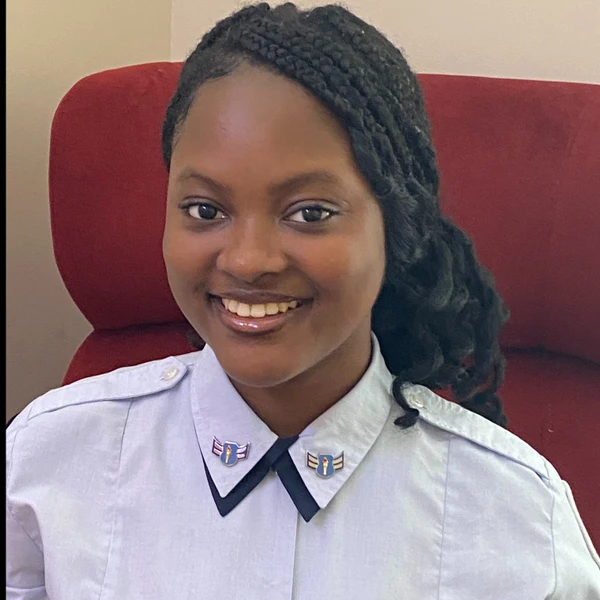
Hello, I am a high school senior passionate about science, research, and community service. Over the past few years, I’ve balanced rigorous academics with hands-on experience in STEM, including internships at top universities where I explored molecular biology and pharmacology. Outside the lab, I dedicate my time to caring for my younger brother and supporting my family, which has taught me resilience, responsibility, and empathy. I’m also active in volunteering, and leadership roles at school. I hope to pursue a career in medicine, combining my love for science with a desire to help others.
Education
Charles Herbert Flowers High
High SchoolMiscellaneous
Desired degree level:
Bachelor's degree program
Majors of interest:
- Medicine
- Microbiological Sciences and Immunology
- Biopsychology
- Biology, General
- Neurobiology and Neurosciences
Career
Dream career field:
Medicine
Dream career goals:
Sports
Softball
Varsity2024 – 2024
Research
Biological and Biomedical Sciences, Other
Upenn, University of Pittsburgh, and healthcare consulting company (Gitamy) — Intern2025 – Present
Public services
Volunteering
Jesus house DC — Helper2022 – Present
Dr. Michal Lomask Memorial Scholarship
My passion for STEM started with my grandmother. Growing up, she was one of the strongest people I knew, so watching her struggle with type 2 diabetes and metabolic dysfunction-associated steatotic liver disease (MASLD) was difficult for me. I remember feeling frustrated that I could not fully understand what was happening to her or how to help. I wanted answers beyond the brief explanations given during doctor visits, so I started researching her condition on my own. The more I read about MASLD and metabolic disease, the more shocked I became by how common and serious these illnesses are. Even though the scientific articles were hard to understand at first, they made me curious instead of intimidated. For the first time, science felt personal to me.
That curiosity pushed me to pursue opportunities where I could learn more about disease and medical research. Through internships at the University of Pennsylvania School of Medicine and Gitamy, a healthcare consulting firm, I was introduced to research involving neurodegenerative and metabolic diseases. Being in those environments opened my eyes to how much work happens behind the scenes in medicine and research. I began to understand that every treatment, discovery, and medical breakthrough starts with people asking questions and searching for solutions.
Wanting to take my interest further, I later worked under Dr. Akinyele at the University of Pittsburgh, where I researched the effects of USP30 deletion in mice and how it impacts MASLD through mitochondrial dysfunction. At first, stepping into a professional research lab was intimidating. I was surrounded by experienced researchers discussing concepts I was still learning, but I pushed myself to grow. Over time, I gained experience working with mammalian cell cultures, assisting with in vivo mouse studies, analyzing data, and presenting during lab meetings. What made the experience even more meaningful was knowing that the research connected back to the type of disease that affected my grandmother. It no longer felt like science happening only in textbooks or laboratories — it felt real and connected to people’s lives.
As my research progressed, I presented my findings at multiple science fairs and symposiums, including the Prince George’s Area Regional Science Fair, where I was named the regional first-place winner in Biomedical Sciences. Presenting my research was nerve-racking at first, but it became one of the most rewarding parts of the experience. Being able to explain my work to judges and researchers made me realize how much I had grown, not only as a student but also as a young scientist. Receiving multiple awards afterward motivated me even more because it showed me that the work I cared so deeply about could make an impact.
My grandmother’s illness sparked my interest in STEM, but my experiences in research showed me how far that passion could go. STEM is meaningful to me because it combines curiosity with purpose. It allows people to search for answers that can improve and even save lives. Because of these experiences, I plan to study neuroscience in college and continue pursuing research related to disease and human health. One day, I hope to become a physician and researcher who helps patients and families facing the same fear and uncertainty that my family once experienced.
Rose Ifebigh Memorial Scholarship
I was born into a Yoruba family, originally from Ile-Ife in Osun State, though I grew up in Lagos before moving to the United States with my family at the age of nine. My parents raised me with pride in our culture, language, and history, and I carried that sense of belonging with me when we immigrated. At first, I was excited about my new life in America, new schools, new possibilities, a new country to call home. But that excitement faded quickly once I entered the classroom.
To my classmates and teachers, I was suddenly “the girl from Africa,” marked by my thick accent, my long and unfamiliar name, and the small differences that made me stand out. I was teased, excluded, and unsure how to fit in. Even though I came from a home filled with pride, school made me question whether my identity was something to show. I felt caught between two cultures, struggling to belong in both.
My experience began to shift when my family joined a church largely made up of Africans. In that community, I felt safe enough to reveal my true self and reclaim my voice. I joined the youth choir despite my fear of performing and later served on the youth group’s Board of Trustees. There, I organized programs that promoted confidence, empathy, and teamwork.
The confidence I rebuilt at church followed me back into school. My teachers and classmates noticed a new steadiness in my voice. I joined the debate club, pursued leadership roles, and began applying for opportunities my younger self would have thought impossible. Each small risk reinforced my sense of self, and I realized that fear no longer had to dictate my decisions.
My interest in science, which had always been present, became deeply personal when I watched my grandmother battle diabetes and a chronic liver disease called MASLD. Seeing her health decline broke my heart and inspired me to act. I sought guidance from scientific literature and mentors to understand her disease, and last summer I worked under Dr. Akinyele at the University of Pittsburgh where I studied the molecular mechanisms behind MASLD. I learned new lab techniques, overcame my initial nervousness, and presented my findings in weekly lab meetings. That experience made me grateful for the confidence I had reclaimed. Additional internships at the University of Pennsylvania and a healthcare consulting firm expanded my understanding of applied biomedical and molecular research.
These experiences confirmed my goal to pursue a Bachelor’s degree in neuroscience and eventually become a physician serving underserved communities, including within the African diaspora. This scholarship would reduce the financial burden on my family and allow me to focus fully on academics, research, and service. It will help support the impact I hope to make in my community and beyond.
Reflecting on the “weird new girl from Africa” who once shrank in classrooms, I am grateful. The challenges I faced shaped my resilience, courage, and sense of identity. I no longer allow fear or others to diminish my voice. Instead, I speak up, step forward, and pursue opportunities that once felt impossible.