
Hobbies and interests
Soccer
Track and Field
Advocacy And Activism
Athletic Training
Business And Entrepreneurship
Church
Viola
Teaching
Reading
Young Adult
History
I read books multiple times per week
Oliviah Walton
1x
Finalist
Oliviah Walton
1x
FinalistBio
Hello! My name is Oliviah Walton. I am a Filipino-American student at St. Mary’s College of Maryland, majoring in business administration. I am also on the school's soccer and track teams.
My goal is to complete my business degree with a focus on sports management and operations. While I plan to play soccer professionally, I also want to coach and inspire a new generation of soccer players, especially kids from marginalized communities. I am working on getting my coaching license, volunteering as an assistant at my soccer club. I also hope to leverage my business degree to make competitive youth soccer accessible to families with limited financial resources.
Education
St. Mary's College of Maryland
Bachelor's degree programMajors:
- Sports, Kinesiology, and Physical Education/Fitness
- Business, Management, Marketing, and Related Support Services, Other
Minors:
- Political Science and Government
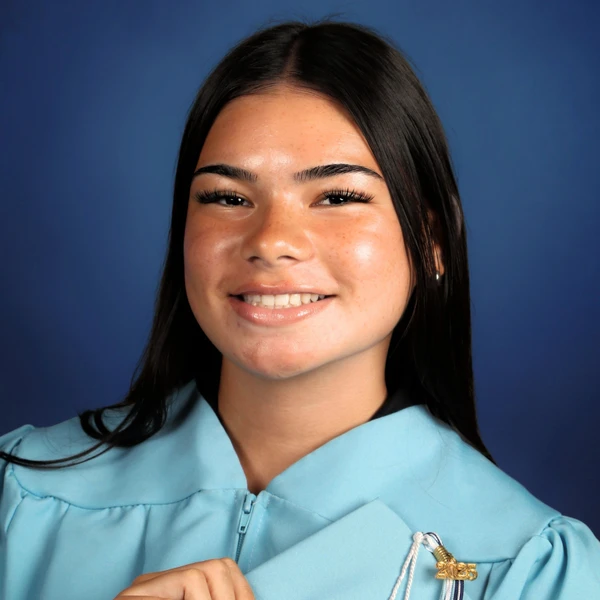
Saint Vincent Pallotti High School
High SchoolMiscellaneous
Desired degree level:
Bachelor's degree program
Graduate schools of interest:
Transfer schools of interest:
Majors of interest:
- Business, Management, Marketing, and Related Support Services, Other
- Sports, Kinesiology, and Physical Education/Fitness
Career
Dream career field:
Sports
Dream career goals:
Sports Management/Professional Athlete
Assistant Coach
A3 Soccer2022 – Present4 years
Sports
Track & Field
Varsity2023 – Present3 years
Awards
- Qualifier, New Balance Outdoor Track Nationals (2025) - 4x100mR, 4x200mR
- Coach's Award, Pallotti HS Outdoor Track & Field (2025)
- First Place - 4x100mR, IAAM Outdoor Track Championships (2025)
- First Place - 4x200mR, IAAM Outdoor Track Championships (2025)
- First Place - 4x400mR, IAAM Outdoor Track Championships (2025)
- Second Place - 400m, IAAM Outdoor Track Championships (2025)
- School Record Holder - 400m, Pallotti HS Outdoor Track & Field (2025)
- School Record Holder - 4x100mR, Pallotti HS Outdoor Track & Field (2025)
- School Record Holder - 4x200mR, Pallotti HS Outdoor Track & Field (2025)
- School Record Holder - 4x400mR, Pallotti HS Outdoor Track & Field (2025)
- School Record Holder - SMR 1600m, Pallotti HS Outdoor Track & Field (2025)
- Top 10 Finisher - 4x400mR, Adidas Indoor Track Nationals (2025)
- Qualifier - 4x200mR, Adidas Indoor Track Nationals (2025)
- Qualifier - 400m, Adidas Indoor Track Nationals (2025)
- Qualifier - 4x400mR, Adidas Indoor Track Nationals (2025)
- Coach's Award, Pallotti HS Indoor Track & Field (2025)
- All-Conference, IAAM Indoor Track & Field (2025)
- Second Place - 4x200mR, IAAM Indoor Track Championships (2025)
- First Place - 4x400mR, IAAM Indoor Track Championships (2025)
- Second Place - 400m, IAAM Indoor Track Championships (2025)
- School Record Holder - 400m, Pallotti HS Indoor Track & Field (2025)
- School Record Holder - 500m, Pallotti HS Indoor Track & Field (2025)
- School Record Holder - 4x200mR, Pallotti HS Indoor Track & Field (2025)
- School Record Holder - 4x400mR, Pallotti HS Indoor Track & Field (2025)
- All-Conference, IAAM Outdoor Track & Field (2024)
- First Place - 4x200mR, IAAM Outdoor Track Conference Championships (2024)
- School Record Holder - 4x200mR, Pallotti HS Outdoor Track (2024)
- School Record Holder - 4x100mR, St. Mary's College of MD Outdoor Track (2026)
- School Record Holder - 4x400mR, St. Mary's College of MD Outdoor Track (2026)
Soccer
Varsity2021 – Present5 years
Awards
- Most Valuable Player, Pallotti HS Girls Soccer (2024)
- All-Conference, IAAM Varsity Girls Soccer (2023)
Football
Varsity2023 – 20252 years
Awards
- Awardee, National Football Foundation of Greater Baltimore Scholar-Athlete Awards (2025)
- Special Teams Most Valuable Player, Pallotti HS Football (2024)
- Academic Leadership Award, Pallotti HS Football (2024)
Soccer
Club2016 – Present10 years
Awards
- Qualifier, 2025 USYS Eastern Regional Championship
- Champions - U19G, 2025 Baltimore Mania Tournament
- Two-time Player of the Match, 2022 Southampton Cup
- Captain, A3 Chelsea (2021-2025)
- State Team, Maryland Olympic Development Program (2018-2020)
Arts
High School Orchestra
Music2021 – 2022
Public services
Volunteering
A3 Soccer — Volunteer referee2020 – PresentVolunteering
Union of the Catholic Apostolate — Leader2024 – 2025
Future Interests
Advocacy
Volunteering
Philanthropy
Entrepreneurship
Jeannine Schroeder Women in Public Service Memorial Scholarship
Competitive soccer is tough on the wallets, the parents' wallets more specifically. It involves ever-increasing club fees and uniforms. The more competitive a team is, the more they travel, and that translates to hotels, flights, and gas.
Many families make the sacrifice for their children to afford competitive soccer, because it is about supporting their children's dreams. For some, it also involves a hope that soccer might lead to opportunities for their children to have better lives than their parents have.
My parents wanted both for me. They wanted to support my dream of playing professional soccer since I was three years old, and they wanted me to live a better life than they have. But my vision is slightly different. I have seen firsthand the sacrifices they made: finding a competitive club that could work within our family budget, working extra hours, hunting down scholarships. I understand the struggle to be seen by people who could bring you to the next level, whether that's college or professional play. Every door that opened for me was held open by someone else, and I want to do the same for kids who aspire to play competitively and for the families who want better for them.
The social issue I am working to address is the pay-to-play crisis in youth soccer. In the United States, financial barriers systematically push out talented kids from low- and middle-income families before they ever get a real chance. Club fees alone can run thousands of dollars per year, and when you add travel, equipment, and training costs, entire communities are priced out of the sport. The kids who don't make it through that filter aren't less talented or less driven; they're just less funded.
As a freshman at St. Mary's College of Maryland, I am playing soccer, running track, and pursuing a business degree with a focus on sports management. I chose this path because of everyone who invested in me when the system made that investment difficult. My goal is to work directly on dismantling the financial barriers that keep youth soccer inaccessible: building programs, funding pipelines, and community networks that don't require a family to choose between rent and registration fees.
I don't want the next kid with my background to need as much luck as I did. Right now, that looks like studying the business side of sport so I can understand how clubs are funded, how resources are allocated, and where change is actually possible. I hope that my hard work and focus can lead me to being in rooms where decisions get made and advocating for structural reform through scholarships, subsidized club models, and partnerships that bring competitive soccer to communities that have been overlooked.
The talent is there. The dreams are there. What's missing is access, and that's what I intend to spend my career building.
Every door that was held open for me had a person behind it who believed the opportunity was worth giving. I want to be that person, not just for one kid, but for as many as I can reach.
Breeze Sports Scholarship
My kids call me Coach Tiny Baby Lame.
I have volunteered as an assistant coach for a team of 12-year-old boys for the last four years. What started as a way to earn community service hours has become one of the clearest answers to why I want a career in sports. Since I was only a few years older (and a few inches taller) when I started, my coaches realized I could reach the boys in ways others could not. I am the one they sent to talk to our striker after he missed the game-winning penalty kick at a championship game. I told him that missed penalty kicks do not get to define who we are as players, to which he responded with a hug and a "thanks, Coach." We have a midfielder prone to anxiety attacks, and my job is to pull him aside, get him to breathe, and send him back out after a few jokes. Before penalty kicks, I tease our goalie (the culprit behind my nickname) to get bigger at goal since that is the only way he will ever be taller than me. He does it with a smile to prove a point. These moments inspire me. Sports gave me people who believed in me, and I want to spend my career being that person for others.
Ever since my parents took me to soccer camp at age three, I have dreamed of playing professionally. That path was never easy. I was told I was too slow as a forward, not aggressive enough to contribute to attacks. I trained hard, making time for extra touches in already long days filled with school, practices, and games. I studied game film and professional matches to build my soccer IQ. That work eventually helped my team win the State President's Cup and earned me All-Conference honors. But I know I could not have done it alone.
My coaches saw potential in me when local elite teams did not. They built a new team around overlooked and underestimated players, challenged me to captain it, and taught me to lead with compassion and grace. In four years, we climbed from the bottom division to the highest level of youth soccer in the United States. My parents sacrificed just as much: budgeting, working extra hours, and finding scholarships so I could play at higher levels and attend a private school where I thrived academically. I graduated with honors, broke nine school records in track, and became the first girl to play varsity football at my school, helping them reach the championship and earning Special Teams MVP and a prestigious local football award not given to a woman in 62 years.
Every door that opened for me was held open by someone else first. That is what drives me.
Now, as a freshman at St. Mary's College of Maryland playing soccer and running track, I am pursuing a business degree with a focus on sports management. I chose this major because of those 12-year-old boys and because of everyone who invested in me when the pay-to-play system made that investment difficult. The financial barriers in youth soccer price out entire communities of talented kids whose dreams are just as valid as anyone else's. I want to be among the people who give those kids a fighting chance: building the programs, the networks, and the funding pipelines that my own coaches and family had to piece together for me. A career in sports is not just something I want. It is the most direct way I know how to make a difference.
Brooks Martin Memorial Scholarship
Sharon Walton didn’t take any crap from anyone. Widowed at 47, she barely had time to grieve while raising her young son and caring for her mother. She kept her siblings in line even as adults, and her workplace respected (maybe even feared) her until she retired at 65. But to me, this fierce woman was just Memaw.
A few years ago, my strong, unstoppable Memaw was diagnosed with multiple myeloma, a form of blood cancer. Losing her constant presence in my life hit harder than I expected. Because chemotherapy left her exhausted and vulnerable, she couldn't come around the way she used to, and without her steadying influence, I quietly fell apart. I didn't tell my parents about an abusive high school coach who made me dread the sport I once loved. I tolerated feeling lost in a big school where I was just another face in the crowd. Even though my grades were decent, I only did the bare minimum.
But during one of her visits, Memaw noticed. She reminded me that I had the courage and strength to change the direction of my life. When I confessed I was thinking about transferring schools but worried about the financial strain, she didn't hesitate. She said if I found a school where I felt at home, she and my parents would find a way to make it happen. That simple conversation planted a seed of hope.
Sadly, Memaw passed away just before I started at my new school. She never got to see what her words inspired, but everything I accomplished after was touched by her influence. I rediscovered my love for soccer, became team captain, earned All-Conference honors, and helped lead my club team to a state championship we dedicated to her memory. I became the first female placekicker on the football team, earned Special Teams MVP, and was the first female football player given a prestigious local award in 62 years. I broke nine school records in track and qualified for national competition. I grew as a leader through the Apostolate Union and as Vice President of Student Government. These were things I never imagined doing back at my old school.
When I broke my leg the summer before college, I was devastated. Laying in bed with a cast on my leg was not how I envisioned I would be spending my summer and my supposed first semester as a college student. Yet, I leaned on Memaw's words: “I have the courage and strength to change the direction of my life.” Those 13 words carried me through recovery, physical therapy, and eventually my collegiate track debut, where I helped my team break two school records.
Memaw's battle with cancer taught me that life doesn't pause for hardship; you adapt. She showed me what resilience looks like: enduring the hardest things with humor and grace, and refusing to let difficulty become an excuse for complacency. I don't just carry her memory. I carry her faith in me. Every time I step onto a field, a track, into a leadership role, or a classroom, I take her words to heart and try to be someone worthy of the woman who believed in me when I had stopped believing in myself.
Filipino-American Scholarship
If AI was trying to understand my Filipino-American experience, I don’t think it would fully capture the nuances that make my life story, and my family’s life story, Filipino.
Growing up, I was not really exposed to many Filipinos, short of the occasional visits from family and friends. There were only a handful in the schools I went to, and while I became friends with them, they too had limited exposure to the culture outside of family.
Despite that, my mom and her family (which consisted of Lolo, Lola, and Chi-chi since Tita was too complex for my toddler vocabulary) always made sure I understood and appreciated our family history. We celebrated traditions (do you know how hard it is to find 12 round fruits in the middle of winter?). They took me to Filipino- and Asian-American festivals. Most importantly, we honor our ancestors, mostly through cooking.
My family’s love language is food. Lolo is the head chef and makes traditional Filipino foods, especially during the holidays. Lola’s expertise is lumpia, a regular staple at our family parties. My mom occasionally makes Filipino food for dinner (adobong sitaw is one of my favorites) and would contribute a Filipino dessert once in a while at parties.
While culture is certainly more than food, I don’t think AI could fully understand how my family’s stories are woven into these plates. My Lolo’s recipes were taught to him by his grandmother, who was one of the first women to own a food stand in their town. Lola’s lumpia recipe was the only culinary legacy passed to her by her mother before she was sent to her aunts in the city for a better life. My mom’s knowledge of Filipino dishes was based on her time with her own grandmother, who helped raise her while Lola was in the US working as a nurse and Lolo worked in the next town over. Almost every dish holds a memory, a story that they would pass to me so I can appreciate Filipino resilience and family values.
I can try to share these foods and their stories with a machine, but I don’t think AI would be able to fully understand and appreciate how these dishes instill in me a strong sense of bayanihan to a country half a world away.
Female Athleticism Scholarship
Being a student-athlete keeps me honest. For as far as I can remember, I was taught that sports would demand more than just physical strength. It would require discipline, organization, and resilience. Being able to balance a challenging course schedule on top of varsity sports has taught me early how to set priorities and persevere, traits that have shaped me into a stronger young woman ready to challenge male-dominated spaces.
This was the foundation I leaned on when I was asked to try out for the varsity football team. As the first female placekicker in my school’s history, I faced skepticism on a field dominated by boys. But that was not going to stop me. I showed them the results of training hard during tryouts, outkicking the competition not just by inches but by yards. Even when I earned the starting position, I immersed myself in strength training and kicking drills far beyond regular practice hours. I poured over game films and strategized with our special team’s coach. Earning and subsequently excelling in the starting placekicker position required not just technical skill but unwavering confidence. Every successful field goal and extra point, including the one I scored in last year’s championship final, was a reminder that competence, not gender, defines capability.
Balancing sport, academics, and extracurricular activities also strengthened my leadership, empathy, and collaboration, critical skills to learn while navigating male-dominated fields. As the captain of the track and soccer teams, I learned to communicate clearly, delegate tasks, and stand firmly in my decisions. I also carried these lessons into the classroom as Vice President of the Student Government Association and a Union Leader of the Catholic Apostolate, advocating for student needs and organizing community service projects. I volunteered as a tutor as part of my National Honor Society service, and I quickly realized that teaching a classmate requires patience and adaptability. I also apply the same skills toward guiding a struggling teammate on how to perfect a free kick. Mastering effective communication, composure, and diplomacy demonstrates my ability to work well in a team as well as to lead it, regardless of how many men or women are in my team.
Despite juggling four varsity teams and a club team with a busy extracurricular schedule, I maintained a 4.11 GPA and earned academic honors, such as the Principal’s Award of Excellence. These accolades in sports, community service, and academics represent more than achievement: they reflect my commitment to excel in every arena I enter. By balancing all three, I have developed a resilient and resourceful character that makes me feel like I am not an outsider in male-dominated spaces. Instead, I am ready to lead, to innovate, and to inspire the next generation of young women (and men) to pursue their goals without hesitation.