Age
21
Ethnicity
Native American/Indigenous Peoples
Hobbies and interests
American Sign Language (ASL)
Art
Cognitive Science
Drawing And Illustration
Exploring Nature And Being Outside
Foreign Languages
Human Rights
Learning
Linguistics
Mental Health
Music
Neuroscience
Poetry
Psychology
Roller Skating
Zoology
Education
Reading
Adult Fiction
Childrens
Art
Education
Music
Cultural
I read books multiple times per month
LOW INCOME STUDENT
Yes
FIRST GENERATION STUDENT
Yes
Oliver Skains
1x
Nominee1x
Finalist1x
WinnerOliver Skains
1x
Nominee1x
Finalist1x
WinnerBio
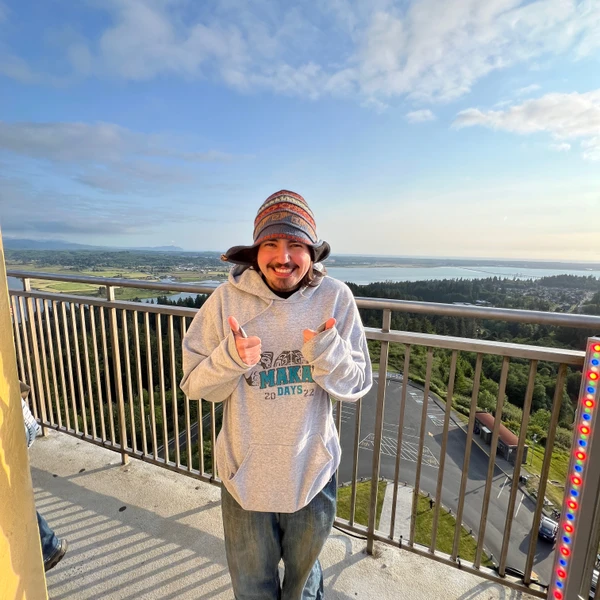
Hello! My name is Oliver, I use he/him pronouns, and I am a 4th year majoring in early childhood education studies at Western Oregon University. I am current president and founder of the Native/Indigenous culture club at Western Oregon university as well as 2024-2025 treasurer for the American Sign Language (ASL) club.
Education
Western Oregon University
Bachelor's degree programMajors:
- Outdoor Education
- Special Education and Teaching
- Education, Other
- Education, General
Miscellaneous
Desired degree level:
Master's degree program
Graduate schools of interest:
Transfer schools of interest:
Majors of interest:
- Education, General
- Education, Other
- Special Education and Teaching
- Library Science, Other
- Library and Archives Assisting
Career
Dream career field:
Education
Dream career goals:
Early childhood education/special education/library education
Assistant Teacher- Substitute Director
Western Oregon University Child Development Center2023 – Present3 years
Sports
Roller Skating
Intramural2020 – Present6 years
Arts
- Drawing2004 – Present
Public services
Advocacy
WOU American Sign Language (ASL) — Treasurer2024 – 2025Advocacy
WOU Native/Indigenous Culture Club — Founder/ President2023 – Present
Future Interests
Advocacy
Volunteering
Philanthropy
Live From Snack Time Scholarship
WinnerMy approach to supporting early childhood development is deeply informed by my lived experience. My intersecting identities are not separate from my practice, rather, they guide everything I do in the classroom. I know firsthand what it’s like to grow up in spaces that don’t reflect or accommodate who you are. That’s why I work to create learning environments where all children feel safe, seen, and empowered to be exactly who they are.
I currently work at the Child Development Center of Western Oregon University as an assistant teacher/substitute director. In my classroom, I prioritize accessibility, inclusion, and cultural responsiveness. I use visual supports, sensory tools, and multiple forms of communication, including ASL, to make sure every child can engage in ways that work for them. I incorporate flexible routines that support neurodiverse learners, recognizing that kids don’t all experience or process the world in the same way. I draw from my culture as a member of the Caddo Nation of Oklahoma, centering community care, storytelling, land-based learning, and deep respect for each child's spirit and autonomy. I also make sure my students see diverse identities reflected in our books, activities, and language, affirming indigenous, queer, disabled, and various other possible identity experiences from the very start.
My decision to enter early childhood education came from both a place of love and resistance. Growing up, I rarely saw educators who looked like me, shared my identities, or understood the ways I navigated the world. I want to be the teacher who validates, uplifts, and creates space for every kind of brilliance, no matter a students’ identities.
Early childhood is such a crucial time for shaping how we see ourselves and others. I believe that affirming a child’s identity from the beginning lays the foundation for lifelong confidence, empathy, and resilience. By modeling care, consent, and community in my classroom, I aim to help children not only grow academically, but also emotionally, socially, and spiritually.
For me, teaching is both a calling and a form of advocacy. School should mean more than meeting developmental milestones. it’s about co-creating spaces where every child can thrive without having to hide who they are. My work is a commitment to justice, rooted in love for my communities and in the belief that early education can be a powerful force for liberation. I don’t just want to teach children, rather, I want to help build a future where all of us belong.
B.R.I.G.H.T (Be.Radiant.Ignite.Growth.Heroic.Teaching) Scholarship
Present your right hand as if you were giving an approving thumbs up. Lay your left hand out in front of your chest, palm up, and fingers together. Now, rest the underside of your right fist on the palm of your left hand, and bring both hands towards your chest as if you were gifting yourself this thumbs up. This is the sign for the phrase “help me” in American Sign Language (ASL). This is a necessary phrase most preschool students have consistent verbal access to, but for some students accessing help in the classroom is associated with further barriers due to ability and language differences.
During my second year teaching at the preschool level, I met a student who had recently lost his ability to hear. Despite our school’s recommendations to provide the student with further Deaf friendly access in the classroom, his guardians respectively refused. This decision, while respected, left me as the only teacher in the class who could effectively communicate fluently with the child. As a Hard of Hearing person myself, I fully understood the struggles this child faced in our classroom. I too began my journey with hearing loss around preschool-age. Remembering the added academic and social differences I faced during that age reminded me of the reasons I began to learn ASL originally. Imagine every instruction you are given is obstructed by the entirety of an ocean, guarding clear speech from reaching your ears. This students reality looked like constant confusion, and general disinterest. Due to his hearing loss, additionally, the student also lacked verbal expressive skills. ASL was a new world of clarity and complete access. Once I began teaching using ASL, he began to become more interested in preschool academics. As the school year progressed, the student learned ways to be understood that built his confidence. He began to search for me in his times of need signing his newly learned phrase “help me.” Language access allowed this student to reach academic and social goals previously thought to be completely inaccessible in our care.
His progress didn’t go unnoticed. Slowly, his peers began to follow his lead, picking up on common signs through observation and curiosity. Without prompting, students started using signs like “more,” “please,” and “all done” during transitions and mealtimes. What started as a tool for one child quickly transformed into a classroom-wide culture of inclusion and support. This experience reminded me why I entered early childhood education in the first place. As educators, we need to create spaces where all children feel seen, heard, and valued. For this student, gaining access to language changed the trajectory of his learning. For me, it affirmed the power of meeting students where they are. And for our classroom, it showed that one child’s need can become everyone’s opportunity to grow. By offering this student access to language, we unlocked his potential and fostered a more compassionate classroom. His journey reminded me that every child deserves to feel understood. As an educator, my goal will always be to break down barriers and create environments where every student can thrive, no matter their abilities or circumstances.
VNutrition & Wellness’ Annual LGBTQ+ Vitality Scholarship
Zoos, wildlife centers, and even your local pet rescue facilities are open portals to countless education opportunities. Animals ranging from the great African savanna elephant to your very own household cat can provide scientists with insight crucial for our understanding of human behaviors. Currently, I am going into my second year of studying at Western Oregon University, double majoring in psychology and biology with a focus in zoology.
In the near future, I hope to become a zoologist. My dream is to work with great apes such as the Orangutan or Bonobo species. While caring for these animals I also plan to engage in teaching classes and giving presentations provided by the zoo. I am passionate about the importance of teaching future generations about habitat protection for not only primates but our combined environment’s survival as well. Promoting empathetic feelings toward endangered species starts with educating others about the creatures’ impact along with the open-ended question of animal cognitive ability compared to our intelligence as humans.
Children are naturally interested in the topic of animals. To encourage this curiosity I feel that it is my role as a future researcher and educator to model healthy expressions of the exciting feelings that come with an interest in animals. Just as Orangutan caregivers teach their young the intricate natures of tool usage and foraging, adult humans have an innate sense to teach our young healthy habits to help our socialization skills such as caring for others. This empathy for others does not stop at the human species.
I identify as a transmasculine (female to male) individual and I am not known to mask my queerness. Throughout my childhood and adolescence queer representation was noticeably scarce within educational environments I had interacted in. While finding my interest in animal sciences I was given limited opportunities to see myself among potential role models showcasing my possible career choices. By presenting my authentic self while educating groups of younger individuals I hope to become the role model my younger self could not access.
Education of animal sciences can be extremely exciting and thought-provoking as well as crucial for the continuation of knowledge regarding our own species. As younger generations develop into active members of society I plan to encourage the natural interest in animal behaviors by keeping animals within zoos healthy and teaching others about the ecological impact of various species. I will continue to express my queerness authentically in hopes to promote confidence in young queer individuals who hope to see themselves in a similar career field. With the combined concepts of education and representation, I will make a positive impact on society.