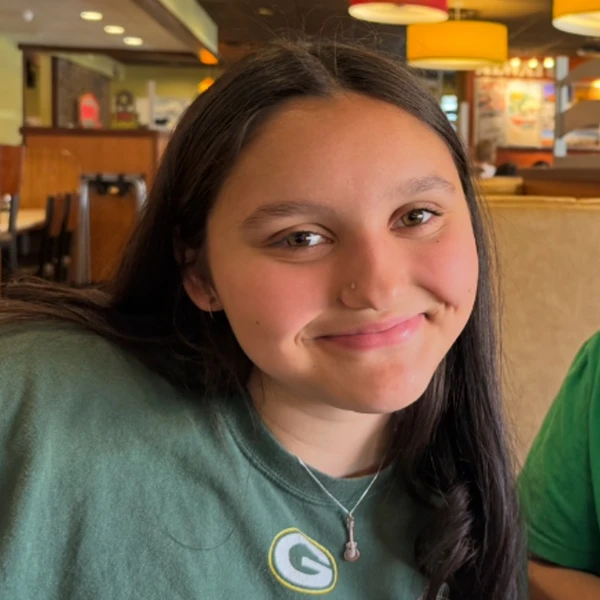
Gilbert, AZ
Age
17
Gender
Female
Ethnicity
Caucasian, Hispanic/Latino, Native American/Indigenous Peoples
Religion
Christian
Church
Christian Church
Hobbies and interests
Theater
Swimming
Reading
Historical
History
Adult Fiction
Drama
Self-Help
I read books daily
US CITIZENSHIP
US Citizen
LOW INCOME STUDENT
No
FIRST GENERATION STUDENT
No
Olivia Hervas
1x
Finalist
Olivia Hervas
1x
FinalistBio
Hi my name is Olivia Hervas. I am 17. I am a senior at Campo Verde High School. I would like to pursue a career in Politics . I want to major in civil law and minor in political science.
Education
Campo Verde High School
High SchoolGPA:
3
Miscellaneous
Desired degree level:
Doctoral degree program (PhD, MD, JD, etc.)
Majors of interest:
- Political Science and Government
- Criminal Justice and Corrections, General
Career
Dream career field:
Political Organization
Dream career goals:
Politician and Criminal Defense Attorney
Essay Tudor/Editor
My Own2022 – 20231 year
Sports
Swimming
Varsity2022 – Present4 years
Awards
- Varsity Letter
- Varsity Bar
Research
Mental and Social Health Services and Allied Professions
Crossroads Discovery — Intern/Assistant2022 – Present
Arts
Campo Verde High School
TheatreHaunted Houses 2022-2026, The Play that Goes Wrong, Almost Maine, Clue, Puffs, Choir Concerts, Orchestra Concerts, Band Concerts2022 – Present
Public services
Volunteering
Girl Scouts — Make blankets for people in assisted living and making first aid kits for people in need.2017 – 2018Volunteering
Maggie's Place — Making food for expecting homeless moms2022 – 2022
Future Interests
Advocacy
Politics
Volunteering
Philanthropy
Entrepreneurship
Christian Fitness Association General Scholarship
Education has never been something I have taken for granted. For me, it represents opportunity, stability, and the ability to create a future different from the circumstances I was raised in. To be fair, I was not aware that I was at a disadvantage in my early childhood. My mother always had food on the table, turned thrifting into treasure hunts, and intentionally filled our home with joy and praise. For some years, I did not even understand that only having one parent in my home was unusual, that was simply the norm for my mother and I. As I grew, I began to understand that I was below the poverty line, that my first year of life was spent in the shelter system, and that my father abandoned me before I was born. Being considered for this scholarship would not only support my academic journey, but also allow me to continue pursuing a path rooted in resilience, service, and purpose.
My mother who worked tirelessly to provide for me. She ensured that I understood that success would not be handed to me. I watched my mother balance long hours, financial challenges, and the full responsibility of raising a child on her own. Her perseverance shaped my work ethic and instilled in me a deep appreciation for education. She emphasized that education was one of the most powerful tools I could use to build a better future, and I have carried that belief with me throughout my academic career.
Academically, I have remained committed to doing my best, even when life outside of school presented challenges. There were times when personal struggles made it difficult to focus, but I made a conscious decision to continue pushing forward. I have taken my education seriously because I know what it represents, not only for me, but for my family. Each achievement, no matter how small, has been a step toward creating opportunities that were not always readily available.
Outside of the classroom, I have been involved in both volunteer work and employment that have shaped my character and strengthened my sense of responsibility. Volunteering in a hospital setting allowed me to assist patients and visitors during moments when they often felt overwhelmed or uncertain. In those interactions, I learned the importance of empathy, patience, and clear communication. I saw how something as simple as offering guidance or a kind word could make a meaningful difference in someone’s experience.
In addition to volunteering, I have worked in roles that require strong interpersonal skills and accountability. Through these experiences, I have learned how to manage my time, balance responsibilities, and remain dependable. Working while maintaining my academic commitments has taught me discipline and resilience, as well as the importance of showing up consistently, even when it is difficult.
One of the most significant aspects of my journey has been learning how to navigate and overcome personal challenges. There were times when I struggled with my mental health and felt uncertain about my future. However, through support, reflection, and determination, I have worked to regain stability and focus. These experiences have not only made me stronger, but have also given me a deeper understanding of others who may be facing similar struggles. They have taught me that perseverance is not about never facing difficulties, but about continuing to move forward despite them.
Looking ahead, I plan to major in political science and pursue law school. My goal is to become an attorney who advocates for marginalized women, particularly those who face systemic barriers or lack access to legal support. I want to use my education to help others navigate systems that can often feel overwhelming and inaccessible. My experiences have shown me how important it is to have someone who understands, listens, and stands up for others, and I hope to be that person in my future career.
Receiving this scholarship would make a significant impact on my ability to pursue these goals. Financial barriers are a very real part of my journey, and additional support would allow me to focus more fully on my education and future plans. More importantly, it would serve as an investment in someone who is committed to using her education not only for personal success, but to create meaningful change.
I should be considered for this scholarship not because my path has been easy, but because I have remained committed to my goals despite the challenges I have faced. I have worked to turn adversity into motivation, and I am determined to continue doing so as I pursue higher education. With the support of this scholarship, I will continue striving toward a future where I can make a lasting and positive impact on the world.
Richard Neumann Scholarship
I have always been someone who solves problems by stepping in and doing something, even when I do not have all the resources I wish I had.
One problem I noticed early on was how easily students, especially those with learning differences or developmental challenges, fall behind when they do not receive individualized support. In my role as a teaching assistant, I began working closely with students who needed extra help understanding material, staying organized, or simply believing they were capable. While I did not create a formal program, I created a system of support. I broke assignments into smaller steps, adapted explanations to fit how each student processed information, and, most importantly, built trust. Over time, I saw students become more confident, more engaged, and more willing to try. The problem was not their ability. It was that the system was not designed for them.
This experience made me realize that many problems are not due to a lack of potential, but a lack of access to the right kind of support.
If I had the resources, I would create a statewide support program in Arizona focused on students who are at risk of falling through the cracks due to learning differences, mental health challenges, or unstable environments. This program would combine academic support with mentorship and mental health resources, recognizing that these factors are deeply connected.
The program would partner with schools to identify students in need early and provide trained mentors who could offer consistent, individualized support. It would also include access to behavioral coaching, tutoring tailored to different learning styles, and workshops to help students build confidence, organization skills, and self-advocacy.
In addition, I would incorporate community partnerships with local organizations, including shelters and youth programs, to ensure that students outside of traditional school environments are not overlooked. The goal would be to create a system that meets students where they are, rather than expecting them to fit into a rigid structure.
Success would be measured not only by grades, but by engagement, confidence, and long-term stability. I would also advocate for policy changes to integrate these supports into public education so that they are not temporary solutions, but lasting ones.
I know this kind of program would make a difference because I have already seen what happens when even one student is given the support they need. With the right resources, that impact could extend to entire communities.
To me, creativity is not just about making something new. It is about seeing what is missing and having the courage to build it.
Tawkify Meaningful Connections Scholarship
My relationship with my mother, who raised me on her own after I was abandoned by my father before I was born, has shaped who I am in ways I am still learning to understand. The first year of my life was spent in the shelter system in Arizona, followed by multiple housing programs as my mother worked to create stability for us. Ours is not a simple story. It has been tested by loss, by mental health struggles, and by moments when connection felt almost out of reach. Growing up, money was always tight, though I now understand that we were living in poverty at the time. What I remember most, however, is not what we lacked, but what my mother was able to provide through her strength and determination. When I was young, my uncle, her brother, died by suicide. I did not fully understand it at the time, but I could feel the silence it created in our family. It was a grief that lived between us, unspoken but always present.
As I grew older, my own mental health struggles deepened that complexity. I experienced intense difficulty regulating my emotions, which led to self-harm and three separate stays in residential treatment. During those times, my relationship with my mother was strained. There were moments of frustration, fear, and distance on both sides. But there was also something else, something quieter but stronger, her refusal to give up on me.
Even when we struggled to understand each other, she remained.
That consistency changed me.
It taught me that connection is not just about shared joy or easy understanding. It is about choosing to stay when things are hard. It is about showing up when communication breaks down, when emotions run high, and when it would be easier to walk away. Through my relationship with my mother, I learned that love is not always expressed perfectly, but it can still be deeply real.
That lesson has shaped the way I build relationships with others. I no longer see connection as something that depends on everything going smoothly. Instead, I see it as something that is built through patience, effort, and presence. I am intentional about listening, especially when it is uncomfortable. I try to understand what someone is feeling beneath what they are saying. And I stay, even when conversations are difficult, because I know how much it matters to not feel abandoned in those moments.
My experiences have also made me more aware of how many people are struggling silently. Because of that, I approach relationships with a sense of responsibility. Whether it is a friend, a classmate, or someone I meet while volunteering, I try to create space for honesty. I have learned that sometimes the most meaningful thing you can offer someone is not advice, but presence.
This understanding of connection has also shaped my future goals. I plan to study political science and pursue a career advocating for marginalized communities, particularly women and children facing instability. At the core of that work is deep connection, understanding people’s lived experiences, building trust, and creating systems that support rather than isolate. I believe that meaningful change cannot happen without genuine human connection, and I want to be part of building that. In a world that often prioritizes speed, efficiency, and surface-level interaction, I have come to value something different. I value the kind of connection that takes time. The kind that requires effort. The kind that stays.
My relationship with my mother taught me that connection is not defined by perfection, but by persistence. And because of that, I carry that same commitment into every relationship I build.
RonranGlee Literary Scholarship
A Selection From Plato's Allegory of the Cave:
"And if he is compelled to look straight at the light, will he not have a pain in his eyes which will make him turn away to take refuge in the objects of vision which he can see, and which he will conceive to be in reality clearer than the things which are now being shown to him? ... When dragged upwards, they would be dazzled by excess of light. And suppose once more, that he is reluctantly dragged up a steep and rugged ascent, and held fast until he is forced into the presence of the sun himself, is he not likely to be pained and irritated? When he approaches the light his eyes will be dazzled, and he will not be able to see anything at all of what are now called realities."
In this passage from "The Allegory of the Cave," Plato suggests that the pursuit of truth is not a peaceful or natural process, but one that is deeply uncomfortable, disorienting, and even painful. He argues that when individuals are confronted with reality after living in ignorance, their first instinct is not acceptance, but resistance. Truth, at first, can feel overwhelming and even threatening to the person encountering it.
Plato's use of physical imagery is especially striking. The prisoner who is forced to look at the light experiences actual pain, and his immediate reaction is to turn away and return to what is familiar. This reaction reveals something important about human nature. People do not naturally seek truth when it challenges their existing understanding of the world. Instead, they often retreat into what feels comfortable, even if it is incomplete or false. The shadows in the cave represent a limited version of reality, but they are familiar, and therefore easier to accept.
The idea that truth can be painful is something that reaches far beyond Plato's allegory. Plato is not only describing a philosophical concept, but also a universal human experience. Growth often requires individuals to confront ideas, beliefs, or realities that they would rather avoid. The "steep and rugged ascent" symbolizes the difficulty of that process. It is not a simple transition from ignorance to knowledge. It is gradual, uncomfortable, and at times forced. The individual being dragged upward does not choose enlightenment willingly. Instead, it is something that happens to them before they are ready to fully understand it.
What is particularly powerful about this passage is Plato's suggestion that even when someone reaches the light, they are not immediately able to see clearly. Their eyes are "dazzled," and they struggle to make sense of what is now in front of them. This implies that truth is not only difficult to accept, but also difficult to understand at first. Clarity comes over time, not in a single moment. The process of learning, then, is not just about exposure to truth, but about developing the ability to perceive and accept it.
On a personal level, I connect with this idea because growth in my own life has not come easily or comfortably. There have been moments when I have had to face realities about myself, my circumstances, or the world around me that I would have preferred to ignore. In those moments, my first reaction was often resistance. It was easier to stay within what I already understood than to step into something uncertain. However, just as Plato suggests, those difficult moments were necessary for growth. Over time, what once felt overwhelming became clearer, and I was able to move forward with a better understanding of both myself and my goals.
Plato's deeper message is that truth is not simply something we discover, but something we must learn to endure. The discomfort that comes with it is not a sign that something is wrong, but rather a necessary part of the process. Without that struggle, there is no real transformation. The individual who remains in the cave may feel comfortable, but they are ultimately limited. It is only by enduring the initial pain of the light that a person can begin to see reality as it truly is.
Ultimately, this passage highlights the idea that enlightenment is not an easy or passive experience. It requires effort, perseverance, and a willingness to confront discomfort. Plato challenges the reader to consider whether they are willing to leave behind the familiarity of the cave in order to pursue something greater. In doing so, he presents truth not as something immediately rewarding, but as something that must be worked toward, understood over time, and, most importantly, chosen.
Works Cited
Plato. "Allegory of the Cave." Introduction to Philosophy, Pressbooks, https://mlpp.pressbooks.pub/introphil/chapter/allegory-of-the-cave. Accessed 17 Apr. 2026.
Elijah's Helping Hand Scholarship Award
For much of my life, I did not understand why certain experiences affected me so deeply. I just knew that some things stayed with me longer than they should have, shaping the way I thought, felt, and saw myself. It was not until I began to reflect on my mental health that I realized how much of that pain came from experiences I had not fully processed.
When I was younger, the first person I trusted and cared for deeply turned out to be someone who did not have my best interests at heart. I did not have the language for it at the time. I only knew the confusion and emotional weight it left behind. As I grew older, I came to understand that I had been a victim of grooming. That realization was difficult, but it helped me begin to make sense of how that experience affected my understanding of trust, relationships, and my own worth.
I was also raised in a Southern Baptist family with deep roots in the Bible Belt, surrounded by people I love deeply. At the same time, some of those relationships were complicated by beliefs that made me feel, at times, like there was something wrong with me because of my sexuality. That tension between love and feeling fully accepted was hard to navigate. It left me questioning where I belonged and whether I could ever be completely understood by the people closest to me.
As I got older, these experiences began to surface in ways I could not ignore. I struggled to regulate my emotions, and at my lowest points, that struggle led to self-harm and time spent in residential treatment on three separate occasions. Those were some of the hardest moments of my life. I felt overwhelmed, disconnected, and unsure of how to move forward. But they also became turning points. Through therapy and support, I slowly began to understand myself better and learn healthier ways to process my emotions.
Mental health struggles have also touched my family. When I was young, my uncle died by suicide. I did not fully understand it at the time, but I felt the weight of it, along with the silence that followed. That loss stayed with me and shaped my understanding of how deeply mental health can affect not just one person, but an entire family. It showed me how important it is to talk about these struggles instead of hiding them.
Because of everything I have experienced, I have developed a deep sense of empathy for others. I know how isolating it can feel to carry things alone, and how powerful it is to have someone who listens without judgment. I try to be that person for others. I want to create space for honesty and connection, especially for those who feel unseen or misunderstood.
These experiences have also shaped my goals for the future. I plan to study political science and pursue a career as an attorney advocating for marginalized communities, particularly women and children who have experienced instability or trauma. I want to help create systems where people are not overlooked, but supported in meaningful and lasting ways.
My journey with mental health has not been easy, but it has taught me resilience, self-awareness, and compassion. Healing is not quick or simple, but it is possible. Through it all, I have found a sense of purpose. I am committed to using my experiences not as something that holds me back, but as something that allows me to better understand, support, and advocate for others.
Students Impacted by Incarceration Scholarship
Growing up, in incarceration was not something I saw only on the news. It was something that quietly shaped my life before I was even born. My father left before I entered the world, and for most of my childhood, he existed only as a vague absence. The first time I ever saw his face was not in person, but in a screenshot of his mugshot on my mother’s phone. That moment was jarring. Instead of a warm introduction or a storybook reunion, my first glimpse of him was tied to a system that had already taken him away.
Later, I learned more of the truth. When my mother met him, he was in recovery and showing promise, working to rebuild his life. But as soon as he got “off paper,” after successfully completing probation, he returned to a life of drugs and crime. By the time my mother felt ready to reach out so that we could meet, he was already incarcerated again on multiple felony charges. Any possibility of a relationship was replaced by distance, disappointment, and unanswered questions.
His incarceration impacted me in ways that were both visible and invisible. On the surface, it meant growing up without a father, without his guidance, support, or presence at milestones. But deeper than that, it shaped my understanding of responsibility, consequences, and resilience. I had to come to terms with the fact that someone connected to me made choices that led to pain, not only for himself but for others around him. That realization forced me to mature early and to decide, very intentionally, that his path would not be mine.
Instead of allowing his absence to define me, I used it as motivation. I poured myself into school, work, and service. Whether volunteering in a hospital or working in a restaurant, I learned that consistency, integrity, and compassion matter. I became determined to build a life rooted in stability and purpose, something I did not always see modeled for me.
This experience has directly shaped my academic and career ambitions. I am drawn to fields where I can help others who feel overlooked or impacted by difficult circumstances, particularly in communities where incarceration and systemic barriers are common. I want to be someone who not only succeeds personally but also advocates for change, someone who understands both the emotional and practical effect incarceration has on families.
Incarceration may be part of my story, but it is not my identity. It has taught me resilience, strengthened my ambition, and clarified my purpose. I carry those lessons with me as I pursue my education, determined to turn what could have been a limitation into a foundation for something greater.
Peter and Nan Liubenov Student Scholarship
I used to think that being a positive force in society meant doing something big and noticeable. Now I understand that it often looks much quieter. It is in the way you treat people when no one is watching, in the patience you show, and in the decision to keep showing up for others even when you are struggling yourself.
In my job as a swim instructor at Swimhaus in Gilbert, I work with young children who are often scared of the water. I see myself in them sometimes. Fear can feel overwhelming, but it can also be worked through with patience and encouragement. When a child finally lets go of the wall and trusts themselves enough to float or swim, it is a small moment, but it matters. It reminds me that growth often happens in those quiet victories. As a teaching assistant in a special needs classroom, I have learned that not everyone moves through the world at the same pace, and that is okay. My role is to meet students where they are, to be patient, and to make sure they feel seen and supported.
My identity has also shaped how I see my place in the world. As a Latina, I have grown up aware that not everyone is given the same opportunities or access to resources. I have seen how language barriers, financial challenges, and lack of representation can impact so many families. Because of this, I feel a responsibility to be someone who not only succeeds, but who helps others navigate systems that are confusing and not fair. Through Girl Scouts and my volunteer work, I learned that even small acts, like making blankets for elderly residents or preparing meals for mothers in need, can make someone feel cared for. Earning my Bronze Award showed me that service is not just something you do once. It is something you carry with you and should always continue to do.
At the same time, my personal struggles have shaped me in ways I never expected. There were times when I felt completely out of place, like I had to hide parts of myself just to fit in. Social norms often tell us to look put together, to seem unaffected, and to keep our struggles private. For a long time, I tried to do exactly that. But I have learned that those expectations makes people feel even more alone. Because of that, I try to be someone who leads with empathy. I know what it feels like to struggle in ways that are not always visible, and I want others to feel understood, not judged.
Society today places a strong emphasis on making a difference, and I take that seriously. But I do not think change only comes from big platforms. It starts in everyday actions and grows from there. In the future, I plan to pursue a career in law and politics, with the goal of becoming a criminal defense attorney and eventually serving in public office. I want to advocate for people who feel overlooked and work toward systems that are more fair and just.
I am still learning, still growing, and still figuring out my place in the world. But I know this: being a positive force is about choosing empathy, choosing integrity, and choosing to keep going. It is about using your experiences, both good and bad, to help others. That is the kind of impact I want to have, now and in the future.
Ruthie Brown Scholarship
As a Latina student working while pursuing my education, I have become very aware that student loan debt is not just something in the future. It is something that can shape my life for years to come. Because of that, I have made a conscious decision to face it with intention instead of fear. My path to higher education has not been traditional, and managing my financial future is deeply connected to the challenges I have had to overcome along the way.
Throughout high school, I struggled with my mental health in ways that made everyday life difficult. I spent time in residential treatment three different times, each stay marking a period where I had to step away from everything and focus on stabilizing. More recently, I transitioned into an adult diagnosis of bipolar disorder. Alongside that, I have a learning disability and was on an IEP in high school, as well as severe ADHD. Finding effective treatment has been complicated, because medications that help with focus can trigger manic episodes. There have also been periods where I struggled with self-harm, which made it even harder to stay consistent in school and work.
Because of these challenges, my education has required persistence and flexibility. I have had to relearn how to manage my time, my energy, and my responsibilities in a way that protects my mental health while still moving forward. That reality has shaped how I approach student loan debt. I cannot afford to take on unnecessary financial stress when I already carry so much that is not visible to others.
One of the biggest ways I am addressing my future debt is by working while I am in school. Balancing a job with my coursework and my mental health is not easy. There are days when simply showing up feels like an accomplishment. Still, I continue because every paycheck helps reduce the amount I need to borrow. Working has also given me a sense of independence and stability, which is especially important for me.
I am also actively applying for scholarships because I know I cannot rely on loans alone. As someone who has had to fight to stay on track, I see education as something I have earned through perseverance. I am committed to doing everything I can to make it financially sustainable.
I am also intentional about my future career. I want to choose a path that allows me to support myself while also helping others who may be struggling in similar ways. I understand what it feels like to navigate systems that are not always built to support people with mental health challenges or learning differences.
Addressing student loan debt is not something I can solve all at once, but it is something I work toward every day. I budget carefully, seek out resources, and plan ahead for repayment so that my future remains manageable.
My journey has not been easy, but it has made me resilient. Earning a degree means more to me because of what it has taken to get here. I am determined to build a future where my education creates opportunity, not limitation, and where my past challenges become part of the strength that carries me forward.
Sola Family Scholarship
Growing up with a single mother taught me that strength is not loud. It is quiet, creative, and often invisible to everyone except the people who need it most.
Before I was born, my biological father abandoned us, and from that moment on, my mom carried the weight of raising me on her own. During my first year of life, we lived in a homeless shelter while she worked to gain stability for us. Much later, after our circumstances changed, the mindset of a single parent never left her. She learned how to stretch everything, time, money, and energy, and somehow make it enough.
We were always strained financially, even when she tried to hide it. I remember walking into the kitchen many nights to find my mom crying and worrying about money. She worked a humble and barely sufficient office job that was not enough to afford basic needs, and instead of giving up, she chose to go back to college to earn another degree. Some of my clearest memories are of how she made something out of nothing. She could turn a trip to the dollar store into full meals and thrift shopping into something fun. There were things she went without so that I never had to and not small things, big things like food.
I remember a jar of all of her change she kept in her bedroom. When it reached around twenty dollars, we would celebrate with Chinese food, a movie, and picnic dinners on the living room floor. To a little girl, those nights felt like feasts and they are one of my fondest memories. She finished college and earned her master’s degree in education and her teaching certification while working as many hours as possible. Even then, money was tight, but I remember summers when she took me to swim lessons before heading to her classroom. I later sat in her kindergarten class as both her daughter and her student.
As I grew older, I faced challenges of my own. I struggled with my mental health and regulating my emotions, which led to self-harm and time in residential treatment. I also carried deep abandonment issues, knowing the man who was supposed to love me chose to leave. I always thought, and still think to this day "how can you abandon something you made". During my hardest moments, my mom remained my constant.Eventually, she married the man who became my forever dad. She waited years to introduce him to protect me from instability and more abandonment issues.
Because of her, I learned how to keep going. That determination shaped my commitment to the swim team, where I showed up every day and improved my performance. It also shaped my commitment to others. I now volunteer at the same shelter where my life began, supporting pregnant women and their babies. Growing up with a single mother did not just teach me resilience. It gave me purpose. I plan to study political science, attend law school, and become an attorney advocating for marginalized communities, especially underrepresented women. I am my mother’s daughter, and everything I am becoming reflects everything she refused to give up on.
Resilient Scholar Award
Growing up in a single-parent household taught me independence long before I fully understood what that meant.
Before I was born, my biological father chose to leave, and from that moment on, my mom became everything for our family. During my first year of life, we lived in a shelter while she worked to rebuild a stable future for us. I would later learn that when my mom met him, he was in recovery for his drug addiction and showing great promise. But as soon as he got “off paper,” after successfully completing his probation, he chose to return to a life of drugs and crime. The first time I ever saw his face was not in person, but when I stumbled across a screenshot of his mugshot on my mom’s phone. That moment stayed with me, shaping my understanding of absence, choices, and consequences.
Even as our circumstances improved, life was never easy. We were always careful with money, and I learned early on that stability was something you worked for, not something you assumed would always be there. I remember my mom stretching every dollar, turning simple ingredients into meals and thrift store finds into things that felt new. I also remember the quiet moments when the weight of responsibility showed, even when she tried to shield me from it.
One of the most important realizations of my life came later, when I began to understand the depth of my mother’s sacrifices. As I grew older, I faced challenges of my own, particularly with my mental health. I struggled to regulate my emotions, which led to self-harm and required time in residential treatment. During those moments, I often felt overwhelmed and alone. But through that experience, something shifted in how I saw my mom.
I realized that she had been doing for me all along what I was only just learning to do for myself. She had been showing up, even when it was hard. She had been carrying fear, stress, and uncertainty, and still choosing to stay, to support me, and to keep moving forward. That realization changed how I understood both her and myself.
It taught me that strength is not about having everything together. It is about continuing, even when things feel uncertain. It also helped me understand that the people around us are often carrying more than we see, and that compassion and patience matter more than quick judgments.
This shift in perspective has shaped the way I approach my life. I became more intentional in how I show up for others, whether it is through my relationships, my academics, or my commitment to service. I now volunteer at the same shelter where my life began, supporting pregnant women and helping care for their babies. Being in that environment has deepened my understanding of resilience and reinforced my desire to support others who are working to rebuild their lives.
It has also shaped my goals for the future. I plan to study political science as a precursor to law school and pursue a career as an attorney advocating for marginalized communities, particularly women and children facing instability. I want to help create systems that support families like mine and ensure that others have access to the resources they need to move forward.
Growing up in a single-parent household did not just shape my circumstances. It shaped my perspective, my resilience, and my purpose. The realization that my mother’s strength had always been guiding me gave me a new understanding of what I am capable of, and who I want to become.
Cooper Congress Scholarship
Policy is not just about laws. It is about people, and whether they feel seen, heard, and protected by the systems around them.
My interest in political science comes from a deep awareness that not everyone experiences those systems in the same way. Through my experiences supporting others, I have seen how easily people can fall through the cracks when systems are not designed with their needs in mind. This has shaped my desire to pursue a path where I can advocate for those who are often overlooked.
I aspire to serve at both the state and federal levels of government. At the state level, I am drawn to the ability to directly impact local communities through policies that address education, mental health resources, and family support systems. At the federal level, I hope to contribute to broader legislative efforts that ensure equity and access across the country. I want to help create policies that are not only effective, but also compassionate and grounded in real human experiences.
One issue I care deeply about is access to mental health care, especially for young people and families navigating instability. In my role as a teaching assistant, I work daily with students who have developmental difficulties. This experience has shown me how critical early support and consistent resources are, and how challenging it can be when those supports are limited or inconsistent. I have also volunteered at Maggie’s Place in the Phoenix area, where I have seen firsthand the strength of mothers facing homelessness and the importance of community-based support systems. These experiences have reinforced my belief that policy must prioritize dignity, accessibility, and early intervention.
Civil discourse plays a critical role in shaping effective public policy. In a polarized world, it is easy for conversations to become about winning rather than understanding. I believe true leadership requires listening with the intention to learn. When people feel heard, even if they do not fully agree, it creates space for collaboration and meaningful solutions.
In my own life, I strive to practice this through the way I show up for others. I offer peer academic support, helping classmates build confidence and succeed in their studies.These experiences have taught me that building understanding starts with presence, respect, and a willingness to listen.As I pursue a degree in political science, my goal is to become a leader who bridges divides rather than deepens them. I want to advocate for policies that reflect the voices of those who are often unheard and ensure that systems serve everyone.
Ultimately, I believe that progress requires both courage and compassion. By combining thoughtful policy work with a commitment to civil discourse, I hope to help create a future where people feel represented, supported, and empowered.
(for my photo I chose this because the last time our country was completely in unison and it wasn't about politics it was about morality)
Hines Scholarship
Going to college, for me, is not just about earning a degree. It is about changing the direction of my life and using my voice to protect others.
As a Latina student, I have grown up aware that opportunity is not evenly distributed. That understanding did not come from statistics, it came from lived experience. I have seen how easily women and children can be overlooked or failed by the very systems meant to protect them. Those experiences shaped not only how I see the world, but what I feel responsible for changing.
My path to this point has not been traditional. I have faced disruptions in my education, challenges with my mental health, and environments where I had to grow up quickly. But those experiences did not stop me. They made me more aware, more resilient, and more determined.
One moment that stayed with me was during my time connected to residential care. I saw girls my age whose lives had taken completely different paths due to circumstances beyond their control. That experience forced me to ask a question that still drives me today: who is protecting them, and why is the system not doing enough?
Through college, I want to find answers to that question and become part of the solution.
I plan to study political science and pursue a career in legal advocacy, focusing on marginalized women and children. I want to understand how policies are created, where they fail, and how they can be improved. My goal is to help shape systems that provide real protection, access, and opportunity for those who need it most.
I also understand the importance of representation. When people do not see themselves reflected in positions of leadership, it reinforces the idea that those spaces are not meant for them. I want to change that. I want to be someone who stands in those spaces and advocates for those who are not in the room.
College is the bridge between who I am now and the impact I want to have. It will give me the tools to turn my lived experiences into meaningful change, not just for myself, but for others.
What I am trying to accomplish is bigger than a career. I want to build a life that contributes to something larger than myself. I want to break cycles, challenge systems, and create opportunities for people who have been overlooked.
Going to college means building a future where I am not just surviving, but actively creating change. And more importantly, it means helping others do the same.
Simon Strong Scholarship
Adversity is not always a single moment. Sometimes, it is a quiet question that looms over you as you navigate life, shaping you and how you see yourself and where you belong.
Growing up, I always knew I was Latina because of what my mother told me about my father, a man I have never met. His absence was my first experience with adversity. It left me with unanswered questions about who I was and where I came from. While other students could trace their family stories through shared memories, I had to rely on fragments and imagination. For a long time, I accepted that uncertainty as something I would always carry.
That changed when I received my 23andMe results. I learned that my father was one quarter Indigenous American. Seeing that part of my identity confirmed brought me both joy and grief. I felt a deep connection to something that had always been just out of reach, but I also felt the weight of realizing that I had been left to discover this part of myself alone. It made me more aware of what I had lost, but also more determined to reclaim what I could.
Instead of allowing that loss to distance me from my identity, I chose to actively pursue it. Each Christmas, I spend time with my mother’s dear friends in their Hispanic household, where I take part in the tradition of making tamales together as a family. In those moments, I am not just learning a recipe. I am learning connection, language, and culture. I practice my Spanish, listen to stories, and experience the sense of belonging that I once felt was out of reach.
Beyond that, I have made an effort to attend Hispanic cultural events in the Phoenix area, seeking out opportunities to learn, connect, and better understand my heritage. These experiences have helped me realize that identity is not only something you are given. It is also something you can build, protect, and grow.
This adversity has shaped me into someone who is resilient, self-driven, and deeply empathetic. I understand what it feels like to search for belonging, and because of that, I am more aware of others who may feel unseen or disconnected. It has also strengthened my determination to create a future where people have access to the support, representation, and community they deserve.
If I could give advice to someone facing a similar situation, it would be this. Do not let absence define your worth, and do not wait for someone else to give you permission to understand who you are. Seek out your story, even if you have to build parts of it yourself. There is strength in choosing to learn, to connect, and to keep moving forward, even when the path is unclear.
Adversity may leave gaps in your story, but it also gives you the opportunity to decide how those gaps are filled. For me, it has become a source of purpose, guiding me toward a life where I can help others feel seen, valued, and connected.
Lily Tantillo Scholarship
I am someone who does not stay quiet in the face of injustice. I have always been strong-willed, sometimes loud, and deeply protective of the people around me. But that strength does not come from anger alone. It comes from empathy, from understanding what it feels like to struggle, and from a belief that people deserve to feel seen, valued, and supported.
Throughout my life, I have faced challenges that forced me to grow up quickly and see the world differently. Those experiences have shaped me into someone who pays attention to the people others overlook. Whether it is sitting with a classmate who feels alone, supporting students with developmental disabilities as a teaching assistant, or volunteering at a shelter for pregnant women experiencing homelessness, I try to show up with consistency, patience, and care.
One of the ways I give back is through my work at Maggie’s Place, where I have helped prepare meals and spend time with mothers and their babies. What stands out to me is not just the hardship these women face, but their strength. Being present in those moments, even in small ways, has reinforced my belief that kindness is not about grand gestures. It is about showing up, listening, and treating people with dignity.
I also bring that same mindset into my daily life. As a teaching assistant, I work closely with students who need extra support. I have learned that sometimes the most important thing you can offer is patience and belief in someone’s ability to succeed. I try to be someone who makes others feel capable, even when they doubt themselves.
At the same time, I am not afraid to speak up. I believe honesty and loyalty mean standing by what is right, even when it is uncomfortable. I have never stayed silent when something is unjust, especially when it affects people who may not have the confidence or support to advocate for themselves. I try to balance that strength with compassion, understanding that people need both advocacy and empathy.
Looking ahead, I plan to attend Northern Arizona University and study political science. My goal is to pursue a career in legal advocacy, focusing on marginalized women and children. I want to work on policies that protect those who are vulnerable and ensure that people who are often unheard have a voice. I see my future not just as a career, but as a responsibility to use my experiences and education to create meaningful change.
Lily’s story reflects a kind of strength I deeply admire, the ability to be bold, driven, and compassionate all at once. That is the kind of person I strive to be. Someone who works hard, stands up for others, and leads with both courage and heart.
Ava Wood Stupendous Love Scholarship
One of the most meaningful acts of kindness I have offered came through supporting a peer who was struggling with both academic pressure and serious mental health challenges. She was dealing with anxiety and emotional overwhelm connected to difficulties at home, and it began to affect every part of her life. I noticed she had become withdrawn and discouraged, often doubting her ability to succeed. She would sit quietly, avoid participation, and sometimes seemed completely shut down. It was clear she did not just need help with schoolwork, she needed someone who genuinely cared.
She was also on our school's swim team with me. Swim was something she once loved but as her mental health declines, I watcher her confidence in the pool fade alongside her confidence in the classroom. She would talk about practices where she felt slow, discouraged, or like she was letting her teammates down. Seeing how much that part of her identity was being affected made me realize even more how important it was that she not feel alone.
Instead of assuming someone else would step in, I chose to be intentional. I began sitting with her during study time, helping her break assignments into manageable steps and offering reassurance when everything felt like too much. There were days when she could barely focus, and on those days, I simply stayed present. I listened without judgment, let her talk when she needed to, and reminded her that struggling did not make her incapable or weak.
What mattered most was not just the academic support, but the consistency. I showed up again and again, even when progress was slow. Over time, I saw small but meaningful changes. She began completing assignments she once avoided, raising her hand occasionally, and even smiling more. Eventually, she started encouraging others who were struggling, reflecting the same kindness she had been given.
That experience was important to me because it reinforced a truth I deeply believe: people do not always need someone to fix their problems. Often, they need someone to stand beside them while they face them. Mental health challenges can feel isolating, and having even one person who shows steady care can make a meaningful difference.
True kindness is not about a grand gesture or getting recognition, it is about being present and choosing to care when it would be easier to look away. In the quiet moments, sitting next to someone, listening to them, and reminding them that they are not alone. In those moments kindness is powerful and real.
Operation 11 Tyler Schaeffer Memorial Scholarship
Some people grow up believing the system will protect them. I grew up understanding that many people are left to navigate it alone.
I plan to use my degree in political science to advocate for those in my community who are often overlooked, unheard, or underserved. While political science is not always seen as direct service work, I believe it is one of the most powerful ways to create real and lasting change for people in need.
My goal is to work where policy meets real life. I want to help shape laws and systems so they truly serve the people they are meant to protect. Too often, marginalized individuals face barriers to basic resources, representation, and justice. Families struggling to stay afloat, individuals battling mental health challenges, and young people without stable support systems are often left without a voice. I want to be someone who speaks for them and stands with them.
This goal is deeply personal to me. I have seen how absence, instability, and lack of support can affect a person’s life and sense of security. Those experiences have made me more aware of how many people are quietly struggling without the resources they need. Because of this, I feel a strong responsibility to help create systems that offer support before people reach a breaking point.
Through a political science degree, I will gain the knowledge to understand how policies are created and how they can be improved. I want to focus on expanding access to mental health care, strengthening support for families, and ensuring that young people have the stability they need to succeed. I am especially passionate about early intervention and prevention, because no one should have to fight so hard just to be seen and helped.
I also know that change does not only happen through policy. It happens in communities, in relationships, and in showing up for others. I plan to stay connected to the people I hope to serve through outreach, advocacy, and mentorship. It is important to me that I never lose sight of the human impact behind the work.
Ultimately, I want my education to be more than a personal achievement. I want it to be a tool I use to protect others, to advocate for justice, and to help build a community where people feel supported, valued, and safe. I cannot change the hardships people have already faced, but I can work to make sure fewer people have to face them alone.
Brooks Martin Memorial Scholarship
Loss has been a quiet but constant presence in my life, shaping who I am long before I fully understood it. Some losses are loud and sudden, while others are silent absences that follow you every day. I have experienced both.
Before I was even born, my father made the decision to leave. His absence has never been something I could point to directly, but it has always been there, a question mark in my life. Growing up, I often wondered what it would have been like to have him present, to feel chosen rather than left behind. That kind of loss is complicated. It does not come with a single moment of grief, but instead reveals itself over time, in milestones missed and in the quiet realization that someone who should have stayed did not.
When I was young, I also experienced a different kind of loss, the death of my Uncle Jeb, my mother's beloved big brother. I will never be able to erase the image of my mother and my Papa standing over his coffin at the funeral. I will never forget their tears and hunched shoulders; even though I was young, the injustice of watching my Papa bury his first born son made me so angry. My mother told me that my favorite uncle passed away because he was very sick. But adults often forget that children, especially the curious ones like myself, have excellent hearing. I heard whispers of "hanging" and "suicide" that burdened me with an awful truth about my uncle's passing. I did not, and in some ways still do not, understand why a man who brought so much joy and laughter with him wherever he went could take his own life.
The two losses, one from abandonment, and one from death, have followed me in different ways. At times, they have been heavy, making me more aware of how fragile relationships can be. But they have also shaped my character in ways I am grateful for. They have taught me empathy at a young age. I notice when people feel alone. I pay attention to the quiet struggles others might overlook because I understand what it feels like to carry something unseen.
Rather than allowing these experiences to define me negatively, I have chosen to let them guide me toward purpose. I am driven to be the kind of person who stays, who shows up, and who protects others from feeling the same kind of loss and instability I have known. These experiences have inspired me to advocate for those who feel unheard or unsupported, especially young people navigating difficult circumstances.
My goal is to pursue a path where I can make a meaningful impact in the lives of others, whether through policy, advocacy, or direct support. I want to help create systems where people are not overlooked and where support is accessible to those who need it most. Loss has shown me that one person’s presence or absence, can change everything. Because of that, I want my presence in the world to be one that brings stability, compassion, and hope.
While I cannot change the losses I have experienced, I can choose what they mean. For me, they are not just sources of pain, they are the foundation of my resilience and the reason I am committed to building a future where others feel seen, supported, and valued.
Ethel Hayes Destigmatization of Mental Health Scholarship
I used to believe that my emotions were something I needed to control or hide.
There were moments when they felt overwhelming, unpredictable, and impossible to manage. At my lowest points, that struggle led to self-harm and required me to spend time in residential treatment on three separate occasions. Walking into those programs, I felt broken, like something inside me needed to be fixed. I did not know how to explain what I was feeling, only that it was too much to carry on my own.
My understanding of mental health was shaped early by loss. When I was young, my uncle, my mom’s brother, died by suicide. Even at that age, I could feel the weight it left behind. It was not just grief, but silence. Questions that were never fully answered. Pain that lingered without being openly discussed. That experience stayed with me, even as I began to face my own struggles, and it made me realize how deeply mental health affects not just one person, but entire families.
In residential treatment, I was forced to slow down and face myself in a way I never had before. I began to understand that my emotions were not the problem, but that I had never been taught how to process them. Therapy was not easy. It was uncomfortable, emotional, and at times exhausting. But it gave me something I had never had before, the ability to understand my thoughts, to sit with difficult feelings, and to respond instead of react.
My journey with mental health has changed the way I see the world. I now recognize how many people are struggling in silence, carrying pain that no one else can see. It has made me more aware of how important it is to create spaces where people feel safe enough to be honest. I have learned that healing does not happen in isolation, it happens in connection.
It has also transformed the way I approach relationships. During my hardest moments, I experienced both distance and support, and I learned how deeply it matters to feel seen. Because of that, I am intentional about showing up for others. I listen more closely, I try to understand before reacting, and I make an effort to be present in ways I once needed myself. I know what it feels like to struggle quietly, and I never want someone around me to feel alone in that.
My experiences have also shaped my goals. I plan to major in political science and pursue a career advocating for marginalized communities, particularly women and children facing instability. I have seen how mental health is often connected to larger systems, access to support, stability, and opportunity. I want to work toward improving those systems so that people are not left to navigate their struggles alone.
Mental health has not been an easy part of my life, but it has been a defining one. It has taught me resilience, self-awareness, and compassion. It has shown me that healing is not linear, but it is possible.
Most importantly, it has given me purpose.
Sunshine Legall Scholarship
I have always felt like part of my identity was missing. My biological father was never in my life, but through my 23andMe results, I learned that I am both Hispanic and Indigenous American. While that gave me answers, it also made the absence more real. There is a difference between knowing where you come from and being taught what it means. Without him, I have had to search for that understanding on my own, piecing together a heritage I was never given the chance to fully experience. That absence has not weakened me. It has pushed me to ask deeper questions, to seek connection, and to become someone who helps others feel seen and supported.
My life began in instability. Before I was born, my father chose to leave, and during my first year of life, my mother and I lived in a shelter while she worked to rebuild a future for us. Her resilience became my foundation. As I grew older, I faced battles within myself as well. I struggled with my mental health and regulating my emotions, which led to self-harm and required three separate stays in residential care. Those moments were some of the hardest of my life, but they forced me to confront who I was and who I wanted to become. I chose to fight for myself. Through support, reflection, and determination, I learned how to manage my emotions and rebuild my sense of self. Those experiences gave me not only resilience, but a deep understanding of what it means to struggle and to keep going anyway.
Today, I am a high school senior, a four-year member of my swim team, and an active volunteer in my community. Swimming did not come naturally to me, but it became one of the clearest examples of my determination. I woke up at 4:00 a.m. to be in the pool by 4:30, showing up even when I was exhausted and discouraged. Over time, that discipline paid off, and by my senior year, I had cut fifteen seconds off my breaststroke time. Swimming taught me that growth is not about talent, but about persistence and the willingness to keep showing up.
My commitment to service is rooted in my own story. I volunteer at the same shelter where my life began, supporting pregnant women and caring for their babies. I do not just see the women I serve. I see my mother. I understand the fear, the uncertainty, and the strength it takes to start over. I have also seen how Hispanic women in these situations often face additional barriers, from language differences to limited access to resources. That reality has strengthened my resolve to do more than serve. It has pushed me to advocate.
I plan to major in political science so I can fight for marginalized communities, especially women and children who are working to rebuild their lives. I want to challenge the systems that make it harder for people to access support and opportunity. I want to be someone who not only understands struggle, but works to change the conditions that create it.
Higher education is not just a goal for me. It is a tool. It is the path that will allow me to turn my experiences into action and my voice into impact. This scholarship would help make that possible. I may have had to search for pieces of who I am, but I have found something stronger in the process: purpose. And I am determined to use it to create change.
Valerie Rabb Academic Scholarship
I screamed nonstop for the first three months of my life. Neither I nor my mother slept for longer than forty-five minutes at a time. Doctors could not explain why, and my mom feared she might lose me. Then, one day, the crying stopped. I became a calm, happy baby. My mom believes something shifted, that I needed to feel safe, loved, and certain that I mattered before I could rest. That story has always stayed with me because, even now, I recognize that same part of myself. When something feels wrong or unjust, I cannot ignore it. I feel unsettled until I understand it or find a way to make it right.
Before I was born, my biological father chose to leave, and during my first year of life, my mother and I lived in a shelter while she worked to rebuild a stable life for us. I do not remember those days, but their impact is something I carry with me. Through my mother’s strength, I learned what resilience looks like and what it means to keep moving forward even when circumstances are uncertain.
As I grew older, I also faced challenges within myself. I have struggled with my mental health and with regulating my emotions, which at times led to self-harm and required me to spend time in residential treatment on three separate occasions. Those were some of the most difficult periods of my life, but they also became turning points. Through support, reflection, and hard work, I began to better understand myself and develop healthier ways to cope. Those experiences did not break me; they strengthened my resilience and deepened my empathy for others who are struggling.
Today, I am a high school senior, a committed student, and a four-year member of my school’s swim team. Swimming did not come easily to me. There were many mornings when I questioned whether I was improving at all. Still, I showed up. I woke up at 4:00 a.m. to be in the pool by 4:30, pushing through exhaustion and doubt. Over time, that consistency led to growth, and by my senior year, I had cut fifteen seconds off my breaststroke time. Swimming taught me that progress is not always immediate, but it is always possible with discipline and persistence.
My background has also shaped my commitment to service. I now volunteer at the same shelter where my life began, supporting pregnant women and helping care for their babies. Being in that space is deeply meaningful to me because I see reflections of my mother’s journey in the women I serve. I understand how overwhelming it can feel to start over, and I have learned that even small acts of encouragement can make a difference. This experience has strengthened my desire to advocate for those who may not have the support they need.
Because of this, I plan to major in political science and pursue a career focused on advocating for marginalized communities, especially women and children facing instability. I want to work to improve systems that directly impact families, helping ensure they have access to resources, protection, and opportunity. My goal is to create lasting change by addressing the barriers that make it difficult for people to rebuild their lives.
Valerie Rabb dedicated her life to uplifting students and helping them reach their potential. That commitment to others is something I deeply admire. The adversity I have faced has not limited me. Instead, it has shaped my purpose, strengthened my resilience, and inspired me to make a meaningful impact in the lives of others.
Aserina Hill Memorial Scholarship
I have always believed that the way we give to others says more about us than anything we do for ourselves. Growing up, I saw that truth lived out in my own life long before I fully understood it. My mom often tells me that as a baby, I cried nonstop for the first three months of my life. Doctors could not figure out why, and she feared she might lose me. Then, one day, the crying stopped, and I became a calm, happy baby. My mom believes that something shifted, that I needed to feel safe, loved, and certain that I mattered. Even now, I recognize that same part of myself. When something feels wrong or unjust, I cannot ignore it. I feel restless until I can understand it or do something to make it right.
Before I was born, my biological father chose to walk away, leaving my mother to navigate pregnancy and early motherhood alone. During my first year of life, we lived in a shelter while she worked tirelessly to rebuild a stable life for us. Though I do not remember those days, they shaped me. Today, I am a high school senior, a four-year member of my swim team, and an active volunteer in my community. Swimming has taught me discipline and perseverance. Waking up at 4:00 a.m. to be in the pool by 4:30 was never easy, but through consistency and determination, I improved, cutting fifteen seconds off my breaststroke time my senior year. That experience showed me that growth is earned through effort, not ease.
My commitment to service is deeply personal. I volunteer at the same shelter where my life began, supporting pregnant women and helping care for their babies. In those moments, I see strength, resilience, and hope, and I am reminded of my mother’s journey. I also see how often people simply need to feel seen and valued before they can move forward. That understanding has shaped my desire to pursue a degree in political science so I can advocate for marginalized communities, especially women and children rebuilding their lives.
If I were given the opportunity to start my own charity, I would create an organization dedicated to supporting Hispanic women facing crisis pregnancies or housing instability. As someone with Hispanic roots, I understand that cultural and language barriers can make it difficult to access help. My organization would provide mentorship, essential resources, and guidance toward education and employment. Volunteers would support families by caring for children, mentoring mothers, and helping women navigate available services. Most importantly, it would be a place where women feel valued and supported.
Aserina Hill’s legacy of sacrifice and generosity reminds me that true impact comes from lifting others up. Through my education, my service, and the work I hope to build, I am committed to continuing that legacy by helping others feel seen, supported, and empowered to move forward.
Kalia D. Davis Memorial Scholarship
The first thing I noticed about Kalia was her smile. It’s the kind of smile that feels real, warm, and full of light. My Papa has always told me, “You can tell a lot about a person by their smile. It shows what lives in their heart.” I’ve carried that with me since I was little, smiling at teachers, neighbors, and even strangers because I believed a small act could brighten someone’s day. Looking at Kalia’s smile, I feel like she understood that same truth. It makes me think she was someone who lifted others up in quiet, meaningful ways, and that is the kind of person I strive to be.
Like Kalia, I have found purpose through athletics, even when it did not come easily to me. I have been on my high school swim team for all four years, but I was never a natural swimmer. Progress was slow, but I learned that grit matters more than talent. Each morning, I woke up at 4:00 a.m. to be in the pool by 4:30, pushing through exhaustion and learning to find peace in those early hours. Watching the sun rise from the water reminded me that growth happens when no one else is watching. Through consistency and working closely with my coach, I trimmed fifteen seconds off my breaststroke time my senior year. That experience taught me perseverance and discipline, qualities I see reflected in Kalia’s life.
Service, for me, is deeply personal. Before I was born, my biological father walked away, leaving my mother to navigate pregnancy and early motherhood on her own. During my first year of life, we lived in a shelter while she worked to rebuild a stable life for us. That beginning has shaped me in ways I continue to understand. It is why I now volunteer at the same shelter, supporting pregnant women and caring for their babies. In those moments, I see strength, resilience, and hope, and I am reminded of my mother. Like Kalia, I strive to be someone others can rely on, someone who brings light into difficult moments.
Looking ahead, I plan to major in political science so I can advocate for marginalized communities, especially women and children working to rebuild their lives. This scholarship would ease the financial burden of my education and allow me to stay focused on my goals and my commitment to service. Kalia’s ambition and drive inspire me to approach my future with purpose.
When I think of Kalia, I think of a life lived with purpose and a commitment to uplifting others. Whether I am in the pool before sunrise, serving families at the shelter, or working toward a future in advocacy, I strive to live with that same grit, kindness, and ambition. If given this opportunity, I will honor her legacy in how I live, serve, and care for others.
Dream BIG, Rise HIGHER Scholarship
Education has never been a straight path for me, but it has always been a important one. Throughout my whole life my mom was an educator, I saw her begin as a kindergarten teacher, then she moved on to teach many grades including second, third, and later even a college professor. Watching her adapt to different students and environments showed me how powerful education can be. I watched her prepare lessons, talk about her students and pour her energy into helping children learn and grow. Her passions made a lasting impression on me. From a young age, I admired teachers and felt at home in a classroom. I was often described as the "teachers pet" not because learning can easily to me, but because I valued the structure, encouragement, and guidance that teachers provided. Even when my academic journey became complicated, that respect for education remained a constant source of direction.
However, my experience in school was far from simple. I struggled significantly with ADHD, which made it difficult for me to sit still, focus, and adapt to rigid classroom expectations. I began my education in a classical school environment, where long periods of stillness and strict routines were the norm. These expectations quickly became overwhelming, and it became clear that this setting was not a good fit for me. Eventually, I transitioned into the public school system, but the challenges did not disappear. Instead, they evolved.
By middle school, I began struggling not only with ADHD, but also with anxiety, depression, and defiance. This period of my life was particularly difficult. I often felt out of place and overwhelmed, and I had trouble regulating my emotional. I sometimes stormed out of classrooms, and my academic consistency suffered. Much of my middle school experience was spent in boarding schools and treatment programs rather than traditional classrooms. While these environments were intended to help me, they also meant that I missed foundational academic instruction, especially in subjects like math, where concepts builds on itself over time.
When I entered high school, the academic gaps became very apparent. Math, in particular was a constant challenge. Without a strong middle school foundation, each new concept felt like trying to build on a structure that was missing key pieces. Despite my efforts, I struggled to keep up, and my grades reflected that. My GPA suffered, and at times, it felt discouraging to see my academic record shaped by circumstances I could not dully control. In fact, many students who struggles with significant mental health challenged face steep odds. Research suggests they have a higher risk of not completing high school, and dropout rates for teen with mental health conditions c an be significantly higher than average. These challenges often mean many do not pursue higher education or stable careers. My story, then is one of persistence, despite these odds I have stayed in school, worked through my struggles and kept pushing toward a better future.
High school also brought continued personal challenges. In my junior year, I once again struggled to maintain stability, and I had to spend half the year in another boarding school due to behavior and mental setbacks. It was the worst, but it was also a significant turning point in my life. This year as a senior, I retook a chemistry semester that I had failed previously, and for the first time, I finally raised my GPA to a 3.0. It may not seem like much to some, but to me it represents persistence,growth, and determination. It reflects the effort it took to return to the classroom, rebuild my confidence, and continue moving forward despite things that can hold me back.
Through these experiences, education has shaped my goals by teaching me resilience, empathy, and perseverance. I have learned that success is not always measures by perfect grades or a flawless transcript, but by the determination to continue even when the path is difficult. My journey has given me a deep understanding of how educational systems can both support and challenge student, especially those dealing with mental health struggles. Because of this, I feel motivated to use my experiences to create positive change.
As I look toward the future, I know that education is not just a means to a career, but a foundation for a better life. I have chosen to pursue a career in law and political science because I want to make the world a better place. I hope to use my education and, my story to advocate for those who struggle, to create opportunities for students who feel overlooked, and to promote policies that support mental health and educational access. My path has not been traditional, but it has given me strength and perspective. Ultimately, I believe that the challenges I have overcome will not hold me back, but instead they will guide me as I work to build a better future for myself and for others.
Finance Your Education No-Essay Scholarship
Ryan T. Herich Memorial Scholarship
Before I was born, my father left, caught up in a life he shouldn't have been. My parents met in a half-way house where they were recovering from their own struggles whether with drugs or mental health. My mother was nine months pregnant when he left, and for the first year of my life, we lived in a homeless shelter. She often went without food so I could eat, she volunteered countless hours just to get diapers and formula, all while battling bipolar disorder, that was unfortunately passed down to me.
Despite all this, I was born healthy, but at three, my mother met a man at her job, and when I was five, they got married. I was given the choice in the step parent adoption, so even as a child I had to grasp the legal complexities of that decision. My childhood was filled with love, but also chaos, I struggled with compulsive lying and, by 12 I was in and out of mental hospitals. I was cutting myself and my mental health became a daily battle.
By seventh grade, I was placed in a therapeutic boarding school, Mingus Mountain. I graduated the program, but relapsed in my behavior by the 8th grade and had to return. That school is now being shut down due to horrific abuse by staff, I remember the police coming to the dorm after my roommate had been sexually exploited by one of my staff. I was surrounded by girls fighting addiction or escaping trafficking. I grew up fast and only at 12 years old. I was forced into adulthood in many ways before I even knew who I was.
When I came home before freshman year, I could not fit in. I made no friends, and my relationships with my stepfather, who is so similar to me became strained. Then is sophomore year, I met someone who took advantage of me. I was pressured, manipulated, and kept a secret phone to hide it from my parents. When my dad found out halfway through junior year, he took the phone to the police. I was sent to another boarding school, which was a punishment I didn't fully deserve, I was just a kid caught in a cycle of lies and manipulation. Now as a senior, I'm in an ongoing criminal case against that person, fighting for justice, holding them accountable for the harm they caused.
Despite these storm, I've always known I wanted to make a big impact. It was just this year, watching the world teeter on the brink of chaos, from the talk a war to AI revolutions that I finally committed to political science. I see how deeply divided we are, with everyone pitted against each other, left against right, as if those small differences define us. I'm centrist, independent, and I believe if we elect a leader who stands in the middle, we can heal this country before it falls apart. I've always wanted to do big things because, in a short life I believe we must aim high. Words and actions must match, we must unite around truth. As I study political science and pursue law, I will fight for integrity, so that this world can have a future where honesty and fairness guide us, one step at a time.
Learner Mental Health Empowerment for Health Students Scholarship
Mental health is the foundation that determines whether a student is simply present in the classroom or truly able to learn grow and succeed. I live with bipolar disorder and also struggle with an intense anxiety disorder, which many times in my life has made school challenging. There have been moments when my thoughts were so overwhelming that I lost motivation, and couldn't focus in class. These struggles sometimes distracted me from assignments, participation, and even ruining my close relationships. However, these experiences have also taught me resilience and the importance of prioritizing my well-being in order to succeed.
Through therapy, I have learned strategies to better manage my mental health and regain control over my focus and goals. Therapy has helped me understand my emotions, recognize when I need to step back, and develop healthy coping mechanisms I've realized that taking care of my mental health is not a weakness but a strength, because it allows me to show up as my best self in school and in my community. Instead of ignoring my struggles, I've chosen to work through them and build habits that support my growth.
One of the most helpful things I've done is intentionally stepping away from electronics and social media. I've noticed that constant scrolling can worsen my anxiety and make my struggles feel bigger than they truly are. Social media often created pressure to compare myself to others or feel like I need to meet unrealistic expectations. To counter this, I focus on activities that help me reset and reconnect with myself. I enjoy going on hikes, spending time at the lake and being outdoors. These moments allow me to clear my mind, breath deep, and be able to returned to school refreshed and ready to focus. Nature really helped me appreciative the present moment and helps with my mental clarity.
Mental health is also important to me because it influences how I support others. I strive to make a positive difference in my community by being someone who genuinely checks in on friends. I know firsthand that many people carry out struggles that aren't visible. Because of this, I try to be the friend who looks beyond the surface and sees past the "mask" that people sometimes put on in day to day life. Weather it's asking someone how they are really doing, listening without judgement, or offering encouragement, I try to create a safe and supportive environment. Sometimes, simply knowing that someone cares can make a meaningful difference.
In my first two semesters of community college I am earning my Behavioral Health Technician certification, before moving on to earning my masters degree in Political Science. I wanted to get the BHT certification because I want to work in mental hospitals as a part time job while in college, I grew up in and out of therapeutic placements and I truly believe that I can connect with the kids that I will work because have experienced what they have and can helps them. Mental health is so important and the people who struggle with it must be checked on.
Sparkle and Succeed Scholarship
My name is Olivia Hervas, and I have always struggled with focusing. Having ADHD has been a significant part of my high school experience, and it has definitely impacted my education in many ways. At first, focusing on my studies was a real struggle. During tests, my mind would often wander, and I’d find myself thinking about things that had nothing to do with the questions in front of me. This made it hard to do well on exams. Additionally, I was very forgetful, often unable to remember important details. To deal with this, I started setting reminders on my phone and even writing notes on my hand to keep track of assignments and deadlines.
During my freshman and sophomore years, these ADHD symptoms were at their worst, especially because I was not yet aware I had ADHD so I thought something was significantly wrong with me. I felt like I was always in a different world, which made it difficult to maintain good grades. However, at the end of sophomore year, everything began to change. I was tested by the school, and the results provided answers to the challenges I was facing. This led to the creation of an Individualized Education Program or an IEP that was tailored to my needs. With the help of a overly supportive and helpful team, I was able to receive accommodations such as testing in small groups, having assignments broken down into smaller chunks to prevent getting overwhelmed, and sitting next to a helpful peer even though sometime that made situation worse because unfortunately endless talking was also a part of my ADHD.
Junior year was a turning point for me. I relied heavily on these accommodations, which made a big difference in my learning experience. By the time I reached senior year, I had developed new strategies to manage my ADHD. I learned how to prioritize my tasks by setting alarms to remind me of important activities and writing down reminders to help me remember things better. I also discovered the importance of time management, setting aside specific times to work on school assignments to avoid procrastination and late submissions.
My journey with ADHD has been challenging, but I have learned how to manage many aspects of it on my own. Now, I am able to focus better on my schoolwork and succeed in my education and life. Through resilience and support, I have found ways to sparkle and achieve my goals despite the obstacles ADHD presents and I believe that anyone can pursue what they want and not have ADHD hold them back.
A Man Helping Women Helping Women Scholarship
As a child, I was drawn to stories of justice, where my heroes used words and morals in stead of weapons to win battles. Watching "Legally Blonde" inspired me to pursue a career in law, I admired the main character's determination and wit. Later, in my teenage years I looked up to the renowned defense attorney, Leslie Abramson, known for her work on the Menendez brother case. Her skill and dedication continued to fueled my passion for the legal field. These influences sparked a passion in me for justice. I plan to major in Civil Law and minor and in Political Science. My goal in life is to better the world one fair trial at a time and maybe even become a politician one day.
In our modern world division constantly overshadows unity, I will stand as a firm centrist not fully aligning will any political party. I believe in the power of dialogue and understanding, which would bridge the unfortunate gaps that politics has created. I dream of a world where differing opinions are met with respect, allowing relationships to thrive despite ideological differences.
My journey will begin in a courtroom. As a lawyer, I want to be known for my integrity and winning cases fairly. I aim to be a beacon of honesty in a field clouded with skepticism. The legal system should be fortress of truth, not a playground for destruction. Too often politicians judgement is clouded because they are being bribed or payed off to have certain views. That starts the societal decay.
I am determined to be different whether that means influencing change behind the scenes or being the face of change in front of millions, my goal will always be to uphold the truth. I aspire to inspire people through transparency and sincerity. I hope my career will be a testament to integrity and a catalyst for change because that is what this world need to continue with its head above water.
I want to be more than just a participant in the changing world I want to the pioneer of this movement, paving the way for the future's focus to be on justice and honesty. Hoping to be president I would promise to represent truth, strongly face adversity, and make a positive impact one step at a time. I would handle each issue as a stepping stone to permanent justice in society. Every decision I plan to make would be committed to fairness and ethical reasoning. I believe that words and actions should always match and that you should never lie, so I hope to encourage honesty and integrity to people and explain how important those qualities are in a society. By fostering a community and lifestyle where truth prevails I believe this world can have a bright future.
Healing Self and Community Scholarship
If I had all the money and resources in the world to make a difference in mental health, I would visit every high school globally. Studies show that 22% of suicides and suicidal thoughts occur during the teenage years of a persons life. The troubling part of this statistic is that signs of suicide in teenagers, or SOS, aren't as prominent as adults. Most teenagers going through a suicidal period appear happy and healthy, effectively masking their SOS. Although high schools have plans and awareness programs about SOS, in my experience, they often feature the same outdated videos that have been shown since elementary school, making them less relatable. Teenagers need a real connection with someone who understands them, as well as training on recognizing the daily masks worn by those with depression. Lastly, I would allocate the funds to schools to hire more counselors who would meet with every student at least once a month, and have there door open to any one who needs someone to talk too. This plan would provide a safe space for teens and hopefully better their quality of living.
Taylor Swift Fan Scholarship
Taylor Swifts new album "The Life of A Showgirl" is a perfect portrayal of all the difficulties she has had to face over her years of being famous. Taylor has many memorable performances, but only one stands out as a meaningful performance. This occurred in her highly anticipated Eras Tour on August 3rd 2023.
In her Red Era part of the performance Taylor performs a song called "22", in this song she wears a black sequin hat that she gives to a fan at the concert. It is a very simple yet profoundly touching gesture, but on this particular day it had true emotion behind in. That night Taylor had decided to give the iconic "22" hat to Kobe Bryant's daughter, Natalia.
This act was far more than just a mere prop exchange. It symbolized Taylor's enduring commitment to her fans, but most important I showed the empathy she contained as a person. By choosing to honor Natalia Bryant in such a public way, she also chose to honor the girls father, the late Kobe Bryant. Taylor was good friends with Kobe and continues to show compassion for that family. This gesture demonstrates her innate ability to empathize with people and shows her true character as a person, behind the fame.
Taylor's ability to connect with every single on one her fans with out having to speak to them is a truly amazing characteristic that solidifies her status of an artists who cares. She is someone who shows her personality the same way through her actions and words. Moments like these in her career underscore the deep emotional connection she has with her fans. As Taylor continues to evolve gestures like this highlight her influence so far and light the way for any future influence.
Wicked Fan Scholarship
Throughout my life so far finding a place where I belonged was a challenge. As a child, I often felt like an outsider, drifting between one friend group to another trying to find a true connection. This changed dramatically in the fifth grade when my mother decided to take me to the ASU Gamage production of Wicked. Having been familiar with the Wizard of Oz I was thrilled at the thought that the universe had been continued. Little did I know that this play would spark a passion inside of me for theater.
Wicked was more than just a performance, it was an unforgettable experience that opened my eyes to an amazing world of storytelling and performance. The well though out set designs, compelling music and intricate characters instantly captivated me. It was as if I had found a new world where I could express my self freely.
Inspired by the magic of Wicked I joined the theater club at my elementary school and was eager to participate in every opportunity that came my way. My first role was a zombie in the play Zombieo and Juliet, and later I was chosen to be a guard for the play Aladdin. Even though those two roles were very small it just continued my connection with the theater community.
Unfortunately due to Covid, I was able to perform Aladdin which temporarily halted my journey. As I entered middle school I enrolled in the technical theater class. Here, I discovered new aspects of theater and loved it. The behind the scenes work was even more exciting than being on stage.
As I transitioned to high school stayed in technical theater classes as it quickly became a safe haven for me. Throughout my high school years theater has provided me with a sense of belonging and purpose. My journey with theater, which began with theater has shaped who I am today. It gave me a community and a platform for my creativity. Wicked is not just a play for a me it was my catalyst for finding a world where I can truly fit in and it continues to inspire me everyday.
Love Island Fan Scholarship
In the captivating world of Love Island the fun and innovative challenges is crucial for keeping both the islanders and the audience engaged. Let me introduce another novel concept, "The Harmony Hunt Challenge". This challenge will show the Islanders communications skills, teamwork and compatibility and hopefully a unforgettable watch.
The Harmony Hunt Challenge will be an interesting scavenger Hunt with a even more interesting twist. This challenge will offer more than just the thrill of the race against time. In this challenge the couples would be tasked with a series of activities that will demand effective communication. The couples will receive a sires of clues as the games goes on, these will eventually lead they to their final destination, an ultimate prize of love. However this prize will only be granted to the couple who finishes the race the fastest.
Clue and Tasks
1. The Puzzle Pool:
The first clue will guide the couples to the pool. Here they must dive into the pool to retrieve puzzle pieces off the bottom. Then they would quickly assemble the puzzle which results in the next clue. The goal of this task would be to build patience.
2. The Communication Tent
The second clue will guide you to a dimly lit in which a clue is hiding, but one partner must where a blindfold and only find the clue by verbal instruction from their partner. The goal of this task would be to build communication.
3.The Cooking Connection
The third clue will lead to the villa's outdoor kitchen. Here is where the couple will have to face the challenge of cooking a meal using specific ingredients. Only there is a catch both partners cant cook they have to choose one, than the partner that is chosen as that cook must cook but with only verbal guidance from the other partner, the instructor is the only partner allowed to see the recipe. The goal of this task would be to work under pressure.
4. The Tango of Fate
The fourth clue will lead to a dance floor near the beach where the couple will once again have to choose a partner to be blindfolded. The couple must preform a dance successfully to the judges by only following the rhythm of the other person. Whether dance is complete the judges will give them their last clue. The gold of this task would be to build teamwork.
5. The Final Find
The final clue will lead the couples to islands infamous love shack where they must hiding hidden slips of paper with numbers on them to open a locked chest. Once the chest is opened they win and are awarded a romantic dinner in a secluded part of the beach.
Wouldn't you like to see this on the next season for Love Island.
David Foster Memorial Scholarship
Growing up I was captivated by the world of theater. At a young age the colors, songs and emotion on the stage fueled my passion for theater at a young age. My theater journey began with me taking a half year course of technical theater in middle school in which I instantly knew this is what I wanted to do in high school. As I entered high school my freshman year with tech as my chosen elective I was prepared to give this class my all.
During my freshman orientation I met Mr.Merritt a jovial teacher with a Santa Claus-like appearance. His witty humor and undeniable passion for theater were infectious. I was committed to this environment, and eager to prove myself. Little did I know that he would and did become more than just a teacher; he would be the light in some of my darkest times.
In the early months of my freshman year, I thrived under Mr.Merritt's guidance and quickly grew a close connection with him. Later in the year he entrusted me with the opportunity to be the assistant stage manager for the upcoming play. This was such an honor for it is extremely rare for a freshman to be granted this opportunity so I embraced it with confidence and determination. Unfortunately the pressures of adolescences caught up with me at the same time causing me to participate in vaping. Mr.Merritt called me out of class with clear disappointment and told me that my role had been taken away. It was a painful less but it was as necessary one. This mistake set the stage for my future personal growth.
Sophomore year brought many challenges. I was given head of marketing for various productions thought the year; a vital role but one given to me with caution due to previous missteps. However my mental health overshadowed my responsibilities that year. My ongoing struggles resulted in a stay at a mental health facility. That stay resulted in me missing opening. Once again I had proven unreliable which haunted me day in and day out. I hated being the though of being unreliable especially in something something I loved so much. Despite my constant failures and let downs Mr.Merritt always to put my mental health first. Confusion about his faith in me led me to start to believe that I had an ability to do great I just needed to pursue those great things.
Junior year turned out to be a public train wreck that everyone at schools saw and judged. I found myself engaged in a secret relationship that led to complications beyond my control. A trap phone, heartbreak, and a restraining order quickly became my reality leading me to loosing all of my roles in theater that year. I had disappointed my teacher again.
Finally in my current Senior year and was given the chance to redeem myself as head of sound for the first play of the year. This was the first role I completed successfully, testament to my growth and resilience I had cultivated from Mr.Merritt's unwavering support. Leaving me the rest of this year to earn new opportunities. Through his mentorship I learned the importance of perseverance, self improvement and the power of second chances.
Mr.Merritt taught me what it means to grow and improve as a person leaving me eternally grateful for his guidance. His belief in me when I struggled to belief in myself, transformed my life. I owe so much to the lessons learned in theater and Mr.Merritt how showed me the true meaning of resilience.
Sabrina Carpenter Superfan Scholarship
From the deep cut Sue Me to the hit single Manchild Sabrina carpenter has empowered a generation of girls and young women and left an undeniable mark on the entertainment world. Her journey contains breaking barriers, changing norms, and inspired millions of individuals to stand up for what they believe in.
My admiration for Sabrina Carpenter during my childhood, when she was on the show Girl Meets World. Sabrina portrayed the role of a spunky and headstrong girl named Maya Hart. Maya was a symbol of resilience and determination on the show. She often stood her ground when she believed in something passionately. Her character strongly embodied the essence of self-respect and never allowed anyone to treat her poorly, regardless of the circumstance. Through Maya, Sabrina conveyed the powerful message that it is crucial to advocate for yourself and remain true to your principles, even in the face of adversity. Maya's unwavering courage and confidence inspired many including myself.
Sabrina journey through the music industry is a testament to her remarkable talent and perseverance. She continuously has pushed boundaries of what it means to be an attractive, powerful young women in the entertainment industry. She helped millions of young girls and women with self esteem by being confident in her looks, but mostly in her height. Many girls are insecure about their height, but she has encouraged young girls to appreciate and love themselves for who they are. Her ability to be able to grow from a successful actor to a amazing singer. She was also able to break the glass of the Disney Channel norms. Most child Disney Channel actors aren't able to grow out of Disney and often continue their careers constantly playing young and wholesome characters, not being able to play something more grown, because they are continued to be viewed as a little kid. With every new project that Sabrina finds herself involved in she continues to redefine the meaning of success and challenge the status quo.
Sabrina Carpenter's influence stretches well beyond her catchy and enjoyable music. She has become and will continue to be a beacon of inspiration for young women everywhere encouraging them to pursue their dreams unapologetically and never settle for less than they deserve. Her journey has impacted many people greatly and has proved the powered behind perseverance, self-belief and impact one can have when they break a barrier.