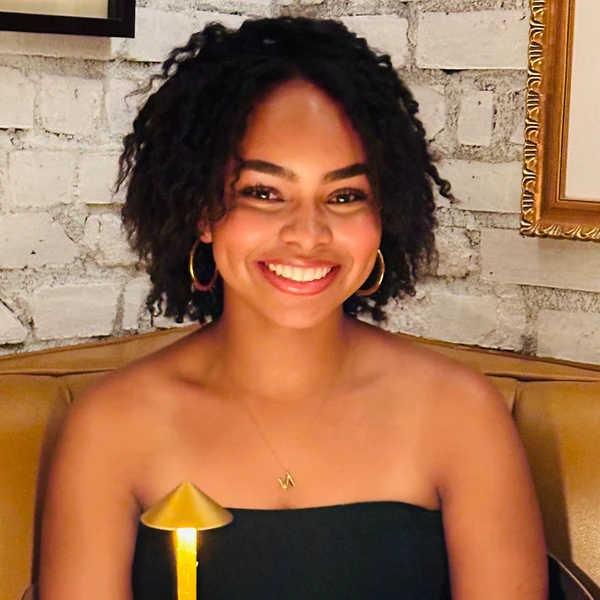
Until recently, my kinky curls were my biggest enemy. In fact, I often dreamed of permanently straightening my hair. Although I was not aware then, I now realize this fantasy was essentially a rejection of my Black heritage and a feeble attempt to assimilate with the masses. At school, I constantly had people telling me my hair was either too big, too short, or too wild. Sadly, I believed them, and unknowingly absorbed countless derogatory remarks and damaging self-perceptions.
Then, one day in Ninth Grade, I finally reached my breaking point. An insensitive classmate thought it would be funny to secretly stick plastic forks in my thick, curly hair. Embarrassed, I laughed it off in the moment, but felt humiliated and hurt. I had always been so good at sticking up for friends in need, but for some reason, advocating for myself was far more difficult. Regardless, I also knew that if I didn’t overcome this challenge, my complacency would eventually make me a part of the problem.
The next day, I pulled the boy aside, and explained how potentially damaging the repercussions of his “joke” could have been. He was sincerely apologetic, promised to change his ways, and never disrespected me again.
That year, I continued to grow more comfortable using my voice, and defended myself when needed. Though it took time, I learned not only to accept, but appreciate my Afrocentric hair and Black identity. Still, I wished I had been better equipped to deal with microaggressions at a younger age. I worried about the plight of other Black girls at my predominantly White school who were, like me, most likely dealing with similar emotional burdens from the harmful impacts of recurring slights.
An opportunity to explore this further arose when a brilliant Black teacher approached me about participating in a mentorship program called “Sister Circle”. She described how the initiative would provide opportunities for Black girls to form a stronger sense of belonging through mentor and mentee pairings. We would share our lived experiences, dreams and concerns, and strive to embrace our full potential. Because I had expressed my investment in our school’s Black students during previous discussion panels, the teacher asked me to help launch Sister Circle’s pilot group. Immediately, I knew I had found my calling, and eagerly began recruiting participants.
Within a few weeks, it became clear just how needed Sister Circle was. As Black girls, we don’t often have the opportunity to unpack our struggles, given how unique they can be to the intersection of our race and gender. But in Sister Circle, Black girls from all ages opened up and connected through our commonalities. We explored concepts like inclusion and belonging, trust and safety, identity and culture. My cohorts and I left each gathering feeling seen, validated and uplifted. Motivated by a deep sense of purpose, I proposed the idea of becoming Sister Circle’s first Student Liaison to the founders. Through this role, I assumed exciting new responsibilities, but most importantly, was able to give back to the program that had given so much to me.
As a current senior, I now proudly hold the title of Sister Circle Student President, and have continued to spearhead the group throughout the school year. Sister Circle gave me the opportunity to utilize the knowledge I gained from overcoming adversity and pay it forward as a mentor. Supporting fellow Black girls as they journey toward improved self-acceptance and self-worth has been so gratifying, that I look forward to sharing the benefits of this important program with others during my college experience and beyond!