Fayetteville, NC
Ethnicity
Black/African
Hobbies and interests
African American Studies
American Sign Language (ASL)
Anime
Advocacy And Activism
Anatomy
Comedy
Health Sciences
Makeup and Beauty
Medicine
Reading
Adult Fiction
Fantasy
Science Fiction
I read books multiple times per week
Nyani Taylor
1x
Finalist1x
Winner
Nyani Taylor
1x
Finalist1x
WinnerBio
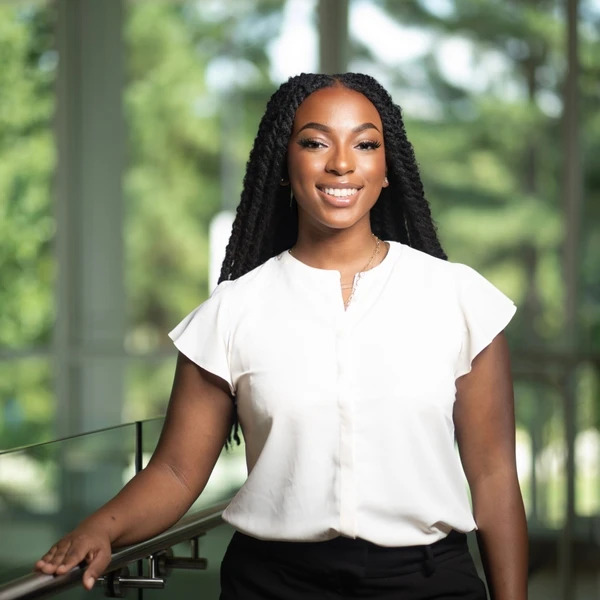
My name is Nyani Taylor, and I am a passionate and determined student pursuing a career in medicine. My journey to become a Physician Assistant has been shaped by a desire to serve communities that often lack access to quality healthcare. I believe representation in medicine is essential, and that belief drives my commitment to becoming a physician. Attending an HBCU has strengthened both my academic foundation and my sense of purpose. Surrounded by a supportive community that celebrates culture, leadership, and excellence, I have grown into a more confident and driven future healthcare professional. I am committed to using my education to advocate for health equity and create meaningful change.
Education
Fayetteville State University
Bachelor's degree programMajors:
- Medicine
- Military Technologies and Applied Sciences, Other
GPA:
3.7
Clover Park Technical College
Associate's degree programMajors:
- Health Professions and Related Clinical Sciences, Other
GPA:
3.8
Miscellaneous
Desired degree level:
Bachelor's degree program
Graduate schools of interest:
Transfer schools of interest:
Majors of interest:
- Biochemistry, Biophysics and Molecular Biology
- Chemistry
- Psychology, General
- Medicine
Career
Dream career field:
- Medicine
Dream career goals:
physician assistant
surgical tech
multicare health systems2022 – 20242 years
Sports
Artistic Gymnastics
Junior Varsity2017 – 20181 year
Public services
Volunteering
Ronald McDonald house of charity — House helper2024 – PresentVolunteering
Boise rescue mission missionaries women and children’s center — Serving meals to the residents, engaging in Conversation, and cleaning the kitchen for the next day2024 – 2024Volunteering
saint josephs hospital — hospital volunteer2019 – 2019
Future Interests
Advocacy
Volunteering
Junie Project Scholarship
The operating room is often the last place a patient expects to feel safe. Bright lights, unfamiliar faces, and the overwhelming loss of control can make even the strongest person anxious. One morning, while working as a surgical technologist, I met a patient who reminded me just how essential trust is in healthcare. As I introduced myself and helped position her for surgery, she leaned in and whispered, “Please don’t let them hurt me.” She was unaware of my role in the operating room, my level of training, or the extent of my authority. What she did know was that I looked like her. As another Black woman in the room, my presence alone gave her a sense of comfort. In that vulnerable moment, she trusted me to protect her when she could not protect herself.
Although I was committed to advocating for her, I lacked the knowledge to fully understand whether everything being done was in her best interest and had to place my trust in the surgeons. In that moment, I realized that I wanted to be more than just a supportive presence. I wanted the knowledge and training to confidently advocate for my patients. This continues to draw me toward becoming a Physician Assistant. That brief interaction stayed with me long after the procedure, as it revealed the profound need for both representation and trust in healthcare.
Rebuilding trust between the community and the healthcare system will not happen overnight. A major challenge is the lack of cultural competency among healthcare workers. One way to address this and better understand the communities we serve is to get out into the community. This is why I volunteer at local assistance centers in my community. I believe these experiences will make me a better provider and a recognizable presence.
Equally important is the role of representation. When patients see healthcare professionals who look like them, it can help bridge the gap between fear and trust. Representation reassures patients that their voices matter. As someone who grew up in Washington State, I did not see many spaces created to celebrate and support people who looked like me, let alone representation in the medical field. When beginning my educational journey, I knew I needed an environment where representation, community, and cultural identity were embraced. That desire led me to travel across the country to attend an HBCU. There, I found the community I had longed for and support like no other. I met more Black doctors and educators than I had ever before. Seeing people who have overcome similar challenges succeed in the spaces I aspire to join strengthens my commitment to increasing diversity in healthcare.
That patient may never know how much her words influenced me, but she reminded me that medicine is not only about procedures, diagnoses, or treatments. It is about people feeling safe enough to place their lives in the hands of someone who cares. Receiving this scholarship would help ease the financial burden of pursuing higher education and allow me to focus more on preparing for Physician Assistant school. Rather than spending time trying to piece together the funds needed to continue my education, I would be able to dedicate more time to learning and serving my community. This support would bring me one step closer to becoming the kind of provider I aspire to be—one who advocates for patients, builds trust, and serves communities with compassion and understanding. Through my education, I hope to gain the knowledge and skills necessary to provide the informed, compassionate care every patient deserves.
My Resume Link [https://1drv.ms/b/c/98461b36f352cd82/IQB4MC2XMwLSSrqdu2JusV3QAZgL37T30ZQxVokl6WGQYvU]
GD Sandeford Memorial Scholarship
WinnerThe operating room is often the last place a patient expects to feel safe. Bright lights, unfamiliar faces, and the overwhelming loss of control can make even the strongest person anxious. One morning, while working as a surgical technologist, I met a patient who reminded me just how essential trust is in healthcare. As I introduced myself and helped position her for surgery, she leaned in and whispered, “Please don’t let them hurt me.”
She was unaware of my role in the operating room, my level of training, or the extent of my authority. What she did know was that I looked like her. As another Black woman in the room, my presence alone gave her a sense of comfort. In that vulnerable moment, she trusted me to protect her when she could not protect herself.
Unbeknownst to the patient, I was committed to advocating for her, but I lacked the education and experience to fully understand whether everything being done was in her best interest. The surgeons were the experts, and while I assisted to the best of my ability, I also had to place my trust in them. In that moment, I realized that I wanted to be more than just a supportive presence; I wanted the knowledge and training to confidently advocate for my patients. This is what continues to draw me toward becoming a Physician Assistant. That brief interaction stayed with me long after the procedure, as it revealed the profound need for both representation and informed, trustworthy care in healthcare.
Rebuilding trust between the community and the healthcare system is not a task that can be completed overnight. One of the larger problems is the lack of cultural competency among healthcare workers. One way to address this and better understand the communities we serve outside of the healthcare setting is to get out into the community. This is why, a few times a month, I volunteer at local assistance locations in my city, where I organize donated clothing, food, and hygiene products. I help individuals who may be going through a difficult time shop for supplies they need. Here, I get to see people as people, and this has helped me gain a better understanding of the community I plan to serve. With each interaction, I learn more ways to communicate and be of assistance to someone in need. I will continue this practice in the years to come, as I believe it will make me a better provider and a recognizable presence. Beyond treating illness, I want to help create environments where patients feel safe asking questions, expressing concerns, and actively participating in their care.
Equally important is the role of representation. When patients see healthcare professionals who look like them and may have experienced similar struggles, it can help bridge the gap between fear and trust. Representation reassures patients that their voices matter and that their experiences are understood. As a Black woman in medicine, I hope to be part of a generation of healthcare professionals who truly reflect the diversity of the communities they serve.
That patient may never know how much her words influenced me, but she reminded me that medicine is not only about procedures, diagnoses, or treatments. It is about people feeling safe enough to place their lives in the hands of someone who cares. Through my education, I hope to gain the knowledge to recognize when things are done right, advocate for my patients, and honor the trust I have been given while continuing to foster more. One patient, one community, and one meaningful connection at a time.
Erin Lanae's HBCU Excellence Scholarship
PWI after PWI after PWI. Predominantly white institutions are all I have ever known, from kindergarten to Community college, and all too many times, I have been the only one in the room who looks like me. I chose to attend an HBCU to give myself something I never had: culture and community. Once I discovered HBCU’s I knew there was no better way to foster my learning environment than that. I have heard that HBCU culture is like a family where everyone around you wants to see you succeed as much as they want it for themselves. I have seen many influential people who are proud alumni of HBCUs, from actresses like Angela Bassett and Oprah Winfrey to trailblazers like Kathrine Johnson, one of the first black women to work at NASA, and George Alcorn, who invented the X-ray.
Additionally, I know that the HBCU that I have chosen has state-of-the-art facilities, just as many of them do, including a renowned research program and strong STEM education programs. As a chemistry major myself, and not seeing many black women in my area in STEM, I know this school will foster an unmatched learning experience.
The experience of attending an HBCU is rival to none. To me, attending an HBCU means being a part of something larger than myself, a part of the legacy of those who achieve greatness. I want to leave my mark like those before me. I know that going to an HBCU is like going home.
Andy Huff Memorial Scholarship
“Dreams don’t work unless you do” is a quote I say to myself often when the work gets rough. It keeps me motivated; it reminds me that I am in charge of my destiny. And what is a dream but a plan, and what is a plan without the funds to make it happen but just a dream? I dream of being a well-respected Physician assistant, a pillar of my community, a healthcare system warrior, and a beacon of light for all those in my care. I grew up in federal way Washington, a small city and still it significantly impacted my decisions to pursue health. Growing up, I witnessed firsthand the impact of accessible, quality medical services and the importance of compassionate care. I learned early on that those two things could make or break the relationships people form with healthcare. A stigma may be created, which can negatively affect the health of the community if enough people choose not to seek care when they feel that their local facilities don’t meet these needs. My local practitioners provided my community with these essential factors, and I, as a future practitioner, will do the same for my community.
Federal Way also taught me the value of culture and diversity. I grew up in a melting pot of many cultures, a few of which I had the pleasure of learning about. I attended school with children of many different backgrounds and was often educated or even immersed in their cultural activities, food, language, customs, and practices. Cultural competency is imperative in the world of medicine but also sorely lacking. As a practitioner, I would bring my knowledge and experience into the health system and share it with others so they may gain knowledge on the subject.
Additionally, although I did not grow up in a rural area, I got to work in one this past summer, Sunnyside, Washington. As I spent my time in Sunnyside as a surgical tech in a hospital setting, I witnessed firsthand the limited resources and access to physicians there. Working here sparked my desire to help in any way I can. When I graduate as a Physician Assistant, I have decided to return to Sunnyside and do my part to care for its occupants.
Finally, this is my plan, my dream. With this scholarship, I will be able to fund my plans, and they will be more than just dreams.
Nikhil Desai Reinventing Healthcare Scholarship
I need help, and I seek it. In a room full of people, I open my mouth to speak, and my voice disappears into the void; people go on with their conversation as if I have said nothing at all. My mouth is moving, but my voice is mute. Invisible, this is all too true of how many black Americans feel in our medical system today. Ignored, concerns for their health and pleas for help falling on deaf ears. As a black woman, I know this all too well. So, if I could change our healthcare system, I would make a system that cares for all as equally as it says it does
Growing up, my mother worked in primary health, which I would visit often, and first began my passion for healthcare, something we would bond over, though I leaned more in favor of the Mother-Baby/OB-GYN department. I have always been passionate about the human anatomy and loved watching procedures be done on myself or my siblings. From a young age, I knew I wanted a career in medicine. Out of high school, I pursued a career as a surgical tech, but my desire to help people led me to become a physician assistant (PA). OB/GYN is still my focus, but in this specialty, I see a disconnect between patients and providers that is resulting in a severe lack of patient care, specifically for black women. As a PA, I would like to specialize in this field and change the system to work in favor of all and be safer for black women.
Firstly, cultural competence is paramount in delivering effective care. According to the CDC, in 2021, the maternal mortality rate for Black women was 2.6 times the rate for White women. Ultimately, this is believed to be because of implicit bias from staff not listening to expecting mothers when they needed it. I have three sisters, all of whom have had babies, and I have feared for them each time they have gone into a birthing suite. I have also made it a point to be in the room with them every step of the way to advocate for them and be their voice, doing what I can to make sure my sisters do not end up as another figure added to this statistic. As a Physician Assistant, I want to do the same for any woman under my care, all women, if I really could, but that is unrealistic as I know I am just one person. Even so, change starts with one, and I hope to teach more. Teach people to identify this bias and work through it for the safety of patients and teach family members the most effective way to advocate for their loved ones until that responsibility can rely solely on the staff. I aim to bridge the gap between providers and communities, leading to a better care system for all.
Lastly, representation matters in a field where minorities are underrepresented. A study published by the National Library of Medicine stated that "greater representation of Black PCPs (primary care providers) in the PCP workforce is associated with improved survival-related outcomes for Black individuals. Knowing this, I want to mentor the future generation of minority providers so that we can keep increasing representation in the health field.
Aaryn Railyn King Foundation Scholarship
I am 24. I am a black woman, and I am currently working in the medical field, a field dominated by older white males. I am a little fish in a big pond, to say the least. I have worked as a Surgical Technologist for the last two years and aspire to become a Physician Assistant (PA) shortly. I am also from a predominantly white area where no one in the room looks like me, and I feel as though I must be the black spokeswoman and daily brush off many hurtful microaggressions. Although the environment may be rough, I still love the medical field and what I do. So much so that I want to become a PA so that I can personally do more for people. What I love about surgery is being so hands-on with the problem and being part of the team that immediately fixes the root problem. I am also the voice of the patient when they cannot speak for themselves, and I view this as an honor and a privilege. As a surgical tech, I work in many different specialties, and it is hard to pick a favorite, but one that I gravitate towards is OB-GYN. But in this specialty, I see a disconnect between patients and providers that is resulting in a severe lack of patient care, specifically for black women. As a PA, I would like to specialize in this field and change the system to work in favor of all and be safer for black women.
Firstly, representation matters in a field where minorities are underrepresented. I once heard a compelling quote on people of color dreaming of venturing into career fields where there are already so few of us: "Now, we, as people of color, don't occupy their imagination the way they occupy ours." This made me think, growing up, that I did not see very many women of color in doctors' offices or even portrayed on TV as doctors. I want to be the provider I wish I could have seen as a little girl to look up to.
Additionally, cultural competence is paramount in delivering effective care. According to the CDC, in 2021, the maternal mortality rate for Black women was 2.6 times the rate for White women. Ultimately, this is believed to be because of implicit bias from staff not listening to expecting mothers when they needed it. I have three sisters, all of whom have had babies, and I have feared for them each time they have gone into a birthing suite. I have also made it a point to be in the room right there along with them every step of the way to advocate for them and be their voice, doing what I can to make sure my sisters do not end up as another figure added to this statistic. As a Physician Assistant, I want to do the same for any woman under my care, all women, if I really could, but that is unrealistic as I know I am just one person. Even so, change starts with one, and I hope to teach more. Teach people to identify this bias and work through it for the safety of patients and teach family members the most effective way to advocate for their loved ones until that responsibility can rely solely on the staff. I aim to bridge the gap between providers and communities, leading to a better care system for all.
CATALYSTS Scholarship
I am 24. I am a black woman, and I am currently working in the medical field, a field dominated by older white males. I am a little fish in a big pond, to say the least. I have worked as a Surgical Technologist for the last two years and aspire to become a Physician Assistant (PA) shortly. I am also from a predominantly white area where no one in the room looks like me, and I feel as though I must be the black spokeswoman and daily brush off many hurtful microaggressions. Although the environment may be rough, I still love the medical field and what I do. So much so that I want to become a PA so that I can personally do more for people. What I love about surgery is being so hands-on with the problem and being part of the team that immediately fixes the root problem. I am also the voice of the patient when they cannot speak for themselves, and I view this as an honor and a privilege. As a surgical tech, I work in many different specialties, and it is hard to pick a favorite, but one that I gravitate towards is OB-GYN. But in this specialty, I see a disconnect between patients and providers that is resulting in a severe lack of patient care, specifically for black women. As a PA, I would like to specialize in this field and change the system to work in favor of all and be safer for black women.
Firstly, cultural competence is paramount in delivering effective care. According to the CDC, in 2021, the maternal mortality rate for Black women was 2.6 times the rate for White women. Ultimately, this is believed to be because of implicit bias from staff not listening to expecting mothers when they needed it. I have three sisters, all of whom have had babies, and I have feared for them each time they have gone into a birthing suite. I have also made it a point to be in the room right there along with them every step of the way to advocate for them and be their voice, doing what I can to make sure my sisters do not end up as another figure added to this statistic. As a Physician Assistant, I want to do the same for any woman under my care, all women, if I really could, but that is unrealistic as I know I am just one person. Even so, change starts with one, and I hope to teach more. Teach people to identify this bias and work through it for the safety of patients and teach family members the most effective way to advocate for their loved ones until that responsibility can rely solely on the staff. I aim to bridge the gap between providers and communities, leading to a better care system for all.
Finally, representation matters in a field where minorities are underrepresented. I once heard a compelling quote on people of color dreaming of venturing into career fields where there are already so few of us: "Now, we, as people of color, don't occupy their imagination the way they occupy ours." This made me think, growing up, that I did not see very many women of color in doctors' offices or even portrayed on TV as doctors. I want to be the provider I wish I could have seen as a little girl to look up to.
Miguel Mendez Social Justice Scholarship
I need help, and I seek it. In a room full of people, I open my mouth to speak, and my voice disappears into the void; people go on with their conversation as if I have said nothing at all. My mouth is moving, but my voice is mute. Invisible, this is all too true of how many black Americans feel in our medical system today. Ignored, concerns for their health and pleas for help falling on deaf ears. As a black woman, I know this all too well. But I envision a health care system that cares for all as equally as it says it does
Growing up, my mother worked in primary health, which I would visit often, and first began my passion for healthcare, something we would bond over, though I leaned more in favor of the Mother-Baby/OB-GYN department. I have always been passionate about the human anatomy and loved watching procedures be done on myself or my siblings. From a young age, I knew I wanted a career in medicine. Out of high school, I pursued a career as a surgical tech, but my desire to help people led me to become a physician assistant (PA). OB/GYN is still my focus, but in this specialty, I see a disconnect between patients and providers that is resulting in a severe lack of patient care, specifically for black women. As a PA, I would like to specialize in this field and change the system to work in favor of all and be safer for black women.
Firstly, cultural competence is paramount in delivering effective care. According to the CDC, in 2021, the maternal mortality rate for Black women was 2.6 times the rate for White women. Ultimately, this is believed to be because of implicit bias from staff not listening to expecting mothers when they needed it. I have three sisters, all of whom have had babies, and I have feared for them each time they have gone into a birthing suite. I have also made it a point to be in the room with them every step of the way to advocate for them and be their voice, doing what I can to make sure my sisters do not end up as another figure added to this statistic. As a Physician Assistant, I want to do the same for any woman under my care, all women, if I really could, but that is unrealistic as I know I am just one person. Even so, change starts with one, and I hope to teach more. Teach people to identify this bias and work through it for the safety of patients and teach family members the most effective way to advocate for their loved ones until that responsibility can rely solely on the staff. I aim to bridge the gap between providers and communities, leading to a better care system for all.
Lastly, representation matters in a field where minorities are underrepresented. I once heard a compelling quote on people of color dreaming of venturing into careers where there are already so few of us: "Now, we, as people of color, don't occupy their imagination the way they occupy ours." This made me think, growing up, that I did not see very many women of color in doctors' offices or even portrayed on TV as doctors. I want to be the provider I wish I could have seen as a little girl to look up to.
Delories Thompson Scholarship
PWI after PWI after PWI. Predominantly white institutions are all I have ever known, from kindergarten to Community college, and all too many times, I have been the only one in the room who looks like me. I often see black girls like me choosing to assimilate into our white counterparts rather than accentuate their beautiful features. See, being black to me means that my hair curls, my lips are full, and my nose is wide. It means I see the world through different eyes. I see that not many of us are in higher places of STEM and research. I see that there is medical negligence when it comes to race, to me being black is being resilient. I aspire to be a Physician Assistant, or PA for short, and once I discovered HBCU’s I knew there was no better way to foster my learning environment than that. As a PA, I plan to work in OB-GYN. In this specialty, I see a disconnect between patients and providers that results in a severe lack of patient care, specifically for black women. As a PA, I want to educate staff on implicate bias, changing the system to work in favor of all and be safer for black women—lastly, representation matters. I once heard a compelling quote about people of color aspiring to fields that lack them: "Now, we, as people of color, don’t occupy their imagination the way they occupy ours.” I strive to be a little black girl's dream
Delon Hampton & Associates African Americans in STEM Scholarship
I am 24. I am a black woman, and I am currently working in the medical field, a field dominated by older white males. I am a little fish in a big pond, to say the least. I have worked as a Surgical Technologist for the last two years and aspire to become a Physician Assistant (PA) shortly. I am also from a predominantly white area where no one in the room looks like me, and I feel as though I must be the black spokeswoman and daily brush off many hurtful microaggressions. Although the environment may be rough, I still love the medical field and what I do. So much so that I want to become a PA so that I can personally do more for people. What I love about surgery is being so hands-on with the problem and being part of the team that immediately fixes the root problem. I am also the voice of the patient when they cannot speak for themselves. This is an honor and a privilege. As a surgical tech, I work in many different specialties, and it is hard to pick a favorite, but one that I gravitate towards is OB-GYN. But in this specialty, I see a disconnect between patients and providers that is resulting in a severe lack of patient care, specifically for black women. As a PA, I would like to specialize in this field and change the system to work in favor of all and be safer for black women.
Firstly, representation matters in a field where minorities are underrepresented. I once heard a compelling quote on people of color dreaming of venturing into career fields where there are already so few of us: "Now, we, as people of color, don’t occupy their imagination the way they occupy ours.” This made me think, growing up, that I did not see very many women of color in doctors' offices or even portrayed on TV as doctors. I would like to be the provider I wish I could have seen as a little girl to look up to.
Additionally, cultural competence is paramount in delivering effective care. According to the CDC, in 2021, the maternal mortality rate for Black women was 2.6 times the rate for White women. Ultimately, this is believed to be because of implicit bias from staff not listening to expecting mothers when they needed. I have three sisters, all of whom have had babies, and I have feared for them each time they have gone into a birthing suite. I have also made it a point to be in the room right there along with them every step of the way to advocate for them and be their voice, doing what I can to make sure my sisters do not end up as another figure added to this statistic. As a Physician Assistant, I want to do the same for any woman under my care. Honestly, all women if I really could, but that is unrealistic as I know I am just one person. Even so, change starts with one and I am hoping to teach more. Teach people to identify this bias and work through it for the safety of patients and teach family members the most effective way to advocate for their loved ones until that responsibility can rely solely on the staff. I aim to bridge the gap between providers and communities and believe this will lead to a better care system for all.
Tanya C. Harper Memorial SAR Scholarship
I am 24. I am a black woman, and I am currently working in the medical field, a field dominated by older white males. I am a little fish in a big pond, to say the least. I have worked as a Surgical Technologist for the last two years and aspire to become a Physician Assistant (PA) shortly. I am also from a predominantly white area where no one in the room looks like me and I feel as though I must be the black spokeswoman and daily brush off many hurtful microaggressions. Although the environment may be rough, I still love the medical field and what I do. So much so that I want to become a PA so that I can personally do more for people. What I love about surgery is being so hands-on with the problem and being a part of the team that fixes the root problem right away. I am also the voice of the patient when they cannot speak for themselves and I view this as an honor and a privilege. As a surgical tech I work in many different specialties and it is hard to pick a favorite but one that I gravitate towards is OB-GYN. But in this specialty, I see a disconnect between patients and providers that is resulting in a severe lack of patient care specifically for black women. As a PA, I would like to specialize in this field and change the system to work in favor of all and be safer for black women.
Firstly, representation matters in a field where minorities are underrepresented. A very powerful quote I once heard on people of color dreaming to venture into career fields where there are already so few of us was that “Now, we as people of color, don’t occupy their imagination the way they occupy ours.” This made me think, growing up I did not see very many women of color in doctors' offices or even portrayed on TV as doctors. I would like to be the provider that I wish I could have seen as a little girl to look up to.
Additionally, cultural competence is paramount in delivering effective care. According to the CDC in 2021, the maternal mortality rate for Black women was 2.6 times the rate for White women. Ultimately, believed to be because of implicit bias from staff not listening to expecting mothers when they needed. I have three sisters all of whom have had babies and I have feared for them each time they have gone into a birthing suite. I have also made it a point to be in the room right there along with them every step of the way to advocate for them and be their voice, doing what I can to make sure my sisters do not end up as another figure added to this statistic. As a Physician Assistant, I would like to do the same for any woman under my care. Honestly, all women if I really could, but that is unrealistic as I know I am just one person. Even so, change starts with one and I am hoping to teach more. Teach people to identify this bias and work through it for the safety of patients and teach family members the most effective way to advocate for their loved ones until that responsibility can rely solely on the staff. I aim to bridge the gap between providers and communities and I believe this will lead to a better system of care for all.