Hobbies and interests
Advocacy And Activism
Archaeology
Reading
Cultural
Environment
Adventure
I read books daily
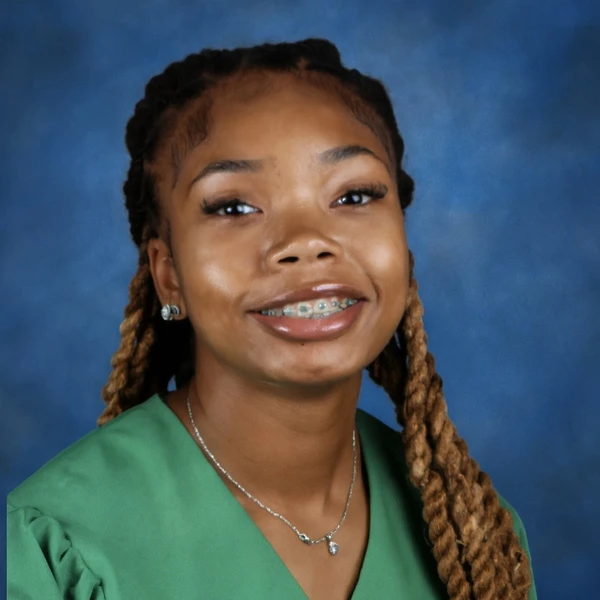
Norah Young
1x
Finalist
Norah Young
1x
FinalistBio
Academically driven high school student with a 4.3 GPA and a planned major in Electrical Engineering. Experienced leader as Class President and All-School President, with strong communication and teamwork skills developed through student government, varsity athletics, and community service. Academic coursework such as AP Computer Science reflects a technological and analytical focus.
Education
Indian Creek School
High SchoolMiscellaneous
Desired degree level:
Bachelor's degree program
Majors of interest:
- Electrical, Electronics, and Communications Engineering
Career
Dream career field:
Engineering
Dream career goals:
Customer Service
Chick Filet2023 – 2023
Sports
Basketball
Varsity2022 – 20264 years
Awards
- 695 Hoops MVP
Research
Foreign Languages, Literatures, and Linguistics, Other
MALI — Student2022 – Present
Arts
Music Intelligence Agency
Videographylive2023 – Present
Future Interests
Volunteering
Entrepreneurship
Julie Holloway Bryant Memorial Scholarship
My name is Norah Young, and I am a senior at Indian Creek School in Crownsville, Maryland. Throughout high school, I have learned that education means more than just studying hard and earning good grades. It is also about finding your voice, connecting with others, and discovering how your experiences can inspire change. I have a 4.3 GPA and plan to major in Electrical Engineering because I love the way technology combines creativity and logic to solve real-world problems. After graduation, I hope to continue exploring STEM in college and eventually design systems that make life easier and more sustainable for communities in need.
In addition to my academic interests, being bilingual has played a huge role in shaping who I am. My first language is English, and I also speak Arabic, which I learned through my family and community. Learning two languages has not always been easy, but it has been one of the most rewarding parts of my life. At times, switching between languages was challenging, especially when I was younger. I sometimes mixed words or had to pause and think about which language to use. But as I grew more comfortable, I began to see that being bilingual gives me a special way of understanding people and building connections.
Speaking Arabic allows me to communicate with my extended family, learn about our cultural traditions, and see the world from a broader perspective. It has helped me appreciate how language shapes the way people think and express themselves. I believe being bilingual has also made me a better listener and problem-solver. It reminds me that there is more than one way to see a situation—whether in language or in life—and that understanding different perspectives leads to better solutions. This mindset has been especially useful in my STEM classes and leadership roles.
Language, much like technology, is a bridge that connects people. Both depend on communication and shared understanding. As All-School President, I use that same idea every day. I listen to students, learn from their ideas, and work to create an environment where everyone feels included. Being bilingual has made me more aware of diversity and more confident in being a representative for others. I have also carried that awareness into my work with the Black Student Alliance, where I help build a supportive and inclusive community by encouraging dialogue and celebrating culture through education and events.
Outside of school, service has been a big part of my life. Volunteering at PALS Baltimore taught me how powerful communication can be, even beyond words. There, I worked with individuals with Down syndrome and helped plan activities that built friendships and confidence. Through experiences like this, I have realized that empathy, understanding, and patience matter as much as knowledge. They are what make leadership meaningful.
After I graduate, I plan to attend college to study Electrical Engineering. I am excited to explore how technology can solve problems such as improving access to renewable energy and creating smarter systems for schools and communities. My ultimate goal is to design technology that makes life better and fairer for people, especially in underrepresented communities. I believe that being bilingual—and the perspective it gives me—will help me approach challenges with creativity and cultural awareness.
Being bilingual has taught me to value communication and teamwork. It reminds me that every voice has value and that the best ideas often come when people from different backgrounds work together. Language has shaped how I connect those dreams to others. I hope to keep using both to make an impact, one project and one conversation at a time.
Learner Calculus Scholarship
When I first signed up for AP Calculus, I thought it would just be another tough math class filled with equations and long homework assignments. But as the year went on, I realized that calculus is so much more than numbers or steps on a page. It is a way of understanding how things change and connect. Calculus helps explain the patterns that happen in real life, from how a ball moves through the air to how electricity travels through a circuit. Learning how to see the world through calculus opened my eyes to how important it is in every STEM field.
In my AP Calculus class with Mr. Andrews, I learned that calculus is like a bridge between math and the real world. When we worked on rate-of-change problems, Mr. Andrews explained how those same rules apply to engineering and physics. He showed us that the equations we used to measure motion could also describe how energy moves, how computers process data, or how buildings stay stable. That lesson stuck with me. I began to see calculus not just as a subject, but as a tool that helps scientists and engineers solve real problems and create new ideas.
Calculus has also taught me valuable lessons that go beyond academics. At first, I found it challenging to keep up with the pace and logic of each problem. There were moments when I wanted to give up because the answers didn’t come easily. But each time I struggled, I learned that the key was to slow down, stay patient, and keep working through the steps. Over time, I gained confidence in myself and learned to appreciate the process, not just the solution. That mindset has helped me in more than math. It has made me a stronger student, athlete, and leader. Now, when I face challenges in basketball, coding, or student government, I remind myself to take one step at a time, just like I do with a calculus problem.
My studies in calculus and computer science have inspired me to pursue a career in Electrical Engineering. I want to design technology that helps people and creates solutions for real-world challenges. From developing renewable energy systems to improving digital access in underprivileged communities, engineers rely heavily on the principles of calculus. It provides the foundation for everything from programming artificial intelligence to designing safe, sustainable technology. I hope to take what I have learned and use it to make technology both more efficient and more equitable.
For me, calculus is more than a math class. It represents how curiosity, persistence, and knowledge can shape the future. With what I continue to learn through my education, I hope to use those same principles to build a career that turns challenges into progress and ideas into innovation.
Dream BIG, Rise HIGHER Scholarship
For as long as I can remember, I have believed that education is more than just what happens inside a classroom. It is what helps shape who we are, what we think, and how we view the world. Education has given me direction, taught me perseverance, and grounded me in a purpose that extends far beyond grades or report cards. Through every challenge I have faced, my education has helped me find my path toward becoming an engineer, a leader, and someone who hopes to give back to others.
During my time at Indian Creek School, I have been motivated to reach my full potential academically and personally. With a 4.3 GPA, I have challenged myself with rigorous courses, especially in science, math, and technology. I always enjoyed solving problems as a child, but it was in high school that I began to understand how deep my passion for STEM really was. Classes like AP Computer Science, AP Calculus, and Cybersecurity helped me discover how creativity and logic come together to make something meaningful. I was fascinated by how a concept could move from numbers on the board to an actual design or program that improves people’s daily lives. This connection between theory and impact is what drew me to study Electrical Engineering.
I remember the first small program I created in my computer science class. It was not complicated, but it worked. It solved a simple scheduling problem for my basketball team, organizing practices, games, and volunteer shifts into one digital tracker I built using Python. Seeing a real solution come from an idea in my head made me excited about what I could build next. That same curiosity and excitement have become the center of my goals. I want to use my future education to design technology that makes people’s lives easier, more sustainable, and more connected.
But education has not just been about success for me. It has been about learning how to overcome obstacles. Balancing school, sports, leadership, and community service has not always been easy. There have been times when the workload felt overwhelming or when I doubted whether I could handle it all. During my junior year, I sometimes went from early-morning basketball practice straight into advanced classes and then stayed late for student government meetings. It took discipline and determination to manage everything, but I learned that growth happens when we step outside of our comfort zones. My teachers and mentors showed me that setbacks can teach resilience just as much as achievements teach confidence. Every late night spent studying and every challenge I pushed through helped me build stronger focus and a greater ability to adapt, skills I will carry into college and my career.
Beyond academics, my education has also shown me how important it is to help others. As All-School President, one of my biggest goals has been to make students feel seen and supported. Leadership has taught me that service is not always grand. It is often about small actions that help others succeed. Whether organizing school-wide projects, planning events that unite students, or listening when someone needs support, I have learned that real leadership comes from empathy. That same belief drives all of my community work. As a member of the Black Student Alliance, I work to help create a safe environment for students of color and to celebrate our shared culture and history. These experiences have deepened my understanding of how representation and inclusion can change an entire community for the better.
Outside of school, I have continued to learn through service. Volunteering more than 100 hours with PALS Baltimore gave me an opportunity to work with individuals who have Down syndrome. Building friendships and planning activities for them taught me patience, compassion, and the joy that comes from helping others feel valued. I have also worked as a counselor for summer basketball camps at my school, mentoring younger players not just in athletics, but in teamwork and confidence. I love helping kids see that they are capable of more than they think, just as my teachers have done for me.
These lessons have all shaped what I want to do with my education. I plan to study Electrical Engineering and use what I learn to help create sustainable and inclusive technologies. I am especially interested in designing renewable energy systems or smart devices that serve schools and communities that lack access to resources. Education has shown me that knowledge should never stay with one person. It should be shared and used to uplift others. I see my degree as a tool for solving problems, but also as a way to make opportunities fairer for everyone.
One challenge I continue to work through is representation. In many of my STEM classes, I am one of the few Black female students. At first, that was intimidating, but now I see it as my motivation. I want to be part of a generation that makes representation in STEM fields normal, not rare. I want to show younger students, especially girls of color, that they can dream big and pursue careers in fields that once felt out of reach. Seeing more diverse faces in labs, classrooms, and research spaces changes how we innovate and who benefits from it.
When I look back on my high school years, I see more than grades or awards. I see lessons learned through effort, persistence, and community. My education has given me direction, strength, and a sense of purpose. I have learned that what matters most is not where you start, but what you choose to do with the opportunities given to you. I know that my education will continue to be the key that opens doors, not just for me, but for the people I hope to help. I want to use what I learn to give back, to innovate with purpose, and to help build a future that is brighter, more inclusive, and full of possibility.
Stephan L. Daniels Lift As We Climb Scholarship
Education has always been something I take seriously, not just because it opens doors, but because it gives me the tools to make an impact. I am a senior at Indian Creek School in Crownsville, Maryland, with a 4.3 GPA and a deep passion for STEM, leadership, and service. Throughout high school, I have worked hard to balance academics, athletics, and community involvement while preparing myself to study Electrical Engineering in college. My goal is to use technology to solve real-world problems and make life better for others.
My love for STEM began when I realized how creativity and logic come together in technology. One of my favorite moments was writing my first program in AP Computer Science and watching an idea come to life through code. That excitement grew when I attended the UMBC Summer Enrichment Academy and learned how artificial intelligence systems recognize data patterns. For me, engineering and computer science combine everything I enjoy—problem-solving, math, innovation, and teamwork. Every project I have worked on, whether in class or on my own, reminds me that even the smallest breakthroughs can have a big impact.
Leadership has been another major part of my high school experience. As All-School President and previously Class President, I have had the opportunity to represent my classmates, plan school-wide events, and work with teachers to make our school community stronger. These roles have taught me that leadership is not about being in charge; it is about listening, supporting others, and creating an environment where everyone can succeed. I take pride in helping students feel heard and included because I know that even one small change can make someone’s experience better.
Outside the classroom, I have worked hard to stay involved and help others. Through the Black Student Alliance, I have helped organize events that celebrate culture and encourage meaningful discussion about race, identity, and history. I have also devoted time to community service, including over 100 hours volunteering with PALS Baltimore, where I built friendships and planned activities for individuals with Down syndrome. Those experiences helped me grow more compassionate, patient, and understanding. I also mentor kids at summer basketball camps and serve as captain of my varsity basketball team, where I focus on teamwork, encouragement, and resilience.
Everything I do comes back to one main goal, using what I learn to serve others. I want to study Electrical Engineering because I believe technology can make life fairer and more accessible. I hope to develop sustainable systems and devices that help communities save energy, increase efficiency, and bridge gaps in opportunity. I have always believed that science is meant to serve people, and I want my future work to reflect that.
This scholarship would help me take the next step toward that goal. It would remove financial pressure from my family and allow me to focus fully on my education and research opportunities. I want to make the most of my college experience, learn as much as possible, and bring that knowledge back into the community through innovation, mentorship, and service.
Looking back on my time in high school, I see how my experiences in STEM, leadership, and service have shaped who I am. They have prepared me not only to study engineering but to use it for something meaningful. I want to build a future where creativity meets compassion and where technology helps people live better. That is the kind of difference I hope to make.
Forever90 Scholarship
To me, service means giving your time, skills, and kindness to make life better for others. It is not just about volunteering—it is about showing up, taking initiative, and making a difference wherever you can. Living a life of service has shaped who I am as a student, a leader, and a person. Every experience I have had in my school and community has taught me that service and leadership go hand in hand.
At Indian Creek School, I have dedicated myself to serving others by creating spaces where students feel valued and connected. As the All-School President, my goal has always been to make our environment more inclusive and supportive. I have helped organize student events, coordinate charity drives, and bring student concerns to faculty to help improve campus life. I see leadership as a form of service—listening, caring, and lifting others up so that everyone can succeed. This role taught me that serving others does not always mean being in front; sometimes it means being the one who listens, encourages, and helps quietly.
Through my involvement in the Black Student Alliance, I have worked to celebrate African American culture and create understanding within our school community. We plan educational programs, cultural events, and open discussions that build unity and awareness. This work has helped me understand the power of representation and how education can help reduce misunderstanding and foster respect. Empowering others to feel proud of who they are and to share their stories is one of the most rewarding forms of service I know.
Beyond school, I find fulfillment in serving my larger community. My volunteer work with PALS Baltimore is one of my proudest accomplishments. I spent more than 100 hours helping individuals with Down syndrome build friendships, develop social skills, and participate in fun group activities. Through this experience, I learned patience, kindness, and how much joy comes from helping others feel included. I have also served as a counselor at my school’s basketball camps, mentoring younger players and encouraging them to practice teamwork, confidence, and character both on and off the court.
Service is also a major part of my future goals. I plan to major in Electrical Engineering because I want to use technology to improve lives. My dream is to create sustainable and affordable systems that make education, power, and communication more accessible to communities in need. I believe technology should be a tool for equality, not just progress. With the right education, I hope to design innovations that bring people together and create lasting change.
This scholarship would help me continue serving others through my education. It would allow me to focus on my academics and research, using what I learn to give back to the communities that have shaped me. I want to inspire other young people of color, especially girls, to see themselves as future engineers, innovators, and leaders.
Living a life of service is about finding purpose through helping others. Whether I am leading in student government, volunteering in my community, or mentoring younger students, I strive to make people feel supported and valued. I believe education, when used with compassion and creativity, can change lives—and I want my journey in STEM to reflect that truth.
Julia Elizabeth Legacy Scholarship
When I think about STEM, I think about creativity, problem-solving, and teamwork. I also think about how much better the world could be if more people from different backgrounds were part of creating new technology and ideas. I believe diverse representation in STEM is important because when people with different experiences and perspectives come together, the solutions are stronger, more creative, and more fair for everyone.
As a young Black woman who loves technology and engineering, I know what it feels like to be one of the few in a room. When I first started taking computer science and calculus, I noticed that not many students looked like me. At first, I questioned whether I belonged, but then I realized that I could help change that. Taking those classes showed me that STEM is a space for thinkers, builders, and problem solvers of all kinds. The stories of people like Katherine Johnson and Mae Jemison have always inspired me because they proved that diversity in STEM opens doors for everyone who comes after. Seeing people like them reminds me that representation matters—it gives others the confidence to see themselves in those same positions.
In my AP Computer Science class, I learned how to code and build small programs. That experience taught me that problem-solving can look different for everyone. Two people might write completely different code and still get to the same solution. That is what makes STEM so amazing. When we mix new ideas from people with different voices and backgrounds, we discover better ways to fix problems and improve lives. I know that diversity in STEM works the same way—it adds new ideas, new approaches, and new growth.
Outside the classroom, I’ve seen how inclusion helps communities thrive. As my school’s All-School President and a member of the Black Student Alliance, I’ve worked to make sure everyone feels included and supported. I’ve helped plan events that celebrate Black culture and open discussions about identity and respect. Leadership taught me that when people feel seen and heard, they do their best work. The same is true in STEM. When everyone feels like they belong, more people will share their talents and ideas.
In the future, I hope to major in Electrical Engineering and use what I learn to design technology that helps communities that are often overlooked. I want to create smart and sustainable systems that make everyday life easier, especially for families who don’t always have access to technology or clean energy. I believe that when people from all backgrounds work together, we can design innovations that actually reach the people who need them most.
Diverse representation in STEM is important because it doesn’t just change who is sitting in the lab—it changes what gets created. More voices mean more ideas, more creativity, and more impact. I want to be part of that change, not only by contributing my own perspective but also by encouraging others to join me.
STEM has the power to build a better future, and I believe that future starts with making sure everyone gets the chance to be part of it.
Learner Tutoring Innovators of Color in STEM Scholarship
Ever since I was little, I have been curious about how things work. I liked taking things apart just to see what was inside or how they fit together. That curiosity stayed with me as I got older and turned into an interest in technology. When I started taking computer science and calculus, I realized that STEM is not just about numbers or formulas. It is about solving real problems and finding creative ways to make life better for people. That is why I want to pursue a degree in STEM and major in Electrical Engineering.
What draws me to engineering and technology is how they connect creativity and logic. In my AP Computer Science class, I learned to write programs and see an idea turn into something that actually works. I also enjoyed classes like Python Data Structures, Cybersecurity, and AP Calculus because they showed me how math and coding come together to build new things. I love how STEM challenges you to think differently and try again when something does not work. Every problem becomes a puzzle, and I have learned that patience and curiosity usually lead to an answer.
As a young Black woman in STEM, I know that representation matters. Growing up, I did not always see people who looked like me in technology or engineering, but that made me even more determined to be part of that change. I have been inspired by pioneers like Katherine Johnson and Mae Jemison, who showed that determination and intelligence can overcome any obstacle. Their stories remind me that the more diverse STEM becomes, the more innovative it can be. I want to be one of those voices helping bring new ideas and perspectives to the field.
In the future, I hope to use my engineering degree to design technology that supports communities and makes life more sustainable. I am especially interested in creating renewable energy systems and smart technologies that can help families save resources and lower costs. I want to use what I learn to solve problems that matter, not just build new machines but build opportunities for people who need them most.
I have also learned that leadership and teamwork are a big part of making an impact. As the All-School President and a member of the Black Student Alliance, I have learned how powerful collaboration can be. I have worked on projects that bring people together, plan events that create unity, and make sure students feel seen and supported. I want to bring that same sense of community and inclusion into STEM by encouraging other students of color to explore technology and science. Everyone deserves the chance to be part of innovation.
For me, STEM is more than a career goal. It is a way to create real change. It pushes me to think deeply, work hard, and help others through the things I build. As I move forward, I want to make an impact not only by designing new technology but also by inspiring other young people of color to see themselves as creators, engineers, and problem solvers.
STEM gives me the chance to imagine a better world and then actually help build it. And that is exactly what I want to do.
Richard Neumann Scholarship
I have always liked figuring out how things work and finding ways to make them better. When I started taking computer science, I learned how powerful technology can be in solving everyday problems. One project that really showed me this was something I created for my basketball team.
During the season, it was hard for everyone to keep track of practice times, games, and volunteer hours. People would forget dates or mix up times because our schedule was buried in text messages. To fix this problem, I created a program called “Team Tracker.” The program helped us to stay organized. It was fancy but it worked. My teammates liked it because it helped them stay prepared and less stressed. Making that program showed me that even small ideas in technology can make real improvements in people’s lives.
After that, I started thinking about how technology could help students on a bigger scale. If I had the money and resources, I would create an app that would help students get to know each other better based on their interests and activities. Sometimes people just need making new friends and fitting in.
The app would be simple to use. Students could create profiles that show what they like and which clubs or sports they are involved in. The app would then recommend people with similar interests. For example, someone interested in coding could meet others who enjoy programming, or someone joining the basketball team could find other players to practice with. To keep things safe, schools would manage the platform, ensuring that all profiles are verified and all messages are respectful.
I would also design the app to include discussion groups for clubs or school events so that students could share updates or prepare for competitions together. It would create stronger connections across grades and make school feel more welcoming. The goal would be to help students who feel shy or alone find friends who understand them. The app could use simple matching algorithms, like those I learned about in computer science class, to connect students automatically. Technology, in this way, would help build community and inclusion both online and in real life.
Making my first small program taught me that problem-solving can start anywhere. Even a basic idea can grow into something that helps a lot of people. If I had the resources, I would use technology to take stress off students’ plates and make school a more positive place for everyone. I want to keep learning so I can build tools that make life simpler, more organized, and less stressful for the people who need it most.
Matthew E. Minor Memorial Scholarship
My name is Norah Young, and I am a senior at Indian Creek School in Crownsville, Maryland. I have always believed that leadership means caring enough to make things better for others. Whether I am leading student government, mentoring younger students, or volunteering in my community, I try to make people feel safe, respected, and included.
As the All-School President, I work every day to make my school a place where students feel valued. Leadership to me is not just about planning assemblies or organizing events. It is about listening to different voices and making sure everyone feels comfortable being themselves. I have worked with teachers and classmates to improve communication between grade levels and to organize activities that bring people together. When students feel connected, there is less room for bullying and more space for understanding.
Being part of the Black Student Alliance has been one of the most meaningful experiences of my high school career. Our club focuses on creating a safe space for African American students and teaching others about Black history and culture. I have helped plan events and discussions that bring our school community together. Through these experiences, I have learned how education and empathy can build bridges between people from different backgrounds.
Outside of school, volunteering with PALS Baltimore showed me what it truly means to support others. I spent more than 100 hours working with individuals who have Down syndrome, helping plan social activities and games. It was one of the most rewarding experiences I have ever had. I learned how to communicate with patience and kindness and how to make sure everyone feels included. These lessons have stayed with me and shaped how I treat people every day.
I also take pride in helping younger kids stay safe, both in person and online. As a counselor at Indian Creek’s summer basketball camps, I mentor younger players and remind them to encourage each other instead of putting one another down. I have learned that simple acts of kindness can change someone’s entire day. Online, I do my best to set a positive example by posting responsibly and speaking up when I see negativity or bullying. Cyberbullying can be easy to ignore, but I believe it takes courage and compassion to stop it. I encourage my friends to think before they post and to treat their words as carefully as they would face-to-face conversations.
As I prepare to start college, my family and I are carefully planning for tuition, books, and housing, but financial need is still a challenge. This scholarship would make a huge difference and allow me to focus on my studies without constant stress about expenses. It would support my goal of majoring in Electrical Engineering and exploring how technology can be used to help communities like mine grow and stay safe both online and offline.
Everything I have done in high school—student leadership, community service, athletics, and mentorship—has shown me how powerful kindness and teamwork can be. I want to continue being a person who helps others feel protected and confident. Whether I am designing technology in the future or mentoring students today, I will keep working to create spaces where everyone belongs. That is what leadership, to me, is really about.
Justin Moeller Memorial Scholarship
Ever since I took my first computer science class, I have been fascinated by how technology turns abstract logic into something that can shape the world around us. My name is [Your Name], and I am a senior at Indian Creek School in Crownsville, Maryland. I have always been drawn to learning how systems work and discovering ways to make them better. With a 4.3 GPA and plans to major in Electrical Engineering, I see technology as both a creative outlet and a gateway to solving real-world problems.
What excites me most about the technology field is its constant movement. There is always something new to learn. It combines math, science, and imagination in a way that connects directly to everyday life. I am especially interested in how artificial intelligence, computer programming, and data systems can work together to make life more efficient and sustainable. I love that technology doesn’t stand still and that innovation is a team effort. Every update, every app, and every algorithm represents someone’s effort to make things better.
My high school experience has given me many chances to explore technology beyond the classroom. At Indian Creek School, I completed Advanced Placement courses in Computer Science and Computer Science A, where I learned the fundamentals of Java programming, data structures, and algorithm design. Those classes taught me how computers “think” and helped me start writing code that solves specific problems. Later, I studied Python Data Structures and Algorithms and used what I learned to build small projects that organized and sorted data based on user input. These experiences showed me the creative side of programming and how powerful even simple lines of code can be.
Outside of class, I expanded my learning through summer programs and leadership opportunities. In July 2025, I attended the UMBC Summer Enrichment Academy on Artificial Intelligence. I gained hands-on experience working with AI pipelines and analyzing how machine learning systems recognize patterns. I was also a panelist at the Indian Creek Artificial Intelligence Summit, where I joined discussions about how new technologies can influence education and daily life. These events gave me the confidence to pursue technology as a career and the motivation to stay engaged in an ever-evolving field.
At school, I also serve as the All-School President and previously as Class President. Leading peers and faculty has strengthened my teamwork and communication skills, which are essential in technology and engineering. Being part of the Black Student Alliance has taught me how inclusion and representation matter in every field, including tech. Through varsity basketball and track, I’ve learned discipline, strategy, and how to keep performing under pressure—all skills that complement my interest in problem-solving.
My work experiences have also strengthened my technical and organizational skills. At Chick-fil-A, where I served as a Front of House Team Member, I learned how data and technology support everyday business operations, from mobile ordering systems to inventory management. Each job and activity has added something new to my understanding of how technology shapes the systems we rely on.
This scholarship would allow me to take everything I have learned and apply it to a higher level of study. It would support my goal of pursuing electrical and computer engineering, helping me explore subjects like robotics, AI, and sustainable system design. Most of all, it would help me continue learning how to use technology not only to solve problems but also to connect people and make a lasting impact.
David Foster Memorial Scholarship
When I think about what truly ignited my passion for STEM, I think about my AP Calculus teacher, Mr. Andrews. He wasn’t just a math teacher, he was the person who changed the way I think about learning, problem-solving, and even life. From the first day of class, he challenged us to think critically, not just to find answers but to understand why they mattered. His energy made even the most complicated calculus problems feel like puzzles waiting to be solved. Through his teaching, I learned that math is more than numbers; it is a way of seeing the world and finding solutions to real problems.
Before taking his class, I enjoyed science and math but didn’t fully realize how connected they were to the world around me. Mr. Andrews helped me see that STEM is alive in everything, from the way energy flows through circuits to the way data drives modern technology. He often related calculus concepts to engineering and physics, which opened my eyes to the beauty of how everything interacts. That is when I began to dream about becoming an electrical engineer, designing systems that don’t just exist on paper but make a real difference in everyday life.
What truly set Mr. Andrews apart was the way he taught resilience. I remember struggling with a long, multi-step problem that seemed impossible to solve. Instead of giving me the answer, he told me to be patient with the process because the struggle is where the learning happens. That lesson stuck with me. I began approaching challenges in other areas, like programming in Python or leading my basketball team, the same way I approached tough calculus problems: stay patient, stay curious, and trust myself to work through it.
Because of Mr. Andrews, I don’t just see STEM as a set of subjects. I see it as a mindset built on logic, creativity, and perseverance. I am especially drawn to electrical engineering and artificial intelligence because they allow me to use that mindset to solve complex issues, such as designing sustainable energy systems or developing technology that makes learning more accessible. My goal is to bring innovation to life in ways that help people and protect the planet.
Books like Hidden Figures and The Innovators have also shaped my goals. They showed me the power of teamwork, persistence, and diversity in shaping the future of science. They remind me a lot of Mr. Andrews, people who never stopped pushing forward even when things got hard because they believed knowledge could make the world better.
This scholarship would help me continue building on the foundation he helped me create. It would allow me to pursue advanced coursework, gain hands-on research experience, and work with mentors who could guide me as I turn my passion for STEM into real innovation. More than anything, it would push me to keep living out the lessons Mr. Andrews taught me: think deeply, stay determined, and use what I learn to make an impact.
STEM has become more than an academic interest; it is a part of who I am. I want to create technology that doesn’t just power machines but empowers people. Thanks to the lessons I learned from Mr. Andrews, I am ready to keep learning, building, and lighting the way toward a brighter future.
Code Breakers & Changemakers Scholarship
My love for STEM started the first time I built a simple circuit and saw a small bulb light up. I remember thinking, “I made that happen.” That tiny moment made me realize how science and technology give us the power to create change with our own hands. Ever since, I’ve been curious about how things work, how electricity travels, how code turns into communication, and how technology can make life better for people everywhere.
What draws me most to STEM is its mix of creativity and logic. I enjoy solving problems that don’t have one right answer, where I can think outside the box and still rely on math and science to guide me. I’m especially interested in electrical engineering and artificial intelligence because they connect directly to how we use energy, share information, and build smarter systems. The challenge I want to tackle is designing sustainable technology that helps communities live better while protecting the environment. I believe innovation should serve everyone, not just those with access to resources.
Through leadership and teamwork in student government, basketball, and track, I’ve learned that big goals are reached one step at a time. The same is true in science: progress comes from collaboration and persistence. I imagine using those same skills in engineering, working with others to find new ways to power our world cleanly or make technology more inclusive. My dream is to help design energy systems that make cities safer and more efficient, especially for people who don’t have access to reliable power today.
Books have played a big role in shaping my goals. Reading Hidden Figures opened my eyes to how Black women mathematicians changed history, even when their contributions weren’t recognized at first. It reminded me that determination and courage are vital in STEM. The Innovators showed me how teamwork drives technological progress and how every major discovery happens when creative minds collaborate. Both books taught me that innovation isn’t just about science; it’s about people and purpose.
This scholarship would be an important step toward turning my goals into reality. It would help me continue taking advanced STEM courses, gain hands-on experience through summer research programs, and learn from mentors already working in the field. More than anything, it would give me the chance to apply what I’ve learned in real-world ways, testing ideas, solving problems, and growing into the kind of engineer who makes a difference.
STEM has always been more than just schoolwork to me; it’s a way to make an impact. I want to create technology that lights up more than circuits—it lights up lives. This scholarship would give me the foundation I need to keep pushing forward, stay curious, and use what I love most, science and problem-solving, to build a better future for everyone.
Big Picture Scholarship
The movie F1 had the biggest impact on my life because it taught me what dedication, teamwork, and focus really mean. At first, I watched the film because I’ve always liked technology and competition, but what stayed with me was the story behind the race. It showed that success isn’t just about being the fastest or the most talented. It’s about preparation, trust, and never giving up when things get difficult. That message has influenced how I approach everything from basketball to academics to my future goals in engineering.
When I first saw F1, I was amazed by how much teamwork was involved in winning a race. The driver might be the one crossing the finish line, but there are dozens of engineers, mechanics, and strategists working together to make that possible. Every detail matters—from the timing of a pit stop to the way the car is built. That reminded me a lot of basketball, where teamwork decides whether you win or lose. As team captain, I’ve learned that communication, preparation, and trust are what really make a group succeed. Watching F1 helped me see that leadership means doing your job well so others can do theirs, too.
One moment from the film that really stood out to me was when a driver faced engine trouble during the middle of a race. Instead of panicking, he stayed calm and relied on the team to help him through it. It reminded me of times during intense basketball games when the score didn’t go our way and everyone’s energy started to drop. As captain, I had to stay calm and show my teammates that we could still fight back. Like the driver, I realized that being a leader means not giving in to frustration. It’s about staying composed and focused, no matter what’s happening around you.
F1 also connected to my academic interests in a big way. I’m planning to major in Electrical Engineering because I love how math, science, and creativity can come together to solve real problems. The film showed how much engineering goes into every race car—how sensors, electrical systems, and data all work together to make things faster and safer. Watching that made me even more excited about a career where I can design technology that improves people’s lives. Just like the engineers in F1 aim to make each car better than the one before, I want to help push innovation forward.
Beyond the technical side, F1 taught me about perseverance. The racers experience setbacks, crashes, and mechanical failures, but what separates them from the rest is how quickly they get back on track, both mentally and physically. That resilience is something I carry with me every day. When I balance AP classes, sports, and student government, there are definitely moments when I feel overwhelmed. But then I remind myself that growth comes from staying patient, trying again, and never losing sight of the goal.
More than anything, F1 reminded me that passion and persistence can take you anywhere. Whether through engineering, leadership, or teamwork, the movie showed me that success doesn’t happen overnight. It’s built through discipline, consistency, and trust. That lesson has inspired me to work harder as a student and as a person, and to always look for ways to make a difference in whatever I do.
In the end, F1 wasn’t just a movie to me—it was a lesson about life. It taught me that progress comes from effort, that teamwork is everything, and that even when life gets tough, you keep racing forward.
Chris Ford Scholarship
My name is Norah Young, and I am a senior at Indian Creek School in Crownsville, Maryland. I have always been a person who loves both challenges and connections — whether that means solving a complex problem in AP Computer Science, captaining my varsity basketball team, or helping a classmate through a difficult assignment. Throughout high school, I have worked to balance academic rigor, athletics, leadership roles, and community service, and through those experiences, I have learned that making a positive impact means using what you love to lift others up.
With a 4.0 GPA and a strong interest in technology, I plan to major in Electrical Engineering. My passion for this field began when I started taking advanced computer science and math courses. I loved the way logic and creativity came together to solve real problems. As I explored programming, cybersecurity, and artificial intelligence through AP classes and the UMBC Summer Enrichment Academy, I discovered that engineering is more than equations or machines — it is about innovation that improves lives. The idea that I can build or design something that makes the world a little more efficient, inclusive, or sustainable motivates me every day.
Leadership and teamwork have been central to my growth. Serving as Class President and later as All-School President taught me the importance of listening, communication, and empathy. I realized that leadership is not just about making decisions, but about encouraging others to share ideas and feel heard. Similarly, basketball has shaped my approach to collaboration. As captain of the varsity basketball team, I learned that success depends on trust, preparation, and collective effort. Whether my team won or lost, I made it a priority to lead with positivity and help everyone stay united. Those experiences helped me understand that progress — in sports, school, or life — is built on shared goals and consistent effort.
Community service has given me a strong sense of purpose and direction for how I want to apply my skills in the future. Volunteering with PALS Baltimore, where I planned and led activities for individuals with Down Syndrome, taught me how meaningful inclusion can be. I also worked as a counselor at the Indian Creek Summer Basketball Camps, where I mentored younger athletes and saw firsthand how patience and encouragement can build a person’s confidence. These experiences inspired my goal to one day use engineering to design accessible technology — tools that help people with disabilities, improve education access, or make communication easier for those with learning differences. For me, technology should always serve people first.
Balancing academics, leadership, and athletics has not always been easy, but it has taught me resilience, organization, and self-discipline. I have learned how to plan my time efficiently while staying committed to excellence in every area of my life. More importantly, I have learned that impact comes from persistence and teamwork — from the willingness to approach challenges with creativity and patience.
In the future, I hope to combine my skills in engineering with my desire to make a difference. Whether I am developing energy systems that protect the environment, designing accessible tools that empower communities, or mentoring young people who love STEM, I want my work to leave a positive mark.
This scholarship would support the next step of that journey. It would help me pursue my studies in Electrical Engineering and continue growing as a leader, student, and innovator. Most of all, it would allow me to keep working toward what I believe in: using knowledge and creativity to build a brighter, more connected world.
Hester Richardson Powell Memorial Service Scholarship
To me, resilience means not giving up when things get hard and using setbacks as motivation to grow. Throughout high school, I have learned that every challenge holds a lesson if I am willing to face it head-on. Whether in the classroom, on the basketball court, or in leadership roles, resilience has helped me stay focused, overcome self-doubt, and encourage others to do the same.
Basketball has been one of the greatest teachers of resilience in my life. When I joined the varsity team as a freshman, I was excited but nervous to play with older, more experienced teammates. During one of my first major games, I missed a crucial shot that could have helped us win. I remember feeling like I had let my team down. Instead of quitting or losing confidence, I made a promise to improve. I stayed after practice to work on my form, watched game film, and listened closely to my coaches’ advice. Over time, that hard work paid off, and by my junior year, I was voted team captain.
Being captain wasn’t just about leading on the court. It was also about setting an example and helping others through adversity. After a tough loss one season, morale was low, and one of my teammates told me she was thinking about quitting. I shared my own story about missing that shot as a freshman and how it pushed me to grow stronger instead of giving up. I encouraged her to keep going, and she eventually became one of our best defenders. Seeing her regain confidence reminded me how resilience can spark courage in others. It showed me that strong leadership means staying positive even when things don’t go as planned.
Resilience has also played a big role in balancing academics, athletics, and leadership responsibilities. As All-School President and a varsity athlete, I have had weeks filled with practices, meetings, games, and assignments all due at the same time. There were moments when I felt overwhelmed, but I learned how to stay organized and focus on one goal at a time. Keeping a 4.0 GPA while leading my peers taught me that success takes time and effort. When younger students ask how I manage both academics and sports, I tell them that resilience isn’t about being perfect. It is about showing up each day with determination and learning from mistakes.
Community service has deepened my understanding of what it means to be resilient. Through PALS Baltimore, I volunteered with the Down Syndrome community, planning programs and building relationships. There were days when things didn’t go as planned, but what inspired me most was the joy, patience, and optimism the participants showed. Their positivity reminded me that resilience can look different for everyone. It is not always about competition or grades; sometimes, it is just about facing the world with courage and kindness.
All of these experiences have shaped who I am today. Resilience has taught me to stay calm under pressure, to lead by example, and to inspire others through my actions. It has shown me that strength isn’t found in never failing, but in standing back up after failure and helping others do the same.
Looking ahead to college, I plan to study Electrical Engineering, a field that requires creativity, persistence, and problem-solving. My experiences have taught me that challenges build character, and I intend to keep approaching every obstacle with the same mindset I developed through basketball and leadership. I want to inspire others to see setbacks not as endings but as chances to rise higher than before.
Koehler Family Trades and Engineering Scholarship
Ever since I was a kid, I have been fascinated by how things work. I used to take apart small gadgets in my house just to see what was inside, even if I had no idea how to put them back together. That curiosity sparked my interest in science and technology, and over time it grew into a real passion for problem-solving. Electrical Engineering feels like the perfect path for me because it connects creativity with logic. It is a field that challenges me to think critically, work with others, and design solutions that can make a difference in people’s lives.
My upbringing played a big role in shaping that mindset. My parents have always encouraged me to stay curious, work hard, and never be afraid of a challenge. They taught me that success is not just about talent but about consistency and perseverance. When I started high school at Indian Creek, I pushed myself to take advanced and AP courses in math, computer science, and engineering because I wanted to understand more than just how technology functions. I wanted to learn how it can make the world better. I have discovered that engineering is about solving real problems, and that keeps me motivated to keep learning and improving.
Basketball has also been an important part of who I am. Playing for my varsity team and serving as team captain taught me lessons I could never get from a textbook. The game has pushed me to stay disciplined, trust others, and think strategically under pressure. Whether we are down by five points with a minute left or trying to stay focused through a tough practice, basketball has shown me the value of teamwork and staying composed. Leading my team and serving as All-School President both taught me that leadership means listening, encouraging others, and leading by example, not just being in charge. Those experiences helped me build confidence and understand how collaboration brings out the best in everyone.
Community service has also shaped my goals for the future. Working with PALS Baltimore, I spent time with people in the Down Syndrome community, planning activities and learning about inclusion. That experience opened my eyes to how technology could make daily life more accessible and supportive. It made me want to use my engineering skills to design something that helps others, whether that is assistive technology or innovations that make learning easier for kids with disabilities. Counseling younger athletes at summer basketball camps taught me similar lessons about how patience, commitment, and kindness can inspire growth.
Balancing my academics, athletics, and leadership roles has not always been easy, but it has taught me the power of determination. Maintaining a 4.0 GPA while competing in sports and serving in student government has strengthened my organization and focus. Those experiences have shown me that success comes from consistency, not perfection, and that small improvements each day add up to something meaningful over time.
I am passionate about pursuing Electrical Engineering because it gives me a way to bring together everything I care about: creativity, problem-solving, and helping others. My experiences have taught me to stay dedicated, think critically, and lead with empathy. With the opportunity this scholarship provides, I will be one step closer to turning my passion into a career where I can design and innovate for the good of others. I want to keep learning, keep leading, and keep pushing myself to grow into not just a successful engineer but also a person who inspires others to do the same.
Kenneth Hartzler Memorial Basketball Scholarship
Basketball has been a central part of my life for as long as I can remember. It is more than a sport to me; it is a teacher that has helped shape my character and mindset. From learning the fundamentals to leading my varsity team as captain, basketball has taught me resilience, discipline, confidence, and leadership—qualities that also define how I approach my academics and my goal to study Electrical Engineering.
What I love most about basketball is how it blends individuality and teamwork. As a small forward, I have learned to balance personal responsibility with trust in my teammates. Every play demands focus, communication, and quick decision-making. That same focus helps me in the classroom when troubleshooting a coding issue or solving a complex math problem. Both basketball and engineering require patience, adaptability, and creative thinking under pressure.
Serving as team captain taught me that leadership is not about control but about consistency, communication, and compassion. I learned how to lift others after setbacks and celebrate shared success. Those lessons followed me into student government, where I now serve as All-School President. Whether organizing events or representing my peers, I lead with empathy and dedication, just as I do on the court.
Basketball has also connected me deeply to my community. As a counselor at the Indian Creek Summer Basketball Camps, I helped younger players build confidence and teamwork. Volunteering with PALS Baltimore gave me the opportunity to form friendships with people in the Down Syndrome community and to see how inclusion strengthens us all. These experiences inspire me to one day design technology that removes barriers and makes opportunities more accessible to everyone.
Balancing academics, athletics, and leadership roles has required time management and commitment. Maintaining a 4.3 GPA while taking advanced classes such as AP Computer Science and AP Calculus demanded the same perseverance that basketball requires. Programs like the UMBC Summer Enrichment Academy in Artificial Intelligence showed me how creativity and logic work together, much like teamwork on the court.
Receiving this scholarship would help me continue both my athletic and academic growth. I plan to use the funds for tuition, textbooks, and a laptop with engineering software for data analysis and programming. This support will bring me closer to my dream of becoming an engineer who uses innovation to serve others.
Basketball has shaped me into a focused, resilient leader. It has taught me to stay calm in pressure situations and work selflessly within a team. With the support of this scholarship, I will continue to carry those lessons forward as I pursue excellence in college and beyond.
Sammy Meckley Memorial Scholarship
take dashes out
I am passionate about my extracurricular activities because they allow me to lead, serve, and build genuine connections with people beyond the classroom. They are where I have grown the most, learning who I am, what I value, and how I want to show up for others. As All-School President, captain of the varsity girls basketball team, and an active member of the Black Student Alliance, I have come to see that the most meaningful part of any role is the impact it has on the people around me.
As All-School President, I care deeply about making sure students feel heard and included. I meet with administrators to share student perspectives, help organize events that bring people together, and try to create an environment where it is easier for students to speak up about what they need. I am passionate about this work because I know what it feels like to want your voice to matter. When a classmate tells me that something we worked on made them feel more comfortable or represented, it reminds me why I put in the time and effort.
On the basketball court, my passion comes from being part of something bigger than myself. As varsity captain, I am not just focused on winning games, but on building a team culture of support, effort, and accountability. I love encouraging my teammates, celebrating their growth, and helping us stay together through both wins and losses. Those moments, lifting someone’s confidence after a rough game or watching a teammate step into their potential, are what make me excited to show up every day.
My involvement in the Black Student Alliance is also deeply important to me. I am passionate about this work because it gives me a chance to help create spaces where Black students can feel seen, valued, and understood. Planning events, hosting conversations, and supporting my peers allows me to contribute to a school community that recognizes and respects our experiences and identities.
Outside of school, my work with PALS Baltimore and youth basketball programs connects my passions to the wider community. With PALS, I help create joyful, welcoming experiences for children with disabilities and their families. Through youth basketball, I mentor younger players, teaching them skills while building their confidence and sense of belonging. These activities benefit my community by offering support, encouragement, and spaces where kids feel safe, included, and capable.
All of these experiences matter to me because they show me that my time and energy can make a difference. My extracurricular activities benefit my community by creating environments where people feel valued, supported, and connected, and that is the kind of impact I want to keep having throughout my life.