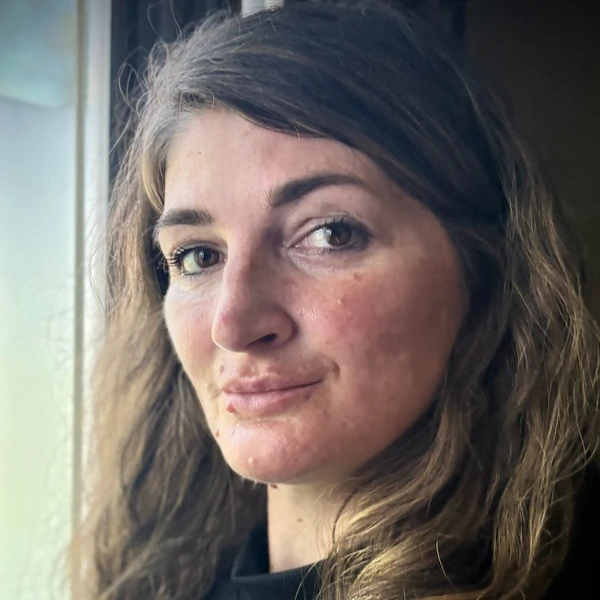
user profile avatar

Nina Capriotti

1x

Finalist

General information

Hobbies & Interests

  • Camping
  • Child Development
  • Counseling And Therapy
  • Hiking And Backpacking
  • Mental Health
  • Meditation and Mindfulness

Reading

  • Biography
  • Psychology

I read books daily.

Bio

Nina Capriotti is a Marriage and Family Therapy associate and doctoral student pursuing a PsyD with a passion for trauma-informed mental health care. Her personal and professional journey has shaped her commitment to supporting individuals who have experienced trauma, adversity, and significant life challenges. Having overcome profound personal obstacles and rebuilt her life, Nina brings both lived experience and clinical training to her work with others. She is particularly passionate about helping women and young adults develop self-awareness, resilience, and healthier relationships while breaking cycles of trauma. Through her doctoral education and future clinical practice, Nina hopes to expand access to compassionate, culturally responsive mental health care and use her experiences to remind others that their past does not have to determine their future.

Education

The Chicago School of Professional Psychology at Los Angeles

Master's degree program

2023 – 2026

Majors:
  • Psychology, Other

The Chicago School of Professional Psychology at Los Angeles

Doctoral degree program (PhD, MD, JD, etc.)

2023 – 2029

Majors:
  • Psychology, Other

The University of Arizona Global Campus

Bachelor's degree program

2021 – 2023

Majors:
  • Psychology, General

Miscellaneous

Desired degree level:
Doctoral degree program (PhD, MD, JD, etc.)
Graduate schools of interest:
The Chicago School of Professional Psychology at Irvine
Medical school interest:
No

Career

  • Mental Health Associate

    Mental Health Care · Era Psych Services

    Jan 2026 – Present

Miscellaneous

Dream career field:
Mental Health Care, Teaching
Work experience:
10+ years
Has nursing license:
No

Future Interests

  • Advocacy
  • Volunteering
  • Entrepreneurship
Fishers of Men-tal Health Scholarship
My experience with mental health and addiction has shaped nearly every part of who I am today. It has changed the way I understand people, relationships, compassion, faith, and the career I have chosen to pursue. My journey has not been a straight line. There were years when I struggled with heroin addiction and experienced homelessness, and there were times when I could not imagine having the life I have today. I want to use what I have learned through my own struggles to help other people find hope when they cannot see a way forward. For approximately ten years, heroin addiction was a significant part of my life. During that time, I also experienced homelessness for several years. When I look back, I do not see that period simply as a story about addiction. I see a story about trauma, pain, disconnection, survival, and the complicated relationship between mental health and substance use. Addiction does not happen in a vacuum. Emotional wounds, trauma, mental-health struggles, unhealthy relationships, poverty, shame, and hopelessness can all become part of a person's experience. I learned this not only from my own life, but from witnessing the experiences of people struggling alongside me. Being homeless and addicted also exposed me to the stigma surrounding people who are struggling. It is easy to look at someone living on the street or using substances and make assumptions about who they are. It is much harder to stop and ask what happened to that person, what pain they may be carrying, and what resources they may have never had access to. My experiences changed my beliefs about people. I learned that a person's circumstances do not tell their entire story and that behavior is often connected to pain that is not immediately visible. Getting clean was not simply about stopping the use of a substance. It meant learning how to live differently. It meant confronting parts of myself that I had avoided, rebuilding relationships, developing trust, accepting responsibility, and learning to imagine a future that was completely different from my past. Healing is a process, and people need support, patience, accountability, and someone willing to believe in them. That lesson has influenced the way I want to practice therapy. I never want to become a mental-health professional who looks at a client and sees only a diagnosis, addiction history, trauma history, or list of problems. I want to understand the story behind the behavior and create a space where someone can be honest about the parts of their life they may be ashamed of without being reduced to those experiences. My experiences have also changed the way I approach relationships. I have learned how important trust is, particularly for people who have experienced rejection, trauma, abandonment, addiction, or homelessness. Trust cannot be demanded; it has to be earned. As a therapist, I want my relationships with clients to be grounded in authenticity, respect, and genuine human connection. I want clients to know that they can tell me the truth about their lives, even when that truth is painful or difficult. I know what it is like to have a past that could easily become the first thing someone sees when they look at you. I also know what it feels like to build a new identity beyond that past. My faith has become an important part of how I understand this journey. My spiritual beliefs have strengthened my desire to serve people who are hurting and to approach others with compassion rather than condemnation. That is why the message behind the Fishers of Men-tal Health Scholarship resonates deeply with me. Matthew 4:19 says, “Follow me, and I will make you fishers of men.” To me, those words represent a call to serve others. I see my future career in mental health as one way I can answer that call. I do not believe serving others requires me to have every answer. I believe it requires me to meet people where they are, listen without judgment, walk alongside them, and help them recognize strengths and possibilities they may have difficulty seeing in themselves. My past has given me a unique perspective on the connection between mental health and addiction. I understand why these struggles so often coexist because I have lived within that intersection. I know how substance use can become a way of coping with emotional pain and how difficult it can be to separate addiction from the experiences that contributed to it. I completed my master's education in Marriage and Family Therapy and am continuing my education through doctoral study. I am pursuing this education because I want to become a knowledgeable, capable, and effective clinician who can understand complex mental-health concerns while never losing sight of the human being sitting in front of me. I hope to work with people who have experienced trauma and who may also struggle with addiction, shame, or other mental-health challenges. I especially want to help individuals who have been made to feel that they are too difficult, too damaged, or too far gone. I want them to understand that a difficult chapter is not the same thing as an entire life. My own life is the reason I believe that so strongly. There was a time when homelessness and heroin addiction were my reality. I cannot change the years I spent struggling, but I can choose what I do with those experiences. My experiences taught me that recovery is possible, people are capable of extraordinary change, and compassion can be the beginning of hope. They have taught me to look beyond behavior and ask what may be underneath it. They have taught me to value relationships built on honesty and trust, and they have strengthened my faith in redemption and second chances. Most importantly, they have given me a purpose. I want to spend my career helping people who are struggling find their way back to themselves. I want to be the person who can sit with someone in their darkest moment and genuinely believe that their story can change because I know what it means to have a life change. For me, becoming a mental-health professional is more than a career aspiration. It is an opportunity to turn survival into purpose, pain into compassion, and experience into service. I survived a life I once could not imagine escaping. Now I have the opportunity to use that experience to help others recognize something I eventually learned myself: they are not defined by their past, they are not beyond hope, and their story is not over.
Brian J Boley Memorial Scholarship
I am pursuing a degree in the mental health field because I know firsthand how deeply mental health, trauma, and addiction can affect a person's life and how difficult it can be to find a path forward. For many years, I struggled with heroin addiction and experienced homelessness. During that time, I saw how easily people struggling with addiction can become defined by their circumstances rather than seen as human beings with histories, trauma, relationships, and the capacity to change. I also experienced how difficult it can be to access meaningful support when someone is struggling with substance use and other mental health challenges. My life eventually changed when I made the decision to get clean and rebuild my life. I went on to earn my master's degree in Marriage and Family Therapy and am now continuing my education through a doctoral program in Marriage and Family Therapy. My journey is a major reason I chose this profession. I know what it feels like to be on the other side of the mental health system, and I want to use both my professional training and lived experience to help people who may feel that they are beyond help. I want to become a mental health professional who looks beyond a diagnosis or addiction and asks, "What happened to you?" rather than simply, "What's wrong with you?" I believe effective treatment must address the underlying trauma, emotional pain, relationships, and mental health concerns that can contribute to substance use. People deserve treatment that is compassionate, trauma-informed, and free from judgment. My goal is to work with individuals who have experienced trauma, addiction, and other barriers that have made it difficult for them to access or trust the mental health system. I want to help reduce the stigma surrounding addiction and mental illness and demonstrate that recovery and meaningful change are possible. Brian's story is a powerful reminder of the consequences that can occur when people do not receive the support they need. While I cannot change what happened to him, I can carry the lesson of his story into my own career. I want to help create the kind of mental health care that recognizes people before they reach a point of crisis and continues to see their humanity even when they are struggling. My past is not something I want to hide from my professional identity. It is part of what gave me the compassion, determination, and understanding that brought me into this field. I know that people can change because I have experienced that change in my own life. As a future psychologist and therapist, I hope to help others discover that their circumstances do not have to determine the rest of their story.
Nina Capriotti Student Profile | Bold.org