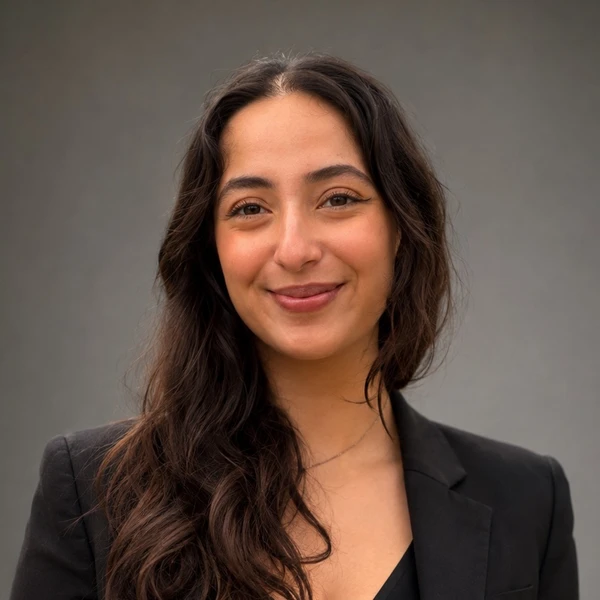
user profile avatar

Nilufer Sagat

1x

Finalist

1x

Winner

General information

Hobbies & Interests

  • Chess
  • Soccer
  • Animals
  • Teaching

Bio

I’m a Computer Engineering student at UC Santa Cruz and a UC Regents Scholar with interests in machine learning, systems, and high-performance computing. My experience spans ML research for molecular dynamics, software and robotics engineering, and teaching data structures, algorithms, and competitive programming. I’ve also competed in USACO Gold, placed 2nd internationally in MITRE’s Embedded Capture-the-Flag competition, and built and shipped my own mobile app. I’m especially motivated by challenging technical problems and by using what I learn to build useful technology and help others grow.

Education

University of California-Santa Cruz

Associate's degree program

2022 – 2027

Majors:
  • Computer Engineering

Miscellaneous

Desired degree level:
Master's degree program
Graduate schools of interest:
Columbia University in the City of New York, Yale University
Majors of interest:
Electrical and Computer Engineering, Computer Science
Desired degree modality:
In-Person
Medical school interest:
No
English as first language:
No
Homeschooled:
No

Career

Miscellaneous

Dream career field:
Astronomy & Astrophysics, Computer Engineering, Computer Science, Computer Software, Physics
Work experience:
1 year
Has nursing license:
No
Leadership experience:
Yes
Sloane Stephens Doc & Glo Scholarship
When I started YouthLink in high school, I was trying to create something I had once needed myself. I grew up in Turkey and came to the United States in 2018 after political turmoil following the 2016 coup deeply affected my family. My father had been separated from us for two years, members of my extended family were imprisoned, and by the time we arrived here, we were rebuilding our lives from the beginning. I barely knew English and had to learn how to navigate a new school system and culture while my parents were doing the same. As I adjusted, I realized that many other immigrant students were carrying that same feeling of being lost between two worlds. I especially noticed young women trying to navigate education and careers without mentors who understood their experiences. In 2020, while I was still in high school, I helped start YouthLink. What began as a small youth initiative eventually grew into an international network of more than 120 Turkish women in technology across the United States, Canada, Germany, Turkey, and Afghanistan. Over the years, I helped lead a Silicon Valley based team connecting students and early-career women with engineers, founders, and industry professionals. The part of YouthLink I value most is not the number of people we reached, but what those connections allowed us to build. We organized a STEM Hackathon for underrepresented girls, where I helped recruit mentors, plan workshops, find sponsors, and create an environment where students could explore technology without feeling like outsiders. I later launched the HER Tutoring Program, which provided mentorship and academic support to more than 30 immigrant girls. We also created a youth climate advocacy campaign that was presented to more than 1,000 people at the United Nations. Eventually, I had the opportunity to represent our work three times at the United Nations Commission on the Status of Women, speaking about STEM equity, women's leadership, and youth empowerment. Those experiences shaped the way I think about impact. Helping one student find a mentor may seem small, but that mentor can change what she believes is possible for her. One technical workshop can be the first time a girl begins to think of herself as an engineer. My own education has continued to expand what I can give back. I now study Computer Engineering at UC Santa Cruz, where my interests include systems, machine learning, and scientific computing. I have worked on cancer research at Stanford and now conduct research involving machine learning and biomolecular systems. I want to spend my career building technology that helps solve difficult scientific problems, particularly problems that can improve human health. At the same time, I never want my education to benefit only me. My parents inspire that belief. They rebuilt their lives in a country they did not know so their children could have opportunities they were never guaranteed themselves. The young women I have met through YouthLink inspire it too. Their ambition constantly reminds me how much talent exists when someone is simply given access and encouragement. My father's recent health problems have also created new financial uncertainty for my family, making scholarship support increasingly meaningful as I finish my education. My goal is to keep building in both directions: technology that can move science forward and communities that help people move forward with it. YouthLink began because I knew what it felt like to need a path. I want to spend my life making sure more people can find one.
Chris Jackson Computer Science Education Scholarship
My interest in computer science started almost by accident during my freshman year of high school, when I decided to take a Java course at a local community college. I remember opening Eclipse for the first time without even knowing what an IDE was. Everything felt unfamiliar: the project folders, the compiler errors, the console. Yet I loved how quickly an idea could become something I could actually run, test, break, and rebuild. Even discovering tools like VS Code later felt exciting because I was beginning to understand that programming was not just a language, but an entire ecosystem for creating things. That curiosity grew into competitive programming and mathematics. I reached the Gold level in USACO and qualified for the USA Math Olympiad, experiences that taught me to enjoy problems precisely because they were difficult. I became fascinated by algorithms and by the process of reducing something complicated into smaller, solvable pieces. My perspective changed again when I began cancer research at Stanford at the age of 15. I worked with microscopy and experimental data involving tumor tissue. For the first time, the computation in front of me was connected to a problem far beyond the screen. The code I wrote and the data I analyzed could contribute to understanding disease. I realized that the same problem-solving ability I enjoyed in programming could be applied to questions that directly affect people's lives. That realization led me to study Computer Engineering at UC Santa Cruz, where my interests have expanded into systems programming, machine learning, and scientific computing. My current research involves machine learning methods for molecular dynamics and biomolecular systems. My goal is to work at the intersection of computing and scientific research, building efficient systems and computational tools that allow researchers to tackle problems that were previously too expensive or difficult to study. I also believe opportunity should extend beyond my own career. After immigrating to the United States from Turkey, I started YouthLink in high school and helped grow it into an international network of more than 120 women in technology. Through it, I have created STEM and tutoring opportunities for immigrant girls and underrepresented students. I believe I am a strong candidate for this scholarship because education has changed the trajectory of my life. My family came to the United States after political turmoil in Turkey separated my father from us for two years. I arrived barely knowing English, yet eventually earned the Regents Scholarship at UC Santa Cruz. More recently, my father's serious health problems have created new financial uncertainty for my family. Receiving this scholarship would help me continue an education I have worked hard to build while pursuing the goal that began with that first Java class: using computing not simply to solve interesting problems, but to solve problems that matter.
Chadwick D. McNab Memorial Scholarship
I started YouthLink in high school in 2020 because I knew what it felt like to enter a new country without a roadmap. My family moved to the United States after the political turmoil surrounding the 2016 coup in Turkey deeply affected us. My father was separated from us for two years, and members of my extended family were imprisoned. By the time we were able to leave Turkey in 2018, starting over in the United States felt both necessary and overwhelming. I arrived barely knowing English and had to learn a new school system, language, and culture at the same time. As I became more comfortable, I started noticing how many other immigrant students, especially young women, were trying to figure out the same things on their own. I wanted to create the kind of community I would have wanted when I first arrived. What began as a small youth initiative eventually grew into an international network of more than 120 Turkish women in technology across the United States, Canada, Germany, Turkey, and Afghanistan. Over the past several years, I have helped lead a Silicon Valley based team responsible for mentorship, partnerships, outreach, and programs connecting students and early-career women with engineers, founders, and industry professionals. One of the projects I was most passionate about was our STEM Hackathon for underrepresented girls. I helped plan the event from the ground up, including recruiting mentors, organizing workshops, reaching out to sponsors, coordinating operations, and making sure participants felt comfortable engaging with technology. The technical part mattered, but what stayed with me most was watching students begin to see themselves differently. For some, it was their first time participating in a hackathon or interacting directly with women working in technology. That experience showed me that access to STEM is not only about providing a computer or teaching someone how to code. Sometimes it starts with giving someone a space where they feel like they belong. That idea became central to YouthLink. I later launched the HER Tutoring Program, which provided mentorship and academic support to more than 30 immigrant girls. I also helped lead a youth climate advocacy campaign that was presented to more than 1,000 people at the United Nations and represented YouthLink three times at the United Nations Commission on the Status of Women, speaking about STEM equity, women's leadership, and youth empowerment. Working on YouthLink changed the way I think about technology. I study Computer Engineering at UC Santa Cruz and am especially interested in systems, machine learning, and scientific computing. I love the technical challenge of understanding how complex systems work, but YouthLink taught me that technology is most powerful when it gives people access to something they did not have before. A platform can connect a student in Turkey with an engineer in Silicon Valley. A tutoring program can help an immigrant student feel less lost in a new education system. A technical event can make a young girl realize that engineering is not something reserved for somebody else. That is what inspires me about working in technology. I want to build difficult and meaningful systems, but I also want to keep using what I learn to create opportunities for the people coming after me. YouthLink began as my attempt to make one unfamiliar path a little easier for someone else. Years later, that is still the kind of impact I want my work in technology to have.
Ismat's Scholarship for Empowering Muslim Women
I was raised in Turkey until 2018. It was the country where I spent my childhood, went to school, and understood the world around me. Then, because of political corruption, my family had to leave. For two years, my father was separated from us while we tried to build a new life in the United States. I arrived barely knowing English. My parents were learning how to navigate a new country while carrying the uncertainty of leaving the old one behind, and I was trying to keep up in a classroom where I could not always understand what was being said. For a long time, I thought the best way I could help my family was simply to succeed. I learned English, pushed myself in school, and eventually earned the Regents Scholarship at the University of California, Santa Cruz, where I study Computer Engineering. Receiving a merit-based scholarship after once struggling to understand my teachers felt unreal. It showed me that I could build something meaningful from the life my family had been forced to restart. Two years ago, my father's health began to decline. After already spending years separated from him, watching his health change affected me deeply. I started thinking constantly about finances, my career, and whether I would be able to support my family if they needed me. My education became more than a personal goal. It became part of how I hoped to create stability for the people who had sacrificed so much for me. My experiences also taught me that success means little if I am the only person who benefits from it. That belief is why I helped build YouthLink with other young immigrants. I knew how isolating it felt to enter a new country and have to figure everything out as you went, and I wanted younger students to have the support I once needed. Through YouthLink, I helped organize a STEM hackathon for underrepresented girls and launched the HER Tutoring Program, which supported more than 30 immigrant students. I also co-led a climate advocacy campaign presented to more than 1,000 attendees at the United Nations. I later had the opportunity to speak three times at the United Nations Commission on the Status of Women about youth leadership, STEM equity, and climate advocacy. That experience was deeply personal to me. The girl who had arrived in the United States barely knowing English was now using that same language to advocate for other young people. More recently, I started a college counseling business with someone I consider a brother. We help students navigate applications, scholarships, and educational opportunities, especially students whose families have never gone through the American college system. I know how much guidance can matter when you are trying to understand a system your family has never had the chance to learn. My goal is to continue in engineering and research while also mentoring young women in STEM and helping immigrant students access opportunities that can change their lives. Because of my father's health, my family's financial circumstances have changed, and additional support has become increasingly important. This scholarship would help me continue my education with less pressure on my family. More importantly, it would allow me to keep doing what others have done for me: move forward, then reach back for someone else.
Pete and Consuelo Hernandez Memorial Scholarship
When my family fled Turkey because of political corruption, I barely knew English. I did not fully understand what was happening around me, but I understood that the life I knew was gone. My father was separated from us for two years. During that time, my family was split between countries, and there was a lot of uncertainty about when we would be together again. When we finally reunited in the United States, we had to start over. My parents had to learn how everything worked in a new country while trying to support our family, and I had to adjust to a new school and a language I was still learning. At school, I often felt behind simply because I could not always understand what people were saying. I had to learn English while also keeping up academically. I spent a lot of time teaching myself, asking questions, and figuring things out as I went. Education eventually became one of the few parts of my life where I felt like my effort could directly change the outcome. I kept pushing myself because I knew what my parents had gone through to give me the chance to study here. Years later, I was accepted to the University of California, Santa Cruz to study Computer Engineering and received the Regents Scholarship, a merit-based scholarship awarded by the university. Receiving it meant a lot to me. I had gone from struggling to understand English in school to receiving one of UCSC's academic honors. I chose Computer Engineering because I genuinely enjoy solving difficult problems and understanding how things work. During college, I have been able to study areas such as systems programming and machine learning and become involved in research. I hope to continue building a career in engineering and research after graduation. Two years ago, however, my family faced another major challenge when my father developed serious health problems. His health affected me much more than I expected. After watching my parents rebuild their lives from nothing in the United States, I started thinking about what would happen if my father could no longer work or support our family in the same way. I felt like the responsibility for my family's future was slowly moving onto my shoulders. That pressure affected how I thought about school, money, and my career. I was no longer thinking only about what I wanted to accomplish for myself. I was also thinking about becoming financially independent and being in a position where my family could rely on me if they needed to. At first, I dealt with that pressure by trying to handle everything myself. Over time, I learned to focus on what I could actually control. I cannot change what happened to my family in Turkey, the years we spent separated from my father, or his current health problems. I can control how seriously I take the opportunities I have now. My Regents Scholarship helped make my education possible, but my family's circumstances have changed since I first entered college. Because of my father's health and the financial uncertainty that has come with it, additional scholarship support has become increasingly important. My family has had to start over more than once. Those experiences have made me independent, resourceful, and determined to make the most of my education. I want to finish my degree in Computer Engineering, continue my work in research, and build a future where I can support both myself and the family that sacrificed so much to get me here.
Nilufer Sagat Student Profile | Bold.org