
Hobbies and interests
Advocacy And Activism
Reading
History
I read books daily
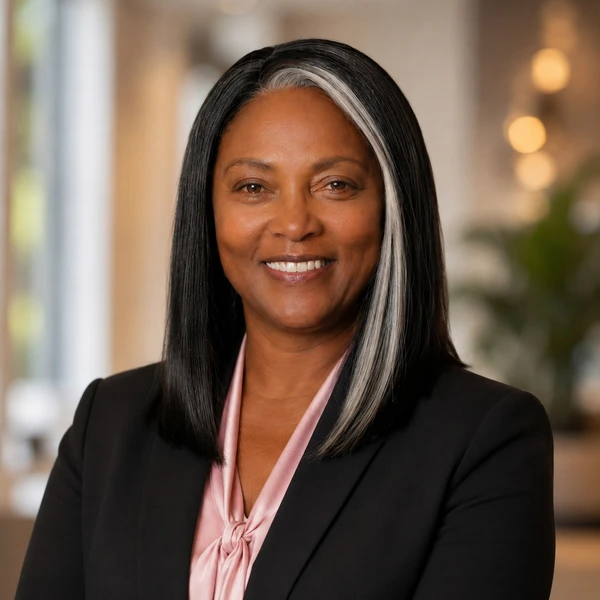
Niki Brunson Saunders
1x
Finalist
Niki Brunson Saunders
1x
FinalistBio
I am a graduate student at the University of Arkansas Clinton School of Public Service, where I have maintained a 4.0 GPA while deepening my skills in public policy, program evaluation, community engagement, and social impact. I am also the founder of A Legacy Solution, a consulting firm that helps nonprofits, schools, community organizations, and resident-led initiatives strengthen their programs, secure resources, and measure meaningful results.
I am passionate about expanding educational opportunity, strengthening historically under-resourced communities, and developing practical policies that help people achieve long-term stability and self-sufficiency. My life goal is to become a respected public policy leader and build A Legacy Solution into a sustainable organization that helps communities transform ideas into lasting impact.
I am a strong scholarship candidate because I combine academic excellence with extensive public service experience, community leadership, and a demonstrated commitment to applying my education to create measurable change. Scholarship support would help me complete my graduate education, strengthen my professional capacity, and continue building solutions that benefit communities for generations.
Education
University of Arkansas at Little Rock
Master's degree programMajors:
- Public Administration and Social Service Professions, Other
North Florida College
Associate's degree programMajors:
- Accounting and Computer Science
Florida State College at Jacksonville
Bachelor's degree programMajors:
- Public Administration and Social Service Professions, Other
Miscellaneous
Desired degree level:
Doctoral degree program (PhD, MD, JD, etc.)
Graduate schools of interest:
- University of Arkansas at Little Rock
Transfer schools of interest:
Majors of interest:
- Public Administration and Social Service Professions, Other
Career
Dream career field:
- Public Policy
Dream career goals:
Graduate Researcher
Clinton School of Public Service2025 – Present1 yearMedical Disability Examiner
Florida Department of Disability Determinations2023 – 20241 yearESOL Teacher Assistant
AmeriCorps2024 – 20251 yearDeputy Sheriff - School Resource Officer
Madison County Sheriff Office2021 – 20232 years
Sports
Volleyball
Intramural1986 – 19871 year
Research
International and Comparative Education
Arkansas Chapter of the Fulbright Commission — Graduate Intern2026 – PresentCommunity Organization and Advocacy
Get Loud Arkansas — Graduate Researcher2025 – 2026
Arts
Richard Lewis Brown Gifted and Accelerated Academy
Theatreyes2016 – Present
Public services
Public Service (Politics)
City of Jacksonville TRUE Commission — County Commissioner - Chairman2015 – 2019
Neetu Watumull Scholarship Program for Those Who Serve Managed by Rupa Shah
My connection to public safety and military service is both personal and professional. I am the unremarried spouse of a disabled Navy veteran, and that experience has shaped the way I understand sacrifice, service, disability, resilience, and the long-term responsibilities carried by military families. Being connected to a disabled veteran taught me that service does not end when a uniform is removed. The effects of service can continue through health challenges, family responsibilities, financial stress, emotional strain, and the daily work of navigating systems meant to provide support.
That lived experience helped shape my values of dignity, accountability, persistence, and public service. It taught me to pay attention to people whose sacrifices may not always be visible and to understand that families often carry part of the burden of public service. It also deepened my respect for veterans, first responders, law enforcement officers, and the families who support them.
My professional journey has also been connected to public safety. As a former deputy sheriff and school resource officer, I worked directly with students, families, schools, and law enforcement systems. That role helped me understand the importance of prevention, trust, restorative practices, and early intervention. I learned that public safety is not only about enforcement; it is also about relationships, education, mental health, family stability, and community support.
These experiences shaped my educational journey and led me to pursue graduate study in public service. At the University of Arkansas Clinton School of Public Service, I am strengthening my skills in policy, program evaluation, community engagement, and systems change. My goal is to use both my lived experience and professional background to design practical solutions that support veterans, families, students, and historically under-resourced communities with dignity, evidence, and care.
Dr. Jade Education Scholarship
Niki Brunson Saunders’ perfect life is not built around escape, status, or comfort alone. It is built around freedom, legacy, safety, and power used responsibly. It is a life where she no longer has to choose between service and stability, calling and compensation, family responsibility and professional ambition. In her perfect life, she earns at an executive level while preserving the flexibility to work from home, think deeply, write clearly, build strategy, manage partnerships, and remain available to the people and communities she loves.
Niki’s path has already shown the shape of that life. She is a public service scholar, civic researcher, founder of A Legacy Solution, former school resource officer, adult education coordinator, student leader, and community-centered strategist. She has lived inside systems, challenged systems, and learned how to translate pain, policy, data, and public voice into something usable. Her work is rooted in the belief that people are not problems to be managed; they are voices to be heard, leaders to be developed, and communities to be strengthened.
A perfect life for Niki includes a home-based executive consulting practice that does not operate from scarcity. A Legacy Solution becomes a trusted civic innovation and government-contracting firm with renewable contracts in civic engagement, youth leadership, public participation, community research, association development, evaluation, and democratic culture-building. The company earns more than $1 million in annual revenue through special contracts that are consistent with its mission, not disconnected from it. These are not one-time projects that leave communities unchanged. They are renewable, measurable, relationship-based contracts that help cities, school districts, nonprofits, public agencies, and civic institutions rebuild trust and participation.
In that life, Niki is not simply facilitating workshops. She is designing civic infrastructure. Her contracts help increase youth participation, strengthen association networks, build social capital, and support the basic function of democracy. Young people learn how to register, vote, speak publicly, analyze issues, attend meetings, organize respectfully, and carry their concerns into policy spaces. Communities begin to see civic engagement as a year-round pathway into leadership, workforce development, and collaborative problem-solving.
The income matters because the mission is personal. Niki’s perfect life includes the financial capacity to sponsor and sustain an eight-plex in Houston, Texas, where special needs grandchildren can transition safely into adulthood. This is more than housing. It is a legacy protection strategy. It is a place designed for dignity, supervision, independence, family connection, and long-term security. It allows vulnerable loved ones to grow without being abandoned to systems that may not know their names, needs, or stories.
In this future, Niki wakes up with choices. She can work from home, travel for meaningful convenings, lead executive meetings, write proposals, mentor young leaders, and build partnerships without being physically or financially depleted. Her calendar reflects authority, not survival. Her income reflects the value of her intellect, lived experience, research skill, and astute judgment.
The perfect life for Niki Brunson Saunders is a life where legacy becomes structure. A Legacy Solution operates as both a business and a vessel: funding family safety, strengthening democracy, developing young civic leaders, and proving that community-centered work can generate executive-level income without abandoning its soul.
Elizabeth Schalk Memorial Scholarship
I have come to understand that trauma does not always begin with one person. Sometimes it begins in a country, moves through a neighborhood, enters a family, and becomes the atmosphere a child learns to breathe.
My life was shaped by the long shadow of the Civil Rights struggle and the unintended consequences that followed the neighborhood unrest of the early 1970s. For many Black families, that period was not only a political moment; it was personal. The fight for dignity, safety, housing, education, and equal protection carried an emotional cost that was rarely named. People were expected to survive injustice, keep working, raise children, bury disappointment, and continue believing in a nation that often failed to protect them. What we now might recognize as trauma or PTSD was often treated as silence, anger, exhaustion, or “just life.”
That unhealed pain affected families, including mine. My parents struggled with drug addiction, and their addiction did not exist in isolation. It was connected to stress, loss, limited opportunity, untreated depression, and the weight of living through systems that too often harmed the very communities they claimed to help. As a child, I did not have the language to understand all of that. I only knew instability, fear, emotional distance, and the deep ache of wanting safety and connection in a home where survival often took priority over healing.
Persistent depression has also been part of my story. It has at times been magnified by the current state of our union in the United States. Watching the same struggles repeat themselves. Attacks on civil rights, threats to voting rights, widening inequality, political hostility, and disregard for vulnerable communities. Old wounds can reopen. It can feel as if the past is not past at all, but still present in new forms. For those of us whose families carried the cost of earlier struggles, today’s national climate can stir grief, anxiety, anger, and weariness.
Yet I do not tell this story only as a story of pain. I tell it because it explains my commitment to public service, community advocacy, and healing-centered leadership. I know what happens when families and neighborhoods are left without support. I know what happens when trauma is ignored until it becomes addiction, depression, violence, disconnection, or despair. I also know that people are more than what happened to them.
That understanding has shaped my work through education, community service, and A Legacy Solution. I am committed to helping historically under-resourced communities build the tools to name harm, protect their voices, document their experiences, and create solutions rooted in dignity and agency. My goal is to turn lived experience into public purpose.
The pain my family carried did not begin with us, but I believe healing can begin with us. My journey is about interrupting inherited trauma, restoring community voice, and helping create a future where survival is no longer the only measure of strength.
Charles B. Brazelton Memorial Scholarship
My “awkward” thing is that I have often been the person who asks the question everyone else may be thinking but is too uncomfortable to say out loud. When I was younger, I did not always understand that as a strength. Sometimes it made me feel out of place, too serious, too direct, too curious, or too unwilling to simply accept things as they were. I was not trying to be difficult. I was trying to understand why something felt unfair, incomplete, or ignored.
Over time, I realized that this part of me was connected to my purpose. My life and public service journey have taught me to pay attention to what is missing, who is being left out, and whose voices are not being heard. I have learned that silence does not always mean agreement. Sometimes silence means people are tired, afraid, overlooked, or unsure whether speaking up will make a difference. That realization has shaped the way I lead, listen, and serve.
In my work with students, families, adult learners, schools, and community organizations, I kept seeing the same pattern. People closest to the problem often had the clearest understanding of what needed to change, but they were not always invited to participate in the decision-making process. Their stories were sometimes valued after a plan was already made, but were not always used to shape the plan itself. That is where my “awkward” habit of asking deeper questions became important.
As a former school resource officer, I learned that asking better questions could change outcomes. Instead of only asking, “What rule was broken?” I learned to ask, “What happened before this moment? What support is missing? What relationship needs to be repaired?” That shift helped me see young people as more than behavior reports or discipline statistics. It helped me understand that leadership rooted in care can create safer, more supportive spaces.
That same instinct followed me into graduate school and community advocacy. I am now pursuing a Master of Public Service at the University of Arkansas Clinton School of Public Service, where I have maintained a 4.0 GPA while studying public policy, program evaluation, community engagement, and social entrepreneurship. My education has helped me give structure to the questions I have been asking for much of my life.
It also led me to create A Legacy Solution, a consulting and capacity-building firm that helps small nonprofits, schools, youth programs, resident-led initiatives, and mission-driven entrepreneurs strengthen their programs, prepare for funding, and measure their impact. Through this work, I help communities turn concern into strategy, lived experience into evidence, and strong ideas into fundable action.
What makes me stand out is that I do not see lived experience as something separate from leadership. I see it as a form of knowledge. I believe people who have lived through challenges often carry insights that systems need but do not always know how to listen for.
So yes, my awkward thing is that I ask hard questions. I notice gaps. I challenge easy answers. But now I understand that this is also my gift. Those questions can protect community voice, create accountability, and help build solutions that are more honest, inclusive, and lasting.
Sloane Stephens Doc & Glo Scholarship
The impact I want to make is rooted in one belief: communities should not have to lose their voice, history, or dignity in order to gain access to opportunity. I come from a family and community legacy shaped by service, resilience, and sacrifice. As a first-generation graduate student raised by adoptive parents who served during World War II. My father was a soldier, and my mother was an Army nurse. I learned early that service is not only something we talk about; it is something we live.
I am currently pursuing a Master of Public Service at the University of Arkansas Clinton School of Public Service, where I have maintained a 4.0 GPA while studying public policy, program evaluation, community engagement, and social entrepreneurship. My education is helping me connect lived experience with the tools needed to create practical solutions. I am learning how to evaluate programs, design community-centered strategies, engage stakeholders, and turn ideas into measurable impact.
The people who inspire me are the ones who keep serving even when resources are limited. I am inspired by parents who advocate for their children, teachers who stay after school, elders who preserve community history, students who keep believing in themselves, and small nonprofit leaders who continue showing up despite limited funding. I am also inspired by the girls, families, and youth I have supported through community enrichment work. More than a decade ago, a commitment to seven young girls grew into a broader effort that helped touch approximately 1,500 students, high school graduates, and families. That experience taught me that small, consistent acts of investment can create ripple effects across an entire community.
I plan to use my education to give back by expanding A Legacy Solution, the consulting and capacity-building firm I founded to support small nonprofits, schools, youth programs, resident-led initiatives, and mission-driven entrepreneurs. Many under-resourced organizations have strong ideas and deep community trust, but they lack access to grant strategy, program planning, evaluation tools, and impact storytelling. A Legacy Solution is designed to help close that gap. I want to help organizations become more fundable, measurable, and sustainable without losing the community voice that makes their work meaningful.
The better future I am determined to help shape is one where historically under-resourced communities are not treated as problems to be solved by outsiders, but as partners with wisdom, leadership, and solutions of their own. I want to help build systems where youth have access to enrichment and civic education, families have pathways to stability, community organizations have the tools to secure resources, and public decisions are shaped by the people most affected by them.
This scholarship would help reduce the financial pressure of graduate school and allow me to stay focused on my studies, public-service work, and the development of A Legacy Solution. It would support not only my education but also the larger purpose behind it: creating a legacy of service, opportunity, and community-driven change. My goal is to use every lesson, every challenge, and every opportunity to help build a future where more people are seen, supported, and equipped to lead.
Bick First Generation Scholarship
Being a first-generation graduate student means carrying more than my own dream. It means carrying the sacrifices, hopes, and unfinished possibilities of the people who came before me. I was raised by adoptive parents whose lives reflected service and resilience. My father served in World War II, and my mother served as an Army nurse during the war. Their example taught me that duty, discipline, sacrifice, and care for others are not just values to admire; they are values to live by.
My path to higher education has not been traditional or easy. I graduated from Andrew Jackson High School in 1987 and later returned to school after years of working, parenting, serving, and overcoming challenges that shaped how I see the world. As a Black woman, single mother, public-service professional, and nontraditional student, I have had to balance education with family responsibilities, financial pressure, work, community service, and the emotional weight of rebuilding while still moving forward.
There were times when higher education felt distant, not because I lacked ability, but because life required immediate survival. Bills had to be paid. The family needed support. Work had to come first. Yet I never lost the belief that education could help me turn lived experience into leadership. I learned to be resourceful, to ask better questions, to advocate for myself, and to keep going even when the path was uncertain.
Today, I am pursuing a Master of Public Service at the University of Arkansas Clinton School of Public Service, where I have maintained a 4.0 GPA. That achievement means more to me than academic success. It is proof that delayed dreams are not denied dreams. It is proof that experience, maturity, faith, and determination belong in graduate education.
My dream is to become a respected public policy and community-development leader while growing A Legacy Solution, my consulting and capacity-building firm. Through this work, I want to help small nonprofits, schools, youth programs, resident-led initiatives, and mission-driven entrepreneurs secure resources, strengthen programs, and measure their impact. I am especially driven by the desire to serve historically under-resourced communities and help create pathways that enable others to access opportunity without having to fight so hard just to be seen.
This scholarship would help reduce the financial burden of continuing my education. It would support the real costs of graduate school, including tuition, books, transportation, technology, and basic living expenses. More importantly, it would give me room to stay focused on my studies, public-service work, and long-term goals without being pulled away by financial strain.
Being a first-generation graduate student means becoming the bridge between sacrifice and possibility. My parents served their country with courage. I want to honor their legacy by serving communities with the same sense of purpose. This scholarship would help me continue that journey and move closer to building a legacy of service, opportunity, and lasting impact.
Charlene K. Howard Chogo Scholarship
Women’s empowerment has always been personal for me because I come from a family legacy rooted in excellence, discipline, faith, and service. I am Niki Brunson Saunders, the niece of Tommy Chandler, a Jacksonville native, Florida A&M University football standout, and FAMU Sports Hall of Fame inductee. His example as part of FAMU’s championship football tradition taught me that legacy is not only about individual achievement; it is also about what we make possible for those who come after us. That lesson shaped how I understand leadership. True leadership is not measured only by titles, awards, or recognition. It is measured by whether our lives create room for others to grow, dream, and lead with confidence.
That understanding shaped my own commitment to girls, women, and community leadership. More than a decade ago, I made a personal commitment to support seven 7-year-old girls whose potential deserved to be protected, nurtured, and expanded. I understood that if young girls are surrounded early with encouragement, structure, cultural pride, and academic support, they are more likely to see themselves as capable of leading, achieving, and serving. What began as a small commitment to a few girls grew into a broader community education and enrichment effort that helped impact approximately 1,500 students, high school graduates, and families over a 10-year period. Through that journey, I saw how investing in girls also strengthens mothers, families, schools, and neighborhoods.
My work in women’s empowerment has been rooted in helping girls and young women understand that they are not limited by stereotypes, income, geography, or the expectations others place on them. I have worked to create spaces where Black girls and young women can see themselves as scholars, leaders, advocates, entrepreneurs, and future decision-makers. Through mentoring, academic encouragement, family engagement, cultural exposure, and youth enrichment, I have seen how early support can change the way a young woman carries herself, speaks about her future, and makes decisions about her education. Empowerment, to me, is not simply telling girls they are powerful. It is helping to build the conditions in which they can practice leadership, receive affirmation, access opportunities, and witness examples of excellence in their own community.
Today, my commitment continues through A Legacy Solution, the consulting and capacity-building firm I founded to help schools, nonprofits, youth programs, and resident-led initiatives strengthen their impact. My goal is to continue building pathways that support girls, women, and families through education, leadership development, funding readiness, program planning, and community-centered strategy. For me, women’s empowerment means turning inherited legacy into active responsibility. It means honoring those who showed me excellence while creating stronger opportunities for the girls and women who will lead next. My effect on women’s empowerment is not measured only by one program or one role, but by my consistent effort to help girls and women recognize their value, use their voices, build futures rooted in dignity, and understand that their leadership can change not only their own lives, but the communities that depend on them.
Yaa Asantewaa Scholarship
Pursuing a master’s degree as a Black woman has required me to carry both my ambition and my history into spaces that were not always designed with someone like me in mind. I am a nontraditional graduate student at the University of Arkansas Clinton School of Public Service, where I have maintained a 4.0 GPA while studying public policy, program evaluation, community engagement, and social entrepreneurship. Academic success is important to me because it represents more than grades. It represents persistence, discipline, and the decision to believe that my lived experience belongs in graduate education.
My path has not been traditional. I graduated from Andrew Jackson High School in 1987 and returned to higher education after years of working, parenting, serving, leading, and surviving. By the time I entered graduate school, I had already lived through responsibilities and challenges that shaped how I see policy, education, family, community, and opportunity. I came to the classroom not only with questions, but with evidence from real life.
One of the challenges I have faced is balancing school with the responsibilities that come with being a single mother, community advocate, entrepreneur, and public servant. Graduate school requires time, focus, and financial resources, but life does not pause for academic goals. I have had to manage tuition, transportation, housing, work, family responsibilities, leadership roles, and community commitments while still holding myself to a high academic standard.
Another challenge has been navigating spaces where Black women are often expected to be strong but not always fully supported. I have had to learn how to advocate for myself, ask for what I need, and trust the value of my voice. Sometimes that means translating lived experience into academic language. Sometimes it means sitting in rooms where decisions are being made and reminding myself that I belong there, not because I was invited, but because my preparation, service, and perspective matter.
My experience has also been shaped by purpose. I am the founder of A Legacy Solution, a consulting and capacity-building firm that helps small nonprofits, schools, youth programs, and resident-led initiatives strengthen programs, prepare for funding, and measure impact. Much of my work is rooted in historically under-resourced communities, including Jacksonville’s Historic Eastside, where my family has deep roots. I understand how policy decisions, institutional barriers, and limited access to resources can shape generations.
As a Black woman pursuing a graduate degree, I am not only working toward personal advancement. I am working to transform experience into strategy, service into systems change, and hardship into opportunity for others. My journey has taught me that education is not separate from community responsibility. It is one of the tools I use to create a legacy of advocacy, dignity, and impact.
Mad Genius Scholarship
The first time I understood what a “Mad Genius” looked like, she was sitting at a kitchen table with bills on one side, textbooks on the other, and a community problem spread out in front of her like a puzzle nobody else wanted to solve.
She did not look like the wild-haired inventor in movies. She did not live in a tower, wear a lab coat, or laugh into the night while lightning cracked outside her window. She looked like a Black woman with tired eyes, a full heart, and a notebook filled with ideas too big to fit inside the limits other people had placed around her.
Her genius was not loud at first. It was practical. It showed up in the way she could look at a school discipline report and see not just numbers but children asking for structure, belonging, and care. It showed up in the way she could sit in a community meeting and hear the real issue beneath the official agenda. It showed up in the way she could take a grant application, a program idea, a family’s frustration, and a neighborhood’s history, then begin connecting the pieces until a path forward appeared.
But the “mad” part was real too.
It was the part of her that refused to accept that under-resourced communities lacked solutions simply because they lacked money. It was the part that questioned why the people closest to a problem were so often the last ones invited to design the answer. It was the part that believed a mother, student, public servant, and community advocate could still become a policy leader, even later in life. It was the part that dared to return to school, maintain a 4.0 GPA, and build something new while carrying responsibilities that could have convinced anyone else to stop.
The world called it too much.
Too late to start over.
Too hard to build a business.
Too complicated to change systems.
Too ambitious to integrate education, public policy, community development, technology, and justice into a single vision.
But a Mad Genius hears “too much” and translates it into “not yet understood.”
That was the beginning of A Legacy Solution.
It started as more than a business idea. It was a response to everything she had seen: small nonprofits doing important work without enough support; schools needing enrichment programs but lacking resources; resident-led initiatives with deep community trust but no grant strategy; youth full of brilliance but limited by systems that could not see them clearly; elders holding history that was rarely counted as data.
So she began building a bridge.
On one side was lived experience: family, community, struggle, faith, service, motherhood, and survival. On the other side was technical knowledge: public policy, program evaluation, stakeholder engagement, grant readiness, and responsible use of technology. Most people treated those worlds as separate. The Mad Genius knew they belonged together.
She had learned this long before graduate school. As a school resource officer, she saw that discipline without relationship could become another form of abandonment. Instead of seeing young people as problems to be removed, she saw patterns, pain, and possibility. By using relationship-centered and restorative approaches, she helped reduce disciplinary referrals from approximately 1,400 to 200. To some, that was a statistic. To her, it was proof that systems can change when people are seen differently.
Later, through youth enrichment and community education, she saw another truth: talent is everywhere, but opportunity is not. Children did not need pity. Families did not need speeches. Community organizations did not need outsiders to rescue them. They needed access, structure, resources, and someone who could translate their vision into language funders and institutions would understand.
That became her laboratory.
Not a sterile room with glass beakers, but church halls, classrooms, community meetings, public offices, Zoom calls, school events, and late-night writing sessions. Her experiments were logic models, outreach plans, evaluation tools, funding strategies, civic education resources, and community conversations. Her formulas were made of trust plus data, history plus strategy, compassion plus accountability.
And every experiment asked the same question:
What if the people closest to the pain are also closest to the solution?
The more she worked, the more she realized that being a Mad Genius was not about being reckless. It was about being brave enough to imagine what does not yet exist and disciplined enough to build it anyway.
It meant taking the stories people overlook and treating them as evidence. It meant turning frustration into research questions. It meant turning community memory into strategy. It meant turning personal hardship into public service. It meant refusing to let age, race, gender, income, or timing decide the limits of a person’s contribution.
Sometimes, her ideas still sounded impossible, even to her.
A consulting firm rooted in community healing and program evaluation.
A civic education platform connected to constitutional rights.
A public service career built on decades of lived experience.
A future law degree.
International service.
A technology-supported toolkit for small nonprofits.
A legacy that could outlive her.
But the Mad Genius inside her did not need the whole staircase. She only needed the next step.
So she kept going.
She studied. She served. She mentored. She asked better questions. She built partnerships. She wrote proposals. She listened before speaking. She carried her community into rooms where it had not always been represented. She learned to use artificial intelligence not as a replacement for human wisdom, but as a tool to help under-resourced organizations organize their ideas, tell their stories, and compete for opportunities they had too often been denied.
Her villain arc, if she had one, was not against people. It was against waste.
Wasted talent.
Wasted history.
Wasted community knowledge.
Wasted potential buried under paperwork, poverty, exclusion, and silence.
She did not want revenge. She wanted a redesign.
To me, a Mad Genius is someone who sees broken systems and does not simply complain about them. She studies them. She questions them. She enters them. She learns their language. Then she builds doors where there used to be walls.
She is not mad because she has lost touch with reality. She is mad because she understands reality too clearly to accept it as final.
She knows that one scholarship can become one degree, one degree can become one organization, one organization can support many communities, and one community with the right tools can change the future for generations.
That is the kind of Mad Genius I believe in.
Not the kind who destroys the world to prove she is brilliant, but the kind who rebuilds a piece of it because she knows brilliance without service is incomplete.
She may begin at a kitchen table, tired and uncertain, surrounded by bills, books, and unfinished plans. But in her mind, she is already designing something larger: a bridge, a blueprint, a legacy.
And when the world asks why she keeps going, she smiles - not because the work is easy, but because she has finally understood her assignment.
The Mad Genius does not wait for permission to imagine a better world.
She gets to work.
J&Y Law Yahouda Yahoudai Service Scholarship
Community taught me that service is not always announced with a title. Sometimes it looks like staying after an event to stack chairs, helping a parent understand a school resource, encouraging a student who has stopped believing in their own ability, or showing up when a neighborhood needs one more steady person in the room.
I come from Jacksonville, Florida, where my family has deep roots in the Historic Eastside. Growing up connected to a community shaped by resilience, faith, culture, and struggle taught me that strong neighborhoods are built by people who refuse to give up on one another. That lesson has followed me through every stage of my life: as a mother, student, public servant, entrepreneur, and community advocate.
My devotion to service grew through years of working with youth, families, adult learners, schools, and community-based organizations. As a former school resource officer, I learned that young people do not only need discipline; they need relationships, guidance, structure, and adults who believe they are more than their hardest moment. By using restorative practices and relationship-centered approaches, I helped reduce disciplinary referrals from approximately 1,400 to 200. That experience changed how I understood public service. It showed me that prevention, compassion, and accountability can work together to create safer and increasingly positive environments.
I have also served through education and youth enrichment. Through Tristan’s Acceleration Academy, a long-standing community enrichment initiative, I have helped support learning opportunities for students and families for more than a decade. The program has reached more than 1,500 students and parents, creating spaces where young people can be challenged, celebrated, and encouraged to see education as a means of possibility. I have seen students gain confidence because someone took the time to expose them to culture, history, creativity, and leadership.
My service has continued through higher education. I am currently pursuing a Master of Public Service at the University of Arkansas Clinton School of Public Service, where I have maintained a 4.0 GPA while studying public policy, program evaluation, community participation, and social entrepreneurship. On campus, I have served through student leadership, including roles with student government and graduate student organizations. These roles have allowed me to support other students, strengthen communication, and help build a stronger, connected graduate community.
I also founded A Legacy Solution, a consulting and organizational development firm that helps small nonprofits, schools, youth programs, resident-led initiatives, and purpose-driven entrepreneurs strengthen their programs, prepare for funding, and measure their impact. I created it because I have seen too many community leaders doing powerful work without the technical support, grant strategy, or evaluation tools needed to sustain it. Through this work, I hope to help local organizations move from survival to self-sufficiency.
The good I have contributed to my communities is rooted in consistency. I may not always have the most resources, but I have offered my time, experience, advocacy, leadership, and willingness to serve. I believe compassionate service builds strong communities because it reminds people they are not alone. My life’s work is to help build neighborhoods, schools, and organizations where people feel appreciated, supported, and equipped to grow.
Humanize LLC Gives In Honor of Shirley Kelley Scholarship
I was born in 1969 in Jacksonville, Florida, into a family defined by love, struggle, sacrifice, and the unfinished work of justice. My mother and father were high school sweethearts who became husband and wife before they were fully able to become my mother and father. My birth was traumatic for my mother, and at four days old, I was discharged from the hospital into the care of my maternal grandmother. Although I was deeply loved, that early separation shaped the emotional distance that followed. My mother suffered from postpartum depression and separation anxiety, and we never fully formed the bond both of us deserved.
By the time I was two years old, violence and uncertainty had become part of my family’s daily life. My parents were involved in the civil rights struggle in Jacksonville, Florida. After a peaceful protest developed into a destructive riot in 1972, my parents left town in different directions to avoid the authorities. I would not see my father again until the fall of 1975. He promised to return for my birthday, but he was arrested before he could keep that promise. My mother, feeling abandoned and trying to survive, joined the Army. When she learned she could not have a dependent, she asked her parents to adopt me.
My grandparents agreed. My father did not. From prison, he fought for his parental rights, later telling me that he felt forced to barter his freedom for fatherhood. He eventually agreed because he believed my grandparents were good people who had raised an awesome daughter and would raise an awesome granddaughter. At age four, I had to relearn my name. That experience disconnected me from my identity in ways I did not fully understand until adulthood.
Being raised by my grandmother gave me stability, protection, and love. Even after my grandparents separated when I was seven, my grandmother continued raising me as a single guardian. She gave me what my parents could not provide during those years: consistency, dignity, and a foundation. At the same time, growing up with absent parents, an incarcerated father, and a mother who returned when I was eighteen and pregnant with my only sister taught me how systems can separate families, silence pain, and require children to become resilient before they understand why.
Those experiences shaped my future goals and my work ethic. Being raised by my grandmother taught me to become responsible early, to keep going even when family circumstances were painful, and to understand that love is often shown through sacrifice, consistency, and service. Because I knew what it felt like to live with emotional distance in primary relationships, I focused much of my early adult life on building family, creating stability, and being present for my own child in ways I had longed for as a child.
After the pandemic disrupted families, schools, and communities, I felt called to return more intentionally to public service and community-based work. The isolation, learning loss, grief, and instability many families experienced reminded me that my own story was not separate from the needs I saw around me. I was reminded that agency and legacy matter to me.
So, I am reclaiming my original name as an act of agency, not defiance, to celebrate my entire family legacy. For me, education is not only about earning degrees. It is about restoring identity, honoring the people who raised me, and transforming lived experience into public service. My grandmother’s care helped me survive. My future goal is to use that foundation to help other students and families thrive.
A Grandmother's Love Single Mom Scholarship
Some nights, after the house is quiet and the day’s responsibilities are finally finished, I sit with my laptop open and remind myself why I started this journey. As a single mother pursuing higher education, I have learned that going back to school is not just about attending classes or earning grades. It is about carrying responsibility, managing sacrifice, and still believing that my future - and the future of those connected to me - is worth the effort.
One of the hardest parts of being a single mom in graduate school is that life does not pause for education. Bills still come. Family still needs attention. Work still has to be done. Meals, transportation, health needs, emotional support, and daily decisions still fall on me. There is no extra person automatically sharing the load or stepping in when I am tired. I have had to learn how to stretch time, money, and energy while still showing up fully as a student, mother, leader, and community servant.
I am currently pursuing a Master of Public Service at the University of Arkansas Clinton School of Public Service, where I have maintained a 4.0 GPA. That GPA means more to me than a number. It represents late nights, early mornings, careful planning, and the discipline to keep going even when I feel overwhelmed. It represents choosing to believe that my life experience belongs in academic spaces and that my voice can contribute to public service, policy, and community change.
My responsibilities at home have shaped the way I serve outside my home. As a mother, I understand what it means to want safety, stability, education, and opportunity for the people you love. That same desire extends into my community work. I have spent years supporting youth, families, adult learners, and community-based efforts because I know how important it is for people to have access to guidance, encouragement, and resources as they try to move forward.
That commitment led me to create A Legacy Solution, a consulting and capacity-building firm that helps small nonprofits, schools, youth programs, and resident-led initiatives strengthen their programs, prepare for funding, and measure their impact. I created it because I have seen too many good people and community organizations with powerful ideas struggle simply because they lack access to technical support, grant strategy, evaluation tools, or the language funders expect. My goal is to help close that gap.
Balancing school, family, work, and community service has not been easy. There are times when I have had to choose between paid work and study time, between resting and finishing an assignment, or between handling immediate needs and staying focused on long-term goals. Those choices can be exhausting. But they have also made me more focused, compassionate, and determined. I know what it feels like to carry pressure quietly, and I also know what it means to keep showing up anyway.
Being a single mother has taught me how to lead with both strength and care. It has taught me how to solve problems, advocate, manage limited resources, and make decisions that affect more than just myself. Those lessons now shape my career goals. I want to become a respected public policy and community-development leader who uses education, research, and lived experience to help communities build lasting solutions.
This scholarship would help reduce the financial pressure of continuing my education. It would help with the real costs of being a student - tuition, books, transportation, technology, and basic living expenses - while allowing me to stay focused on my academic work and public-service commitments. More than anything, it would give me room to keep building without being forced to choose between survival and purpose.
My journey has not been easy, but it has given me a clear sense of responsibility. I am not pursuing higher education only for myself. I am pursuing it for my family, for the communities I serve, and for every person who needs to see that it is never too late to begin again, grow stronger, and create a legacy of service, opportunity, and hope.
TRAM Purple Ribbon Scholarship
I have learned that violence not only harms a person in the moment; it can also reshape a family, silence a community, and limit a person’s ability to imagine a future beyond survival. That understanding has shaped my commitment to public service, community advocacy, and education.
My personal background has taught me to pay attention to the conditions that make people vulnerable and the systems that either protect them or fail them. As a Black woman, single mother, nontraditional graduate student, and lifelong community advocate, I have seen how economic insecurity, housing instability, limited access to legal support, fear, shame, and lack of trusted resources can keep people trapped in unsafe situations. I have also learned that people experiencing harm do not only need a hotline or a referral. They need safety, dignity, options, and a community that believes them before the crisis becomes irreversible.
My professional and community experiences have deepened this understanding. As a former school resource officer, I saw how trauma, family conflict, and instability often show up in young people long before adults name the source of the pain. In adult education and youth enrichment work, I have worked with learners and families whose lives were shaped by barriers that extended beyond the classroom. Through community advocacy, I have also seen how under-resourced neighborhoods often carry the burden of violence without having equal access to prevention programs, culturally responsive services, or long-term healing supports.
I respect the work of existing initiatives dedicated to eradicating intimate partner violence, including crisis hotlines, shelters, legal advocacy programs, counseling services, coordinated community response teams, law enforcement partnerships, hospital-based screening, prevention education, and survivor-centered advocacy organizations. These efforts save lives. However, I also recognize that many programs are stretched thin, underfunded, difficult to navigate, or disconnected from the everyday places where people seek help, such as schools, churches, workplaces, community centers, and informal family networks.
I am currently pursuing a Master of Public Service at the University of Arkansas Clinton School of Public Service, where I have maintained a 4.0 GPA while studying public policy, program evaluation, community engagement, and social entrepreneurship. I plan to use my education to strengthen intimate partner violence prevention and response by helping organizations move from isolated services to coordinated, measurable, and community-rooted systems of care.
Through A Legacy Solution, the consulting and capacity-building firm I founded, I want to support nonprofits, schools, youth programs, and resident-led initiatives with grant strategy, program planning, evaluation tools, stakeholder engagement, and responsible use of technology. Applied to intimate partner violence prevention, this work could help community organizations identify service gaps, document survivor-informed needs, improve outreach, evaluate program outcomes, and secure funding for prevention, safety planning, trauma-informed education, and economic-stability supports.
My long-term goal is to help build stronger bridges between public systems and trusted community institutions. I believe efforts to eradicate intimate partner violence must include prevention education for young people, culturally responsive support for survivors, accountability for harm, and economic pathways that help individuals leave unsafe situations without losing housing, income, or hope.
This scholarship would help me continue my education and expand my capacity to serve. I am not pursuing higher education only to advance my own career. I am pursuing it so I can help communities build systems that protect people before violence escalates, support survivors after harm occurs, and create a future where safety is not a privilege but a shared public responsibility.
Olivia Rodrigo Fan Scholarship
The Olivia Rodrigo lyric that resonates most with my life is from “hope ur ok”: “I hope that you’re okay.” Those words are simple, but they carry the kind of compassion that has shaped my entire journey. They remind me of the people I have met throughout my life who were doing their best to survive challenges that others could not always see. They also remind me of myself.
My story has not followed a traditional path. I graduated from Andrew Jackson High School in 1987 and returned to higher education later in life with decades of responsibility, work, family, service, and lived experience behind me. At this stage, pursuing a Master of Public Service at the University of Arkansas Clinton School of Public Service is not just about earning another credential. It is about turning everything I have survived, learned, and witnessed into a life of greater purpose.
As a Black woman, single mother, community advocate, entrepreneur, and nontraditional graduate student, I understand what it means to keep moving forward while carrying more than people can see. I have balanced school, family, work, financial pressure, leadership responsibilities, and community service. Maintaining a 4.0 GPA while pursuing graduate education has been one of my greatest triumphs, not because it was easy, but because it proves that discipline, faith, and purpose can carry a person through difficult seasons.
Rodrigo’s lyric connects to my journey because my life has taught me to care about whether people are truly okay—not just on the surface, but in their homes, schools, neighborhoods, and futures. Much of my professional and community work has grown from that question. Are young people okay when schools lack enrichment opportunities? Are families okay when they do not have access to resources? Are small nonprofits okay when they have strong ideas but no grant strategy, evaluation tools, or support system? Are historically under-resourced communities okay when decisions are made without their voices?
Those questions led me to create A Legacy Solution, a consulting and capacity-building firm that helps small nonprofits, schools, youth programs, resident-led initiatives, and mission-driven entrepreneurs strengthen their programs, prepare for funding, and measure impact. My goal is to help community organizations move from survival to sustainability. I want to help them tell their stories, secure resources, and build solutions that last.
The unique challenge of my journey is that I am building while still becoming. I am still a student, still managing financial responsibilities, still balancing personal and professional obligations, and still learning how to turn my vision into a sustainable organization. But the triumph is that I have not allowed hardship to make me bitter. Instead, it has made me more committed to service.
When I hear the words “I hope that you’re okay,” I hear more than concern. I hear a call to action. My education, my business, and my community work are all rooted in the belief that hope should be supported by practical tools, strong systems, and people willing to serve. I want my life to become evidence that difficult beginnings and delayed dreams can still lead to meaningful impact. I want my work to help others be more than okay. I want it to help them grow, lead, and build a legacy of their own.
Debra S. Jackson New Horizons Scholarship
When I graduated from Andrew Jackson High School in 1987, I could not have predicted how many roles I would hold before returning to higher education: parent, community advocate, nonprofit and youth program leader, law enforcement officer, adult education coordinator, entrepreneur, and public servant. Each experience demonstrated to me something that a classroom alone could not - how policies affect real families, how easily people can be excluded from opportunity, and how determined communities can be when they have the right support.
Returning to school later in life was not a decision to begin again. It was a decision to build upon decades of experience and turn what I had learned into long-lasting, systems-level change. I am now pursuing a Master of Public Service at the University of Arkansas Clinton School of Public Service, where I have maintained a 4.0 GPA. My studies in public policy, program evaluation, public participation, and social entrepreneurship are helping me connect lived experience with the research and technical skills needed to design effective public solutions.
My story has developed my ideals of service, accountability, education, fairness, and steadfastness. As a school resource officer, I used relationship-building and restorative approaches to help reduce disciplinary referrals from approximately 1,400 to 200. Through adult education, youth enrichment, and community-centered initiatives, I have seen that people do not lack potential; they usually lack balanced access to resources, responsive institutions, and opportunities to be heard. These lessons have strengthened my commitment to guiding communities to move from being recipients of decisions to becoming partners in creating them.
My career goal is to become a respected public policy and community-development leader while growing A Legacy Solution, the consulting firm I founded. Through this work, I plan to help small nonprofits, schools, youth programs, and resident-led organizations develop strong programs, secure funding, evaluate results, and communicate their impact. I am especially committed to historically under-resourced communities like Jacksonville’s Historic Eastside, where my family has lived for four generations.
My education will allow me to translate community knowledge into practical policies, sustainable programs, and quantifiable impacts. I want to create tools that smaller organizations can use to compete for resources, strengthen accountability, and build solutions that remain effective beyond a single grant cycle.
Receiving the Debra S. Jackson New Horizons Scholarship would reduce the financial pressure of completing graduate school and help cover tuition, transportation, books, technology, and other educational expenses. It would allow me to devote more time to my scholarly work, capstone research, and community service commitments without taking on additional financial hardship.
At 57, I understand that new horizons are not limited by age. My life experiences have primed me to use this opportunity with purpose. This scholarship would not simply support my education; it would strengthen my ability to help communities turn their ideas, experiences, and hopes into abiding change.