Hobbies and interests
Basketball
Graphic Design
Community Service And Volunteering
Business And Entrepreneurship
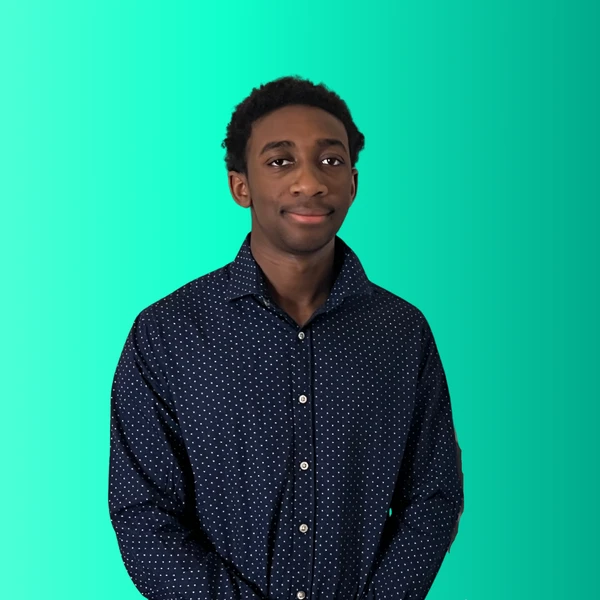
Nigel Mushambi
1x
FinalistNigel Mushambi
1x
FinalistBio
My name is Nigel Mushambi (he, him, his), and I am currently pursuing an Associate of Applied Science in Electrical Technology at North Dakota College of Science. I am especially interested in electrical systems, analog circuitry, and the role skilled trades play in building reliable infrastructure. As co-owner of Gemstone Geniuses, I teach youth critical thinking through project-based learning, helping bridge technical concepts with practical application.
I have completed more than 600 hours of volunteer service and have earned the Presidential Volunteer Service Award four times. As a youth ambassador for JB Dondolo, I helped raise funds for a borehole that now supplies clean water to a school and hospital in Igusi, Zimbabwe. These experiences reinforced my belief that skilled work can strengthen essential systems and support communities in meaningful ways.
Whether I am troubleshooting a breadboard, mentoring students, or speaking publicly as an author and entrepreneur, I bring the same mindset to my work: precision, consistency, and service. Outside the lab and classroom, I enjoy playing chess and basketball, baking, and exploring how everyday systems function. My long-term goal is to become a Master Electrician, applying my skills to real-world challenges and contributing to projects that strengthen infrastructure and expand opportunity.
Education
North Dakota State College of Science
Associate's degree programMajors:
- Electrical/Electronic Engineering Technologies/Technicians
Minors:
- Heating, Air Conditioning, Ventilation and Refrigeration Maintenance Technology/Technician (HAC, HACR, HVAC, HVACR)
North Dakota State College of Science
Trade SchoolMajors:
- Electrical, Electronics, and Communications Engineering
Minors:
- Heating, Air Conditioning, Ventilation and Refrigeration Maintenance Technology/Technician (HAC, HACR, HVAC, HVACR)
Ridge Point High School
High SchoolMiscellaneous
Desired degree level:
Trade School
Majors of interest:
- Electrical and Power Transmission Installers
- Heating, Air Conditioning, Ventilation and Refrigeration Maintenance Technology/Technician (HAC, HACR, HVAC, HVACR)
Career
Dream career field:
Electrical/Electronic Manufacturing
Dream career goals:
Played a multifaceted role in the business, including recipe development, baking, cake decorating, and handling public relations, including media interviews.
2 Bros. In Business, LLC2018 – Present8 yearsAuthor, Key Note Speaker -Provided keynote speaking services for schools and communities with audiences ranging from 10 to 650 people during author visits.
Books for Diversity2019 – Present7 yearsTeaching Math and Spanish - Prepared and delivered dynamic and interactive math lessons that effectively taught math and physics concepts in a practical and intuitive manner, tailored to meet the individual needs of each student.
Self Employed2021 – Present5 years
Sports
Basketball
2020 – Present6 years
Public services
Volunteering
Catalyst 2 Change _60 hours — Baked and distributed 250 Cakes-in-the-Jar to police officers, hotel workers, and teachers2019 – 2019Volunteering
Gemstone Geniuses (www.GemstoneGeniuses.com) _150 hours — • Teach STEM to 4th-7th graders, impacting 543 youth to date. • Developed a multicultural learning system featuring short stories, hands-on activities, and more2021 – PresentVolunteering
JB Dondolo _10 Hours — Speared collection of 50 books from youth authors • Organized the shipment of books to Zimbabwe2021 – 2022Volunteering
JB Dondolo,Inc._20 Hours — Keynote Speaker for the United Nations Science Summit (UNGA79) - Advocated for equal access to emerging technologies for underserved communities • Recruited and trained five youth leaders to expand the youth program to three additional cities2019 – PresentVolunteering
Catalyst 2 Change _ 30 hours — Baked and sold over 400 cupcakes to raise funds to procure over 200 meals and 1,000 freeze pops for those experiencing homelessness2019 – 2019Volunteering
Catalyst 2 Change (Catalze2Change.org) _ 55 hours — Sewed and distributed over 200 masks during COVID-19.2020 – 2020Volunteering
Catalyst 2 Change (Catalze2Change.org) _ 30 hrs — Baked and distributed over 500 cookies.2020 – 2021
Future Interests
Advocacy
Volunteering
Philanthropy
Entrepreneurship
Kim Moon Bae Underrepresented Students Scholarship
That Lone Brown Crayon
At ten years old, I did not yet have the language to describe what it meant to be an underrepresented minority, but I understood the feeling of being different. I craved inclusivity. I longed for the 64-count crayon box instead of my 16-count, convinced it would finally give me the right colors to draw my family. After persistent pleas, my mom relented and bought the coveted box. My excitement quickly faded when I opened it and realized there was only one shade of brown, while blues, greens, and reds came in many variations.
That lone brown crayon became symbolic of how I often felt in my classrooms. As a student of color, I was present but rarely reflected, included but not fully seen. That same absence followed me into my textbooks, where the characters rarely looked like me. When they did, they appeared in the margins rather than at the center of learning. As a result, I did not ask questions in class, not because I did not care, but because I did not think the education system cared about me.
Over time, my mindset shifted from quiet withdrawal to purposeful advocacy. I stopped seeing my silence as self-protection and began to recognize it as a barrier to change. That decision led me to co-create Gemstone Geniuses, a service project that teaches math through short stories, flashcards, and hands-on activities with imagery that reflected a wider range of identities and experiences.
Creating the program was hard and tedious, but it was worthwhile to see how engaged learners became once they felt safe and represented. One learner shared that seeing a character who looked like her made her feel seen and valued. Another jokingly asked if his brother knew I had used him in the book, because a character named Miles wore cornrows like his brother and was always hungry, just like him. That moment of recognition shifted his confidence, and the once-reserved learner became the first to raise his hand to be a team leader.
As I move forward on my path as an electrician, my identity and experiences shape how I intend to serve. I am excited about the impact I will be able to make in underserved communities. I plan to use my training to provide affordable electrical services in low-income neighborhoods and assist families with essential home repairs they cannot afford. I also intend to mentor young people from underrepresented backgrounds who may not see the trades as a viable or welcoming path. I aim to offer underserved individuals the visibility and care I once sought within the 64-count crayon box.
Grover Scholarship Fund
I was raised to understand that work ethic and commitment are the foundation of achieving anything meaningful. From an early age, I watched my grandfather, a Master Electrician, show up when power failed for a neighbor or when a small business needed assistance. I never heard him complain, not even on days when he worked a 12-hour shift. Some weekends, I assisted by climbing into crawl spaces or handing him tools. Working alongside him helped me value hard work and piqued my interest in becoming an electrician.
My desire to become an electrician was cemented during the Texas winter freeze, when the power grid failed, and everyday life quickly fell apart. People rushed to gas stations to fuel their generators, and the sudden demand caused two-hour lines and gas shortages that limited how long generators could run. For five days, my family huddled under blankets as the temperature inside our home dropped to nearly 30 degrees. Conditions did not improve until linemen from neighboring states arrived to help restore power. This experience showed me that electricians are not only problem solvers; they are responsible for the systems people rely on every day. Knowing how grateful I was when our power was restored, I decided to pursue a career focused on reducing disruptions to the grid.
I am in an accelerated program that follows a Monday through Thursday schedule from 9:00 a.m. to 4:00 p.m., with a half-day on Friday, excluding additional study time. This schedule, combined with the school’s rural location in North Dakota, limits my ability to take work beyond my work-study position and occasional short-term job opportunities to cover program fees of $6,900 per semester (excluding housing). During the spring semester, I need to live on campus because my hometown is more than an hour away, and frequent blizzards can make travel unsafe and unreliable due to road closures.
My program is everything I envisioned: challenging, engaging, and rewarding. I have just completed the first semester with a 3.5 GPA. With the dual-credit coursework I earned in high school, I am on track to earn an Associate of Science degree in Electrical Technology, an Industrial Electrical Certification, and a CDL by May 2027. With these credentials, I plan to begin my career as a Substation Technician Trainee, gaining hands-on experience while working toward becoming a Grid Reliability Specialist. After earning my Master Lineman certification, I aim to move into senior technical roles focused on system protection, reliability, and grid operations.
I have the work ethic, discipline, and determination to reach these goals. What I lack are the financial resources to cover the full cost of my education. I currently have an unmet need of $10,000, after scholarships and expected summer earnings.
Track to the Trades
“Your career should power your heart.” Those words, spoken by my grandfather—a Master Electrician who carried the weight of regret for waiting until his late 40s to reach that milestone—still echo in my life. To me, he is more than my grandfather; he is a constant in my life who reminds me that a person’s career is more than a means of income; it is a reflection of their character, influence, and values. His lessons have become my foundation, forming my belief that a career in the skilled trades is not just a way to earn a living, but a way to live with purpose.
His influence, combined with my natural curiosity, shaped the way I approach real-world problems. In my community, I began teaching hands-on STEM classes to encourage young people to put down their phones and develop critical thinking skills. At home, I became the resident repairman in my family, troubleshooting appliance failures, fixing fences, and handling minor car maintenance. These projects required fortitude and precision, and built my confidence. Looking back, I understand that these experiences were more than just single-action events. They were building blocks for a future in the trades and were moments that instilled in me the components of the mindset I will carry into a career in the trades.
My desire to become an electrician has been solidified through firsthand experiences. During the 2021 Texas winter freeze, I witnessed how the power grid failure highlighted our dependence on a reliable source of electricity. Schools and businesses shut down, hospitals strained to operate critical equipment, and families endured freezing conditions in their homes. The loss of power was more than an inconvenience; it quickly became a matter of public safety. Furthermore, over the past four years, I have been working closely with the maternity hospital my great-grandfather founded in Zimbabwe. It remains the only birthing center within a day's walk for many families, yet it operates with outdated systems. I helped raise funds to install indoor plumbing, but major electrical upgrades are still needed to keep it safe and dependable. These experiences underscored the reality that electricians are far more than problem solvers; they are protectors of the community and infrastructure. Choosing this path is not just about a career; it's about a life that carries real and lasting impact.
Beyond being a part of my family legacy, I know that becoming an electrician is my calling because it uniquely blends my strengths in critical thinking with my commitment to service. I enjoy physical tasks, solving complex problems, and I am not afraid of hard work or responsibility. Furthermore, I understand that each repair or installation affects real people—the family waiting for heat to return, the business relying on uninterrupted power, the community that depends on safety and stability. This awareness drives me to pursue a trade that demands discipline, reliability, and integrity. These are the same principles that embody my grandfather’s legacy and guide my vision.
My long-term aspiration is to become a Master Electrician with the technical knowledge to lead complex industrial projects and ensure reliable installations that keep manufacturing facilities and communities running. Equally important, I want to create a pipeline of electricians who understand both the responsibility of this career and the importance of giving back. I have a vision to create systems and procedures that support a program in which tradespeople work alongside communities, locally and internationally, to restore essential infrastructure while offering hands-on training and long-term planning.
This scholarship is key to my plans coming to fruition, as it will enable me to fully dedicate myself to my educational pursuits, helping alleviate the financial burden of tuition and tools. More than financial relief, it represents your investment in someone determined to build a meaningful career that multiplies your gift by giving back at every stage. Whether through mentoring apprentices, leading projects that keep communities running, or creating programs that strengthen infrastructure around the world. With your support, I can carry on my grandfather’s legacy, create my own, and prove that skilled trades are not only about fixing systems but about empowering people and changing lives.
Be Skilled Find Success Scholarship
Skilled for Change
Game nights in my family are filled with laughter, but also come with life lessons. Between rounds, my grandfather often shares his regret for waiting until his late 40s to pursue his Master Electrician certification. With a stern look, he would say, “Your career should power your heart”—meaning, do what you enjoy. His words have stayed with me, shaping how I approach both work and personal growth. That mindset has guided me in every endeavor, leading me to pursue both service and hands-on learning.
Before discovering my passion for electrical work, I spent over 600 hours volunteering, organizing initiatives that uplifted communities, mentoring students in STEM, and sewing and distributing masks during the pandemic. At home, I became the go-to problem solver, repairing appliances, rebuilding fences, and maintaining vehicles. Through these experiences, helping people through both direct service and practical solutions became second nature, solidifying my interest in the electrical trade, where critical thinking and service intersect.
Having endured power outages lasting days due to hurricanes and winter freezes, I’ve seen firsthand the essential role electricians play in restoring vital services: hospitals, water treatment systems, traffic signals, and home climate control. As climate change intensifies, I am eager to contribute to grid modernization and the integration of renewable energy, ensuring resilient and sustainable power systems for communities. To build the expertise needed, I will attend North Dakota State College of Science, drawn to its hands-on approach, strong cohort structure, and dorm life.
The Electrical Technology program admits 60 students each year, forming three cohorts of 20. Within these groups, we study and work as a unit, developing teamwork while honing individual technical skills. Our camaraderie extends beyond class time through dorm living and extracurricular activities, fostering a tight-knit learning community. Each student has a dedicated project workspace, allowing us to refine troubleshooting and wiring skills at our own pace. This balance of collaboration and individualized technical growth makes the program the ideal foundation for my career goals.
Eventually, I aspire to become a Master Electrician, like my grandfather, and lead projects, train apprentices, and ensure high-quality installations that meet the evolving demands of the energy sector. But my goals extend beyond mastering the trade. I’ve witnessed how outdated infrastructure affects communities, including the maternity hospital my great-grandfather founded in Zimbabwe. Over the years, I have helped raise funds to improve indoor plumbing, but essential rewiring remains undone. As an electrician, I’ll have the skills to help, but my vision is bigger.
I plan to establish a volunteer program for tradespeople, mobilizing skilled workers to restore infrastructure in underserved communities. By collaborating with locals, we can provide hands-on training while making essential repairs, empowering communities in ways that extend beyond the work itself. My commitment to service and a sustainable energy future remains constant. Guided by this principle, I am working toward the Lifetime President’s Service Award for 1,000+ hours of service. Still, I know that my impact will extend far beyond any milestone—through skill, service, and mentorship, I will continue to create lasting change that reaches across generations.
Hines Scholarship
Creating My Narrative
I come from a family of story makers. My great-grandfather sold his cattle, his lifeline, to pay for his children's education despite ridicule from other villagers who deemed a college education for the elite, not farmers’ children. His story continues because his bold move led to my grandfather, aunts, and uncles emerging as beacons of hope as they established schools and hospitals in their rural communities. Now, it is time for me to step into the narrative.
A college education will enable me to build upon my family's legacy of improving the lives of those in impoverished areas. Currently, the hospital my grandfather established in Zimbabwe is in disarray. While I have raised enough money to replace water pipes and toilets, a college education would allow me to contribute on a larger scale. One of my long-term goals is to establish a community garden near the hospital. As a future engineering major, college will equip me to design sustainable irrigation technology that will benefit the hospital and the surrounding Igusi community.
College will also allow me to broaden my horizons by building relationships with individuals from different backgrounds. Growing up in a family rich in diversity and heritage, I appreciate different perspectives. I love it when relatives from other countries visit because they bring their vocabulary, food, and worldviews with them. I have learned the value of diverse cultures from these intimate family moments, and I am excited to extend my learning while in college. I look forward to spending late nights with a diverse body of students and discussing the nuances of our cultural differences over games of chess. College is my gateway to new interactions, where peers from different walks of life become lifelong friends, partners, and collaborators.
College is not just a time for learning about others; it is also a time for personal growth and self-discovery. A few years ago, I experienced sporadic hair loss due to alopecia. When my alopecia first emerged, it reached a point where I avoided combing my hair because I felt like I was combing out my confidence with every stroke. After a few months, though, I stopped focusing on the “Why Me" and began focusing on my core values. Although this is an ongoing process, I look forward to sharing with my peers in college how I used my challenge for personal growth. On the other hand, I am also excited to learn from my peers and mentors how they overcome obstacles. By doing this, I can develop into the best version of myself and inspire others to do the same.
Reflecting on my narrative, a college education is a personal goal and a means to continue my family’s story. With every course taken, every culture embraced, and every personal discovery made, I will be better equipped to be a beacon of hope within my community and the world at large. I want my great-grandchildren to be inspired by my storyline just as my great-grandfather’s story inspired me.
Grace and Growth Scholarship
Have you ever reached a book’s finale only to find yourself yearning for more? That is how I felt as I sat at my great-grandfather's grave, listening to stories of his sacrifice—how he sold his cattle, his lifeline, to pay for his children's education. His bold move led to my grandfather, aunts, and uncles becoming doctors, lawyers, and engineers. They emerged as beacons of hope, establishing schools and hospitals in their rural communities.
The tales of my great-grandfather's bravery motivated me to craft my own account—a story of generosity. This defined my high school journey, featuring chapters of various passion projects, each leaving a distinct mark. The initial chapter centered on revitalizing a maternity hospital in Igusi, Zimbabwe. Through my fundraising endeavors, I raised sufficient funds to replace the facility's aging water pipes and refurbish the internal plumbing. This endeavor reinstated the dignity to expectant mothers by improving the sanitary conditions and eliminating the need to share a single outdoor latrine.
Flipping to a chapter closer to home, I organized an award ceremony for youth facing difficult situations, such as coping with a family loss. It was a joyous event for the honorees and their families even though it was held in a local shopping strip parking lot. Each student received several notes with positive affirmations that I collected from my local community and social media followers. Furthermore, I arranged a mini shopping spree in a grocery truck filled with snacks. After shopping, the kids proudly walked down a blue carpet, their smiles as bright as the sun, to receive their Resilience Awards.
In my current chapter, which I have been on for several years, I teach STEM classes on the weekend. I love students’ reactions when I walk into a classroom with a box of snacks and announce, “Today, we are learning how to square numbers.” They are always amazed at how quickly they can calculate 15 x 15 using Cheez-Its. One student said she wished I was her teacher because I made math relatable, which is my goal. I know how it feels to sit in a class where everyone understands a concept except you. It is not a great feeling, so I look out for students who appear confused and make extra effort to assist them.
For my next chapter, securing this scholarship would enable me to optimize my time and engage in community service while navigating college life. Despite already earning four Presidential Service Awards for dedicating 600 hours to various service projects over the years, my aspiration is to achieve the esteemed Lifetime Service Award, necessitating an accumulation of 1,000 service hours. Moreover, this scholarship will help me gain the knowledge and skills I need to be a leader in the STEM field and to continue working with the United Nations to promote equitable access to technology.
Reflecting on my narrative, I agree with the African proverb, “The best way to find yourself is to lose yourself in the service of others.” With every passion project, I evolve and learn more about myself. Serving has deepened my empathy, communication, and organization skills while enhancing my understanding of STEM concepts. I have realized I am a self-assured individual with the drive to fulfill my long-term commitments. Furthermore, I have learned to embrace my out-of-the-box thinking to improve my community. Most of all, though, serving others has helped me realize I want to lead a life of service. I want my great-grandchildren to be as inspired by my story as much as I am by my great-grandfather's story.