user profile avatar

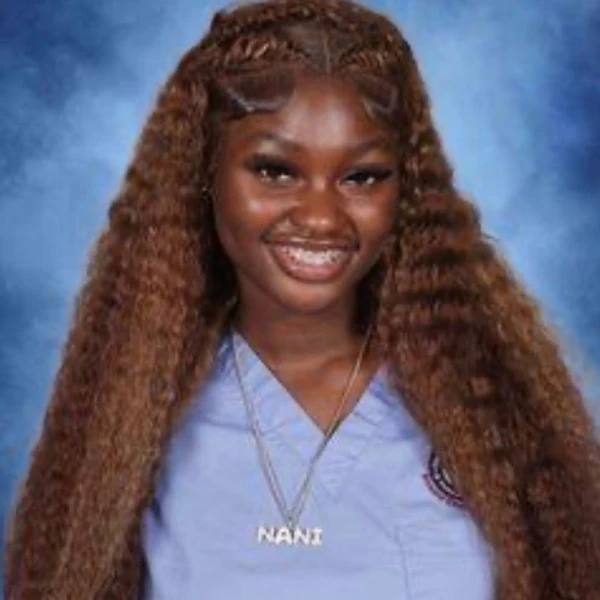
Nhaija Bathelemy

1x

Finalist

1x

Winner

General information

Hobbies & Interests

  • African American Studies
  • Anatomy
  • Animals
  • Animation
  • Anime
  • Art
  • Babysitting And Childcare
  • Hair Styling
  • Social Media
  • Fashion

Reading

I read books daily.

Bio

Hello my name is nhaija (ni-Ja) I am a sweet well rounded girl who loves to express myself creatively and I plan to work with mothers and babies in the future

Education

Sheridan Technical College

Trade School

2025 – 2027

Majors:
  • Registered Nursing, Nursing Administration, Nursing Research and Clinical Nursing
Stranahan High School

High School

2024 – 2027

Miami Northwestern Senior High

High School

2023 – 2024

Miscellaneous

Desired degree level:
Bachelor's degree program
Majors of interest:
Registered Nursing, Nursing Administration, Nursing Research and Clinical Nursing
Desired degree modality:
Online
Medical school interest:
No

Career

  • Rec aide summer camp counselor

    Recreational Facilities and Services · City of Miami

    Jan 2026 – Jan 2026

  • Clerical

    Consumer Services · SYEP

    Jan 2023 – Jan 2026

Miscellaneous

Dream career field:
Medical Practice
Work experience:
4 years
Has nursing license:
No

Future Interests

  • Advocacy
  • Volunteering
  • Entrepreneurship
Lotus Scholarship
In third grade, I spent months in the hospital. There were times when I couldn’t walk, eat, or write. My mom, who raised us on her own, helped me do things I was used to doing for myself. She stayed beside me when I was scared and helped me get through each day while we waited for answers. Watching her taught me how to persevere when I couldn’t see far ahead. I learned to focus on what I could do that day and ask for help when I needed it. I carry that lesson into my senior year. I spend my mornings at Sheridan Technical College training to become a patient care technician, then take the bus to Stranahan High School, where I serve as senior class president. I’ve earned my EKG Technician and CPR/BLS certifications. After graduation, I plan to work as a patient care technician while earning my nursing degree. That will allow me to gain experience with patients, earn an income, and help my mom with expenses. My goal is to become a labor and delivery nurse and help reduce preventable maternal deaths among Black women, especially after childbirth. When a mother tells me something feels wrong, I want to listen closely, bring her concerns to the care team, and follow up with her. Before she goes home, I want her to know what to watch for and whom to call if she needs help. I also want to mentor Black students in Broward County by sharing how I found healthcare training in high school. Practicing my first EKG helped me picture myself caring for a patient. I want another student to get that chance. My mom helped me see what I could do one day at a time. I want to do that for someone else.
Brian Moore Memorial Scholarship
To me, “Be More” means caring for the mother in front of me and using what she teaches me to improve care for the mothers who come after her. I want to become a labor and delivery nurse and join the Black nurses working to reduce preventable maternal deaths, especially among Black mothers in the weeks after childbirth. I want my impact to begin at the bedside and continue through changes my team can carry forward. I’m a senior and class president at Stranahan High School. I spend my mornings at Sheridan Technical College, where I’m training to become a patient care technician. I’ve earned my EKG Technician and CPR/BLS certifications, and I plan to work as a patient care technician while pursuing my nursing degree. Learning to perform an EKG taught me how much the details matter. My nursing education will help me apply that same attention to what a patient tells me, recognize when she needs help, and speak up on her behalf. When a mother tells me something feels wrong, I want to give her time to explain what has changed in her own words. I’ll communicate her concern to the care team and follow up so she knows what’s being done. Before she goes home, I want to explain postpartum warning signs in plain language and ask her to tell me, in her own words, whom she would call if something worried her. That conversation can reveal a question she was hesitant to ask. When everyone is asking how the baby is doing, I want to make sure someone asks how she’s doing, too. As I gain experience, I want to help my unit improve how we prepare mothers for those first weeks at home. I’d ask patients what they remember from their discharge conversations and what they wish someone had explained sooner. If several mothers tell us they were unsure whom to call after hours, for example, I’d bring that feedback to the team and help make that information easier to find. I’d want to hear from patients again after we make a change to see whether it actually helped them. I also want to mentor Black students interested in healthcare. I know how much it meant to practice an EKG in high school and realize I could picture myself caring for patients. I’d share what I learned at Sheridan and help students explore training programs and ways to gain experience while earning a degree. I’d be proud to know that a mother got help sooner because she remembered a conversation we had. I’d be just as proud if what I learned from her helped my team prepare the next mother to go home, or if a student I mentored went on to have that conversation with a patient of her own.
Kitchen to Campus Scholarship
At the Haitian Flag Day festival, I helped my aunt prepare plates for her small food business. We were serving from a tent, and when the rush hit, it felt like everyone had walked up at once. I saw people I knew in the crowd, along with people who were trying my aunt’s food for the first time. It’s easy to get distracted when you recognize someone and want to stop and talk, but there were still plates to prepare and people waiting. I had to pay attention to what my aunt needed and be ready to switch tasks when someone else needed help. That day taught me what being adaptable looks like when people are counting on you. The lesson I’ll carry with me is that being busy can change how fast I work, but it doesn’t have to change how I speak to people. When I go somewhere to buy food, I appreciate being greeted and feeling like I can ask a question. I wanted people at our tent to feel that same way, even while we were trying to keep up with the rush. My aunt’s business also made me think about how a stranger can become someone who opens a door for you later in life. I may never know who that person will be. I can still give everyone the courtesy I’d want if I were the one standing in line. If I had $100 and a completely free Saturday, part of me would want to spend it all in one outing. I’d put it in the bank and spend part of the afternoon looking into how much I need to start my vending machine business. I’d compare prices for used machines, look at what it would cost to stock one, and write down a savings goal I could work toward. I want to become an entrepreneur while I’m young, and that $100 would give me a place to start. I’d still take some time to enjoy my Saturday. I would end the day feeling good about having gotten some rest and knowing what I wanted to do with the next $100 I earned. If I could add one meal to my aunt’s menu, I’d call it The Energy Boost. I’d serve epis-seasoned salmon with rice and beans and a crisp side salad tossed in lime dressing. The part I’d be most excited to make is a sparkling pineapple, ginger, and lime refresher poured over ice. I want the pineapple to be the first thing you taste, with the ginger coming through a second later. I can picture someone walking up to our tent after spending hours out in the sun, taking that first cold sip while they wait for their plate, and telling the person behind them, “You need to get one of these, too.”
RonranGlee Literary Scholarship
What Remains Ours to Decide Don’t demand that things happen as you wish, but wish that they happen as they do happen, and you will go on well. — Epictetus, The Enchiridion, section 8. Epictetus argues that freedom begins when we stop making our ability to act depend on whether events go the way we planned. In section eight of The Enchiridion, the movement from “demand” to “wish” describes a change in where we direct our will. At first, we expect events to conform to a preference we have already formed. Then we bring our attention and effort to the circumstances that have actually arrived. I read this passage as an argument about what becomes possible once we release an outcome we can no longer control. We regain the ability to judge the situation clearly and decide what it asks of us. The word “demand” is stronger than the ordinary language of disappointment. A demand assumes that someone owes us an answer or an action. If a person promises to meet me and fails to appear, I can ask that person to explain. The explanation may matter because trust is involved, and the person has some responsibility for what happened. Epictetus, however, speaks of demanding that “things happen” in a certain way. His object is broad enough to include delays, illness, and decisions already made. An event cannot answer for itself simply because I address it as though it can. The verb exposes how easily I assign an obligation to something that has no power to fulfill it. This distinction matters because a wish usually begins with something worth caring about. A student wants a good grade because she worked hard and wants to see evidence that her work has improved. A scholarship applicant wants an award because it might make college easier to afford. The student and the applicant have reasons to care. Trouble begins when the desired result takes on a second job. It has to deliver the benefit they sought and prove that their efforts mattered. When the result becomes the only judgment they trust, the time they spent learning, preparing, or asking for help can suddenly feel worthless. They have given a single outcome more authority than it deserves. Epictetus makes the change in authority visible through repetition. The words “wish” and “happen” appear on both sides of the sentence. At first, events are supposed to happen as the reader wishes. The wish supplies a standard, and the event is judged by how closely it fits. In the second half, what happens supplies the starting point, and the reader must reconsider where to direct that wish. The sentence keeps the same basic elements while reversing their order of importance. That reversal helps explain how a person can care deeply about an outcome and still act when it goes another way. The care remains available, even though its original object may be out of reach. The hardest instruction is to wish that events happen as they do. The word “wish” sounds almost excessive here. A person who has received bad news can often admit it is true long before she wants to make any decision in light of it. I think the strength of the word matters. It asks for a degree of willingness that goes beyond stating a fact. If I spend the day saying that something happened while privately treating every response as pointless unless it restores what I wanted, the fact has entered my vocabulary but made little difference to my thinking. Wishing, in this sense, means becoming willing to give my effort to the life that now requires it. Consider a student who receives a grade much lower than she expected. She might read the instructor’s comments looking for evidence that the grade was unfair. She might also turn the grade into a verdict on her intelligence. Either reaction makes it harder to see what the comments actually say. One note may identify a missing explanation. Another may point to a claim that needs better evidence. A third may be unclear enough to justify a conversation with the instructor. Accepting the grade as the result she received gives her a chance to distinguish among those possibilities. She can revise her work, ask a focused question, or request a correction if she finds an error. I understand this distinction differently when I think about being hospitalized in third grade. There were times when I could not walk, eat, or write. Those abilities had been part of an ordinary day, and suddenly I depended on help for things I used to do myself. Wanting to recover was natural. It still left the question of how to get through a day when my body could not do what I wanted it to do. Looking back, I see how much could depend on choices that seemed small at the time. I could tell an adult what I was feeling or say that I did not understand something. My mother could help me with what I needed that day. My mother’s support helps me see that the freedom Epictetus describes can depend in part on how people treat one another. A child can ask questions more freely when someone is willing to hear them. She can admit she needs help when the person caring for her makes it safe to say so. My mom was the person I depended on through that time. Her care gives me a concrete way to understand the word “well.” A person can go on well by staying present for someone whose situation remains uncertain. The work available to my mother on any given day was the care she could give that day. I was the one who benefited from her willingness to give it. As a future labor and delivery nurse, I think about this passage from the other side of the hospital bed. A mother might arrive with expectations about how her delivery will go. Her hopes can tell me how she wants to be included in decisions, what she is afraid of, or what kind of support she needs if circumstances change. I would want to ask about those hopes and give her time to answer. If she tells me that something feels wrong, taking the situation as it is includes taking her report seriously. I can listen, communicate what she said to the care team, and follow up. Those actions start with attending to the person in front of me. The passage also asks me to examine my own expectations in that situation. A nurse may have an idea of how a shift will go or what a patient will need. Some expectations help organize work. Others can become so familiar that a nurse hears new information only through what she already assumed. A mother describing an unexpected concern is asking for attention to something happening now. If I am attached to how I thought the situation would develop, I may miss the significance of what she tells me. Epictetus’s reversal puts a practical question in front of me. Am I letting what I expected determine what I hear, or am I letting what I hear guide what I do? That distinction becomes especially important when someone has been treated unfairly. The advice to wish for events as they happen could be used to pressure a person into silence. My reading gives acceptance a different role. A mother who was dismissed can describe what she reported, who heard her, and what response she received. An advocate who listens to that account can help determine what still needs attention and ask the people responsible to act. Their ability to challenge the treatment starts with acknowledging it accurately. Even after an event has happened, choices about accountability and future care remain open. The passage is most persuasive to me when it helps identify where those choices still exist. The closing promise also deserves careful attention. Epictetus says we will “go on well.” The words describe a way of continuing. The student can ask useful questions about her essay and still feel disappointed by the grade. The nurse can communicate an urgent concern and still have to wait for another member of the team to respond. In either case, “well” gives us a way to judge the action itself. Were we attentive to what we knew? Did we make a reasonable effort? Did we treat someone with care? Those questions remain answerable even when the outcome is uncertain. They give the reader a standard to use in the meantime. There is also room in “go on” for a person who needs time. I might read this passage and expect myself to accept every setback immediately. That would turn my emotional life into one more set of events I insist must follow a schedule. Disappointment can arrive before I am ready to decide what it means. Sometimes I need to talk with someone, step away from the situation, or return to it after I have had time to think. A willingness to continue can begin with an honest description of how I feel. It can take time before I am able to ask what the disappointment is telling me and which conclusions I have drawn too quickly. The passage also changes how I understand planning. When I plan for college, I have to imagine events that have yet to happen. I need to hope that I will find financial support, do well in my courses, and have enough time to gain experience in healthcare. Those hopes give me reasons to fill out an application or prepare for a certification. If one scholarship does not come through, I can ask what I hoped the award would make possible. Maybe I needed help paying for books so I could keep my work hours manageable. Once I identify that purpose, I can ask the financial aid office a more precise question or look for another source of help. I return to the image of being a child who wanted to write again because it keeps the stakes of the passage clear for me. I could want that ability back and still need my mother’s help with the day ahead. She could give me that help before anyone could tell us what the next day would bring. As a future nurse, I want to offer that kind of attention to the person whose plans have suddenly changed. When I read “you will go on well,” I think of a question I can ask even on a hard day. Given what has already happened, what can I do now that will matter to someone?
Grover Scholarship Fund
I earned my EKG Technician and CPR/BLS certifications while I was still in high school. Now, I’m training to become a patient care technician at Sheridan Technical College. Learning to perform an EKG made me more confident around medical equipment. My PCT training is helping me build on that experience by teaching me how to support patients with their daily care. After graduation, I want to use those skills to begin working in healthcare. Becoming a patient care technician would give me a dependable way to support myself. If I need to work and save before starting nursing school, I’ll have a healthcare career to fall back on. I can earn an income, gain experience caring for patients, and learn from the nurses I work alongside. Having that option matters to me because it means I can keep moving toward my goal even if my timeline changes. I attend Sheridan in the morning and take the bus to Stranahan High School for the rest of my classes. Balancing both schools limits the hours I can commit to a paid job while I finish my training. Financial assistance would help me cover transportation and other program-related expenses during a time when I have limited hours to earn money. It would give me more room to focus on completing the program and preparing to enter the workforce after graduation. My long-term goal is to become a labor and delivery nurse and help reduce maternal deaths among Black women. When a mother says something feels wrong, I want her to know that I’ll listen, take her concern seriously, and speak up for her. I can start developing those habits now by paying attention to what patients tell me and communicating their concerns to the care team. This scholarship would help me finish the training that allows me to earn a living in healthcare while working toward the kind of nurse I want to become.
Fans of Olandria Carthen Black Women Excellence Scholarship
In high school, I learned how to take an EKG. At Sheridan Technical College, I practiced placing the electrodes and recording a heartbeat. I could finally picture myself doing something I’d only seen other people do: caring for a patient. Now I think about the student who is just as curious about healthcare as I was, but who has to look at an unpaid internship and ask herself how many shifts she’d have to give up to take it. I would build a company that connects high school students in Broward County with paid career placements, starting in healthcare. I want to reach students whose choices are limited by transportation, money, or work schedules, especially Black girls who are curious about healthcare and want a chance to see what the work is like. A student could spend a few weeks in a medical office learning how staff welcome patients, schedule visits, and keep a clinic running, all while earning a paycheck. As senior class president at Stranahan High School, I would start by asking students which jobs they want to explore, what hours they can work, and how far they can travel. I’d use their answers to design a pilot with ten students and two local healthcare employers. My company would recruit students, prepare them for their first day, and check in with them and their supervisors. Employers would pay students for their time, and I’d seek local sponsorships for bus passes and uniforms. As the company grows, I’d charge employers for recruitment and training so students can continue to participate for free. My own goal is to become a labor and delivery nurse and help reduce maternal deaths among Black women. In 2024, Black women in the United States died from maternal causes at more than three times the rate of White women. When a mother tells me something feels wrong, I want her to know I’ll listen, take her seriously, and speak up for her. I also want more Black girls to get the chance I had at Sheridan: to try a skill for the first time and think, “I could see myself doing this.” I want her to be able to say that and still bring home a paycheck on Friday.
Healing Self and Community Scholarship
A student might spend the whole school day laughing with friends, then get home and type “I need help” into a message they never send. If they do hit send, I want the next thing they hear to be that someone can see them and that their family can afford it. As senior class president at Stranahan High School and a member of Sandy Hook Promise’s Youth Advisory Board, I would start by asking students what keeps them from reaching out. I’d use their answers to create free after-school workshops where students could write, make art, or listen without having to share anything personal. Afterward, they could speak privately with a school counselor who could help them find a provider and book an appointment. I’d ask local clinics to set aside reduced-cost appointments and seek community donations to help pay for follow-up visits. It takes time to trust someone enough to open up. I want a student who finally feels comfortable with their counselor to be able to come back the next week. As a future labor and delivery nurse, I want to bring that same care to young mothers. Before a mother goes home, I’d work with her care team to help her book an appointment she can afford. As everyone gets ready to send her home with her baby, I want her to hear someone ask, “Who’s going to check on you?”
Uniball's Skilled Trades Scholarship
1. What trade are you pursuing and why are you passionate about it? I am pursuing a career in healthcare through my Patient Care Technician (PCT) program this upcoming senior year . I have always been passionate about helping others, and this trade allows me to make a meaningful difference in people’s lives every day. I enjoy learning the skills needed to care for patients with compassion, respect, and professionalism. Earning certifications such as CPR and EKG my junior year has strengthened my confidence and confirmed that healthcare is the career path I want to follow. Knowing that I can provide comfort and support to someone during a difficult time motivates me to continue growing in this field knowing I can be the reason a family smiles and just be a pure soul in the healthcare felid is rare and needed and to be apart of the 5% of black healthcare workers is a blessing. 2. What are your future plans after your trade education? After completing my Patient Care Technician program, I plan to work in a hospital or healthcare facility to gain valuable hands-on experience while continuing my education. My long-term goal is to become a registered nurse / Nurse practitioner working with mothers and babies continue advancing my career in healthcare. I hope to use my knowledge and experience to provide high-quality patient care, advocate for others, and make a positive impact in my community. I believe this trade is the first step toward a lifelong career dedicated to serving others. 3. Describe a time in your life when you overcame adversity. How did you work through it? One of the biggest challenges I have overcome is the time I was diagnosed with a condition that stoped my ability to be able to walk eat write and continue my education , I had to regain my strength by going to physical therapy and more at the ripe young age it was hard not being able to write being weak It was a time in my life that tested my strength, resilience, and determination. Although it was difficult, I refused to let that experience define who I was or limit what I could accomplish. Instead, I used it as motivation to work harder and focus on building a better future for myself now I’m the president of my class I graduated from college while being in high school taking college classes and more is a blessing I worked through that adversity by staying committed to my education, becoming involved in leadership opportunities, and surrounding myself with people who encouraged me to keep moving forward. Rather than allowing setbacks to discourage me, I learned how to adapt, remain positive, and keep my goals at the center of everything I did. Looking back, that experience taught me perseverance, maturity, and the importance of believing in myself even during difficult times. It shaped the person I am today and inspired me to pursue a career where I can help others through their own challenges with compassion and understanding.
Khalil Mack 52 Scholars Program
Winner
I rise I remember the moment my life shifted, even if I did not fully understand it at the time. I was in third grade, an age meant for playground games and learning multiplication tables, but instead of sitting in a classroom, I was going in and out of hospitals. It started suddenly. I began walking differently, like my body no longer belonged to me. My balance was off, my head tilted downward, and I could not keep food down. My mother took me from hospital to hospital searching for answers, but each time doctors insisted nothing was wrong. Still, she knew better. She watched me lose weight, fall into walls, and grow weaker by the day. Refusing to accept uncertainty, she remained persistent until I was finally admitted to a children’s hospital. One of my earliest memories from that time is a CAT scan. I was dressed in a thin blue hospital gown and led into a room with a large machine shaped like a dome. The nurses told me to lie completely still and handed me a red button in case I wanted to stop. Determined to be brave, I said I did not need anesthesia. But inside the machine, the silence felt overwhelming. It was just me, the low hum of the scanner, and my thoughts. A radio played softly in the background, and I remember staring up and wondering if I was going to be okay. The fear caught up to me, and I pressed the red button. Within seconds, nurses rushed in, placed a mask over my face, and everything faded to black. That moment was only one of many. While other children followed their routines, I spent weeks in hospital rooms. Nurses helped me with simple tasks I could no longer do on my own, and firefighters sometimes visited to lift our spirits. Through it all, my mother never left my side. The hardest part was not just being in the hospital, but losing abilities I had always taken for granted. I struggled to walk, write, and keep up with schoolwork. While classmates moved forward, I felt like I was falling behind in every way. Eventually, we had an answer. I was diagnosed with ataxia, a neurological condition that affects balance and coordination. The diagnosis brought clarity, but not immediate relief. I began physical therapy as the youngest patient in the clinic, spending hours practicing movements such as walking in straight lines, balancing, and rebuilding strength. Progress was slow and often frustrating, but over time, improvements became meaningful victories. Throughout it all, my mother carried a weight of her own. She cared for me while raising my younger brother and managing our daily lives. Even as a child, I recognized her strength and resilience. Her support became my foundation. When I returned to school, my mother arranged a 504 plan that gave me extra time on tests and access to the elevator. Although these accommodations helped, I sometimes avoided using them because I did not want to feel different. I wanted to feel normal again. I still remember calling my mother after a math test to tell her I earned a B. She told me how proud she was. That moment meant more than the grade itself because it represented progress, resilience, and hope. Over time, my health improved, and I regained strength. Today, I thrive academically, earn honor roll, lead my class, and pursue dual enrollment while working toward becoming a nurse. That experience shaped me, instilling resilience, gratitude, and compassion, showing me how to rise through hardship.
Nhaija Bathelemy Student Profile | Bold.org