user profile avatar

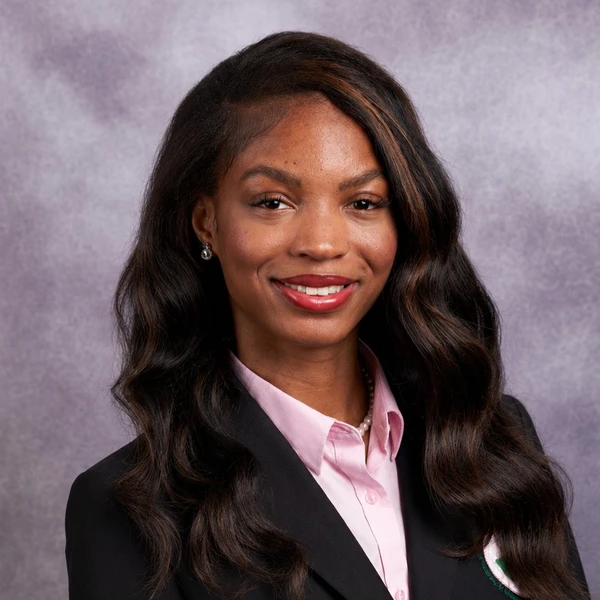
newell dodoh

1x

Finalist

General information

Gender
Female
Ethnicity
Black/African

Hobbies & Interests

  • African American Studies
  • Artificial Intelligence

Reading

  • Contemporary

I read books multiple times a week.

Bio

My personal goal is to use technology as a tool to create opportunities and improve the lives of underserved communities. As a first-generation Ghanaian American and Computer Science student, I have witnessed how access to education, mentorship, and resources can transform a person's future. These experiences have inspired me to pursue a career at the intersection of technology, business, and social impact. In the short term, I plan to gain experience technology consulting roles, where I can develop technical expertise while learning how organizations leverage technology to solve complex challenges. After earning my bachelor's degree, I hope to pursue an MBA to strengthen my leadership and business skills.

Education

Indiana University-Bloomington

Bachelor's degree program

2024 – 2028

Majors:
  • Computer Science
Minors:
  • Mathematics and Computer Science
  • Mathematics
GPA3.7 GPA

Miscellaneous

Desired degree modality:
In-Person
Medical school interest:
No

Career

  • Undergraduate Reserach Assistant

    Research · Kelley School of Buisiness

    Jan 2025 – Present

Miscellaneous

Dream career field:
Management Consulting
Work experience:
1 year
Has nursing license:
No
S3G Advisors NextGen Scholarship
My career aspirations have always felt like a rough draft. Every new experience adds a paragraph, every challenge leaves an editor's note in the margins, and every rejection forces a revision. One of the most difficult revisions I have had to make came during my search for professional opportunities in technology. At the beginning of my sophomore year, I had a clear vision for myself. I wanted to become a technology consultant. I attended networking events, revised my resume countless times, practiced interview questions, and submitted application after application for internships, leadership programs, and early career opportunities. I believed that if I worked hard enough, the results would follow. Instead, I was met with rejection. The emails all sounded similar: "Thank you for your interest..." followed by some version of "we have decided to move forward with other candidates." At first, I tried to brush them off. One rejection was disappointing, but manageable. Five felt discouraging. Ten felt personal. Soon, I found myself questioning everything. Was my resume not strong enough? Was I interviewing poorly? Was I simply not good enough for the opportunities I wanted? Rather than giving up, I focused on improving what I could control. I met with career advisors to review my resume. I asked mentors and upperclassmen for honest feedback. I attended more networking events and practiced behavioral interviews. I even began tracking my applications so I could identify patterns in what was and was not working. Some of these efforts paid off. Feedback from mentors helped me communicate my experiences more effectively. Networking introduced me to opportunities I otherwise would not have discovered. Through persistence, I earned leadership positions, joined a research lab, and was accepted into professional development programs that strengthened my confidence and skills. However, not everything worked. For a long time, I believed that applying to more opportunities would solve the problem. Instead, I received more rejection emails. I learned that persistence without reflection can become repetition. Simply working harder was not enough; I had to work differently. The most important lesson came from the rejection itself. After repeatedly pursuing consulting opportunities, I began asking myself why I was so committed to that path. Was consulting truly my passion, or had it simply become my definition of success? That question pushed me to explore other interests. Through undergraduate research on AI-enabled mental health therapists, I discovered how much I enjoyed building and evaluating AI systems. The work challenged me intellectually while allowing me to think about how technology can positively impact people's lives. If I could approach this experience again, I would seek mentorship much earlier. Many of my biggest improvements came not from another application but from conversations with people who had already navigated similar challenges. I would also spend less time viewing rejection as a verdict on my abilities and more time treating it as feedback. Looking back, the problem was never the rejection itself. The real challenge was learning how to respond to it. While rejection did not lead me where I originally expected to go, it forced me to reflect, adapt, and reconsider my goals. In many ways, those setbacks became some of the most valuable edits in my rough draft, helping me build a career path that feels more authentic to who I am becoming.
GD Sandeford Memorial Scholarship
As a first-generation Ghanaian American pursuing a degree in Computer Science with a concentration in Data Science, I view my education as more than a pathway to personal success. I see it as a tool to create opportunities, solve problems, and empower others in communities that have historically been underrepresented in technology. My goal is to use my degree to bridge gaps in access, representation, and innovation while ensuring that technological advancements benefit everyone, not just a select few. One of the most significant ways I plan to serve my community is by increasing access to technology education and mentorship. Growing up, I rarely saw people who looked like me in STEM fields, and many students in my community lacked exposure to careers in technology. As a result, many talented young people never considered pursuing opportunities in computer science or engineering. Through mentorship programs, workshops, and community outreach initiatives, I hope to introduce students to coding, artificial intelligence, and data science at an early age. By sharing my experiences and providing guidance, I can help students see themselves in spaces where they are often underrepresented. My academic and research experiences have also shown me how technology can address real-world challenges. As an undergraduate researcher studying AI-enabled mental health support systems, I have explored ways to make artificial intelligence more empathetic, culturally aware, and accessible. Mental health resources remain difficult to access for many individuals due to financial barriers, provider shortages, and cultural stigma. By continuing to work at the intersection of artificial intelligence and human-centered design, I hope to develop technologies that expand access to support services, particularly for underserved and marginalized communities. In addition to creating technological solutions, I am committed to building systems that help people succeed. Throughout my leadership experiences in organizations such as the National Society of Black Engineers and Alpha Kappa Alpha Sorority, Incorporated, I have focused on connecting students with professional development opportunities, academic resources, and career guidance. My degree will allow me to continue creating pathways for others by designing programs, developing educational resources, and leveraging data-driven solutions to improve community outcomes. Whether helping students secure internships, introducing them to emerging technologies, or advocating for greater diversity in STEM, I want my work to create lasting impact. I also recognize the importance of representation. Black women remain significantly underrepresented in technology and engineering fields. By pursuing a career in artificial intelligence and technology, I hope to demonstrate what is possible for the next generation. Representation alone does not solve systemic challenges, but visibility can inspire confidence, open doors, and encourage others to pursue opportunities they may not have thought were attainable. Ultimately, I will use my degree to combine innovation with service. Technology has the power to transform lives, but its greatest value lies in how it improves the lives of others. Through mentorship, community engagement, inclusive technological development, and advocacy for greater access to STEM opportunities, I hope to use my education to create meaningful change and help build a future where everyone has the opportunity to thrive.
newell dodoh Student Profile | Bold.org