Hobbies and interests
Art
Singing
Dance
Reading
Swimming
Cheerleading
Gardening
Videography
Reading
Realistic Fiction
Romance
Thriller
Horror
Literary Fiction
I read books multiple times per week
Neriah Williams
1x
FinalistNeriah Williams
1x
FinalistBio
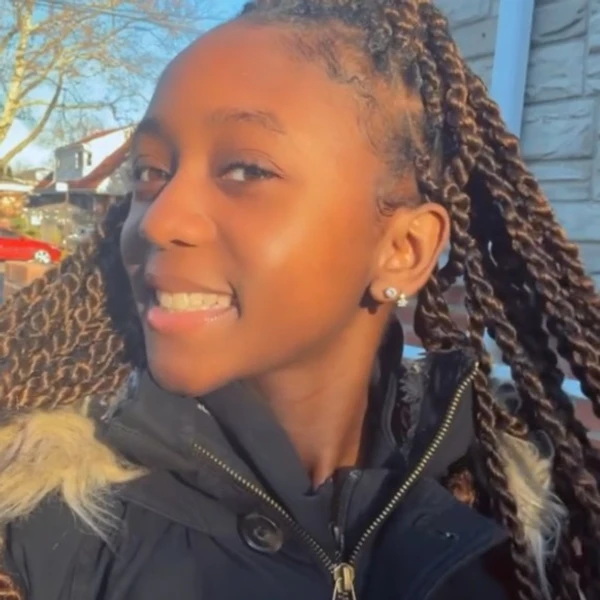
Hi! My name is Neriah Williams, and I am currently a junior in High School. I reside in Brooklyn, NY, and enjoy singing, swimming, dancing, gardening, cheerleading, and the arts. I am very passionate about giving back to my community, and volunteer my services to others in need on a regular basis. As someone that takes academics very seriously, I have made it my duty to work as hard as possible to ensure acceptance into top universities. These scholarships will be used to help me attend these incredible programs, and reach my dream of becoming an Anesthesiologist!
Education
Brooklyn College Academy
High SchoolMiscellaneous
Desired degree level:
Bachelor's degree program
Majors of interest:
- Medicine
Career
Dream career field:
Medical Practice
Dream career goals:
Anesthesiologist
Group Counselor
Mill Basin Day Camp2024 – Present2 yearsParticipant
Summer Youth Employment Program2023 – 2023
Sports
Cheerleading
Varsity2022 – Present4 years
Swimming
Varsity2024 – Present2 years
Research
Health and Medical Administrative Services
LuvMichael — Volunteer2025 – Present
Arts
Brooklyn College Academy
Theatre2022 – 2024New York All City High School Chorus
Music2023 – 2024
Public services
Advocacy
LuvMichael — Researcher, Fundraiser, and Educator2025 – 2025Volunteering
Grace Church Of The First Born — Lead Resource Coordinator & Distributor2022 – PresentVolunteering
Upchieve — Tutor( 6th, 7th, and 8th grade math, Prealgebra, Algebra 1 and 2, Trigonometry, Precalculus, essay feedback, and essay planning.)2025 – Present
Future Interests
Volunteering
Desire To Inspire Scholarship
1.When asked to define the word “inspiration”, Webster’s Dictionary defines it as “the act of drawing in.” However, this explanation doesn’t serve the term justice. Inspiration goes beyond the act of reeling in– it changes you. That's why, instead of only expressing what it means to me, I’d like to explain how it strengthened, shaped, and molded me into the advocate I am today.
My parents were informed that I needed a life-threatening brain surgery exactly a month after my tenth birthday. I remember being sent out of the doctor's office, and being told to play outside in the waiting room. Unfortunately, my mother’s sobbing echoed louder than the Paw Patrol on the television– too loud to ignore. While my father remained strong and collective in the best interest of my mother, I tried my best to emulate him. But let's face it: no child wants to see their parents cry– especially in a household like mine where tears are sacred.
I acted as if the prospect of surgery didn’t bother me all week, but my nerves won when I was called in by a nurse the morning of the procedure. I must've looked petrified, because the Anesthesiologist intervened immediately. She told me I had a bright smile, and commented on the giraffes on my gown. When my body relaxed, she invited me to sit in the “Princess Chair”– a grey, hole-infested couch. Thankfully, ten year olds don’t analyze furniture, so I hopped right in.
She proceeded to hand me a Ziploc bag filled with scented lip balms, and had me choose one to mask the potent anesthetic smell. I selected one, smothered it into the mask, and was instantaneously knocked out cold. This act of kindness–her efforts to distract, relax, and comfort me– lingered. It didn’t just calm me down, but inspired me. I instantly realized I wanted to do for others, what she did for me that morning. I was going to be an Anesthesiologist.
Patients undergoing surgery have a valid reason to feel anxious, especially if they are alone. Although I had the support of family and friends, it isn't a privilege granted to everyone. Anesthesiologists are the ones you see last before your slumber, and the first you see when you return. Therefore, I want my patients to not only feel safe because I’m trained– but because I care.
In addition to my Anesthesiologist, I believe young black female providers excel in patient centered care. They often spend more time with their patients which creates a stronger rapport. Patients are more inclined to follow the advice of these providers leading to overall better patient outcomes. Females specifically are motivated to emulate successful women in healthcare if they witness them first hand, and I want to be that inspiration for my clients as she was for me.
After all, if a giraffe covered gown and scented lip balm could inspire my life’s mission, imagine what I can do in a white coat, a pocket full of stickers, and a full heart.
2. “Neriah, this is a blessing in disguise child. You would be wrong to turn down such an incredible opportunity.”
I’ll never forget that random Friday night. It was the month that marked my one year anniversary post surgery when my mom received the email. It was from the hospital my procedure was held at–and we only heard from them after an MRI scan– but that was back in March. So when she saw this notification mid November, she said her heart plummeted.
She called a family meeting, and read the email out loud. Subtly pacing back and forth, observably nervous, she read: They were impressed with my post surgery progress. Therefore, they were interested in shooting an interview with me, and having me as a guest speaker at their fancy dinner campaign.
I was ecstatic at the idea of becoming Youtube famous, so I had no doubts about the interview. As for the speech– that didn't sound very “Neriah like.” It wasn't until my mother told me that the opportunity wasn't about going viral, but sharing my story to others who need hope– then it clicked. This wasn't about Neriah only, but all the people she could reach through her words.
That experience showed me the beauty of authenticity, storytelling, and ignited a fire in me: my desire to help others.
I am currently the head resource distributor in a Community Based Organization that helps homes that are still recovering from the economic fallout of the Pandemic. Black communities are amongst those that were hit the hardest– not because the shelves were empty, but their wallets were. So what can a twelve year old do?
Our team received shipments of food, toiletries and even medicine to distribute. We wasted no time going on social media, and spreading the word to as many people in our reach. There was no need for proof of ID or financial standing– we are all human. As I watched my community show up for each other, it filled my heart with a love that screamed, “You're exactly where you need to be, doing exactly what God called you to do.”
This position has allowed me to inspire young Black girls like myself, both near and far. Why wait for change when we are the change? There is no point in watching a problem from the sidelines because you can't clean a spill by staring at it. Similarly, you can't inspire anyone by remaining silent.
Beyond charity work, I remain active in my volunteering services: Tutoring underprivileged groups, singing and playing guitar at senior homes, advocating for adult autism awareness, and hosting trivia games to bring happiness to the elderly. Although some may view these as small contributions, they certainly add up. Every student that leaves the meeting less stressed, each smile I get from the elderly, and every connection I make with the participants matter.
Through all of this, I have learned you don't need to be loud to inspire others. You just need to show up, ready to be active and present. It also means letting those that feel unseen know there is someone that cares.
(And if I still go viral in the process? No problem at all!)
3. I don't only aspire to wear that white coat, but plan to use it as a tool for improvement. Therefore, I am proud to say I already know the “why” for applying to this scholarship; now I need assistance with the “how.”
If granted this scholarship, I will use the funds in different areas. Since I’m the first in my family interested in studying out of state, I have witnessed the overwhelming expenses. Its predominant use will be to help me cover my tuition as I pursue my Bachelors degree in Health Sciences or Biology– both majors that will prepare me for medical school, and bring me closer to becoming an Anesthesiologist.
Unfortunately, tuition is only enough to grant me a seat. Textbooks, laboratory fees, and other materials costs accumulate quickly, with prices beyond what I can afford. This scholarship would give me the ability to narrow my focus on academics solely.
It would also give me the opportunity to expand my volunteer work by easing financial burdens. I could devote more time and energy into advocacy and distribution, improving the community wherever I decide to go.
This scholarship isn't just an investment in my future, but can light the way for others– a type of chain worth starting.
MedLuxe Representation Matters Scholarship
“Neriah, you’re going to continue the legacy of doctors in this family. You know that?” Writing won’t serve this moment justice– you had to hear how my Nana said it. I gazed at her with starry eyes and a full heart, because my aspiration to become a doctor had already sprouted.
My most vivid memory of realizing I wanted to become a doctor travels back to kindergarten. We hosted a “What Do You Want to Be When You Grow Up?” event, and I was ecstatic when my father came home with a tiny lab coat. I squealed, fastened it myself– though it took many hard fought attempts- and danced around, magically transformed into “Dr Williams.” I don't remember much after, but my family’s faces were memorable: Loving and admirable.
When the grand day arrived, I was the most energetic child on stage. I screamed into the microphone, “I will be a Pediatrician and save people!” The audience laughed, but my grandmother’s voice rose above them all: “Go Ny! That’s our next doctor right there!” I already believed it, but this sealed it. I would later learn the deeper reason behind her excitement.
My first pediatrician was Bajan– kind and deeply rooted her tradition. She spoke to my family and I without making us feel rushed. After she moved, my new doctor was also Black, but more reserved. Regardless, my grandmother loved him. Why? He is Jamaican, like her. They share a heritage– a background. When I had a “minor issue”, he would say things like, “Not a ting na wrong with her. Just gyar a ginga shot.” I didn't understand it then, but I do now: it wasn't solely about healthcare, but the comfort, relatability, and understanding they shared. About trust.
All patients deserve that experience. Healthcare figures see patients at their most vulnerable place– emotionally, mentally, and physically. When young girls like myself walk into an office and see providers that look like us, it fosters trust. A connection that can’t be built in 3-minute checkups, or taught in textbooks– It's rooted in a shared background.
Imagine a young Black girl finds out she’s pregnant. She may be hesitant to come clean to her parents because we all know– Black moms don't play. However, if her Healthcare provider is also Black, that relationship might naturally feel safer. A “I understand” or “I get you” builds a relationship that can't be forced– but lived.
Increasing racial diversity in healthcare is crucial for this reason. Fostering trust, strengthening patient outcomes, and creating environments where people feel heard are more important than just merely providing representation.
In addition to my first doctor, I believe young black female providers excel in patient centered care. They often spend more time with their patients which creates a stronger rapport. Patients are more inclined to follow the advice of these providers, leading to overall better patient outcomes. Females specifically are motivated to emulate successful women in healthcare if they witness them first hand, and I want to be that motivation for my clients as she was for me.
My goal is to become an Anesthesiologist, but more importantly, a doctor who brings comfort and connection to her patients. Today, 65.6% of all employed doctors are identified as White, followed by 18% Asian, 8.9% Hispanic or Latino, and only 4.7% Black or African American. Therefore, every Black doctor we gain is a small victory for our entire race. I know I can be that familiar face—the one that makes someone exhale and think, “She understands me.” Because sometimes, understanding is the best medicine we can give.