user profile avatar

NazstaziaSimone Henry Jubitana

1x

Finalist

Bio

My goal is to become a plastic surgeon and use my skills to help people who would not otherwise have access to care. I am really interested in working with organizations like Doctors Without Borders to perform reconstructive surgeries for children in developing countries, particularly those born with cleft lip and palate. I want to help give these children more than medical care, but confidence and a better quality of life. Helping others has always been important to me. Since I was 13, I have mentored youth in foster care, where I saw how often kids are moved from home to home without basic necessities. I’ve worked with my Bible study group to collect and distribute clothing, toiletries, and essential items for these youth. I have also participated in outreach efforts to support vulnerable young girls by providing personal care items with dignity and compassion. As a gymnast, I’ve learned discipline, resilience, and how to push through challenges. I carry that mindset into my academics and everything I commit to. I take pride in showing up and doing my best. I am a strong candidate because I don’t just talk about helping others, I’ve already started. Despite emotional and financial challenges, I remain committed to my education and my goals. This scholarship would help me continue that path and grow into someone who can make a real difference.

Education

Temple University

Bachelor's degree program
2024 - 2026
  • Majors:
    • Neurobiology and Neurosciences

Florida Virtual School Flex 9-12

High School
2020 - 2024

Miscellaneous

  • Desired degree level:

    Doctoral degree program (PhD, MD, JD, etc.)

  • Graduate schools of interest:

  • Transfer schools of interest:

  • Majors of interest:

    • Medicine
    • Biochemical Engineering
  • Planning to go to medical school
  • Career

    • Dream career field:

      Medical Practice

    • Dream career goals:

      Plastic surgery

    • Gymnastics coach

      American Twister Gymnastics
      2023 – Present3 years

    Sports

    Artistic Gymnastics

    Varsity
    2009 – Present17 years

    Awards

    • Pan American Games and Junior World Champinship medalist

    Arts

    • Florida Youth Orchestra

      Music
      2017 – 2024

    Future Interests

    Advocacy

    Volunteering

    Philanthropy

    Entrepreneurship

    Charles B. Brazelton Memorial Scholarship
    On Friday nights, my house didn’t look like what most people would expect. Around the table sat boys from different neighborhoods, different histories, and sometimes even rival gangs. Some had face tattoos. Some carried stories and rap sheets no one their age should have. But in our house, none of that mattered. We played Uno, Monopoly, charades and memory match games. We argued over the rules and laughed until someone couldn’t breathe. My parents would ask the most random questions just to keep the conversation going. What level of thirst would powdered water actually quench? How do we know that water is actually wet? The debates would spiral into jokes and laughter, each person trying to outdo the other. For a few hours, nothing outside those walls existed. They were not defined by their past or what waited for them beyond our front door. They were just kids. My parents volunteered to foster teenage boys my entire life, and over time, they adopted five of my siblings. Because they accepted the hardest placements, the boys who came into our home were often the ones who had been turned away everywhere else. Living with them taught me to see people differently. I learned to look past what was obvious and pay attention to who someone was when they felt safe enough to be themselves. I also learned something harder. Not all of those boys made it out. Over the years, I lost four of my foster brothers to gun violence. I did not always understand everything happening outside of our home, but I understood enough to know that the moments we shared mattered. That is what makes me different, and sometimes what makes me seem awkward to others. When I am with people, I am fully there. I listen closely, not just to respond, but to understand, I hold eye contact a little longer than most. I notice shifts in tone, pauses in conversation, the things people choose not to say. I tend to slow down in moments that others move through quickly, as if I am trying to hold onto something that cannot be repeated. I have been told I can come across as intense or a little strange, sometimes in ways that were not meant kindly. Growing up as I did, I learned that time with people is not guaranteed. Moments are not replaceable. The conversations you have, the laughter you share, and the way you make someone feel, are the things that last. So when I’m with someone, I treat that moment with care. I pay attention. I settle into it. I allow it to matter. In college, that has not always made it easy to fit in. There is a pressure to move quickly, to keep things surface level, and to treat connection as something without depth. I find that difficult. I cannot move through people that way. My “awkward” thing is that I care deeply, and I do not hide it. It is not something I outgrew. It is the way I have learned to hold onto people, and it is what makes me who I am. I don’t rush through people. I do not treat moments as disposable. I show up fully, even when it’s uncomfortable, even when it’s misunderstood. I have lived enough to know that one day, a moment like that might be the one you remember.
    Harry & Mary Sheaffer Scholarship
    I have learned that empathy isn’t just about understanding someone’s story. It’s about noticing how people are experiencing the world in real time and choosing to respond with care. As a first-generation college student and the daughter of immigrants, I grew up watching my parents work to build a life in a system they did not fully understand. They came to the United States to create educational opportunity for their children, but the structure of higher education was something we had to learn through experience rather than inherited knowledge. That meant I often had to figure out applications, academic planning, and financial systems on my own. It taught me independence, but also awareness of how many students navigate education without guidance. I also learned early what compassionate care looks like and what it feels like when it is missing. During hospital visits with my grandmother after her heart transplant and with my mother after her diagnosis of cardiomyopathy, I saw nurses who offered patience, calm, and reassurance that eased fear in real time. I also remember moments where communication felt rushed, where eye contact was absent, and where the person behind the chart felt secondary to the diagnosis. Sitting beside them, I understood that empathy in medicine is not abstract. It changes how safe a person feels in their most vulnerable moments. One of my greatest strengths is discipline, developed through over fifteen years as a gymnast and now as a Division I athlete. Gymnastics has trained me to pay attention to detail, to remain consistent under pressure, and to understand that progress often happens through repetition and correction rather than sudden success. It has also made me observant of people, not just performance. I notice hesitation before a skill, frustration after a mistake, or silence when someone is overwhelmed but trying to continue anyway. I carry that awareness into how I interact with others. In training environments and everyday spaces. I pay attention to the emotional states of people around me. I’ve learned that empathy is often shown in small decisions; checking in on someone quietly, listening without interrupting, or encouraging someone who does not yet believe in their own ability. I’ve also seen how powerful it is when someone feels genuinely seen. That awareness shapes how I hope to work in the future as I pursue biomedical science and reconstructive medicine. I am interested in fields where precision and human care meet, where understanding both the body and the person is essential to healing. For me, building a more empathetic and understanding community does not begin with large declarations. It begins in how I show up in everyday spaces. It is in how I listen, how I notice, and how I respond when someone is struggling but trying not to show it. I am intentional about practicing it in real time and in the way I move through the world.
    STEAM Generator Scholarship
    Growing up as the daughter of two immigrants, I learned early that my parents came to the United States not just for themselves, but to give their children the opportunity for an education they never had. That hope shaped my upbringing, but it also came with a gap in understanding how complex and expensive higher education would be in practice. Much of what I have experienced in school has involved learning systems they never had access to navigating. Because neither of my parents attended college in the United States, I often had to figure out academic planning, applications, and financial processes on my own. That independence was not always easy, but it taught me how to problem-solve in environments where guidance is not always available. My interest in STEM grew from both lived experience and discipline. I am pursuing biomedical science with the goal of entering reconstructive plastic surgery. My grandmother’s heart transplant and my mother’s diagnosis of cardiomyopathy made me aware early that medicine is not abstract. It determines the quality and continuity of life. At the same time, I have spent over fifteen years in gymnastics, a sport that has trained me to think in systems of precision, repetition, and correction. When I suffered a bilateral tibial fracture that required two years of recovery, I experienced medicine not as theory, but as process. Rehabilitation, imaging, and regenerative treatments such as PRP and stem cell injections showed me how science directly restores function over time. These experiences have shaped how I approach STEM. I see it as structured problem-solving grounded in biology, adaptation, and evidence. It requires discipline, observation, and persistence even when progress is slow. As a first-generation student, I am aware that entering higher education without a family roadmap requires more than ambition. It requires constant adjustment, self-education, and resilience in unfamiliar systems. That reality has made me more intentional in how I approach my education, but it has also made me deeply aware of how many students face the same barriers without support. I want to use my education in STEM to work in medicine where innovation and access intersect, particularly in reconstructive surgery for children born with cleft conditions and other structural differences. My goal is to apply scientific training in ways that restore both physical function and personal confidence. Higher education for me is not just a personal milestone. It is a structured path I am learning to navigate in real time, without inherited guidance. What I bring to STEM is more than interest. It’s lived experience with systems, recovery, and adaptation. I am pursuing STEM because I want to understand how the body is built, how it fails, and how it can be restored. I do not see that as an abstract interest, but as a responsibility I am already growing into. I intend to use that knowledge to expand what is possible for people whose access to healing, opportunity, and care has too often been limited.
    Stephan L. Daniels Lift As We Climb Scholarship
    I want to pursue a career in STEM because I have always been drawn to understanding how the human body functions, how it fails, and how it can be restored. That interest became personal long before it became academic. My grandmother received a heart transplant after years of waiting, and my mother lives with cardiomyopathy. I grew up understanding that the human body is not predictable, and that science and medicine often determine whether a person simply survives or is able to live fully. Those experiences shaped how I see healthcare at its core: biological, precise, and deeply human. At the same time, I have spent over fifteen years as a gymnast, a sport that depends on repetition, biomechanics, and precision. I have learned to analyze movement, understand force, and refine performance through constant feedback and adjustment. When I suffered a bilateral tibial fracture that took two years to heal, I became a patient myself. My recovery included rehabilitation and regenerative treatments such as PRP and stem cell injections for my knee, shoulder, and lower extremity injuries. I experienced firsthand how biomedical innovation is not theoretical. It is applied science that restores function. Recovery became a structured process grounded in biology, adaptation, and time. That experience clarified my direction. I want to pursue STEM through biomedical science and medicine, specifically reconstructive plastic surgery. I am interested in how scientific and medical advancements can restore both physical function and personal confidence, especially for children born with cleft conditions and other structural differences. I have seen how deeply appearance and function shape how a person is treated and how they see themselves, and I want to be part of the science that changes that outcome. STEM, to me, is problem-solving at its most essential level. It is identifying what is not working, understanding the system behind it, and applying knowledge to create repair. I see that same process in both medicine and athletics, where performance is studied, measured, and improved through precision and data. As a Black woman in STEM, I am also aware of what underrepresentation means in practice. When fewer people from my community enter these spaces, fewer perspectives are included in shaping solutions that affect everyone. I want to help change that not only by entering the field, but by excelling in it and creating visibility for those who come after me. My goal is to use my degree to contribute to healthcare systems that are more accessible and more equitable. I want to be part of expanding both innovation and representation in medicine and science, especially in communities that have historically had less access to advanced care. This scholarship would allow me to continue my education in STEM without being overwhelmed by financial pressure. More importantly, it would support my development into a scientist and physician who understands both the technical precision of healing and the responsibility that comes with it. I am pursuing STEM because I want to understand the human body at its deepest level and use that knowledge to restore what others thought was permanently lost. I do not see this as a distant goal, but as the path I am already on. I intend to spend my life turning that understanding into healing, access, and possibility for others.
    Pay It Forward Scholarship
    I am pursuing a career in medicine because I have seen, up close, what it means for healthcare to determine not just outcomes, but survival and quality of life. My grandmother’s heart transplant meant years of waiting, hospital visits, and the understanding that another family’s loss gave her a second chance at life. My mother’s diagnosis of cardiomyopathy made even ordinary moments feel uncertain, teaching me that even on normal days, her heart could not always be trusted to keep up with her life. I grew up understanding that the human body is fragile, and that medicine is often what stands between crisis and continuity. At the same time, I have spent over fifteen years in gymnastics, a sport that has shaped my understanding of discipline, precision, and resilience. When I suffered a bilateral tibial fracture that took two years to heal, I experienced what it means to lose the ability to do what defines you. Recovery was not only physical, but emotional and mental. I learned that healing is structured, slow, and deeply intentional. That experience is part of what led me toward medicine, specifically reconstructive plastic surgery. I want to work with children born with cleft conditions and other facial differences, helping restore not only function, but confidence and identity. I understand how appearance can shape how someone is treated and how they see themselves. I want to be part of a field where technical skill directly changes how a person experiences the world. I am especially inspired by Dr. Michael Paglia and Dr. Albina Claps-Paglia. Their careers in surgical oncology and pediatric cardiology reflect a life committed not only to excellence in medicine, but to service, mentorship, and breaking barriers in healthcare. Dr. Albina Claps-Paglia’s success as a woman in a demanding specialty speaks to the strength required to thrive in spaces where you are not always expected to lead. Their legacy reflects the kind of physician I hope to become; skilled, compassionate, and purpose-driven. As a first-generation college student, I have had to navigate higher education without a roadmap. I have learned to advocate for myself in academic spaces while balancing the demands of Division I athletics. Gymnastics has taught me discipline, consistency, and how to perform under pressure even when circumstances are not ideal. Those same qualities are essential in medicine, where precision and focus directly affect lives. What drives me most is responsibility. I do not take lightly the sacrifices my family has made or the medical realities that have shaped my understanding of care. I have seen what it looks like when health is fragile, and what it takes to fight for it. This scholarship would allow me to continue my education in medicine without being overwhelmed by financial strain. More importantly, it would support my path toward becoming a physician who understands both the science of healing and the human experience behind it. I am pursuing medicine because I have lived its importance. And I intend to dedicate my life to honoring it through service.
    Michele L. Durant Scholarship
    I have always understood that opportunity is not evenly given. Sometimes, it is built quietly through sacrifice. On Sunday nights, when the gym was empty, my parents stayed behind to clean the floors and equipment so I could afford to train. They did it quietly, without telling anyone, because they did not want me to carry the weight of other people’s opinions or whispers. They wanted me to feel like I belonged there, even if we had to work differently to make it possible. For a long time, I did not know. When I eventually found out, I remember the moment clearly. I didn’t feel embarrassed. I saw how determined my parents were to protect my dreams. My mother told me she cleaned that gym with pride because her daughter’s future would not be limited by her income. That stayed with me. I grew up understanding that what I had access to came at a cost, and that not every child is given the same chance. Gymnastics has been a part of my life for over fifteen years. It has given me discipline, confidence, and a sense of identity. It has also shown me the barriers that exist. I have trained alongside athletes with far greater resources, while my family quietly made a way for me. Those experiences shaped how I see the world. They also shaped what I want to change. I plan to pursue a career in plastic surgery, with a focus on reconstructive work for children in underserved communities. I want to work with organizations like Doctors Without Borders to provide life-changing procedures for children born with cleft conditions. I understand how something as simple as a smile can impact confidence, identity, and opportunity. Restoring that for someone else is not just meaningful to me, it is necessary. At the same time, I carry another vision with me. I want to open gymnastics facilities in low-income communities so that young girls, especially girls who look like me, have access to a sport that is often out of reach. I know what it feels like to launch into the air, and for a moment feel weightless, suspended, as if gravity has let go of you. In those moments, there are no limitations, no barriers, no quiet calculations about what you can or cannot afford. There is only freedom. A freedom so pure you can fly. Every child deserves to experience that feeling. To me, these goals are not separate. They are connected by one idea, ‘access’. Whether it is access to healthcare or access to opportunity, I want to be part of removing the barriers that keep people from becoming who they are capable of being. As a Black woman and a first-generation college student, I’m aware of the challenges that come with pursuing higher education. There are financial pressures, systemic barriers, and moments where you have to navigate spaces without a clear guide. But I also see education as the tool that allows me to create change, not just for myself, but for others. This scholarship would give me the ability to focus more fully on my studies and my development as a future leader. It would allow me to invest my time and energy into becoming the kind of professional who not only succeeds, but reaches back. I don’t measure success by what I gain alone, but by what I make possible for others. I know what it feels like to be given the chance to rise, even when the path isn’t easy. I want to be part of the reason someone else gets to fly.
    Dinakara Rao Memorial Scholarship
    Every Christmas growing up, my siblings and I were given a choice. My mother would sit us down and tell us what we could afford that year. Then she would ask a question that most children are never asked: do you want gifts, or do you want to donate that money to help fund cleft lip surgery for a child through Doctors Without Borders? I chose the donation. As a child, I did not fully understand medicine, but I understood what it meant to feel seen. I would imagine what it must be like to be born with a cleft condition, to feel different every time you smiled, to carry something you never chose. Then I would imagine what it would feel like to look in the mirror after surgery and see yourself differently for the first time. In my mind, that felt like a kind of transformation. Not just physical, but emotional. The idea that something we gave up could help a child smile without feeling self-conscious felt powerful to me. It felt like being part of something bigger than myself. Like, in a small way, I got to be part of changing someone’s life. As I grew older, I began to understand something deeper. We were not a family with excess. The money we were giving was not extra. It was a sacrifice. That changed me. It taught me that giving is not about abundance. It is about intention. It is about choosing to show up for others, even when it costs you something. As a first-generation college student, I carry that mindset with me every day. There is no blueprint in my family for navigating higher education. Every step has required persistence, discipline, and the willingness to figure things out as I go. I have had to advocate for myself in spaces that were not built with me in mind. All while continuing to meet the expectations of being both a premed student and a Division I athlete. Gymnastics has shaped much of who I am. It has taught me discipline, resilience, and how to keep going when progress is not immediate. I have trained for over sixteen years, competed at national and international levels, and fought my way back from a two-year injury that threatened to end my career. But beyond the sport, it has reinforced something I learned much earlier in life, that growth often requires sacrifice. That understanding is what led me to pursue a career in plastic surgery. I do not see medicine as just a profession. I see it as a continuation of the values I was raised with. I want to work with organizations like Doctors Without Borders to provide reconstructive surgeries, particularly for children with cleft conditions in underserved communities. I understand what it means to give something up so someone else can have a chance at something better. Now, I want to be in a position to give not just resources, but my skill, my time, and my expertise. My journey has not been defined by what I have had, but by what I have been willing to do without. Being first-generation has meant navigating uncertainty, but it has also given me clarity. I know why I am here. I know what I am working toward. I am not just pursuing a degree. I am building a future that extends beyond me. Because somewhere, there is a child waiting for an opportunity they did not choose to need. I intend to be part of the reason they receive
    YOU GOT IT GIRL SCHOLARSHIP
    I am a “You Got It Girl” because I show up, even when everything in me is being tested. I have been a gymnast for sixteen years. Most of my life, I measured time in routines, in repetition, in progress. I believed that if I worked hard enough, there would always be a next level waiting. That belief was tested when I was diagnosed with a bilateral tibial fracture. Located in an area my orthopedist called the “dreaded black line,” an injury that with luck could take years to heal. Sitting in the car after that appointment, I did not ask if my career was over. I called my coach and said, “We need a plan. I know I will heal. I know me.” I told him I would be at practice that same day, even if all I could do was upper body. My tears only came as I pleaded with him not give up on me. You see, it was only just then, just in that moment, that it occurred to me that maybe he didn’t know who I am. That injury took two years. Two years of watching other athletes move forward while I stood still. But I kept showing up. Not perfectly, not always confidently, but consistently. I learned that resilience is not loud. It is quiet. It is choosing to keep going when there are no guarantees. Before my injury, I had already built a strong competitive career. I qualified for the Junior World Championships as a freshman and was a two-time Pan American Games qualifier. By my senior year, I earned a 37.4 all-around, scored a 9.500 on bars at Nationals, a 9.355 on beam at States, and a 9.475 on vault at Regionals, becoming a 2024 All-Star Nationals Qualifier. But what defines me is not just what I achieved when things were going well. It is what I did when everything slowed down. Because of my injury, I was recruited late. By the time I proved myself again at Nationals, most Division I programs had already allocated their scholarship spots. Even so, I earned opportunities to compete at multiple universities and ultimately secured my place on the gymnastics team at Temple University. I was not handed that opportunity. I fought my way back into it. That is what makes me a YGIG. I do not rely on motivation. I rely on discipline. I show up. I finish what I start. I have become a teammate others depend on, not because I am the loudest, but because I am consistent. I mentor younger athletes and support those around me because I understand what it feels like to question your place. I use what I have been through to remind others that setbacks are not the end. I have always been inspired by Muhammad Ali. What stands out to me is not just what he accomplished, but how he believed in himself before the world agreed. He said, “I am the greatest” long before he had the titles to prove it. At the time, it wasn’t confidence backed by proof. It was belief in motion. He trained like it, spoke like it, and lived like it before anyone else saw it. That mindset stayed with me, especially during my lowest moments. I learned that belief is not something you wait for. It is something you choose, and then you work to become. As a premed Division I athlete, I balance the demands of training, travel, and academics every day. This support would allow me to focus on performing at my highest level instead of worrying about how to sustain it. Being a “You Got It Girl” is not about never struggling. It is about deciding who you are, and continuing to show up as that person, long before anyone else sees it. And I have already decided who I am.
    Gladys Ruth Legacy “Service“ Memorial Scholarship
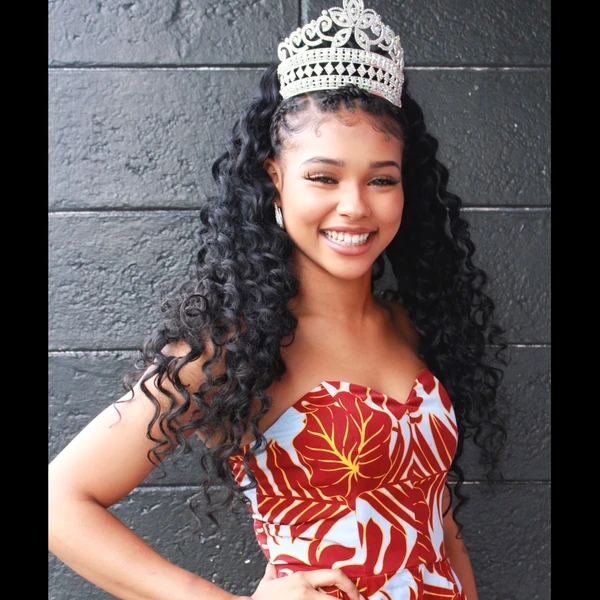
    On Sunday nights, when the gym was empty and quiet, my parents made the hour drive to clean the floors and equipment so I could afford to train in gymnastics. I remember watching them and understanding, even as a child, what it took for me to stand on that mat. No one in the stands ever saw that part of my story, but I carried it with me to every practice and every competition. I carried it not as shame, but as fuel. I learned early that my path would not look like everyone else’s. I grew up in spaces where I was often the only girl who looked like me and the only one who could not afford to be there. Before a critical competition, a coach told me to flat iron my hair so I would look “less black.” I was called names meant to make me feel small. There were moments when even the people meant to guide me made me feel like I did not belong. Those experiences stayed with me. There were times I was knocked down, but  even on my knees I would inch forward. When I stepped onto the competition floor, I carried everything with me. During out-of-town competitions, there were nights we slept in the car because we could not afford a hotel. By morning, I stepped onto the mat determined to prove that my circumstances did not define me. I carried my parents’ sacrifices, long hours of training, and every doubt I had ever faced. I competed against athletes with far more resources and still earned my place at Junior Olympics, the Pan American Games, and national competitions, winning gold. My faith in God has been my foundation. When I felt unseen or questioned my worth, my faith reminded me that I was created with purpose. It gave me the strength to keep going when things felt unfair and uncertain. What makes me different is not just what I have endured, but how I use it. Since I was thirteen, I have mentored youth in foster care and supported girls in vulnerable situations. I recognize the same uncertainty and pain in others that I have felt, and I use my experiences to meet them  where they are, with compassion, honesty, and strength. I am intentional about how I show up because I know someone is always watching, even when I do not realize it. When I was crowned Miss Teen Juneteenth USA, I stood on that stage holding a title that many would see as the reward. What stayed with me most happened afterward, when a younger girl told me she had been watching me and finally felt like she could belong too. In that moment, I understood that a crown does not make you a queen. Character does. I am unapologetically unique not just because I had to be but most importantly because I was created to be. There were too many moments when it would have been easier to shrink or believe what I was told about who I was not. Instead, I chose to stand in who I am, even when I stood alone. Somewhere, there is a girl watching who feels out of place or not enough. She may never meet me, I may never know her name, but she is watching how I rise. If my life can show her that she does not have to shrink herself or her dreams, then every challenge I have faced has meant something. I keep going, not just for myself, but for the ones who are watching.