Gender
Female
Ethnicity
Asian
Religion
Hindu
Hobbies and interests
Art
Biotechnology
Neuroscience
Business And Entrepreneurship
Environmental Science and Sustainability
Biomedical Sciences
Biology
Mental Health
Reading
Horror
Novels
Thriller
Science
Self-Help
Academic
Business
Mystery
History
I read books daily
Navya Sarapadi
1x
FinalistNavya Sarapadi
1x
FinalistBio
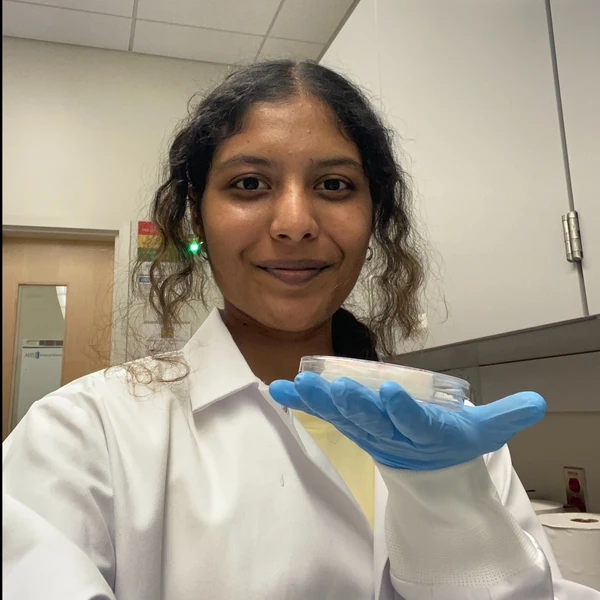
My name is Navya Sarapadi, and I’m a junior majoring in Biomedical Engineering at the University of Michigan-Dearborn and work as a research assistant in the Biomedical Interactions and Transports Lab. My research focuses on neuroscience and microfluidics with a goal of contributing to a cure for Alzheimer’s disease.
My career goals include becoming a research assistant in R&D as a neuroscientist or genetic engineer, attending graduate school, and eventually starting my own biotech company.
As an international student, I face financial challenges due to limited aid and rising tuition. Coming from a low-income family and with a single parent, I struggle to pay the huge out-of-state tuition costs. I’m deeply concerned that I won’t be able to afford continued studies due to these rising expenses.
I’m incredibly thankful to be on Bold and appreciate the support of its sponsors and team. Opportunities like this bring hope to students like me who are passionate about science and driven to make a difference. substance abuse
Education
University of Michigan-Dearborn
Bachelor's degree programMajors:
- Biomedical/Medical Engineering
Miscellaneous
Desired degree level:
Master's degree program
Graduate schools of interest:
Transfer schools of interest:
Majors of interest:
- Biotechnology
- Biochemical Engineering
- Biological and Biomedical Sciences, Other
Career
Dream career field:
Biotechnology
Dream career goals:
Scientist, Entrepreuner
Student Ambassador
University of Michigan-Dearborn2024 – 20251 yearLaboratory Assistant
University of Michigan-Dearborn2024 – Present2 yearsStudent Researcher
University of Michigan-Dearborn2024 – Present2 yearsGeneral Physics II Tutor
University of Michigan-Dearborn2025 – Present1 year
Sports
Track & Field
Varsity2019 – 20212 years
Research
Biological and Biomedical Sciences, Other
University of Michigan-Dearborn — Research Assistant2024 – Present
Arts
Self owned
PaintingNo2010 – Present
Public services
Volunteering
Biomedical Engineering Society — Secretary2024 – PresentVolunteering
Society Of Women Engineers — Vice President2024 – PresentPublic Service (Politics)
IMUN — Student delegate2022 – PresentVolunteering
Fridays For Future — State Co-ordinator2020 – 2024
Future Interests
Volunteering
Philanthropy
Entrepreneurship
Finance Your Education No-Essay Scholarship
Tinkerer’s Path Scholarship
Curiosity, for me, has always meant building things to understand how they work. As a biomedical engineering student researching neurological disease, I was allowed to explore a question that fascinated me: how can we better model the complex inflammatory processes that occur in the brain during Alzheimer’s disease?
Rather than relying solely on traditional cell culture methods, I designed and built a 3D microfluidic circuit to create an organ-on-a-chip neuro-inflammatory model. The project required hands-on engineering from the ground up. I designed the chassis of the microfluidic system, carefully arranging tubing networks, reservoirs, and flow channels that could sustain living neural cells while allowing precise control of the chemical environment. Each component had to be assembled and tested to ensure that the system maintained stable flow conditions without damaging the cells.
The process felt very much like tinkering in a workshop. Early prototypes leaked, flow rates were inconsistent, and some configurations disrupted the delicate cell cultures. Instead of seeing these challenges as failures, I treated them as opportunities to redesign and improve the system. Through repeated experimentation—adjusting tubing lengths, modifying reservoir positions, and refining the circuit layout—I gradually built a functional platform capable of modeling neuroinflammatory responses.
To make the model more representative of the brain’s cellular environment, I also developed a co-culture system incorporating astrocytes alongside neurons. Astrocytes play an essential role in regulating inflammation in neural tissue, and integrating them into the microfluidic platform allowed the system to capture more realistic cellular interactions. Watching these cells communicate within a system I had physically built was one of the most rewarding moments of my research experience.
This project shaped how I approach problem-solving. I learned that innovation often begins with curiosity but becomes meaningful through hands-on experimentation and persistence. Engineering is not just about designing solutions on paper; it is about building, testing, and refining ideas until they work in the real world.
That mindset also shapes the impact I hope to make through engineering. Many of the most advanced medical technologies remain inaccessible to low-resource communities because they are expensive, complex, or difficult to implement outside major research institutions. In the future, I hope to design biomedical technologies that are not only innovative but also practical and scalable. By creating systems that simplify disease modeling and drug testing, we can accelerate medical discoveries while lowering the cost of developing new treatments.
For me, tinkering is not just about solving technical problems—it is about building tools that can improve lives. Through curiosity, creativity, and hands-on engineering, I hope to continue developing solutions that make medicine more accessible and equitable for communities around the world.
Nabi Nicole Grant Memorial Scholarship
Faith has been the constant force guiding me through the most difficult chapters of my life. For me, faith is not simply belief—it is the quiet strength that reminds me to persevere when circumstances feel overwhelming.
Growing up, my home was not always a place of safety. My father was emotionally and verbally abusive to both my mother and me. Hearing degrading words and watching my mother suffer left deep emotional scars. Eventually, she made the courageous decision to leave and raise me as a single parent. Seeing her carry the weight of our family alone taught me resilience, but it also revealed the immense challenges women often face in silence.
In those years, faith became my refuge. In moments of fear and uncertainty, I turned to God for strength. Verses like Isaiah 41:10—“So do not fear, for I am with you… I will strengthen you and help you” reminded me that I was never truly alone. My church became more than a place of worship; it became a sanctuary when life felt like it was falling apart. Quiet prayer gave me peace and the reassurance that God had a plan for my life, even when I could not yet see it.
That belief carried me across continents when I came to the United States as an international student to study biomedical engineering at the University of Michigan. While this opportunity was a dream come true, it also brought immense challenges. As the daughter of a single mother, the cost of higher education is incredibly difficult for us. There are moments when the uncertainty around tuition, living expenses, and supporting myself feels overwhelming. Yet my faith has remained my anchor. I trust that God will guide me and show me a path forward, just as He has done throughout my life.
Deuteronomy 31:6—“Be strong and courageous… for the Lord your God goes with you”—is the verse I return to whenever doubt appears. Instead of letting fear stop me, I lean on faith and perseverance. Today, I maintain a 4.0 GPA while working as a research assistant, focusing on biomedical engineering research that aims to improve healthcare accessibility and innovation.
My desire to serve others is deeply rooted in my faith. God’s teachings emphasize compassion, kindness, and love. I believe the ability to give and support others is a gift from God, and I strive to honor that gift through service.
As a volunteer with St. Jude Children’s Research Hospital, I have seen how compassion and hope can transform lives. Supporting children and families facing life-threatening illnesses has strengthened my belief that even small acts of kindness can bring light into someone’s darkest moments.
My experiences also inspired me to create Shakti, an initiative supporting women in India who face domestic abuse. “Shakti,” meaning strength, reflects the resilience I saw in my mother and in many women whose voices go unheard. Through this initiative, I hope to help women find safety, support, and empowerment.
Looking back, every challenge has strengthened my faith. It has taught me resilience, compassion, and purpose, and shown me that even in the darkest moments, God’s presence can guide us toward a greater future. With faith as my foundation, I continue to dream, serve others, and trust that He will lead me down the path He has prepared for me.
MannKind Al Mann Centennial Scholarship
Living with diabetes has made biology deeply personal to me. Long before I learned about endocrine signaling pathways in class, I was living them every day. Blood glucose fluctuations, insulin dosing, inflammation, metabolic balance — these were not abstract textbook concepts but real variables shaping my energy, focus, and well-being. That constant awareness sparked my curiosity about how the body regulates itself and, more importantly, how it fails. Pursuing a degree in life sciences felt like a natural extension of that curiosity.
As I progressed academically, I began to see diabetes not just as a condition to manage, but as a complex systems-level challenge involving immunology, metabolism, vascular biology, and bioengineering. In one course on cellular signaling, we studied feedback regulation in hormonal pathways. While others focused on memorizing mechanisms, I found myself thinking about pancreatic β-cell stress, inflammatory cytokines, and long-term complications. Understanding the molecular framework behind something I live with every day was empowering. It transformed frustration into fascination and gave me a sense of agency. I no longer saw myself only as a patient; I saw myself as a future contributor to the science.
Living with diabetes has also shaped how I approach challenges. Chronic illness requires daily recalibration. A single high or low glucose reading does not define overall health — trends and long-term patterns matter more. I apply that same mindset to academics and research. When I encounter setbacks, whether it is a difficult exam or an experiment that fails to produce expected results, I step back and analyze rather than panic. What variables can I adjust? What can I learn from this data? Diabetes has taught me resilience, patience, and analytical thinking under pressure.
One particularly challenging semester tested this perspective. Balancing rigorous coursework with research responsibilities felt overwhelming, and I initially viewed my struggle as a personal shortcoming. But I reframed the situation the same way I would interpret a glucose trend: gather information, identify contributing factors, and make targeted adjustments. I reorganized my study strategies, sought mentorship, and restructured my schedule. The experience reinforced that adaptability is a strength, not a weakness.
If I could make one meaningful contribution to the life sciences or the diabetes community, it would be advancing more personalized, inflammation-aware approaches to diabetes care. Diabetes is often treated uniformly, yet patients experience it differently due to genetic, environmental, and inflammatory factors. I am particularly interested in how chronic inflammation intersects with metabolic dysfunction and long-term vascular complications. By identifying predictive biomarkers and integrating them into tailored treatment strategies, we could move toward more precise, preventative care.
Ultimately, my goal is to bridge lived experience with scientific innovation. I want to contribute to research that not only advances molecular understanding but also improves the quality of life for people managing chronic disease. Living with diabetes has shaped my resilience, deepened my empathy, and clarified my purpose: to transform personal challenge into meaningful scientific impact.
Second Chance Scholarship
Growing up in India, pursuing higher education as a woman was not always encouraged. In my household, my ambitions to attend college and study engineering were often dismissed, as my father believed investing in a daughter’s education was unnecessary. Alongside these societal expectations, my mother and I also endured years of abuse at home before she ultimately became a single parent. Watching my mother rebuild her life with courage and resilience shaped my understanding of strength and perseverance. Her determination to keep moving forward inspired me to believe that my future did not have to be defined by the circumstances I was born into.
I wanted to make a change in my life because I refused to accept that my potential would be limited by gender expectations or by the instability of my upbringing. Instead, I focused on building a path forward independently. I researched universities, pursued opportunities on my own, and worked relentlessly in school to create the future I wanted. Each step forward required persistence, especially after years of being told that engineering was not a place for someone like me.
Today, I am a biomedical engineering student and research assistant at the University of Michigan–Dearborn, where I contribute to research exploring neuro-inflammation. While balancing these responsibilities, I have maintained a 4.0 GPA while working 20 hours per week to support myself financially. I was also recently accepted to the University of Michigan–Ann Arbor, a milestone that further reflects the resilience and determination that carried me through these challenges.
Beyond my academic work, I am deeply committed to supporting others who face similar barriers. As President of the Society of Women Engineers chapter at my university, I mentor younger girls and women interested in STEM, helping them build confidence and pursue opportunities in engineering. I am also the founder of **Shakti**, a nonprofit initiative dedicated to supporting women who have experienced abuse by connecting them with resources, mentorship, and encouragement to rebuild their lives.
This scholarship would help relieve the financial burden of pursuing my education independently, allowing me to focus more fully on my studies, research, and leadership efforts. More importantly, it would strengthen my ability to continue paying forward the opportunities I have received.
I believe that giving someone a second chance can transform not just one life, but many. By mentoring women in STEM and supporting survivors through Shakti, I hope to continue creating opportunities for others to rebuild their confidence, pursue education, and shape futures that once seemed out of reach.
Larry W. Moore Memorial Scholarship for Aspiring Engineers
Around 35,000 people in India lost their lives during the COVID-19 crisis due to a shortage of ventilators. Watching hospitals struggle without sufficient medical equipment was devastating, and it ignited something in me. I had always been drawn to science, but that moment transformed my interest into purpose. I realized that engineering is not just about innovation—it is about accessibility. It is about ensuring that life-saving technologies reach the communities that need them most.
Now, as a biomedical engineering student at the University of Michigan, I pursue this path without financial or family support, driven entirely by my conviction that healthcare and engineering must work hand in hand. My goal is to bridge the gap between cutting-edge medical technology and low-resource communities. I want to help design affordable, scalable solutions that improve medical facilities and ultimately save lives.
At Michigan, I am a member of the microfluidics sub-team for M-HEAL’s Project Brevera, where we are developing a low-cost portable ventilator currently in the prototype stage. In partnership with hospitals in Guatemala, our team is working to ensure that this device is practical, affordable, and adaptable to real clinical settings. This experience has taught me that impactful engineering requires collaboration, cultural awareness, and iterative design grounded in real-world constraints.
In addition, I am a student researcher studying neuroinflammation in Alzheimer’s disease. Our lab integrates microfluidic circuits with organ-on-a-chip devices to culture endothelial cells and induce inflammatory conditions that mimic aspects of the blood-brain barrier. By modeling inflammation in a controlled system, we aim to better understand disease mechanisms and contribute to the development of potential therapeutics. This research has deepened my appreciation for precision, experimentation, and the translational power of biomedical engineering.
While my curiosity and love of discovery drew me to this field, the desire to save lives is what sustains me. Engineering, to me, is not abstract problem-solving—it is deeply human.
My greatest inspiration is my late grandfather. Growing up in poverty, he began his career as a fireman in the engine room of a ship, working in intense heat and soot to keep vessels running. With limited resources, he studied tirelessly and passed his engineering examinations, eventually rising to become a third assistant marine engineer before retiring. His perseverance, discipline, and refusal to give up despite adversity continue to guide me. He taught me that circumstances do not define potential—determination does.
Through my engineering career, I hope to honor his resilience by creating technologies that expand access to care and improve lives across the globe.
Below is the completed micro-fluidic circuit integrated with our microchip device, mounted in a confocal microscope for live cell imaging under physiological shear stress.
Sue & James Wong Memorial Scholarship
Submitted via a video link
Anthony Belliamy Memorial Scholarship for Students in STEAM
Growing up, I idolized my dad. He was my favorite person, the sweetest, most caring, and fun individual I had ever known. When he moved to the United States for better career opportunities, my mother, brother, and I were overjoyed and proud of him. After a few years, he called us to join him in the U.S., and I could hardly contain my excitement. My mother was thrilled to reunite our family and begin a new chapter together.
But what was meant to be a fresh start quickly turned dark. Within six months, my father’s demeanor changed drastically. He began saying hurtful things like, “You’re a burden to me. I wish I had never called you here.” I witnessed the physical and sexual abuse of my mother, which left deep scars and pushed me into severe depression. Another six months later, he forced my mother, brother, and me to return to India. It felt like our lives had been uprooted overnight. We were abandoned, both emotionally and financially, left to rebuild from nothing.
My mother, with incredible courage and determination, became our pillar of strength. Working as a schoolteacher, she single-handedly supported us. In 2024, after years of saving every rupee she could, she finally sent me to the United States for college. She saw a reflection of herself in me; her dreams that had been snatched away when she was forced into marriage at nineteen lived on through mine.
Coming to college was not easy. I juggled three jobs and 18 credits per semester while waiting nearly nine months for my research funding to be approved. There were nights I went to bed hungry and days when $20 seemed like a huge amount. My mother had faced worse and never surrendered, and that became my inspiration. With resilience, I pushed forward and went on to win three best research poster awards, present at the Summer Undergraduate Research Experience(2024), the Biomedical Engineering Society Conference (October 2025), and the Cerebrospinal Conference (June 2025).
My passion for Biomedical Engineering stems from a deeply personal loss, my grandmother’s death due to Alzheimer’s complications. I was devastated to learn there is still no cure for this disease, even in the 21st century. That realization shaped my mission: to bridge the gap between disease and cure.
As a research assistant, I study the microfluidics of the blood-brain barrier and how fluid exchange affects overall brain health. My long-term goal is to quantify neuroinflammation and develop drugs that can reduce its effects. I aspire to work in R&D and, one day, establish my own biotechnology company to bring affordable and innovative healthcare solutions to people worldwide.
Despite being a woman from a single-parent, financially struggling background, I clung to the belief that, as Nelson Mandela said, “It always seems impossible until it’s done.”
My journey has also shaped me into a leader and advocate. Growing up in the Indian society meant not giving any importance to domestic abuse and mental health, as someone who went through both pushed me to find "Naari," which means "woman" in Sanskrit, to provide cost-free support to single mothers facing domestic abuse in India. Later, I created “Okay Buddy,” a free mental health counseling platform that connects teenagers with volunteer doctors for support, inspired by my own battles with depression and anxiety.
Today, I serve as the Vice President of the Society of Women Engineers, leading a team of 70 women and 180 members, creating mentorship opportunities with top companies, and helping women step into spaces where they’ve long been excluded. I’m also the Secretary of the Biomedical Engineering Society on campus, organizing outreach programs in over 50 middle and high schools to inspire younger students to pursue STEM.
Though my financial situation remains volatile, with out-of-state tuition often threatening my ability to continue college, I refuse to give up. Every scholarship brings me one step closer to realizing not just my dream, but my mother’s too. She fought for me and my brother against all odds, and now it’s my turn to fight for her sacrifices and for a brighter, more equitable world.
This scholarship would not only ease my financial burden but also allow me to carry forward Anthony Belliamy’s legacy of strength in adversity, integrity, and leadership through service. My journey, like his life, stands as a testament that faith, resilience, and selflessness can transform even the deepest pain into purpose.
Crenati Foundation Supporting International Students Scholarship
Growing up in India, I saw families struggle with serious illnesses without access to affordable healthcare or good medical technology. My grandmother's death from Alzheimer's complications changed me forever. Watching her slowly forget her loved ones, including me, showed me how fragile memory is and how devastating it is to lose someone who is still physically present. That loss planted the seed for my goal to bridge the gap between disease and cure.
I am now pursuing this goal in the United States as a Biomedical Engineering student, researching Alzheimer's disease. I study the microfluidics of the blood-brain barrier and how changes in fluid exchange affect neurological health. My work quantifies neuroinflammation and seeks ways to diminish it, a critical step toward developing effective treatments for neurodegenerative disorders. I have presented my findings at the Biomedical Engineering Society Conference and the Cerebrospinal Conference, and have received three Best Research Poster Awards. Each success reminds me of my responsibility to apply what I am learning, not just for myself but for my country.
Millions of families in India share the same feeling of helplessness I have seen when my grandmother was ill. Neurodegenerative diseases are largely misconceived and, often, not well diagnosed; treatment options still remain unreachable for most. I would like to contribute to creating better, low-cost diagnostics and therapeutic strategies for Alzheimer's and related disorders by returning to India with education and research experience from the United States. My goal is to build a biotechnology company in India with a focus on affordable biomedical solutions. I aspire to construct local research capacity: collaboration with universities and hospitals, training young scientists, and offering internships to students at all levels interested in neuroscience and/or biomedical engineering.
Growing up, I watched my mother rebuild our lives after escaping an abusive marriage, becoming a schoolteacher and teaching me the importance of education and independence, especially to women. Her resilience shaped my desire to uplift others who face systemic and social barriers. At age fourteen, I founded a small organization in India to empower single mothers and survivors of domestic abuse. A year later, I created Okay Buddy, a mental-health counseling initiative that connects struggling teenagers with volunteer doctors and therapists. To date, these programs collectively have helped more than 40 women and 35 teenagers.
In the future, I envisage these programs scaling up throughout India integrating mental health education at schools and community centers. Mental health is a deeply stigmatized topic within Indian society, and through this platform as an engineer and scientist, I want to call for awareness, compassion, and reform. I want to prove that science and empathy can coexist that innovation can heal both the body and the mind.
The education I have received in the United States has opened doors that once felt unimaginable. It has taught me that success is determined by perseverance, not by privilege. My professors, mentors, and peers have shown me how collaboration fuels discovery, and I intend to bring that same spirit of innovation and inclusion back to India. I dream of a country where a diagnosis like Alzheimer's no longer feels like a sentence, and where young women pursuing science are not told their dreams are too big. By applying my knowledge, research, and leadership to transform healthcare accessibility and empower the next generation, I seek to give back to the country that has raised me. My goal is to turn these opportunities afforded to me into opportunities for others to ensure no one's potential is defined by where they were born, but by how far they are willing to go.
Special Delivery of Dreams Scholarship
Growing up, I never imagined that the man I admired most, my father, would become the source of our deepest pain. When my family moved from India to the United States to reunite with him, I believed it would be a new beginning. Instead, within months, his warmth turned to rage. I witnessed the physical and sexual abuse of my mother, and within a year, he forced my mother, brother, and me to return to India against our will. We were left with nothing but heartbreak and confusion.
That experience shattered the stability I once knew, but it also taught me resilience. My mother, once dependent on him, became a schoolteacher and single-handedly supported our family. Through her sacrifices, she eventually saved enough to send me to the U.S. in 2024 to pursue my dream of studying Biomedical Engineering. Life here has not been easy, I juggle three jobs and 18 credits each semester to make ends meet.
My struggles shaped me into someone who refuses to surrender, no matter how steep the path. My mother and I are struggling to afford the overwhelming out-of-state tuition, and without this support, I will not be able to continue my education. But my education has never been solely for myself. I founded two community organizations: one that supports single mothers facing domestic abuse, and another called Okay Buddy, which provides free mental-health counseling for teenagers by connecting them with volunteer doctors. Together, these initiatives have supported over 40 women and 35 teenagers, offering more than 200 hours of free counseling.
With this scholarship, I will be to advance my Alzheimer’s research, that aims to understand the blood–brain barrier and develop therapies to reduce neuroinflammation. I have won three Best Research Poster Awards and presented my work at national biomedical conferences, including the Biomedical Engineering Society Conference in October 2025 and the Cerebrospinal Conference in June 2025. I want to use my education to bridge the gap between disease and cure and eventually to establish my own biotechnology company focused on affordable neurodegenerative treatments.
My love for science began with stamps. My grandfather, who suffered from Alzheimer’s disease, was a passionate stamp collector. When I was a child, we spent hours sorting through his collection, stamps from different countries, colors, and times. Each one had a story, and he would tell me about the history and people behind them. Those afternoons remain among my most cherished memories.
As his Alzheimer’s progressed, he began forgetting names, faces, and eventually, me. But even on his hardest days, he would hold a stamp and smile faintly, as if it sparked a flicker of recognition. Today, his stamp collection sits on my desk a reminder of where my curiosity and compassion began. Those stamps taught me that memory is fragile but precious. They are why I chose Biomedical Engineering, why I study the brain, and why I dream of finding solutions for Alzheimer’s disease. Every time I look at those stamps, I am reminded of my why to bring hope to families like mine, who watch the people they love slowly fade away.
The problems I’ve overcome shaped my strength. The community I’ve built reflects my purpose. And the stamps I’ve kept remind me of my why. This scholarship is not just financial aid, it is the bridge between my present struggle and the future I am determined to build. Without it, I would not be able to continue college. I will continue to fight for memory, dignity, and opportunity, for myself, my family, and for others who dare to dream despite the odds.
Dr. William and Jo Sherwood Family Scholarship
The first time I boarded a plane alone, I wasn’t flying toward adventure, I was flying toward survival. I had fought for the chance to study biomedical engineering in the United States after my father refused to support my education abroad. I arrived with nothing but my determination, a small suitcase, and a promise to my mother that I would make it on my own. That promise has carried me through every sleepless night, unpaid research semester, and empty refrigerator.
When my professor’s funding was delayed during my first year, I worked two campus jobs to afford rent while waiting nine months to receive my first paycheck. Each day was a balance between hunger and hope. I skipped meals, walked in the cold without proper clothing, and learned how to survive on grit alone. I could have given up, but I reminded myself that I wasn’t doing this just for me, I was doing it for my mother, for the women in my community who were told they couldn’t, and for the young girls who will come after me.
This scholarship would allow me to continue my education without constantly fearing that financial strain will cut it short. It would mean studying biomedical engineering at the University of Michigan–Ann Arbor, an opportunity that is currently out of reach because of tuition costs. More than that, it would mean I can focus on what truly matters: creating meaningful change through science and service.
My work in the Biointeractions and Transport Lab focuses on developing microfluidic models of the blood–brain barrier to understand inflammation in Alzheimer’s disease. This project has already earned recognition at national conferences, and it’s my first step toward my dream of founding a biotech company that makes healthcare more accessible. I want to dedicate my career to developing treatments for neurodegenerative and genetic diseases, innovations that save not only lives but also hope.
Outside the lab, I’ve poured my heart into philanthropy. As President of Alpha Omega Epsilon and Vice President of the Biomedical Engineering Society, I’ve raised over $10,000 to support girls in STEM and local education programs. Through the Society of Women Engineers, I help mentor female students who lack guidance in technical fields. My nonprofit “Naari” empowers women facing domestic abuse in India, and “That’s Okay Buddy” provides mental-health support for youth struggling in silence. Partnering with UNICEF and St. Jude’s Children’s Hospital has deepened my belief that giving is not a gesture, it’s a responsibility.
This scholarship will not only help me afford my degree; it will amplify my ability to serve others. It will give me the freedom to focus on research and expand my organizations. Every challenge I’ve faced has refined me, not defined me. I may have begun this journey with nothing, but I carry within me something far more powerful than wealth: resilience, vision, and purpose. This scholarship will help me turn those into impact, so that when I rise, I can lift others with me.
Lynch Engineering Scholarship
The plane lifted from the tarmac, and with it, so did the life I had built. At twelve, I was an “academic weapon” in the eyes of my teachers, holding a perfect 4.0 GPA and the promise of a bright American high school future. But my father’s decision to send my mother, brother, and me back to India shattered those dreams. The unfairness stung deeply, but it also ignited a quiet resolve: I would return to the U.S. for college, no matter the obstacles.
The years that followed tested every part of me. My father refused to support my education financially, and the bank denied my student loan without his co-signature. For a year and a half, I fought relentlessly until he finally relented. When I reached Michigan, scarcity became my shadow. I went unpaid as a Research Assistant for months, often went to bed hungry, and endured winter without proper clothing. Yet I refused to let hardship define me. In my sorority, I was nicknamed "Phoenix," because I rise from ashes, from defeat, just as I always have.
I found stability in the lab. My research on Alzheimer’s disease, culturing mouse brain endothelial cells on organ-on-a-chip devices, and studying inflammatory responses became my sanctuary. This work earned my team the Best Poster Award at the Cerebrovascular Biology Conference in Ann Arbor and will be presented at the National BMES Conference in San Diego. With this foundation, I have applied to transfer to the University of Michigan–Ann Arbor, where I hope to expand my research opportunities and strengthen my path toward a career in biomedical engineering. The cost of transferring is far beyond my family’s reach, which is why I am actively seeking scholarships to make this goal possible.
My long-term career goal is to expand this work into genetic engineering and neurosurgical applications, with the vision of developing safer, more effective treatments for neurodegenerative and rare genetic diseases. Beyond research, I aspire to become an entrepreneur in the biotech industry, using innovation not only to improve lives medically but also to extend support financially and educationally to underprivileged women, children, and students like me.
The values that drive me—resilience, empathy, and service—were forged through hardship. Having once been denied support, I strive to become the support system others can lean on. As President Intern of the Society of Women Engineers, I have supported over 150 women, organized mentorship programs with industry professionals, and raised scholarship funds by inviting more than 10 companies to our annual conference. Through Alpha Omega Epsilon and the Biomedical Engineering Society, I conduct STEM outreach for underprivileged girls, giving them hands-on opportunities to explore science. As a Supplemental Instructor for Physics II, I take pride in teaching a subject rarely taught by women, breaking stereotypes, and empowering others to see physics not as a barrier but as a tool to explore the world.
Poverty, once an abstract concept, became my relentless teacher. It stripped me bare and rebuilt me with tempered steel. Now, my worth is not measured in currency but in perseverance, skill, and vision. At the core of my journey are the values of resilience, empathy, and service that not only sustain me but also drive my vision of becoming a biomedical innovator and a mentor for the next generation. My goal is to rise, not just for myself, but to lift others with me.
Maggie's Way- International Woman’s Scholarship
As the flight took off, I felt not only the pull of gravity but also the weight of my heart. It carried the pain of shattered dreams and broken hope, yet also the courage to begin again.
From a young age, I was fascinated by science; Physics, Biology, and Chemistry sparked my curiosity and fueled my dream of becoming a Biomedical Engineer. But that dream nearly slipped away. When my father sent my mother, brother, and me back to India after middle school, I felt stripped of my basic right to education. I had been excelling academically, and I knew I could have pursued competitive colleges if I had studied high school in the U.S. That injustice lit a fire inside me. I vowed to return for college, no matter the cost.
The years that followed tested every part of me. After high school, I had to wait a year and a half to begin college because my father refused to support me financially or emotionally. The bank denied my student loan without his co-signature, and every day I fought to change his mind. Only after relentless persistence did he finally relent, and I boarded the plane to the U.S. with fear, but also with faith.
Arriving in Michigan, my struggles continued. As a Research Assistant, I went unpaid for months due to delayed funding. I often went to bed hungry and braved the harsh winter without proper clothing. Yet I refused to let hardship break me. Like Malgorzata “Maggie” Kwiecien, I learned that resilience is not about avoiding struggle, but about rising through it. While Maggie climbed her mountains, I climbed mountains of financial distress and lack of support, eventually reaching a zenith, as she did. My nickname at my sorority is "Phoenix," because I truly believe I rise from ashes, I rise from defeat, just like Maggie did.
Today, I channel that resilience into leadership. As President Intern of the Society of Women Engineers on my campus, I have supported 150+ women through networking events, invited 10+ companies to our annual conference to raise scholarship funds, and launched mentorship programs that connect students with professional engineers. As Vice President of Alpha Omega Epsilon, an engineering sorority, and Cultural Chair of the Biomedical Engineering Society, I organize STEM outreach for underprivileged girls, inviting schools and charities to give them hands-on exposure to science. I am also a Supplemental Instructor for Physics II, where I impart my knowledge in a subject rarely taught by women, just as Maggie defied stereotypes as a woman ski instructor.
My research fuels my deepest passion: I aspire for my work to pave the way for understanding junction proteins and lead to safe, effective drugs for treating Alzheimer’s. Beyond research, my vision is to contribute globally to biomedical innovation and to return as a mentor for women in STEM—especially international students like me who often arrive without a support system.
Biomedical Engineering, and engineering in general, remains a male-dominated field. But like Maggie, I embrace the challenge of breaking barriers. I was stripped of my right to education by my own father, yet my ambition gave me the drive not to give up. With courage and hunger for success, I have applied to the University of Michigan–Ann Arbor to continue pursuing Biomedical Engineering.
Maggie’s legacy reminds me that courage and knowledge can transform not only one life but entire communities. Like her, I will continue to turn stumbling blocks into stepping stones, and I hope to encourage others, especially women, to do the same.
Eric W. Larson Memorial STEM Scholarship
The plane lifted from the tarmac, and with it, so did the life I had built. At twelve, I was an “academic weapon” in the eyes of my teachers, holding a perfect 4.0 GPA and the promise of a bright American high school future. But that day, as I watched the skyline shrink through the oval window, my father’s decision to send my mother, brother, and me back to India shattered my dreams. The unfairness stung deeply, but it also ignited a quiet resolve to return to the U.S. for college.
The Fall semester arrived in its familiar rush, campus alive with hurried footsteps, the air crisp with the first whispers of winter, and trees shedding their summer brilliance in slow, golden resignation. It was my first autumn in college; I looked forward to meeting my Primary Investigator to map out our research goals. But when I stepped into his office that day, my excitement began to erode. After discussing the semester’s scientific objectives, the conversation turned to my weekly hours and pay. The weight of his words was crushing: my payment schedule was uncertain, dependent on a yet-unapproved funding source.
That afternoon, I called my mother, and I watched panic ghost across her face before she steadied herself. October would bring answers, I told myself. Yet, when I approached my professor the following month, funding was still stalled. My mother, with her modest teacher’s salary, sent me rent for another month. Each call to request help felt like pulling a thread that might unravel her marriage; my father had once been unyielding in his refusal to send me to the United States for college. It had taken a year and a half of battles to secure his reluctant consent, and even then, I had mortgaged my grandfather’s house for the student loan. I had promised him that I would never depend on him financially.
The period of not getting paid taught me permanent lessons. I began saving diligently and spending responsibly. I applied for jobs as a lab assistant and campus ambassador to shoulder my expenses. Now, I am actively applying for scholarships to make the cost of transferring to Ann Arbor, far beyond my reach, more attainable.
As the semester progressed, scarcity became my shadow. I hesitated to buy even basic groceries, relying on the university’s food pantry. Utility bills went unpaid until my roommates covered them. Growing up, I had never known the sensation of an empty stomach; now I fell asleep to its hollow ache. It was a descent from diamond rings to paper ones. Academically, I began to falter; chemistry, once effortless, felt like wading through thorns. My confidence eroded, and depression settled over me like an unrelenting winter. The dream of transferring to the University of Michigan–Ann Arbor felt increasingly naive, but with reluctant courage, I submitted my application. The denial came as I had expected, yet its sting was no less sharp.
The setback could have defined me, but instead, it reminded me of who I was becoming. In my sorority, my big had once nicknamed me “Phoenix,” not for what I had yet achieved, but for my ability to rise again and again from every challenge. It was that very rejection that rekindled something fierce within me. I turned inward, to the only place that felt steady, my research. Cells, culture media, and the microscopes orchestrated a symphony for me. There was a strange kind of magic in replicating the blood–brain barrier on an organ-on-a-chip device. My white coat became my armor and my escape. I am a small boat on a vast Nile; as long as I remain upright, I will keep moving forward.
My passion for biomedical engineering stems from my love for biology and physics; I always knew I wanted to be a scientist. I dreamt of white coats and microscopes growing up. That passion grew during COVID-19, when the world seemed to hold its breath and bet its future on science. Scientists became our superheroes; we waited for a vaccine, a cure, a sliver of hope.
I immersed myself in developing a micro-simulation device, culturing mouse brain endothelial cells, and subjecting them to microfluidic flows and amyloid-beta to study its aggregation. That work, driven by long hours and a hunger for discovery, culminated in my team earning the Best Poster Award at the 15th Cerebrovascular Biology Conference in Ann Arbor. Now, I am pushing forward with the next phase—stimulating mBMECs with amyloid-beta and introducing neutrophils to study activation under both static and dynamic conditions. This research holds the potential to illuminate inflammatory responses in Alzheimer’s disease and contribute to the development of safer, more effective treatments. With much excitement, I will be displaying my research at the National Biomedical Engineering Society Conference in San Diego, California, this October.
Moving forward, I want to work in genetic engineering to develop better cures for mutant diseases, potentially integrating them into neurosurgical applications. I dream of becoming an entrepreneur in the biotech industry, and philanthropy is inseparable from that vision. I will dedicate myself to improving lives not only through scientific innovation but also through direct financial, medical, and educational support, particularly for underprivileged women, children, and college students who face battles like my own.
Poverty, once an abstract concept to me, became a relentless teacher. It stripped me bare, then rebuilt me with tempered steel. I learned that struggle is not something to pity but to respect. I understand now that financial hardship may return, but it will no longer undo me. My worth is not measured in currency but in perseverance, skill, and vision. I hope I always rise from ashes with wings as big and regal as my dreams, like a “Phoenix,” as my friends in my sorority would say.
I once watched my dreams vanish through an airplane window; now I watch them take flight again, powered by science, resilience, and the certainty that my journey will lift others with me. Only onwards. Only upwards.
WCEJ Thornton Foundation Low-Income Scholarship
One of my greatest achievements to date has been my role as a research assistant in the Biomolecular Interactions and Transportation Laboratory. During my time in the lab, I had the opportunity to work on complex and meaningful projects, including the study of protein interactions and the reconstruction of cerebrospinal fluid dynamics. These projects were technically demanding and intellectually rigorous, but they deepened my interest in bioengineering and helped me grow tremendously—both as a student and as a person.
When I first joined the lab, I had a basic understanding of molecular biology and engineering principles, but very limited hands-on research experience. I remember feeling intimidated by the complexity of the techniques and the fast-paced environment. However, I was determined to contribute meaningfully. I took the initiative to study scientific literature, ask thoughtful questions, and learn directly from graduate students and postdocs in the lab. Over time, I became proficient in essential lab techniques such as protein purification, gel electrophoresis, and image analysis. I also worked with software tools to model and simulate cerebrospinal fluid dynamics in neurological contexts—work that required attention to detail, problem-solving skills, and interdisciplinary collaboration.
Through this experience, I not only developed technical skills but also discovered key aspects of my character. I learned that I am someone who thrives in challenging environments and remains committed even when the path isn’t clear. Research taught me patience, resilience, and how to deal with failure constructively. Every unsuccessful experiment or flawed data set became a learning opportunity, not a dead end. I also realized how much I value teamwork—science is a collaborative endeavor, and I found great satisfaction in contributing to group efforts and brainstorming solutions with others.
What made these projects especially meaningful was the real-world relevance. Our work on cerebrospinal fluid dynamics, for example, was directly related to understanding and improving treatment options for neurological disorders. Knowing that our efforts could one day contribute to better diagnoses or therapies gave me a sense of purpose and motivation. It reinforced my belief that engineering and biology, when brought together, have the power to transform lives.
Looking to the future, I hope to continue working at the intersection of biomedical engineering and human health. My goal is to develop innovative, accessible medical technologies—whether that’s in the form of regenerative medicine, wearable diagnostics, or fluid-based drug delivery systems. I am particularly passionate about bridging the gap between advanced scientific discovery and real-world healthcare, especially in underserved communities.
Ultimately, this experience shaped my identity not just as a student, but as a future researcher and innovator. It taught me that I am capable of growth, adaptability, and meaningful contribution. It also instilled in me a long-term vision: to use my skills and knowledge to make healthcare more effective, equitable, and compassionate.