Hobbies and interests
Business And Entrepreneurship
Artificial Intelligence
Coding And Computer Science
Volunteering
Soccer
Reading
Adult Fiction
Academic
Business
Philosophy
I read books daily
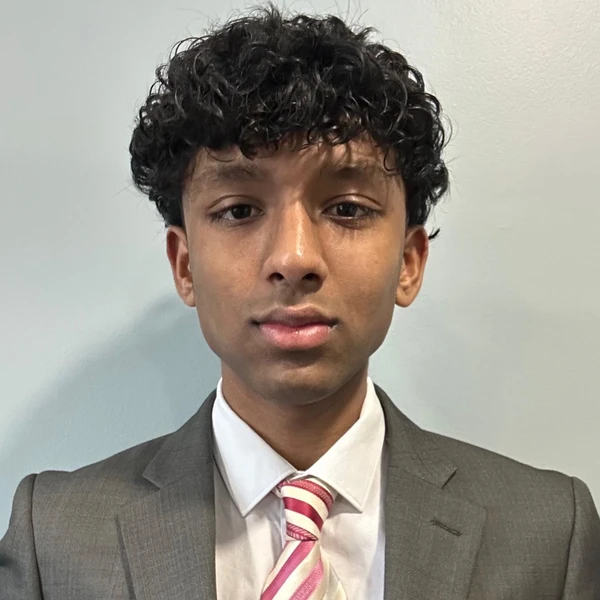
Nathan Sekar
1x
FinalistNathan Sekar
1x
FinalistBio
Hello! My name is Nathan, and I am a rising senior in high school with a passion for creating AI-driven solutions that tackle real-world challenges. I am fascinated by the power of technology to improve lives, from enhancing accessibility in healthcare to designing tools that empower communities. I am eager to combine my curiosity, technical skills, and creativity to develop innovations that make a meaningful impact on the world.
Education
John P Stevens High School
High SchoolMiscellaneous
Desired degree level:
Master's degree program
Majors of interest:
- Business, Management, Marketing, and Related Support Services, Other
- Computer Science
- Economics
Career
Dream career field:
Computer Software
Dream career goals:
Intern
Saama Technologies2025 – 2025
Sports
Soccer
Varsity2022 – 20264 years
Awards
- All-Divison
Public services
Volunteering
JPS Counseling Department — Counseling Aide2023 – 2025Volunteering
Project Mozhi — CEO/Founder2023 – 2026
Future Interests
Politics
Volunteering
Philanthropy
Entrepreneurship
Richard Neumann Scholarship
Growing up, I noticed that my grandparents often struggled with understanding their medications and medical instructions. Labels were confusing, medical terminology felt intimidating, and even simple instructions could cause stress or mistakes. I realized that this was not just a personal challenge; it is a problem that affects millions of older adults and patients worldwide. Wanting to help them, I decided to combine my curiosity, creativity, and passion for technology to design a solution that would make healthcare information more accessible.
My initial solution was small but impactful. I began creating simple, color-coded charts and annotated guides for my grandparents’ medications. I explained side effects in plain language, organized pills by time of day, and added visual cues to make instructions easier to follow. Even these simple tools made a noticeable difference: my grandparents felt more confident, asked fewer questions out of fear, and could manage their medications independently. This experience taught me the value of designing solutions that meet the user’s needs first, even before focusing on advanced technology.
If I had the funding and resources to scale this idea, I would develop a comprehensive digital platform called “ClearMed” that uses AI, design thinking, and accessibility principles to simplify healthcare communication for patients of all ages. The platform would begin by allowing users to upload or scan prescription information. An AI engine would then translate medical terminology into plain, personalized language, and generate visual aids such as color-coded schedules, icons for common side effects, and step-by-step instructions. For patients with vision or reading difficulties, the platform could read instructions aloud or provide interactive voice prompts.
Creativity would be central to the platform. Beyond simplifying instructions, ClearMed would allow users to ask natural language questions, such as “Can I take this with food?” or “What should I avoid?” The AI would respond with personalized guidance based on the user’s medication profile. The platform would also incorporate gamification to make learning about health engaging, offering small rewards or visual progress trackers as users complete modules, reinforcing understanding and retention. Additionally, caregivers could access shared dashboards, making it easier for families to monitor medication adherence and coordinate care.
To bring this vision to life, I would assemble a team of software engineers, designers, healthcare professionals, and user experience researchers. We would run user testing with patients and caregivers to ensure that every feature is intuitive, culturally sensitive, and effective. I would also collaborate with hospitals, pharmacies, and community organizations to ensure the platform could reach the people who need it most.
ClearMed represents more than just technology; it embodies creativity, empathy, and problem-solving in action. It turns a frustrating personal challenge into an opportunity to design a solution that has the potential to help millions of people live safer, healthier, and more independent lives.
By combining imagination with technical skill and a user-first mindset, I hope to show that innovation is most powerful when it meets real human needs.
Aserina Hill Memorial Scholarship
Hello! My name is Nathan Sekar, and I am a high school student with a deep interest in computer science, technology, and community service. I have always been fascinated by how technology can solve complex problems and improve people’s daily lives. I enjoy courses that challenge me to think critically and creatively, particularly in STEM fields where problem solving and innovation are central. Outside the classroom, I spend time building projects, learning new programming languages, and exploring how software and artificial intelligence can be applied to real-world challenges, especially in healthcare and education.
My extracurricular activities reflect my passion for combining technical skills with community impact. I founded Project Mozhi, a nonprofit dedicated to teaching English to children in rural areas of India. Many of these students are motivated but face obstacles due to limited access to quality education and language resources. Through Project Mozhi, I organized volunteers, designed lesson plans, and coordinated virtual sessions focused on conversational English and confidence-building. Beyond teaching language skills, the program created a space where students felt heard, supported, and included. I also worked with volunteers to ensure lessons were culturally respectful and engaging, adapting to different learning levels. This experience showed me the power of connection and mentorship, and reinforced my belief that education and technology together can create meaningful change.
Community involvement has been central to my growth. I enjoy leading projects that bring people together, listening to the needs of others, and helping build solutions that address challenges directly. Whether mentoring younger students, organizing lessons, or collaborating with volunteers, I have learned that leadership is most effective when it is rooted in empathy, communication, and shared purpose.
After high school, I plan to attend college and pursue a degree in computer science. I hope to deepen my technical knowledge while exploring interdisciplinary areas such as healthcare, education, and ethics. My long-term goal is to create technology-driven solutions that make complex systems more accessible and human-centered, helping people understand information that might otherwise feel confusing or overwhelming.
If I could start my own charity, its mission would be to improve access to education and essential information for underserved communities. The organization would serve students and families facing resource limitations or language barriers. Volunteers would teach, mentor, and develop educational content, as well as build platforms or tools to help scale learning opportunities. By combining education, mentorship, and practical support, the organization would help learners gain both knowledge and confidence.
Ultimately, my experiences and goals are guided by the same principle: knowledge and understanding are powerful tools. Through my studies, volunteer work, and future ventures, I hope to combine technology, education, and empathy to make learning and critical information more accessible, helping people feel capable, included, and empowered.
Ava Wood Stupendous Love Scholarship
Creating Connection
Community, to me, is built when people feel seen, understood, and capable of expressing themselves. That belief is what led me to found Project Mozhi, a nonprofit dedicated to teaching English to children in rural areas of India. Many of these students are bright and motivated, yet limited access to language education often prevents them from fully participating in academic and professional opportunities. I wanted to help bridge that gap.
Through Project Mozhi, I organized volunteer instructors, structured lesson plans, and virtual learning sessions focused on conversational English and confidence building. More than grammar or vocabulary, the goal was to give students a voice. I worked closely with volunteers to ensure lessons were culturally respectful, engaging, and accessible, and I collaborated with local contacts to understand the students’ needs rather than imposing a one-size-fits-all solution. What stood out most was how quickly a sense of belonging formed. Students who were initially hesitant began speaking up, asking questions, and supporting one another. The classroom became a space where mistakes were welcomed and progress was celebrated collectively. In bringing together volunteers and students from different backgrounds, Project Mozhi created a shared purpose rooted in learning and mutual respect.
This experience showed me that inclusion is not just about access, but about connection. By helping students communicate more confidently, Project Mozhi strengthened their ability to engage with the world and reminded me that creating belonging often starts with simply giving people the tools to be heard.
Kindness in Action
One of the most meaningful acts of kindness I have offered was helping my grandparents navigate their healthcare and medications. As they grew older, they were often overwhelmed by prescription labels, medical instructions, and unfamiliar terminology. What seemed straightforward on paper became confusing and stressful in practice. I began sitting with them regularly, reading instructions aloud, explaining dosages, and helping them organize their medications so they felt more confident and safe. At first, this felt like a small responsibility, but I soon realized how much it mattered. My grandparents were not just confused, they were anxious about making mistakes that could affect their health. Taking the time to patiently explain and listen eased that anxiety. More importantly, it restored a sense of independence and dignity for them. They no longer felt embarrassed asking questions or afraid of misunderstanding something important. That moment was important because it changed how I view kindness. I learned that support does not always come from grand gestures, but from consistency, patience, and presence. It also opened my eyes to how many people struggle silently with systems that are not designed for them. This experience continues to influence how I approach both my personal life and my goals. It taught me that kindness can be practical, quiet, and deeply impactful, especially when it helps someone feel less alone in navigating everyday challenges.
Zedikiah Randolph Memorial Scholarship
I am a student driven by curiosity, problem solving, and a desire to use my education to make a meaningful difference. From an early age, I have been interested in how systems work and how they can be improved. That curiosity, paired with a strong motivation to help others, ultimately led me to choose a degree program in computer science.
I chose computer science because it gives me the ability to turn ideas into real, usable solutions. What drew me in was not just coding itself, but the way software can simplify complex problems and improve everyday experiences. This became especially clear through my family’s experiences with healthcare. Watching my grandparents struggle to understand medication instructions and medical information showed me how intimidating critical systems can be when they are poorly designed. I realized that technology, when built thoughtfully, has the power to make essential information clearer and more accessible. Computer science provides the foundation I need to build tools that prioritize usability, clarity, and impact.
I plan to make an impact on my community by applying my technical skills to real-world challenges, particularly those involving access and understanding. In the near term, I want to engage in projects, research, and organizations that use technology for social good. Long term, I hope to create or contribute to ventures that improve how people interact with healthcare systems, whether through clearer digital communication, user centered platforms, or tools that help individuals manage their own care with confidence. My goal is to ensure that innovation serves people at all levels of technical literacy.
Within my degree program, representation is an important topic. For context, similar to how only a small percentage of U.S. CPAs come from certain backgrounds, Indian students make up a relatively small percentage of professionals in fields like accounting and finance, even though participation in STEM is more visible. This highlights a broader issue of representation not just in numbers, but in leadership, influence, and purpose-driven work. I aim to represent a model of success in computer science that combines technical excellence with community impact.
Inspiring the next generation is a responsibility I take seriously. I believe the most effective inspiration comes from visibility and mentorship. I plan to support younger students by sharing my experiences, offering guidance, and participating in outreach programs that encourage students to explore STEM without fear of not belonging. I want them to see that success in computer science does not require a single background, personality, or path. It requires curiosity, persistence, and a willingness to learn.
Ultimately, I want to use my education not only to build a career, but to build pathways for others. By pursuing computer science with intention and staying connected to my community, I hope to increase representation in meaningful ways and inspire future students to believe that they, too, can use technology to make a difference.
Code Breakers & Changemakers Scholarship
he power to make complex systems more humane. I have always been curious about how things work beneath the surface, especially computers and software that quietly shape everyday life. What draws me to STEM is not just the challenge of solving technical problems, but the opportunity to use logic and creativity together to design solutions that help real people.
That curiosity became personal as I watched my grandparents struggle to understand their medications and medical instructions. Simple questions about dosage, side effects, or timing often led to confusion and anxiety. I began to wonder why information so critical to someone’s health could be so difficult to understand. That question continues to drive me. I am deeply motivated by challenges where clarity, accessibility, and impact intersect, particularly in the healthcare sector. I aim to address issues where technology can alleviate fear, foster understanding, and empower individuals to take greater control over their own well-being.
I envision my STEM career centered on building technology that improves healthcare accessibility and patient understanding. My long term goal is to create or contribute to a technology venture that uses software and artificial intelligence to simplify medical information and support patient decision making. This could include tools that translate medical jargon into plain language, help users manage medications, or provide personalized explanations of treatment plans. By designing systems that prioritize clarity and empathy, I hope to help close the gap between advanced medical innovation and the patients who rely on it.
Books have played an important role in shaping how I think about STEM and its impact. Reading about innovators who used technology to solve human problems helped me understand that progress is not just about invention, but intention. Works that explore ethical technology, innovation in medicine, and the responsibilities of engineers have reinforced my belief that technical skill must be paired with moral awareness. These books showed me that the most meaningful breakthroughs happen when problem solvers understand both systems and people, and they have guided me toward a vision of STEM rooted in service rather than novelty.
My deeper vision begins with a strong educational foundation. I plan to attend college to study computer science, with a focus on software engineering and artificial intelligence. In addition to core technical coursework, I want to pursue interdisciplinary learning in areas such as healthcare, ethics, and human centered design. I believe that understanding the social and ethical context of technology is just as important as mastering algorithms and code. College will be where I develop both the technical depth and the broader perspective necessary to build responsible, impactful solutions.
This scholarship program would serve as a critical bridge between my ambitions and reality. Financial support would allow me to focus fully on my education, pursue research opportunities, and engage in projects that align with my goals without limitation. It would enable me to invest time in internships, collaborative initiatives, and independent exploration at the intersection of technology and healthcare. More importantly, it would affirm my belief that my vision is worth pursuing and that I am not alone in striving to make a difference.
By supporting my educational journey, this scholarship would help transform my passion for STEM into meaningful action. It would equip me with the tools, confidence, and opportunity to turn curiosity into innovation and ambition into impact. Through education, technology, and purpose driven work, I hope to build a future where STEM serves not just progress, but people.
Lyndsey Scott Coding+ Scholarship
My interest in computer science began as a curiosity about how technology works, but it has grown into a long term goal of using technology to improve people’s lives. As I look toward the future and prepare to attend college, I see computer science not just as a field of study, but as a powerful tool that can be combined with other passions to create meaningful change. My goals in computer science and beyond are deeply connected, and I plan to use my education to bring them together in purposeful ways.
My primary computer science goal is to study software engineering and artificial intelligence in college. I want to gain a strong foundation in programming, data structures, algorithms, and system design while also exploring how intelligent systems can process and simplify complex information. I am particularly interested in building user-focused software that is intuitive, efficient, and accessible. In the long term, I hope to start my own technology venture focused on creating digital tools that solve real-world problems, especially in industries where complexity often creates barriers for everyday users.
Alongside my technical ambitions, I have important non-computer science goals that shape how I want to use my skills. One of my biggest goals is to improve accessibility and equity within healthcare. Growing up, I watched my grandparents struggle to read and understand their medications and medical instructions. This experience showed me how intimidating healthcare systems can be, especially for older adults and non native English speakers. I want to help reduce this confusion and stress by making healthcare information clearer, more human, and easier to navigate.
Another non computer science goal of mine is to become a leader who builds with empathy. I want to understand people’s needs, communicate effectively, and make ethical decisions that prioritize trust and impact. College will play a crucial role in this development. Beyond technical coursework, I plan to take classes in public health, ethics, and communication to better understand the human side of the problems I want to solve. I also hope to engage in student organizations, research opportunities, and community service that expose me to diverse perspectives and real world challenges.
I plan to combine my computer science and non computer science goals by focusing my education and future career at the intersection of technology and healthcare. In college, I want to work on interdisciplinary projects that apply software and AI to medical data, patient education, and healthcare accessibility. By collaborating with students and professors from different fields, I can learn how to design solutions that are technically strong while also socially responsible.
After college, I hope to launch or contribute to a technology venture that improves how patients interact with healthcare systems. This could include tools that simplify medical language, help users manage medications, or provide personalized explanations of treatment plans. By combining my technical training with my commitment to accessibility and empathy, I want to create solutions that empower patients rather than overwhelm them.
Ultimately, my goals are about more than mastering computer science or achieving professional success. They are about using my education to make a difference. College will be the foundation where I develop the skills, perspective, and purpose needed to bring my technical abilities and human centered goals together. By uniting computer science with a desire to improve healthcare, I hope to build a future where technology serves people in the ways they need it most.
John Woolley Memorial Scholarship
The first time I truly understood how confusing the healthcare system could be was not in a hospital or doctor’s office, but at my grandparents’ kitchen table. Spread out in front of us were prescription bottles, folded instruction papers, and appointment summaries covered in small print and unfamiliar terms. My grandparents tried to read them carefully, yet it was clear they were struggling. They asked simple questions that did not have simple answers, and in that moment, I realized how difficult it can be for patients to understand the very information meant to protect their health.
As time went on, I saw this struggle repeat itself. My grandparents often worried about whether they were taking the right medication at the right time or what certain side effects actually meant. Medical language felt intimidating, and the design of the information made it even harder to process. These challenges created unnecessary stress and fear, especially for older adults who already face health-related concerns. Watching this happen firsthand shaped the way I think about healthcare and inspired me to look for solutions beyond traditional systems.
My passion for computer science gave me a new perspective on this problem. I began to see how technology could make healthcare more accessible rather than overwhelming. If awarded this money, I would use it to create a computer science venture dedicated to improving how patients understand medications and medical information. The goal of this venture would be to build digital tools that simplify complex healthcare language into clear, personalized explanations that patients and caregivers can easily understand.
This funding would allow me to take the first real steps toward making this idea a reality. I would invest in cloud computing services, development platforms, and secure data storage to begin building and testing prototypes. These resources are essential for creating technology that is reliable, scalable, and capable of handling sensitive healthcare information responsibly. With the proper tools, I could experiment with features such as medication explanation systems, dosage reminders, and user friendly interfaces designed specifically for older adults.
In addition to product development, the money would support my growth as both a computer scientist and an entrepreneur. I would pursue advanced learning opportunities in software development, artificial intelligence, and healthcare technology to better understand how to design systems that are both effective and ethical. Healthcare is a field where accuracy, trust, and accountability matter deeply, and I am committed to building solutions that meet those standards.
Equally important, this opportunity would give me the time to focus on transforming a personal challenge into a meaningful solution. Starting a venture requires persistence, patience, and the willingness to learn from failure. Financial support would allow me to dedicate myself fully to research, development, and refinement without sacrificing quality or vision. It would enable me to move thoughtfully rather than rushing progress.
This money would represent more than financial assistance. It would be an investment in a future where patients are empowered rather than confused, and where technology serves as a bridge instead of a barrier. What began as a moment of uncertainty at my grandparents’ kitchen table has grown into a purpose driven vision to make healthcare information clearer, more humane, and easier to understand for those who need it most.