user profile avatar

Nathan Long

1x

Finalist

General information

Hobbies & Interests

  • Surfing
  • Skateboarding
  • Coding And Computer Science
  • Electric Guitar
  • Aerospace
  • Astrophysics
  • Hiking And Backpacking
  • Beach
  • Exploring Nature And Being Outside
  • Athletic Training
  • Guitar
  • Golf
  • 3D Modeling
  • Legos
  • Pickleball

Reading

  • Academic
  • Adventure
  • Biography
  • Historical
  • Health
  • Self-Help
  • Science‎

I read books multiple times a week.

Bio

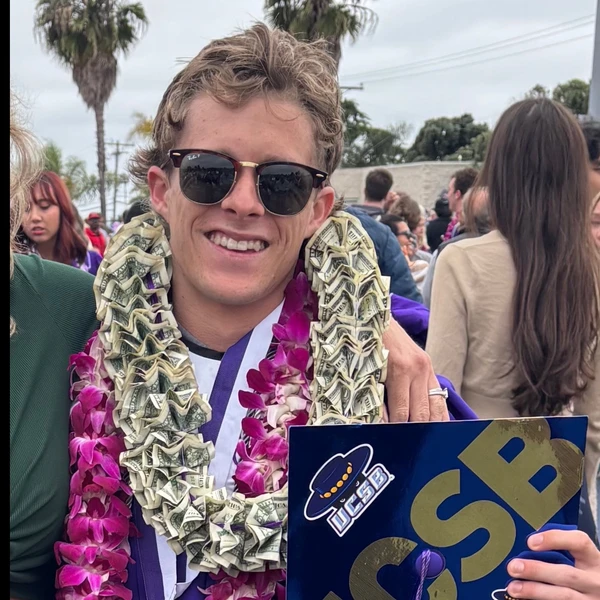
Hi, I'm Nathan — a 19-year-old physics major at UC Santa Barbara who's spent most of my life rebuilding, literally and figuratively. When I was 10, I lost my older brother to suicide. That loss shaped who I am: someone who doesn't take a single day for granted and who's determined to build a life that honors the one he never got to finish. Raised by a single parent, I learned early that nothing gets handed to you — you work for it. That lesson got tested again in high school, when a lacrosse injury tore up my knee. What was supposed to be one reconstruction became two after my body rejected the cadaver graft. Two surgeries, two six-month recoveries, and a knee that carries permanent arthritis and disability for good. I had to walk away from my job as a golf cart attendant and relearn how to walk, twice over. I still surf and skateboard — just smarter now, and with a lot more scar tissue than the average 19-year-old. At UCSB, I'm putting that same stubbornness into physics, aiming toward software engineering, AI, and mechanical engineering. I want to build things — smarter systems, better machines, tools that solve real problems for real people. As a brother in Sigma Phi Epsilon, I've also found a community that keeps me accountable and grounded. I've had to learn resilience the hard way more than once. Now I want the chance to turn it into something that lasts.

Education

University of California-Santa Barbara

Bachelor's degree program

2025 – 2029

Majors:
  • Physics

Carlsbad High

High School

2021 – 2025

Miscellaneous

Desired degree level:
Bachelor's degree program
Majors of interest:
Physics, Computer Science, Computer Systems Networking and Telecommunications, Computer and Information Sciences, General, Electromechanical Engineering, Engineering Science, Engineering, General, Engineering Mechanics, Engineering, Other, Geological/Geophysical Engineering, Materials Engineering, Mechanical Engineering, Mechatronics, Robotics, and Automation Engineering, Nuclear Engineering, Nuclear Engineering Technology/Technician, Polymer/Plastics Engineering, Systems Engineering, Computer Programming, Aerospace, Aeronautical, and Astronautical/Space Engineering, Computer Engineering, Engineering Physics, Mechanical Engineering Related Technologies/Technicians, Computer Engineering Technologies/Technicians, Engineering-Related Fields, Engineering/Engineering-Related Technologies/Technicians, Other, Astronomy and Astrophysics
Desired degree modality:
In-Person
Medical school interest:
No
English as first language:
Yes
Homeschooled:
Yes

Career

  • Golf Cart Attendant

    Hospitality · JC Resorts

    Jan 2024 – Jan 2025

  • Cashier

    Food & Beverages

    Jan 2023 – Jan 2023

Miscellaneous

Dream career field:
Software Engineering, Astronomy & Astrophysics, Artificial Intelligence
Work experience:
2 years
Has nursing license:
No
Leadership experience:
No
Ethel Hayes Destigmatization of Mental Health Scholarship
I’ve been managing ADHD, anxiety, depression, and OCD since I was a kid, long before I had language for any of it. As a kid, the OCD showed up as needing the couch pillows arranged exactly right, and the anxiety showed up as a fear of being locked in somewhere — both got worse during a period when I was on Accutane for acne, which is when I first understood that my mind could work against me in ways I couldn’t just will my way out of. Losing my brother Dustin to suicide when I was ten added another layer to all of this. He struggled with substance abuse and untreated mental health issues for years, and growing up in the aftermath of that loss meant I was processing my own mental health alongside a very early, very real understanding of what happens when someone’s struggles go unseen for too long. That combination has shaped my goals in a specific way: I don’t think of managing my mental health as separate from the rest of my life, something to handle quietly on the side while I pursue my “real” goals. It is part of how I approach everything, including school. I’m a physics major, which demands a kind of sustained focus that doesn’t come naturally to me with ADHD, so every goal I set gets filtered through the question of how I’ll actually execute it, not just what I want to accomplish. I recently started therapy to deal with some of the earlier wounds I’d never fully addressed, and that decision itself came out of realizing that ambition without honestly dealing with my own mind underneath it wasn’t sustainable. I use skating and the gym as physical outlets for anxiety, which sounds small, but building those into my routine was itself a goal — learning that I need concrete, physical ways to regulate myself, not just willpower. It’s shaped my relationships even more directly. Joining Sigma Phi Epsilon gave me a sense of brotherhood and family I didn’t always have growing up, especially with my dad largely absent from my life. But what mattered more than just having that community was what I was able to do inside it. When a brother in my chapter started struggling with his mental health and leaning too hard into partying to cope, I recognized the pattern immediately, because I’d lived it myself and because I’d watched it happen to Dustin without anyone close enough catching it in time. I made a point of being honest with him about my own struggles first, so the conversation wasn’t one-sided, and I stayed present with him instead of assuming someone else would. That’s probably the clearest way my own mental health history has changed how I show up for people: I don’t look away from someone who’s struggling, because I know exactly what it costs when people do. It’s changed my understanding of the world most in how I think about stability and visibility. My mom provided real stability for me growing up, often quietly and without credit, while carrying the financial weight of raising me largely on her own — and while managing her own major depression and anxiety the whole time, something I didn’t fully appreciate until I got older. Watching that taught me that the people holding things together are often the ones nobody notices, and that struggling — whether it’s ADHD, anxiety, grief, or anything else — doesn’t look like a single dramatic moment from the outside. It usually looks ordinary, which is exactly why it goes unseen. I used to think mental health struggles were something you got through and then left behind. I don’t think that anymore. I think they’re something you learn to carry differently over time, and that the goal was never to stop carrying it, but to get better at recognizing it in myself and in other people before it becomes a crisis instead of a conversation.
RonranGlee Literary Scholarship
Paragraph (Epictetus, Enchiridion, Chapter 1, Elizabeth Carter translation): “Of things some are in our power, and others are not. In our power are opinion, movement towards a thing, desire, aversion, and, in a word, whatever are our own acts: not in our power are the body, property, reputation, offices, and, in a word, whatever are not our own acts. And the things in our power are by nature free, not subject to restraint nor hindrance: but the things not in our power are weak, slavish, subject to restraint, in the power of others. Remember, then, that if you think the things which are by nature slavish to be free, and the things which are in the power of others to be your own, you will be hindered, you will lament, you will be disturbed, you will blame both gods and men: but if you think that only which is your own to be your own, and if you think that what is another’s, as it really is, belongs to another, no man will ever compel you, no man will hinder you, you will never blame any man, you will accuse no man, you will do nothing involuntarily, no man will harm you, you will have no enemy, for you will not suffer any harm.” Essay: Epictetus is not arguing that suffering comes from the world; he is arguing that suffering comes from a category error about what the world is made of. That distinction is the entire weight of this passage, and it is easy to flatten it into the more familiar modern advice to “focus on what you can control.” Epictetus is making a stronger and stranger claim: that almost everything people treat as theirs — their body, their reputation, their circumstances — was never theirs to begin with, and the entire architecture of human misery is built on the false premise that it was. Start with how deliberately narrow his first list is. “Opinion, movement towards a thing, desire, aversion” — these are not achievements or possessions, they are acts of judgment happening inside a single mind in a single instant. Everything else in human life, including the body a person is born into, gets sorted into the opposite category without exception. This is a much more radical cut than it first appears. Most ethical systems treat the body as at least partially “yours” — you are responsible for it, you identify with it. Epictetus refuses that. The body goes in the same pile as property and reputation: things that can be taken, restrained, or destroyed by forces outside you, and therefore things you never actually owned in the first place. The passage isn’t asking you to be careful about what you value. It’s asking you to redraw the boundary of the self so that almost nothing physical or social is inside it. That redrawing is what makes the logic of the second half airtight rather than merely comforting. Epictetus doesn’t say external things are bad or dangerous. He says they are “weak, slavish, subject to restraint, in the power of others” — meaning the defect isn’t in the thing, it’s in the ownership claim placed on it. A reputation is not harmful; believing a reputation belongs to you is what turns its loss into an injury, because you’ve staked your identity on something that was always on loan from other people’s opinions. This is why his conclusion is so absolute: “no man will ever compel you... no man will harm you, you will have no enemy.” That isn’t naive optimism, and it isn’t a promise that bad things will stop happening. It’s a precise consequence of the premise he already established — if nothing external was ever yours, nothing external can be taken from you, because taking implies a prior possession that, by his account, never existed. What keeps this from collapsing into a tidy maxim is how much it demands in practice. Epictetus is asking the reader to continuously re-sort experience into two piles — “mine” and “not mine” — in real time, under pressure, which is a cognitive discipline closer to training than to belief. Notice the structure of the sentence itself: “if you think... you will be hindered, you will lament, you will be disturbed, you will blame.” Four consequences, each one escalating, all triggered by a single misclassification. The passage reads like a rule because it is describing a habit of mind that has to be rebuilt constantly, not a comforting idea a person accepts once and keeps. That also explains why the passage is unsentimental rather than consoling, and why I think that’s the detail most readers skip past. Epictetus is not telling you that loss doesn’t hurt, and he isn’t offering a trick for feeling better about things you cannot change. He is telling you that the hurt you are actually experiencing is almost never about the lost thing itself. It is about the misplaced claim of ownership you made over it — a claim that, unlike the thing, was always within your power to withdraw. The body can be taken from you by illness or accident; the opinion you held about the body cannot be taken by anything except your own choice to surrender it. That is the entire argument compressed into one sentence, and it is also the reason this passage has survived as something closer to a discipline than a doctrine: it doesn’t ask to be agreed with once. It asks to be practiced, failed at, and returned to, every time something external convinces you, again, that it was yours.
Michael Rudometkin Memorial Scholarship
I didn't learn to recognize when someone is drowning from a textbook. I learned it the hard way, and that's exactly what let me step in when one of my fraternity brothers needed someone to notice. Last year, a brother in my chapter started slipping. It showed up in small ways at first — skipping class, drinking more at every event, laughing off things that weren't funny. Most people around him read it as a guy having a wild semester. I read it as something else, because I'd seen that exact pattern before, in my own brother, before I lost him to suicide when I was ten years old. Dustin struggled with substance abuse and untreated mental health issues for years, and by the time anyone around him understood how bad it had gotten, it was too late to help him. I grew up carrying that. I also live with ADHD, anxiety, depression, and OCD myself, which means I know what it feels like to be unraveling on the inside while everyone around you assumes you're fine. That combination — watching my brother lose his fight, and fighting my own — meant I couldn't unsee what was happening with my fraternity brother. So I didn't. I started by just being around more. I didn't open with a lecture or an intervention; I sat with him, brought up my own struggles first so it wasn't one-sided, and let him know I wasn't judging him — I was worried about him. Over a series of conversations, I was honest about Dustin, about what it's like to lose someone to the exact spiral he was in, and about my own mental health, which I don't talk about easily. I told him I'd rather have an uncomfortable conversation with him now than a eulogy later. I kept checking in, even when it would have been easier to assume someone else had it handled. I helped him think through actually using the campus counseling resources instead of just knowing they existed, and I made sure he knew our friendship wasn't conditional on him having it together. He's doing better now. He's not "fixed," because people aren't projects, but he's present again, and he knows he has at least one brother who will say something instead of looking away. That's what selflessness means to me. It's not a single grand gesture — it's choosing to see someone clearly, even when it costs you something emotionally, and staying in the room when it would be easier to leave. I know what it costs to lose someone you love to silence. I wasn't going to let that happen again without at least trying. Being part of SigEp gave me a brotherhood I didn't always have growing up, and I take that seriously enough to show up for it, even in the hard moments — especially in the hard moments.
Elizabeth Schalk Memorial Scholarship
Mental illness has touched my family in two ways I carry with me every day: through my brother, Dustin, who died at 20 after a battle with substance abuse and ADHD and depression, when I was only 10 years old, and through my own mental health, which I've been managing since early childhood — ADHD, along with depression, anxiety, and OCD. Some of my clearest memories of him are from POODS skatepark, where we'd skate together all day. He was older, better than me, patient about it anyway — those were hours where nothing about either of us needed fixing, we were just brothers on boards. I think about those days a lot, especially now that I skate on my own. Losing him didn't just change my own life — it reshaped my family too. My father, who hadn't been very present in my life even before that, disappeared from it completely after Dustin died. He hasn't been part of my life since, and my mom has raised me on her own ever since. I learned early that mental illness doesn't stay contained to the person experiencing it. It moves through the people close to it in ways that aren't always easy to name, let alone talk about. My own struggles started well before I lost my brother. As a kid, my anxiety showed up as a fear of locked doors — I was always afraid of being trapped somewhere. My OCD showed up in smaller ways, like needing the pillows on our couch arranged just right. Both got noticeably worse for a stretch when I was on Accutane; going off that medication was a relief for reasons that had nothing to do with my skin. Losing Dustin didn't create these struggles, but it tested every tool I'd already had to build to manage them. There's a strange kind of recognition, too, in knowing my brother carried some of the same things I carry — his own ADHD, his own depression — and in wanting my story with those conditions to end differently than his did. What's helped most has been stability. My mom has given me a steady home, and that stability is what keeps me grounded. Therapy has helped too, more recently — I wasn't ready to face some of this until I was older, and having a space to finally address it has mattered more than I expected. Skating has always kept me connected to Dustin and it's given me a physical outlet for anxiety that talking alone never fully handled. And joining SigEp gave me something I didn't have growing up: a brotherhood, a built-in sense of family. It's been one of the best parts of my time in college. I'm studying physics at UCSB now, working toward a career in aerospace physics and engineering. There's something steadying about a field built on precision and sustained attention — exactly what ADHD, anxiety, and OCD each make harder to hold onto — and I've come to see building that focus on purpose, rather than assuming I already have it, as part of the same discipline losing my brother taught me I needed. I'm not writing this to present any of it — the diagnoses, the loss, my father's absence — as fully resolved. I'm writing it because all of it is part of how I got here: to a stable home, a brotherhood I chose for myself, a major I care about, and a life I'm still building. This scholarship exists because mental illness deserves to be talked about honestly rather than quietly worked around.
Barbara Cain Literary Scholarship
The books I keep coming back to aren't connected by genre — they're connected by what they taught me about getting back up. Grit gave me language for something I'd already been living through two knee reconstructions: that talent matters less than the willingness to keep showing up after things break down, literally and otherwise. Angela Duckworth's argument that passion has to be paired with sustained effort over years, not just intensity in short bursts, reframed how I think about physics. I'm not the fastest problem-solver in my classes, but I've learned that consistency beats speed — that grinding through a problem set on a bad day matters more than acing one on a good day. Atomic Habits gave me the practical version of that same idea. James Clear's point that identity change comes from small, repeated actions — not big, one-time decisions — reshaped how I manage having ADHD in college. Instead of relying on willpower to power through a semester, I've built systems: fixed study blocks, the same desk, the same routine before I sit down with a problem set. The habit does the work my attention can't always do on its own. Chasing Mavericks hit differently because it's close to home. Watching Jay Moriarity train himself, physically and mentally, to face waves most people would never paddle out for taught me something about respect — for the ocean, for the process, and for the idea that you don't earn the big moments by wanting them badly enough; you earn them by doing the unglamorous preparation nobody sees. Every time I'm out surfing, I think about that same discipline: reading the water, respecting what you don't control, and trusting the work you put in before you ever paddled out. Then there's Percy Jackson, which I probably read a little later than most people admit to. What stuck with me wasn't the mythology — it was that Percy's ADHD and dyslexia weren't framed as things to fix, but as evidence he was wired for a different kind of battlefield. That reframing mattered to me more than I expected. It's easy to experience ADHD as a list of things that make school harder. That book was one of the first places I saw it framed as a different kind of attention, suited to a different kind of problem, rather than a deficit. And Harry Potter taught me the most obvious lesson, but the one I still lean on: you don't get through hard things alone, and you don't have to. The friendships that carried that whole series are the same reason I joined a fraternity — not for the reputation, but for a built-in group of people who show up for each other. Taken together, these books point me toward the same goal: to keep studying physics with the same stubborn consistency Grit and Atomic Habits describe, to treat setbacks the way Chasing Mavericks treats a wipeout — as information, not failure — and to keep building the kind of community around me that got the characters in the other two books through everything.
Learner Math Lover Scholarship
I love math because it's the one place where confusion has a guaranteed exit. A problem might look like chaos at first — a tangle of variables, a physics scenario with too many moving parts — but underneath it, there's always a structure waiting to be found. Once I see it, everything clicks into place at once, and that feeling never gets old. That's part of why I gravitated toward physics. Math gives me the tools to actually describe the world instead of just observing it. When I'm skateboarding and misjudge a drop, or surfing and reading how a wave is going to break, I'm watching torque, momentum, and fluid dynamics play out in real time — math isn't abstract to me, it's the language underneath things I already care about. Rehabbing two knee surgeries taught me something similar. Physical therapy is basically applied math: load percentages, rep counts, angles of flexion, tracking small numeric gains week over week when progress feels invisible otherwise. Numbers gave me something concrete to hold onto when recovery felt slow and uncertain. They didn't lie to me, and they didn't require me to just take someone's word for it — I could see the trend line myself. I also think math meets my brain where it lives. I have ADHD, and a lot of subjects ask me to hold loose, shifting context in my head, which is exhausting. Math is different — it rewards the kind of intense, narrow focus I'm actually good at, and it gives me instant feedback: I know within seconds whether an approach is working. That immediate honesty is rare, and it's part of why I trust math even when everything else feels uncertain. Studying physics lets me keep chasing that same feeling — using math not just to solve problems, but to understand why the world moves the way it does.
Larry Darnell Green Scholarship
Growing up in a single-parent household taught me the value of self-reliance before I was ready to learn it. My mom worked hard to keep our family afloat, and from a young age I understood that nothing in our lives came without effort — including my education. When I lost my older brother to suicide at age 10, that lesson only deepened. I watched my mom hold our family together through unimaginable grief while still showing up for both of us every single day. I decided early on that I wanted to be someone she could lean on, not someone she had to worry about, and that meant taking my education seriously enough to build a future that could support both of us. That mindset showed up concretely by high school, when I took a job as a golf cart attendant to help cover my own expenses and ease pressure at home. I kept working until a lacrosse injury forced two knee reconstructions — the first surgery failed when my body rejected the cadaver graft, meaning I went through two separate six-month recoveries and came out with permanent arthritis and disability in that knee. Losing the ability to work the physical job I'd relied on was its own kind of loss, but it also clarified something for me: I needed an education that could open doors a bad knee couldn't close. Physics, and eventually engineering and software, became the path I chose specifically because it didn't depend on the body I no longer fully had — it depended on the mind I'd been building the whole time. Now at UCSB, studying physics with an eye toward software engineering, AI, and mechanical engineering, I carry that same drive. Growing up without a financial safety net means I don't take opportunities for granted, and losing my brother means I don't take time for granted either. Both have made me more deliberate about building a career that actually matters — not just to me, but to the people around me. Looking ahead, I want to give back in ways that connect directly to what I've lived through. On the engineering side, I want to work on accessible technology — better mobility devices, smarter assistive tools, and mechanical designs that make daily life easier for people managing chronic injuries or disabilities like mine. I know firsthand what it's like to relearn how to walk, and I want to help build things that shorten that road for someone else. On a more personal level, I want to mentor kids growing up in single-parent homes or dealing with loss, the way I wish someone had mentored me — showing them that grief and hardship don't have to be the end of ambition. I also plan to keep volunteering locally, continuing the beach clean-ups and community service I already do through my fraternity, Sigma Phi Epsilon, because giving back shouldn't wait until "someday." My education has never just been about a degree. It's the tool I'm building to turn everything I've survived into something useful for someone else.
Jean Ramirez Scholarship
was nine years old when my world shattered. The day my brother Dustin died by suicide is etched into my memory with painful clarity. At twenty years old, he chose to end a life that had been filled with struggle—a life shaped by an absent father and an alcoholic mother who offered little support. Like many children of addiction, he bore the weight of adult responsibilities far too early. I was too young to understand the depth of his pain, but I felt the impact of his absence immediately. His death was the first I had ever experienced, and it left a hole in my heart that nothing could fill. What I did not realize then was how much his loss would shape me—not just in grief, but in the lessons, I would carry and the resilience I would find in the years that followed. Dustin's life was not easy. With a mother who was emotionally unavailable and an absent father, he grew up without the stability every child deserves. According to experts, such unstable environments can increase the risk of depression and substance abuse by up to 60%. He turned to drugs to numb his pain—an escape that eventually blurred his sense of reality. Looking back, I wonder if things could have been different for him if he had felt supported and loved. What I do know is that his death changed everything, not just because I lost a brother, but because in the wake of his death, I also lost my father. After Dustin's suicide, my father disappeared from my life, leaving me to navigate my grief without him. In those early years, the sadness felt overwhelming. I missed Dustin's presence—his laugh and energy. I also struggled with feelings of confusion and rejection. If my father could walk away so easily, what did that mean about my worth? These were heavy questions for me to carry, but they lingered in my mind for years. I found something Dustin never had unwavering support. My mother and stepfather became my foundation. They encouraged me to talk openly about my feelings, never judging the pain or confusion I expressed. Instead of burying my grief, I faced it. I shared my thoughts with my parents and my friends. Slowly, those conversations became a lifeline. I realized that my feelings, were not a burden—they reflected my love for my brother and the pain of his absence. One of the most important lessons I have learned is that pain does not have to define my future. I could have easily followed a path similar to Dustin’s—but I chose differently. Research shows that siblings of suicide victims are higher risk for mental health issues and substance abuse, but with support, many find ways to cope. I saw firsthand how drugs distorted his world and contributed to death. I knew that I wanted more for myself. I poured myself into my education and worked hard to build a future. Dustin's organs were donated, giving others a second chance. In his death, he gave the greatest gift of life. That act of generosity reminds me that even in tragedy, there is hope. Dustin's story did not end with his death; it continues in the lives he saved and in the lessons I carry forward. I am not defined by the losses I have endured, but by the strength I have found through them. I have learned that support makes all the difference—that with love and open communication, it is possible to survive even the darkest moments.
Gone & Here Annual Scholarship
My world was turned upside down when I was only nine years old. The day my half-brother, Dustin, committed suicide is forever burned into my mind. Struggling with the combination of an absent father and a mentally unstable mother, his decision came at just twenty years old. Like many children battling addiction, he was forced to grow up at an age far too young. Although I did not understand his struggle at a young age, I immediately felt his absence. His death was my first encounter with loss, and it left me completely shattered. What I didn’t understand in the moment was how profound the impact of his loss would be in my life—not only in grief but in resilience, and strength earned from lessons tough to bear. Dustin faced numerous challenges throughout his life. With a mother who was emotionally neglectful and a father who was physically absent, he did not have the basic assurance every child requires. Studies suggest that in the absence of a stable environment, the likelihood of suffering from depression and addiction can increase by up to 60%. He, sadly, chose the path of drugs to escape the pain that numbed him, obliterating his grasp on reality. It is disheartening he did not receive the love and support that could have changed his perspective. Everything changed after his death; I did not just lose a brother, I also lost my father, who slipped away from my life after the tragedy. After Dustin took his life, dealing with grief on my own felt impossible. I wanted to feel his laughter and energy and grappled with abandonment and confused emotions. What did it say about my worth, if my father could so easily walk away? These burdensome thoughts troubled me for years. Fortunately, I managed to cope with the unconditional support of my mother and stepfather, who encouraged me to talk about my feelings. Rather than ignoring my grief, I confronted it. My loved ones became a form of support, guiding me through understanding my feelings as reflections of my love for my brother and the pain of his absence. One of the most important lessons I have come to learn is that pain does not dictate my future. There was a time when I could have easily followed a path similar to Dustin’s, but I chose differently. Studies indicate that siblings of suicide victims experience even greater mental health challenges and substance use, but with help many are able to cope. I saw with my own eyes how drugs ruined the world for Dustin, and ultimately contributed to his death. This motivated me to change my life around. I decided to focus on my education and work towards a better future. Ironically, when Dustin passed away, his organs were donated, giving many people a second chance at life. His story did not end with death; It will continue through the people he saved, and in the lessons I learned. This continued in the lives he saved, and in the lessons I carry forward. My identity is not encapsulated by the losses I have faced but rather by the strength I have harnessed from those experiences. The course of my life coupled with grief has defined me and I hope to channel my experiences towards advocating mental health awareness. My understanding of empathy and compassion enables me to give the needed support to people who face these issues. Looking ahead, my past instills a certain resilience to move forward, and I aim to transform my pain into strength—not only for myself, but for many throughout the community.
Children of Divorce: Lend Your Voices Scholarship
Title: The Effect Divorce Has Had on Me as a Child Overview The divorce of my parents which happened when I was around eight years old, had a striking impact on my life. From that age onward, I began to deal with a lot of psychological confusion and chaos which stemmed from my mother’s decision to abandon my father because of his substance abuse issues. My perception of family, love, and especially enduring difficulties has been shaped by this experience. Personal Story: The Immediate Effects of Divorce My life was turned upside down with the divorce. I recall the day very clearly when my mother decided to break the news to my brother and me that dad will no longer be living with us. Even when I didn’t understand the consequences at that point, I could feel a harmful void. As months went by, I could feel my father’s presence more and more absent. He began withdrawing, focusing on his self-destructive tendencies rather than being a father. This shift was difficult; I felt lost and isolated, met with the overwhelming question: Why would someone choose to self-destruct instead of being there for his family? The Ripple Effects As if this shift wasn't devastating enough, two years later, our family had to face an even more heartbreaking loss. My elder brother, who had been dealing with his own set of addiction issues, died by suicide. This sent shockwaves through my already fraying world and left me dealing with overwhelming grief, paired with anger and confusion – all directed towards my father. Why was he so detached during our time of need? That period of addiction proved truly difficult for me and his absence underscored how deeply addiction had afflicted him. It was obvious that addiction had so many repercussions that the family couldn’t even begin to fathom. My Mom's New Husband Out of the blue, we were graced with my stepdad who came into my life when I was about 8. He became my stepdad in the most literal sense and it was not long before he picked up the responsibilities entitled to a father. I could tell through his relentless support that a father and a dad are two different people. He was there when I needed guidance and he showed me what it truly means to care for someone. He made sure that my emotional expression was well monitored and sculpted as well and as a bonus, infused into my mind the true meaning of family, the kind of family that is built through caring, love and not blood. Lessons Learned From these sets of experiences, I learned the importance of resilience while for example enduring the pain of losing my brother alongside the absence of my father and the growing pains that accompanied these events. I understood that while I could not modify the past, I could change my future reactions to it. Having gone through such intense hardships sparked my interest in mental health his ensured that I strived to help myself and others going through painful realities. Such realizations led me to spread awareness about addiction and the harm it does not only to the individual but to the family as well. Conclusion Navigating the aftermath of my parents' divorce and the divorce itself has imparted fundamental concepts around love, loss and choice. My childhood, as a lot of people do, was surrounded by an immense amount of pain. However, whenever I felt that way, my stepdad brought a shine to my life that I thought would never come. And now, I understand that I will be facing new challenges and for that I have learned some incredibly useful lessons for life that have made me realize that family isn't just blood, but the people who you make strong bonds with and show love to.
Jean Ramirez Scholarship
I was nine years old when my world shattered. The day my brother Dustin died by suicide is etched into my memory with painful clarity. At twenty years old, he chose to end a life that had been filled with struggle—a life shaped by an absent father and an alcoholic mother who offered little support. Like many children of addiction, he bore the weight of adult responsibilities far too early. I was too young to understand the depth of his pain, but I felt the impact of his absence immediately. His death was the first I had ever experienced, and it left a hole in my heart that nothing could fill. What I did not realize then was how much his loss would shape me—not just in grief, but in the lessons, I would carry and the resilience I would find in the years that followed. Dustin's life was not easy. With a mother who was emotionally unavailable and an absent father, he grew up without the stability every child deserves. According to experts, such unstable environments can increase the risk of depression and substance abuse by up to 60%. He turned to drugs to numb his pain—an escape that eventually blurred his sense of reality. Looking back, I wonder if things could have been different for him if he had felt supported and loved. What I do know is that his death changed everything, not just because I lost a brother, but because in the wake of his death, I also lost my father. After Dustin's suicide, my father disappeared from my life, leaving me to navigate my grief without him. In those early years, the sadness felt overwhelming. I missed Dustin's presence—his laugh and energy. I also struggled with feelings of confusion and rejection. If my father could walk away so easily, what did that mean about my worth? These were heavy questions for me to carry, but they lingered in my mind for years. I found something Dustin never had unwavering support. My mother and stepfather became my foundation. They encouraged me to talk openly about my feelings, never judging the pain or confusion I expressed. Instead of burying my grief, I faced it. I shared my thoughts with my parents and my friends. Slowly, those conversations became a lifeline. I realized that my feelings, were not a burden—they reflected my love for my brother and the pain of his absence. One of the most important lessons I have learned is that pain does not have to define my future. I could have easily followed a path similar to Dustin’s—but I chose differently. Research shows that siblings of suicide victims are higher risk for mental health issues and substance abuse, but with support, many find ways to cope. I saw firsthand how drugs distorted his world and contributed to death. I knew that I wanted more for myself. I poured myself into my education and worked hard to build a future. Dustin's organs were donated, giving others a second chance. In his death, he gave the greatest gift of life. That act of generosity reminds me that even in tragedy, there is hope. Dustin's story did not end with his death; it continues in the lives he saved and in the lessons I carry forward. I am not defined by the losses I have endured, but by the strength I have found through them. I have learned that support makes all the difference—that with love and open communication, it is possible to survive even the darkest moments.
Nathan Long Student Profile | Bold.org