
Natalie Linde
1x
Finalist
Natalie Linde
1x
FinalistBio
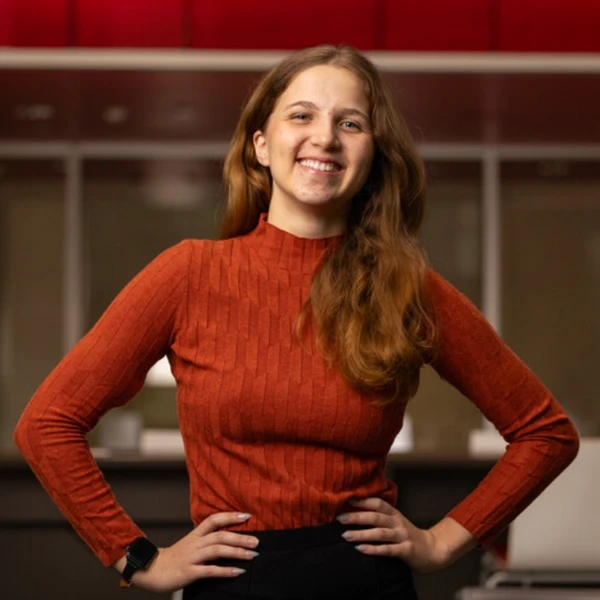
Hi! I’m a Biomedical Engineering student at the University of Houston Honors College, minoring in economics. I have type 1 diabetes, which is a big part of what sparked my interest in biomedical engineering—living with a chronic condition has made me deeply aware of the real-world impact of medtech innovation and the need for research that improves patient care and quality of life.
Currently, I’m working at the Aiden Lab at UTMB and Rice University, contributing to research in 3D genome architecture and computational biology. I also previously completed a Summer Undergraduate Research Fellowship at Baylor focused on artificial insulin delivery systems and glycemic outcomes. Beyond the lab, I mentor as a TA for honors engineering courses, I have served as House Manager for my sorority, and presented my research at symposiums and competitions. I’m always open to new opportunities in research, biotech, or clinical innovation—especially where engineering meets human health.
Education
University of Houston
Bachelor's degree programMajors:
- Biomedical/Medical Engineering
Miscellaneous
Desired degree level:
Doctoral degree program (PhD, MD, JD, etc.)
Graduate schools of interest:
Transfer schools of interest:
Majors of interest:
Career
Dream career field:
Biotechnology
Dream career goals:
Clinical Affairs in Diabetes Technology
Research
Biological and Biomedical Sciences, Other
Baylor College of Medicine — Summer Intern2026 – 2026
MannKind Al Mann Centennial Scholarship
The human body is infinitely fascinating. Biomedical sciences focus on why we are the way we are, but I chose biomedical engineering specifically because it takes that knowledge and then finds problems to pick apart and solve. When I graduate, I will go on to medical school to apply not just the knowledge but the problem-solving skills I have learned. But there’s more to my degree than my classes: I also manage student government and the executive board for my sorority, work, and study abroad through the honors college, all while living with Type 1 Diabetes. I began my university’s chapter of the Diabetes Link in order to create a safe space for students with diabetes. I traveled to Washington, DC, with DPAC to advocate for people with diabetes. I’ve presented research posters, sequenced the genome of a pancreatic Beta cell, and am second author on a paper under review with Diabetes Technology & Therapeutics. This summer I will work in the machine learning department at Abbott. My dream is to be an endocrinologist, doing clinical care and research. I have an endless list of what I want to do for people with diabetes, and I think it’s a good thing it’s impossible to exhaust. As hard as it is to be a student with a chronic illness, it has made me more resilient and driven to make real change in the world.
Every challenge requires a different solution. Adaptability is crucial. When I developed a machine learning algorithm to predict compression lows in my Dexcom data, I spent my summer redesigning with different neural networks and pushing on despite data limitations. Optimism is very useful for working through challenges; for instance, when I quit my pre-professional ballet career because I shattered the bones in my right foot, I spent my bed rest with my nose in books, teaching myself orthopedic medicine to understand how our bodies knit themselves back together. Sometimes the answer isn’t to stay on course; but when it truly matters, I do. I cannot afford medical school out of college, so I will work in Diabetes technology for a few years to save money. Though some might see this as a long hurdle, to me it’s an opportunity to contribute to people with Type 1 Diabetes in a different way than patient care.
If I could make only one contribution to diabetes care, it’s to build a bridge for the transition from pediatric to adult endocrinology, where young people with Type 1 lose their support system almost overnight. Often they will lose close familial, medical, and community support. I want to develop a clinical program that keeps patients from slipping through those cracks. This transition-specific care would assist people through early adulthood, when life is most chaotic and frankly, terrifying, and diabetes management is most likely to suffer.
But contributions can be much more subtle, and realized everyday: I am very outspoken about living with T1D. I have never hidden my devices and alarms, and I advocate for myself when I need to take care of my glucose. Last year, I got a knock on my dorm room at one in the morning, from a sorority sister I don’t know well with another girl in tow. The other girl had T1D, and her last Dexcom had just died. I gave her what she needed, and I became her first friend with Type 1 Diabetes. My sister barely knew me, but knew I would help. Every person, regardless of their career path or social circle, can make a difference for this community through representation and self-advocacy.