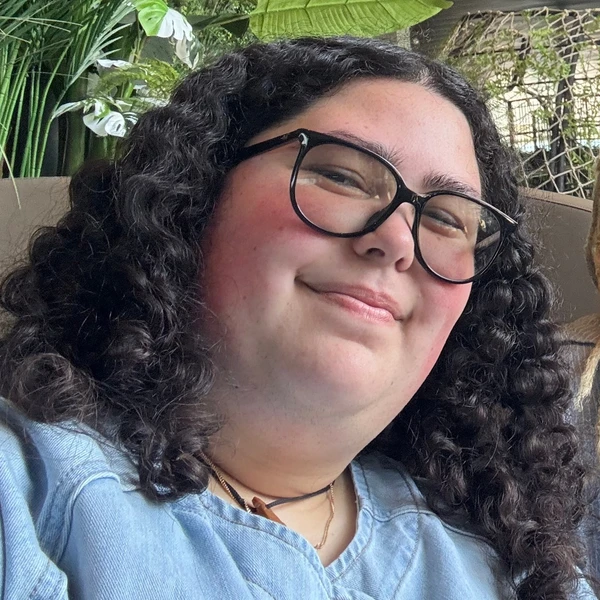
I look back on my journey and see a story made of struggle and resilience. Being a first-generation American, I was born in a Cuban family of immigrants that moved to South Florida in 2001, and was thus taught by my parents the importance of perseverance. They abandoned all that they knew to get a chance, and their sacrifices gave me a basis for my dreams. My parents not only promote education in the house, but it is considered to be the way to stability, development, and the opportunity to add something significant to the world.
Although my parents worked hard, I did not have the assurance of financial stability. I saw them working hard, long hours, because they had to support me and my elder brother. Their sacrifices motivated me, yet they made me realize that it is not always easy to be in higher education and be burdened by financial responsibility. In the year 2024, when I graduate high school and enroll at Florida International University, I was aware that it was time to balance between studies and a job because the tuition and living costs were going to be expensive.
Over the last year, I have been employed part-time and full-time in mechanical engineering at Best Buy. This balance is not easy. I sometimes have days when I work late at night, and when I get home, I am so exhausted, and I wake up the following morning and solve some calculations or write a physics test. It also happens that financial concerns creep into my head: bills, tuition, and the price of textbooks for the semester. Never have I been halted by these fears. Instead, they energize me to continue to move on, reminiscent of my parents' sacrifices, and the dreams I hold not just on my behalf, but theirs, as well.
It is not only financial but also personal; the feeling that I fit in STEM can be considered one of the biggest challenges I have to deal with. It is natural to feel confused in engineering classrooms, and as a woman and a Latina, I have at times encountered the burden of being the one in the room. It is easy to cast doubts aside: Am I good enough, smart enough, or capable enough to perform in such a challenging field?
I get myself out of these doubts by reminding myself of why I began. My interest in space and rockets started back in the pre-college days when I used to watch the launches on Cape Canaveral and imagine how I would one day be a part of something greater than myself. That love is only intensified by the fact that each time I acquire some new concept in the classroom, be it thermodynamics, material strength, or aerodynamics, I see how each component contributes to the greater picture of space exploration.
I concentrate on persistence in order to remain down to earth. I keep in mind that I have the heritage of resiliency, and I am resilient. There are potentially financial challenges and a lack of confidence, yet I continue to persevere because my goals are not only my personal concern, but also the future of science and exploration.
The first step to my actual specialization- aeronautical engineering- is mechanical engineering. I would like to move to Embry-Riddle Aeronautical University and base my profession on the creation of the life support system in long-term space missions.
It may read like an attention to technicality, but to me, it is very personal. When I consider astronauts departing the Earth to go on a mission to Mars or farther, I do not simply visualize rockets and engines. I envision the human beings on the shipboard - they needed air, water, food, and emotional health. The human challenge is in designing systems that will recycle and breathe life into space. It poses: how do we make sure that we survive when no supply ships are coming, no speedy home to Earth, and no chance to spare?
This question drives me. I would like to apply my education to contribute to the development of systems that ensure long-duration missions will be safe, efficient, and sustainable. Through this, I would be able to help usher in the next generation of exploration - one that would explore the limit of what can be accomplished by humanity.
One day, I would like to be employed at NASA or one of the major aerospace corporations and spend my time solving these life support issues. However, I will not just make any difference in the systems I design. I also wish to be an example of a young woman of color who might be having the same doubts I have had. Representation matters. I would like to show other people that I could become someone like that first-generation Latino student, who is financially struggling, has to balance his/her activities, but can pursue STEM and become an important part of science in the future.
I wish to commemorate the sacrifices of my family, the strength of my culture, and the hope of people, such as Eric Larson, who had faith in equality in the sciences.
It has not been a smooth ride, but I have been guided by perseverance, enthusiasm, and the need to make a difference. I have encountered economic hardship and lack of self-confidence, but these have only made me more determined to become an engineer. I am driven by my passion for space exploration, and my future vision drives me.
I feel that with education, perseverance, and labor, I will not only be able to make my dream of working in aerospace engineering come true, but I will also be able to make others believe that they are not out of place in STEM.