user profile avatar

Nasteha Ahmed

1x

Finalist

General information

Hobbies & Interests

  • Advocacy And Activism
  • American Sign Language (ASL)
  • Archery
  • Boxing
  • Aviation
  • Foreign Languages

Reading

  • History
  • Cultural
  • Environment
  • Folklore

I read books multiple times a month.

Bio

My name is Nasteha Ahmed, and I am a first-generation college student pursuing a career as a commercial pilot. I come from a Somali immigrant family in St. Paul, where my father’s long-term illness and limited household income have required me to take on significant family responsibilities while continuing my education. Balancing work, caregiving, and school has required organization, time management, and discipline — skills that directly translate to aviation training and academic performance. My interest in aviation is driven by its professional rigor, clear performance standards, and long-term career stability. Through my aviation program and flight training, I have strengthened my technical knowledge, increased my academic consistency, and improved my GPA significantly. I approach my education with a practical focus on safety, precision, responsibility, and reliability qualities that are essential to aviation and to my long-term career goals. As a first-generation student from a low-income background, I am working toward a career that will provide financial stability for my family while contributing to greater representation within the aviation field. My objective is to complete my training, build flight experience, and progress toward a commercial pilot role through a structured and disciplined pathway.

Education

Rochester Community and Technical College

Associate's degree program

2025 – 2027
Miscellaneous

Desired degree level:
Associate's degree program
Graduate schools of interest:
Mitchell Hamline School of Law
Majors of interest:
Law, Air Transportation
Medical school interest:
Yes

Career

  • Behavior technician

    Education · Sensory hub

    Jan 2024 – Present

Miscellaneous

Dream career field:
Airlines/Aviation
Dream career goals:
airline pilot
Work experience:
5 years
Has nursing license:
No

Future Interests

  • Volunteering
  • Philanthropy
  • Entrepreneurship
Bick First Generation Scholarship
I am the first in my family to pursue a career in aviation. There is no one ahead of me who has done this, no one to call when I am confused or scared or wondering if I am making the right choice. I figure it out as I go, and some days that is really hard. I grew up in St.Paul Minnesota. There were no pilots in my family and no pilots in my community. Not one. So when I fell in love with flying, I was falling in love with something that felt completely out of reach for someone like me. But the first time I got up in the air, I knew. I just knew. There is a feeling that comes with being up there that I cannot find anywhere else. It fills me up. It inspires me every single time. And I decided that no matter what it took, I was going to chase that feeling all the way to the flight deck of a commercial airline. What it has taken is more than I expected. I drive three hours every day to get to my classes and back. I work seven days a week without a day off. I stay up late at night by myself studying, going over everything I need to know while the rest of the world sleeps. I do not have a financial safety net. I do not have someone who has done this before to tell me it gets easier. I just have my dream, my drive, and the deep belief that every hard day is moving me forward. I found community along the way through Pilots of Tomorrow and Sisters of the Sky. I found a mentor who is a First Officer at Delta Air Lines, the airline I hope to fly for one day. Those connections have meant everything to me. They showed me that people who look like me can do this, and that I am not as alone as I sometimes feel. This scholarship would genuinely change things for me. It would ease a pressure that I carry every single day and allow me to put more of my energy into my training and my goals. But more than the money, it would mean that someone looked at my story and said it matters. That means more than I can explain. I am doing this for myself, but I am also doing it for every first generation/ child of color who has never seen someone like them fly a plane. I want to be the first so I am not the last. I want to reach back one day and make the path easier for someone else the way others have done for me. That is my purpose. That is what gets me through the long drives, the late nights, and the hard days. I am not stopping until I get there
Craig Huffman Memorial Scholarship
My name is Nasteha Ahmed, and I am a Somali American student pilot from Minnesota working toward a future in commercial aviation. I am a member of Pilots of Tomorrow and Sisters of the Sky, organizations that have played a huge role in shaping my journey and reminding me that I belong in this industry. I am also fortunate enough to have a mentor who is a First Officer at Delta Air Lines, the airline I dream of flying for one day. Every conversation with her reminds me that the path I am on is possible, even when it feels far away. I did not grow up around aviation. There was no pilot in my family, no one who pointed at a plane and told me that could be me someday. But the first time I got up in the air, something inside me shifted in a way I still struggle to put into words. Looking out at a sky that seemed to go on forever, feeling the ground fall away beneath me, I felt inspired in a way I had never experienced before. That feeling has never left. Every single flight, without fail, reignites something in me. Flying does not just excite me. It moves me. It makes me feel like anything is possible, and I have been chasing that feeling ever since. I am currently a student pilot preparing for my checkride, and the road has not always been easy. Balancing the financial demands of flight training, navigating an industry that does not always reflect people who look like me, and pushing through the moments of self-doubt have all tested me. But that is exactly where my passion has carried me forward. Ambition without resilience is just a wish, and I have learned that the hard way. Every time I have wanted to quit, something pulls me back to the cockpit, and I go back every time. Being part of communities like Pilots of Tomorrow and Sisters of the Sky has made an enormous difference. Surrounding myself with other women and people of color who are fighting for the same dream has given me strength on the days when I needed it most. Leadership, to me, is not about a title. It is about showing up in spaces where people do not expect you and refusing to shrink. As a Somali woman in aviation, I do that every time I walk onto a flight line. But leadership is also about caring about something bigger than yourself, and for me, that is the future of this industry. I am deeply passionate about mental health in aviation, an issue that has long been pushed to the background and only addressed after tragedy strikes. I want to be part of changing that. My long term goal is to pursue a master's in aviation law so I can help build real, protected mental health support systems for pilots, people who deserve to ask for help without fearing for their careers. I want to fly for Delta Air Lines one day. I want to sit in that cockpit and know that every hour of training, every sacrifice, every moment of doubt was worth it. But more than that, I want to leave this industry better than I found it. I want the little Somali girl in Minnesota who looks up at a plane and wonders if that could ever be her to have an answer. It can be. I am proof of that, and I am just getting started.
James Diorato Memorial Scholarship
Growing up Somali in Minnesota, aviation was not an industry that looked like me. Pilots on TV, in movies, in the cockpits I dreamed about rarely reflected my background or my community. But that never stopped the passion. If anything, it made it stronger. The first time I got up in the air, something clicked. There is a feeling that comes with being above the clouds that I cannot fully put into words. It inspires me every single time. That feeling is what made me fall in love with flying, and it is what keeps me going every time the journey gets hard. I am currently a student pilot preparing for my checkride, and every hour in the cockpit has only deepened my commitment to this career. But my passion goes beyond just flying. The more I have learned about aviation, the more I have seen an industry that still has serious work to do, especially when it comes to mental health. Pilots are expected to be unshakeable, and the stigma around asking for help has pushed too many of them to suffer in silence rather than risk their careers. That bothers me deeply. I am drawn to psychology and the way stigma operates, and my long-term goal is to pursue a master's in aviation law so I can help create real, protected mental health support systems for pilots. Not just policies on paper, but change that actually makes flying safer for everyone. I want to be part of an aviation industry that is more open, more human, and more representative. As a Somali woman in a cockpit, I already know what it means to be somewhere people do not expect you to be. I plan to keep showing up anyway, and to help make the path a little easier for the people who come after me in the future. In that regard I would love to be a meteor for the students who are interested and even the ones that never thought aviation would be an option. I want to be able to bridge gaps for as many people as possible. Because if a little girl from the Somali community in Minnesota can look up at the sky and dare to dream about flying, she deserves to see someone up there who looks just like her one day. That is the future I am working toward. That is the future I believe in.
Aviation Excellence Scholarship
Mental Health in Aviation If there is one thing that frustrates me deeply about the aviation industry, it is this. We wait for people to die before we take mental health seriously. That is not a safety culture. That is a pattern, and it has to change. Aviation is an industry that obsesses over safety, and rightfully so. Checklists, regulations, simulator training, redundancy after redundancy. We leave nothing to chance when it comes to the aircraft. But the person sitting in the left seat? That is a different story. For decades, the mental and emotional health of pilots has been treated like a personal problem, something to be managed quietly and kept far away from the flight deck conversation. And pilots have gone along with it, because what choice did they have? Admitting to anxiety or depression has meant risking the one thing they worked their whole life for, their medical certificate. So they stay quiet. They keep flying. And the industry keeps looking the other way. That silence has consequences. In 2015, Germanwings Flight 9525 crashed into the French Alps. All 150 people on board were killed. The co-pilot had a documented history of depression that he had hidden from his employer out of fear of losing his career. It was a tragedy on every level, for the passengers, for their families, and honestly, for a young pilot who should have been able to ask for help. In the weeks that followed, regulators scrambled. New screening protocols were announced. Peer support programs were discussed. And then, slowly, the urgency faded. Until the next time. That is the cycle that frustrates me most. We react, we reform just enough to feel like we did something, and then we move on. But the underlying problem never really goes away. A Harvard study found that over 12% of active airline pilots meet the clinical threshold for depression, and 4% reported suicidal thoughts within the past two weeks. Those are not small numbers. Those are people in cockpits right now, carrying passengers, managing untreated pain in silence because the system gives them no safe way to speak up. I am still early in my journey, but my long-term goal is to pursue a master's in aviation law, because I believe lasting change in this area has to be backed by policy, not just good intentions. I have always been drawn to psychology and the way stigma works, how it does not just make people feel ashamed, but actively stops them from getting help. In aviation, that silence has real safety consequences. I want to use my passion for both aviation and human wellbeing, combined with a future foundation in aviation law, to help build mental health support systems that pilots can actually trust, not programs that exist on paper, but ones with real protections that remove the fear of career consequences from the decision to seek help. Real change in aviation has always come from people who cared enough to push back. I care about this industry too much to accept that we only talk about mental health when something goes wrong. A mentally healthy pilot is a safer pilot. It really is that simple, and it is long past time we started treating it that way.
First Generation College, First Generation Immigrant Scholarship
My siblings and I were born in the United States, my parents came here as refugees from the civil war in Somalia. Growing up, our household was deeply influenced by survival. My parents carried the trauma, fear, and resilience that came from everything they experienced, and that mindset naturally became part of our lives as well. From a young age, I understood sacrifice, hardship, and responsibility in ways many people around me did not. Even now, I still find myself trying to move beyond that constant “survival mode”, and just getting through each day. My father has also been terminally ill for over fifteen years, and helping care for him alongside my family forced me to mature quickly. Watching both of my parents continue to persevere despite illness, financial hardship, and everything they have endured taught me so much. Their sacrifices are the reason I push myself as hard as I do today. These experiences have given me a strong sense of purpose. I want to succeed not only for myself, but to give back to my parents and provide them with the same safety, comfort, and peace they worked so hard to give me growing up. Pursuing aviation is part of that purpose. Flying is one of the few things that has ever made me feel completely free, hopeful, and excited about the future. It represents more than a career to me, it represents possibility, growth, and breaking cycles.
Kyle Rairdan Memorial Aviation Scholarship
I didn’t grow up around aviation. No one in my family is a pilot, and for most of my life, becoming one didn’t even feel like a realistic option. In my family, I’m the first to take this path, and even though it’s unfamiliar to them, they’ve supported me in every way they can. That support has meant everything, especially on the days when this journey feels overwhelming. I am currently pursuing a bachelor’s degree in aviation, with the goal of becoming an airline pilot. What draws me to this career is how much I genuinely enjoy flying. There’s something about being in the air that challenges me in a way nothing else has. It pushes me to stay focused, disciplined, and constantly improving. Aviation has given me a space where I can truly showcase my skills and the hard work I’ve put in, and that motivates me to keep going. My interest in aviation grew over time. Aviation is one of those fields where there’s no room for carelessness, people are trusting you with their lives. That’s not something I take lightly. The more I learned about flying, the more I realized that this is exactly the kind of challenge I want in my life. A big part of who I am comes from my experiences with my family, especially in healthcare settings. I’ve watched people I love struggle to get the right care, including my father, who was misdiagnosed for years. I remember how frustrating and exhausting it was to keep searching for answers, and how much trust had been lost along the way. Being in those situations taught me how to stay calm, advocate for others, and carry responsibility even when things feel uncertain. Even though aviation and healthcare are very different, the core values feel similar to me. It’s about trust, staying composed under pressure, and understanding that your decisions matter. That is what draws me to becoming a pilot. Being the only one in my family pursuing aviation hasn’t been easy. There are moments where it feels like I’m figuring everything out on my own, and that can be isolating. But at the same time, my family has always stood behind me. In my everyday life, I have always tried to show up for the people around me. Whether it’s helping family members through medical situations, or working in fast-paced environments, I’ve learned how to manage pressure and put others first. These experiences have helped me build strong communication skills, adaptability, and the ability to stay calm in stressful situations, qualities that are essential in aviation. Right now, I am in the final stage of earning my private pilot’s license, which I expect to complete by the end of April, and I am currently taking Instrument ground. Earning my private pilot’s license will represent not only a technical achievement, but also discipline, perseverance, and confidence in my abilities. With my aviation degree, I plan to pursue a career as an airline pilot. I want to continue developing my skills, gaining experience, and eventually operating at the highest level of the profession. At the same time, I hope to serve as an example for others who may not see themselves represented in aviation. If my journey can show even one person that this path is possible, then it will mean even more to me. This journey is not just about a career, it’s about growth, responsibility, and proving to myself that I can succeed in something challenging. Aviation has pushed me in the best ways, and I am committed to continuing this path.
Wicked Fan Scholarship
I’m a fan of Wicked because it completely reframes a story I thought I already knew and forces you to question who gets to decide what “good” and “evil” really mean. Instead of accepting the original narrative at face value, Wicked asks you to look deeper and consider how fear, power, and misinformation shape public opinion. That idea alone makes the story incredibly meaningful to me. Elphaba’s character especially resonates with me. She is intelligent, principled, and deeply empathetic, yet she is constantly misunderstood and judged for being different. Watching her be othered, dismissed, and eventually labeled as a villain mirrors real-life experiences of people who do not fit into societal norms. Her story highlights how standing up for what is right often comes at a personal cost, and how doing the moral thing does not always lead to praise or acceptance. I am also drawn to the way Wicked explores friendship, particularly the complicated relationship between Elphaba and Glinda. Their dynamic shows how privilege, pressure, and fear can influence choices, even between people who care about each other. The music and performances are powerful, but what truly makes me a fan is the message that authenticity, integrity, and courage matter, even when the world chooses to misunderstand you.
Audra Dominguez "Be Brave" Scholarship
Pursuing a career in aviation has been one of the most challenging and meaningful decisions of my life. I am an aviation student in a program where the environment is overwhelmingly white. My cohort is about 98 percent white, and I am the only Muslim woman of color. This reality shows up in both subtle and direct ways. I am often not taken as seriously as my peers, spoken over, or treated as a token representative of diversity rather than simply a student trying to learn and grow. Without asking for it, I am sometimes expected to be the pillar of inclusivity in the room, carrying a weight that others do not have to consider. This constant pressure has been mentally exhausting. There are moments when isolation sets in, when I question whether I truly belong in this field, and when the lack of representation makes the path feel lonelier than it already is. On top of that, I come from a low-income household where my mother has worked to support our family because my father has been and still is sick with an incurable disease. Balancing financial stress, family responsibility, and an emotionally demanding academic environment has tested my resilience in ways I never expected. Despite these challenges, I have taken intentional steps to continue pursuing my career aspirations. One of the most important steps has been refusing to internalize the doubt placed on me by others. I remind myself daily that I earned my place in aviation just like everyone else. I focus on preparation and discipline by studying harder, asking questions even when it feels uncomfortable, and holding myself to high standards not to prove others wrong, but to stay aligned with my own goals. I have also learned to seek support strategically. I look for mentors, peers, and instructors who respect me and take my ambitions seriously. When support is limited, I lean on my faith, which grounds me and gives me clarity during moments of mental fatigue and self-doubt. Faith has taught me patience, perseverance, and the understanding that difficulty does not mean failure. It often means growth. Another step I have taken is reframing my presence in this space. While I did not choose to be the only one, I choose how I show up. I aim to be visible, confident, and consistent, knowing that my persistence alone challenges the idea of who belongs in aviation. Even on days when the mental burden feels heavy, I show up because quitting would mean letting circumstances define my future. Adversity has not pushed me away from my goals. It has sharpened my purpose. Every obstacle I face strengthens my commitment to becoming a pilot and creating space for others who come from backgrounds like mine. I am not just working toward a career. I am working toward representation, stability, and the ability to give back to communities that are too often overlooked.
Lotus Scholarship
I come from a low-income household where my mother has always worked hard to support our family because my father has been and still is sick with an incurable disease. Growing up in that environment taught me responsibility and perseverance at a very young age. There were many moments where giving up would have been easier, but my family’s situation pushed me to keep going, even when things felt heavy or unfair. Seeing my parents go through so much shaped how I view life and my purpose. It made me more compassionate and aware of how illness, finances, and lack of access can affect families. I plan to use my experiences to make a positive impact by being someone who understands struggle and still shows up for others, especially in communities that are often overlooked. I’m actively working toward my goals by staying focused on my education and career path, even when it’s challenging financially and emotionally. I continue to push forward, seek opportunities, and invest in myself because I know that breaking these cycles doesn’t just change my life, it creates hope and opportunities for others who see themselves in my story.
Kevin Howard Memorial Flying Scholarship
Although I am not a member of the Areo club I am apart of the sisters of the sky and AOPA. I am passionate about flying because it gives me a sense of freedom, focus, and purpose that I rarely feel elsewhere. Growing up, I carried a lot of responsibility. I have been supporting myself, managing school, and helping my family navigate challenges, including medical struggles that showed me how important it is to advocate for those who might not be heard. Flying became a space where I could take control and see the results of my effort. Every time I sit in the cockpit, I am reminded that discipline, preparation, and focus matter, and that I am capable of handling challenges even when life feels overwhelming. Flying has also changed how I approach school and life. Since joining the aviation program, my GPA has improved. The structure, responsibility, and problem-solving required in flight training have made me more organized, confident, and resilient. I have realized that the same focus I bring to the cockpit can help me tackle almost anything, whether it is a difficult assignment, a long workday, or navigating complicated systems. The small victories in flight training, such as completing a maneuver successfully, handling unexpected weather, or making a safe landing, remind me that persistence pays off and that hard work leads to real progress. Being a Somali woman in aviation also makes this journey feel bigger than myself. I rarely saw people who looked like me in this field, and that motivated me to push harder. My work in the cockpit is not just about earning hours or learning procedures. It is about showing others from my community that they belong in spaces that might seem out of reach. Flying reminds me that what I do can inspire someone else to believe in themselves. It has taught me that representation matters and that perseverance and courage can open doors for not only myself but also for others who come after me. What I love most about aviation is that it turns my resilience into something tangible. It is not just about getting through hardship. It is about rising above it and using what I have learned to grow, achieve, and help others. Flying is my way of proving to myself and my community that hard work, determination, and focus can truly take you places, sometimes literally. It has given me direction, confidence, and a vision for the future that I would not have found anywhere else. Every flight reminds me that with patience, dedication, and persistence, I can navigate both the sky and life’s challenges successfully.
Ali Safai Memorial Scholarship
Flying has had a profound impact on my life, not only because it introduced me to a career path I am passionate about, but because it reshaped my mindset, discipline, and sense of purpose. Before entering aviation, my life was defined by responsibility, financial stress, and the challenge of supporting myself while managing school and work. Aviation became the place where I learned to transform resilience into confidence and direction. Training as a pilot helped me grow into a more focused and disciplined version of myself. The structure of flight training, from safety procedures to preflight planning, taught me how to stay calm under pressure and how to take full responsibility for each decision I make. I learned the value of preparation, consistency, and clear thinking. Instead of feeling overwhelmed by everything I was balancing, I began to slow down, analyze situations carefully, and approach challenges with patience and problem-solving skills. Aviation also strengthened my perseverance. There were times when financial barriers and life stress made continuing my training feel uncertain. But every hour in the cockpit reminded me why I was working so hard. Flying gave me something meaningful to strive toward and helped me believe that my circumstances did not have to define my future. Since starting this program, even my GPA has improved. The discipline I developed in aviation carried over into my academics. I study with more focus, manage my time more intentionally, and hold myself to a higher standard. I have gained confidence in my ability to learn, adapt, and grow, even when the workload feels demanding. Aviation has also shaped the way I understand leadership and representation. As a Somali woman in aviation, I know how rare it is to see people like me in this field. My journey has made me want to encourage others from immigrant and African diaspora communities to explore opportunities they may have never considered possible. Flying has given me a sense of purpose that extends beyond myself, because I hope to one day mentor and support other students who face similar barriers. Ultimately, aviation has grounded me while allowing me to dream bigger. It has strengthened my resilience, sharpened my discipline, and given me the courage to keep moving forward, no matter how difficult the path may feel. The lessons I have gained in the air continue to shape the way I approach challenges in every part of my life.
Sgt. Albert Dono Ware Memorial Scholarship
My journey has been shaped not only by academic goals, but by the realities of being a young Black Muslim woman from an immigrant family who has witnessed firsthand how systems can fail the people who need support the most. Much of my resilience was shaped by watching my family navigate the healthcare system during my father’s long misdiagnosis. For over seven years, he was given the wrong medication. My family repeatedly expressed concern, but our worries were brushed aside until we drove two hours to another hospital, where he finally received the correct diagnosis. We were told that the damage could have been prevented if he had been treated earlier. Eventually, we drove two hours to a different hospital and there, he finally received a different diagnosis. The doctors told us that much of his pain and decline could have been prevented if he had received proper care earlier. That experience changed me. I remember sitting in the hospital room surrounded by my family, all of us worried and exhausted, realizing how deeply mistrust, bias, and system barriers affect immigrant and African diaspora families. I saw how language, culture, and assumptions about “who complains too much” or “who can wait” can literally shape people’s outcomes. It was in that moment that service stopped being an abstract concept for me it became a responsibility. Service now means advocating for people who are overlooked or dismissed. Sacrifice has meant working through financial hardship to stay in school, supporting myself, and carrying responsibilities that many students never see. Bravery has meant speaking up when something feels unjust, even when institutions are unwilling to make exceptions or acknowledge the challenges faced by students like me. The challenges facing the African diaspora in the U.S. are layered, but healthcare inequity is the one I feel personally called to address. Families should not have to bring multiple relatives to appointments just to feel safe. They should not have to drive hours away to be taken seriously. I believe critical reforms include expanding culturally competent care, increasing representation of African diaspora professionals in healthcare, and strengthening community-based clinics that understand our histories and experiences. Key stakeholders must include hospitals, public health leaders, policymakers, faith-based organizations, and most importantly community members themselves. Real change requires listening to the people whose lives are directly impacted. Resilience for me has meant supporting myself financially while staying in school, working long hours, and still pushing forward when resources felt out of reach. It has meant navigating systems that were not designed with students from immigrant and African diaspora backgrounds in mind Sgt. Ware’s legacy reminds me that courage is not always loud or dramatic; sometimes it is the quiet determination to keep showing up for your family, your community, and your future even when the obstacles feel overwhelming. His example inspires me to pursue a path where my education, identity, and lived experience can become a source of healing and advocacy for others. Winning this award would mean a lot.
Andrea Worden Scholarship for Tenacity and Timeless Grace
My academic record has never been a simple reflection of my understanding. While teachers often called me a "genius" in class for grasping complex concepts, my transcripts tell a more complicated story. I learned early that my mind works differently, it soars in discussions and dives deep into passions, but struggles with the rigid formulas of traditional academics. This unique way of thinking became part of my non-traditional path, teaching me to value genuine comprehension over perfect grades, and to trust the intelligence that shows up in how I solve problems and support others, not just in how I test. Andrea Worden’s gift for seeing beyond the paper resume is one I recognize deeply. She would have understood that real success isn't about a flawless transcript, but about the strength of character built through life's challenges. My family's journey as Somali refugees and my father's long illness taught me that perseverance isn't about perfect performance, it's about showing up, day after day, with love and determination. This is the same perseverance I bring to my dream of aviation, where my ability to think in three dimensions and maintain calm under pressure are my greatest assets. What truly defines me, however, is my commitment to lifting others up. In my community, I'm known as the person who always shows up, whether mentoring younger students, helping at community events, or simply being there when someone needs support. This isn't just volunteering to me; it's a core part of who I am. Having faced my own challenges in being understood, I've developed a deep empathy for others who feel overlooked or underestimated. When I help a young Somali girl see her own potential, or when I support classmates who are struggling, I'm paying forward the same belief in human potential that Andrea Worden championed. A specific moment that crystallized this mission happened last year during a challenging time in my flight training. I was studying for a critical exam while also helping care for my father. My mother watched me moving between these two worlds, and she said quietly, "I may not understand these aviation terms, but I recognize the look in your eyes, it's the same determination your father had when he built our life here. That's our family's legacy." In that moment, everything connected. My education wasn't just about me; it was about continuing my family's story of resilience and hope. My path hasn't been conventional, but it has given me exactly what matters most: a resilient spirit, a compassionate heart, and the conviction that our greatest impact comes from helping others rise. I may not have a perfect transcript, but I have the qualities Andrea Worden valued most, the kindness to support my community, the perseverance to overcome obstacles, and the vision to use my education to create opportunities for others. That, to me, is the truest measure of success.
Equity Elevate Scholarship
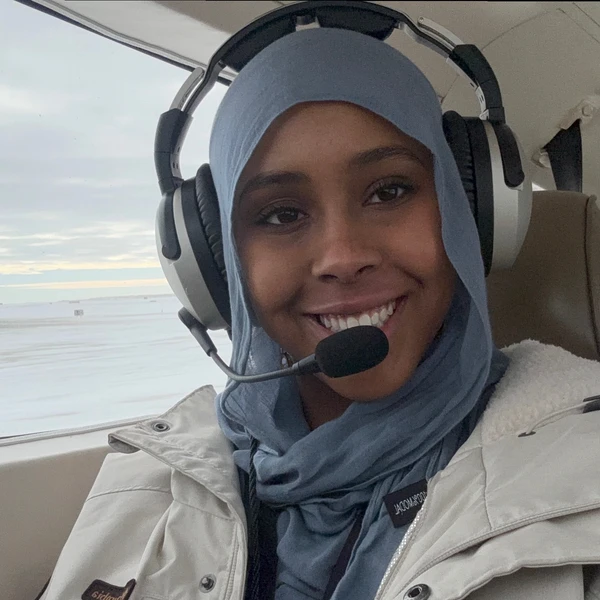
The most defining moments of my life were not spent in a classroom, but in the quiet, beeping stillness of my father’s room. I learned the true meaning of responsibility not from a textbook, but from the delicate, terrifying task of suctioning his throat when MSA stole his ability to breathe on his own. I was just a girl, my hands too small for the medical equipment, my heart too big for the helplessness I felt. While other kids were learning to ride bikes, I was learning to read the subtle distress in my father’s eyes. I learned to measure time not by school bells, but by medication schedules. I sacrificed afternoons with friends to hold his hand, to let him know he wasn’t alone. In those silent, aching hours, a different kind of education took root—one of profound love, relentless patience, and a resilience that is etched into my very soul. That resilience became my compass. It guided me when I first walked onto an airfield, the smell of jet fuel and the roar of engines feeling like a home I’d never known but had always longed for. The moment my hands touched the controls, I felt a sense of power I had been denied for so long. In the cockpit, I wasn't a caregiver burdened by circumstance; I was a commander, responsible for my own journey. The intricate checklists and complex navigation were not a struggle, but a sanctuary. They were challenges I could finally master, a language of precision and control that made sense in a world that had once felt so cruelly chaotic. My dream to become a pilot was born from the ashes of my powerlessness—a phoenix rising from the feeling of being grounded by a reality I never chose. But my dream is no longer just for me. It is for my mother, whose hands were calloused from work and worry, who never let us see her break, even when she was carrying the world. It is for my father, whose own dreams were cut short, so that mine could have a chance to fly. And it is for every little girl in my community who has ever been told, directly or through silence, that the sky is not her place. When I put on a pilot’s headset over my hijab, I am not just wearing uniform pieces; I am stitching together two identities into a single, unbreakable thread of possibility. I am building a bridge for her, so she never has to feel that her faith, her background, or her gender is a barrier to the clouds. This scholarship is more than financial aid; it is the fuel for this sacred mission. The $4,000 would be the wind beneath wings that have been tested by the heaviest of storms. It would allow me to trade the constant anxiety of "how will I pay for the next lesson" for the focused determination of mastering my next landing. It is an investment in a future where my father’s suffering is redeemed by his daughter’s sovereignty, where my mother’s sacrifices are repaid with security, and where my journey becomes a beacon for every child who has ever loved someone they couldn't save, and in doing so, learned how to save themselves. I am not just asking for a chance to fly. I am asking for the chance to show that even from the hardest ground, the most beautiful things can learn to soar.
ADHDAdvisor Scholarship for Health Students
My role in supporting the mental health of those around me is rooted in a simple, steadfast principle: being a calm and present anchor in their storm. This has taken two main forms. First, I am the friend who actively listens without judgment. When friends are overwhelmed by academic pressure, family issues, or personal anxiety, I create a safe space for them to be heard and felt. Second, I gently and proactively destigmatize professional help. I am often the one to say, "It's okay to not be okay, and a therapist can give you tools I can't," and then help them research options or even accompany them to a first appointment if they're nervous. This isn't about having all the answers; it's about offering unwavering support and guiding them toward the resources that do. My plan to use my future career as an airline pilot to support others is a direct extension of this mindset, but on a broader scale. The cockpit is a place of immense technical skill, but the cabin and the community are places of human connection. Firstly, I will lead by example, fostering a culture of mutual support and psychological safety among my crew. A pilot who prioritizes well-being sets a tone that ripples through the entire flight team. More profoundly, my very presence in the uniform is a form of emotional support for my community. As a Somali American Muslim woman, I represent a narrative of resilience. For young people of color who internalize societal pressures and doubts, seeing me in that role is a powerful, visible counterargument to those anxieties. It says, "Your dreams are valid, and your mental well-being is worth fighting for." I will use the platform my career provides to continue my advocacy openly, speaking at schools and community centers about the intersection of ambition, resilience, and mental health, ensuring my journey helps others carry their own emotional weight a little more easily.
RonranGlee Literary Scholarship
Selected Paragraph "The soul, being immortal and having been born many times, and having seen all things both here and in the underworld, has learned everything that is. So there is nothing surprising in its being able to recollect about virtue and other things, because it knew about them before. For since all nature is akin, and the soul has learned everything, nothing prevents a man, upon recalling just one thing—which men call learning—from discovering all the rest for himself, if he is brave and does not grow weary of the search; for searching and learning are, as a whole, recollection." — Plato, Meno (81c-d) Short Essay: The Courage to Recollect Central Thesis: In this passage from the Meno, Plato’s theory of recollection (anamnesis) is not merely a metaphysical claim about the soul’s immortality, but a profound philosophical argument for the inherent capacity and intellectual dignity of every human being, framing the pursuit of knowledge as an act of courageous and tireless self-discovery that is accessible to all, regardless of external circumstance. Plato’s underlying meaning dismantles the very notion of ignorance as a permanent state. By asserting that the soul “has learned everything that is,” he posits that knowledge is not an external commodity to be bestowed by a privileged teacher upon an empty vessel. Instead, it is an internal, latent inheritance. The phrase “nothing prevents a man... from discovering all the rest for himself” is a radical declaration of intellectual empowerment. It suggests that the potential for profound understanding is universally distributed, residing within the “soul” of every individual. This is not an elitist philosophy but a deeply democratic one; the prerequisite is not wealth, status, or even formal education, but the internal qualities of bravery and perseverance. The underlying message is that the barriers to wisdom are not a lack of innate ability, but a lack of nerve and tenacity in the face of the difficult work of “searching.” This is where Plato’s vocabulary becomes critically significant. He does not use gentle terms like “contemplation” or “curiosity”; he chooses the language of struggle and endurance. The learner must be “brave” (andreios, literally, manly or courageous) and “not grow weary of the search.” This frames education not as a passive reception of information, but as an active, often arduous, excavation of one’s own inner resources. The “search” is a trial that requires virtue in itself. The underlying meaning here is that the process of learning is intrinsically character-forming. The ambition to know and the drive to continue searching are themselves manifestations of virtue, honing the seeker’s resilience and intellectual fortitude. The ultimate “impact” of this process is not just a learned person, but a stronger and more virtuous one. Furthermore, Plato’s statement that “all nature is akin” provides the logical foundation for this empowerment. If all of reality is interconnected, then understanding one truth deeply can unlock understanding in seemingly unrelated domains. This insight champions a holistic and integrative approach to knowledge, opposing a fragmented, specialized view of learning. The underlying imperative is to look for the hidden connections, to trust that diligent inquiry in one area will yield insights in another. This transforms the learner’s journey from a series of disconnected tasks into a unified, lifelong quest for a coherent understanding of the world. Ultimately, Plato’s underlying purpose is to inspire confident, self-directed inquiry. He redirects the question “Can I know this?” to “Do I have the courage to remember what I already, in essence, know?” This philosophical stance has a direct and powerful resonance with my own journey as a first-generation student. In my pursuit of a career in aviation, a field where I seldom see faces like my own, I have encountered both external and internal obstacles. The greatest internal obstacle is the doubt, the “growing weary”, that Plato warns against. His philosophy reframes my ambition not as an attempt to acquire something I lack, but as the courageous act of recollecting and claiming a potential that is my birthright. My drive is the daily choice to be “brave and not grow weary,” to see each challenge in my flight training not as a confirmation of limitation, but as a step in the process of uncovering my own capability. The impact I seek, to pave a way for others in my community, is rooted in this same Platonic conviction: to show others that their souls, too, contain boundless knowledge and potential, waiting only for their own brave search to bring it to light.
Bick First Generation Scholarship
Being a first-generation student means building a bridge for my family. My parents fled a civil war in Somalia to give us a chance in America. They gave me everything they could, unwavering love and a powerful work ethic, but they couldn’t give me a map for this part of the journey. They can’t help me fill out the FAFSA, they don’t know the difference between a scholarship and a loan, and they’ve never seen a college syllabus. My dream of becoming a pilot is something they fully support with their hearts, but it’s a path I have to navigate completely on my own. It’s a lonely feeling, but it’s also my greatest motivation. I’m not just studying for myself; I’m learning a new language and a new system for all of us. I’ve faced challenges that have nothing to do with textbooks. The biggest was growing up while caring for my father, who has Multiple System Atrophy. As a kid, I was giving him his medication and suctioning his throat so he could breathe while my friends were outside playing. I learned about sacrifice not as a concept, but as a daily reality, staying home to give my mom a break, managing my homework around his care schedule. That experience taught me a resilience that I now bring to my flight training. When a maneuver is difficult or the studying feels overwhelming, I tap into the same calm, stubborn perseverance I learned at home. I’ve already overcome things much harder than a written exam. My dream is to wear an airline captain’s wings. But it’s not just for the uniform or the freedom of flying. It’s to be a living, breathing example for my community. I want a young Somali girl to see me and know, without a doubt, that the cockpit is a place for her, too. This scholarship is the one thing that can turn this dream from a possibility into a reality. My family has no savings; everything went to my dad's medical care. Without financial aid, my training stops. This money would be the concrete for the bridge I’m trying to build. It would pay for the flight hours I need to get my Commercial License and, most importantly, my Certified Flight Instructor certificate. That CFI ticket is my key, it’s how I can finally get a job flying to support myself and pay for the rest of my training without drowning in debt. You’re looking for honesty and heart. Here it is: I am determined to be a pilot. I have the grit from my family and the focus from my struggles. What I don’t have is the money. This scholarship wouldn’t just help a student; it would launch a future captain, a community role model, and a daughter who can finally give her parents some of the security they always gave her.
Sandra West ALS Foundation Scholarship
Looking back on my childhood, it’s clear that my normal was very different from that of most kids. From a young age, my afternoons weren’t just for homework and playing outside. They were also for helping my dad. For a long time, I didn't even know the name of his illness, Multiple System Atrophy. I just knew that he needed me. I learned how to organize his pill box for the week, making sure the right medications were in the right slots for morning and night. I learned how to carefully use a suction machine to clear his throat when he was struggling to breathe, a task that was scary at first but became a necessary routine. I remember spending hours walking slowly beside him, holding his arm to provide balance. There were definitely moments, especially as a teenager, when I felt the weight of that responsibility. I’d see my friends making plans and feel a pang of sadness because I knew I had to stay home. It wasn't that I didn't want to help my family; I just wished our circumstances were different. I wanted a normal life where my biggest worry was a math test, not whether my dad had taken his medication. But seeing the exhaustion on my mom's face, and knowing how much my presence comforted my dad, put things in perspective. I learned the meaning of sacrifice not as a grand concept, but in those small, daily choices to be there for my family. That experience, as difficult as it was, became the foundation of my character. It forced me to develop a level of maturity, patience, and resilience that I wouldn't have had otherwise. In a strange way, it prepared me for the challenges of pursuing a demanding career in aviation. The focus required to monitor my dad's health is the same focus I use in the cockpit during a pre-flight check. The calmness I had to maintain during a medical scare is the same calm I need to land a plane in gusty winds. The perseverance our entire family showed for sixteen years is the same perseverance I’m using to tackle the long and expensive journey to becoming an airline pilot. This is why this scholarship support is so critical to me. My family has always been rich in love and support, but financially, we have struggled. My father’s long-term illness meant that medical bills were a constant priority, and there was never any extra money to set aside for something like college or flight school. My parents have always told me to "go for it," but they can't help with the tuition bills. The cost of flight training is the single biggest obstacle standing in my way. This scholarship would change everything. It would directly fund my training, allowing me to progress from my private pilot license to my instrument and commercial ratings without having to stop and work for months to save up for the next lesson. Most importantly, it would help me earn my Certified Flight Instructor (CFI) certificate, which is the key to turning my passion into a profession. As a CFI, I can get paid to teach others to fly while building the flight hours I need for the airlines. This scholarship wouldn’t just be a check it would be the catalyst that breaks the cycle of financial limitation. It would allow me to achieve my dream of becoming an airline pilot, a career that will not only fulfill me personally but also allow me to financially support my family and inspire others in my community as well.
Rev. and Mrs. E B Dunbar Scholarship
My pursuit of higher education in aviation has been paved with lessons in resilience, a trait my family embodied after immigrating to Minnesota from Somalia. The most significant obstacle I've faced is one that many first-generation students know intimately: navigating an uncharted path without a map. My parents, with their boundless love and support, always told me to "go for it and be the best at it," but they couldn't guide me through the specifics of FAA medical certificates, flight training loans, or the competitive landscape of scholarship applications. This journey has been one of self-advocacy and independent research, of learning to ask the right questions and build my own network of mentors in an industry where I seldom saw people who looked like me. It meant transforming the uncertainty of not having a generational blueprint into the motivation to create one for myself and those who will follow. The financial hurdle has been equally formidable. The cost of flight training is astronomically high, and coming from a family where resources were often dedicated to essential needs, taking on this level of debt was a daunting prospect. I learned to approach this challenge with strategic determination, treating the search for scholarships and funding as a critical part of my education itself. This process taught me financial literacy, perseverance, and the value of a well-structured plan, turning the obstacle of cost into a lesson in resourcefulness and long-term planning. These challenges, however, have not deterred me; they have armed me with a profound sense of purpose. I am not pursuing this education solely for a career; I am pursuing it as a tool for community empowerment. I will use my education to give back in two fundamental ways. First, I will become a visible symbol of possibility. As a Somali American Muslim woman in an airline captain’s uniform, my very presence will challenge stereotypes and expand the imagination of what is achievable for young people in my community. I will be a living answer to the question of "can I?" that I once asked myself. Second, and more actively, I will use the platform and stability my career provides to create tangible pathways. I plan to establish a mentorship initiative that connects young students with professionals in aviation, demystifying the path I had to navigate alone. Furthermore, I am committed to eventually funding a scholarship for first-generation students of color, directly addressing the financial barrier that I have worked so hard to overcome. My education is the foundation upon which I will build a stronger, more accessible bridge for the next generation. I am not just learning to navigate the skies; I am learning to navigate a system, so I can hold the door open and ensure that my community has a clear and supported route to follow.
Kim Moon Bae Underrepresented Students Scholarship
My identity as a Somali American Muslim woman is a beautiful and fundamental part of who I am, and it gently shapes the way I see my future in the skies. It isn’t a loud, dramatic force, but rather a quiet, steady whisper that adds a deeper layer of purpose to my love of flying. Growing up in a vibrant community in Minnesota, I was surrounded by immense love and support, but the world of aviation felt like a distant universe. The pilots I saw in movies or at the airport didn’t look like the women in my family or the friends in my neighborhood. Without even realizing it, I began to internalize a subtle message that perhaps this incredible career wasn’t a path for someone like me. It wasn't a door that was slammed shut, but one that seemed slightly ajar, with no one from my world on the other side to hold it open. It was that very feeling of distance that eventually transformed into my greatest motivation. The moment I began my flight training, I understood that my presence in the cockpit was itself a powerful statement. Wearing my hijab while performing pre-flight checks or discussing weather patterns with my instructor became a natural, yet profound, act. It was a living example, not just for others, but for myself, that my faith, my heritage, and my ambitions could coexist beautifully and powerfully. This realization filled my training with a joy that goes beyond the thrill of takeoff. It’s the joy of knowing that my journey is quietly rewriting a narrative. When my younger cousins ask me about my lessons with wide-eyed curiosity, or when aunts and uncles in my community express their proud amazement, I see the impact firsthand. I am answering a question they never even had to ask out loud: "Can I do that too?" My presence provides a simple, resounding "yes." Looking ahead, this sense of purpose will only continue to guide me. My goal is to become an airline pilot, but my vision extends beyond the flight deck. I see my career as a platform for gentle and consistent encouragement. I don’t aspire to be a distant icon, but an accessible mentor. I want to be the person who visits local schools and community centers, not just to talk about the mechanics of flight, but to share my story. I hope to demystify the path, showing the tangible steps from a dream to a reality. I plan to champion initiatives that provide mentorship and scholarships, helping to smooth the financial and informational roadblocks that can seem so daunting. In the end, my identity is my compass. It guides me to fly with gratitude and a generous heart. It reminds me that my success is not just for me, but a shared victory for my community. I am pursuing this career not with a loud roar, but with a hopeful and joyful heart, eager to share the freedom of flight and to ensure that the next generation of aspiring pilots from all backgrounds can look up and see a friendly, familiar face waving back from the cockpit, assuring them that the sky has always been a place for them.
Hector L. Villarreal Memorial Scholarship
My identity is rooted in resilience and the pursuit of possibility. I am a first-generation Somali American Muslim woman, the daughter of parents who built a new life in Minnesota from the ashes of civil war. My family’s journey taught me that courage is not the absence of fear, but the decision to move forward with hope in spite of it. This lesson was tested profoundly during my father’s 16-year battle with a debilitating illness, an experience that solidified my faith and taught me the meaning of steadfast perseverance, or Sabr—to trust in God, do my absolute best, and leave the outcome to a higher plan. It is this very principle that now guides my pursuit of a career in aviation. I am called to the aviation industry because it represents the ultimate convergence of my personal passion and my profound purpose. The feeling of flying is a metaphor for the freedom and perspective my parents fought for. But beyond the thrill, I see a critical need for representation. The cockpit door was, for generations, a symbol of the unattainable for many in my community. I am called to change that. My goal is not only to wear an airline captain’s epaulets but to serve as a living, breathing testament that this sky is for everyone. I am currently deep in my flight training and on the cusp of my first solo, and every hour in the air confirms that this is where I am meant to be to pave a wider road for those who will follow. This scholarship is not merely financial aid; it is a direct investment in that vision. The cost of flight training is the single greatest barrier standing between me and my next ratings. By alleviating this burden, this award would allow me to accelerate my progress from my Private Pilot License through my Instrument and Commercial ratings without interruption. More importantly, it would empower me to dedicate more time to mentorship and outreach, rather than diverting all my energy to managing overwhelming debt. This scholarship would do more than create a pilot; it would fuel a catalyst for change, helping me reach a position where I can hold the door open for the next generation of diverse aviators. With the plethora of avenues I can take to make that dream a reality, but it all starts from this scholarship being a stepping stone.
Nabi Nicole Grant Memorial Scholarship
In the landscape of every life, there are terrains that test not just our strength, but the very core of our spirit. For my family, this terrain was the long and arduous journey of my father’s illness. Diagnosed with Multiple System Atrophy, he gradually lost his ability to move and speak over a span of sixteen years. As a young person, watching the pillar of our family slowly fade was a devastating experience that left me feeling helpless and adrift. It was during this tempest that I learned to navigate by the most reliable compass I possess: my Islamic faith, and specifically, the divine principle of Sabr. In the Western world, patience is often misunderstood as passive waiting. But Sabr is something far more profound and active. It is a patient perseverance, an unwavering steadfastness that is rooted in a conscious and deliberate trust in Allah. It is the understanding that our role is not to control the unchangeable, but to navigate it with grace, strength, and a heart full of faith. During my father’s illness, this meant shifting my focus from the agonizing “why us?” to the purposeful “what can I do?” My faith did not erase the pain, but it gave it meaning. It empowered me to become a source of comfort for my grieving mother, a supportive sister to my siblings, and a presence of love at my father’s bedside, reading to him even when he could no longer respond. I learned to pour my best efforts into the aspects of life I could influence—my family’s well-being, my studies, and maintaining a hopeful home—while surrendering the ultimate outcome to Allah’s wisdom. This is the very foundation of my belief: to trust in Allah, to do my very best, and to leave the rest to Him. This foundational lesson has become the bedrock upon which I am building my future, including my pursuit of a career in aviation. The path to becoming a pilot is notoriously challenging, marked by immense financial hurdles, rigorous academic study, and the intense pressure of mastering a complex skill. There are moments of self-doubt, of frustration when a maneuver doesn’t click, and of anxiety about the costs ahead. Yet, in these moments, I return to the compass of Sabr. This faith is not a crutch; it is a source of immense peace and confidence. It allows me to perform under pressure, to learn from my mistakes without being crippled by them, and to look at the long and expensive road ahead not with fear, but with the calm assurance that where there is a sincere and diligent effort, gods plan will provide a way. The challenges my family endured forged in me a resilience that is both tough and gentle, tough enough to withstand pressure, and gentle enough to be guided by faith. My goal is not merely to fly airplanes, but to soar above limitations, to become a beacon for others in my community who may feel their own dreams are out of reach. I know that with Sabr as my co-pilot, combining relentless effort with profound trust, I will navigate any obstacle. I will continue to do my best in the cockpit of my life, and with faith, leave the final flight path to God.
Fasiang Future of Flight Scholarship
My journey in aviation began with a quiet dream during a turbulent time. When I was just six years old, my father became seriously ill. Even through his pain, he would tell me, “Do what you love, and do what’s best for you.” As a middle child in a Somali-American immigrant family of seven, I often found myself in a balancing role—helping care for my siblings while quietly carrying my own ambitions. That dream was to one day fly planes—not only because of my fascination with the skies, but to create a future of financial independence and stability for my family. This fall, I will officially begin a two-year professional aviation program, where I will train toward earning my Private Pilot License (PPL) and later, my Instrument and Commercial ratings. I’ve worked hard to get here—juggling part-time work, caregiving responsibilities, and school—while staying committed to this dream. Every time I learn about aircraft systems, flight dynamics, or watch planes take off, I’m reminded of why this path means so much to me. My goal is to become a commercial airline pilot, not just to fly, but to build a better future for myself and those I care about. Because of my religious beliefs, I do not take out interest-based loans. That makes scholarships, part-time work, and community support my only options. I’ve saved what I could, and I plan to continue working while applying for every scholarship I’m eligible for. This isn’t just about money—it’s about being able to pursue my dream with integrity. Volunteer Work & Community Involvement Giving back has always been part of who I am. I regularly volunteer in my community in St. Paul, Minnesota—whether it’s tutoring Somali-American youth in STEM subjects, helping elders with translation at medical appointments, or assisting with food drives during Ramadan. I also helped organize a “Girls in STEM” workshop at our local mosque, where I spoke about aviation and encouraged young girls to explore science and engineering. As I continue my journey in aviation, I hope to expand that impact—through mentoring programs, workshops, and by working with organizations like Women in Aviation and OBAP. Representation matters, and I want to be that example for young Black Muslim girls who may not think they belong in the skies. Stewardship of Aviation One of my deepest hopes is to give back to aviation once I’m in a financial position to do so. I plan to establish or contribute to scholarship funds for first-generation students and aspiring pilots from low-income backgrounds. I also want to help create more outreach programs in underserved communities to show that aviation is a real, reachable dream. Stewardship means being grateful, giving back, and keeping the door open for others. Final Thoughts Starting this program this fall is more than just a career move—it’s a life-changing moment for me and my family. I may not come from a background of wealth or connections, but I come with passion, purpose, and the drive to succeed. With the support of scholarships like this one, I know I can turn my dream into a reality—not just for me, but for the people who’ve stood by me through everything. Thank you for your time, and for supporting students like me who are working hard to earn our wings
S3G Advisors NextGen Scholarship
When I was ten years old, I remember watching a plane fly overhead and asking my mother, “Do you think I could ever fly one of those?” She paused, smiled gently, and said, “Insha’Allah”—God willing. At the time, it felt like a distant dream. I didn’t know anyone who looked like me who had ever flown a plane. But that one moment sparked something in me: a quiet obsession with flight—and the determination to prove that people like me can belong in the sky. The problem I’m obsessed with solving is representation and access in aviation, especially for women, first-generation Americans, and communities of color. The aviation world often feels closed off—financially, culturally, and systemically. It wasn’t designed for people like me, a Somali American woman raised in St. Paul, Minnesota, by immigrant parents who sacrificed everything to give us a better life. The more I learned about flight school costs, the lack of diversity in pilot careers, and the barriers to entry, the more driven I became to break them down. I realized how important this issue was to me when my father—after years of being misdiagnosed and misunderstood by the healthcare system—was finally correctly diagnosed at a hospital two hours away. That experience showed me how deeply systemic inequality affects our lives. It’s not just about healthcare. It’s in every industry, including aviation. And I knew then that if I had the strength and ability to make it through these obstacles, I would dedicate my life to creating access for others. This year, I’m beginning my Private Pilot License (PPL) training—a major milestone in a journey that has taken years of saving, planning, and perseverance. My long-term goal is to become a Certified Flight Instructor and eventually a commercial pilot. But beyond that, I want to start an aviation mentorship and scholarship program for girls from immigrant communities. I want them to see flight not as a far-off dream, but as a real possibility. I’ve already begun by volunteering at community events and speaking at local schools. I tell young girls my story and remind them that they do belong in these spaces, even if the world hasn’t told them that yet. Once I’m in a financial position to do so, I plan to sponsor flight hours for aspiring pilots from underrepresented backgrounds and work to expand flight access in underserved neighborhoods. This problem matters to me because I’ve lived it. I know what it feels like to have the dream but not the map. I’m obsessed with solving it because no one should have to wonder if they’re allowed to fly—they should know they can. And one day, I want that same little girl who looks up at the sky to know, without a doubt, that she belongs there too.
Craig Huffman Memorial Scholarship
My name is Nasteha Ahmed, and I’m a 20-year-old Somali woman from St. Paul, Minnesota. I’ve always loved flying—not just for the thrill, but for how freeing and beautiful it is to be above the clouds, seeing the world from a new perspective. The idea of being able to travel the world and fly myself feels like both an escape and a calling—something that pushes me beyond my limits while connecting me to something greater. As a first-generation Somali American, I’ve grown up with both the pressure and the privilege of carrying my family’s hopes forward. My parents came to this country with almost nothing, determined to build a better life not just for themselves, but for us—their children. My father has had serious health issues since his first accident in 2009, and despite being misdiagnosed and mistreated for far too long, he has never once complained. His quiet strength and resilience taught me what it means to persevere even when the odds are against you. My mother, equally strong, has been the anchor of our family. I watched her struggle just to afford something as basic as an inhaler, even while she worked endlessly to make sure we were cared for and never went without. She is the definition of selflessness and sacrifice. They’ve both had a huge impact on who I am. They never pressured me to become someone I’m not, but they always believed in me, even when I doubted myself. They’ve shown me that success isn’t just about individual achievement—it’s about rising while lifting others with you and making sure I am the best at it. That belief drives me in everything I do. Aviation excites me because it’s not just about flying—it’s about precision, responsibility, and calm under pressure. These are qualities I’ve developed while helping my family navigate the healthcare system, advocating for my elders, and stepping into leadership roles when others were silent. Leadership, to me, means being dependable, compassionate, and determined. I’ve lived that every day, whether it’s in school, at work, or within my community. Flying has always felt like freedom, but now it also feels like purpose. I want to be a pilot who not only commands an aircraft, but also represents hope, representation, and excellence for girls who look like me. With the strength and support of my parents behind me, I know I’m ready to take on the skies.
Nasteha Ahmed Student Profile | Bold.org