user profile avatar

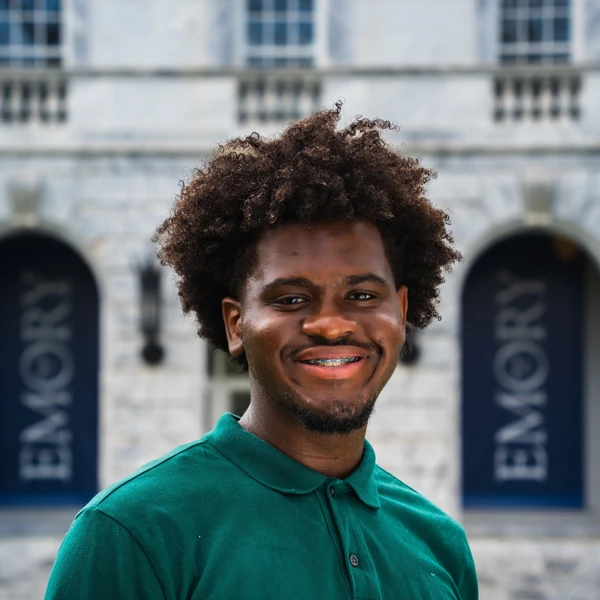
Nasir Muhammad

1x

Finalist

1x

Winner

Bio

I am a Sophomore and first-generation student at Emory University pursuing a dual academic path in Neuroscience & Behavioral Biology (NBB) and Sociology. Driven by a strong work ethic, I combine a deep understanding of human behavior and social structures with on-campus leadership to prepare for a career in medicine. On campus, I’m actively involved in student leadership and mental health advocacy, creating supportive spaces where peers feel empowered to succeed. As a first-generation student, community and mentorship are central to how I lead and learn. With my aspirations of becoming a physician, I am interested in internal medicine, neurology, or physical medicine & rehabilitation (PM&R), while remaining committed to service, mentorship, and expanding access for underrepresented communities. Outside of academics, I find inspiration through museums, music, and film.

Education

Emory University

Bachelor's degree program
2025 - 2029
  • Majors:
    • Sociology
    • Biology, General
    • Psychology, General
    • Anthropology
    • Neurobiology and Neurosciences

James Clemens High School

High School
2022 - 2025

Miscellaneous

  • Desired degree level:

    Doctoral degree program (PhD, MD, JD, etc.)

  • Graduate schools of interest:

  • Transfer schools of interest:

  • Majors of interest:

    • Neurobiology and Neurosciences
    • Medicine
    • Psychology, General
    • Sociology
  • Planning to go to medical school
  • Career

    • Dream career field:

      • Medicine
    • Dream career goals:

      Increasing health equity and representation in medicine to serve underrepresented communities

    • Medical Observer

      Emory University Hospital
      2026 – 2026
    • Server Support and Host, Certified Trainer

      Outback
      2024 – Present2 years
    • Cashier and Cook

      Zaxby's
      2023 – 20241 year

    Sports

    Weightlifting

    2023 – Present3 years

    Track & Field

    Junior Varsity
    2023 – 20241 year

    Research

    • Neurobiology and Neurosciences

      Nell Hodgson Woodruff School of Nursing — Undergraduate Research Assistant
      2026 – Present

    Arts

    • Independent

      Music
      2020 – Present

    Public services

    • Volunteering

      Emory Reads — Tutor
      2025 – 2026
    • Advocacy

      Black Mental Health Ambassadors — Outreach Chair
      2025 – Present
    • Public Service (Politics)

      The 60th Emory University Student Government Association — Director of First Year Council
      2026 – Present
    • Advocacy

      Active Minds — Advocacy Chair
      2025 – Present
    • Volunteering

      Brotherhood of Afrocentric Men (BAM) — President
      2025 – Present
    • Advocacy

      Emory NAACP — Health and Wellness Committee Chair
      2025 – Present
    • Volunteering

      James Clemens Psychology Club — Founder/President/Editor-in-Chief
      2024 – 2025
    • Advocacy

      African American Student Union — External Vice-President
      2026 – Present

    Future Interests

    Advocacy

    Politics

    Volunteering

    Philanthropy

    Entrepreneurship

    Christian Fitness Association General Scholarship
    I lied to my parents quite a lot last year. Many times, throughout my first few weeks, they asked how school was going. I always responded, “Good,” recounting what things in life might’ve been going well. Truthfully, I made a D on my first exam, reasoning that not studying would get me by in college as it did in high school. I struggled with procrastination and imposter syndrome, losing the same motivation that had enabled me to be so high-achieving. On top of that, as a Black student at a Predominately White Institution, I could not find reflections of myself in my classes. So, when my mom, dad, or siblings called to check in, I certainly omitted the theme of struggling in my story. I longed to maintain their view of me as a distinguished scholar. Nevertheless, the reality was that my short-lived light burned out quite quickly, and I found myself, for the first time, truly struggling; beyond that, I was alone. I am a first-generation college student. The first to navigate moving away from home to college, especially at an institution as prestigious as Emory University. Having no one to tell my raw experience to, I sat with my reality heavy on my heart, heavier on my mind.  What changed late that September was me finding community. Taking advice to get out of my dorm and find my place on campus, I started by attending events hosted by mental health organizations on campus. Black Mental Health Ambassadors and Active Minds held discussions that truly reflected my college experience thus far. Through other students, I heard parts of what I had been struggling with for weeks and realized I wasn’t the only one carrying the weight. Inspired by the change I noticed in myself, I became the First-year Representative for both organizations. Noticing gaps in mental wellness at Emory, I took initiative to start “Minds of Emory,” a campus-wide, storytelling initiative sharing real student mental health experiences. Furthermore, aspiring to connect with other Black men on campus, I joined the Brotherhood of Afrocentric Men, a first-year step organization involved in community service. With these activities, I began to feel like I belonged on campus, and throughout my struggles, I learned lessons that propelled me to succeed in the future. I was able to engage in community service, volunteering for the Side by Side Brain Injury Clubhouse, meeting survivors of traumatic brain injuries. In Downtown Atlanta, I often distributed packed lunches to the unhoused population and first-aid kits to those in need. Community service reaffirmed my purpose, reminding me of my desire to utilize my education to support vulnerable populations. With this, my mindset shifted, and I started to see my identity as a Black, first-generation student not as something to hold me back, but as something to inspire me to go further. Those months of showing up on campus and in Atlanta eventually led to me being nominated as a First Year Trailblazer at the Emory NAACP Image Awards, a recognition earned from who my difficult beginning taught me to become. Soon, I will begin my second year studying Neuroscience and Behavioral Biology with a secondary major in Sociology on the pre-medical path. My interdisciplinary approach blends psychology, biology, and anthropology with sociology to understand health beyond a biological state, recognizing how it’s shaped by culture, environment, equity, and more. Curiosity about the brain, people, and the stories within healthcare guides my journey as a pre-medical student, and I find myself especially interested in traumatic brain injury, bioethics, and how healthcare equity shapes outcomes. With my aspiration to become a physician, I am considering specializing in internal medicine but am still undecided. Nonetheless, I am certain that I will continue to advocate for health equity and representation in medicine. Beyond academics, I will conduct research as an Undergraduate Research Assistant in a lab focused on chronic stress, aging, and heart disease risk in African American women. The findings from this research will be used for risk assessment and stratification to better identify factors that increase vulnerability to accelerated biological aging and CVD risk. Moreover, I will continue holistic health advocacy as the Outreach Chair for Black Mental Health Ambassadors, the Health and Wellness Committee Chair for the Emory NAACP, and the Advocacy Chair for Active Minds. As an intern of the Active Minds Mental Health Advocacy Institute, my goal is to expand diversity within Emory’s Wellbeing Coaching program and to continue my project “Minds of Emory.” Throughout my first year, I recognized the importance of having peers and mentors guide me through my transition to college and developing essential academic skills. I will reciprocate that support as the President of the Brotherhood of Afrocentric Men, a Sophomore Advisor in Residence Life, and as the Director of First Year Council, all enabling me to support students through their transition and create a sense of belonging.   When I get calls back from home this year, it will be hard to stray away from just saying I am “good” when I might not be. I am still the first in my family to do any of this, but being first-generation stopped being something I had to figure out on my own. Through advocacy and service, I found not only belonging, but purpose. The Christian Fitness Association General Scholarship would ease the financial strain that currently pulls my time away from that purpose and enable me to continue serving and advocating for others as I pursue a career in medicine.
    Frantz Barron Scholarship
    I am an honor roll student. I have a 4.77 GPA. I am ranked 42 out of 546. I founded the psychology club at my school and lead one of the engineering clubs as vice-president. I have taken a myriad of Advanced Placement and honors courses. Nonetheless, what my achievements do not accentuate is the shadow of being Black at James Clemens High School, a predominantly white academy. The most immense disappointment of my years at James Clemens High School has been walking through many different thresholds yet still distinguishing scarcely any Black peers. The matter only worsened in my STEM classes. My freshman biology class had only 6 Black students. My Humans Body Structures and Functions class consisted of 4 Black students and my chemistry class had only 3 Black students. Now in my AP Biology class, I am one of 2 Black scholars. It is fair to say that I felt remote in these environments. Personally, being Black in STEM has, for the most part, been summed up as watching opportunities pass me by as I was overlooked despite my accomplishments. It was feeling isolated from my peers more and more as time elapsed. It was not having someone palpable to look up to or even learn from. It was feeling pressured to overcompensate out of the fear of failure and to prove myself of my intelligence. But the most distinguished element of my quest has been bridling these barriers. I joined the James Clemens chapter of the National Society of Black Engineers and became aware of the excellent Black scientists and engineers in my city, hosting them not only as guest speakers but also as role models. I helped anew the formerly inactive Black Student Union at my school and fostered an environment for Black scholars to feel a sense of community and intersected the club academically to provide support in class. I even gathered the courage to be my own role model with the aspiration of the gifted Black doctor I will someday be, dedicating this character to my little brothers. By such means, I discovered the duality of being Black in STEM: a quest of struggle and pride that draws an image of success. Being a Black scientist is demanding to utter the least but I draw pride in being the carpenter who, from the legs to the back rest, built a seat at the table.
    Achieve Potential Scholarship
    As I stood in front of the photo of the first graduate class from the Morehouse School of Medicine, I was enraptured to see the beauty of Black skin in white coats and to see so many familiar faces flourishing in the field of medicine. I suddenly understood the challenges that these Black doctors faced in the abysmally racist society of the time. They were among the first Black doctors stepping into a field where Black people are seldom represented, at war with a system that ostracized them and procured remedies that only diminished the nuisances of Caucasian people. Seeing the photo that was more than 50 years old, I mistakenly thought that the number of Black people in the field of medicine would have surged tenfold. I was dispirited to discern that as of 2018, only 5.7% of physicians in the U.S. were Black. Moreover, beyond the numbers, I further learned that the quality of healthcare for Black people reflects the number of Black doctors. Historically, medical treatments and practices were developed to suit the needs of Caucasian people despite the distinctive concerns for Black people. The ramifications of the foundation of the healthcare system are evident when Black patients are dismissed because of ongoing racial bias and when the mortality rates of Black patients in areas with low representation are high. Representation in medicine is exceedingly salient, it is the matter of life and death for Black people. I percieve my future in medicine not only as a career, but as a mission. With my neuroscience degree and aspiration to be a neurosurgeon, I will do everything within reach to advance beyond the medical solutions that fall short at serving Black people. As a young Black man and the son of an admirable Black woman from Selma, AL, I dedicate my academic distinction to my mother for her resilience despite financial burdens and countless sacrifices has been the foundation of my accomplishments. She carried the weight of her three kids’ well-being on her shoulders, ensuring that we had access to the education and opportunities that she had to abandon. My mom never let the intervals of our struggles diminish her commitment to my future. For that reason, I am grateful to be considered for this scholarship, and should I be selected, I will use it to reciprocate the admiration I felt from my mother to my mother and represent Black people in medicine.
    Norman C. Nelson IV Memorial Scholarship
    Winner
    The Mayo Clinic classifies a congenital diaphragmatic hernia (CDH) as a condition where a baby's diaphragm fails to close, leaving a hole in the muscle called a hernia. This condition can cause problems throughout development since the abdominal organs can travel through the hernia -- leading to intestinal malrotation and possibly a cut off blood supply. Furthermore, per John Hopkins Medicine, the presence of these organs in the thoracic cavity limits the lungs ability to develop and mature, leading to complications in aspiration after birth. CDH occurs in about 1 in 3000 births. On October 18, 2011, my baby brother Jayce was born with this condition. In his case, his stomach had moved up into his chest through his hernia. He lived for 37 days, unfortunately passing away on November 25, 2011 -- the day after Thanksgiving. I am Nasir Muhammad, and everyday Jayce is my inspiration to make strides in the medical field. Whenever I lack motivation or ambition, Jayce is my inspiration to persevere as I think about the countless lives I could save in the future through networking with a team of doctors to cure conditions. Unfortunately for Jayce, my family, and I, 2011 was a time when many conditions occurred without any foresight and treatment options; however, it is comforting to know that within those 13 years many doctors have put in the work to find treatments for conditions in all fields of medicine, such as the neonatal field. Personally, my passion is in the neurology field. Learning about the mind and human behavior through AP Psychology and the anatomy and physiology of the brain in my Anatomy class captivated me from day one. This passion led me to start a research project in neuroscience in which I am currently investigating the brain's mesolimbic pathway and its relation to addiction. Furthermore, I am in the process of starting a psychology club at my school since I've learned I can create opportunities for my peers and I -- and make an impact in my community -- starting with an engaging club environment. I believe my interest in the medical field is innate. However, seeing my father grieve the life of his third son, Jayce, and reading the story of Norman C. Nelson IV continues my ambition to become a neurosurgeon and save lives. With this in mind, my current plan is to attend Georgia State University and earn my master's degree in neuroscience; furthermore, I will continue on to Emory School of Medicine and earn my doctorate degree. My ultimate goal is to become a neurosurgeon and with hard-work and dedication I know I will accomplish this. However, I know this path is expensive and as a child from a single-parent household this scholarship will help me fund my ambition. Altogether, Jayce and his potential is my greatest inspiration in life.