
Hobbies and interests
Golf
Reading
Music
Theater
Gardening
Naomi Ishioka
1x
Finalist
Naomi Ishioka
1x
FinalistBio
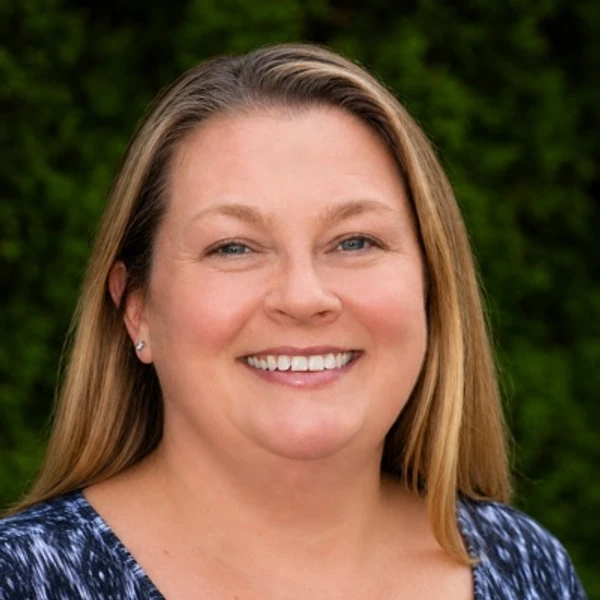
Naomi J. Ishioka, RN, MSN, NHDP-BC, CEN PEM is a seasoned emergency nursing leader and public health advocate with over 25 years of clinical, educational, and administrative experience. Currently serving as a Nurse Consultant for the Michigan Department of Health and Human Services, she provides statewide leadership and expert consultation in stroke and STEMI care — working to strengthen clinical systems and quality improvement across Michigan’s healthcare landscape.
Naomi’s career spans the full breadth of emergency nursing — from bedside care in Level II trauma centers to nursing education, emergency preparedness coordination, and state-level policy influence. She holds an impressive array of certifications including Certified Emergency Nurse (CEN), ANCC National Healthcare Disaster Preparedness Board Certification (NHDP-BC), and State of Michigan Professional Emergency Manager, among many others.
A dedicated educator and researcher, Naomi has developed widely adopted curricula, presented at national and state conferences, and contributed to peer-reviewed publications in emergency and cardiovascular care. She is a lifetime member and longtime leader within the Emergency Nurses Association, having served on Michigan’s state council board and chaired multiple committees at both the state and national levels.
Outside of her professional life, Naomi is the proud mother of two. She finds balance and joy in gardening, staying active, and spending time with her cats.
Education
Oakland University
Doctoral degree program (PhD, MD, JD, etc.)Majors:
- Registered Nursing, Nursing Administration, Nursing Research and Clinical Nursing
University of Phoenix
Master's degree programMajors:
- Registered Nursing, Nursing Administration, Nursing Research and Clinical Nursing
Pensacola Christian College
Bachelor's degree programMajors:
- Registered Nursing, Nursing Administration, Nursing Research and Clinical Nursing
Tec Education Center
High SchoolMiscellaneous
Desired degree level:
Doctoral degree program (PhD, MD, JD, etc.)
Graduate schools of interest:
Transfer schools of interest:
Majors of interest:
Career
Dream career field:
Health, Wellness, and Fitness
Dream career goals:
Sports
Soccer
Intramural1994 – 19951 year
Research
Health Professions and Related Clinical Sciences, Other
Beaumont hospital — Primary investigator2010 – 2011
Arts
High school
ActingThe The About Cinderella1993 – 1993
Public services
Volunteering
Kaleo Arts — Volunteer2017 – Present
Future Interests
Advocacy
Politics
Volunteering
Philanthropy
Women’s Health Research & Innovation Scholarship
For nearly three decades, I have worked as an emergency department nurse, and for the last several years I have also led Michigan’s stroke program at the state health department. Both roles have taught me the same lesson from different directions: the patients who are hardest to diagnose are often the ones who don’t fit the pattern we were trained to expect. Stroke work has been about pattern recognition, teaching emergency staff to catch presentations that don’t look like the textbook stroke so patients aren’t sent home to suffer irreversible harm. What I did not expect was to need that same lesson at home.
When my teenage daughter began experiencing severe, cyclical mood symptoms tied to her menstrual cycle, I watched her go from provider to provider before we finally found a gynecologist willing to take her seriously. Along the way, I heard the same dismissals I have heard for years in my own emergency department: that it was just cramps, that all women get emotional during their period, that toughing it out was simply part of being a woman. Premenstrual Dysphoric Disorder and premenstrual exacerbation of existing conditions are real, recognized, and treatable, yet they are routinely waved off in the very setting where a patient in crisis most needs to be believed.
That experience reframed how I see my own profession. I have spent my career building tools that help nurses catch what is easy to miss, and I now understand that PMDD and PME sit in exactly that blind spot: not a lack of clinical knowledge, but a lack of a fast, reliable framework for asking the right questions during a short triage encounter.
Alongside my full-time work in stroke program leadership, I have committed to my daughter that I will build an education program for emergency department nurses, one that develops PMDD and PME recognition for emergency staff. It will be modeled on the same principles that made stroke recognition training effective: a quick symptom-timing framework, clear differentiation between distinct conditions, and case-based scenarios that help staff recognize their own dismissive scripts before they use them on a patient in crisis.
While I work full-time for the health department doing pretty vascular care. I have always kept a contingent position in the emergency department and involved in the Emergency Nursing Association. I intend to give this work the rigor and reach it deserves. I want to move beyond individual advocacy toward a body of research and training that changes practice at scale, so that the next mother sitting in an emergency department with her daughter does not have to fight to be heard. My years at the bedside taught me to notice what others miss. My daughter’s experience taught me why that noticing has to become standard practice.
Begin Again Foundation Scholarship
I have a very unusual sepsis story that has served as a warning for many. I have been an ER nurse for 29 years, and over the past few years I have realized that I truly love teaching nursing students and sharing my love of this profession with them. I want to teach at the university level, and to do that I need my doctorate, here I am, a seasoned emergency nurse, a wife, a mother, and a doctoral student. I am truly starting again, if you will.
My story starts with a chance encounter with a mother goose protecting her babies. It started with a very small scratch and my calf. I washed it off, put a Band-Aid on it, and went about my day.
The next morning my entire calf was inflamed. By afternoon I had chills and a fever. I left work midday because I had chills and was shaking, and went to the ER. The doctor wanted to admit me, but I begged to go home. I was young and healthy, I was OK. Kindergarten graduation was the next day and I didn’t want to miss it. They convinced me to stay in observation for a second dose of IV antibiotics. So I did.
Looking back at my labs now, the story was already written in the numbers. I had a high white count, elevated lactates, a low blood pressure, and rising heart rate. The early fingerprints of sepsis were right there. I was young, I looked healthy, and I think that picture made it hard for people to see how sick I actually was. That is one of the cruelest things about sepsis. Sometimes the patient is holding a conversation just fine while their body is quietly losing ground.
That night I ended up in ICU. What followed was not a short hospital stay. It was a long, protracted illness that left permanent marks. I developed blood clots in my lung and was oxygen dependent for months. I had a small stroke. 6 weeks in a bed and I was never the same. A scratch from a bird protecting her babies had cascaded into something that touched nearly every system in my body, and I have never fully gotten back to who I was before that afternoon.
Sepsis takes things from you that do not always come back, But it also gave me something. I came out of that experience with a clinical alertness I did not have before. I know what early sepsis looks like from the inside now, in a way no textbook can fully teach. I know what it feels like when the numbers are telling a story that the patient's appearance is not. I am a more attentive clinician because of what happened to me, and I am a more empathetic one too.
That empathy is what drives me toward teaching. I have seen students struggle without the mentorship that makes the difference between staying in this profession and leaving it. I had faculty who believed in me when my circumstances made it easy to quit, and I have never forgotten what that meant. That is what I want to give students. Not just knowledge, but the belief that they belong here.
Getting a doctorate at this stage of my life is not the easy choice. But I have learned that the most important things rarely are. I am starting again, and I could not be more ready.
And if anyone asks, I also have one standing piece of advice: never run a foul with a fowl.
Annie Pringle Memorial Scholarship
When my grandmother was 60 years old, she found a lump in her breast. She knew it was not normal, but did not do anything about it until she developed a cough and severe pain. About two years later, she finally talked to a doctor and was diagnosed with breast cancer. She was embarrassed and wanted to keep this “woman’s cancer” to herself. She did not tell anyone except her husband. It was not until my aunt visited six months into treatment that anyone knew. By the time she sought treatment, it was so advanced that there was little she could do. She died less than three years later.
My mother found a lump at age 63. Because I am a nurse, she called me, and I talked her into immediately seeking treatment. We found doctors who cared, and I had the privilege of helping her through the treatment and recovery from her cancer. My mother has now been cancer free for nine years. The same disease that took my grandmother’s life did not take hers. Education made that difference.
It is why, when I recently scheduled my own mammogram, I did not treat it as a routine task. I make it a point to talk to my teenage girls about the importance of screening and self breast exams. I treated it as an act of commitment, both to myself and to my family, as well as to the women I serve. As a nurse, I know the statistics. I know the disparities. I know which communities are least likely to receive timely screening and most likely to present with late-stage disease. Knowing all of that and still showing up for my own appointment felt like a practice in what I ask others to do.
That commitment extends into my community. I teach breast health education to high school girls in after-school programs and Senior Girl Scout troops. I meet young women at the age when health habits are formed and when the body feels invincible, which is exactly when the foundation for lifelong self-advocacy needs to be laid. I teach them how to do self-exams. I talk to them about what to look for, when to speak up, and why speaking up matters. I tell them about my grandmother. I tell them about my mother. I tell them that knowledge is not just power. In some cases, it is survival.
Because of my family experience, I take spreading breast cancer awareness seriously. It is a thread that runs through my family history, my clinical practice, and my community work. It connects the grandmother I lost to the mother I helped save to the teenage girls who deserve the chance to grow old. Every woman in that chain deserved information. My grandmother did not get it. My mother did. And the girls I teach are getting it earlier than either of them. That is the work I intend to keep doing, and this scholarship would help me do it with greater reach and deeper impact.
MJ Strength in Care Scholarship
Here is your essay with only that one typo corrected, exactly as you wrote it:
For as long as I remember, I always wanted to be a nurse. Growing up, I watched my parents pour themselves into humanitarian work in communities in Rural Thailand that had very little, and I learned from that early on that showing up for people in their hardest moments is not a burden, but a privilege. Over and over I saw my dad work to make people’s lives better, and saw how it gave him joy. When I entered emergency nursing more than 27 years ago, I found a place where that philosophy was confirmed every single shift.
The emergency department is where I learned what nursing really means. It is loud, fast, and unforgiving, and it demands your whole self. I stayed because that environment asked me to be fully present for people at the most frightening moments of their lives – a stroke arriving by ambulance, a cardiac arrest, a family standing at a doorway waiting for news. I never lost the sense that what happens in those minutes matters enormously, not just for one patient, but for every family that patient goes home to. Over time I learned that what I loved was that I had the opportunity to take what is one of the worst moments of people’s lives and make it just a little more bearable.
Over time, my role expanded beyond the bedside. I held positions in nursing education, research, and management. Through all of that I always kept a side position at the bedside in the ER because I always wanted to be able to help people.
Today I serve as a Nurse Consultant for Cardiovascular Care and Stroke at the Michigan Department of Health and Human Services, where I lead the Michigan Stroke Program and direct stroke learning collaboratives in Detroit and Flint. I still work shifts in the ED, because policy divorced from practice loses its footing. The work I do at the state level is better because I have not left the bedside. I know what it looks like when a system fails a patient, and I know what it costs.
What drives me most now is equity. I have sat with community members in senior centers, bus depots, train stations, and church halls, checking blood pressures and teaching people how to prevent strokes and other cardiovascular disease. I have seen the disparities that exist, and want to help improve the care that people have access to. That is the work I want to deepen through doctoral study. Not just describing disparities, but understanding their architecture well enough to do something about them.
I am currently pursuing my PhD at Oakland University, where my research focuses on the relationship between geographic distance from stroke-capable hospitals and county-level stroke mortality across Michigan’s 83 counties. I deferred doctoral study until my children completed their education, a choice I made without regret. Watching them finish reminded me that it is never too late to go further, and that the people who love us often believe in our potential before we fully reclaim it ourselves.
Outside of work, I garden, which teaches patience in a way little else does. I share a home with my spouse, our children, and my 102-year-old mother-in-law. I have also made it a hobby of late to apply to any scholarship I am eligible for. There are not many out there for people my age going back to school, and unfortunately because I have put away for retirement I qualify for much less student aid. I have to decide between having savings for my future, or going back to schoolso I have learned to like writing essays.
Twenty-seven years in, the belief that brought me into this work has not softened. It has sharpened. I pursue this doctorate because the problems I care about are bigger than any one nurse can solve alone, and I intend to do something about that.
Michael Rudometkin Memorial Scholarship
Selflessness is not a single act. It is a way of living, a series of decisions made over years that place the wellbeing of others before your own. For most of my adult life, I have lived this way.
For the past eighteen years, my mother-in-law, now 102 years old, has lived in our home. I made sure she was safe, comfortable, and surrounded by family rather than being in a nursing home. As a nurse, I have the skills and knowledge to be sure she is safe, healthy and happy. During those same years, my father became seriously ill. My parents lacked the financial resources to manage his care alone, so I stepped in. I helped him navigate Medicare and health insurance, and I covered some of his medical costs out of my own pocket because his wellbeing came before my own educational goals. When he passed away, I helped my mother to move nearby and furnish an apartment so she would not be alone.
I also raised two children with the goal that they would enter adulthood without student loan debt. Both of my children have been able to attend college and begin their lives on solid footing. That is something I will always be proud of.
I completed my master’s degree in 2010 knowing that a PhD was the next step. In September of 2019 I began to research universities to apply to. January of 2020 I had finally committed to beginning my doctoral studies with the goal of moving into teaching and shaping the next generation of nurses. Then COVID-19 arrived. Instead of stepping back from my hospital role to pursue that goal, I was asked to lead the COVID-19 response for Beaumont Troy Hospital as its disaster preparedness coordinator. I said yes without hesitation.
Over the years that followed I helped with organizing the response, opening testing centers, monitoring the hospitals capacity, making sure care was evidence based and appropriate, then opening a vaccination clinic. We even opened a vaccination clinic for patients who could not navigate traditional clinic settings, including those with autism, dementia, anxiety, and complex medical histories because I had personal knowledge from my family of the need for these special circumstances. We met every patient where they were and made sure no one was turned away.
Now, at 50 years old, it is my turn.
I am pursuing my PhD not in spite of everything I have given, but because of it. Fifteen years of caregiving, financial sacrifice, raising a family, and leading a hospital through a pandemic have shaped the nurse, the researcher, and the person I am today. Returning to school now is not starting over. It is finally completing something that has always been part of who I am.
Selflessness taught me patience, resilience, and the ability to lead under pressure. Those are exactly the qualities I will bring into doctoral study and carry through the rest of my career in nursing education and research.
Olivia Rodrigo Fan Scholarship
Olivia Rodrigo’s album GUTS is not really about teenage heartbreak. It is about the terrifying, exhilarating experience of becoming — of standing at the edge of who you were and deciding to step into who you are meant to be, even when that leap makes no logical sense and everyone around you might be watching. The first time I listened all the way through, I was not thinking about a boy. I was thinking about a doctoral application.
At fifty, returning to school feels like the kind of decision that requires explaining to everyone — family, colleagues, even yourself. The inner critic is loud. There is a voice that asks whether this moment has passed, whether the window closed somewhere in your thirties, whether ambition at this stage of life is wisdom or delusion. Rodrigo captures that voice precisely in the album’s recurring tension between self-doubt and defiance. Her narrators know they are being judged. They do it anyway. That resonates with me more than I expected.
Twenty-six years in emergency nursing teaches you a particular kind of toughness — the kind forged in overnight shifts, in impossible decisions, in watching people arrive broken and trying your best to send them home whole. But there is a different kind of courage required to sit in a classroom again, to raise your hand, to write a dissertation that says I believe I have something to contribute to the knowledge base of this field. That vulnerability is not something nursing prepared me for. Rodrigo’s album did, a little.
The heart of GUTS is the refusal to be small. Track after track, her narrators push back against the pressure to shrink — to be easier, quieter, less inconvenient. I have felt that pressure throughout my career as a woman in healthcare leadership, as a Black nurse in rooms where my presence required justification, as someone who cares loudly and openly about patients that systems have quietly decided not to prioritize. The social determinants of health are not a comfortable topic in boardrooms. Stroke disparities in Detroit are not a comfortable topic in policy meetings. I have spent decades being the person who brings up the uncomfortable topic anyway. That is not always welcome. It is always necessary.
What GUTS gave me was a reframe. The discomfort is not a sign that you are doing something wrong. It is a sign that you are doing something real. Rodrigo writes about the specific ache of growing pains — the knowledge that becoming the person you want to be requires shedding the version of yourself that felt safe. I am in that shed right now. The PhD program, the scholarship applications, the late-night studying alongside a full-time career and a full life — none of it is comfortable. All of it is intentional.
Rodrigo ends GUTS not with resolution but with determination. There is no neat bow. There is just a person who decided that the alternative — staying still, staying small, staying safe — was no longer acceptable. I understand that feeling completely. Some albums find you at exactly the right moment. This one found me at mine.
Charles B. Brazelton Memorial Scholarship
I think just about everyone has something like a trait, quirk, or circumstance that made them feel like they were standing slightly outside the circle while everyone else was comfortably inside it. For me, it wasn’t just one thing. It was thick-framed glasses that announced my difference before I ever said a word, homemade and hand-me-down clothes that never quite matched what my classmates were wearing, hyper religious parents who would not permit us to participate in everything others did in and out of school, and a childhood spent moving frequently that developing deep friendships impossible.
We moved a lot, which sounds like an adventure until you are the new kid arriving mid-semester, trying to figure out the unspoken social rules of yet another school while wearing a slightly awkward dress your mother sewed from clearance fabric. I was awkward in the truest sense, always slightly out of place, always a beat behind the inside jokes, always watching friendships form and solidify around shared history I was never part of. That particular loneliness settles into your bones quietly, but it also — and I did not understand this until much later — begins building something durable inside you.
College did not immediately change my circumstances. I remember running my fingers along the coin return slots of vending machines, hunting for stray quarters just to afford a load of laundry, calculating whether I had enough change to get through the week. More than one summer, I couch-surfed my way through, sleeping on borrowed couches because a stable place to land simply was not guaranteed. I was still, in many ways, that awkward girl from the outside — except now I was older, more tired, and more determined than ever to prove that none of this was going to stop me.
Because here is what poverty and instability had actually done, underneath all the hardship: they had sharpened my drive to succeed. I was not going to let my starting place become my permanent address. I graduated. I built a life and then a career, becoming a Registered Nurse with nearly three decades of emergency nursing experience, eventually earning a Master of Science in Nursing and certifications that once felt impossibly far away from that girl checking vending machines for spare change.
And now, my ambition has grown into something even larger than my own survival. I am pursuing my PhD in nursing because I want to teach — not just to transfer knowledge, but to reach students who may be sitting exactly where I once sat, on the outside looking in, quietly wondering whether someone with their background, their circumstances, their particular brand of awkward, can actually make it in this profession. I want to stand in front of those students as living proof that they can. That where you start does not determine where you finish, and that sometimes the very things that made you feel like you did not belong are precisely what equip you to lead.
Deanna Ellis Memorial Scholarship
I will be honest — I did not always see substance abuse the way I see it now. Early in my career, I carried the same misunderstandings that most people carry. Addiction felt like a choice, a moral failing, something that happened to people who simply did not try hard enough to do better. Twenty-six years in the emergency department, combined with some deeply personal losses close to people I love, have completely dismantled that thinking.
I have watched friends grieve children. I have sat with family members of people I knew personally who did not survive their addiction. There is nothing abstract about overdose when it has a face you recognize. Grief has a way of forcing you to ask harder questions, and the question I kept arriving at was this — how did I ever think these people deserved anything less than compassion?
What I understand now, that I did not understand before, is that substance use disorder is a diagnosis. It is a disease process with neurological underpinnings, trauma connections, and social determinants that run deeper than willpower can reach. The person in bay four who has been in three times this month is not a nuisance. They are a human being caught in something that is bigger than them, and they deserve the same care and dignity as every other patient I treat. Changing that internal narrative was not instant, but it was necessary.
That shift in perspective pushed me out of the hospital and into the community. I have had the privilege of speaking at high school assemblies alongside our local sheriff and some local judges who also have an understanding of the issue and spread exactly the right message — that people struggling with addiction need help, not handcuffs. Standing in front of teenagers and talking honestly about what addiction does to families, to communities, to people sitting right next to them in those bleachers, feels like some of the most important work I have ever done.
Every time I have the chance, I make the same ask to patients, and their friends and families. Take the free Narcan. Whether it is for yourself, a friend, a sibling, a parent — take it and learn how to use it. Narcan saves lives, and removing the stigma around carrying it is part of removing the stigma around addiction itself.
We will not treat our way out of this crisis from inside the emergency department. It starts with understanding, and understanding starts with compassion.
Learner Online Learning Innovator Scholarship for Veterans
Nursing never really lets you stop learning, and honestly, I would not want it to. Healthcare changes fast, and if you are not keeping up, you are falling behind — and in emergency nursing, falling behind has real consequences for real people. Over the years I have pieced together my own approach to staying current, and it has less to do with formal coursework and more to do with taking advantage of the incredible free resources that are available to anyone willing to look for them.
Medline and online medical libraries are where I go when I need to get serious. When a clinical question comes up that I cannot answer confidently, I want to look at actual research — not a summary, not someone’s opinion, but peer-reviewed evidence. Being able to pull up current literature keeps my practice grounded in something solid. It also keeps me honest, because sometimes what we have always done is not actually what the evidence supports.
There are many free, continuing education, credits available for nurses in many places. I have found sites such as the CDC, FEMA, and even some of the state health departments have links to lectures by various experts that I have found extremely helpful. The center for domestic terrorism also has lots of good resources. In addition, various professional organizations like the emergency, nurses association, the American College of surgeons, the American Heart Association, in other professional organizations, also offer free education and lectures on their area of expertise.
Khan Academy surprised me. I did not expect a platform known for helping high school students to be useful to a nurse with over two decades of experience, but when I needed to brush up on pathophysiology and pharmacology concepts in preparation for doctoral studies, it delivered. The visuals are clear, the explanations are straightforward, and there is no shame in going back to basics when the basics matter.
Podcasts have honestly become one of my favorite ways to learn. I am busy — most nurses are — and being able to listen to clinicians break down complex topics while I am driving or exercising feels like stealing extra hours in the day. There is something about hearing a real conversation between practitioners that makes information stick in a way that reading sometimes does not.
Free clinical education sites fill in the rest of the gaps. Stroke updates, mental health training, pharmacology refreshers — it is all out there, and most of it costs nothing but time and intention.
What I have come to believe is that the best nurses are endlessly curious. The resources exist. The research is accessible. The knowledge is there for anyone willing to reach for it. In a profession where what you know directly affects what happens to your patient, that kind of self-directed learning is not optional — it is part of the job.
Learner Mental Health Empowerment for Health Students Scholarship
Over twenty-six years in the emergency department, I have not simply witnessed the mental health crisis in America — I have watched it grow. What began as an occasional challenge has become a defining feature of emergency nursing, and nowhere is that reality more visible than in the patients we hold. I have cared for individuals in acute psychiatric distress who waited in our emergency department for days, sometimes weeks, occupying a bed in a unit never designed for long-term psychiatric care. These are not statistics. These are human beings — frightened, suffering, and invisible to a system that did not know what to do with them.
Emergency departments were built for broken bones and cardiac events. Yet for millions of Americans, the ED has become the default front door to mental healthcare — and often the only door. I have cared for patients in suicidal crisis, severe psychosis, and crushing depression, watching them cycle in and out of our department with heartbreaking regularity. The system was failing them, and too often, we did not have the training, the resources, or the infrastructure to do better. Psychiatric holds stretching into weeks are not just a operational problem — they are a moral one. A patient boarding in a busy emergency department, surrounded by noise and chaos, with minimal therapeutic intervention, is not receiving care. They are simply waiting. That reality refused to let me stay silent.
So I took my voice beyond the bedside. I have traveled to Washington D.C. and to our state capital in Lansing on more than one occasion to advocate directly for mental health policy reform, increased funding, and the integration of behavioral health resources into emergency care. Sitting across from legislators and policymakers, I shared with them stories of real suffering. Advocacy, I learned, is simply nursing practiced at a different scale.
But policy change alone is not enough. Transformation must begin with nurses themselves. We are the most trusted profession in America, and we are present at every critical point of a patient’s journey. If nurses do not understand mental health — truly understand it, with both clinical competence and genuine human compassion — the gaps in care will persist regardless of what any legislation mandates. Too many nurses enter the emergency department without adequate preparation for the psychiatric patients they will inevitably face. That is not a criticism; it is a systems failure that education can begin to correct.
That is why I am returning to school to earn my doctorate. I want to teach. I want to stand before the next generation of nurses and equip them not just with clinical skills, but with the conviction that mental healthcare is emergency care — that the patient boarding in bay seven, waiting for a psychiatric placement, deserves the same urgency, the same dignity, and the same standard of excellence as every other patient in our department. I want to inspire nurses to see behavioral health not as a burden on an already stretched system, but as a core dimension of the care we are called to provide.
Twenty-six years have shown me how deep this crisis runs. They have also shown me the extraordinary difference a knowledgeable, compassionate nurse can make in the life of someone at their most vulnerable. I intend to spend the rest of my career ensuring that more nurses have the tools, the training, and the heart to make that difference.
Wieland Nurse Appreciation Scholarship
Some people can trace the moment their life’s calling found them to a single, experience, or caring for a loved one through an illness. For me, it was not one moment but many — a series of urgent rides through rural Thailand on the back of my father’s motorcycle and sidecar, carrying neighbors and strangers alike toward the nearest hospital 25 miles away. My desire to become a nurse did not begin in a classroom or after reading an inspiring story, it began in the dust and urgency of rural life, where help was scarce and every second mattered.
Growing up in the Kingdom of Thailand, my family lived in a rural area far from the conveniences most people take for granted. We owned the only vehicle for miles — a motorcycle with a sidecar — and that simple fact made us essential to our community in ways I did not fully understand as a child. My father, a minister, was a man others naturally turned to in times of crisis. When emergencies arose, and they arose often, neighbors came to our door weather it was a farming accident or a sick child, my dad never said no.
My mother, though she wanted to help, did not handle blood or illness well. She would faint at the sight of blood, leaving my father to respond. And so at age 6 or 7 I became his partner on those rides. I would climb into that sidecar alongside whoever needed us, and we would race toward the provincial hospital as fast as that little motorcycle could carry us.
At the hospital, I befriended the nurses who received our neighbors at the door. They were calm where everything else was chaos. They were knowledgeable, skilled, and kind. I admired their white uniforms and crisp caps, and loved watching them work. They also saw me as interested, and took the time to teach me basic first aid. As I became more skilled provided me with a bag of supplies that I learned how to use when someone needed help, was bleeding, in pain or ill. I learned how to be useful, and help ease symptoms as we went down the bumpy dirt roads. That sense of purpose never left me.
That little girl in the sidecar grew up and found her way to the emergency room, where I spent 26 years of my career. The emergency department is still that urgent, unpredictable space where people arrive at the worst moments of their lives, frightened and vulnerable, needing someone who will not flinch. I have held hands, made quick decisions, delivered hard news, and fought alongside patients who had no one else in their corner. Every shift is a reminder of why I started — because people deserve someone who shows up for them, fully and without hesitation, when everything has gone wrong.
But my calling has continued to evolve. Now, I feel drawn to the classroom — to the next generation of nurses who will one day be the calm in someone else’s storm. Teaching others to become nurses feels like a natural next step. It is a way of multiplying impact, of ensuring that the compassion and skill I carried through decades of emergency nursing does not stop with me.
At the heart of it all is something beautifully simple: in the emergency room, people are scared, and I find it fulfilling to be there on what they see as one of the worst days in someone’s life just a little bit better.
I found out about this scholarship through bold.org.
Sabrina Carpenter Superfan Scholarship
At first glance, Sabrina Carpenter and the nursing profession may seem like unlikely companions. One commands pop stages; the other commands emergency bays. Yet her music carries a kind of emotional intelligence that mirrors the demands of clinical and community health work in ways that are difficult to ignore. The confidence, the exhaustion, the persistence, and the quiet joy embedded in her lyrics have, unexpectedly, come to reflect my own professional journey.
“Espresso” is a song built on self-possession — knowing your value and moving through the world accordingly. That quality is not a luxury in emergency nursing; it is a requirement. When a stroke alert is called, there is no space for hesitation. Decisive action within a narrow treatment window determines whether a patient walks out of the hospital or does not. Years of clinical practice have taught me that confidence is not arrogance — it is the natural result of preparation, experience, and deep professional commitment. Carpenter’s unapologetic ownership of her craft resonates with what it means to trust your training when everything is on the line.
“Please Please Please” speaks to something more vulnerable — the weight of sustained advocacy within systems that do not always cooperate. Much of my community health work has felt exactly like that. Fighting insurance denials for patients who need GLP-1 medications, writing grant proposals to fund cardiovascular outreach in underserved Detroit neighborhoods, and partnering with community health workers to reach populations the formal healthcare system consistently misses — all of it requires a particular kind of hope that persists even when the answer is no. Carpenter captures that emotional endurance beautifully, and I have lived it professionally.
“Nonsense,” despite its lighthearted presentation, is ultimately about finding genuine joy amid chaos. Emergency nursing demands precisely that capacity. The ability to connect authentically with colleagues and patients during the most difficult moments is not a departure from professionalism — it is the foundation of sustainable, compassionate care. Levity, when earned and well-placed, keeps both nurses and patients grounded in their shared humanity.
What distinguishes Sabrina Carpenter as an artist is her refusal to be diminished by a world that sometimes underestimates her. As a woman pursuing doctoral study in nursing science after years of frontline clinical practice, that posture feels deeply familiar. Nurses are not always recognized as scientists or researchers. But curiosity has driven every stage of my career, and it is curiosity — not credentials alone — that will carry this work forward.
Women in STEM Scholarship
The first time I witnessed a stroke patient receive thrombolytic therapy, I didn’t just see medicine — I saw a miracle born from decades of relentless scientific inquiry. A clot dissolving. A hand beginning to move. A family exhaling. In that moment, I understood that nursing was never separate from science. It was science — and I was standing at its frontier.
My path into health sciences was not paved with straight lines. It was built question by question. Why does this patient’s brain respond differently than the textbook says it should? Why do certain communities suffer strokes at disproportionately higher rates? Why does the gap between clinical research and bedside care remain so wide, so costly, and so deadly? Each question pulled me deeper — not away from the patient, but closer to understanding what the patient truly needed.
As an emergency and stroke care nurse in metro Detroit, I have worked at the intersection of urgency and complexity. I have administered Tenecteplase during the narrow golden window of stroke intervention, coordinated care across clinical and community health systems, and watched firsthand how health disparities play out not in data sets, but in human lives. These experiences did not simply teach me to care — they taught me to investigate. They ignited a researcher’s mind inside a clinician’s hands.
That curiosity has led me to pursue doctoral study in nursing science. I want to do more than treat disease at the bedside. I want to study the systems, behaviors, and social determinants that shape who gets sick, who gets care, and who gets well. I want to design community-based interventions that bridge the space between hospital walls and the neighborhoods where health is truly made or broken. Science, to me, is not confined to a laboratory. It lives in a community center in Detroit, in a conversation between a nurse and a patient who doesn’t understand why her prescription isn’t covered, in the data we collect and the stories we refuse to ignore.
Women in health sciences carry a particular kind of knowledge — one rooted in listening, advocacy, and the willingness to sit with complexity. Yet too often, women who look like me, who come from communities like mine, are trained to execute science rather than create it. This scholarship represents something larger than financial support. It represents permission — permission to lead research, to ask bold questions, and to build the kind of evidence that changes practice, policy, and lives.
I am not pursuing a PhD because I have all the answers. I am pursuing it because I have learned that the most powerful thing a woman in STEM can do is refuse to stop asking questions. Science advances because someone was curious enough to look closer, dig deeper, and challenge what was accepted as truth.
I have been that person at the bedside for years. Now, I am ready to carry that same relentless curiosity into the research that will shape the next generation of care.
Christian Fitness Association General Scholarship
I have spent 27 years as an emergency nurse showing up for people on the worst days of their lives. I have held hands, delivered difficult news, advocated fiercely, and poured everything I had into caring for strangers who needed me. Through every season of that career, my Christian faith has been the foundation beneath my feet, the reason I believed that every single person who came through those emergency department doors deserved to be treated with dignity, compassion, and grace.
That same faith is what brought me back to school.
Returning to pursue a doctoral degree happened in one of the most demanding chapters of my life. I am currently caring for my 102-year-old mother-in-law, whose daily needs require the kind loving attention that only deepens your understanding of what it means to honor the elderly. Scripture calls us to care for those who cannot fully care for themselves, and I take that seriously — not as a burden, but as a calling. Every day I spend with her is a reminder that human dignity does not diminish with age, and that the people deserve our devoted attention.
I am also the mother of an autistic daughter who needs my advocacy, my presence, and my unconditional support in ways that are both exhausting and extraordinary. Raising her has taught me more about compassion, patience, and creative problem-solving than any clinical training ever could. She has shown me that the world is far more beautiful and complex than a single perspective can capture, and that our differences are not obstacles to be overcome but gifts to be understood. Advocating for her has made me a fiercer advocate for every vulnerable patient I have ever cared for.
At the same time, I am helping put two children through college simultaneously, navigating the financial weight that comes with wanting to give your kids every possible opportunity while also investing in your own future. There were moments — honestly — when I wondered if this was the right time. When the caregiving demands were high and the coursework was waiting and I was running on determination and prayer. But my faith has never allowed me to confuse difficult with wrong. Some of the most important things we are called to do are hard. That difficulty is not a stop sign. It is a refinement.
I turned 50 this year. I say that not with hesitation but with a sense of clarity and purpose that I could not have had at 30. The experiences of my life — every patient I have cared for, every family member I have loved, every hard season I have walked through — have brought me to this moment with a depth of conviction that only comes from truly living. I am not returning to school because it is convenient or because the timing is perfect. I am returning because the calling has never quieted, and because I believe God does not place a purpose in your heart without also providing a path forward.
That purpose is specific. I have watched for nearly three decades as patients cycle through the emergency department with preventable conditions — hypertension, diabetes, stroke, heart disease — not because medicine failed them, but because the circumstances of their lives did. Food insecurity. Unstable housing. Lack of transportation. Social isolation. These are not medical diagnoses, but they are medical emergencies in slow motion. And nurses, who spend more time with patients than anyone else on the healthcare team, are perfectly positioned to recognize these circumstances and connect people to the community resources that could genuinely interrupt the cycle.
The problem is that too many nurses do not have the training or the tools to do that consistently. That is the gap I intend to dedicate my doctoral work to closing. I want to develop educational programs that equip nurses in every setting — emergency departments, community clinics, faith communities, and beyond — to screen for social determinants of health, understand the profound connection between nutrition and chronic disease prevention, and confidently connect patients and families to programs that make healthy living achievable rather than aspirational.
The Christian Fitness Alliance stands for the integration of faith, health, and wholeness — and that integration is something I have lived personally and professionally for decades. I have served on medical response teams at my church for years. I have presented stroke awareness and health education programming in faith communities across Michigan. I have seen firsthand how the church can be one of the most powerful vehicles for health education and community wellness, because it reaches people where they are and carries a trust that clinical settings sometimes cannot. Healthy bodies, healthy minds, and healthy communities are not separate from our faith. They are an expression of it. Caring for the body God gave us, and helping others care for theirs, is an act of stewardship and love.
I am asking for this scholarship not because the path is easy, but because the purpose is clear and the need is urgent. Every year that passes without better nurse education around social determinants of health is another year of preventable suffering. Every community that lacks access to stroke awareness programming is a community where someone will wait too long and lose more than they had to lose. Every nurse who enters practice without the tools to see the whole patient is a missed opportunity to change a life.
I am not the traditional scholarship candidate. I am a 50-year-old woman juggling caregiving responsibilities that would give most people pause, choosing to pursue doctoral education anyway — because the people of Michigan deserve better, because nurses deserve better training, and because my faith compels me to use every gift and every opportunity I have been given in service of something larger than myself.
I am deeply grateful for the opportunity to be considered by an organization whose values align so completely with the work I am called to do.
Learner Math Lover Scholarship
I will be honest — not everyone expects a nurse to say they love math. But I do. And after 27 years in healthcare, I am more convinced than ever that mathematical thinking is one of the most undervalued tools we have, both inside medicine and out in the world.
In nursing, math is not abstract. It is immediate and consequential. A medication dosage calculated incorrectly is not just a wrong answer on a test — it is a patient harmed. Understanding statistics helps me read research critically and make evidence-based decisions. Interpreting data helps me recognize patterns in patient populations that point toward prevention rather than just treatment.
But math matters far beyond the hospital walls too. A community that understands basic statistics can evaluate health claims in the news rather than simply believing them. People who understand numbers can read their medical bills, question their insurance coverage, and make informed decisions about their own care. Mathematical literacy is health literacy. And health literacy saves lives.
As I move into nursing education and research, I want to help demystify both. Math does not have to be intimidating. It just has to be taught in a way that connects it to something people already care about — like their health, their family, and their future.
Ethel Hayes Destigmatization of Mental Health Scholarship
Emergency nursing teaches you things about human beings that you cannot learn anywhere else. You see people at their most raw, their most vulnerable, and their most desperate. And over 27 years, one of the most consistent things I have witnessed is how deeply misunderstood and underserved mental health remains — even inside the very system designed to help people heal.
I have cared for patients in mental health crisis who waited hours in a hallway because there were no available psychiatric beds. I have watched people arrive in the emergency department not because they wanted to be there, but because they had nowhere else to turn. I have seen the shame on people’s faces when they had to tell someone — a stranger in scrubs under fluorescent lights — that their mind was betraying them and they needed help. That shame does not come from weakness. It comes from a culture that has spent generations telling people that mental health struggles are something to hide rather than something to treat.
I know that culture intimately. Not just professionally, but personally.
My own daughter struggled with mental health during college. Watching someone you love navigate that kind of pain is humbling in a way that reshapes everything you think you know. It stripped away any remaining clinical detachment and replaced it with something much more important — empathy that is bone deep and completely unconditional. I was a nurse who understood mental health intellectually. Becoming a mother watching her child suffer made me understand it in my soul. Those two perspectives together have given me a passion for destigmatizing mental health treatment that I carry into every professional space I enter.
That is exactly why I want to teach nursing. Future nurses need to understand that a patient in mental health crisis deserves the same urgency, compassion, and dignity as any other patient who walks through those doors. They need to hear that mental illness is not a character flaw, a weakness, or something to be whispered about. They need to learn how to sit with someone in that darkness without flinching, without judging, and without rushing them toward the exit.
If I can shape even one generation of nurses to approach mental health with genuine compassion and zero stigma, the impact will ripple outward in ways I may never fully see — but will always believe in.
Taylor Swift Fan Scholarship
Here’s your essay:
What Taylor Swift Taught Me About Nursing
At first glance, Taylor Swift and emergency nursing do not have much in common. One performs for stadium crowds under dazzling lights. The other works under fluorescent ones. But the more I think about it, the more I see a connection that feels surprisingly real.
Taylor Swift has built an extraordinary career not on talent alone, but on her ability to make every single person in a crowd of thousands feel like she is singing directly to them. She tells stories that are specific and personal, and somehow that specificity makes them universal. People feel seen. They feel heard. They feel less alone.
That is exactly what great nursing does.
For 27 years I have walked into rooms where people are frightened, in pain, and overwhelmed. My job in those moments is not just clinical — it is human. It is to make one person, in one of the worst moments of their life, feel seen and less alone. Taylor Swift does that from a stage. I do it at a bedside. The tools are different. The mission is remarkably similar.
She also reinvents herself without losing her core identity. As a nurse pursuing her PhD at 50, I relate to that more than I ever expected.
Tawkify Meaningful Connections Scholarship
Option 1
Nobody tells you, when you first put on your scrubs, that the most powerful tool you will ever carry into a patient room is not a skill or a medication or a protocol. It is your humanity. It is the ability to look at someone in the worst moment of their life and let them know, without words if necessary, that they are not alone. That is something I have believed for 27 years. And one night in the emergency department gave me a story I will carry for the rest of my life that proves it.
She was a young woman, college age, just on the edge of everything her life was about to become. Her father had been brought in after a car accident. We did everything we could. It was not enough. And in the quiet that followed, after the chaos of a trauma resuscitation settles into something heavy and still, I found her. Alone. Devastated. Standing at the beginning of what should have been one of the most exciting seasons of her life — her first college classes were starting — and instead she was standing in a hospital hallway trying to absorb the fact that her father was gone.
I did not have the right words. Nobody does in that moment. But I sat with her. I stayed. I made sure she did not have to face those first terrible hours alone. Something connected between us that night — the kind of human connection that does not follow any clinical guideline but is every bit as healing as anything medicine has to offer.
What happened next is the part that still humbles me. She did not disappear back into her grief and her life. She came back. She told me that night, and the care she witnessed in that emergency department, had changed the direction of her future. She wanted to be a nurse. She wanted to be the person who sat with someone in the dark and helped them find their way through it.
I became her mentor. Through the hard semesters and the self-doubt and the moments every nursing student has when they wonder if they are strong enough for this profession, I was in her corner. I watched her grow from a grieving young woman in a hospital hallway into a confident, compassionate nurse. The day she graduated, I was prouder than I have words for.
That experience rewired something in me professionally. I had always loved caring for patients. But mentoring her showed me a different kind of impact — one that multiplies. When you teach a nurse, you are not just shaping one career. You are shaping every patient that nurse will ever touch. Every family member they will ever sit with. Every young person they will mentor someday. The ripple effect of good nursing education is immeasurable, and I felt it for the first time watching her walk across that stage.
That is why I want to teach nursing. Not to stand in front of a classroom and recite information, but to help nurses understand that their greatest clinical instrument is their ability to connect with another human being. To show up fully. To stay when it is hard. To see the person behind the patient and honor them in their most vulnerable moment.
Healthcare is becoming faster, more technological, and more complex by the day. Those advancements are important and necessary. But none of them replace the nurse who pulls up a chair, takes someone’s hand, and says without saying a word — I am here, and you matter. That is the nurse I have tried to be for 27 years. And that is the nurse I want to spend the rest of my career helping others become.
Human connection is not soft skill in nursing. It is the skill. And I believe with everything I have that teaching it, modeling it, and championing it at the doctoral level is exactly what I am meant to do next.
Bulkthreads.com's "Let's Aim Higher" Scholarship
Stroke is one of the most time-sensitive medical emergencies that exists. Every minute that passes between the onset of symptoms and treatment is brain tissue lost — and yet, across Michigan, countless people still do not know the warning signs. They do not recognize what is happening to their loved one. They wait. They hope it will pass. And by the time help arrives, the window for the most effective treatment has often closed. That gap between what people know and what they need to know is something I am determined to close.
My goal is to build a comprehensive, community-based stroke awareness program for the state of Michigan centered on BE-FAST — a simple, proven tool that gives anyone, regardless of their medical background, the ability to recognize a stroke and act immediately. Balance changes. Eye disturbances. Face drooping. Arm weakness. Speech difficulty. Time to call 911. Six indicators that can save a life if the person standing in that moment knows what to look for.
The challenge is that awareness is not evenly distributed. People in well-resourced communities with access to healthcare and health education are far more likely to recognize stroke symptoms than people in rural areas, underserved urban communities, and populations where health literacy has historically been low. That inequity has real consequences. It shows up in delayed treatment, higher rates of disability, and preventable death. A program that only reaches people who already have access is not enough. Michigan deserves better than that.
What I envision is a program that travels — into churches, community centers, senior living facilities, schools, barbershops, and anywhere else people gather. A program delivered not just by healthcare professionals but by trained community members who speak the language, know the neighborhood, and carry the trust of the people around them. Stroke awareness should not require a hospital visit to receive. It should be woven into the fabric of everyday community life.
My background as an emergency nurse, stroke care consultant, and educator has given me both the clinical foundation and the community relationships to build something like this. I have already developed BE-FAST curriculum for Michigan residents and presented stroke awareness programming across the state. This scholarship would fuel the next step — expanding that work into a structured, replicable program that reaches every corner of Michigan, because a stroke does not check your zip code before it strikes.
Women in Healthcare Scholarship
Here’s your essay:
Why I Choose Healthcare, Every Single Day
Honestly, I am not sure healthcare was ever really a choice for me. It was more like something I recognized in myself — this deep need to be useful to people in their hardest moments. From the time I was young, I was drawn to the idea of being the person who showed up when things fell apart. Nursing gave me a way to do that professionally, and 27 years later, I am still showing up and still grateful for every single day of it.
What I did not fully understand when I started was just how much this field would teach me about people — not just their bodies, but their lives, their struggles, and the circumstances that shape their health in ways that have nothing to do with what happens inside a hospital. That education has been slow, sometimes painful, and completely irreplaceable.
I work in emergency nursing. People come to us scared, in pain, and overwhelmed. Being the person who steadies them in that moment is something I consider an incredible privilege. But over the years I started noticing something that I could not ignore. The same patients kept coming back. Not because we were failing them medically — we were doing everything right clinically. They kept coming back because they went home to food insecurity, unstable housing, no transportation, and no support system. We were treating the crisis but missing the cause.
That realization changed everything for me. It shifted the way I see my role as a nurse and honestly the way I see healthcare as a whole. We have built an incredible system for responding to illness. What we have not done nearly as well is build a system for preventing it. And I believe nurses — because of how much time we spend with patients, because of the trust people place in us — are perfectly positioned to help change that.
So that is how I am choosing to improve healthcare. Not by reinventing the wheel, but by filling a gap that I have watched cost people their health and their lives for decades. I want to educate nurses on social determinants of health — things like access to healthy food, safe housing, and community resources — so that every patient encounter becomes an opportunity to not just treat illness but interrupt the cycle that keeps creating it.
I am going back to school for my PhD at 50 years old, while caring for my elderly mother and helping put my kids through college. I will not pretend that is easy. But I have never been more certain of anything in my professional life. Healthcare needs nurses who are willing to ask harder questions, look beyond the diagnosis, and fight for patients even after they leave the building.
That is the nurse I have always tried to be. This scholarship would help me become the researcher and educator who can teach others to do the same.
Jerrye Chesnes Memorial Scholarship
There is a version of my life story where I went straight from my master’s degree to a doctoral program, building credentials while my career was still new and my life was less complicated. That is not my story. My story is messier, more human, and honestly — more meaningful because of it.
I made a choice when my children were young to put them first. Not because my ambitions were small, but because my love for them was large. The years of school plays, sports, homework help, teenager heartaches, and college preparation were not years I was willing to hand off to anyone else. I wanted to be present for all of it. So I waited. I poured myself into my nursing career, into my community, into my family — and I told myself that the doctoral dream would keep.
It did keep. But nursing never let me go quiet. For 27 years I have worked in emergency nursing, and what has kept me coming back through every hard season of life is something I cannot fully explain except to say it feels like a calling. I get to show up for people on what they believe is the worst day of their life and hopefully make it just a little bit easier. That has never stopped meaning everything to me. Through every stage of motherhood, every late night, every season of sacrifice, nursing was the thread that ran through all of it — reminding me that I had more to give, more to learn, and more to do.
Now, with my children grown and finding their own way, I find myself standing at a door I have been eyeing for a very long time. But life, as it tends to do, has added new layers. My elderly mother now needs care, the kind of steady, loving attention that only family can truly provide. I am honored to give it. And yet caring for her has also reminded me, quietly but urgently, that time does not pause for anyone. In May I will turn 50 years old. I say that not with hesitation but with clarity. Fifty feels less like a deadline and more like a declaration — that I am still growing, still reaching, and absolutely still capable of making a significant contribution to this profession I love.
The timing of this doctoral journey is not accidental. It is the result of a life lived intentionally. I chose my children first. I chose my patients every single day. I chose my family when they needed me. And now I am choosing myself — not instead of those things, but because of them. Every experience I have gathered, every patient I have cared for, every hard conversation I have sat through, every family member I have loved and advocated for has brought me to this moment with a depth of purpose that I could not have had at 30.
I want to use this education to make a real difference — to help nurses understand how social determinants of health, including access to nutritious food and community resources, shape the people sitting in front of them. I want to build something that outlasts me, research and educational tools that give nurses everywhere the knowledge to help patients not just survive, but truly thrive.
I am a nurse, a mother, a caregiver, and a lifelong learner. I waited until the time was right. The time is right.
VNutrition and Wellness Nursing Scholarship
The relationship between nutrition and health outcomes is one of the most well-established bodies of evidence in medical literature. Research consistently shows that what people eat directly influences the development, progression, and in some cases the reversal of conditions like cardiovascular disease, type 2 diabetes, hypertension, and stroke — the very conditions I encounter most across 27 years of emergency nursing. Watching patients return repeatedly for the same preventable conditions has shaped my deep conviction that nutrition education is not optional in nursing practice. It is essential.
If awarded this scholarship, my approach to educating patients and their families would be grounded in three principles: meet people where they are, make it practical, and remove the barriers standing between knowledge and action.
Meeting people where they are means understanding that telling someone to “eat more vegetables” is not education — it is advice without context. Real education starts with listening. What does this family already eat? What do they have access to? What is their budget? What does food mean to them culturally? Before I can help anyone improve their nutrition, I need to understand their reality. That means screening for food insecurity without shame and approaching every conversation with curiosity rather than assumption.
Making it practical means translating evidence-based nutrition guidance into information families can actually use. Not medical jargon — real, actionable steps. How to build a nutritious meal on a limited budget. Which foods have the greatest impact on blood pressure or blood sugar. How small, sustainable changes compound into meaningful health improvements over time. Education that patients can walk out the door and actually apply is the only education that matters.
Removing barriers means recognizing that knowledge alone is not enough. A patient who understands that fresh produce improves their health but cannot afford it or access it still faces the same outcome. That is why connecting patients and families to community resources — food pantries, SNAP enrollment assistance, community gardens, healthy food prescription programs, and local nutrition support services — is just as much a part of patient education as the clinical content itself. Knowing what resources exist and how to connect people to them is something I am passionate about teaching nurses to do as part of routine care.
Improving the quantity and quality of life through nutrition is not a single conversation — it is an ongoing commitment to seeing the whole person and giving them every possible tool to thrive.
Community Health Ambassador Scholarship for Nursing Students
I became a nurse because I wanted to help people. I know that sounds simple, but for me it has always been exactly that simple. For 27 years I worked in the emergency department, and if you ask me what my favorite part of that work is, the answer comes easily — I get to show up for people on what they believe is the worst day of their life and hopefully make it just a little bit easier. That never gets old.
People don’t come to the emergency department on a good day. They come scared, in pain, and overwhelmed. Being the person who steadies them in that moment is something I consider an enormous privilege. But over the years, I started noticing something that bothered me. I kept seeing the same patients come back — not because we had failed them medically, but because the lives they were returning to were making them sick.
The patient who rationed their blood pressure medication because they couldn’t afford a refill. The elderly woman with no one at home to make sure she was eating. The young dad who waited too long to come in because he couldn’t lose a day’s pay. These aren’t unusual cases — they are Tuesday in the emergency department. And I started asking myself a hard question: what good are we doing if we patch people up and send them right back into the same circumstances that brought them to us in the first place?
That question is what drives me now. Social determinants of health — things like housing, food security, transportation, and social support — have an enormous impact on how healthy people are and how healthy they stay. But so many nurses still don’t have the training or tools to routinely ask about these things and connect patients to real help. That’s not because nurses don’t care. It’s simply a knowledge gap — and knowledge gaps can be fixed.
Nurses are in one of the best positions on the healthcare team to do this work. We spend the most time with patients. People trust us and talk to us. If we give nurses practical knowledge about community resources — food pantries, transportation assistance, housing programs, mental health services — we turn every patient encounter into a chance to not just treat illness, but prevent it.
I’ve seen this work firsthand. In current role as a Nurse Consultant for the Michigan Department of Health and Human Services, and in presentations I’ve given to nurses and care teams across Michigan, I’ve watched nurses light up when given this kind of information. They want it, they use it, and they’re grateful for it.
That’s why pursuing advanced education matters so much to me. I want to help build the research base and develop educational programs that give nurses in every setting the tools to see the whole picture of a patient’s life. After 27 years of showing up for people on their hardest days, I believe nursing is about the whole human being — their body, their story, their circumstances, and their future. Every patient deserves not just to survive their worst day, but to have a real chance at many better ones ahead.
Melendez for Nurses Scholarship
There is a particular kind of strength that does not announce itself. It looks like getting up before the sun rises, checking on a 102-year-old woman who needs you, making sure your daughter has everything she needs to navigate a world that was not always designed with her in mind, and then sitting down to do your coursework — because the dream does not wait, and neither do the people who depend on you.
That is my life right now. And I would not trade it.
I am pursuing a doctoral degree in nursing while serving as a caregiver for my 102-year-old mother-in-law and my autistic daughter. My mother-in-law is a remarkable, resilient woman, and caring for her has deepened my understanding of what it truly means to age with dignity. The elderly deserve to be seen, heard, and treated with profound respect — not as burdens, but as people whose lifetimes of experience and wisdom carry immeasurable value. Sitting with her, learning from her, and advocating for her comfort and quality of life has reinforced something I believe deeply as a nurse: compassionate care for our elderly population is not just good medicine, it is a moral obligation. That conviction now shapes everything I do professionally.
My daughter is autistic, and advocating for her, supporting her, and celebrating who she is has been one of the greatest privileges of my life. Together, these two caregiving roles have taught me patience, presence, and a creativity in problem-solving that no classroom could replicate.
Caregiving is also demanding in ways that are hard to fully describe unless you are living it. The emotional weight is real, and the financial demands are significant. Pursuing doctoral level work in the middle of all of this requires a level of discipline and determination I draw on deeply every single day. I am not here because it is convenient. I am here because it matters.
Going back to school is my way of saying I am not finished. I want to use this education to help nurses better understand the social forces shaping their patients’ health — including the unique vulnerabilities of elderly patients — so that more people receive the compassionate, informed care they deserve before crisis strikes.
This scholarship would ease a very real financial burden and bring that goal meaningfully closer. It would be an investment not just in my education, but in everything and everyone that education is ultimately for.
Skin, Bones, Hearts & Private Parts Scholarship for Nurse Practitioners, Physician Assistants, and Registered Nurse Students
I did not arrive at the doorway of doctoral education by a straight or simple path. I arrived here after 27 years of emergency nursing, countless early morning shifts, difficult patient encounters, and a growing conviction that the work I am called to do requires more than clinical skill alone — it requires knowledge, research, and the ability to drive change at a level I have not yet been able to reach.
My journey in nursing began at the bedside, caring for critically ill patients and learning quickly that this profession demands everything you have. Over the decades, my roles evolved — from staff nurse to clinical educator, from emergency preparedness coordinator to state-level nurse consultant. Each chapter taught me something new, but every chapter came back to the same truth: the patients who needed us most were often the ones the healthcare system was least equipped to help.
Those experiences changed me. Early in my career I measured success by the care I delivered in a single shift. Today I measure it by whether the systems and people around me are better equipped to serve vulnerable communities than they were before I showed up. My values shifted from individual excellence to collective impact. My career aspirations grew from caring for patients to building the infrastructure that helps nurses care for patients better. And my commitment to community service deepened every time I watched a preventable illness bring someone back through our emergency department doors.
What I know now, with absolute clarity, is that the gap between what nurses know about social determinants of health and what they need to know is costing people their lives. Nurses are trusted, accessible, and present — but too many lack the training to connect patients with the community resources, nutritional support programs, and preventive services that could genuinely change their health trajectory. That is the problem I intend to dedicate my doctoral work to solving.
With a PhD in nursing, I plan to develop and test educational interventions that equip nurses across clinical and community settings to screen for food insecurity, understand the link between nutrition and chronic disease prevention, and confidently connect patients and families to resources that make healthy living achievable — not just advisable.
I will be honest about the season of life in which I am pursuing this goal. I am currently helping put two children through college while also serving as a caregiver for my 102-year-old mother-in-law. The financial and personal demands of this stage of life are real and significant. Pursuing a doctoral degree in the middle of all of that is not the easy choice — but it is the right one. This scholarship would make an enormous practical difference, easing the financial pressure that comes with balancing family responsibilities and academic ambitions simultaneously. More than that, it would signal that this work matters — that investing in a nurse who has spent nearly three decades showing up for her community, and who continues to show up every day for her family, is an investment worth making.
I am not coming to doctoral education because it is the next logical step on a checklist. I am coming because after everything I have seen, everything I have learned, and every patient I have watched struggle with circumstances beyond their control, I cannot imagine doing anything else. The path has not been straight or simple — but it has always been purposeful.
Debra S. Jackson New Horizons Scholarship
I did not arrive at the doorway of doctoral education by a straight or simple path. I arrived here after 27 years of emergency nursing, countless early morning shifts, difficult patient encounters, and a growing conviction that the work I am called to do requires more than clinical skill alone — it requires knowledge, research, and the ability to drive change at a level I have not yet been able to reach.
My journey in nursing began at the bedside, caring for critically ill patients and learning quickly that this profession demands everything you have. Over the decades, my roles evolved — from staff nurse to clinical educator, from emergency preparedness coordinator to state-level nurse consultant. Each chapter taught me something new, but every chapter came back to the same truth: the patients who needed us most were often the ones the healthcare system was least equipped to help.
Those experiences changed me. Early in my career I measured success by the care I delivered in a single shift. Today I measure it by whether the systems and people around me are better equipped to serve vulnerable communities than they were before I showed up. My values shifted from individual excellence to collective impact. My career aspirations grew from caring for patients to building the infrastructure that helps nurses care for patients better. And my commitment to community service deepened every time I watched a preventable illness bring someone back through our emergency department doors.
What I know now, with absolute clarity, is that the gap between what nurses know about social determinants of health and what they need to know is costing people their lives. Nurses are trusted, accessible, and present — but too many lack the training to connect patients with the community resources, nutritional support programs, and preventive services that could genuinely change their health trajectory. That is the problem I intend to dedicate my doctoral work to solving.
With a PhD in nursing, I plan to develop and test educational interventions that equip nurses across clinical and community settings to screen for food insecurity, understand the link between nutrition and chronic disease prevention, and confidently connect patients and families to resources that make healthy living achievable — not just advisable.
I will be honest about the season of life in which I am pursuing this goal. Because my husband is undergoing cancer treatment I am the sole wage earner in my home, and we also care for my 102-year-old mother-in-law who lives with us, finances will be tight. The financial and personal demands of this stage of life are real and significant. Pursuing a doctoral degree in the middle of all of that is not the easy choice — but it is the right one. This scholarship would make a practical difference, easing the financial pressure that comes with balancing family responsibilities and academic ambitions simultaneously. More than that, it would signal that this work matters — that investing in a nurse who has spent nearly three decades showing up for her community, and who continues to show up every day for her family, is an investment worth making.
I am not coming to doctoral education because it is the next logical step on a checklist. I am coming because after everything I have seen, everything I have learned, and every patient I have watched struggle with circumstances beyond their control, I cannot imagine doing anything else. The path has not been straight or simple — but it has always been purposeful.
Amber D. Hudson Memorial Scholarship
The relationship between nutrition and health outcomes is one of the most well-established bodies of evidence in medical literature. Research consistently shows that what people eat directly influences the development, progression, and in some cases the reversal of conditions like cardiovascular disease, type 2 diabetes, hypertension, and stroke — the very conditions I encounter most across 27 years of emergency nursing. Watching patients return repeatedly for the same preventable conditions has shaped my deep conviction that nutrition education is not optional in nursing practice. It is essential.
If awarded this scholarship, my approach to educating patients and their families would be grounded in three principles: meet people where they are, make it practical, and remove the barriers standing between knowledge and action.
Meeting people where they are means understanding that telling someone to “eat more vegetables” is not education — it is advice without context. Real education starts with listening. What does this family already eat? What do they have access to? What is their budget? What does food mean to them culturally? Before I can help anyone improve their nutrition, I need to understand their reality. That means screening for food insecurity without shame and approaching every conversation with curiosity rather than assumption.
Making it practical means translating evidence-based nutrition guidance into information families can actually use. Not medical jargon — real, actionable steps. How to build a nutritious meal on a limited budget. Which foods have the greatest impact on blood pressure or blood sugar. How small, sustainable changes compound into meaningful health improvements over time. Education that patients can walk out the door and actually apply is the only education that matters.
Removing barriers means recognizing that knowledge alone is not enough. A patient who understands that fresh produce improves their health but cannot afford it or access it still faces the same outcome. That is why connecting patients and families to community resources — food pantries, SNAP enrollment assistance, community gardens, healthy food prescription programs, and local nutrition support services — is just as much a part of patient education as the clinical content itself. Knowing what resources exist and how to connect people to them is something I am passionate about teaching nurses to do as part of routine care.
Improving the quantity and quality of life through nutrition is not a single conversation — it is an ongoing commitment to seeing the whole person and giving them every possible tool to thrive.
As I am going back to school in order to teach nursing students, I would be taking these thoughts and ideas to nurses. There is a huge gap between nurses knowledge of their patient's needs, and a nurses knowledge of programs and services available to improve nutrition, and other health needs. My thesis is directly addressing this gap.
Eric Maurice Brandon Memorial Scholarship
I became a nurse because I wanted to help people. I know that sounds simple, but for me it has always been exactly that simple. For 27 years I have worked in the emergency department, and if you ask me what my favorite part of that work is, the answer comes easily — I get to show up for people on what they believe is the worst day of their life and hopefully make it just a little bit easier. That never gets old.
People don’t come to the emergency department on a good day. They come scared, in pain, and overwhelmed. Being the person who steadies them in that moment is something I consider an enormous privilege. But over the years, I started noticing something that bothered me. I kept seeing the same patients come back — not because we had failed them medically, but because the lives they were returning to were making them sick.
The patient who rationed their blood pressure medication because they couldn’t afford a refill. The elderly woman with no one at home to make sure she was eating. The young dad who waited too long to come in because he couldn’t lose a day’s pay. These aren’t unusual cases — they are Tuesday in the emergency department. And I started asking myself a hard question: what good are we doing if we patch people up and send them right back into the same circumstances that brought them to us in the first place?
That question is what drives me now. Social determinants of health — things like housing, food security, transportation, and social support — have an enormous impact on how healthy people are and how healthy they stay. But so many nurses still don’t have the training or tools to routinely ask about these things and connect patients to real help. That’s not because nurses don’t care. It’s simply a knowledge gap — and knowledge gaps can be fixed.
Nurses are in one of the best positions on the healthcare team to do this work. We spend the most time with patients. People trust us and talk to us. If we give nurses practical knowledge about community resources — food pantries, transportation assistance, housing programs, mental health services — we turn every patient encounter into a chance to not just treat illness, but prevent it.
I’ve seen this work firsthand. In my role as a Nurse Consultant for the Michigan Department of Health and Human Services, and in presentations I’ve given to nurses and care teams across Michigan, I’ve watched nurses light up when given this kind of information. They want it, they use it, and they’re grateful for it.
That’s why pursuing advanced education matters so much to me. I want to help build the research base and develop educational programs that give nurses in every setting the tools to see the whole picture of a patient’s life. After 27 years of showing up for people on their hardest days, I believe nursing is about the whole human being — their body, their story, their circumstances, and their future. Every patient deserves not just to survive their worst day, but to have a real chance at many better ones ahead.