Hobbies and interests
Artificial Intelligence
Bible Study
Boxing
Cooking
Soccer
Table Tennis
Gaming
Reading
Academic
Adult Fiction
Social Science
I read books multiple times per month
Nana Kwasi Owusu
1x
FinalistNana Kwasi Owusu
1x
FinalistBio
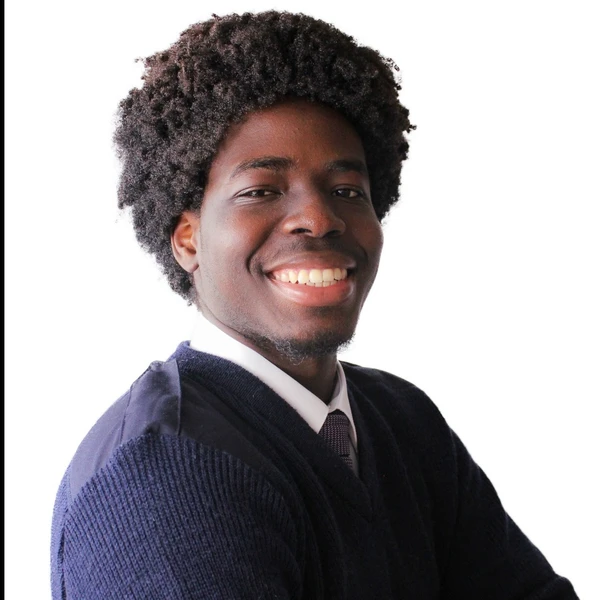
I'm an international student from Ghana pursuing a degree in Data Science at Drexel University. Passionate about the intersection of technology, social impact, and global equity, I strive to use data to drive meaningful change. Beyond academics, I’m involved in professional development programs like the Goldman Sachs Possibilities Summit and support student-led initiatives that empower underrepresented communities in tech. With a strong sense of responsibility to give back, I aim to combine technical skills with purpose-driven work that uplifts others and builds a more inclusive future.
Education
Drexel University
Bachelor's degree programMajors:
- Engineering, Other
- Finance and Financial Management Services
- Data Science
Career
Dream career field:
Technology
Dream career goals:
Data Analyst
Choppies Ventures2022 – 2022Software Engineering Intern
Mansa Capital2023 – 2023Data Analyst
Vivo Energy2024 – 2024Financial Controller
Venerable2024 – 20251 year
Sports
Soccer
Intramural2024 – Present2 years
Public services
Volunteering
CVP Ghana — Head of Financial Committee2020 – Present
Future Interests
Volunteering
Philanthropy
Entrepreneurship
Mohamed Magdi Taha Memorial Scholarship
Mohamed Magdi Taha’s legacy reminds us that a community is not something one simply finds, but something one builds with intention, compassion, and a voice willing to speak up for others. He understood that advocacy is not always a grand, sweeping gesture but can begin with the simple, transformative act of seeing a need and choosing to stand up and bridge a gap. My journey as an international student from Ghana has been a testament to this belief, teaching me to turn the challenges of transition into ways for connection and to use my voice to build communities, one small act at a time.
Arriving on campus, I was immediately confronted with the dual challenges of academic and cultural adjustment. I saw this same silent struggle in the eyes of incoming Ghanaian freshmen, a sense of disorientation that could easily lead to isolation. I knew I had to be an up-stander for them. This conviction led me to establish a mentorship program that paired new Ghanaian students with seniors who had already navigated these challenges. To transform these meetings from simple check-ins into genuine moments of community, I centred our monthly sessions around sharing Ghanaian cuisine. A familiar meal became a powerful tool, lowering barriers and sparking conversations that bridged cultural and academic divides. The initiative’s warmth and effectiveness quickly attracted other international students, and what began as a small support group blossomed into a vibrant, campus-wide exchange of cultures and perspectives, reinforcing my belief that strength truly lies in celebrating our differences.
My commitment to community goes beyond my campus. Back home in Ghana, my friends and I co-founded a charity organization to address pressing local needs. As the finance head, I helped steer our initiatives from ideas into impactful actions. We recognized that a community’s well-being requires attention to both urgent crises and long-term morale. During the pandemic, we contributed to the community by sourcing and distributing essential COVID-19 materials to a local community, ensuring their health and safety. Later, understanding the importance of recreation and positive outlets for youth, we organized and provided soccer equipment for a local team, investing in their passion and teamwork. These experiences, both big and small, solidified my role as an advocate who listens to a community's needs and uses my voice to mobilize support.
Moving forward, I plan to amplify my voice by expanding these foundations. I aim to formalize the campus mentorship program into a university-recognized "Cultural Ambassador" initiative, creating a sustainable support system for all international students. For our charity in Ghana, I will use my financial acumen to seek grants and corporate partnerships, growing our capacity to support not just immediate needs but also educational scholarships and youth entrepreneurship programs. Mohamed Magdi Taha’s example shows that a powerful voice is one that is used consistently, whether to comfort a homesick freshman or to advocate for the resources an entire community needs to thrive. I am committed to being that kind of voice, building a future where everyone feels seen, supported, and empowered to belong.
Priscilla Shireen Luke Scholarship
Giving back has always been more than an idea to me—it is a responsibility. As someone raised in Ghana and now studying in the United States, I understand the importance of lifting others as you climb. My experiences have taught me that small acts create lasting ripple effects. Today, I give back by directly supporting communities that shaped me, mentoring peers, and contributing to meaningful student initiatives. In the future, I plan to create tools that empower underserved populations and improve lives globally.
Currently, I co-lead a charity organisation my friends and I founded during the COVID-19 pandemic. To support our local community in Ghana, we produced and distributed hygiene materials like masks and sanitisers to families who otherwise could not afford them. We also raised funds to provide soccer equipment for a youth team in our hometown. This effort helped the team stay active and united during a difficult time, showing them that they were seen and supported. These projects were entirely grassroots and funded by our personal savings and small donations. The impact wasn’t just physical; it was emotional. We reminded people back home that even from abroad, we are still part of their community.
At university, I give back through mentorship and peer support. As a Data Science major, I’ve had classmates who struggle with adapting to college-level coursework. I often volunteer to help them with assignments, understand concepts, or explore resources. For me, giving back is not limited to formal service but it’s about being available. Helping someone pass a difficult class or regain confidence in their academic journey is just as powerful as any organised initiative.
My future goal is to use data science and artificial intelligence to address social and economic disparities, especially in underrepresented communities. Growing up in Ghana, I witnessed the harm that comes from lack of access to information. From land disputes to labor rights, many people are unaware of the systems governing their lives, or how to navigate them. In the future, I want to build digital platforms that provide legal and civic guidance to individuals in their local languages. Imagine a farmer in rural Ghana using a mobile chatbot to understand how to file a land ownership claim, or a domestic worker learning her labor rights through a simple text interface. These tools can be life-changing.
Education has been the gateway to every opportunity I have had. Because of this, I also plan to invest in education initiatives, particularly those that support STEM learning for African students. Whether by developing online platforms, sponsoring scholarships, or hosting coding bootcamps, I want to make tech education more accessible for the next generation.
In everything I do, giving back is not separate from my career goals but their heart. I believe true success is measured not by what you achieve, but by how many people you lift along the way. Whether through technology, education, or community outreach, I am committed to creating impact that lasts beyond my personal journey.
This scholarship would help ease the financial pressure I face as an international student, allowing me to focus more deeply on my goals. More importantly, it would support my current work and help me build the skills and resources needed for a broader impact in the future.
Michael Rudometkin Memorial Scholarship
Selflessness, to me, is about showing up for others, even when it’s not convenient or comfortable. It’s about being present, not just when it’s easy, but especially when it’s hard. Growing up in Ghana and now studying in the U.S., I’ve learned that selflessness isn’t always a grand gesture. Often, it’s the quiet commitment to care, give, and support others in moments that matter most.
One of the most formative examples of this happened during the height of the COVID-19 pandemic. My friends and I, all from Ghana, noticed how severely the pandemic was impacting vulnerable families back home. Many lacked access to basic health supplies, accurate information, or financial resources. Even though we were students ourselves (managing tuition, rent, and food costs) we pooled together our savings to start a small charity initiative. We used the funds to produce and distribute COVID-19 materials such as face masks, sanitizers, and hygiene products to a local community in Ghana.
We didn’t have any corporate sponsors or large donations. It was simply a group of students choosing to help, because we knew what it felt like to be in need. Coordinating logistics from overseas, sourcing materials, and working with contacts on the ground was not easy. But the messages of gratitude we received reminded me that selflessness isn't about how much you give but the love and intention behind your actions.
Another example came during my time at university, when a fellow international student from my dormitory faced an emergency housing situation. His off-campus housing plans fell through unexpectedly, leaving him temporarily without a place to stay. I offered him a space in my apartment for over a week while he sorted out his living situation. Sharing my already small space wasn’t easy, especially during a busy academic term. But I remembered what it felt like to first arrive in the U.S. with no safety net, no relatives nearby, and how much I would’ve appreciated someone extending a hand. My help made a real difference to him, and the experience deepened my understanding of what it means to support one another in real, human ways.
Selflessness has also shown up in how I approach academics and community life. I often help classmates with programming assignments or data analysis projects; especially those struggling with coding for the first time. Being a student in a technical field like data science, I understand how intimidating it can be to fall behind. I don’t tutor because I expect something in return; I do it because I believe that knowledge should be shared and that lifting others up doesn’t bring you down but it brings everyone forward.
To me, selflessness is not a moment but rather a mindset. It’s choosing to give when no one is watching, to listen when someone is hurting, and to show up even when you’re tired or stressed. It’s the belief that we are all interconnected, and that by supporting one another, we not only uplift others but we also grow into more compassionate and resilient individuals ourselves.
As I continue my journey in data science and social impact, I plan to carry this selfless spirit with me. Whether I’m building tools to empower underserved communities or mentoring other students who feel lost in their academic path, I want to lead with empathy, generosity, and a deep commitment to making life better for someone else.
Robert F. Lawson Fund for Careers that Care
My name is Nana Kwasi, and I’m a Data Science major at Drexel University with roots in Ghana and a vision that reaches far beyond borders. As a first-generation immigrant, my life has been shaped by both the resilience of my upbringing and the opportunities I’ve discovered through education. I’ve always believed that knowledge is most powerful when used to serve others—and that belief is at the heart of both who I am and who I aspire to be.
Growing up in Ghana, I witnessed firsthand how a lack of access to information, technology, and legal resources could hold people back. I watched small business owners like my mother navigate complex systems without guidance, and saw young people brimming with talent and potential but limited by their environment. These experiences planted the seed of my passion for data and technology—not as abstract tools, but as means to bridge inequality, empower underserved communities, and build systems that give people control over their lives.
At Drexel, I’ve immersed myself in the world of data science—learning how to analyze patterns, build predictive models, and develop intelligent solutions to complex problems. But beyond technical knowledge, I’ve also learned how critical it is to approach innovation with empathy and intention. My dream is to leverage artificial intelligence and data platforms to create tools that improve lives at scale—particularly in underserved regions like the one I come from.
One project I envision is a multilingual, AI-powered chatbot that helps low-income individuals navigate legal systems and access government resources. Imagine a domestic worker receiving clear, local-language information about her labor rights, or a farmer using SMS to resolve a land dispute with guided support. These solutions are simple, yet potentially transformative—and they represent the kind of impact I want my career to create.
Outside the classroom, I’ve co-founded a charity initiative with friends to support communities back home. We’ve donated COVID-19 safety materials to families in need and provided soccer equipment to youth teams. These projects reflect my deep belief in community action and remind me that even small acts of service can ripple outward and inspire hope.
The values that guide me—service, equity, and perseverance—have been sharpened by my experience as an international student living independently in the U.S. I’ve had to balance academic rigor with financial responsibility, often managing rent, groceries, and tuition while navigating a new culture. It hasn’t always been easy, but it’s made me stronger, more resourceful, and deeply grateful for every opportunity I’ve been given. These challenges have also fueled my drive to ensure that others—especially those in underrepresented communities—can access opportunity, too.
In the future, I hope to work at the intersection of technology and global development, creating open-source tools and systems that promote transparency, access, and empowerment. Whether through nonprofit tech initiatives, private sector innovation, or eventually launching my own social enterprise, my mission is to use data not just to understand the world, but to change it for the better.
Receiving this scholarship would bring me one step closer to that mission. It would ease the financial burden of independent living and allow me to dedicate more time to research, service projects, and technical development. More importantly, it would affirm the belief that someone like me—with humble beginnings, big dreams, and a heart for impact—has a place in building the future.
I’m not just pursuing a career. I’m pursuing a purpose: to ensure that technology works for everyone, not just the privileged few. With the right support, I know I can turn this vision into reality—and help others do the same.
Xavier M. Monroe Heart of Gold Memorial Scholarship
When I first moved from Ghana to the United States for college, I expected challenges—cultural differences, academic rigour, and the usual adjustments that come with living in a new country. What I didn’t anticipate was how deeply isolation, financial pressure, and self-doubt would affect my mental and emotional well-being during my first year.
I arrived at Drexel University full of ambition and optimism, eager to dive into my Data Science major and pursue opportunities that could one day change lives, including mine. However, the transition was harder than I imagined. I was thousands of miles from my family and the comfort of home. I had no nearby relatives, few familiar faces, and a growing weight of responsibilities that I had never faced alone. From navigating healthcare and housing on my own to figuring out how to stretch limited finances across high living costs, I felt overwhelmed.
The real turning point came during my first winter term. Balancing full-time coursework, adjusting to the academic expectations of a U.S. university, and managing my finances left me physically and emotionally drained. I failed a key exam in one of my programming courses—something that had never happened to me before. I remember feeling defeated. Back in Ghana, I had always been near the top of my class. Now, I questioned whether I even belonged in the program I had worked so hard to get into.
But as painful as that moment was, it became a catalyst for growth. I realized that success in this new chapter wouldn’t come from raw intelligence or past accolades—it would require humility, adaptation, and persistence. I began to take ownership of my learning in a new way. I sought tutoring, visited professors during office hours, and joined study groups. I explored different learning methods that worked better for me, including interactive coding platforms and visual aids. I started to ask for help without feeling ashamed—something I struggled with before.
Outside the classroom, I also found strength by leaning into community. I joined African student organizations where I connected with people who understood my cultural background and challenges. I spoke openly about what I was going through, and in return, I received support, advice, and friendship. I even co-founded a small charity organization with friends, channeling my struggles into action by working on projects that benefited underserved communities in Ghana. Giving back reminded me of my purpose and helped me shift my focus from what I was lacking to what I could offer others.
The most important lesson I learned from this experience is that failure is not the opposite of success—it is part of the process. That exam I failed? It didn’t define me. It pushed me to become more resilient, reflective, and resourceful. I’ve since earned higher grades, gained hands-on experience through co-op opportunities, and grown more confident in my skills and direction. More importantly, I’ve learned that setbacks don’t mean you’re off-track—they’re just detours that demand new tools and new ways of thinking.
Today, I continue to face challenges as a first-generation immigrant student navigating life in a foreign country, but I approach them differently. I don’t panic at the first sign of struggle. I ask questions, I make adjustments, and I remind myself that persistence matters more than perfection.
This lesson will stay with me far beyond college. Whether I’m building data platforms to help underserved communities or managing complex tech projects in the future, I know how to face obstacles with resilience. I’ve learned that success isn’t about avoiding failure—it’s about using it as fuel for growth, purpose, and long-term impact.
Lynch Engineering Scholarship
From a young age, I was taught that education is both a gift and a responsibility. Growing up in Ghana, I watched my mother work tirelessly to support our family through her small supermarket business, often putting my needs before her own. It was through her example that I first learned the importance of perseverance, sacrifice, and community. Now, as a Data Science student at Drexel University, I carry those values with me—and they continue to guide my long-term goal: to become a technology leader who uses data-driven systems to solve real-world problems and create meaningful, equitable change.
My career vision centers around the intersection of engineering, artificial intelligence, and social impact. I aspire to build digital platforms that expand access to critical information for underserved populations. For example, I’m passionate about creating AI-powered tools that help low-income individuals understand their legal rights, access basic healthcare information, or find government services. I envision a world where a farmer in rural Ghana can use a chatbot in their native language to navigate a land dispute, or where a young mother can access maternal health advice via SMS, even without internet access. These are not just technical problems—they are human problems that demand culturally aware, ethically grounded solutions.
The core values that drive these ambitions are empathy, equity, and empowerment. As an international student studying in the United States, I’ve seen firsthand how access—or lack thereof—can determine a person’s entire trajectory. I’ve experienced the difficulties of living independently in a foreign country, balancing rent, tuition, and groceries while striving for academic excellence. I’ve also seen what happens when people are given the tools and knowledge to change their circumstances. These experiences have taught me to lead with compassion and to design with intention.
My interest in engineering and data science stems not just from a love for technology, but from its potential to solve problems on a large scale. In high school, I was drawn to mathematics and computing because they offered clarity, logic, and structure. But as I’ve grown in my studies and taken on hands-on experiences at Drexel—including coursework in machine learning, ethics, and analytics—I’ve come to appreciate how these tools can do more than crunch numbers. They can uncover patterns of injustice, automate tasks to free up human effort, and scale access to life-changing resources. I want to create solutions that are not just efficient, but also fair and accessible.
Beyond the classroom, I’ve committed myself to service. I co-founded a charity organization with close friends to support under-resourced communities in Ghana. Our initiatives have included producing COVID-19 materials for local families and donating soccer equipment to youth teams. These experiences have shown me the power of grassroots action and have deepened my desire to use my technical knowledge to make a larger impact.
The Lynch Engineering Scholarship would be a vital help on this journey. Financially, it would ease the burden of independent living and allow me to focus more fully on my studies and research. It would also serve as recognition of the values I strive to uphold: curiosity, community, and commitment to the greater good. With this support, I will continue building toward a career where I can engineer inclusive technologies that bridge gaps, uplift communities, and empower individuals to take control of their lives.
In the long term, I hope to lead innovative projects in global tech companies or international development organizations. My goal is not just to succeed, but to bring others with me—to build systems that reflect the diverse world we live in and ensure no one is left behind.
Dr. Soronnadi Nnaji Legacy Scholarship
As a first-generation African immigrant from Ghana, I carry the values of resilience, community, and perseverance—principles from my upbringing. My journey at Drexel University has been shaped not only by my academic ambitions but also by my commitment to uplifting those around me, just as others have done for me.
One of my proudest contributions has been co-founding a charity organisation with like-minded friends. Our work began during the COVID-19 pandemic, when many communities in Ghana lacked access to basic protective equipment. We mobilised resources and produced masks, hand sanitisers, and hygiene kits for local families, helping to reduce exposure and spread. We’ve since expanded our efforts to include youth empowerment—donating soccer gear to a local team of passionate young players who, until then, had been playing barefoot or in worn-out shoes. These projects may seem small, but the gratitude and hope they sparked reaffirmed my belief that even modest efforts can create lasting change.
Here in the U.S., I also stay grounded in my cultural identity by participating in African student communities. At Drexel, I engage with peers from across the continent through cultural events, dialogues, and advocacy work. These spaces allow us to celebrate our diversity while supporting one another in an academic environment where we’re often underrepresented. They’ve also taught me the value of collective strength—how standing together not only enriches our experience but helps amplify our voices and contributions.
Growing up in Ghana, education was viewed not just as a personal goal but a communal investment. My mother, who runs a small supermarket, always emphasised that knowledge was the one thing no one could take from me. That mindset stayed with me when I moved to the U.S. for college, where I faced new challenges—academic rigour, cultural differences, and the burden of supporting myself financially. Living independently has been both a privilege and a struggle. I’ve juggled rent, groceries, and tuition, all while maintaining a strong GPA and seeking out co-op opportunities to build my skills. Despite these obstacles, I’ve never lost sight of my purpose: to use data and technology to solve real-world problems, especially those affecting underserved communities like the one I come from.
My goal is to build data-driven platforms that harness artificial intelligence to expand access to information for low-income individuals. I envision a future where a farmer in Ghana can use a chatbot in Twi or Ewe to navigate a land dispute, or where a domestic worker can learn her labor rights through an accessible, mobile-friendly tool. This vision is rooted not only in my technical education but in the cultural value of helping others succeed alongside you.
Receiving the Dr. Soronnadi Nnaji Legacy Scholarship would be a tremendous support on this journey. Financially, it would relieve some of the pressure of living expenses and allow me to dedicate more time to research, community work, and technical projects that align with my career goals. More importantly, it would affirm that my identity—as a first-generation African immigrant, a community servant, and a STEM student—matters. It would connect me to the legacy of a trailblazer like Dr. Nnaji, whose life exemplified the very values I strive to live by: academic excellence, cultural pride, and service to others.
As I look to the future, I hope to follow a similar path—using the education I’ve worked hard for not only to advance my career but to give back to the communities that raised and inspired me. This scholarship would not just help me complete my degree; it would help me continue building a life of purpose, impact, and pride in where I come from.
Camari Hunt 4x Foundation Independent Living Expenses Scholarship
Living independently as a college student is challenging. Living independently as an international student in a new country—without a family support system nearby, with limited access to public assistance, and with a currency exchange rate that rarely works in your favor—is a different kind of challenge altogether. Since moving from Ghana to pursue my degree at Drexel University, I’ve learned what it means to manage not just academic stress, but also the financial strain of maintaining a household on my own while trying to make the most of my education.
My financial responsibilities go beyond just tuition and books. I pay rent monthly and cover all living costs—from groceries and transportation to utilities and occasional medical bills. Because I’m on a student visa, work opportunities are limited. Even budgeting wisely, I often find myself stretched thin. Back home, my mother runs a small supermarket and does her best to support me, but the economic instability in Ghana, coupled with a weak currency, makes it difficult to rely on consistent financial help. There have been months where I’ve had to skip meals to make rent, or walk long distances just to save on transportation. These experiences, while difficult, have also pushed me to become incredibly disciplined, resilient, and resourceful.
Despite these obstacles, I remain deeply committed to my educational and professional goals. I’m currently pursuing a degree in Data Science with a plan to minor in Finance. My dream is to work at the intersection of technology, social impact, and global development—using data to design systems that uplift underserved communities. One idea I’m particularly passionate about is developing AI-driven digital platforms that help low-income individuals access legal information in their native languages. Imagine a Ghanaian farmer using a chatbot to file a land dispute, or a domestic worker learning about her labor rights—this is the kind of meaningful, scalable change I want to help create.
In addition to my academic path, I’ve found strength, purpose, and community through service. I co-founded a small charity organization with close friends who, like me, share a vision of giving back. We began during the COVID-19 pandemic, distributing masks and sanitizers to vulnerable communities in Ghana. More recently, we raised funds to provide soccer gear for a youth team in need—some of the players had never owned cleats or a proper uniform. What started as a small idea among friends has grown into a cause that reminds us of the power of community.
Giving back is not just something I do—it’s a reflection of how I was raised. In Ghana, community is everything. We were taught to look out for one another, to share what little we had, and to act when we saw a need. This value has shaped every part of my journey. Through our charity work, I’ve learned how to lead, organize, and speak up for others. It’s also helped me stay grounded and connected to my roots, even as I study in a very different world.
Receiving this scholarship would provide more than just financial relief—it would be a lifeline that allows me to breathe, focus, and grow. With less stress about how I’ll pay my next month’s rent or afford groceries, I’ll be able to concentrate more fully on schoolwork, internships, and research opportunities that bring me closer to my goals. It will also help me continue my work with our charity, as I’ll have the flexibility to dedicate time and energy toward building out new initiatives.
This scholarship is not just an investment in me as a student—it’s an investment in the impact I intend to make. I am determined to use the education I’m receiving to give back to my community, both in Ghana and in the broader global space. I want to be a voice for those navigating systems they don’t understand, a builder of tools that make justice and opportunity more accessible, and an example to others who come from humble beginnings but dare to dream beyond borders.
Thank you for considering my story and my goals. With your support, I’ll be able to continue walking this path—not just toward personal success, but toward lasting impact for others as well.
Byte into STEM Scholarship
From Ghana to Data: A Journey Fuelled by Purpose and Possibility
My journey began in Ghana, where I was raised in a close-knit community that valued family, faith, and resilience. From a young age, I watched my mother run a small supermarket—balancing business challenges with grace and perseverance. Her strength, along with the supportive network around me, shaped my belief in service, hard work, and community-driven growth. But even in that warm environment, I noticed gaps: limited access to basic information, missed opportunities due to lack of resources, and communities struggling not because they lacked potential, but because they lacked support. These early observations planted a seed in me—a desire to become someone who builds solutions for real people.
That seed grew when I moved to the United States to pursue my education. As an international student at Drexel University majoring in Data Science, I have had to navigate culture shock, financial pressure, and the challenges of being far from home. These experiences have taught me to be resilient, adaptable, and resourceful. More importantly, they have solidified my belief that knowledge is most powerful when it is used to uplift others.
My passion for technology isn’t rooted in the code itself—it's in what the code can do. I’m particularly driven by the potential of artificial intelligence to expand access to life-changing resources for underserved communities. One project that’s close to my heart is the idea of creating AI-powered digital platforms to help low-income individuals understand their legal rights. Imagine a chatbot that speaks local Ghanaian languages, guiding a farmer through a land dispute process or helping a domestic worker know her labor protections. This is the kind of work I want to do—human-centered, impact-driven technology that gives people the tools to advocate for themselves.
That passion for service is also what led my friends and me to co-found a charity organization. We’ve produced COVID-19 materials for local communities in Ghana and donated soccer equipment to a youth team that lacked basic supplies. These efforts may seem small, but they reflect a larger commitment to giving back, especially to the people and places that shaped us. They also reflect my belief that leadership isn’t just about titles—it's about taking initiative, mobilising others, and acting with purpose.
Through my Data Science degree, I’m building the technical foundation to bring these ideas to life. Courses in machine learning, data ethics, and natural language processing are equipping me with the skills to design systems that are both powerful and socially responsible. Drexel’s co-op program and professional development opportunities have helped me connect classroom learning with real-world impact. Eventually, I hope to work at the intersection of AI, public policy, and community development—creating scalable tools that serve marginalised populations not just in Ghana, but globally.
My education is not just a personal goal—it’s a bridge. A bridge between where I come from and where I’m going. A bridge between problems and solutions, between potential and progress. With the knowledge and opportunities I gain, I plan to return that value tenfold—to my family, my community, and the world.
Receiving support through this scholarship would not only ease the financial burdens of pursuing my education, but also affirm that this path I’m walking—one filled with purpose, challenge, and service—is one worth investing in. I’m determined to use every skill I learn and every opportunity I’m given to create a legacy of impact.
Because I believe technology should not just change industries—it should change lives.
Chadwick D. McNab Memorial Scholarship
Empowering Voices Through Code: A Vision for AI and Justice
One of the most meaningful projects I’ve worked on began not in a classroom or lab, but in a conversation with my mother and neighbours back home in Ghana. As we discussed common struggles in our community, a recurring theme emerged: the lack of accessible legal information for ordinary people. Farmers unsure of how to protect their land, domestic workers unaware of their labour rights—many people face injustice simply because they don’t know what protections they are entitled to. That conversation inspired an idea that has since grown into a deep passion: building digital platforms powered by artificial intelligence to help low-income individuals understand their legal rights and options.
I imagined a chatbot—simple, intuitive, and available on mobile phones—that could guide someone through legal processes in their native language. For example, a farmer dealing with a land dispute could answer a series of questions in Twi or Ewe, and the system would use AI to determine the issue, retrieve relevant legal information, and even suggest the next steps. Similarly, a domestic worker could use the tool to learn what labour protections she has and how to report violations. The beauty of this idea lies in its scalability and accessibility. Many low-income individuals already use smartphones and messaging apps. By meeting them where they are, this project could transform legal access from an intimidating, expensive process into something as easy as sending a message.
As a Data Science student at Drexel University, I’ve started laying the groundwork for this vision. I’ve been learning how natural language processing (NLP), sentiment analysis, and machine learning models can be trained to interpret text input and generate contextually appropriate responses. I’ve also begun exploring open-source legal datasets and the frameworks needed to ensure compliance with both local and international data privacy laws. While the technical work is challenging, it is deeply fulfilling because the goal isn’t just to build another app—it’s to bridge the gap between knowledge and justice.
What inspires me most about working in technology is its power to make systems more equitable. In many parts of the world, justice is a privilege of the informed. Those who understand how to navigate legal systems often win by default, while those without that knowledge are left vulnerable. Technology, particularly AI, can disrupt that imbalance. It can take something as complex as legal code and turn it into plain-language guidance. It can empower people with knowledge that once seemed out of reach. And most importantly, it can amplify the voices of those who are often unheard.
I envision a future where people in underserved communities won’t have to rely solely on expensive lawyers or untrustworthy middlemen to understand their rights. Instead, they’ll have tools that make justice approachable and personalised. I hope to partner with legal aid organisations, technologists, and policymakers to pilot this project in Ghana and eventually expand it to other countries with similar needs.
Winning the Chadwick D. McNab Memorial Scholarship would be an important step toward making this vision a reality. It would support not just my education, but my commitment to building tech that uplifts others. I’m not just learning to code for the sake of writing programs—I’m learning to code for change.