user profile avatar

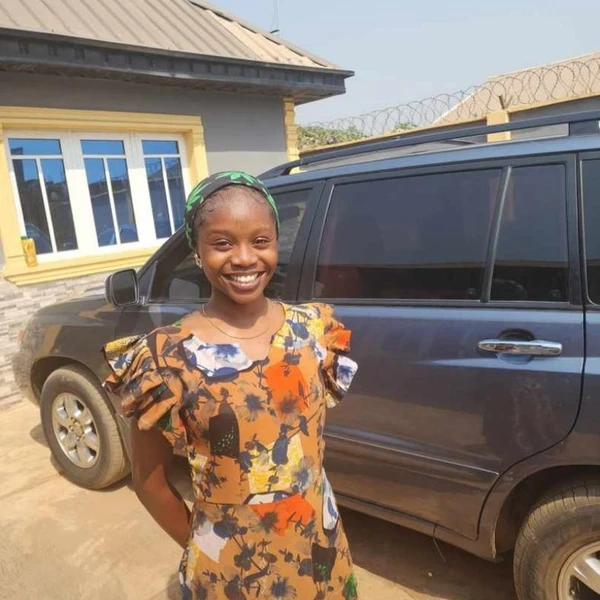
Najat Balogun

1x

Finalist

Bio

I graduated Alief Taylor High School as a calass of 2026. I plan to attend The University of Texas at Dallas as a first-generation Nigerian immigrant to major in neuroscience. I want to become a brain surgeon. I want to serve underserved communities and give adequate treatment of neurological conditions to help avoid cases where patients die due to a lack of urgency and an inadequate healthcare system. I also want to reduce racial inequality in healthcare by treating every patient with respect and actively listening to their demand and complaints. Also, I want to ensure people do not have to compromise on their health due to living conditions, social status, or the area where they live. Health is wealth, and everyone deserves to be healthy.

Education

Alief Taylor High School

High School
2025 - 2026

Miscellaneous

  • Desired degree level:

    Bachelor's degree program

  • Majors of interest:

    • Biological and Biomedical Sciences, Other
    • Medicine
    • Neurobiology and Neurosciences
  • Planning to go to medical school
  • Career

    • Dream career field:

      • Medicine
    • Dream career goals:

      To be a renowned neurosurgeon

    • Crotcheted a lot of items for people and sold them. Handled every step of the business

      Self owned crotchet business
      2024 – Present2 years
    • I made food and packaged them carefully for friends, families, and people who ordered. I also handled my own finances.

      Self owned
      2025 – Present1 year
    • Cashier and Customer Service

      Family Owned Entrepreneurial Business
      2022 – 20242 years

    Sports

    Track & Field

    Club
    2024 – 2024

    Awards

    • Top 3 for 800m race
    • Top 2 for 400m race

    Cross-Country Running

    Intramural
    2024 – 2024

    Arts

    • Alief Tayor Theatre club

      Acting
      2025 – Present

    Public services

    • Volunteering

      Texas Association for Future Educators — Gardener
      2025 – 2025
    • Volunteering

      Braiding entrepreneurship — Helped new members learn basic skills of braiding.
      2023 – 2024
    • Volunteering

      OSMAS — Helped the school library staff to ensure library users have access to resources when needed.
      2023 – 2023
    • Volunteering

      School — Tutored underclassmen in boarding school during test and exam periods and helped them better understand topics.
      2023 – 2024
    • Volunteering

      Project LIT — VIP author guide
      2026 – 2026
    • Volunteering

      FBLA — Responsible for the lecture room
      2026 – 2026

    Future Interests

    Advocacy

    Volunteering

    Philanthropy

    Entrepreneurship

    Dr. Michal Lomask Memorial Scholarship
    My middle name, Aduke, belonged to my grandmother. I never met her, as she passed away a month before I was born. The night my mother explained how she died, it was her remembrance ceremony. The power had gone out again and a rechargeable lamp sat between us, casting shadows across my mother’s face as she described the rushed referrals between hospitals, the delays in treatment, and the expired medication that should have never been prescribed to her. What stayed with me most was the grief and frustration stretched across my mother’s face. My grandmother’s condition was reversible but the system around her failed to respond in time. As I grew older, I realized her story was not unusual. I heard relatives talk about overcrowded hospitals and patients waiting endlessly to be attended to. I heard stories of conditions becoming life-threatening because symptoms were ignored for too long. While limited resources were part of the issue, what unsettled me more was the inconsistency in urgency and care. There were moments where patients were not taken as seriously as they should have been, sometimes because of their race or socioeconomic status. Neglect became something people expected from healthcare instead of something they questioned. That frustration pushed me toward STEM. Science became the only place I could pour my desire and compassion into solving the problem I kept seeing around me. After school, I often helped my mother at her store before returning home to cook and finish chores with my siblings. It was usually late at night, after the house had finally become quiet, that I would sit down to study biology and neuroscience. Even when I felt fatigued, I kept reading because I wanted to understand why symptoms could be overlooked and why preventable deaths kept becoming normal. The more I learned, the more I realized medicine is not only about knowledge, but also about urgency, and the ability to listen to patients carefully. I became especially drawn to neurosurgery after reading Ben Carson’s story and learning more about the nervous system. Neurological conditions are often deeply complex, and many symptoms are invisible to everyone except the patient experiencing them. In a healthcare system already affected by neglect and bias, patients with neurological conditions are especially vulnerable to being misunderstood or dismissed. I want to pursue neuroscience to reduce this vulnerability and become the kind of physician who pays close attention. That same desire to help others shaped how I approached my community. In boarding school, I spent weekends tutoring underclassmen in science courses. Watching students regain confidence after understanding concepts they once feared showed me how much I could help fuel someone’s future. In the future, I hope to continue serving underserved and minority communities through medicine, research, and advocacy. During college, I plan to seek clinical and volunteer opportunities that expose me to patient care in under-resourced environments so I can understand how to respond to patients effectively. I also hope to raise awareness about neurological conditions where symptoms are often overlooked and normalized until they become severe. Carrying the name Aduke has become more than a family connection to me. It is a constant reminder of what can happen when care falls short, and of the responsibility I want to take on through medicine. I want to help create a healthcare system where neglect is not normalized, where patients are listened to properly, and where outcomes do not become dangerous due to lack of urgency.
    Abigail O. Adewunmi Memorial Scholarship
    My middle name, Aduke, belonged to my grandmother. I never met her as she passed away a month before I was born. Her death was due to delays in care, referrals between hospitals, and treatment that came too late. Since then, I have come to understand that what happened to her was not an isolated experience, but part of a larger pattern where access, urgency, and attention can determine whether someone receives the healthcare they need. That understanding shaped my goals and how I want to serve others. I plan to pursue a career in medicine, with the goal of becoming a neurosurgeon. I am drawn to neuroscience because it requires careful interpretation of complex systems that influence how people experience illness. When that complexity is met with inattention or lack of care, particularly due to bias in underserved and minority communities, patients will be overlooked misdiagnosed, or treated at the wrong time. I want to be a part of changing that outcome from the complex root. While I have not had formal opportunities to volunteer in medical settings, I have consistently sought ways to support my community. Whether tutoring underclassmen in boarding school, assisting in a braiding workshop to teach new members basic skills, or volunteering as a guide at Teen Book Con and Alief New Teacher Summit to create welcoming environments for authors and other participants, I have learned that true service requires patience and the ability to respond to people's needs in the moment. These roles taught me to create welcoming, accessible environments, skills that are needed for patient advocacy. In college, I plan to build on this by volunteering in healthcare settings and clinics that serve underserved and marginalized populations. I want to be in environments where I can observe how care is delivered, learn how to respond to patients with urgency and attention, and understand practical challenges that affect treatment decision. I will also lead outreach programs that raise awareness about neurological conditions whose symptoms are often overlooked or misunderstood, helping individuals recognize when to seek care earlier. Through these efforts, I aim to combine clinical exposure with advocacy through consistent volunteering, ensuring my growth in medicine is connected to improving a patient's experience. Beyond college, I plan to continue this work as a physician by contributing more equitable practices and ensuring that patients are treated with the right urgency, attention, and respect regardless of their background. This scholarship represents the opportunity to pursue these goals with focus and purpose. Like Abigail Adewunmi, I believe in using education as a way to serve others, guided by determination, faith, and a commitment to make a meaningful difference. Carrying my grandmother's name reminds me of the kind of care I want to help provide for patients; care that is timely, attentive, and grounded in the belief that no one's story should end due to a delay in the healthcare system.