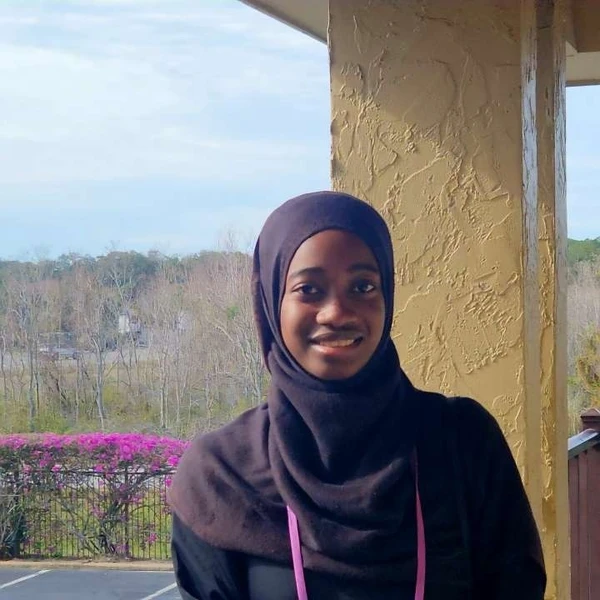
Gender
Female
Ethnicity
Black/African
Hobbies and interests
Robotics
National Honor Society (NHS)
Volunteering
Poetry
Badminton
Reading
Cultural
Criticism
Literature
Psychology
Social Science
Social Issues
I read books multiple times per month
LOW INCOME STUDENT
Yes
FIRST GENERATION STUDENT
Yes
Moriam Lawal
1x
Finalist
Moriam Lawal
1x
FinalistBio
Hi, I’m Moriam Lawal--a curious and driven student currently ranked in the top 5 in my class of 120. I’ve taken several AP classes, dual credit courses, and love diving deep into STEM topics, especially when they have real-world impact. Whether it's designing low-cost aquatic prosthetics for children or researching how different cultures perceive mental health, I’m always looking for ways to explore the sciences.
I’ve been part of programs like MITES at MIT and the Collegiate Scholars Program at the University of Chicago, which have helped me grow my skills in science writing and medical engineering. Outside of academics, I’m passionate about making STEM more inclusive--especially for girls and underrepresented students--and I’ve led efforts to bring more diversity to engineering clubs in my school. I’m excited about the future of ethical technology, and I’m looking for opportunities that support students who want to use science to solve meaningful problems.
Education
Chicago Math & Sci Elem Charter
High SchoolMiscellaneous
Desired degree level:
Doctoral degree program (PhD, MD, JD, etc.)
Majors of interest:
- Engineering Science
Career
Dream career field:
- Biotechnology
Dream career goals:
Intern for Sound Producer
Whatever Spectrum2025 – 2025
Sports
Badminton
Varsity2024 – Present2 years
Awards
- MVP
Research
Chemistry
Chicago Math and Science Academy — main scientists and researcher2025 – 2026
Arts
Chicago Math and Science Academy AP 2D ART
Paintingpaintings, portraits2024 – 2025
Public services
Volunteering
CareForREAl — food distributor volunteer2023 – Present
Future Interests
Volunteering
Philanthropy
Entrepreneurship
Science and Advocacy Scholarship
No matter the illness, there was always an Abgo for it.
Agbo is a bitter herbal tincture, swallowed when the nearest hospital is a year's salary away. During Harmattan season, it was our first line of defense. Every Sunday, the jingle of the Agbo man's bicycle echoed through my neighborhood like an ice cream truck. Though my parents insisted the bitterness would make me strong, eight-year-old me dreaded every sip.
In 2016, I found myself on a long plane ride to America. As I adjusted to new surroundings, I noticed the absence of the Agbo man's jingles and the loss of our Sunday routine. Instead of buying bitter leaf brews, we took store-bought medicine. Instead of the two-hour trip to the hospital and an exorbitant bill, we took comfort in the twenty-minute drive to a subsidized clinic.
One afternoon, my dad informed me that my uncle had lost his leg in an accident and couldn’t access the aid he required. As I watched my dad pool money to send prostheses and medication to Nigeria and my uncle lose his vibrant persona, it became clear to me that not all ailments can be remedied with Agbo.
When I began high school, I resolved to educate myself so that I could make a tangible impact on healthcare access in Nigeria. My experience on my school’s FIRST robotics team allowed me to explore how robotics can improve mobility for individuals with limited mobility. This experience led me to take a medical devices class through the MIT MITES program in my junior year, where I had the opportunity to design an aquatic prosthetic leg for children. As I navigated the challenges of creating a prosthetic device, I also targeted an issue that deeply resonated with my passion for creating medical technology: accessibility. I ensured my innovation could serve the families and children that needed it the most.
My experience designing prosthetic devices taught me that innovation alone is not enough; people must also have access to the opportunities that make innovation possible. I began to think about access in a different way: not just who benefits from science, but who gets to participate in it.
Through FTC robotics outreach, community STEM workshops, and mentoring local robotics teams, I have worked to make STEM feel accessible to others, particularly girls who may not see themselves represented in engineering. When I joined my high school robotics team, I was one of only two girls on a team of eleven. I still remember leaving a meeting in tears, overwhelmed by the feeling that I did not belong. Rather than allowing that experience to push me away from STEM, it strengthened my resolve to ensure that other girls would feel welcomed in spaces that had once felt intimidating to me.
By introducing students to robotics and mentoring aspiring engineers, I strive to show young people that they belong in STEM just as much as anyone else. Today, I am one of five girls on my robotics team and serve as its first female captain. By helping students see themselves as future scientists, engineers, and innovators, I have worked to create pathways into science for those who might otherwise feel excluded from it.
If science is not championed, communities like the one I grew up in risk being left without access to healthcare innovations and the opportunities needed to create their own future. Science does more than generate discoveries; it expands possibilities. That is why I am committed not only to developing accessible medical technologies, but also to empowering the next generation of innovators to transform lives.
Julie Adams Memorial Scholarship – Women in STEM
No matter the illness, there was always an Agbo for it.
Agbo consists of bitter tinctures, swallowed quietly at home when the nearest hospital is a year's salary away. When Harmattan arrived with its entourage of illnesses, Agbo was our first line of defense. On Sunday, the jingle from the Agbo man’s bicycle rang through my neighborhood like an ice cream truck. We drank these earthy concoctions first thing in the morning. Though my parents insisted that the bitterness would make me strong, 8-year-old me thought the drinks were unpleasant.
In the winter of 2016, I found myself on a long plane ride to America. After we landed, it dawned on me that I was in a new continent where everything seemed to contradict all I'd known. As I adjusted to new surroundings, I noticed the absence of the Agbo man's jingles and the loss of our Sunday routine. Instead of buying bitter leaf brews, we took store-bought medicine. Instead of the two-hour trip to the hospital and an exorbitant bill, we took comfort in the twenty-minute drive to a subsidized clinic in America.
One afternoon, my dad informed me that my uncle had lost his leg in an accident and couldn’t access the aid he required. To ease his pain, he relied on bitter leaves and neem concoctions. As I watched my dad pool money to send prostheses and medication to Nigeria and my uncle lose his vibrant persona, it became clear to me that not all ailments can be remedied with Agbo.
When I began high school, I resolved to educate myself so that I could make a tangible impact within the healthcare system in my country. My experience on a FIRST robotics team allowed me to explore the depth to which robotics can provide aid for individuals with limited mobility. This experience led me to take a medical devices class through the MIT MITES program in my junior year, where I designed an aquatic prosthetic leg for children. As I navigated the challenges of creating a prosthetic device, I also targeted an issue that deeply resonated with my passion for creating medical technology: accessibility. Through financially and environmentally inclusive design choices, I ensured my innovation could truly serve the families and children that needed it the most.
Throughout the design process, I learned that biomedical engineering is not solely about creating advanced technology; it is about designing with people in mind. I had to consider how children would move comfortably in the water, how families could realistically afford the device, and how environmental conditions might affect its durability. That experience taught me the importance of empathy in engineering and reinforced my desire to pursue a career dedicated to creating healthcare solutions that are both innovative and accessible.
As I embark on my college journey, I aim to major in biomedical engineering with a minor in global health studies. I plan to help build a future in which minority populations, like mine, don’t have to rely solely on homemade remedies like Agbo nor be denied rehabilitation and an improved quality of life. I'll continue to be committed to being a part of the effort to innovate the healthcare tools of tomorrow while advocating for equity and accessibility for underserved communities globally.