
Hobbies and interests
Agriculture
Alpine Skiing
Animals
Art
Baking
Beach
Calligraphy
Camping
Child Development
Coffee
Communications
Concerts
Crafting
Education
Farming
Fishing
Food And Eating
Gardening
Graphic Design
Hiking And Backpacking
Horseback Riding
Hunting
Motocross
Nordic Skiing
Ranching
Shopping And Thrifting
Shooting
Wrestling
Reading
Reading
Historical
I read books multiple times per week
Morgan Holmes
1x
Finalist
Morgan Holmes
1x
FinalistBio
Hello!
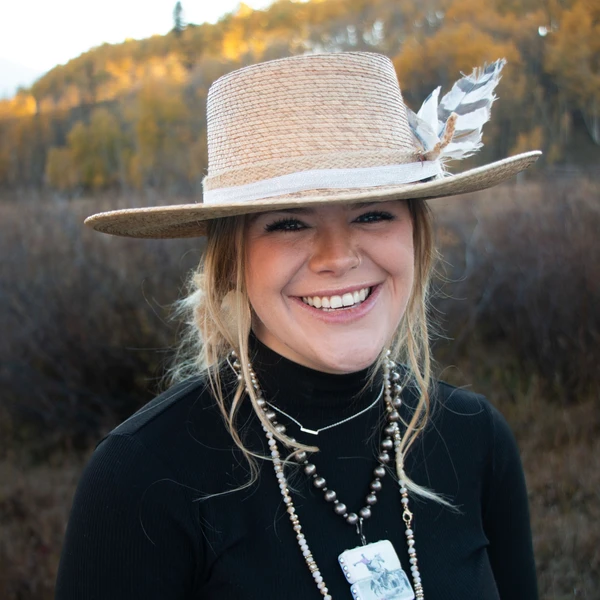
My name is Morgan Holmes and I am an Early Childhood Special Education teacher and Child Find Coordinator for two counties. I am simultaneously getting my MA degree and license in Early Childhood Special Education alongside my professional work. I live in the remote mountains and have a fierce love for the outdoors. I am also very passionate about child development and special education something fierce!
Education
Grand Canyon University
Master's degree programMajors:
- Special Education and Teaching
Western Colorado University
Bachelor's degree programMajors:
- Communication, General
Career
Dream career field:
Education
Dream career goals:
Educational Assistant
Gunnison Watershed School District2022 – 20253 years
Sports
Volleyball
Varsity2015 – 20194 years
Awards
- yes
Public services
Volunteering
Gunnison Cattlemen's Days — Planning/Volunteer2020 – 2022
Bulkthreads.com's "Let's Aim Higher" Scholarship
Something I hope to build in my life is a future where children with special needs feel understood, supported, and empowered to succeed. My journey toward building this future began with a young boy in my second year teaching preschool. He was a high-needs student with autism and was nonverbal. At the time, our program did not have the staffing needed to fully support him, so I stepped in and worked closely with him throughout the day. What started as simply trying to help one student soon became the moment that shaped my entire career and the foundation for the future I want to build.
He and I quickly developed a deep connection. Although he did not use spoken words, he communicated in his own ways. In the beginning, I struggled to understand what he needed, and many days I went home feeling overwhelmed and emotional, hoping I would learn how to support him better. Over time, I realized that my role was not to change him, but to learn how to meet him where he was and understand his unique way of communicating.
As time passed, I began recognizing his communication cues and the subtle ways he expressed his needs. Slowly, our connection grew stronger. He began making eye contact with me and would search for me in a room full of students and teachers. One day he walked up to me and placed his lunchbox in my hands to tell me he was hungry. While this moment may seem small, it represented something profound: trust, connection, and the power of being understood.
That student changed my life. He showed me that every child deserves an educator who believes in them, advocates for them, and takes the time to truly understand them. Because of him, I decided to pursue a career in special education and begin building a future dedicated to supporting children with diverse needs.
Today, I continue to build that future through my work serving young children with special needs and their families. My goal is to create inclusive learning environments where students feel safe, valued, and capable of growth. I strive to empower students by helping them develop communication, self-regulation, and confidence so they can participate meaningfully in their classrooms and communities.
Looking forward, I hope to continue building stronger support systems for children with disabilities, especially in rural communities where access to services can be limited. By supporting both students and their families, I hope to help create communities where every child—regardless of ability—has the opportunity to be understood, supported, and celebrated.
The young boy who changed my life may never know the impact he had on my path, but because of him I am committed to building a future where children with special needs are not overlooked, but instead are seen, heard, and empowered to reach their full potential.
Bryent Smothermon PTSD Awareness Scholarship
Through my experiences with service-related PTSD in my family, I have learned how deeply trauma can affect not only the individual experiencing it, but also the people who love and support them. My uncle, a veteran, lives with severe PTSD and was recently admitted again to a psychiatric care center during an episode. Watching someone you care about struggle in this way is incredibly difficult and heartbreaking for our entire family. It has shown me that PTSD is not simply a condition someone can “get over,” but rather a complex and ongoing challenge that requires patience, compassion, and professional support. Experiencing this alongside my family has helped me better understand how important it is to approach individuals suffering from PTSD with empathy instead of judgment.
Through my uncle’s journey, I have learned that healing is rarely a straight path. There are moments of progress, but there can also be setbacks that feel overwhelming for both the individual and their loved ones. These experiences have taught me that support systems matter greatly. People who are experiencing PTSD often need consistent care, stability, and people around them who are willing to listen and stand beside them during their most difficult moments. This has also opened my eyes to the importance of mental health awareness and accessible care for veterans who have sacrificed so much in service to others.
My personal experiences with PTSD in my family have also shaped my professional perspective as an Early Childhood Special Education teacher. In my work, I support young children who have experienced trauma at many levels. Research shows that trauma in early childhood can have lasting impacts on development and may even contribute to long-term mental health challenges, including PTSD later in life. Because of this, it is incredibly important that educators understand trauma and respond with patience, consistency, and compassion.
In my classroom and work with families, I strive to create safe, predictable environments where children feel secure and supported. I focus on helping children develop emotional regulation, communication skills, and trusting relationships with the adults around them. By helping children feel safe and understood at a young age, we can begin to build resilience and healthier coping strategies that may positively impact their lives in the long term.
Because of my family’s experience with PTSD, I also feel a strong desire to support veterans and raise awareness about the importance of mental health care. While my professional work focuses on young children, I hope to use my experiences to advocate for trauma-informed practices, support families navigating PTSD, and encourage open conversations about mental health within our communities. Even small acts of understanding and compassion can make a meaningful difference for someone who is struggling.
My hope is that through empathy, advocacy, and education, I can contribute in some small way to a world where veterans and their families feel supported, understood, and never alone in their journey toward healing.
Champions for Intellectual Disability Scholarship
My journey into special education began with a young boy in my second year teaching preschool. He was a high-needs student with autism and was nonverbal. At the time, our program did not have the staffing needed to fully support him, so I stepped in and worked closely with him throughout the day. What started as simply trying to help one student soon became the moment that shaped my entire career.
He and I quickly developed a deep connection. Although he did not use spoken words, he communicated in his own ways. In the beginning, I struggled to understand what he needed, and many days I went home feeling overwhelmed and emotional, hoping I would learn how to support him better. I realized that my role was not to change him, but to learn how to meet him where he was and understand his unique way of communicating.
Over time, I began recognizing his communication cues and the subtle ways he expressed his needs. Slowly, our connection grew stronger. He began making eye contact with me and would search for me in a room full of students and teachers. One day he walked up to me and placed his lunchbox in my hands to tell me he was hungry. While this moment may seem small, it represented something profound: trust, connection, and the power of being understood.
That student changed my life. He taught me that every child deserves an educator who believes in them, advocates for them, and takes the time to truly understand them. He is the reason I chose to pursue a career in special education.
Today, I continue to carry that lesson with me in my work serving young children with special needs and their families. My goal is to create inclusive environments where students feel safe, valued, and capable of learning. I strive to empower students by helping them develop communication, self-regulation, and confidence so they can participate meaningfully in their classrooms and communities.
In the future, I plan to continue advocating for equitable access to early intervention and special education services, especially in rural communities where resources can be limited. By supporting both students and families, I hope to ensure that every child—regardless of ability—has the opportunity to be understood, supported, and celebrated for who they are.
The young boy who changed my life may never know the impact he had on my path, but because of him I will spend my career making sure that students with special needs are not overlooked, but instead are seen, heard, and empowered.
Special Needs Advocacy Inc. Kathleen Lehman Memorial Scholarship
My journey into special education began with a young boy in my second year teaching preschool. He was a high-needs student with autism and was nonverbal. At the time, our program did not have the staffing needed to fully support him, so I stepped in and worked closely with him throughout the day. What started as simply trying to help one student soon became the moment that shaped my entire career.
He and I quickly developed a deep connection. Although he did not use spoken words, he communicated in his own ways. In the beginning, I struggled to understand what he needed, and many days I went home feeling overwhelmed and emotional, hoping I would learn how to support him better. I realized that my role was not to change him, but to learn how to meet him where he was and understand his unique way of communicating.
Over time, I began recognizing his communication cues and the subtle ways he expressed his needs. Slowly, our connection grew stronger. He began making eye contact with me and would search for me in a room full of students and teachers. One day he walked up to me and placed his lunchbox in my hands to tell me he was hungry. While this moment may seem small, it represented something profound: trust, connection, and the power of being understood.
That student changed my life. He taught me that every child deserves an educator who believes in them, advocates for them, and takes the time to truly understand them. He is the reason I chose to pursue a career in special education.
Today, I continue to carry that lesson with me in my work serving young children with special needs and their families. My goal is to create inclusive environments where students feel safe, valued, and capable of learning. I strive to empower students by helping them develop communication, self-regulation, and confidence so they can participate meaningfully in their classrooms and communities.
In the future, I plan to continue advocating for equitable access to early intervention and special education services, especially in rural communities where resources can be limited. By supporting both students and families, I hope to ensure that every child—regardless of ability—has the opportunity to be understood, supported, and celebrated for who they are.
The young boy who changed my life may never know the impact he had on my path, but because of him I will spend my career making sure that students with special needs are not overlooked, but instead are seen, heard, loved, and empowered.
RonranGlee Special Needs Teacher Literary Scholarship
I am passionate about the special education profession because it allows me to help children see their own value, abilities, and voice in a world that often focuses on their challenges. Special education is not just about teaching academic skills; it is about helping students understand who they are, what they are capable of, and how they belong within their community. Every child deserves to feel seen, understood, and empowered to participate in their own learning and life.
Professor Harold Bloom’s statement, “the purpose of teaching is to bring the student to his or her sense of his or her own presence,” speaks to the deeper purpose of education. A “sense of one’s own presence” means helping a student recognize that they matter; that their thoughts, feelings, ideas, and abilities have value. For many students with disabilities, school can sometimes feel like a place where they are defined by what they cannot do. Guiding students toward a sense of their own presence means helping them discover their strengths, build confidence, and recognize that they have an important place in their classroom and in the world.
My mission as a special education teacher is to create learning environments where students feel safe, capable, and proud of who they are. I do this by meeting students where they are developmentally, celebrating small successes, and providing individualized supports that help them access learning. I believe in teaching students self-advocacy, emotional regulation, and problem-solving skills so they can begin to understand and express their needs. When students are given the right supports, encouragement, and opportunities to succeed, they begin to believe in themselves. That belief is what allows them to develop their own sense of presence.
In my classroom, I want students to experience moments where they realize, “I can do this.” Whether it is a child communicating their needs for the first time, solving a problem independently, or showing kindness to a peer, those moments help students see their own strength and potential. These experiences build confidence that extends beyond the classroom and into their everyday lives.
If this mission were told as a fairy tale, it might go like this:
Once upon a time, in a classroom filled with colorful books and curious minds, there lived a teacher whose quest was not to slay dragons, but to help children discover their inner strength. Many of the children had been told the journey of learning would be too difficult for them. But the teacher carried special tools; patience, encouragement, creativity, and belief.
One by one, the children began to discover hidden powers within themselves. One child found the courage to speak up. Another learned to calm the storms of big feelings. Another discovered that numbers and letters could unlock new worlds. As each child recognized their abilities, they stood a little taller and walked a little more confidently.
And the teacher realized that the true magic was never in the tools she carried, but in helping each child see the magic that had been inside them all along.
That is the purpose of my work as a special education teacher: to help every student discover that they are capable, valued, and present in the world.