user profile avatar

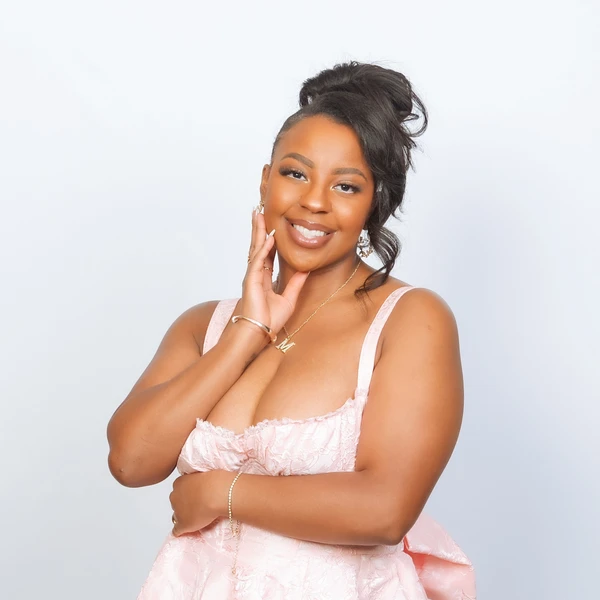
Monae Ferguson

2x

Finalist

Bio

Hello! I'm a Certified Nursing Assistant and aspiring registered nurse with over a decade of clinical experience across long-term care and critical care settings. I am the first in my family to pursue graduate education, and this achievement means everything to me. Educational Pursuits I am currently pursuing my nursing degree, building on a Bachelor of Science and over a decade of clinical experience. Balancing full-time healthcare work with academics has sharpened my time management, critical thinking, and patient communication skills. Career Aspirations My goal is to become a nurse practitioner and community health leader, focused on bringing compassionate, evidence-based care to underserved populations. I aim to design outreach programs that close gaps in access and advocate for those who cannot yet advocate for themselves. Passion for Helping Others I volunteer as a mentor with Big Brothers Big Sisters, working with a young girl in the foster care system. This work is personal and it directly shapes how I show up at the bedside. I believe nursing is an act of service, and I bring that belief into everything I do. Personal Mission I strive to be the person I once needed. I am dedicated to upholding the dignity of every patient, lifting up my community, and proving that where you start does not determine where you go. Thank you for taking the time to learn about me. I look forward to connecting with others who share a passion for healthcare and community impact.

Education

Joyce University of Nursing and Health Sciences

Bachelor's degree program
2026 - 2028
  • Majors:
    • Registered Nursing, Nursing Administration, Nursing Research and Clinical Nursing
Saint Cloud State University

Bachelor's degree program
2020 - 2023
  • Majors:
    • Communication, Journalism, and Related Programs, Other

Miscellaneous

  • Desired degree level:

    Bachelor's degree program

  • Graduate schools of interest:

  • Transfer schools of interest:

  • Majors of interest:

  • Not planning to go to medical school
  • Career

    • Dream career field:

      Health, Wellness, and Fitness

    • Dream career goals:

      Certified Registered Nurse Anesthetist

    • Nursing Assistant

      Emory Hospital
      2019 – 20201 year

    Sports

    Basketball

    Junior Varsity
    2012 – 20131 year

    Public services

    • Volunteering

      Big Brother Big Sister of LA — Mentor
      2026 – Present
    EverGreen Trails of Service Scholarship
    I chose nursing because I needed to be useful in a way that mattered. Not useful in an abstract sense, but useful in the room, in the moment, with the person in front of me. After nearly a decade working as a Certified Nursing Assistant across long-term care and critical care settings, I have learned that nursing is the fullest expression of that kind of usefulness I have ever encountered. It demands clinical precision and deep humanity at the same time, and I have never found another profession that asks for both in equal measure. My planned specialty is nurse anesthesia. I want to become a Certified Registered Nurse Anesthetist. This goal grew directly out of my work in a Cardiothoracic ICU, where I care for patients before and after some of the most complex surgeries performed in medicine. I have watched CRNAs work with a level of autonomy, technical mastery, and patient-centered focus that consistently draws my attention. They are the last person a patient sees before going under and one of the first voices they hear on the other side. That responsibility is not lost on me. It is exactly what draws me to it. The patient demographic I feel most called to serve is critically ill adults, particularly those navigating cardiovascular disease and its complications. This population sits at the intersection of everything I have been building toward. These patients are often frightened, often facing procedures they do not fully understand, and often carrying years of deferred healthcare behind them. In the perioperative and anesthesia space, there is an opportunity to be a calm, knowledgeable, and compassionate presence at one of the most vulnerable moments of a person's life. I want to be that presence. Working in a nonprofit academic medical center has also shaped how I think about this specialty. I see firsthand how underserved patients access surgical care later, with more advanced disease, and with less support before and after procedures. As a CRNA, I want to practice in environments that prioritize access, and eventually contribute to programs that bring anesthesia services and perioperative education to communities that have historically faced barriers to surgical care. My path to this goal has not been linear, and I would not have it any other way. I have worked in dementia care and learned patience. I have worked in surgical support and learned precision. I have worked in critical care and learned how to stay steady when everything around you is moving fast. Each role has added something I will carry into anesthesia practice. I am not arriving at this specialty from a textbook. I am arriving from the bedside, and I believe that matters deeply for the kind of CRNA I will become. Nursing chose me, and anesthesia is where I am choosing to take it. I am ready.
    MJ Strength in Care Scholarship
    I have spent nearly a decade learning what it means to truly show up for another person. As a Certified Nursing Assistant who has worked across long-term care, surgical support, and critical care, I have sat with patients in their hardest moments and walked away from every shift more committed to this work than before. Nursing is not something I fell into. It is something I have been building toward my entire adult life, one patient at a time. I am now pursuing my registered nursing degree with plans to advance into nurse practitioner or CRNA practice, and I am doing so as someone who understands exactly what is at stake at the bedside. The cause I am most actively involved in is youth mentorship, specifically through Big Brothers Big Sisters of Los Angeles. I am currently matched with a young Black girl who is in the foster care system. We meet regularly, work through homework together, and talk about her goals and her future. I show up for her consistently, which sounds simple but is actually the most meaningful thing I can offer a child whose life has not always had that consistency. This relationship is not charity. It is a mirror. I see in her some of the same resilience I had to develop on my own at a young age, and I take the responsibility of being her mentor seriously. This cause matters to me because it is personal. I know what it means to navigate the world without a guaranteed support system. I know what it feels like to need someone in your corner and wonder if that person is ever going to show up. Mentoring her is my way of making sure she does not spend as much time wondering. It is also directly connected to my nursing practice. The same qualities that make me a good mentor, consistency, presence, the ability to listen without judgment, make me a better caregiver. I do not separate these two parts of my life because they are the same impulse: to be useful to people in meaningful ways. Beyond my mentorship, I am also involved in health and wellness advocacy through my hospital unit, where I participate in community health walks and team wellness initiatives. I believe that healthcare workers have a responsibility to model the kind of care we want to see in the world, not just inside hospital walls but in our communities as well. If awarded this scholarship, it would directly reduce the financial pressure that comes with balancing full-time clinical work and graduate-level education. I have self-funded my academic journey while working in healthcare, and every dollar of support translates into more time and energy I can dedicate to my studies, my patients, and my mentee. This scholarship would not just help me reach my educational goals. It would allow me to keep showing up fully in every role I hold, as a student, a caregiver, and a mentor, without having to choose between them.
    Robert F. Lawson Fund for Careers that Care
    I have spent nearly a decade learning what it means to truly show up for another person. As a Certified Nursing Assistant who has worked across long-term care, surgical support, and critical care, I have sat with patients in their hardest moments and walked away from every shift more committed to this work than before. Nursing is not something I fell into. It is something I have been building toward my entire adult life, one patient at a time. I am now pursuing my registered nursing degree with plans to advance into nurse practitioner or CRNA practice, and I am doing so as someone who understands exactly what is at stake at the bedside. The cause I am most actively involved in is youth mentorship, specifically through Big Brothers Big Sisters of Los Angeles. I am currently matched with a young Black girl who is in the foster care system. We meet regularly, work through homework together, and talk about her goals and her future. I show up for her consistently, which sounds simple but is actually the most meaningful thing I can offer a child whose life has not always had that consistency. This relationship is not charity. It is a mirror. I see in her some of the same resilience I had to develop on my own at a young age, and I take the responsibility of being her mentor seriously. This cause matters to me because it is personal. I know what it means to navigate the world without a guaranteed support system. I know what it feels like to need someone in your corner and wonder if that person is ever going to show up. Mentoring her is my way of making sure she does not spend as much time wondering. It is also directly connected to my nursing practice. The same qualities that make me a good mentor, consistency, presence, the ability to listen without judgment, make me a better caregiver. I do not separate these two parts of my life because they are the same impulse: to be useful to people in meaningful ways. Beyond my mentorship, I am also involved in health and wellness advocacy through my hospital unit, where I participate in community health walks and team wellness initiatives. I believe that healthcare workers have a responsibility to model the kind of care we want to see in the world, not just inside hospital walls but in our communities as well. If awarded this scholarship, it would directly reduce the financial pressure that comes with balancing full-time clinical work and graduate-level education. I have self-funded my academic journey while working in healthcare, and every dollar of support translates into more time and energy I can dedicate to my studies, my patients, and my mentee. This scholarship would not just help me reach my educational goals. It would allow me to keep showing up fully in every role I hold, as a student, a caregiver, and a mentor, without having to choose between them.
    Wieland Nurse Appreciation Scholarship
    In 2016, I was taking classes to become a Certified Nursing Assistant. My teacher said something that has stayed with me: "It’s your job to uphold a patient’s dignity. It’s not their job to uphold yours." My 20-year-old self didn’t understand at first. I quickly learned after starting my first CNA position in the largest nursing home in Minnesota. One vivid memory is my first encounter with a patient who wanted to die. I assumed my first patient death would be traumatizing, like on TV. However, the patient felt at peace. Day by day, he refused food, becoming more frail and sickly. I sat beside him, listening to stories about his boyhood. When I massaged his feet with lotion, I noticed scars from the Vietnam War. His military accolades were displayed on the walls. On the bedside was an old photo of him and a little girl—his daughter. He said his daughter kept trying to prolong his life, but he was ready to die. I felt conflicting emotions after my shift that night. Three days later, the patient had gone to hospice and died before I could say goodbye. This experience became a cornerstone of my nursing philosophy. Autonomy and dignity now sit at the heart of my practice. Being present when someone’s life is ending is a feeling I can’t explain unless you’ve done it. My favorite part of being a Nursing Assistant is coming to work with a smile and bringing happiness to both patients and teammates. You’re only as good as your team. Your co-workers help you be your best self. Our team makes patients feel like more than a name on a report or a body in a gown. Moving forward, I am committed to holding onto this lesson. I want every interaction to leave patients feeling respected and valued. Every patient I have cared for has taught me something about courage, and every challenge has taught me something about strength. What I’ve learned most is that nursing is not just a profession; it’s a lifelong commitment to humanity. Becoming a nurse represents the next step in that commitment. It is where my compassion meets academic rigor, and where my personal story can transform into professional leadership. I am ready to contribute to a program that values integrity, inclusion, and innovation, and to a profession that continues to remind me why I chose this path: to uphold the dignity of others, just as I was once taught; to make people feel seen, valued, and cared for when they need it most. I found this scholarship on bold.org
    First Generation Scholarship For Underprivileged Students
    I have spent nearly a decade learning what it means to truly show up for another person. As a Certified Nursing Assistant who has worked across long-term care, surgical support, and critical care, I have sat with patients in their hardest moments and walked away from every shift more committed to this work than before. Nursing is not something I fell into. It is something I have been building toward my entire adult life, one patient at a time. I am now pursuing my registered nursing degree with plans to advance into nurse practitioner or CRNA practice, and I am doing so as someone who understands exactly what is at stake at the bedside. The cause I am most actively involved in is youth mentorship, specifically through Big Brothers Big Sisters of Los Angeles. I am currently matched with a young Black girl who is in the foster care system. We meet regularly, work through homework together, and talk about her goals and her future. I show up for her consistently, which sounds simple but is actually the most meaningful thing I can offer a child whose life has not always had that consistency. This relationship is not charity. It is a mirror. I see in her some of the same resilience I had to develop on my own at a young age, and I take the responsibility of being her mentor seriously. This cause matters to me because it is personal. I know what it means to navigate the world without a guaranteed support system. I know what it feels like to need someone in your corner and wonder if that person is ever going to show up. Mentoring her is my way of making sure she does not spend as much time wondering. It is also directly connected to my nursing practice. The same qualities that make me a good mentor, consistency, presence, the ability to listen without judgment, make me a better caregiver. I do not separate these two parts of my life because they are the same impulse: to be useful to people in meaningful ways. Beyond my mentorship, I am also involved in health and wellness advocacy through my hospital unit, where I participate in community health walks and team wellness initiatives. I believe that healthcare workers have a responsibility to model the kind of care we want to see in the world, not just inside hospital walls but in our communities as well. If awarded this scholarship, it would directly reduce the financial pressure that comes with balancing full-time clinical work and graduate-level education. I have self-funded my academic journey while working in healthcare, and every dollar of support translates into more time and energy I can dedicate to my studies, my patients, and my mentee. This scholarship would not just help me reach my educational goals. It would allow me to keep showing up fully in every role I hold, as a student, a caregiver, and a mentor, without having to choose between them.
    Future Nonprofit Leaders Award
    I did not set out to work in the nonprofit sector. I set out to help people. What I discovered along the way is that those two things are often the same. I currently work at UCLA Health, one of the largest nonprofit academic medical centers in the country, and every shift reinforces why mission-driven work matters in a way that purely transactional healthcare cannot replicate. When an institution's purpose is not profit but people, it changes the culture of care from the inside out. As a Clinical Care Partner in a critical care unit, I am on the front lines of that mission daily. I work alongside nurses, physicians, respiratory therapists, and specialists to support some of the most acutely ill patients in the hospital. But the nonprofit model means that the patients we serve are not filtered by ability to pay. We care for everyone, including those who would have nowhere else to go. That is not a policy I follow reluctantly. It is the reason I show up. The community impact of nonprofit healthcare is something I have seen up close in ways that statistics cannot fully capture. I have cared for patients who came to us with no primary care physician, no health history on file, and no one to call in an emergency. I have watched our social work teams connect families to housing resources, food assistance, and mental health services because UCLA Health understands that healing does not stop at the hospital room door. That wraparound approach to care is only possible because the institution's bottom line is outcomes, not revenue. I want to build my nursing career within this model because I believe healthcare is fundamentally a public good, not a commodity. As I advance from registered nurse toward nurse practitioner or CRNA practice, I intend to remain anchored in institutions and programs that prioritize access, equity, and community. My long-term goal is to design outreach programs that bring preventive care, health education, and chronic disease management to underserved communities, particularly those who have historically been pushed to the margins of the healthcare system. That work only makes sense inside a nonprofit framework, where the mission can be the compass rather than the margin. I also volunteer as a youth mentor through Big Brothers Big Sisters of Los Angeles, working with a young girl in the foster care system. This is nonprofit work of a different kind, but it is rooted in the same belief: that communities are held together by people who show up consistently for those who need it most, without expecting anything in return. My mentorship and my clinical work feed each other. Both ask me to be present, to listen, and to serve with integrity. If awarded this scholarship, it would allow me to continue pursuing advanced nursing education without compromising the clinical and volunteer commitments that define who I am as a professional. I am not pursuing a career in mission-driven healthcare because it is the practical choice. I am pursuing it because I have seen what it looks like when healthcare prioritizes humanity, and I want to spend my life contributing to that.
    Amber D. Hudson Memorial Scholarship
    In a Cardiothoracic ICU, I see the end of the road every single day. I care for patients recovering from open heart surgery, valve replacements, and bypass procedures, many of whom spent decades making choices that quietly brought them to that operating table. Heart disease. Diabetes. Obesity-related complications. Conditions that peer-reviewed research has repeatedly linked to nutritional habits, inflammation, and lifestyle factors that are, in many cases, preventable. Working in that environment has given me an unshakeable conviction: the most powerful nursing I will ever do will not happen in the ICU. It will happen years before a patient ever needs one. The link between nutrition and disease is not new information, but it remains one of the most underutilized tools in healthcare. Research consistently shows that diet plays a significant role in the development and progression of conditions including heart disease, cancer, arthritis, and autoimmune disorders. What is less discussed is how often patients and their families simply do not know this, or know it in a vague way that never translates into action. That gap between knowledge and behavior is exactly where nurses can intervene, and it is where I intend to focus a significant part of my practice. As a future registered nurse and eventually an advanced practice provider, I plan to educate patients and families on the connection between what they eat and how their bodies function, using language that is accessible, culturally relevant, and free of judgment. One of the things I have learned working at the bedside is that health education fails when it is delivered as a lecture. Patients do not respond to being told what they are doing wrong. They respond to being understood, to having someone take the time to ask about their life, their habits, their barriers, and work with them from there. For a post-cardiac surgery patient, that might mean sitting with their family and explaining how an anti-inflammatory diet can support healing and reduce the risk of a second event. For a diabetic patient being discharged, it might mean walking through practical grocery store strategies that fit their budget and their culture. For a patient with early-stage arthritis, it might mean connecting them with resources on omega-3 fatty acids and the role of processed food in joint inflammation. The science exists. My job is to translate it into something a person can actually use on a Tuesday night when they are standing in a kitchen trying to figure out what to make for dinner. I am also passionate about extending this education beyond individual patient encounters and into community settings. My long-term goal includes developing outreach programs that bring preventive health education, including nutritional guidance, to underserved communities that have historically had the least access to it and the highest rates of diet-related chronic illness. These are the communities I come from, and these are the communities I intend to serve. If awarded this scholarship, it would allow me to move through my nursing education without the constant financial strain of funding graduate-level study while working full time in clinical care. That freedom matters not just for my GPA, but for the quality of nurse I become. A student who is stretched thin survives school. A student with support thrives in it, absorbs more, gives more, and carries more into every patient interaction that follows. I want to be the kind of nurse who has enough left in her at the end of a shift to sit with a patient and actually teach. This scholarship would help make that possible.
    7023 Minority Scholarship
    I have spent nearly a decade learning what it means to truly show up for another person. As a Certified Nursing Assistant who has worked across long-term care, surgical support, and critical care, I have sat with patients in their hardest moments and walked away from every shift more committed to this work than before. Nursing is not something I fell into. It is something I have been building toward my entire adult life, one patient at a time. I am now pursuing my registered nursing degree with plans to advance into nurse practitioner or CRNA practice, and I am doing so as someone who understands exactly what is at stake at the bedside. The cause I am most actively involved in is youth mentorship, specifically through Big Brothers Big Sisters of Los Angeles. I am currently matched with a young Black girl who is in the foster care system. We meet regularly, work through homework together, and talk about her goals and her future. I show up for her consistently, which sounds simple but is actually the most meaningful thing I can offer a child whose life has not always had that consistency. This relationship is not charity. It is a mirror. I see in her some of the same resilience I had to develop on my own at a young age, and I take the responsibility of being her mentor seriously. This cause matters to me because it is personal. I know what it means to navigate the world without a guaranteed support system. I know what it feels like to need someone in your corner and wonder if that person is ever going to show up. Mentoring her is my way of making sure she does not spend as much time wondering. It is also directly connected to my nursing practice. The same qualities that make me a good mentor, consistency, presence, the ability to listen without judgment, make me a better caregiver. I do not separate these two parts of my life because they are the same impulse: to be useful to people in meaningful ways. Beyond my mentorship, I am also involved in health and wellness advocacy through my hospital unit, where I participate in community health walks and team wellness initiatives. I believe that healthcare workers have a responsibility to model the kind of care we want to see in the world, not just inside hospital walls but in our communities as well. If awarded this scholarship, it would directly reduce the financial pressure that comes with balancing full-time clinical work and graduate-level education. I have self-funded my academic journey while working in healthcare, and every dollar of support translates into more time and energy I can dedicate to my studies, my patients, and my mentee. This scholarship would not just help me reach my educational goals. It would allow me to keep showing up fully in every role I hold, as a student, a caregiver, and a mentor, without having to choose between them.
    Eric Maurice Brandon Memorial Scholarship
    In 2016, I was taking classes to become a Certified Nursing Assistant. My teacher said something that has stayed with me: "It’s your job to uphold a patient’s dignity. It’s not their job to uphold yours." My 20-year-old self didn’t understand at first. I quickly learned after starting my first CNA position in the largest nursing home in Minnesota. One vivid memory is my first encounter with a patient who wanted to die. I assumed my first patient death would be traumatizing, like on TV. However, the patient felt at peace. Day by day, he refused food, becoming more frail and sickly. I sat beside him, listening to stories about his boyhood. When I massaged his feet with lotion, I noticed scars from the Vietnam War. His military accolades were displayed on the walls. On the bedside was an old photo of him and a little girl—his daughter. He said his daughter kept trying to prolong his life, but he was ready to die. I felt conflicting emotions after my shift that night. Three days later, the patient had gone to hospice and died before I could say goodbye. This experience became a cornerstone of my nursing philosophy. Autonomy and dignity now sit at the heart of my practice. Being present when someone’s life is ending is a feeling I can’t explain unless you’ve done it. My favorite part of being a Nursing Assistant is coming to work with a smile and bringing happiness to both patients and teammates. You’re only as good as your team. Your co-workers help you be your best self. Our team makes patients feel like more than a name on a report or a body in a gown. Moving forward, I am committed to holding onto this lesson. I want every interaction to leave patients feeling respected and valued. Reflecting on these journeys, especially as my 30th birthday approaches, allows me to look back with gratitude at where life has taken me. My time in CTICU and past patient experiences provide context for my resilience. I grew up faster than my peers, having moved away from home at 17 to escape physical and emotional pain. As an unaccompanied minor, college was never a consideration; instead, survival became my main focus. The lack of support from adults during those formative years deeply affected my self-perception. Now that I am applying to a program in nursing, I am profoundly grateful to have found my purpose. My journey has instilled in me a strong sense of dependability, something I longed for in my youth. I aspired to be the person I once needed: someone who would advocate for me when I could not speak up for myself. This is why nursing has become my passion. When I see the broken look in a patient’s eyes, it strikes a deep chord within me, reminding me of my 17-year-old self, overwhelmed and unsupported. Wishing I had someone in my corner who’s not scared to speak up and fight for me, even when I didn’t have the confidence to do it myself. This experience translated my vulnerability into leadership, where resilience meets empathy and decisive action. As I take this next step, I am committed to using my journey to become a nurse who uplifts others at their most vulnerable moments, carrying forward the lessons of dignity, empathy, and courage.
    Mighty Memorial Scholarship
    In 2016, I was taking classes to become a Certified Nursing Assistant. My teacher said something that has stayed with me: "It’s your job to uphold a patient’s dignity. It’s not their job to uphold yours." My 20-year-old self didn’t understand at first. I quickly learned after starting my first CNA position in the largest nursing home in Minnesota. One vivid memory is my first encounter with a patient who wanted to die. I assumed my first patient death would be traumatizing, like on TV. However, the patient felt at peace. Day by day, he refused food, becoming more frail and sickly. I sat beside him, listening to stories about his boyhood. When I massaged his feet with lotion, I noticed scars from the Vietnam War. His military accolades were displayed on the walls. On the bedside was an old photo of him and a little girl—his daughter. He said his daughter kept trying to prolong his life, but he was ready to die. I felt conflicting emotions after my shift that night. Three days later, the patient had gone to hospice and died before I could say goodbye. This experience became a cornerstone of my nursing philosophy. Autonomy and dignity now sit at the heart of my practice. Being present when someone’s life is ending is a feeling I can’t explain unless you’ve done it. My favorite part of being a Nursing Assistant is coming to work with a smile and bringing happiness to both patients and teammates. You’re only as good as your team. Your co-workers help you be your best self. Our team makes patients feel like more than a name on a report or a body in a gown. Moving forward, I am committed to holding onto this lesson. I want every interaction to leave patients feeling respected and valued. Every patient I have cared for has taught me something about courage, and every challenge has taught me something about strength. What I’ve learned most is that nursing is not just a profession; it’s a lifelong commitment to humanity. Becoming a nurse represents the next step in that commitment. It is where my compassion meets academic rigor, and where my personal story can transform into professional leadership. I am ready to contribute to a program that values integrity, inclusion, and innovation, and to a profession that continues to remind me why I chose this path: to uphold the dignity of others, just as I was once taught; to make people feel seen, valued, and cared for when they need it most.
    Sara Jane Memorial Scholarship
    Nursing chose me before I chose it. In 2016, I became a Certified Nursing Assistant and stepped into one of the largest nursing homes in my state, not fully understanding what I was walking into. What I found there changed me permanently. I learned that healthcare is not just a job. It is a covenant. You are with people at their most stripped-down, most vulnerable moments, and how you show up in those moments matters more than almost anything else in their day. I have never forgotten that, and I never plan to. I chose this career path because I have always been drawn to advocacy. Growing up, I learned early what it feels like to need someone in your corner and not have one. That experience made me determined to become that person for others. Nursing gives me the tools to do exactly that: to speak up for patients when they cannot speak for themselves, to sit with them in uncertainty, and to provide care that goes beyond the clinical and into the deeply human. My experience in the medical field spans nearly a decade across multiple care settings. I have worked in long-term care, caring for elderly residents with dementia and complex medical needs. I have worked in surgical support, operating imaging technology used during live procedures to guide surgeons in real time. Most recently, I have been working as a Clinical Care Partner in a critical care unit, where I support nurses and physicians caring for some of the most acutely ill patients in the hospital. Each role has added a layer to my clinical foundation and deepened my respect for what registered nurses do every day. I am currently pursuing my RN degree, and my goals extend well beyond that milestone. In the near term, I plan to work as a registered nurse in critical care, where I can apply the skills I have been building at the bedside for years. From there, I intend to pursue advanced practice, either as a Certified Registered Nurse Anesthetist or a Nurse Practitioner, depending on where my clinical interests lead as I grow. Both paths represent the same core commitment: to become the most skilled, most compassionate version of a nurse I can be, and to use that skill in service of patients who deserve nothing less. Sara Jane spent 48 years showing up for her patients and encouraging those around her to keep going, keep growing, keep becoming. That is exactly the kind of nurse I am working to be. I do not want a career. I want a calling. This scholarship would honor her legacy by investing in someone who carries the same belief she did: that a nurse who puts patients first, who leads with kindness, and who never stops learning can change lives one shift at a time. I am ready to be that nurse.
    GD Sandeford Memorial Scholarship
    My mother was a foster child. So were six of her siblings. That fact has shaped everything about how I move through the world, how I show up for people, and why I chose nursing as my life's work. Growing up, I watched my mother carry the invisible weight of a childhood without consistency, without a guaranteed person in her corner. I promised myself early that I would be that person for someone else. That promise became tangible when I joined Big Brothers Big Sisters of Los Angeles and was matched with a 12-year-old Black girl currently in the foster care system. She is bright, funny, and perceptive in the way that children who have had to read rooms their whole lives often are. She notices everything. She trusts slowly. And every time she opens up to me, I understand more clearly what it means to truly show up for another person. We meet regularly, do homework together, talk about her goals, and navigate the ordinary moments that end up meaning the most. I take her seriously. I ask about her opinions. I celebrate her wins loudly and sit with her quietly when things are hard. I am not trying to fix her life. I am trying to be a steady presence in it, something she has not always had. My mother never had that either, and I think about that every single time we meet. This experience is not separate from my nursing journey. It is the same journey. Mentoring her has deepened my understanding of what it means to care for someone across systemic barriers, to show up with both warmth and reliability, and to recognize that trust is built in small moments over time. These are the exact skills that make a nurse effective, especially in communities where patients have learned to be cautious about who truly has their best interest at heart. When I earn my nursing degree, I intend to bring this same commitment directly into my practice and my community. My long-term goal is to develop outreach programs focused on the health and wellness of underserved populations, with a particular emphasis on families and children who have experienced the foster care system. The data is clear: foster youth face disproportionate health challenges, from mental health crises to gaps in preventive care, largely because no one has consistently advocated for them. I want to be part of changing that. As a Black woman pursuing a graduate nursing degree, I also carry a responsibility to be visible. Representation in healthcare matters. When my mentee sees me pursuing this degree, showing up for her while building toward something larger, I hope she internalizes that her own future has no ceiling. I want her to grow up knowing that someone who looked like her, who came from a family shaped by the same system she is currently in, went on to lead, to serve, and to make a difference. This scholarship would help make that possible. Every dollar invested in my education is an investment in every patient I will care for, every community I will serve, and every young person who needs to see what is possible. I am not just pursuing a degree. I am continuing a story that started with my mother, and that I intend to redirect toward