Gender
Male
Ethnicity
Asian, Middle Eastern
Religion
Muslim
Hobbies and interests
Football
Basketball
Athletic Training
Weightlifting
Music
Advocacy And Activism
Community Service And Volunteering
Data Science
Mentoring
Genetics
Cooking
Reading
Academic
Fantasy
I read books multiple times per month
US CITIZENSHIP
US Citizen
LOW INCOME STUDENT
Yes
FIRST GENERATION STUDENT
Yes
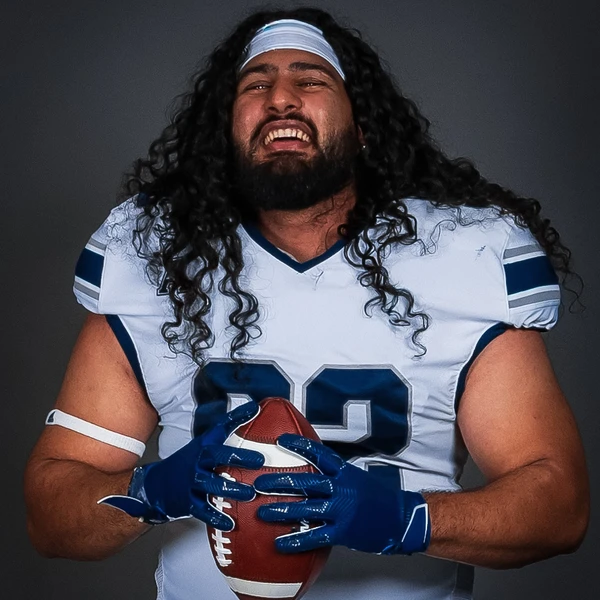
Momen Zahid
1x
FinalistMomen Zahid
1x
FinalistBio
I am a first-generation, low-income college graduate who learned early how to turn obstacles into momentum. At William & Mary, I earned my B.S. in Biology and Data Science while competing as a Division I football player and serving as the 2025 valedictory commencement speaker. Balancing demanding academics, financial hardship, and recovery from multiple surgeries taught me discipline, gratitude, and persistence.
My work bridges data, health, and human stories. I have modeled ROI for proton therapy centers, analyzed MRI data in elite athletes, and conducted spatial analyses in biomedical research. As a Student Representative to the Board of Visitors, I advocated for equity, wellness, and policy change. I also helped secure halal dining options and organized Ramadan programs for Muslim students.
I want to use data and storytelling to improve lives, especially for communities that, like mine, often feel unseen. Every challenge has strengthened my resolve to make opportunity more accessible for others.
Education
College of William and Mary
Bachelor's degree programMajors:
- Biology, General
Minors:
- Data Science
Miscellaneous
Desired degree level:
Master's degree program
Graduate schools of interest:
Transfer schools of interest:
Majors of interest:
Career
Dream career field:
genetics
Dream career goals:
company founder/researcher
Sports
Football
Varsity2021 – Present5 years
Awards
- CAA Commisioner's Award With High Honors
- Provost Award
- Dean's List
- CSC Academic All-District
Basketball
Varsity2010 – 202010 years
Public services
Advocacy
William and Mary Student Assembly — Secretary of Religious Diversity, Athletics Liason2021 – 2025
Future Interests
Advocacy
Politics
Volunteering
Philanthropy
Entrepreneurship
Bick First Generation Scholarship
Being a first-generation college student means learning to walk into rooms where no one in your family has ever stood before. It means translating every form, every policy, and every expectation into a language your parents can understand while trying to understand it yourself. It means carrying both gratitude and pressure at the same time.
My parents are Pakistani immigrants who came to the United States with hope and little else. They worked long hours so my brothers and I could chase dreams they never had the chance to pursue. At home, I was their interpreter for everything: bills, medical paperwork, and college applications. They could not tell me how to apply for financial aid or what a FAFSA was. I learned through trial, error, and persistence. When I was accepted to William & Mary, it felt like a victory for my entire family.
But success as a first-generation student often comes with invisible costs. I walked on to the William & Mary Division I football team without a scholarship, taking buses to practice, stretching food stamps to make ends meet, and studying late into the night. When I tore ligaments in my ankle and shoulder, the program did not cover my surgeries or physical therapy. I paid what I could and kept going. There were times I wondered if all the sacrifices were worth it. Yet every time I doubted myself, I remembered my parents’ journey across the world and reminded myself that I was continuing what they had started.
Over time, I found purpose in giving back. I served as a student representative on the university’s Board of Visitors, advocating for equity, mental health, and academic flexibility. I helped secure halal dining options and organized Ramadan meals so Muslim students could feel a sense of belonging. I mentored first-generation athletes who were trying to find their footing the same way I once did. I graduated Summa Cum Laude in Biology and Data Science, became the Valedictory Speaker for the Class of 2025, and received the Cypher Award for leadership and service. Those accomplishments are not mine alone; they belong to everyone who believed in me when I was uncertain of my place.
Being first-generation taught me that courage is not the absence of fear but the choice to keep moving anyway. My dream is to use data and science to make healthcare more equitable for communities like mine, where access and understanding are often limited.
This scholarship would help me pay down medical bills and student loans while continuing to pursue opportunities in public health and data research. More than financial support, it would serve as recognition that the struggles of first-generation students matter and that perseverance, not privilege, defines our success.
For me, being first-generation means believing in possibility, even when no one before you has seen it.
Ethel Hayes Destigmatization of Mental Health Scholarship
I grew up in a home where the word “depression” did not exist. My parents are Pakistani immigrants and devout Muslims who believed that faith could cure everything. If you prayed hard enough, sadness would fade. If you struggled, it meant your faith was weak.
That belief shaped everything I knew about mental health. My older brother was diagnosed with ADHD and depression when we were young, but my parents could not accept it. They called him “hyper” and told him to be more like his brothers. They loved him, but they did not understand him. School did not either. He was brilliant, curious, and creative, yet teachers treated him as a problem to manage rather than a mind to nurture. Growing up brown and Muslim after 9/11 only made it worse. We were the targets of jokes, suspicion, and lowered expectations. The world saw danger where there was simply difference.
One night he ran away from home. I chased him through the neighborhood, terrified, realizing he intended to end his life. When I finally reached him, I held him and we cried. I was still a child myself, but that night forced me to grow up fast. It taught me that silence can kill and that sometimes love alone is not enough to save someone.
From that moment, I decided to become the “strong one.” I hid my own anxiety and sadness because I saw what happened when you showed weakness in our house. When I earned a place on the Division I football team at William & Mary, my family finally saw something they recognized: success. What they could not see was that I was falling apart inside.
Football was supposed to give me security. Instead, it became another test of endurance. I was a walk-on athlete with no scholarship, taking buses to practice, stretching food stamps, and sneaking into dining halls when my meal plan ran out. When I tore ligaments in my ankle and shoulder, the school did not cover my surgeries or physical therapy. I iced my joints in my dorm sink and went back to class. I kept smiling because I thought that was what strength looked like.
Then came the false sexual-assault allegations. Overnight, I went from being respected to being whispered about. People I thought were friends disappeared. I stopped eating. I barely slept. For the first time since chasing my brother years earlier, I understood what it felt like to want to vanish. One night I almost did. I was not sure I wanted to die, but I wanted everything to stop.
What stopped me was memory: of my brother in that dark street, of what might have happened if I had arrived a minute later. I thought of my best friend, who recently tried to take his own life and is only here because his gun jammed, and of his mother, whom I loved like family, who passed away soon after. I thought of all the people who might not make it if I gave up too. I could not add one more loss to a world already full of them.
That realization changed me. I began to understand faith in a new way. Faith was not pretending everything was fine; it was choosing to believe that pain could have purpose. I started speaking openly about what I had been through. I mentored other student-athletes who felt isolated. I joined my university’s Board of Visitors and helped expand mental-health and equity conversations across campus. I learned that vulnerability can move people to act more than strength ever could.
My studies deepened that conviction. I studied Biology and Data Science to understand how invisible suffering leaves visible traces. Through research in cancer histology and sports diagnostics, I saw how inequity hides in data: who receives care, who recovers, who is forgotten. Those numbers mirrored what I had lived. They showed me that stigma and access are measurable forces, not abstract ideas, and that empathy should be a variable in every equation about health.
Healing, for me, has not been a straight line. Some days I still wake up with the old weight in my chest. But now I meet it with compassion instead of shame. I remind myself that surviving does not mean the pain is gone; it means I am learning to carry it better. When I talk with my brother, I see how far we have both come. He is still brilliant, still restless, and still teaching me patience. My best friend is in therapy now, and I check on him constantly. We talk about grief, music, faith, and the strange ways hope returns when you least expect it.
Mental health has shaped how I see everything. It has taught me that people are not broken; they are carrying burdens that were never meant to be carried alone. It has redefined strength for me as the ability to stay kind while healing. It has made me a better teammate, scientist, and advocate because I look for the quiet pain others overlook.
When I mentor younger athletes or first-generation students from immigrant families, I tell them what I wish someone had told me: you are not weak for struggling. You are human.
I still believe in prayer, but I also believe in therapy, medication, and community. Faith does not mean denying pain. It means believing that healing is possible, even when you cannot see the light yet.
I have learned to hold both belief and pain without letting either destroy me. That balance is what keeps me alive, and it is what I hope to offer others: proof that even in the darkest moments, belief can be the beginning of healing.
Andrea Worden Scholarship for Tenacity and Timeless Grace
Momen means “believer” (مؤمن), yet belief has not always come easily.
I have never been the kind of student success was built for. I was a first-generation, low-income Pakistani Muslim kid trying to find my footing in a world where everything, from FAFSA forms to football scholarships, felt written in another language. My parents had never been to college. I filled out my own financial aid paperwork, took the bus to and from campus, and worked through nights while trying to keep my dreams alive on the football field.
When I walked on to the Division I football team at William & Mary, I thought hard work would be enough. I was told I would earn a scholarship after my first season, that I would be taken care of. Instead, that promise never came. When I got injured twice, no one covered the cost of my surgeries or physical therapy, even though both injuries happened on the field. I played through torn ligaments and pain that did not end after the whistle. I was on food stamps, sneaking into dining halls for meals, and rehabbing myself between classes. My teammates arrived in nice cars while I limped from the bus stop, hoping no one noticed the swelling in my ankle.
There were times I questioned why I kept going. The injuries hurt, but the isolation hurt more. I had worked my whole life to belong, yet every day reminded me how different I was. My name, faith, and skin color entered the room before I did. I was racially profiled more times than I can count, followed in stores, searched on the street, and treated like I did not belong in spaces I had earned my way into.
Then, when I thought I had survived the worst of it, I was falsely accused of sexual assault. It was the lowest point of my life. Overnight, I went from being a respected student-athlete to a headline of whispers. I thought I would lose everything, from my degree to my reputation and community. But I refused to disappear. I met with the people who spread the rumors. I kept showing up to class, to practice, and to the Board of Visitors meetings where I represented the entire student body. I did not let hate harden me. I chose to forgive, not because it was easy, but because bitterness would have destroyed me long before injustice did.
In time, the truth came out. I was completely cleared. But what mattered most was not vindication, it was how I carried myself through it. I kept advocating for due-process protections so no other student would go through what I did. I kept mentoring first-generation and low-income students who felt invisible. I helped secure halal dining and organized Ramadan meals so Muslim students could eat with dignity. And I stood on stage as my university’s 2025 Valedictory Speaker, representing every underdog who had ever been overlooked.
Through all of it, I learned that tenacity is not loud. It is quiet, stubborn faith. The kind that keeps showing up when the world expects you to quit. Grace is not about staying untouched by pain; it is about refusing to let pain make you cruel.
My background in biology and data science grew from that same spirit. I have studied cancer histology, sports medicine, and public health systems because I want to fix the inequities I have lived through. Working at Proton International, I modeled how access to cancer treatment changes survival rates depending on where you live. At HTI Sports Diagnostics, I analyzed MRI data from athletes around the world to understand injury patterns that often go ignored. For me, science is not abstract. It is personal. Every number represents a story like mine, where someone is just trying to be seen, healed, or believed.
Andrea Worden believed in the power of people who do not fit the mold. That is why this scholarship means so much to me. I was not supposed to make it here. I was the kid taking the bus while my teammates drove Teslas, the player paying out of pocket for surgeries the program should have covered, the student who had to fight for his education and name. And yet, I flourished.
I became a Board of Visitors representative, shaping policy on equity and student wellness. I earned a 3.8 GPA and graduated Summa Cum Laude in Biology and Data Science. I spoke at commencement, not as the most decorated student, but as one who had walked through fire and still found kindness intact. That same year, I received the Cypher Award for leadership, service, and flourishing, along with a letter from the Seven Society recognizing my impact on the university community. Even in my hardest seasons, I was named to the CSC Academic All-District Team for academic and athletic excellence. Those honors remind me that success is not about perfection, but perseverance with integrity.
There is a line from the Qur’an that my father taught me: “Indeed, with hardship comes ease.” It does not mean life will get easier. It means that within hardship itself lies the opportunity to grow softer, wiser, and more compassionate. Every obstacle I have faced has deepened my empathy. It is why I want to build a career using data to close gaps in health and opportunity, to make systems work for those who have always had to work around them.
I am not a traditional success story. I didn't have perfect support, perfect health, or perfect circumstances. But I have learned that imperfection is where empathy lives. The adversity that could have broken me became the reason I believe in others so fiercely.
If Andrea Worden were here, I think she would understand that the real measure of grace is how you treat people when no one is watching, and the real test of tenacity is continuing to believe when you have every reason not to.
I am still that believer. I always will be.