user profile avatar

Muhammed Abdi

1x

Finalist

General information

Hobbies & Interests

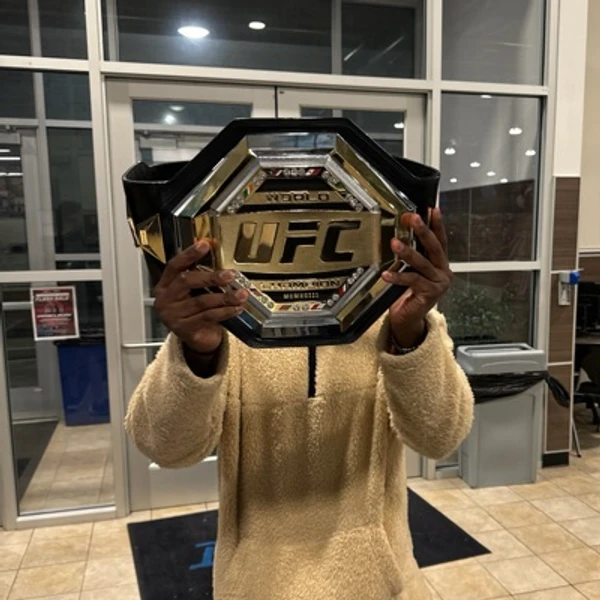
  • Boxing
  • Kickboxing
  • Jiu Jitsu
  • Piano
  • Guitar
  • Electric Guitar
  • Magic The Gathering
  • Magic

Bio

I’m a first-generation college student pursuing a career in biomedical engineering and aerospace engineering. I’m passionate about using science and technology to improve people’s lives and solve meaningful problems. Through school, research, leadership, and work, I’m committed to continuing my education and creating opportunities to give back to my community.

Education

University of Washington-Seattle Campus

Associate's degree program

2026 – 2028

Majors:
  • Biology, General
  • Engineering-Related Fields

Miscellaneous

Desired degree level:
Doctoral degree program (PhD, MD, JD, etc.)
Majors of interest:
Mechanical Engineering, Civil Engineering, Biomedical/Medical Engineering
Desired degree modality:
In-Person
English as first language:
No
Homeschooled:
No

Career

Miscellaneous

Dream career field:
Aviation & Aerospace, Civil Engineering, Biomedical Engineering, Mechanical or Industrial Engineering
Work experience:
6 years
Has nursing license:
No
Leadership experience:
Yes

Future Interests

  • Entrepreneurship
Larry Darnell Green Scholarship
For two months, my family ate peanut butter sandwiches because that's what we had. Not as a phase or a preference — because my mom was raising 12 kids on her own, and some months the math simply didnt allow for anything more. I wore the same pair of shoes for three years. Four shirts and four pairs of pants had to carry me through every season, every year, until they didnt fit or didn't hold together anymore. Even something as basic as getting to the bathroom without waiting in line was a small daily negotiation in a house that full. I'm the fourth of twelve, and the oldest boy, which meant alot of the physical weight of the household landed on me early. While my mom worked to hold everything together, I became one of the people who made sure the younger ones were fed, watched, and taken care of. That's not a complaint — it's just what the situation required, and I stepped into it because someone had to. But I won't pretend it didnt make school harder. Homework competed with responsibilities at home that couldn't wait. Studying happened in the cracks of time left over after everything else got handled. What that upbringing gave me, though, is a kind of resourcefullness and endurance that I don't think you can learn any other way. When you've had to stretch two months of peanut butter sandwiches and still show up functional the next day, "hard" gets redefined. Difficult classes, long nights, competing responsibilities — none of it intimidates me the way it might someone who hasnt had to carry that kind of weight before. I learned early that you work with what you have, you take care of the people around you, and you dont get to fall apart just because things are hard. That's also exactly why I want to give back. I know firsthand what it looks like when a family is doing everything right and still doesn't have enough — and I know how much of a diffrence even small support can make in a moment like that. I plan to use my career, and whatever platform comes with it, to create real opportunities for kids growing up the way I did: mentorship, resources, and proof that where you start doesn't have to be where you stay. I want the next fourth of twelve kid wearing one pair of shoes for three years to know someone made it through that and came back to help.
Nadia Ansari Design Award
My uncle had a stroke that took his ability to walk without help. Overnight, tasks he'd done without thinking his whole life — standing up from a chair, getting to the bathroom, moving from one room to another — became things he needed someone else for. I became one of those people. I help him with mobility, with the small physical tasks that most people never have to ask permission for, and with the quieter, harder part: watching someone who used to be fully independant adjust to needing help for almost everything. The problem I refuse to accept as inevitable is how much of stroke recovery still depends on a person having someone else physically present. Assistive devices exist, but alot of them are designed around a single fixed disability, not around the reality that recovery is uneven — some days he has more strength or balance than others, and the tools available to him don't flex with that. On his harder days, he needs real physical support. On his better days, the same devices can feel like more restriction than help. I've watched him do the math constantly: is this worth asking for help with, or do I try it alone and risk falling. That calculation shouldn't have to happen dozens of times a day. Understanding this problem hasn't come from research papers — it's come from being in the room for it. I've watched what actually slows him down versus what the assumption is that should slow him down. I've seen which movements are hardest for him specifically, which ones caregiving guides dont really cover, and how much mobility assistance is really about adapting in real time rather then following one static plan. What I want to build, eventually, is mobility support technology that adjusts to a persons actual condition day to day instead of assuming a fixed level of disability — something closer to adaptive assistance than a single static device, using the kind of engineering and systems thinking I'm already working toward in aerospace. The instinct is the same whether your designing for a stroke survivor or a pilot: the machine should absorb uncertainty so the person doesn't have to carry all of it themself. This is part of why I'm pursuing engineering in the first place. I don't want my career to only be about aircraft and spacecraft — I want it to be about building things that give people back a measure of control they've lost, whether that's control over altitude or control over walking across a room. Taking care of my uncle has shown me exactly how much that control matters, because I watch him fight for peices of it every single day. The future I want to help create is one where the tools we build for people recovering from something like a stroke actually keep up with them, instead of asking them to keep adjusting to the tool.
Craig Huffman Memorial Scholarship
I've wanted to be an astronaut since I was 17. Not just to fly — to go all the way past the atmosphere. That dream started as something almost embarrassing to say out loud, but seven years later, at 24, it's the thing that still gets me out of bed to study, train, and keep working toward a degree in engineering with my sights set on aerospace. My interest in aviation didn't come from a single dramatic moment. It came from persistent curiosity — the kind that makes you stop and actually wonder how a several-hundred-thousand-pound aircraft gets off the ground, and then decide you want to be one of the people who understands it well enough to make it safer and better. That curiosity turned into a plan: finish my degree, pursue a PhD in Aeronautical Engineering, commission as an officer in the U.S. Air Force, and eventually work toward becoming an astronaut. It's an ambitious timeline, and I know it. But I'd rather spend my twenties and thirties building toward something that big than settle for something smaller just because it's easier to explain at a dinner party. Leadership, for me, hasn't come from a title — it's come from practice, in more than one sense. I compete in MMA, and I also coach, which means I've had to learn leadership from both directions: as the person under pressure and as the person responsible for someone else's under pressure. Coaching teaches you fast that leadership isn't about having the most talent in the room — it's about being able to see what someone else needs, communicate it clearly, and stay steady when they're struggling so they can stay steady too. Competing teaches you the flip side: how to take your own coach's word, apply it in real time, and take ownership of the outcome instead of the excuses. I carry both of those lessons into how I approach school and long-term goals. I'm a first-generation college student, which means I've had to figure out a lot of the "how do I actually do this" questions on my own, and I've often ended up being the person other students in similar situations come to for advice — not because I have it all figured out, but because I know how to break a hard thing down into something learnable, the same way I do for the people I coach. I think that's the kind of leadership aviation actually needs: not just technical skill, but the willingness to mentor the people coming up behind you. Craig Huffman's legacy, from what I understand of it, was built on exactly that — skill paired with mentorship and a genuine investment in other people's success. That's the standard I want to hold myself to, both as a future engineer and as someone who wants young people from backgrounds like mine to see a real, walkable path into this field. I'm not at the finish line yet — I'm an undergraduate with a long road still ahead of me. But I've already proven to myself, both in the gym and in the classroom, that I can sustain discipline toward a goal that takes years to reach. I plan to keep doing exactly that until aviation and aerospace are no longer just where I want to end up, but where I've built something worth leaving behind too.
Learner Tutoring Innovators of Color in STEM Scholarship
There's a particular kind of quiet that happens in the second before a fight starts. Everything you've trained for compresses into a single moment where preperation either holds or it doesnt. I've spent years in that quiet as a competitor, and I think it's taught me more about engineering than any textbook has: the work that matters happens long before anyone's watching, in the unglamorous repetition nobody applauds. I'm pursuing a degree in engineering because I want to spend my life in that kind of preparation — building toward something too large to finish alone. Specifically, I want to work in aerospace, chasing a PhD in Aeronautical Engineering and eventually an officer's commission in the United States Air Force, with the long term aim of flying as an astronaut. I know how that sounds when I say it out loud at 24, still an undergrad, still years from any of it. Someone once told me it looks like a sunk cost — too much time already spent to rationally continue. But sunk cost only applies if the thing your chasing has an expiration date. Mine doesn't. I'm not finishing a bet I made at 17, I'm still making it, one semester at a time, because the goal hasn't gotten smaller — I've just gotten closer to being someone capable of reaching it. What draws me to aerospace specifically is the strange intimacy of it: the same physics that keeps a bird in the air, scaled up into something that can carry a human being past the atmosphere entirely. I want to understand that transition well enough to improve it — to make the machines that do it safer, more efficient, more forgiving of the humans inside them. It's the kind of problem that rewards patience, and I've had to learn patience the hard way, as a first generation student piecing together how college even works while also building a competitive fighting career on the side. Neither of those things came with a instruction manual. Being a person of color in this field means I notice the room I'm in. Aerospace engineering, officer corps, astronaut candidate pools — these aren't spaces that have historically expected someone like me to walk through the door, and I feel that absence even when no one says it out loud. I don't think my job is to just tolerate that and succeed anyway. I think it's to make the absence smaller. Every time a student who looks like me sees someone who looks like them holding a technical role in that world, the ceiling they imagine for themselves moves. I want to be one of the reasons it moves — not as a symbol, but as an engineer who happens to also be visible. I don't know yet exactly which problem in aerospace I'll end up spending my career on — propulsion, spacecraft design, something not yet named. What I do know is that I've already spent years proving to myself that I can sustain effort toward something invisible and far away, without needing proof along the way that its working. That's not a sunk cost. That's the only way anything worth building ever gets built.
SrA Terry (TJ) Sams Jr. Civil Engineering Scholarship
I am currently pursuing a degree in engineering because I want to build a career where I can combine my passion for science, technology, aviation, use the military and my service as the crutch to get there. My end game goal is to earn a PhD in Aeronautical Engineering and become an astronaut. I have been working toward this goal since I was 17 years old, and now, at 24, I am still more than committed to making that dream a reality. My interest in engineering comes from my fascination with how things work and how engineering can be used to solve problems that affect people’s lives. I am particularly interested in aerospace and aeronautical engineering, including aircraft and spacecraft design, propulsion, and advanced aerospace systems. I want to continue my education further beyond just my current bachelor’s degree program and eventually conduct research that contributes to the future of aviation and space exploration. My game plan post my bachelors is that I am planning to pursue a career in the United States Air Force. Serving in the Air Force would allow me to mix both my engineering education with my desire to serve my country and work in an environment focused on advanced technology and mission-driven problem solving. I am interested in pursuing the officer carrer pathway and using my engineering background in a technical role. The education and experience I gain through this path would help prepare me for my long-term goal of becoming an astronaut. After graduating, I plan to continue my education and work toward my PhD while building professional experience in aerospace engineering. Ultimately, I hope to work on technologies that make aviation and space travel safer, more efficient, and more capable. I would also like to inspire students from backgrounds similar to mine to pursue engineering and other STEM careers. My journey through college has been nothing short of the word easy, but I have and will continue forward because I believe in the goal I am working toward. Some see it as a sunk cost fallacy but I know that becoming an engineer, earning a PhD, serving as an Air Force officer, and eventually becoming an astronaut will require years of dedication. I am willing to put in that work. To me, engineering is not simply a degree or career—it is a path toward exploration, service, and creating something that can have an impact far beyond myself.
James Diorato Memorial Scholarship
I am passionate about aviation because I want to understand and help advance the technology that allows us to explore the great beyond. Ever since I was 17, I have dreamed of becoming an astronaut and one day traveling into outer space. Now, at 24, that dream has not changed. Through the challenges, the setbacks, the classes, the late nights, I have faced from the start of my education to now, have made me more determined to achieve it. My end game goal is to earn a PhD in Aeronautical Engineering and pursue research in areas such as aircraft and spacecraft design, propulsion, and advanced aerospace systems. I want to develop a deeper understanding of how aircraft and spacecraft operate and use that knowledge to help create technologies that are safer, more efficient, and capable of taking us (possibly me) farther into space and explore the great beyond. I am especially interested in the connection between engineering and exploration because every advancement in aerospace technology creates new possibilities for humanity. It’s crazy to think that even the device I’m writing this one was made using rocks. My journey toward this goal has not always been easy. I am still working hard and steady toward my degree while balancing the responsibilities and challenges that come with being a college student. There have been times when reaching my goals felt far away, or even times where Ive wanted to give up. Balancing my MMA career with my hobbies and school life have been nothing short of challenging, but I have continued moving forward because I know what I am working toward. Being in school at 24 is not a sign that I am behind; it is a reminder that I have continued to pursue my dream despite the obstacles in my path. I also want my career to have an impact beyond my own accomplishments. As someone who has had to work hard to find my place in higher education, I understand how difficult it can be to pursue a STEM career when you do not always see people from similar backgrounds represented in those fields. I hope to inspire other students to believe that they can pursue ambitious goals, even when their journey takes longer than expected. All in all, I want to become an astronaut, earn my PhD, contribute to the field of aerospace research, and hopefully one day experience outer space firsthand. Aviation and aerospace represent more than a career to me—they represent curiosity, the human potential personified, and the possibility of discovering what lies beyond what we already know.
Muhammed Abdi Student Profile | Bold.org