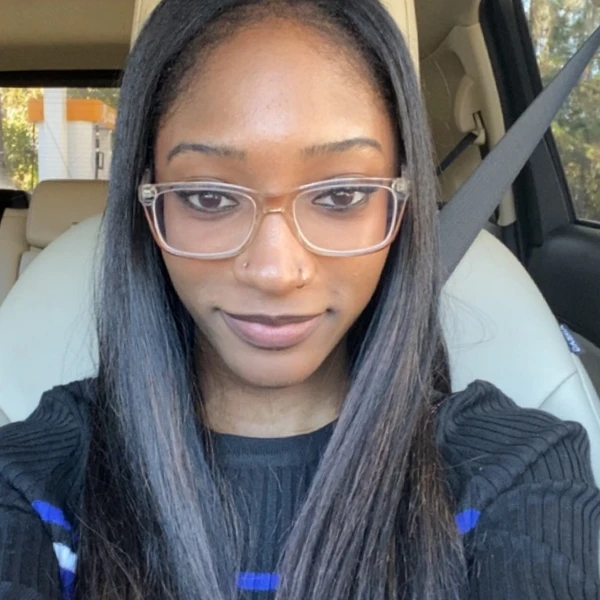
user profile avatar

Madison Allen

1x

Finalist

Bio

An african american woman with a passion for technology and digital learning! Sideways thinking, alternative ways of living and thinking and loving are what I breathe!

Education

South Carolina Virtual Charter

High School
2021 - 2026

Miscellaneous

  • Desired degree level:

    Bachelor's degree program

  • Majors of interest:

    • Graphic Communications
    • Human Computer Interaction
  • Not planning to go to medical school
  • Career

    • Dream career field:

      Graphic Design

    • Dream career goals:

    • Brand Associate

      Gap Inc
      2025 – 2025

    Sports

    Cheerleading

    Club
    2020 – 20211 year

    Public services

    • Volunteering

      Woman’s Domestic Violence Shelter — In my role as a sales associate at Gap Inc.
      2025 – 2025

    Future Interests

    Advocacy

    Volunteering

    Entrepreneurship

    Williams Foundation Trailblazer Scholarship
    My interest in technology and design has always been tied to the idea of making things easier and more accessible for people who often feel left behind. While I never had access to large formal programs or structured outreach opportunities, I learned early on that meaningful impact doesn’t always come from big institutions — sometimes it begins with small, self-initiated projects created from the heart. Through digital media, design, and technology, I’ve worked to create tools and resources that support people who are often underserved in our rapidly evolving digital world: elderly individuals, students from low-resource backgrounds, and families unfamiliar with modern online platforms. One of the first projects I started was helping older adults in my family and community navigate basic digital tasks. Many felt intimidated by technology — confused by cluttered interfaces, overwhelmed by constant updates, or hesitant to trust online forms. I began by simplifying things visually: designing easy-to-read graphics, step-by-step guides, and clear icons that showed them exactly where to click and what to expect next. I created simplified instructions for accessing email, organizing photos, adjusting phone settings, and protecting themselves from scams. What started as a small favor quickly grew into something larger, because word spread that I could explain technology without making people feel embarrassed or “behind.” I also used my design and video-editing skills to create approachable tutorials that broke down common digital tasks. I posted these on social media accounts I created specifically for this purpose, where I shared short, visually clear clips designed for absolute beginners. I made sure the visuals were high-contrast, the instructions slow-paced, and the language welcoming. My goal was to give marginalized groups — especially older adults and low-tech households — access to digital tools without frustration or fear. The response was overwhelmingly positive, with several people telling me they finally felt confident enough to try things on their own. Another self-initiated project involved photography and digital media for families who couldn’t afford professional services. Many families wanted graduation photos, headshots, creative portraits, or graphic designs for events but didn’t have the budget. I began offering them free or low-cost sessions, editing their photos, creating invitations, or designing digital materials they could use for family announcements, birthdays, and small businesses. This work helped people showcase themselves in ways they never thought possible — giving them pride, confidence, and resources they otherwise wouldn’t have been able to access. These projects were small in scale, but they taught me something important: innovation isn’t only about invention — it’s also about compassion. My work has shown me that technology becomes powerful when it reaches the people who need it most. And sometimes all it takes is one person deciding to create something that makes someone else’s life a little easier. These experiences shaped my desire to study UX/UI design and pursue a future focused on accessibility. I want to continue designing tools that simplify technology for underserved communities, building resources that give people confidence instead of confusion, and using creativity to open doors that have been closed for too long. My self-initiated projects are only the beginning — but they reflect the kind of work I hope to expand on for the rest of my life.
    Justin Moeller Memorial Scholarship
    The first time I realized how powerful technology could be, I was sitting at my computer trying to edit a simple photo. I had no idea what the buttons meant, but the moment I figured out how to adjust the lighting and turn an ordinary picture into something expressive, I felt something click inside me. It wasn’t just about making an image look better—it was about understanding how technology could bring creativity to life. That single moment started a journey that shaped my interests, my skills, and my future career goals. My background in technology grew naturally from my curiosity. I began experimenting with digital tools on my own, teaching myself the basics of photo and video editing before I even knew what “graphic design” meant. Over time, that curiosity evolved into a passion. I created social media pages dedicated entirely to image editing and video creation, where I shared my work, posted tutorials, and encouraged others to explore digital design. Managing these pages taught me about algorithms, digital communication, branding, and how technology shapes the way people interact online. As I became more confident, I expanded my skills into software used by professionals. I earned an Adobe Certified Professional credential, which helped me master Photoshop, After Effects, and InDesign. These programs opened my eyes to how digital tools can transform ideas into visual experiences. I also became comfortable with a variety of video editing platforms, learning the technical details behind transitions, color grading, timing, and motion graphics. My exploration of technology didn’t stop there. I grew interested in coding and web design, teaching myself HTML and CSS to build simple, functional web pages. Web design showed me that creativity and technical structure can work together—every line of code affects layout, usability, and how people experience information. This connection between design and technology is one of the things I find most interesting about the IT field. It’s not just about building something that works; it’s about building something that works well for real people. Outside of personal projects, I also worked part-time as a Media Associate for a catering company. In this role, I created digital content, edited promotional videos, and helped with their online branding. This experience showed me how technology supports businesses and how important digital communication is in modern marketing. It was my first introduction to using technology in a professional environment, and it helped me understand how technical skills can turn into real-world opportunities. What excites me most about the technology field is how constantly it evolves. There is always a new tool, new software, or new idea to learn. I’m especially interested in the areas where design and technology overlap—like UX/UI design, digital media, and interactive content. These fields take creativity and problem-solving and turn them into tools that can help people communicate, learn, and connect. My background has taught me that technology is more than screens and software—it’s a creative language, a problem-solving tool, and a way to shape the world around us. I hope to continue exploring this field, growing my skills, and using technology to create meaningful digital experiences in the future.
    Trees for Tuition Scholarship Fund
    When I was thirteen, I spent an entire weekend trying to help my grandmother use her new phone. Watching her struggle with something that was supposed to make her life easier made me realize something powerful: technology can either connect people or completely shut them out. That moment—watching her frustration turn into a smile when she finally learned how to make a video call—was the first time I understood that design isn’t just about how things look; it’s about how they work for everyone. Since then, I’ve been fascinated by the space where art and technology meet. I started editing videos for friends, experimenting with colors, transitions, and timing to tell stories that felt real and emotional. Soon, I began creating social media pages dedicated to image and video editing, using my platforms to share tutorials, tips, and encouragement for other young creators. When someone messages me saying my videos inspired them to start editing, I feel the same spark of connection I felt helping my grandmother. As I’ve grown, my curiosity has evolved into purpose. I’m drawn to UX/UI design because it’s where empathy meets innovation. Good design has the power to make the world more accessible—whether that means helping a student learn online, assisting someone with limited mobility to navigate an app, or guiding a small business owner to reach their audience. I want to be the kind of designer who solves problems that matter, creating experiences that make people feel understood, included, and empowered. Right now, I’m already taking small steps toward that goal. I volunteer my creative skills in my community by helping friends and local organizations design digital flyers, edit promotional videos, and set up websites that help them share their stories. I’ve also worked part-time as a Media Associate for a catering company, where I learned how to communicate visually and authentically through design. Each project—no matter how small—teaches me how design can build bridges between people and ideas. Beyond my creative work, I try to make my community better through kindness and collaboration. I help classmates with their design assignments, share editing resources online, and celebrate the success of others in my art classes. I believe community improvement starts with connection—listening, supporting, and creating spaces where everyone feels seen. After college, I plan to expand that mission on a larger scale. My goal is to become a UX/UI designer who develops inclusive, user-friendly experiences for education and accessibility. I want to work with organizations that prioritize diversity and design technology that adapts to people’s needs, not the other way around. I also hope to teach or mentor young designers someday—to show them, as I learned early on, that creativity isn’t just about making things beautiful; it’s about making them meaningful. Attending the Savannah College of Art and Design will give me the foundation and tools to turn my creative energy into impact. SCAD’s focus on innovation, collaboration, and real-world application is the perfect place for me to learn how to merge empathy with design. My dream is to graduate not just as an artist, but as a problem-solver—someone who uses design to make life a little easier, a little clearer, and a lot more connected for people everywhere. Every app interface, video, or digital product I create is a chance to improve someone’s day—to make technology a little more human. That’s how I plan to make my community, and eventually the world, a better place: one thoughtful design at a time.