
Hobbies and interests
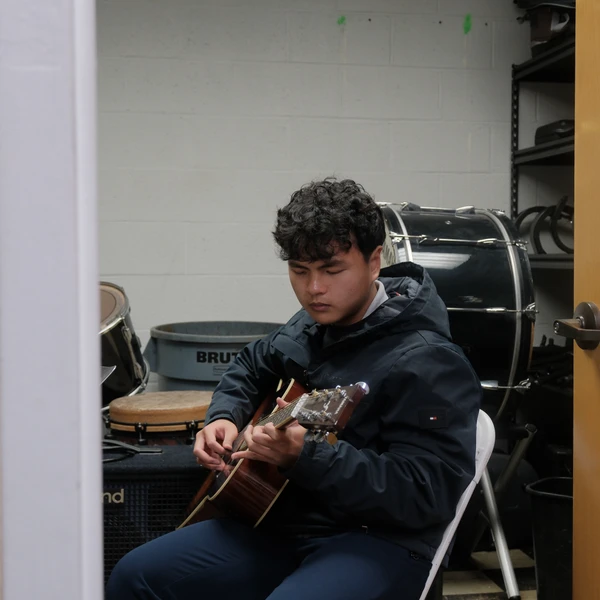
Electric Guitar
Reading
Academic
Classics
Horror
I read books multiple times per week
Minh Trần
1x
Finalist1x
Winner
Minh Trần
1x
Finalist1x
WinnerBio
I am a motivated international student who is pursuing a career in Medicine. My dream is to become a dermatologist and develop a medically proven skincare company tailored specifically to Southeast Asian teenagers.
Education
University of Rochester
Bachelor's degree programMajors:
- Biological and Biomedical Sciences, Other
Minors:
- Philosophy
- Visual and Performing Arts, General
- Music
Wilbraham & Monson Academy
High SchoolMiscellaneous
Desired degree level:
Doctoral degree program (PhD, MD, JD, etc.)
Majors of interest:
- Health/Medical Preparatory Programs
- Music
- Visual and Performing Arts, General
Test scores:
1520
SAT1460
PSAT
Career
Dream career field:
Medical Practice
Dream career goals:
Accountant
Bao Son LLC2024 – 20262 years
Sports
Track & Field
Junior Varsity2024 – 20262 years
Cross-Country Running
Junior Varsity2024 – 20262 years
Research
Agricultural Engineering
Nguyen Khuyen HighSchool — Innovator2022 – 2023
Arts
WMA's Jazz Essemble
Music2024 – Present
Public services
Volunteering
N/A — Teacher2025 – Present
Future Interests
Advocacy
Volunteering
Entrepreneurship
Robert F. Lawson Fund for Careers that Care
The first time I tried to be a scientist, I dumped hand sanitizer on my hands in the dead of winter, convinced its high electron density would shield me from static shocks. Evidently, it only made the shocks worse. That moment captures my restless, sometimes naive curiosity, the same drive that pushed me to understand a world far beyond the financial struggles and turmoil of my childhood in Thanh Quy, Vietnam.
Growing up, my world was defined by two contrasting sounds: my father’s bitter, drunken insults and the grounding melodies of my grandfather’s acoustic guitar. While my father insisted education was only a path to a quick paycheck, I craved deeper understanding. I wanted the microscope we couldn’t afford. I wanted to know whether my mother’s LDL cholesterol of 111 mg/dL was something to panic over. But without guidance, I became overwhelmed by conflicting Google searches and my inability to interpret the data.
That sense of helpless confusion is what I am determined to eradicate for others. My vision is to become both a physician and a science communicator—the “Richard Feynman of medicine”, though I doubt Feynman ever tried to build a makeshift microscope from three magnifying glasses.
Studying Biochemistry and Pre-Medicine at the University of Rochester, my goal is twofold. First, I want to demystify health for the underprivileged. I’ve already started small: I use TikTok to translate what I’m learning into Vietnamese medical content and host free online guitar classes to give back the peace music once gave me. Long-term, I plan to return to Thanh Quy and open a free medical clinic. There, I will translate intimidating medical jargon into straightforward, actionable advice for people who lack the resources to interpret complex science.
My greatest inspiration is my grandfather. When I moved to the U.S., he was diagnosed with dementia. From thousands of miles away, I obsessively researched amyloid-beta plaques and hippocampal atrophy, searching for a cure that didn’t exist. I felt powerless. When I finally returned to Vietnam, we jammed on our guitars as we always had, but he was losing the notes. One day, he heard me play “Besame Mucho”, which was the first song he ever taught me, and asked what it was called. It shattered my heart that he had forgotten, yet the pure joy on his face as he heard it “for the first time” taught me a profound lesson in optimism.
I am not perfect. I still carry resentment toward my father’s abuse, and some nights I struggle to sleep, haunted by old echoes of my parents’ fights. But through my education, I am choosing to nurture my curiosity rather than wallow in the dark. I want to use my degree to contribute to treatments for neurodegenerative diseases so other families don’t have to watch their loved ones’ memories evaporate.
Through medicine, education, and the healing power of community, I am determined to help others find clarity and care. My legacy will not be measured by accolades, but by the number of people in Thanh Quy who no longer feel helpless in the face of medical complexity—and by the families who, because of my work, can sit together a little longer before the music fades.
Jacob Kelly Memorial Scholarship for Arts and Music
If you blindfold me, sit me down in a chair, and play any song from Queen’s discography, chances are I will sing along to every single word, even if I can't remember the title. Music has come to me naturally like that since I was a young boy, back in my family’s old house, imitating the prima donnas on our black-and-white TV screen. In middle school, discovering Queen and their charismatic frontman, Freddie Mercury, was a revelation. Their music was a refuge that lifted from me the blindfolds of trauma, and opened my eyes to the musical wonders of The Seven Seas of Rhye, Innuendo, Bohemian Rhapsody, and so many others.
Middle school me thought that was it: That was enough music for me; Queen had wrapped every possible sound into perfect, delicate presents. But I soon realized there is no ceiling to music. Artists like Radiohead, Nick Drake, and Alice In Chains brought vastly different palettes to my world. So much so that I picked up the guitar in my sophomore year, determined to offer the world a present of my own. Over the past four years, I’ve added piano to my repertoire and taught myself music theory. This theoretical foundation recently culminated in my new project, "A Dance with Pi," where the melody is composed of scale degrees corresponding to the digits of π.
However, for my first year as an instrumentalist, I missed out on the best part of music: the community. It wasn’t until I moved to the US during my junior year that I discovered the exhilarating joy of ensemble play. I co-founded a band—BandAid—playing talent shows and local festivals. I joined the Jazz Ensemble, played in the Pit Band for our school's musicals, and sang in the chorus. Whether I was harmonizing, comping behind a soloist, or stepping out for a solo myself, those moments were pure bliss. I felt a deep, instinctual connection with the people around me. Music was no longer just a solitary refuge; for me, it had turned into shared language, spoken through one’s heart.
Now, as a student pursuing music at the University of Rochester, I plan to further hone my craft. My goal is not to create "perfect" music, as there is no such thing, but to offer an authentic expression of myself and my experiences. To do this, I need the time and resources to immerse myself fully in my studies, collaborative projects, and the wider campus community. This scholarship would be pivotal in funding my four-year journey at the University of Rochester, allowing me to focus entirely on my passion as an artist rather than stressing over tuition bills.
With your support, I can dedicate my college years to becoming the best musician I can be. And who knows? Maybe one day, someone will be blindfolded in a chair, loudly and passionately singing along to one of my songs. I just promise not to make them memorize the title.
Henry Respert Alzheimer's and Dementia Awareness Scholarship
The notes rang like breezes amidst a summer night: I could not help but fall asleep, surrounded by the melodies from my grandfather's guitar. His playing comforted me on nights that I could not sleep, absorbed in the screams of my mother and my dad's drunken laughs. His playing stayed with me into the next few days, when school felt meaningless, and loneliness surfaced. His playing held me, like an extension of my grandfather's arms, warmly on days I felt weak and hopeless.
The summer after 9th grade, I decided to pick up the guitar. I wished to be like my grandfather, who played Besame Mucho incredibly well, while singing with a surprisingly good Spanish accent as a Vietnamese. I consulted the general himself, who spent hours teaching me about fret positions, major/minor scales, and tricks he invented to memorize the pattern of each mode in a scale. For the first time, I was exposed to the wonderful world of music, an entirely different dimension from the chemistry or biology I learnt in class. Whenever free time permitted, I would sit with my grandfather in our joint room and become fascinated with the sounds and timbers produced by my grandfather's acoustic guitar. And I remember I could not have been happier to hear that sweet sound of Besame Mucho strummed out from my guitar for the first time, grateful that my grandfather had guided me towards accomplishing my first big musical milestone.
In the first year of my stay in the United States, I was notified of terrible news: My grandfather had been diagnosed with dementia. The night after my sister's announcement, I could not really sleep. I kept thinking about my grandfather and how old he had become over the years. The worst part was that he could not be there to comfort me with his melodies. I had myself and the memories with granddad to keep me company until morning.
Eventually, I came back to Vietnam. It had been 4 years since he was diagnosed with dementia. We sat with each other in our joint room. I picked up my Yamaha acoustic guitar. He laid his beat-up Hummingbird down comfortably against his thighs. We started jamming like we used to. Blues in A. His rhythm was off, and mine was too fast. But it was a great jam session. We then jammed with each other regularly. Sometimes we would jam to a Latin Minor 2-5-1, while other times we were taking turns soloing over a Major Blues progression. During every jam session, my grandfather never failed to teach me a thing or two about soloing, but as the days went by, his speech and playing became more and more difficult, and I could not shake off the feeling that I was learning how to play the notes while he was losing them.
I tried to find ways to combat his dementia. I used Google to learn about the possible symptoms, causes, treatments, and remedies. During my period of researching the disease, I felt like I was being chased by time itself. I learned that dementia is a progressive neurodegenerative process in which neurons gradually lose their ability to communicate, especially in regions such as the hippocampus, which is critical for forming new memories. In some cases of dementia, accumulations of amyloid-beta plaques and tau tangles smother the brain, disrupt neural function, and are strongly linked to hippocampal atrophy and cognitive decline. Each moment when it seemed like there was a possible breakthrough, that dementia could be reversible through altering one molecular pathway, I found out that those were just theories, and in reality, it was extremely difficult to fully reverse the effect of dementia. But what then? Would my grandfather lose his ability to play the guitar? Would he lose the ability to sing? And eventually, would he still be able to remember my face? Or will all of those be lost and dried up in his ever-evaporating stream of consciousness?
He was becoming really ill, and there was nothing I could do about it.
The last days of that summer, I happened to be playing my guitar when my grandfather walked into the room. "That's a beautiful song! What is it called?" he asked me. It was Besame Mucho. I replied, and despite how sad I was that he forgot the first song he had taught me, the smile radiant on his face taught me an important lesson: Everything has the good and the bad, no matter how extreme the situation is. It is true that dementia has stolen from him the memories of his life, but it has given him the chance to enjoy things for the first time, to smell a rose and remember the scent, and to hear the pure, sweet melodies of Besame Mucho again.
The situation taught me to be optimistic about life and to always treasure the wonders of the world around me. My grandfather does not play guitar anymore. There are still nights that I cannot sleep, still haunted by the screams and terror of my mother and my father's satisfied laugh. But when I wake up in the morning, I can still appreciate the radiant color of the sun and the sweet scent of life that is all around me. As a biochemistry major at the University of Rochester, I am hopeful that with the motivation my grandfather gave me, I will one day find a way to treat people whose families have to suffer from their dementia. It is hard work, but I know there are people who need the potential treatment for their loved ones.
Sometimes during my studies, I still would find myself embraced by the sounds of music and of the world, as if the arms of my grandfather never let go.
Dr. Rajesh Aggarwal Scholarship for Scientific Studies
WinnerWhen my grandmother developed tremors from Parkinson’s disease, small tasks became daily obstacles: buttoning shirts, pouring tea, holding a pen. Watching her frustration sparked in me the two instincts of empathy and curiosity. I wanted to help, but I also wanted to learn how to help in a way that respected her independence. That blend of creative thinking and science led me to build a simple adaptive utensil that changed how she ate her meals and how I think about solving problems.
I started by observing. The tremor was rhythmic, and my grandmother’s greatest difficulty was maintaining a steady grip. I then sketched ideas like weighted handles, counterbalances, or textured grips. I read biomechanics articles and watched videos about tremor-suppression devices used in research labs. Combining those sources, I devised a prototype: a spoon with an inner weight that slid inside the handle and a silicone sleeve for improved friction. The weight moved opposite the tremor phase by using a viscous fluid damper, which is essentially a small chamber filled with glycerin and a freely moving metal slug. The slug’s inertia smoothed rapid shakes while the sleeve made the handle easier to hold.
I tested the spoon with my grandmother. The first version felt awkward as she complained the handle was bulky. I returned to the drawing board and iterated: thinning the chamber, shortening the slug, and replacing the sleeve material after she found it too sticky. Each revision combined creative experimentation with principles from physics, such as moment of inertia, damping, and ergonomics. After three weeks, she could sip soup with one hand again and regained confidence at the dining table. More than a household win, the project taught me how to translate scientific concepts into human-centered solutions.
This experience crystallized my belief that science is most powerful when paired with creativity and empathy. Scientific training gives tools like an understanding of mechanics, materials science, and data analysis, but creativity directs those tools toward real human problems. My spoon was simple. It didn’t require expensive sensors or complex algorithms. Instead, it used basic physics and iterative design rooted in an intimate understanding of the user’s needs. That combination produced an accessible, low-cost aid that could be replicated and adapted for others with fine-motor impairments.
Pursuing a degree in science will let me scale this approach. I want to deepen my knowledge of biomechanics, materials, and human-centered design so I can create scalable assistive technologies that are affordable and culturally appropriate. On campus, I plan to collaborate across engineering, biology, and design labs, learning to prototype faster, test rigorously, and evaluate outcomes ethically. After all, society benefits when scientific discovery is democratized.
In a broader sense, training in science cultivates a mindset: observe carefully, hypothesize creatively, and iterate responsibly. Whether improving an eating utensil for a loved one or developing public-health interventions, this process translates curiosity into practical impact. My grandmother regained more than a steady hand; she reclaimed a quiet pleasure of daily life. With a scientific education, I aim to multiply those small recoveries into widespread improvements in how we design for human needs.
Bright Lights Scholarship
In third grade, infatuated with the illustrations from Horrible Sciences comic books, I wanted to get a microscope. My family couldn't afford one, so I stacked three two-dollar magnifying glasses on top of each other and held them over a leaf from our yard, squinting through the blurred, doubled image. It didn't really work. But I remember exactly how it felt to want to understand something so badly and not have the tools to get there. That feeling has quietly shaped almost every decision I've made about my education since.
My father knows that feeling too, in a harsher form. As a teenager, he wanted to go to college, but his family had no money for tuition, so instead of studying, he sold taffy on the street to help support the household. That disappointment never really left him. Over the years, it hardened into alcoholism, and alongside it, violence in our home that I grew up learning to predict and avoid. I share this not for sympathy, but because it explains the household I was raised in and why, when I told my father I wanted to pursue higher education myself, he refused to support it. He believed, from his own experience, that college wasn't worth the cost, and that the responsible path after high school was to get a job immediately and start contributing to the family. In his own way, he thought he was protecting me from a disappointment he already knew too well.
But I couldn't shake the memory of that third-grade microscope, or the belief underneath it: that not having something isn't a good enough reason to stop wanting it. On my own, without anyone reviewing my essays or checking my applications, I researched and applied for scholarships, and eventually earned $80,000 to attend high school in the United States. I left the only home I had ever known without my family's blessing, and without most of them fully understanding why. Some still don't.
I'm applying to college anyway. I've already shown myself that I can build real opportunity out of very little — three stacked magnifying glasses, a folder of scholarship applications no one helped me fill out, a plane ticket paid for with money I earned from tutoring my classmates instead of money my family gave me. More than any single subject I might study, what I want to keep doing is what that eight-year-old with the taped-together lenses was already trying to do: get closer to the things I don't yet understand, and refuse to let a lack of resources be the reason I stop looking.
This scholarship would mean I don't have to choose between tuition and rent, or between finishing my degree and helping the family I still love, even the ones who never supported this path. It would let me finish what I started the day I chose to leave everything familiar behind. My father never got the chance to go to college. He sold candy on the street instead. I'm not trying to erase that or make up for it. I'm asking for the chance to write a different ending — one he never got to write for himself, and one I intend to write for both of us.
Maxwell Tuan Nguyen Memorial Scholarship
I still remember the despondence third-grade me felt when my mother said we could not afford a microscope: It had been my dream to possess the apparatus that could open me to a whole different universe, one that I had read about in Horrible Science publications but had never gotten to lay my eyes upon.
Since then, I have been on a quest to quench my scientific curiosity. In my sophomore year, I tried mixing my father's alcohol with salt, hoping a substitution reaction would occur. I self-studied the first semester of Organic Chemistry using an online resource called Proton Guru. I tutored my friends in Chemistry and Biology to review my understanding of the sciences. During my first year in America, I dumped hand sanitizer all over my hands in the winter because I thought the subsequent high electron density on my hands would make me immune to static shocks from touching metal. It made it worse.
The questions are not always for my own gratification, however. I was curious about the numbers on my mother's annual health assessment, guessing what 111 mg/dL of LDL means for her health. "Should she be concerned about that?" is something that I often ask myself before trying to Google the optimal range for whatever health indicators and compare hers with it. Sometimes it works out; most of the time it does not: I get overwhelmed by the amount of conflicting information on so many subjects. Is a high urate level bad for you? What range of cholesterol is considered healthy? For the first time, there have been questions I don't know the answers to, as it was too hard to navigate the maze of the human body without any guidance.
When I got asked which profession I would like to pursue, the answer was obvious: It would be a biology-related profession, one that would answer all of my questions regarding human interactions with the world. One that would guide me in explaining my mother's numbers, and those of people around me. Then I thought back about the moment that started it all: The elusive microscope stood before me as a reminder about the monetary responsibilities I will have to uphold. It was then that I hoped to become a doctor, a profession which would grant me the fascinating knowledge about biology , while also ridding me of the poverty that has haunted my family for three generations.
My approach to medicine, then, would be according to my wish for scientific elucidation. I do not want to keep the secrets of biology for myself; however, my goal is to bring knowledge about health to the people in my country, those who are underprivileged not only in terms of income, but also in terms of their ability to process and interpret often complicated science. The difference that I would like to make resembles that of a science communicator. I hope to use the knowledge that I acquire in my medical journey to reach my people and teach them how to take care of their health and body. Through simplifying complicated medical concepts, I am planning to create a channel where I post Vietnamese medical content to promote true wellness to my people. With enough capital and expertise, I would then open my own medical institution near Thanh Quy, my hometown, providing free treatment and advice to those who are in need. The Richard Feynman of medicine- that is who I am trying to become, although I don't think he's ever tried to stack 3 magnifying glasses onto each other to imitate a microscope.