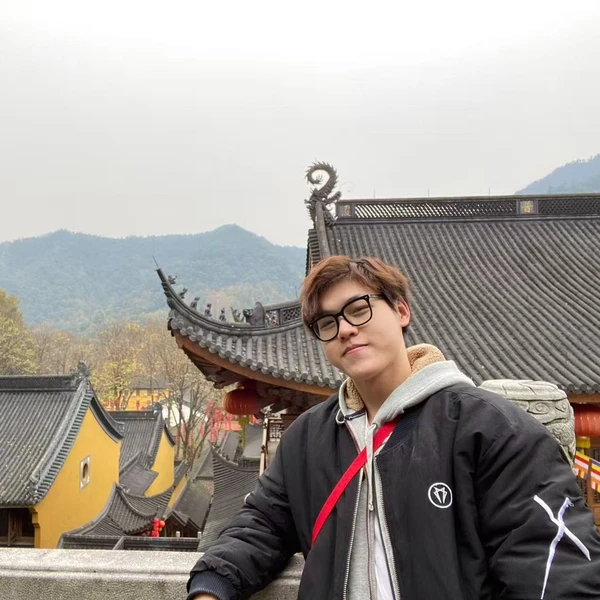
Hobbies and interests
Animals
Reading
Adult Fiction
I read books multiple times per week
Mingsheng (Simon) Li
1x
Finalist1x
WinnerMingsheng (Simon) Li
1x
Finalist1x
WinnerBio
I am a clinical psychology doctoral student at Boston University. My research interests are examining the association between emotion regulation and suicidal ideation in daily life, particularly through the contextual perspective.
Education
Boston University
Doctoral degree program (PhD, MD, JD, etc.)Majors:
- Psychology, General
- Clinical, Counseling and Applied Psychology
Teachers College at Columbia University
Master's degree programMajors:
- Psychology, General
Denison University
Bachelor's degree programMajors:
- Psychology, General
Career
Dream career field:
Research
Dream career goals:
Research
Clinical, Counseling and Applied Psychology
Boston University — Graduate Student Researcher2024 – Present
Arts
Denison University
Dance2018 – 2019
Public services
Volunteering
NewYork-Presbyterian Westchester Behavioral Health — Volunteer2023 – 2024
Future Interests
Advocacy
Volunteering
Philanthropy
Dr. Shuqiao Yao Memorial Scholarship
WinnerCurrently, I am a doctoral student in the Clinical Psychology Ph.D. program at Boston University, where my research centers on understanding the daily emotional and contextual dynamics that give rise to suicidal ideation. As an international student from China, a person of color, and a first-generation college student, my background has deeply shaped this commitment, not only by influencing the questions I hope to address, but by shaping my broader mission to develop personalized treatment that is culturally informed, inclusive, and grounded in real-world experience.
My ongoing projects integrate ecological momentary assessment, situational taxonomy, and multilevel modeling to examine how emotion regulation strategies fluctuate across time and context to influence suicidal ideation. One line of my work uses dynamic structural models to study how emotion regulation strategies shift across the day and week. A parallel line of my research examines how cultural dimensions, such as tightness–looseness and collectivism, shape emotional processes and suicide risk across both U.S. states and countries. This work reflects my growing commitment to integrating cultural psychology with computational methods. As an international student who has experienced multiple cultural transitions, I have seen firsthand how cultural norms, social expectations, and shifting environments shape emotional expression, coping, and well-being. These experiences motivate my interest in the “contextual layer” of suicide risk, how culture, environment, and situational demands can shape emotional experience and regulation.
My future work seeks to bridge these lines of inquiry by developing real-time, culturally responsive models of suicidal ideation, with the long-term goal of informing just-in-time adaptive interventions. I aim to use idiographic modeling to identify moment-to-moment transitions in emotional–suicidal states. Integrating cultural frameworks, I hope to determine how these transitions differ across individuals of diverse backgrounds, including Asian and Asian American communities. This direction is motivated by the belief that suicide risk is not only a psychological process but also a culturally contextualized one and that effective prevention requires understanding both. Clinically, I am receiving advanced training in cognitive-behavioral therapy and acceptance-based interventions at my institution. Working with individuals experiencing anxiety, trauma, and mood-related difficulties has further strengthened my conviction that research and practice must be deeply interconnected. My experiences as an Asian international trainee, navigating stigma and cultural barriers, inform my clinical skills. I have learned that approaching clients with cultural humility, respect for their lived experiences, and an appreciation for the complex ways identity and context shape mental health.
My background has therefore influenced my path in two important ways. First, it has shaped my scientific questions: how cultural and contextual factors shape emotion regulation and suicide risk. Second, it motivates my broader career goal: to develop psychological research and interventions that are empirically rigorous, culturally grounded, and accessible to diverse communities.
Ultimately, I hope to become a clinical scientist who advances our understanding of suicide through a combination of computational modeling, real-time assessment, and cultural psychology, work that aligns closely with Dr. Shuqiao Yao’s mission of improving mental health through integrative, culturally informed science. Thank you for your consideration!
Li, S.M., Irani, K. & Liu, Q. (In press). Beyond depression severity: Symptom-specific associations of suicidal thoughts and behaviors. Journal of Adolescent Health.
Li, S.M., Kobrinsky, V., Irani, K., Sangani, A. & Liu, Q. (2025). Neural correlates involved in behavioral metrics of emotion regulation, suicidal thoughts, and behaviors. Archives of Suicide Research: official journal of the International Academy for Suicide Research, 1–21. Advance online publication.
Li, S.M., Kobrinsky, V., Bi, K. & Chen, M.S. (2025). An initial exploration of mechanisms contributing to higher suicidal ideation in bisexual+ compared to lesbian/gay individuals. Psychology of Sexual Orientation and Gender Diversity. Advance online publication.