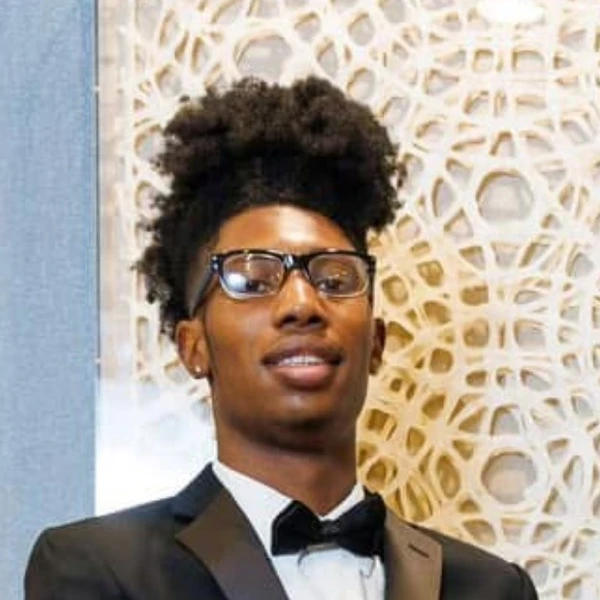
Hobbies and interests
Architecture
Artificial Intelligence
Basketball
Boxing
Combat Sports
Computer Science
Game Design and Development
Gaming
Reading
Science Fiction
Action
I read books multiple times per month
Millieyon Gavin
1x
Finalist
Millieyon Gavin
1x
FinalistBio
From a young age, I’ve always been captivated by the world of design and structure. My dream of becoming a successful architect ignited when I first wandered through a stunning modern building; it was a blend of creativity and functionality that truly inspired me. I envision creating spaces that not only house people but also enrich their lives. My passion for architecture drives me to constantly learn about innovative design and sustainable practices, with the aspiration of leaving a lasting impact on the environment and the communities I serve.
Alongside my architectural ambitions, basketball has been a cornerstone of my life. The exhilaration of the game, the teamwork, and the discipline it demands resonate deeply with me. I strive to balance my time between perfecting my jump shot and sketching my next architectural masterpiece. The hustle on the court parallels the dedication I apply to my studies, instilling in me the resilience needed to excel in both fields.
Gaming also plays a significant role in my life; it allows me to explore limitless worlds and develop strategic thinking. These skills translate seamlessly into architecture, where problem-solving and creativity are crucial. My diverse interests and determination make me a well-rounded candidate. I am committed to honing my skills in both architecture and basketball, believing that one enriches the other. I aim to inspire others through my journey, showing that with passion and discipline, you can chase multiple dreams simultaneously.
Education
Spartanburg Community College
Associate's degree programMajors:
- Computer Science
Blacksburg High School
High SchoolMiscellaneous
Desired degree level:
Master's degree program
Majors of interest:
- Architecture and Related Services, Other
- Accounting and Computer Science
- Computer Science
Career
Dream career field:
Architecture & Planning
Dream career goals:
Sports
Track & Field
Varsity2023 – Present3 years
Tennis
Varsity2022 – Present4 years
Basketball
Varsity2021 – Present5 years
Awards
- Student Athlete
Research
Architecture and Related Services, Other
American Institute of Architects — To find out more about my Major2022 – 2024
Future Interests
Volunteering
Entrepreneurship
Ruthie Brown Scholarship
Paying for higher education is a significant responsibility, and I understand the importance of developing a realistic plan to manage current and future student loan debt. While I view education as one of the most valuable investments I can make in my future, I also recognize that borrowing should be approached carefully and strategically. My goal is to minimize debt whenever possible while creating a sustainable plan for repayment after graduation.
The first step I am taking is actively pursuing scholarships and financial aid opportunities. Every scholarship I receive reduces the amount I may need to borrow and lowers my overall financial burden. I dedicate time to researching and applying for scholarships because I understand that reducing debt before it accumulates is one of the most effective financial strategies available to students.
In addition to seeking scholarship support, I plan to maintain responsible budgeting throughout my college education. I carefully evaluate educational and personal expenses and focus on spending money where it is most necessary. By managing expenses thoughtfully, I can reduce unnecessary costs and avoid taking on additional debt beyond what is required to complete my degree.
I also plan to work when possible while balancing my academic responsibilities. Whether through part-time employment, internships, or other opportunities related to my field of study, earning income during college can help offset educational expenses and reduce reliance on loans. In particular, internships in the technology field may provide both financial support and valuable professional experience that will strengthen my career prospects after graduation.
My long-term strategy for addressing student loan debt is centered on career preparation and financial responsibility. I am pursuing a degree in Computer Science because it offers strong career opportunities and the potential for stable earnings after graduation. By developing technical skills, gaining practical experience, and building a competitive resume, I hope to secure employment that allows me to meet my financial obligations while continuing to grow professionally.
Once I enter the workforce, I plan to create a structured repayment plan and prioritize student loan payments within my budget. Rather than viewing repayment as an obstacle, I see it as a financial responsibility that can be managed through careful planning and discipline. My goal is to make consistent payments, avoid unnecessary debt, and work toward financial stability as early as possible in my career.
I also understand the importance of remaining flexible. Economic conditions, career opportunities, and personal circumstances can change over time. Because of this, I plan to regularly evaluate my financial situation and adjust my repayment strategy when necessary. Staying informed about repayment options and maintaining responsible financial habits will help me navigate challenges that may arise.
Ultimately, my approach to student loan debt is proactive rather than reactive. Through scholarships, budgeting, employment opportunities, career preparation, and responsible financial planning, I am working to minimize debt while positioning myself for long-term success. My goal is to earn my degree, build a meaningful career in technology, and manage my financial obligations in a way that supports both personal stability and future growth.
Joe Gilroy "Plan Your Work, Work Your Plan" Scholarship
My primary goal is to earn a Bachelor’s degree in Computer Science and build a successful career as a software engineer. I am passionate about technology because it combines creativity, problem-solving, and innovation to address real-world challenges. In the long term, I hope to work in software development, contribute to meaningful technology projects, and achieve financial stability while making a positive impact on others through my work.
To achieve this goal, my first priority is completing my education. As a transfer student, I plan to focus on maintaining strong academic performance while developing practical skills outside the classroom. My timeline is to complete my degree within the next few years, participate in internships or hands-on projects during my studies, and secure an entry-level software engineering position after graduation.
The resources necessary to achieve this goal include tuition assistance, textbooks, computer equipment, software tools, transportation, and access to reliable internet. In addition, I plan to utilize campus resources such as academic advising, tutoring services, career development programs, and networking opportunities. Online learning platforms such as freeCodeCamp, GitHub, and technical tutorials will also help me strengthen my skills and remain current with industry trends.
My estimated annual educational budget includes:
* Tuition and fees: approximately $10,000–$15,000
* Books and course materials: approximately $800–$1,200
* Computer equipment and software: approximately $1,000
* Transportation and miscellaneous academic expenses: approximately $1,500
* Living expenses and personal costs: variable depending on housing and employment
To help cover these costs, I plan to combine scholarships, financial aid, part-time employment, and careful budgeting. Receiving scholarship support would significantly reduce financial pressure and allow me to dedicate more time and energy to my studies and professional development.
I also understand that career paths are rarely perfectly linear. While my primary objective is to become a software engineer, I am open to related opportunities in areas such as cybersecurity, systems administration, data analysis, or technology consulting. Developing a broad technical foundation will provide flexibility and increase my chances of success in a competitive job market.
To prepare for these opportunities, I plan to build a portfolio of projects, pursue relevant certifications when appropriate, and gain practical experience through internships and collaborative projects. These experiences will strengthen my resume and help me develop both technical and professional skills.
Ultimately, my plan is built on consistent effort, adaptability, and long-term thinking. By completing my degree, developing practical experience, managing resources responsibly, and remaining open to multiple career paths, I will position myself for success. My goal is not only to build a rewarding career in technology but also to create opportunities for myself, support my family, and contribute positively to my community through the skills and knowledge I gain.
Ethel Hayes Destigmatization of Mental Health Scholarship
My experiences with mental health have shaped the way I approach challenges, relationships, and my future goals. Like many students, I have faced periods of stress, uncertainty, and self-doubt while balancing academics, personal responsibilities, and planning for the future. These experiences have taught me that mental health is not something separate from success or personal growth—it is an essential part of both.
One of the most important lessons I have learned is the value of self-awareness. There have been times when I felt overwhelmed by responsibilities and expectations. Through those experiences, I learned the importance of recognizing when I need to slow down, reorganize my priorities, and focus on maintaining balance. I discovered that taking care of my mental well-being allows me to perform better academically and remain focused on my long-term goals.
These experiences have also influenced my relationships with others. I have become more understanding of the challenges that people may be facing, even when those struggles are not visible. As a result, I try to be a better listener, offer encouragement when someone is struggling, and avoid making assumptions about what others are experiencing. Learning that everyone carries challenges of their own has made me more compassionate and patient in my interactions with others.
My understanding of the world has also changed because of these experiences. I have come to recognize that success is not simply about achievements, grades, or career accomplishments. True success includes maintaining healthy relationships, supporting others, and developing the resilience needed to overcome obstacles. Mental health has taught me that growth often comes from difficult moments and that setbacks can provide valuable opportunities for learning and self-improvement.
My future goals have been shaped by these lessons as well. As I pursue a degree in Computer Science, I want to build a career that allows me to solve problems and create positive change through technology. At the same time, I want to maintain a healthy balance between professional success and personal well-being. I have learned that sustainable success requires both hard work and self-care.
Ultimately, my experiences with mental health have helped me become more resilient, empathetic, and determined. They have taught me the importance of perseverance, the value of supporting others, and the need to prioritize well-being alongside achievement. These lessons will continue to guide me throughout my education, career, and personal life as I work toward making a positive impact on the world around me.
Learner Math Lover Scholarship
I love math because it challenges me to think critically, solve problems, and approach situations logically. Unlike many subjects that can have multiple interpretations, math often provides a clear path to a solution when the correct process is followed. I enjoy the sense of accomplishment that comes from working through a difficult problem and arriving at an answer through persistence and reasoning.
What I find most rewarding about math is that it teaches problem-solving skills that extend far beyond the classroom. Every equation or challenge requires analyzing information, identifying patterns, and developing a strategy to reach a solution. These are skills that are valuable in everyday life and especially important in my chosen field of Computer Science. Programming and software development rely heavily on logical thinking, and my appreciation for math has helped me develop the mindset needed to approach complex technical problems.
I also enjoy how math builds upon itself. Learning a new concept often means connecting ideas from previous lessons, creating a deeper understanding of how different topics relate to one another. This process has taught me patience and persistence because success in math often comes from practice and continuous learning rather than immediate results.
Another reason I love math is that it has real-world applications in nearly every field. From technology and engineering to business and science, mathematical concepts help solve practical problems and drive innovation. Understanding that the skills I learn in math can be applied to creating software, analyzing data, and developing new technologies makes the subject even more meaningful to me.
Ultimately, I love math because it challenges me to grow intellectually while providing tools that can be used to make a positive impact. It has strengthened my analytical thinking, improved my problem-solving abilities, and helped prepare me for a future career in Computer Science. For me, math is more than a school subject—it is a way of understanding and solving problems in the world around us.
Arin Kel Memorial Scholarship
If I could start a business with my deceased sibling, it would be a technology education company focused on helping young people gain access to digital skills and career opportunities. I would choose this type of business because education has the power to change lives, and I believe it would allow us to make a meaningful impact on others while building something that reflects our shared values.
My sibling was someone who cared deeply about helping others and encouraging people to reach their potential. One of the qualities I admired most was their ability to connect with others and make them feel supported. Because of that, I think a business centered on learning and opportunity would be a natural reflection of who they were.
The company would offer affordable resources, workshops, and mentorship programs that introduce students to technology, coding, and career development. Many young people have talent and ambition but lack access to guidance or educational resources. Through this business, we would work to close that gap and help students gain confidence in their abilities.
What makes this idea meaningful to me is that it combines personal passion with purpose. As a Computer Science student, I am interested in how technology can solve problems and create opportunities. Building a company that helps others learn and grow would allow me to use my skills in a way that benefits the community while honoring my sibling's memory.
Although I no longer have the opportunity to work alongside my sibling, I can still carry forward the qualities they inspired in me. By pursuing goals that focus on service, education, and positive impact, I would be building something that reflects both their legacy and my own aspirations. In that way, the business would be more than a company—it would be a lasting tribute to someone who continues to influence my life.
Sola Family Scholarship
Growing up with a single mother has been one of the most influential experiences of my life. While there were challenges that came with being raised in a single-parent household, those experiences helped shape my character, values, and determination to succeed. Watching my mother work hard to provide for our family taught me important lessons about perseverance, responsibility, and sacrifice that continue to guide me today.
From a young age, I saw firsthand the effort and dedication required to manage a household while raising children alone. My mother often had to balance multiple responsibilities, making difficult decisions and putting the needs of our family ahead of her own. Although I may not have fully understood the sacrifices she was making at the time, I now recognize the strength and commitment it took to provide stability and support despite the challenges she faced. Her example taught me the importance of hard work and the value of never giving up when circumstances become difficult.
Growing up in a single-parent household also encouraged me to develop independence at an early age. I learned how to take responsibility for my actions, manage my time, and contribute where I could. These experiences helped me become more self-reliant and taught me that achieving goals often requires personal accountability and consistent effort. As I progressed through school, I carried those lessons with me, understanding that success would depend largely on my willingness to stay focused and committed.
There were certainly challenges along the way. Like many families, there were times when resources were limited, and we had to make the most of what we had. Those experiences taught me gratitude and helped me appreciate opportunities that might otherwise be taken for granted. Rather than allowing challenges to discourage me, they motivated me to work harder and pursue an education that could create greater opportunities for my future.
My mother's resilience also shaped the way I view adversity. I watched her face obstacles with determination and continue moving forward even when situations were stressful or uncertain. Her ability to remain strong during difficult times showed me that setbacks do not have to define a person's future. Instead, challenges can become opportunities to grow stronger, learn valuable lessons, and build character.
As a result of these experiences, I have developed a strong sense of perseverance and purpose. They have motivated me to pursue higher education and work toward a career in Computer Science. I see education as a way to honor the sacrifices my mother made and to create a future filled with greater opportunities. I am committed to making the most of the opportunities I have been given and using my education to build a stable and meaningful life.
Overall, growing up with a single mother has shaped me into a more resilient, responsible, and determined person. The lessons I learned from her example continue to influence my decisions and goals. Her strength, work ethic, and dedication have inspired me to pursue my dreams with confidence and to approach life's challenges with perseverance and gratitude.
Hines Scholarship
Going to college means much more to me than earning a degree. It represents opportunity, growth, and the chance to build a better future for myself and those around me. College is a pathway that allows me to develop the knowledge, skills, and experiences necessary to achieve my goals while also becoming a more capable and well-rounded individual. It is an investment in my future and a commitment to making the most of the opportunities available to me.
As a student pursuing a degree in Computer Science, college provides the foundation I need to enter a field that is constantly evolving and shaping the modern world. Through my coursework, I am learning how technology can be used to solve problems, improve efficiency, and connect people in meaningful ways. The technical skills I gain through programming, software development, and problem-solving are important, but college is also teaching me valuable lessons about communication, teamwork, leadership, and perseverance.
One of the things I am trying to accomplish through higher education is building a successful career that allows me to make a positive impact. My goal is to become a software engineer and contribute to the development of technology that improves people's lives. I am fascinated by the ability of software to solve real-world problems, and I want to be part of creating solutions that help individuals, businesses, and communities operate more effectively. College is helping me develop the knowledge and practical experience needed to turn that goal into reality.
Beyond career preparation, I am also trying to accomplish personal growth. College has challenged me to become more disciplined, independent, and resilient. It has taught me how to manage responsibilities, overcome obstacles, and continue moving forward even when faced with difficult situations. These experiences are helping me develop qualities that will serve me throughout my life, both professionally and personally.
Another important goal is creating opportunities for myself and my family. Education has the power to open doors that might otherwise remain closed, and I want to make the most of that opportunity. By earning my degree and building a successful career, I hope to achieve financial stability and create a future with greater possibilities. I also want to be an example to others who may be pursuing higher education and show that dedication and hard work can lead to meaningful success.
In the long term, I hope to use the knowledge and skills I gain in college to give back to my community. Whether through mentoring students, supporting educational initiatives, or developing technology that serves others, I want my success to have a positive impact beyond my own life. I believe education carries a responsibility to use what we learn to help others and contribute to society.
Ultimately, going to college means investing in my future while preparing myself to make a difference. It is helping me transform my goals into achievable plans and providing the tools I need to build a meaningful career and a purposeful life. Through hard work, persistence, and continued learning, I am determined to make the most of this opportunity and create a positive impact on the world around me.
Christian Fitness Association General Scholarship
One of the most significant challenges I faced during school was learning how to stay consistent and disciplined when my academic workload became increasingly demanding, especially while balancing personal responsibilities and adjusting to the expectations of higher education. This challenge was not tied to a single moment of failure, but rather a gradual realization that success in school requires more than intelligence or motivation—it requires structure, accountability, and resilience even when progress feels slow.
When I first began taking college-level courses, particularly in Computer Science, I quickly realized that the material was more complex and fast-paced than what I had previously experienced. Topics such as programming logic, problem-solving with algorithms, and debugging required not only understanding concepts but also applying them under pressure. At times, I would spend long hours trying to solve a single problem without immediate success, which often led to frustration and self-doubt. I began to question whether I was truly prepared for the demands of the program.
At the same time, I was adjusting to the responsibilities that come with being more independent in college. Unlike earlier stages of my education where structure was more externally guided, I had to take full ownership of my schedule, assignments, and study habits. This shift was more difficult than I expected. There were moments when procrastination or poor time management affected my ability to complete tasks efficiently, and I found myself working under stress to meet deadlines. This cycle made it clear that I needed to change my approach if I wanted to succeed long-term.
The turning point came when I made a conscious decision to rebuild my habits and approach school in a more structured way. I began by creating a consistent daily routine that included dedicated study time, breaks, and clear goals for each session. Instead of approaching assignments all at once, I learned to break them down into smaller, more manageable steps. This helped reduce the feeling of being overwhelmed and made it easier to track progress. I also started prioritizing tasks based on deadlines and difficulty, which improved my time management and reduced unnecessary stress.
Another important step in overcoming this challenge was changing how I responded to difficulty. Instead of viewing struggle as a sign that I was not capable, I began to see it as part of the learning process. In Computer Science especially, problem-solving often involves trial and error, debugging, and revisiting concepts multiple times before fully understanding them. I learned to be more patient with myself and to treat mistakes as opportunities for growth rather than setbacks. This shift in mindset helped me persist through challenging assignments that I might have previously given up on.
I also took advantage of available academic resources and support systems. I began using online learning platforms, tutorials, and coding practice websites to strengthen my understanding of difficult topics. When I struggled with specific concepts, I made an effort to seek help rather than working in isolation. This included asking questions in class, reviewing examples, and learning from different explanations until I fully understood the material. Over time, I realized that seeking help is not a weakness, but a valuable part of the learning process.
As I continued to apply these changes, I noticed significant improvement not only in my academic performance but also in my confidence. Assignments that once felt overwhelming became more manageable. I became more efficient in my study habits and more consistent in completing tasks on time. More importantly, I developed a sense of discipline that extended beyond academics into other areas of my life. I learned how to stay focused on long-term goals even when short-term challenges felt discouraging.
This experience taught me that overcoming challenges in school is not about avoiding difficulty, but about developing the habits and mindset needed to work through it. I learned that discipline is built gradually through consistent effort, and that progress often comes in small but meaningful steps. I also learned the importance of resilience—continuing forward even when results are not immediate or perfect.
Today, I carry these lessons with me as I continue my education in Computer Science. I approach challenges with more patience, structure, and confidence than before. I understand that setbacks are a normal part of the learning process, and I now have the tools to manage them effectively. This experience has not only helped me become a better student but has also shaped how I approach problems in life more broadly.
Ultimately, this challenge taught me that success in school is not defined by avoiding struggle, but by learning how to grow through it. By developing discipline, seeking support, and changing my mindset, I was able to overcome one of the most important obstacles in my academic journey. These lessons continue to guide me as I work toward my degree and prepare for a future career in Computer Science.
Learner Online Learning Innovator Scholarship for Veterans
As a Computer Science student, I rely heavily on a variety of online platforms, tools, and resources to deepen my understanding of programming concepts and strengthen my ability to apply what I learn in real-world situations. These resources have become an essential part of my education because they allow me to go beyond the classroom, explore topics at my own pace, and gain hands-on experience that reinforces theoretical knowledge.
One of the primary platforms I use is YouTube, where I follow programming tutorials and computer science educators who break down complex topics into clear, understandable lessons. This has helped me grasp foundational concepts such as data structures, algorithms, and object-oriented programming in a more practical way. Seeing code written and explained in real time has improved my ability to understand how different parts of a program work together.
I also use coding practice platforms such as freeCodeCamp and Codecademy to reinforce what I learn through structured exercises. These platforms allow me to write and test code directly, which helps me move from passive learning to active problem-solving. By working through challenges step by step, I have become more confident in debugging code and thinking logically about how to approach different programming tasks.
In addition, I frequently use GitHub to explore open-source projects and understand how real-world applications are built. Reviewing other developers’ code has helped me learn best practices for organization, collaboration, and version control. It has also shown me how large-scale software projects are structured, which is very different from small classroom assignments. This exposure has given me a better understanding of how professional development teams operate.
Stack Overflow is another valuable resource I use when I encounter errors or need clarification on specific coding problems. It has taught me how to research solutions effectively and understand different approaches to solving the same problem. Instead of simply copying answers, I try to understand the reasoning behind them, which has strengthened my critical thinking skills.
These platforms have not only helped me learn technical skills but have also improved how I apply knowledge in practical settings. For example, when working on coding assignments or personal projects, I am now more confident in breaking problems into smaller steps, testing solutions, and improving my code through iteration. I have also learned how to be more independent in my learning process, which is essential for success in Computer Science.
Overall, online tools and resources have played a major role in shaping my academic growth. They have allowed me to learn in a more flexible and hands-on way, reinforced my classroom education, and prepared me to apply my skills in real-world environments. As I continue my studies, I plan to keep using these resources to strengthen my abilities and stay current with evolving technologies in the field.
Patricia Lindsey Jackson Foundation - Eva Mae Jackson Scholarship of Education
Faith plays a grounding and guiding role in my life, especially as I navigate my academic journey and plan for my future career in Computer Science. It provides me with a sense of purpose, direction, and stability when I face uncertainty or challenges. My faith reminds me that my efforts are not just about personal success, but about using my talents and opportunities in a way that benefits others. It encourages me to stay patient, work diligently, and trust the process even when progress feels slow or difficult.
In my academic life, faith has helped me stay focused and resilient. College can be demanding, and there are times when coursework, responsibilities, and future planning feel overwhelming. During those moments, my faith helps me stay calm and grounded. It reminds me to keep pushing forward, to stay disciplined, and to believe that persistence leads to growth. This mindset has been especially important in a field like Computer Science, where problem-solving often requires patience and repeated effort before success is achieved.
My future goals are deeply connected to this foundation. I am pursuing a degree in Computer Science with the goal of becoming a software engineer. I want to develop skills that allow me to create meaningful technology that improves communication, accessibility, and everyday life for others. My faith influences how I approach this goal by encouraging me to think not only about what I can achieve, but also about how my work can serve and positively impact others.
Beyond faith, my biggest motivation for pursuing higher education has been my personal experience and the desire to build a better future for myself. Coming from a background where opportunities were not always easily accessible, I have learned the value of education as a path to stability and growth. My family and personal experiences have pushed me to stay committed to my goals, even when the path forward was not always clear. I want to honor the sacrifices and support I have received by making the most of my education.
I have also been motivated by mentors, peers, and experiences that showed me what is possible through hard work and consistency. Seeing others succeed through education and perseverance has inspired me to continue pushing myself and to believe in my own potential. These influences, combined with my faith, have helped shape a strong sense of direction in my life.
Overall, faith plays a central role in how I approach both my education and my future career. It strengthens my resilience, guides my values, and keeps me focused on long-term purpose rather than short-term challenges. As I continue my studies, I plan to carry these principles with me into my career in technology, using my skills not only for personal success but also to make a meaningful and positive impact on the world around me.
I do not currently use public social media handles that I would like to share.
Lost Dreams Awaken Scholarship
Recovery means learning how to rebuild yourself after facing challenges, setbacks, or moments in life that changed your direction. To me, it is not about returning to who I was before, but about becoming a stronger, more self-aware version of myself through what I have experienced.
Recovery involves patience and consistency. It means understanding that growth does not happen all at once, but through small daily decisions to keep moving forward even when things feel difficult. It is about learning self-discipline, creating healthier habits, and choosing long-term goals over short-term struggles.
Recovery also means forgiveness—both of yourself and your circumstances. It is recognizing that mistakes or hardships do not define your future. Instead, they become lessons that shape your mindset and strengthen your resilience.
Most importantly, recovery is about hope. It is the belief that your current situation is not your final destination and that change is possible with effort and support. For me, recovery represents progress, healing, and the decision to keep building a better future no matter what has happened in the past.
Bulkthreads.com's "Let's Aim Higher" Scholarship
One of the most important things I want to “build” in my life is a future defined by stability, purpose, and the ability to create positive change through technology. For me, building a future is not just about achieving a career goal, but about intentionally developing the habits, skills, and mindset that will allow me to grow into someone who contributes meaningfully to my community and the world.
At the center of this vision is my goal of becoming a software engineer. I want to build a strong foundation in Computer Science through my education, focusing on programming, problem-solving, and system design. However, I understand that technical knowledge alone is not enough. I also want to build discipline, communication skills, and the ability to work effectively with others. These qualities are just as important as coding ability because they determine how well I can collaborate, lead, and adapt in real-world environments.
Beyond my personal career, I want to build technology that makes life easier and more accessible for others. I am especially interested in creating software that improves communication, organizes information more efficiently, and helps people solve everyday problems. Technology has the power to reach large groups of people at once, and I want to be part of building tools that are not only innovative but also practical and inclusive. My hope is that the work I do in the future will help bridge gaps in access and opportunity for individuals who may not have the same resources as others.
I also want to build consistency in how I approach my goals. Coming from a background where I have had to learn independence and self-discipline, I understand that success is built through small, steady actions over time. Whether it is studying daily, completing challenging assignments, or continuing to learn outside the classroom, I am focused on building habits that will support long-term success rather than short-term motivation.
In addition, I want to build a life where I can give back to my community. As I grow in my career, I hope to support others who are pursuing education and technology paths, especially students who may feel uncertain about their future. By sharing my experiences and encouraging others, I want to help build confidence and opportunity for people who are working toward their own goals.
Ultimately, what I am building is more than a career—it is a foundation for a meaningful life. Through education, discipline, and service, I am working to build a future where I can succeed personally while also contributing positively to the lives of others. This process of building will continue throughout my life, but my commitment to growth and impact will remain at the center of everything I do.
Max Bungard Memorial Scholarship
One of the most important challenges I have faced in my personal development has been learning how to build self-control and discipline in my daily life. As a student working toward my goals in higher education, I have come to understand that success is not determined only by talent or intelligence, but by consistency, habits, and the ability to stay focused even when motivation is low.
In earlier stages of my academic journey, I sometimes struggled with maintaining strong routines. It was easy to become distracted or to delay tasks when responsibilities felt overwhelming. Over time, I realized that these habits could hold me back from reaching my full potential. This awareness became a turning point for me. Instead of viewing discipline as something natural that some people have and others do not, I began to see it as a skill that could be developed through effort and practice.
I started making intentional changes in how I approached my education and personal responsibilities. I focused on building structure into my daily routine, setting specific goals for my coursework, and holding myself accountable for completing tasks on time. I also learned the importance of breaking larger goals into smaller, manageable steps so that I could maintain steady progress without becoming discouraged.
Developing self-control has also meant learning how to manage distractions and prioritize long-term success over short-term comfort. There were times when it would have been easier to procrastinate or step away from responsibilities, but I learned to remind myself of the bigger picture. I want to earn a degree in Computer Science and build a career in technology, and I recognize that achieving that goal requires discipline in the present moment.
This growth has not only improved my academic performance, but it has also shaped my mindset. I have become more patient with myself and more committed to continuous improvement. Instead of expecting immediate perfection, I now focus on consistency and progress over time. Each small step forward has helped me build confidence in my ability to stay on track and handle greater challenges.
Moving forward, I plan to continue strengthening these habits as I progress through my education. I understand that college and a future career in Computer Science will require strong time management, focus, and persistence. By continuing to develop self-discipline, I am preparing myself not only to succeed academically, but also to thrive in a professional environment where responsibility and consistency are essential.
Ultimately, the process of learning self-control has shaped how I view success. It has taught me that discipline is not about being perfect, but about being committed. I am proud of the progress I have made, and I am motivated to continue growing as a student, a future professional, and an individual who is capable of achieving long-term goals through dedication and effort.
Jerrye Chesnes Memorial Scholarship
Returning back to school has come with a number of challenges that have tested my discipline, adaptability, and commitment to my long-term goals. One of the biggest challenges has been readjusting to an academic environment after time away and regaining consistent study habits. Getting back into the rhythm of assignments, deadlines, and structured learning required me to rebuild my focus and time management skills. At first, balancing coursework with personal responsibilities felt overwhelming, but over time I learned how to create routines that helped me stay organized and productive.
Another challenge I faced was rebuilding academic confidence. Like many students returning to school, I sometimes questioned whether I would be able to keep up with the demands of college-level coursework, especially in a field like Computer Science. However, I learned that progress comes through persistence and effort rather than immediate perfection. Instead of allowing self-doubt to hold me back, I began to focus on small, consistent improvements and celebrated incremental progress in my understanding of difficult material.
Financial and personal responsibilities have also played a role in the challenges of returning to school. Balancing school with other obligations required me to be more intentional with my time and energy. I had to learn how to prioritize tasks, make sacrifices when necessary, and stay committed to my education even when circumstances were not always ideal. These experiences helped me develop a stronger sense of responsibility and independence.
In addition, returning to school meant adapting to new learning environments and expectations, especially as a transfer student. Adjusting to different academic systems, course structures, and classroom environments required flexibility and patience. However, these adjustments also helped me become more adaptable and open to change, which are important skills both in education and in the technology field.
Despite these challenges, returning to school has reinforced my motivation and purpose. Every obstacle I have faced has reminded me why I chose to pursue a degree in Computer Science and how important education is to my future goals. I have learned that challenges are not setbacks but opportunities to grow stronger, more disciplined, and more determined.
Overall, the experience of returning to school has shaped me into a more focused and resilient student. It has strengthened my ability to manage responsibility, overcome self-doubt, and stay committed to long-term goals. These lessons will continue to guide me as I progress through my education and work toward a future career in technology.
Veterans Next Generation Scholarship
Growing up as the son or daughter of a veteran has had a lasting influence on my values, discipline, and long-term career aspirations. It has shaped the way I view responsibility, service, and perseverance, and it has taught me that success is not only measured by personal achievement, but also by the ability to contribute to something greater than oneself. Seeing the dedication and sacrifice associated with military service has given me a deeper appreciation for hard work, structure, and commitment.
One of the most important lessons I have learned is the value of resilience. Military life often requires adaptability and strength in the face of uncertainty, and those qualities have been reflected in my family experience. I have seen how challenges can be faced with determination rather than defeat, and that mindset has influenced how I approach my own academic journey. Whether dealing with difficult coursework, adjusting to new environments, or working toward long-term goals, I have learned to remain focused and persistent rather than discouraged by setbacks.
My experience has also shaped how I understand leadership. Through my family’s connection to military service, I have come to see leadership as service-oriented rather than authority-driven. True leadership is about responsibility, accountability, and the willingness to support others, especially in challenging situations. This understanding has influenced my academic and personal development, encouraging me to take initiative in group settings, remain dependable, and support others when needed.
These values have played a significant role in my decision to pursue a career in Computer Science. While it may seem different from military service, I see strong connections between the discipline I have learned through my family background and the structure required in technology fields. Computer science requires problem-solving, attention to detail, teamwork, and the ability to remain focused under pressure. These are qualities that I have developed through my upbringing and continue to strengthen as I pursue my degree.
In my future career, I hope to apply these lessons by contributing to meaningful work in the technology industry. I am especially interested in using technology to solve real-world problems and improve systems that people rely on every day. Whether through software development, cybersecurity, or systems design, I want to be part of creating solutions that are reliable, efficient, and beneficial to others. The sense of discipline and responsibility I have gained from my family background will help me stay committed to producing high-quality work and continuously improving my skills.
Additionally, I want to carry forward the values of service and contribution that are often associated with military life. Even outside of a military career path, I believe it is important to give back to the community and support others who are working toward their goals. I hope to use my education and future career to mentor others, contribute to community development, and help create opportunities for those who may face barriers similar to the ones I have encountered.
Overall, being the child of a veteran has deeply influenced my character and career aspirations. It has taught me discipline, resilience, and the importance of serving something larger than myself. These values continue to guide my path in Computer Science and will remain central to how I approach my future career and contributions to society.
RonranGlee Literary Scholarship
(William Shakespeare, Hamlet, Act 3, Scene 1):
“To be, or not to be, that is the question: Whether 'tis nobler in the mind to suffer
The slings and arrows of outrageous fortune,
Or to take arms against a sea of troubles,
And by opposing end them.”
Shakespeare’s soliloquy in Hamlet is not merely a reflection on life and death, but a deeper philosophical inquiry into human endurance, moral responsibility, and the psychological burden of choice; it reveals that suffering is often preferred over action not because life is inherently more valuable than death, but because uncertainty, moral consequence, and fear of the unknown shape human decision-making more than rational desire for relief.
At its core, Hamlet’s question—“To be, or not to be”—is a confrontation with human consciousness itself. Shakespeare is not simply asking whether existence is preferable to nonexistence, but instead exposing the unique burden that comes with awareness. Unlike other forms of life, humans are capable of reflecting on suffering while experiencing it, imagining alternate realities, and projecting future consequences. This awareness creates a paradox: the ability to think deeply about suffering increases the pain of suffering. Hamlet’s phrasing suggests that the human mind becomes a battleground where endurance and escape are weighed not in terms of physical survival, but in terms of intellectual and emotional consequence.
The phrase “whether 'tis nobler in the mind to suffer the slings and arrows of outrageous fortune” introduces the idea that suffering can be interpreted as a form of nobility. Shakespeare is not glorifying pain itself, but rather questioning whether passive endurance carries moral or existential superiority. The imagery of “slings and arrows” suggests external forces—fortune, fate, circumstance—that strike the individual without consent. Hamlet’s reflection implies that much of human suffering is not self-inflicted but imposed by the unpredictability of existence. The question then becomes whether enduring such suffering is an act of dignity or resignation. Shakespeare is exposing a philosophical tension between endurance as strength and endurance as helplessness.
The opposing idea—“to take arms against a sea of troubles, and by opposing end them”—represents the human desire for agency. However, Shakespeare deliberately frames this action as paradoxical and potentially irrational. The metaphor of a “sea of troubles” suggests that life’s difficulties are vast, fluid, and uncontrollable. To “take arms” against a sea is inherently futile, implying that action itself may be symbolic rather than effective. Here, Shakespeare is not presenting action as a clear solution, but rather as an emotional response to overwhelming conditions. The phrase “and by opposing end them” reveals the human hope that resistance can create resolution, even when logic suggests otherwise.
What Shakespeare ultimately reveals is that paralysis often arises not from weakness, but from moral and existential complexity. Hamlet is not incapable of action because he lacks courage, but because he is hyper-aware of consequence. The soliloquy introduces the idea that thinking itself can become a barrier to decision-making. This is the psychological burden of consciousness: the more one understands the weight of action, the more difficult action becomes.
The final implication of the passage is that uncertainty is the central force shaping human behavior. Hamlet later references “the undiscovered country” of death, suggesting that fear of the unknown is more powerful than the desire to escape suffering. Shakespeare is arguing that humans tolerate known pain more readily than unknown peace, because imagination amplifies uncertainty into something more terrifying than present reality. This insight remains deeply relevant: human beings often remain in difficult circumstances not because they are incapable of change, but because the outcomes of change cannot be fully known or controlled.
In conclusion, Shakespeare’s soliloquy is a profound meditation on the human condition. It reveals that the struggle between life and death is ultimately secondary to the struggle between action and inaction, certainty and uncertainty, and suffering and fear of the unknown. Hamlet’s question is not answered because it cannot be definitively answered; instead, it exposes the fundamental truth that human existence is defined by the tension between what we endure and what we dare to change.
Learner Mental Health Empowerment for Health Students Scholarship
Mental health is important to me as a student because it directly affects how I learn, grow, and handle the challenges that come with education and everyday life. As a college student, I have experienced firsthand how stress, pressure, and uncertainty can impact focus, motivation, and overall performance. I have learned that taking care of mental health is just as important as working hard academically, because without a healthy mindset, it becomes much harder to stay consistent and reach long-term goals.
For me, mental health is about balance. There are times when schoolwork, responsibilities, and future planning can feel overwhelming. In those moments, I have learned the importance of stepping back, organizing my thoughts, and making sure I am not neglecting my well-being. Whether it is managing time more effectively, taking breaks when needed, or simply talking through challenges with others, I have come to understand that mental health plays a major role in academic success and personal development.
I also value mental health because I have seen how it affects people around me. Many students silently deal with stress, anxiety, or pressure to succeed, and it is easy for those struggles to go unnoticed. Because of this, I try to be mindful and supportive of others whenever possible. Even small actions, such as checking in on a classmate, offering encouragement, or being a good listener, can make a meaningful difference in someone’s day.
In my community, I advocate for mental health by promoting openness and understanding. I try to create an environment where people feel comfortable talking about stress or challenges without feeling judged. I believe that normalizing these conversations helps reduce stigma and encourages others to seek support when they need it. Whether in school, at home, or in social settings, I make an effort to be someone who listens and supports others rather than dismissing what they are going through.
Additionally, I advocate for mental health by setting an example through my own habits. I recognize the importance of maintaining balance in my life, and I try to prioritize rest, reflection, and self-awareness alongside my academic responsibilities. By doing so, I show that success does not require constant pressure or burnout, but rather consistency and self-care over time.
Ultimately, mental health is important to me because it affects every aspect of life, including learning, relationships, and long-term success. As a student, I want to continue building healthy habits for myself while also encouraging others in my community to prioritize their well-being. I believe that when mental health is valued and supported, students are better equipped to reach their full potential and contribute positively to the world around them.
SrA Terry (TJ) Sams Jr. Civil Engineering Scholarship
I am currently pursuing a degree in Computer Science because I am fascinated by how technology shapes nearly every aspect of modern life. From communication and healthcare to business and national security, software and digital systems play a central role in solving complex problems and improving efficiency. I chose this field because it combines logic, creativity, and problem-solving in a way that allows me to turn ideas into practical solutions that can positively impact people’s lives.
My interest in Computer Science developed as I became more curious about how computers, applications, and networks function behind the scenes. The more I learned, the more I realized that technology is not just about using tools, but about creating them. This realization motivated me to pursue a degree that would give me the knowledge and skills needed to build software systems and contribute to innovation in meaningful ways. I am especially interested in areas such as software development, systems design, and cybersecurity because they all play important roles in how technology is used to support society.
At this time, I am not planning to pursue a career in the United States Air Force or any other branch of military service. However, I have great respect for those who serve, and I recognize the importance of technology within the military and national defense. While my path is focused on the civilian technology sector, I understand that many of the skills I am developing—such as programming, problem-solving, and systems thinking—are also valuable in supporting national infrastructure and security in other ways.
After graduation, my primary goal is to pursue a career as a software engineer or in a related technology role. I hope to work in an environment where I can continue learning, developing my skills, and contributing to projects that have a real-world impact. I am particularly interested in building software that improves efficiency, accessibility, and communication for individuals and organizations. As I gain experience, I would like to take on more advanced responsibilities, eventually contributing to larger-scale systems and possibly stepping into leadership roles where I can help guide projects and mentor others.
Long-term, I want my career to be defined not only by professional success but also by meaningful contribution. I hope to use my education to help create technology that solves problems and improves quality of life for others. Whether through software development, innovation, or collaboration with teams across the industry, I am committed to using my skills to make a positive impact.
Overall, pursuing a degree in Computer Science is the foundation for my future goals. It will provide me with the technical knowledge, critical thinking skills, and opportunities needed to build a successful career in the technology field and contribute to meaningful progress after graduation.
Champions Of A New Path Scholarship
I believe I deserve this scholarship because I bring a combination of persistence, adaptability, and purpose that has been shaped by my background and academic journey. I am not someone who has had a perfectly direct or easy path to higher education. Instead, I have learned to navigate challenges, stay committed to my goals, and continuously push myself forward even when circumstances were uncertain. That experience has helped me develop a level of determination and independence that I believe sets me apart from many other applicants.
As a transfer student and someone who has had to take responsibility for my own academic direction, I have learned how to advocate for myself, manage my education effectively, and stay focused without constant guidance. This has required discipline and maturity, especially when balancing academic demands with personal responsibilities. Rather than seeing obstacles as setbacks, I have learned to treat them as opportunities to grow stronger and more capable.
What gives me an advantage is not just my work ethic, but my mindset toward learning and improvement. I am committed to constantly developing my skills in Computer Science and applying what I learn in meaningful ways. I do not approach education as something to simply complete, but as something that equips me to solve real-world problems. Whether through programming projects, independent study, or classroom learning, I actively seek opportunities to deepen my understanding and challenge myself.
I also believe my long-term vision sets me apart. My goal is not only to build a successful career in technology, but to use that career to create a positive impact. I am especially interested in how software and digital systems can improve access, efficiency, and opportunity for people in everyday life. I want to contribute to technology that is not only innovative, but also practical and beneficial to communities that may not always have access to the same resources.
In addition, I bring a strong sense of responsibility toward others. I understand that success is not achieved alone, and I want to use my education and future career to support and uplift others who may be walking a similar path. Coming from a background where I have had to work hard for opportunities, I am motivated to help create pathways for others who may face similar challenges.
If awarded this scholarship, I would use it as an opportunity to continue focusing fully on my education and professional development. It would allow me to dedicate more energy to my studies, pursue internships and projects, and further develop the technical and leadership skills needed in the field of Computer Science.
Ultimately, I believe I deserve this scholarship not because I am different in a superficial way, but because I am committed to growth, discipline, and impact. I am focused on building a future where I can use my skills in technology to contribute something meaningful to society, and I am prepared to put in the consistent effort required to make that vision a reality.
WCEJ Thornton Foundation Low-Income Scholarship
Attending higher education is an essential step in helping me achieve my long-term goals and building the foundation I need for a successful future in Computer Science. College provides not only technical knowledge, but also the structure, resources, and opportunities necessary to develop into a skilled and well-rounded professional. Through my education, I will gain a deeper understanding of programming, algorithms, software development, and problem-solving techniques that are critical for working in the technology industry.
Beyond the classroom, higher education also offers opportunities that are just as important as academics. Access to internships, research opportunities, collaborative projects, and mentorship will allow me to apply what I am learning in real-world environments. These experiences will help me develop practical skills, build confidence, and prepare for the expectations of a professional career. I also plan to take advantage of networking opportunities to connect with peers, professors, and professionals who can guide me and help me grow.
Higher education will also help me develop important soft skills such as communication, teamwork, and leadership. Working with others on group projects and engaging in academic discussions will prepare me for collaborative environments in the workplace. I believe these skills are essential for becoming not only a strong technical professional, but also someone who can work effectively with diverse teams and contribute to meaningful projects.
In terms of creating a positive impact, I plan to use my education to build technology that helps improve people’s lives. I am especially interested in developing software solutions that address real-world problems such as accessibility, efficiency, and access to information. Technology has the power to reach large populations, and I want to contribute to innovations that make everyday life better for individuals and communities.
In addition, I hope to use my educational experience to inspire and support others. I understand that many students face challenges in pursuing higher education, especially those who may not have access to strong guidance or resources. By sharing my experiences and encouraging others to pursue their goals, I want to help create a more supportive environment where more people feel confident in their ability to succeed.
Ultimately, higher education will serve as the bridge between my current abilities and my future aspirations. It will equip me with the knowledge, experience, and mindset needed to succeed in the technology field and make a meaningful difference. Through dedication to my studies and a commitment to using my skills responsibly, I hope to create a lasting positive impact on both my community and the broader world.
New Light: Illuminating Your Future Scholarship
When I think about my future, I envision a life built on growth, stability, and purpose. My long-term goal is to build a successful career in Computer Science, specifically as a software engineer who develops technology that improves people’s everyday lives. I am motivated by the idea that the work I do can go beyond myself and contribute to solving real-world problems, whether through improving access to information, creating more efficient systems, or developing tools that make life easier and more connected.
One of my bigger goals is to graduate with my degree and gain the technical skills needed to enter the technology industry with confidence. I understand that achieving this requires consistent effort, focus, and a willingness to keep learning even when the material is challenging. To reach this goal, I plan to stay disciplined in my coursework, actively seek help when needed, and take advantage of opportunities such as internships, projects, and hands-on experience that will prepare me for the workforce.
In addition to my career goals, I also have smaller personal goals that help keep me grounded and focused. One of these is to continuously improve my skills in programming and problem-solving. I aim to work on personal coding projects, learn new technologies, and strengthen my understanding of computer science concepts outside the classroom. Another personal goal is to develop strong communication and leadership skills, which I believe are essential for working effectively in teams and advancing in any career.
I also hope to achieve financial independence and stability so that I can support myself and, in the future, give back to my family and community. Coming from a background where resources were limited at times has made me value education and opportunity even more. Because of this, I am determined to use my education as a stepping stone toward creating a better future for myself and those around me.
To meet these goals, I plan to remain consistent, disciplined, and open to growth. I understand that success is not achieved overnight, but through small, steady steps over time. I will continue to challenge myself academically, seek mentorship and guidance, and stay focused on long-term outcomes even when short-term challenges arise.
Ultimately, my vision for the future is not only about personal achievement but also about impact. I want to build a life where I can use my skills in technology to contribute positively to society while also achieving stability and fulfillment. By staying committed to my education and personal development, I am confident that I can turn these goals into reality.
Arthur and Elana Panos Scholarship
My faith in God has been a steady foundation throughout my life, especially during times of uncertainty, challenge, and growth. It has given me a sense of direction and purpose that goes beyond academics or personal achievement. When I face difficult situations, my faith helps me stay grounded and remember that my efforts, struggles, and progress all have meaning. It encourages me to approach life with patience, gratitude, and trust that challenges can help me grow into a stronger and more capable person.
One of the ways my faith has helped me personally is by strengthening my resilience. There have been moments in my educational journey where things did not go as planned or where I felt unsure about the path ahead. During those times, my faith has reminded me to keep moving forward and to trust that growth often comes through persistence and effort. It has also helped me develop a more positive outlook, allowing me to focus on what I can control rather than becoming discouraged by setbacks.
My faith has also influenced how I treat other people. It has taught me the importance of compassion, service, and seeing value in everyone I meet. I try to carry those principles into my daily interactions by being respectful, patient, and willing to help others whenever I can. Whether in school, work, or community settings, I believe that small acts of kindness can make a meaningful difference in someone’s life.
As I pursue a career in Computer Science, I believe my faith will continue to play an important role in how I approach my work. Technology is a powerful tool that can impact millions of people, and I want to use my skills responsibly and ethically. My faith encourages me to consider the impact of my decisions and to strive to create solutions that benefit others, not just technically but also morally and socially.
In my future career, I hope to apply my faith by leading with integrity, humility, and a strong sense of service. Whether I am developing software, working on a team, or solving complex problems, I want to maintain a mindset that values people as much as innovation. I also hope to use my success to give back and support others who are working toward their own goals, especially those who may face similar challenges.
Overall, my faith has shaped my character, strengthened my perseverance, and guided my values. It will continue to influence my decisions as I grow academically and professionally, helping me stay focused on becoming not only a skilled computer scientist, but also a person who uses their abilities to make a positive difference in the world.
Gardner Family EFY Field Staff Scholarship
Serving on EFY field staff has been one of the most meaningful leadership experiences of my life. It pushed me to grow spiritually, emotionally, and practically in ways that continue to shape how I approach leadership in every area of my life. Whether I was supporting counselors, coordinating logistics, or interacting with youth, I learned that true leadership is not about authority—it is about service, consistency, and being willing to show up for others even when it is difficult.
Spiritually, my time on EFY staff strengthened my understanding of faith in action. Being surrounded by youth who were trying to grow spiritually reminded me that leadership often means setting an example rather than simply giving instruction. I learned that my attitude, behavior, and willingness to serve could influence others more than any formal teaching role. One experience that stood out to me was working with a group of youth who were initially hesitant to participate in activities or discussions. Rather than pushing them, I focused on building trust through small, consistent interactions. Over time, they became more engaged and open. That experience taught me that spiritual growth often happens gradually and that patience and compassion are essential in helping others feel safe and included.
Emotionally, EFY challenged me to become more aware of the needs of others. There were moments when participants were struggling with homesickness, self-doubt, or social anxiety. I learned that sometimes the most important thing a leader can do is simply listen. I remember speaking with a participant—“Alex”—who was feeling overwhelmed and unsure of their place in the group. Instead of trying to immediately fix the situation, I focused on understanding their perspective and offering encouragement. Later in the week, I saw that same participant more confident and engaged. That moment reinforced the importance of empathy and emotional support in leadership.
Practically, working on EFY staff taught me responsibility, teamwork, and adaptability. Events required coordination, communication, and the ability to solve problems quickly. Whether adjusting schedules, helping resolve conflicts, or supporting counselors in real time, I learned how to stay calm under pressure and think critically in fast-moving situations. These skills have already helped me in my academic life, especially in group projects and demanding coursework where teamwork and time management are essential.
Beyond EFY, I plan to apply these lessons in my education, professional career, and community involvement. In my studies in Computer Science, I want to bring the same patience, collaboration, and problem-solving mindset to my academic work and future projects. In my career, I hope to lead with integrity and empathy, ensuring that the technology I help create considers the needs and experiences of real people. In Church service and community leadership, I want to continue serving others in ways that strengthen connection, belonging, and personal growth.
Overall, my experience on EFY field staff taught me that leadership is rooted in service, empathy, and consistency. These lessons have shaped how I see myself not just as a student or future professional, but as someone responsible for positively influencing the people around me wherever I am called to serve.
Lotus Scholarship
Coming from a single-parent and low-income household has shaped my mindset and strengthened my ability to persevere through challenges. Growing up, I learned early that success would require hard work, patience, and the willingness to keep going even when circumstances were not ideal. My family did their best to provide support, but I also had to become independent and responsible for my own progress. This taught me how to manage my time, stay focused on my goals, and find solutions instead of being discouraged by obstacles.
These experiences have motivated me to pursue higher education in Computer Science with determination. I understand that education is one of the most powerful tools for changing my future, and I am committed to making the most of every opportunity. Whether through coursework, self-study, or exploring new technologies, I am actively working to build the skills needed to succeed in the tech industry.
In the future, I plan to use my experiences to positively impact my community by creating technology-based solutions that improve access, efficiency, and opportunity. I also hope to encourage others who come from similar backgrounds to believe in their potential and pursue their goals despite challenges. By sharing my story and using my education to give back, I want to help create opportunities for others and contribute to a more supportive and empowered community.
Edwards Scholarship
My name is Millieyon Gavin, and I am a student pursuing a degree in Computer Science in the United States. I consider myself a driven and curious individual who is motivated by learning, problem-solving, and the opportunity to use technology to improve people’s lives. My academic journey has been shaped by persistence, adaptability, and a strong desire to create a better future for myself and my community.
One of the main obstacles I have had to overcome is navigating higher education as a transfer and first-generation college student. Without a family background in college, I did not always have clear guidance on how to move through the process of selecting courses, understanding degree requirements, or preparing for a long-term career path. Because of this, I had to become independent early on, learning how to seek out information, ask for help when needed, and take responsibility for my own progress. While this sometimes felt challenging, it ultimately helped me develop important skills such as self-discipline, time management, and resilience.
Another challenge has been staying focused and consistent through uncertainty. Like many students, I have faced moments where the path forward was not always clear. However, I learned to treat those moments as opportunities for growth rather than setbacks. Each challenge reinforced my commitment to education and reminded me why I chose this path in the first place. Over time, I have become more confident in my ability to adapt and continue moving forward, even when circumstances are difficult.
My interest in computer science developed from my fascination with how technology shapes the modern world. I am inspired by the way software, applications, and digital systems can solve complex problems and improve everyday life. This field excites me because it combines logic, creativity, and innovation in a way that allows individuals to build solutions that can reach millions of people. As I continue my studies in the United States, I am gaining the technical foundation and critical thinking skills necessary to turn ideas into real-world solutions.
Through my education, I plan to make a positive impact by using technology to address real challenges faced by individuals and communities. I am especially interested in developing software that improves access to information, enhances communication, and increases efficiency in everyday systems. I also hope to use my skills to support underserved communities by helping bridge gaps in access to technology and digital resources.
Beyond technical contributions, I want to make an impact by encouraging and supporting others who may face similar obstacles in their educational journeys. I understand how difficult it can be to navigate higher education without guidance, and I hope to serve as an example of what is possible through determination and hard work. By sharing knowledge and supporting others, I want to contribute to a more inclusive and empowering learning environment.
Overall, my experiences, challenges, and goals have shaped my commitment to using education as a tool for positive change. Studying in the United States has given me the opportunity to grow academically and personally, and I am determined to use that opportunity to build a future where my work in technology benefits others and creates meaningful impact.
First Generation College, First Generation Immigrant Scholarship
My personal experiences have played a major role in shaping my sense of purpose and the direction I want my life to take. Growing up, I learned early on that success is not always a straightforward path and that achieving meaningful goals requires persistence, adaptability, and self-motivation. As a first-generation college student, I did not always have a clear roadmap for navigating higher education, but I learned to seek resources, ask questions, and take responsibility for my progress. These experiences taught me independence and strengthened my determination to succeed.
My interest in computer science has also influenced my sense of purpose. As I explored technology more deeply, I became fascinated by its ability to solve real-world problems and improve people’s lives. Learning to code and understanding how software systems function showed me that even complex challenges can be broken down into manageable steps. This mindset has carried over into my personal life, helping me approach obstacles with patience and a problem-solving attitude.
Overall, my experiences have given me a strong sense of purpose centered on growth, perseverance, and service to others. They have motivated me to continue my education and use my skills to make a positive impact in the world.
Stephan L. Daniels Lift As We Climb Scholarship
I want to pursue a career in STEM because I am naturally drawn to problem-solving, innovation, and understanding how systems work. From an early age, I found myself curious about technology and how it shapes nearly every part of daily life—from communication and entertainment to education, healthcare, and business. As I continued learning, I realized that STEM fields, especially computer science, are not just about working with technology, but about using knowledge and creativity to solve real-world problems and improve people’s lives.
One of the main reasons I am passionate about STEM is its ability to create meaningful and lasting impact. Technology is constantly evolving, and with that evolution comes the opportunity to address challenges in new and more efficient ways. Whether it is improving access to information, increasing accessibility for underserved populations, or developing tools that make everyday tasks easier, STEM provides the foundation for solutions that can benefit entire communities. I am motivated by the idea that the work I do in this field could positively influence people far beyond my immediate environment.
Another reason I am drawn to STEM is the emphasis on continuous learning. In technology and science-related fields, there is always something new to discover, improve, or innovate. This constant growth encourages curiosity and adaptability, both of which are qualities I value highly. I enjoy the challenge of learning new programming languages, understanding emerging technologies, and applying that knowledge to build solutions that are both practical and impactful.
As I pursue my degree in Computer Science, I plan to use the knowledge and skills I gain to help uplift my community in meaningful ways. One way I hope to do this is by developing or contributing to technology that addresses real community needs, such as educational tools, job resources, or systems that improve access to important services. I also want to use my skills to help bridge the digital divide by supporting initiatives that make technology more accessible to people who may not have the same resources or opportunities.
In addition to creating technology, I also hope to give back through mentorship and support. I understand how challenging it can be to navigate education and career paths, especially for students who may not have strong guidance or resources. By sharing my experiences and helping others explore STEM opportunities, I hope to encourage more students to pursue careers in these fields and believe in their ability to succeed.
Ultimately, pursuing a career in STEM is not only about personal achievement for me, but also about responsibility and impact. I want to use my education to contribute to solutions that improve quality of life, strengthen communities, and create opportunities for others. Through dedication, innovation, and service, I hope to use my STEM degree as a tool to help build a more connected, informed, and empowered society.
Harry & Mary Sheaffer Scholarship
I believe that empathy and understanding are essential qualities for building a stronger and more connected global community. In an increasingly digital world, where people from different backgrounds interact more than ever before, it is important that technology is used not only to improve efficiency and innovation but also to strengthen human connection. As someone pursuing a degree in Computer Science, I see my unique talents in problem-solving, logical thinking, and creativity as tools that can be used to support this goal.
One of my key strengths is my ability to approach problems with both logic and consideration for how solutions impact people. Computer science teaches you to break down complex challenges into smaller parts and find efficient solutions. However, I have also learned that the most effective solutions are those that consider the human experience behind the problem. Whether designing software, analyzing systems, or working on projects, I try to think about how technology affects users from different backgrounds and how it can be made more accessible and inclusive.
I also believe that communication plays an important role in building empathy. Through collaborative work and group projects, I have learned the importance of listening to others, respecting different perspectives, and working toward shared goals. Technology projects are rarely created in isolation, and success often depends on teamwork. These experiences have taught me that understanding others’ ideas and viewpoints leads to better outcomes and stronger relationships.
In my future career, I plan to use my skills in technology to help create tools and systems that bring people together rather than divide them. Technology has the power to connect individuals across cultures, languages, and geographic boundaries. I want to contribute to the development of software and digital platforms that make communication easier, more inclusive, and more meaningful. Whether through applications that improve accessibility, systems that support education, or tools that enhance collaboration, I hope to use my knowledge to reduce barriers between people.
Additionally, I want to promote empathy by being mindful of the ethical and social impact of technology. As technology continues to evolve, issues such as digital inequality, data privacy, and access to resources become increasingly important. I hope to be a professional who considers not only what technology can do, but also how it affects people and communities around the world. By prioritizing ethical decision-making and inclusive design, I can help ensure that technology benefits as many people as possible.
Ultimately, I see my talents in computer science as a way to contribute to a more connected and understanding world. While technical skills are important, I believe the greatest impact comes from using those skills responsibly and with awareness of others’ experiences. Through my education and future career, I hope to help build technology that strengthens empathy, encourages collaboration, and brings people closer together across cultural and global boundaries.
Dinakara Rao Memorial Scholarship
As a first-generation college student, pursuing higher education represents much more than earning a degree. It represents an opportunity to create new possibilities for myself and my family while building a foundation for future success. Being the first in my family to navigate the college experience has come with unique challenges, but it has also strengthened my determination, resilience, and commitment to achieving my goals.
Growing up, I understood that earning a college degree could open doors to opportunities that previous generations of my family may not have had access to. While my family has always encouraged me to pursue my education, there was no roadmap for navigating the college application process, selecting a degree program, understanding financial aid, or preparing for university life. As a result, I learned the importance of independence, research, and self-motivation. I had to take responsibility for understanding the steps necessary to continue my education and move closer to my goals.
Being a first-generation student has taught me the value of perseverance. There have been moments when balancing academic responsibilities, financial considerations, and future planning felt overwhelming. However, these experiences have motivated me to work harder rather than give up. Every challenge I have faced has strengthened my belief that education is one of the most powerful tools for creating opportunity and achieving long-term success.
My motivation for pursuing a degree in Computer Science comes from my fascination with technology and its ability to solve problems. I have always been interested in how computers, software, and digital systems work behind the scenes. As technology continues to transform industries and connect people around the world, I became increasingly interested in learning how these systems are designed and developed. Computer science offers a unique combination of creativity, innovation, and problem-solving that aligns with both my interests and strengths.
What excites me most about this field is its potential to make a meaningful impact on people's lives. Technology influences nearly every aspect of society, from communication and healthcare to education and business. By pursuing a career in computer science, I hope to contribute to the development of solutions that improve efficiency, increase accessibility, and help people overcome everyday challenges. I am particularly interested in software engineering because it provides opportunities to create tools and applications that can positively affect large numbers of people.
As a first-generation student, I also feel a responsibility to set an example for others. I want to demonstrate that success is achievable through hard work, persistence, and a willingness to continue learning. My educational journey is not only about personal achievement but also about showing younger family members and future students that higher education is possible, regardless of where they start.
Earning a degree in Computer Science will allow me to build a stable and rewarding career while pursuing my passion for technology. More importantly, it will help me create opportunities that can positively impact my family, my community, and the people I serve through my work. My experiences as a first-generation student have taught me resilience, determination, and the value of education, and those lessons will continue to guide me as I work toward achieving my goals.
Justin Moeller Memorial Scholarship
My interest in technology began with a curiosity about how computers, software, and digital systems work. Growing up, I was surrounded by technology and quickly became fascinated by the role it plays in everyday life. From smartphones and websites to cloud computing and cybersecurity, technology influences nearly every aspect of modern society. As I learned more about the field, I became increasingly interested in the problem-solving, creativity, and innovation that drive technological advancement.
I am currently pursuing a degree in Computer Science because I enjoy finding solutions to complex problems and learning how technology can be used to improve people's lives. What interests me most about the technology field is its constant evolution. New technologies emerge every year, creating opportunities to solve challenges in ways that were previously impossible. I am particularly interested in software development, cybersecurity, artificial intelligence, and cloud computing because these areas have the potential to create meaningful and lasting impacts across industries and communities.
Throughout my educational journey, I have actively worked to expand my knowledge of technology both inside and outside the classroom. One of the most important projects I have undertaken has been learning programming and developing software applications. Through these experiences, I have gained valuable insight into the software development process, including planning, coding, testing, debugging, and improving programs. These projects have strengthened my technical skills while also teaching me patience, attention to detail, and perseverance.
In addition to coursework and personal projects, I have spent time exploring technology through independent learning. I regularly use online resources, tutorials, and technical documentation to learn about programming languages, emerging technologies, and industry trends. This self-directed learning has helped me develop a growth mindset and reinforced my belief that successful technology professionals must remain committed to continuous education throughout their careers.
I have also participated in collaborative learning environments where I have had opportunities to work with others, share ideas, and solve problems as a team. These experiences have shown me the importance of communication and teamwork within the technology industry. While technical skills are essential, successful projects often depend on the ability to collaborate effectively with others and contribute to a shared goal.
As I continue my education, I hope to become increasingly involved in technology-related organizations, projects, and professional development opportunities. My long-term goal is to build a career in software engineering where I can create innovative solutions that help people and organizations overcome challenges. I am excited by the possibility of contributing to a field that is constantly changing and making a positive impact on society through technology.
Technology represents more than just a career path to me—it is an opportunity to innovate, solve problems, and contribute to meaningful progress. Through my education, personal projects, and commitment to learning, I am preparing myself to become a technology professional who can make a positive difference in the world.
Stephan L. Wolley Memorial Scholarship
My name is Millieyon Gavin, and I am a transfer student pursuing a degree in Computer Science at Clemson University. I am passionate about technology, problem-solving, and continuous learning, and I am excited to continue my education in a field that offers endless opportunities to innovate and make a positive impact on society.
Family has always played an important role in my life. My family has taught me the values of hard work, perseverance, and responsibility. They have supported me throughout my educational journey and encouraged me to pursue my goals, even when challenges arose. Growing up, I learned the importance of dedication and resilience by watching the people around me work hard to provide opportunities for our family. Their encouragement has motivated me to stay focused on my education and strive for success.
My educational path has not been entirely traditional. As a transfer student, I have taken a route that required adaptability, determination, and careful planning. Throughout my academic journey, I have worked to build a strong foundation while preparing for the next stage of my education. My experiences have taught me that success is not always about following a straight path but about remaining committed to your goals and continuing to move forward despite obstacles. These lessons have strengthened my confidence and reinforced my commitment to earning a bachelor's degree.
My interest in Computer Science developed from my fascination with technology and the way it shapes our everyday lives. I became curious about how software, applications, and digital systems function and how they can be used to solve real-world problems. The more I learned about technology, the more I realized that computer science combines creativity, analytical thinking, and innovation in a way that aligns perfectly with my interests and strengths. This passion ultimately led me to pursue a degree in the field.
Looking toward the future, my goal is to build a successful career as a software engineer. I want to develop technology that improves people's lives, whether through innovative applications, efficient systems, or solutions that address important challenges. I am particularly interested in using technology to create meaningful change and contribute to projects that have a positive impact on individuals and communities. In addition to achieving professional success, I hope to mentor others, support future students pursuing technology careers, and give back to the communities that have supported me throughout my journey.
Receiving a college education represents more than just earning a degree. It is an opportunity to build a better future, develop valuable skills, and create opportunities that can benefit both myself and others. I am committed to making the most of this opportunity and continuing to grow both academically and personally. Through hard work, perseverance, and dedication, I hope to achieve my goals and make a meaningful contribution to the field of technology and the world around me.
Future Green Leaders Scholarship
Sustainability should be a priority in the field of computer science because technology has a significant impact on the environment. While many people think of technology as a digital industry, the reality is that computers, data centers, networks, and electronic devices require large amounts of energy and resources. As technology continues to expand and become more integrated into everyday life, it is important for technology professionals to consider how their work affects the environment and to develop solutions that promote long-term sustainability.
One reason sustainability is especially important in computer science is the growing demand for computing power. Data centers that support cloud computing, artificial intelligence, online services, and digital storage consume enormous amounts of electricity. Additionally, the production and disposal of electronic devices contribute to resource depletion and electronic waste. Without careful planning and innovation, the environmental impact of technology will continue to grow as society becomes increasingly dependent on digital systems.
Computer science professionals have a unique opportunity to help address these challenges. Software developers and engineers can create more energy-efficient applications, optimize systems to reduce unnecessary resource consumption, and design technologies that help organizations operate more sustainably. Even small improvements in software efficiency can have a large impact when implemented across millions of devices and users. By prioritizing sustainability during the design and development process, technology professionals can help reduce energy consumption while maintaining high levels of performance.
As I pursue a degree in Computer Science, I hope to contribute to a future where technology supports both innovation and environmental responsibility. One way I can help reduce environmental impact is by developing software that improves efficiency and minimizes waste. For example, technology can be used to optimize transportation routes, improve energy management systems, reduce paper consumption through digital solutions, and help organizations monitor and lower their environmental footprint. These types of innovations demonstrate how technology can be part of the solution to environmental challenges.
I am also interested in supporting the development of sustainable computing practices. As new technologies continue to emerge, there will be increasing opportunities to improve the efficiency of data processing, cloud infrastructure, and digital services. By staying informed about advancements in green technology and sustainable software engineering, I hope to contribute to projects that balance technological progress with environmental stewardship.
Beyond my professional responsibilities, I believe sustainability requires a mindset of continuous improvement and accountability. Technology professionals have a responsibility to consider the broader impact of their work and seek solutions that benefit both society and the environment. I want to be part of a generation of innovators who recognize that long-term success depends not only on creating powerful technology but also on ensuring that it is developed responsibly.
Sustainability should be a priority in computer science because technology has the power to influence nearly every aspect of modern life. By creating efficient systems, supporting environmentally responsible innovation, and promoting sustainable practices, computer science professionals can help reduce environmental impact while continuing to advance technological progress. Through my education and future career, I hope to contribute to these efforts and use technology as a tool for building a more sustainable future.
Andrea N. Santore Scholarship
I chose to pursue a degree in Computer Science because I have always been fascinated by technology and the way it shapes the world around us. From the apps we use on our phones to the software that powers businesses, healthcare systems, and communication networks, technology plays a critical role in modern life. As I learned more about how these systems work, I became interested in the problem-solving and creativity involved in developing technology. I realized that computer science would allow me to combine my curiosity, analytical thinking, and desire to create meaningful solutions into a rewarding career.
One of the aspects of computer science that attracts me most is its ability to make a positive impact on people's lives. Technology has the power to connect people, improve efficiency, expand access to information, and solve complex challenges. Whether it is developing software that helps businesses operate more effectively, creating tools that improve accessibility, or designing innovative applications that make everyday tasks easier, computer science offers endless opportunities to contribute to society. I want to be part of a field that is constantly evolving and creating new possibilities for the future.
Another reason I chose this career path is the opportunity for continuous learning and growth. Technology changes rapidly, and successful professionals must constantly adapt to new developments and challenges. I enjoy learning new skills and exploring emerging technologies, and I am excited by the idea of working in a field where innovation is encouraged and curiosity is rewarded. The challenges presented by computer science motivate me to push myself and continue developing both personally and professionally.
Earning a degree in Computer Science will have a significant impact on my life. First, it will provide me with the knowledge and technical skills needed to pursue a successful career in the technology industry. Through my education, I will gain experience in programming, software development, problem-solving, and other essential areas that will prepare me for future opportunities. A degree will also open doors to careers that offer stability, growth, and the ability to contribute to meaningful projects.
Beyond career opportunities, earning this degree represents a personal achievement and an investment in my future. As a transfer student, I have worked hard to continue my education and move closer to my goals. Completing my degree will demonstrate my commitment, perseverance, and dedication to building a better future for myself. It will provide opportunities not only for financial stability but also for personal fulfillment through meaningful work.
Most importantly, a degree in Computer Science will allow me to make a positive impact on others. I hope to use my skills to create innovative solutions that improve people's lives and address real-world challenges. Whether through software development, emerging technologies, or future leadership opportunities, I want my work to contribute to positive change. By pursuing this degree, I am taking an important step toward achieving those goals and creating opportunities for both myself and the communities I hope to serve.
Adrin Ohaekwe Memorial Scholarship
My career goal is to build a successful career in the technology industry as a software engineer. I am currently pursuing a degree in Computer Science because I am fascinated by the power of technology to solve problems, improve efficiency, and create opportunities for people around the world. In the future, I hope to develop software and technological solutions that make a positive impact on society while continuing to grow as a leader and innovator in my field.
One of the activities that has helped shape my mindset and prepare me for these goals is playing chess. While chess may appear to be just a game, it teaches many valuable skills that directly apply to both education and professional success. Through chess, I have learned the importance of strategic thinking, patience, discipline, and adaptability.
Perhaps the most important lesson chess has taught me is to think several steps ahead. Every move on a chessboard has consequences, and successful players must anticipate different possibilities before making a decision. This ability to plan ahead is highly valuable in computer science and software development. Whether designing a program, solving a technical problem, or managing a long-term project, success often depends on carefully evaluating options and considering how decisions made today will affect future outcomes.
Chess has also taught me the value of patience. In today's fast-paced world, people often expect immediate results. However, chess rewards those who remain focused and avoid making impulsive decisions. Similarly, achieving my career goals will require years of education, practice, and continuous learning. The patience I have developed through chess reminds me that meaningful success is built through consistent effort over time rather than instant achievement.
Another important lesson I have learned is how to respond to setbacks. Every chess player loses games, makes mistakes, and occasionally overlooks opportunities. Early on, I learned that dwelling on mistakes does not improve future performance. Instead, it is important to analyze what went wrong, learn from the experience, and apply those lessons moving forward. This mindset will be essential throughout my academic and professional journey. Challenges and failures are inevitable, but they can become valuable learning experiences when approached with resilience and determination.
Chess has also strengthened my problem-solving abilities. Each game presents a unique situation that requires careful analysis and creative thinking. Similarly, computer science is built around solving problems efficiently and effectively. The analytical skills I have developed through chess complement my interest in technology and have helped me become a more thoughtful and methodical thinker.
As I work toward my career goals, I believe the lessons I have learned through chess will continue to serve me well. Strategic planning, patience, resilience, and problem-solving are qualities that contribute to success both on the chessboard and in the technology industry. By applying these lessons to my education and future career, I hope to achieve my goals and use technology to make a meaningful difference in the lives of others.
Mark A. Jefferson Teaching Scholarship
I believe education is one of the most powerful tools for creating positive change in the world. Throughout my life, I have been inspired by teachers who invested their time, knowledge, and encouragement in helping students reach their potential. Their impact extended far beyond the classroom, influencing confidence, character, and future opportunities. These experiences have shaped my desire to pursue a career in education and make a meaningful difference in the lives of others.
One of the qualities that defines me is my commitment to helping people learn and grow. I enjoy sharing knowledge, encouraging others, and finding ways to make complex ideas easier to understand. Whether assisting classmates, mentoring younger students, or simply offering support to someone who is struggling, I have always found fulfillment in helping others succeed. This passion for learning and service has motivated me to pursue a career where I can make a lasting impact every day.
As an educator, I hope to create a classroom environment where every student feels valued, respected, and capable of success. Every student comes from a unique background and faces different challenges. I want to be the kind of teacher who recognizes those differences and provides the encouragement and support students need to reach their goals. By fostering a positive and inclusive learning environment, I hope to help students develop confidence in their abilities and a lifelong love of learning.
I also believe educators play an important role in preparing students for life beyond academics. While teaching subject matter is essential, teachers also help students develop critical thinking skills, problem-solving abilities, resilience, and character. I want to encourage students to believe in themselves, persevere through challenges, and understand that mistakes are opportunities for growth. These lessons can have a lasting impact long after students leave the classroom.
In addition, I hope to use education as a way to expand opportunities for future generations. Education has the power to break down barriers, open doors, and create pathways to success. By helping students gain knowledge and skills, I can contribute to stronger communities and a brighter future. Even small moments of encouragement can inspire students to pursue goals they may not have thought possible.
The positive impact I hope to make extends beyond individual students. By helping young people become confident, capable, and compassionate members of society, I can contribute to positive change that reaches families, communities, and future generations. Every student who discovers their potential has the ability to make a difference in the lives of others.
Ultimately, my goal as an educator is to inspire, support, and empower students to achieve their dreams. I want to be a positive influence in their lives and help them develop the skills and confidence needed to succeed. Through education, I hope to contribute to a more knowledgeable, equitable, and compassionate world, one student at a time.
Chris Jackson Computer Science Education Scholarship
My interest in computer science began with my curiosity about how technology works. Growing up, I was surrounded by computers, smartphones, gaming systems, and applications that seemed almost magical in what they could accomplish. As I learned more about technology, I became fascinated by the fact that every program, website, and application started as an idea that someone transformed into reality through code. I wanted to understand how these systems worked and eventually learn how to create my own solutions.
As I explored programming and technology, I discovered that computer science is much more than writing code. It is a field centered around problem-solving, innovation, and continuous learning. The ability to develop software that can help people, improve efficiency, and solve real-world challenges inspired me to pursue a degree in Computer Science. Every new skill I learn increases my excitement about the opportunities available within the technology industry.
After receiving my degree, my goal is to work as a software engineer, developing applications and systems that have a meaningful impact on people's lives. I am particularly interested in creating technology that improves accessibility, efficiency, and communication. Technology continues to transform nearly every industry, and I want to contribute to that progress by building solutions that help businesses and individuals overcome challenges. Long-term, I hope to advance into leadership positions where I can guide projects, mentor future technology professionals, and help drive innovation within the industry.
I believe I am a strong candidate for this scholarship because of my commitment to education, perseverance, and determination to achieve my goals. As a transfer student, my path to a bachelor's degree has required hard work, adaptability, and persistence. Throughout my academic journey, I have remained focused on improving myself and preparing for a successful future in technology. Each challenge I have encountered has strengthened my work ethic and reinforced my belief in the value of education.
In addition to my academic goals, I am committed to using my education to make a positive impact on others. I understand that success is not measured solely by personal accomplishments but also by the ability to help those around us. By pursuing a career in computer science, I hope to contribute innovative solutions that improve people's lives while serving as an example for others who are working toward their own educational and professional goals.
Receiving this scholarship would help me continue pursuing my education at Clemson University and move closer to achieving my career aspirations. More importantly, it would provide support that allows me to focus on developing the knowledge and skills necessary to make a meaningful contribution to the technology field. I am eager to continue learning, growing, and using my abilities to create positive change through technology.
Chadwick D. McNab Memorial Scholarship
One project that I am particularly passionate about was teaching myself the fundamentals of programming and using those skills to create my first software application. While the project was relatively simple compared to professional software, it represented something much larger to me: the opportunity to turn ideas into reality through technology.
When I first became interested in computer science, I was fascinated by the fact that software powers nearly every aspect of modern life. From the apps we use every day to the systems that support businesses, healthcare, and communication, technology has become an essential part of society. Wanting to better understand how these systems worked, I began learning programming on my own through online resources, tutorials, and practice projects.
As I learned the basics of coding, I decided to challenge myself by creating a project from start to finish. The process required me to plan the program's functionality, write the code, test for errors, and continuously improve the final product. At times, the project was frustrating because even a small mistake could prevent the entire program from working correctly. However, every challenge became an opportunity to learn. Through trial and error, I developed stronger problem-solving skills and gained confidence in my ability to tackle complex tasks.
What made this project especially meaningful was not simply completing it, but experiencing the creative side of technology. Before learning to code, I viewed software as something that simply existed. Through this project, I realized that every application begins as an idea that someone chooses to build. Technology provides people with the ability to create solutions, improve efficiency, and positively impact the lives of others. That realization transformed the way I think about innovation and inspired me to pursue computer science as a career.
Working in technology inspires me because it combines creativity with practical problem-solving. Technology offers endless opportunities to address challenges, whether through developing software, improving cybersecurity, analyzing data, or creating tools that make people's lives easier. I am especially excited by the idea that a single technological solution can help thousands or even millions of people. Few fields offer the same potential to create widespread and lasting impact.
In addition, technology is constantly evolving. New challenges, discoveries, and innovations emerge every year, creating opportunities for lifelong learning and growth. I am motivated by the idea of working in a field where curiosity is valued and where there is always something new to learn.
This project reinforced my passion for technology and confirmed my desire to pursue a career in computer science. It taught me that success often comes from persistence, patience, and a willingness to learn from mistakes. More importantly, it showed me how technology can be used to solve problems and improve lives. As I continue my education, I look forward to building more advanced projects and developing the skills needed to make a meaningful contribution through technology.
Little Miami Brewing Native American Scholarship Award
Growing up as a member of the Cherokee Nation, my Native American heritage has been one of the most important influences in my life. It has shaped my values, strengthened my connection to family and community, and taught me lessons that continue to guide me as I pursue my education and future career. Through both challenges and successes, I have learned the importance of perseverance, respect, and giving back to others.
One of the most meaningful parts of my experience has been participating in cultural gatherings and heritage events with my family and community. These events have allowed me to learn more about our traditions, history, and the stories that have been passed down through generations. Listening to elders speak about the struggles and achievements of our people has helped me understand the importance of preserving our culture and honoring those who came before us. These experiences have given me a deep appreciation for my heritage and a sense of responsibility to carry those traditions forward.
At the same time, being Native American has helped me recognize some of the challenges that many Indigenous communities continue to face. Issues such as educational disparities, limited access to resources, and underrepresentation can create obstacles for young people pursuing their goals. Learning about these challenges has motivated me to take my education seriously and work hard to create opportunities for myself and others. Rather than seeing obstacles as barriers, I have learned to view them as opportunities to grow stronger and more determined.
One of my proudest accomplishments has been my commitment to higher education. Throughout my academic journey, I have worked hard to maintain my grades and prepare for the next stage of my education. As someone interested in computer science, I am excited about the potential of technology to solve problems and improve lives. Pursuing this field requires dedication, discipline, and a willingness to keep learning—qualities that have been reinforced by the values I have learned through my heritage and community.
My Native American background has also taught me the importance of community service and helping others succeed. I believe that personal success is most meaningful when it can be used to benefit those around us. Whether through mentoring, volunteering, or using my future skills to address real-world challenges, I hope to make a positive impact on my community and beyond. I want to be someone who creates opportunities for others and demonstrates that education can be a powerful tool for change.
My experiences as a Native American have shaped my identity in countless ways. They have taught me to value resilience, respect tradition, and remain committed to my goals even when challenges arise. Most importantly, they have shown me that success is not only about individual achievement but also about contributing to the well-being of others. As I continue my education and work toward my future career, I will carry these lessons with me and strive to honor my heritage through my actions and accomplishments.
Gladys Ruth Legacy “Service“ Memorial Scholarship
What makes me different is not a single achievement, talent, or experience. Rather, it is my belief that leadership is demonstrated through everyday actions, even when no one is paying attention—or when I do not realize that someone is. I have learned that people often observe how we respond to challenges, treat others, and pursue our goals, and those observations can influence them in ways we may never fully understand.
As a transfer student pursuing a degree in Computer Science, my educational journey has not followed a perfectly straight path. Like many students, I have faced obstacles, uncertainty, and moments when reaching my goals seemed difficult. Instead of allowing those challenges to discourage me, I have used them as motivation to continue moving forward. I believe this perseverance is one of the qualities that makes me unique. When people see someone continue working toward their goals despite setbacks, it sends a powerful message that success is not determined by where you start but by your willingness to keep going.
I also strive to be someone who treats others with respect and encouragement. In school, at work, and in everyday interactions, I understand that small actions can have a lasting impact. Offering help to a classmate, supporting a coworker, or simply showing kindness to someone who is struggling may seem insignificant at the time. However, those moments can influence a person's confidence, outlook, and determination. Often, we never know the full effect of our actions because the people we help do not always tell us how much it meant to them.
One reason I believe this matters is because I have personally benefited from the example of others. Throughout my life, I have been inspired by people who demonstrated hard work, integrity, and resilience. Some of them were teachers, mentors, family members, or community members. Others may not have realized that I was paying attention to the way they carried themselves and approached challenges. Their example helped shape my own mindset and showed me the importance of being a positive influence, even when recognition is unlikely.
I leverage my uniqueness by leading through consistency. I try to approach challenges with determination, opportunities with gratitude, and people with respect. Whether someone is watching me succeed, struggle, learn, or adapt, I want them to see that growth comes from persistence and effort. I want my actions to communicate that setbacks do not define a person's future and that treating others with kindness is always worthwhile.
The reality is that we rarely know who is watching us. A younger student, a coworker, a friend, or even a stranger may notice our actions and draw inspiration from them. Because of this, I strive to be intentional about the example I set. If my perseverance encourages someone to continue pursuing their education, or if my kindness helps someone feel valued, then I have made a meaningful difference.
My uniqueness is not about standing apart from others. It is about using my experiences, values, and actions to positively influence the people around me, including those I may never realize are watching. That quiet impact is often the most meaningful kind of leadership.
First-Gen Futures Scholarship
Pursuing higher education is a significant milestone in my life, particularly as a first-generation college student. The decision to further my education stems from a deep-seated desire to enhance my knowledge and skills, ultimately leading to a fulfilling career in the fields of architecture and computer science. These disciplines not only fascinate me but also offer the potential to create meaningful solutions to real-world problems. By integrating the artistic elements of architecture with the analytical and technical aspects of computer science, I aim to contribute to innovative designs and technologies that can improve our built environment and everyday lives. My journey towards higher education began with a commitment to academic excellence. Throughout high school, I focused on building a strong foundation in mathematics and science, recognizing their importance in both architecture and computer science. I sought out advanced courses and participated in extracurricular activities that challenged me intellectually and creatively. This proactive approach not only prepared me for the rigors of college coursework but also instilled in me a sense of discipline and resilience. I learned to manage my time effectively, balancing academic responsibilities with personal interests, which is crucial for success in higher education. In addition to my academic preparations, I have actively engaged in community resources that support first-generation students. I attended workshops and informational sessions at my school and local community centers, where I learned about the college application process, financial aid options, and the importance of networking. These experiences have equipped me with the knowledge and confidence to navigate the complexities of higher education. I also sought mentorship from teachers and professionals in my desired fields, who provided invaluable guidance and encouragement. Their insights have been instrumental in shaping my academic and career aspirations. To further prepare for college, I enrolled in early college classes at Spartanburg Community College, pursuing an Associate in Science degree. This experience has been transformative, allowing me to experience college-level coursework while still in high school. The classes have challenged me to think critically and engage deeply with the material, reinforcing my passion for learning. Moreover, the opportunity to interact with diverse peers and instructors has broadened my perspective and enhanced my collaborative skills, which are essential in both architecture and computer science. As I look ahead to my future in higher education, I am excited about the possibilities that lie ahead. I am committed to leveraging my education to make a positive impact in my community and beyond. I understand that the path to success may be filled with challenges, but my preparation as a first-generation student has equipped me with the tools to overcome obstacles. I am determined to embrace every opportunity that higher education presents, knowing that it will serve as a stepping stone toward achieving my career goals in architecture and computer science. Ultimately, my pursuit of higher education is not just about personal achievement; it is also about inspiring others in my community to recognize the value of education and the doors it can open.
Harry & Mary Sheaffer Scholarship
In an increasingly interconnected world, the need for empathy and understanding among diverse cultures has never been more critical. As a student majoring in Computer Science with a minor in Architecture, I possess a unique blend of technical skills and creative insights that I aim to leverage in building a more empathetic global community. My approach combines the analytical capabilities of computer science with the human-centered design principles of architecture, allowing me to create solutions that foster connection and understanding. One of my primary skills lies in software development, which I plan to use to create platforms that promote dialogue and collaboration among individuals from different backgrounds. For instance, I envision developing an application that connects users through shared interests, facilitating discussions and projects that encourage cultural exchange. By integrating features such as language translation and cultural education, this platform can help bridge gaps between people, fostering empathy through understanding. The ability to communicate and collaborate effectively across cultures is essential in today’s global landscape, and technology can serve as a powerful tool in this endeavor. In addition to my technical skills, my minor in Architecture equips me with a strong understanding of how physical spaces can influence human interaction. I believe that the design of our environments plays a significant role in fostering empathy. By creating inclusive and accessible spaces, I can help cultivate a sense of belonging among diverse groups. For example, I aim to design community centers that serve as hubs for cultural exchange, featuring spaces for workshops, art exhibitions, and community gatherings. These environments can encourage individuals to share their stories and experiences, promoting understanding and empathy among community members. Furthermore, I recognize the importance of education in fostering empathy. I plan to use my skills to develop educational programs that emphasize the value of diversity and inclusion. By collaborating with schools and community organizations, I can create workshops that teach young people about different cultures and perspectives. These programs can incorporate technology, such as virtual reality experiences that allow participants to immerse themselves in different cultural contexts. By providing opportunities for experiential learning, I hope to inspire a new generation to embrace empathy and understanding as core values. In conclusion, my unique combination of skills in Computer Science and Architecture positions me to contribute meaningfully to the development of a more empathetic and understanding global community. By leveraging technology to foster connections, designing inclusive spaces, and promoting educational initiatives, I aim to create environments where empathy thrives. As we face global challenges that require collaboration and understanding, I am committed to using my talents to build bridges between cultures and promote a more compassionate world. Through these efforts, I hope to inspire others to join in the pursuit of empathy, ultimately leading to a more harmonious global community.
Phoenix Opportunity Award
Being a first-generation college student significantly shapes career goals, particularly in fields such as architecture and computer science. This unique experience often instills a strong sense of determination and resilience, as first-generation students navigate the complexities of higher education without the guidance of family members who have previously attended college. This journey fosters a deep appreciation for the value of education and the opportunities it can create, motivating these students to pursue ambitious career paths.In the realm of architecture, first-generation college students may be driven by a desire to contribute to their communities through innovative design and sustainable practices. They often seek to create spaces that reflect their cultural backgrounds and address the needs of underrepresented populations. This personal connection to their work can lead to a more passionate and purpose-driven approach to architecture, as they aim to make a meaningful impact in their environments.Similarly, in computer science, first-generation students may be inspired to leverage technology to solve real-world problems. They often recognize the transformative power of technology in today’s society and aspire to develop software or applications that enhance accessibility and inclusivity. Their unique perspectives can lead to innovative solutions that challenge the status quo and promote diversity in tech.Ultimately, being a first-generation college student not only influences career goals but also enriches the fields of architecture and computer science with diverse viewpoints and experiences. These students are often motivated by a desire to pave the way for future generations, ensuring that their achievements inspire others to pursue higher education and professional success.
Scholar Budget Define Your Dream Scholarship
Dreams often serve as the foundation for our aspirations, guiding us toward our future endeavors. For me, the dream of becoming an architect is not just a fleeting thought; it is a profound ambition that I am determined to turn into reality. This journey requires careful planning, dedication, and a clear vision of the steps I need to take to succeed in the architecture field.To begin with, education is the cornerstone of my plan. I intend to pursue a degree in architecture from a reputable university, where I can acquire the necessary knowledge and skills. This educational foundation will not only provide me with technical expertise in design and construction but also expose me to the historical, cultural, and environmental aspects of architecture. I believe that understanding these elements is crucial for creating buildings that are not only functional but also aesthetically pleasing and sustainable. Additionally, I plan to participate in internships during my studies, which will allow me to gain practical experience and make valuable connections in the industry.Networking is another vital aspect of turning my dreams into reality. I understand that the architecture field is highly competitive, and building relationships with professionals can open doors to opportunities that may not be available otherwise. I plan to attend industry conferences, workshops, and seminars to connect with established architects and fellow students. These interactions will not only enhance my knowledge but also provide insights into the latest trends and innovations in architecture. Furthermore, I aim to join professional organizations, such as the American Institute of Architects (AIA), to stay informed and engaged with the architectural community.In addition to education and networking, I recognize the importance of developing a strong portfolio. A well-curated portfolio showcasing my design projects, sketches, and models will be essential when applying for jobs or internships. I plan to dedicate time to work on personal projects, participate in design competitions, and collaborate with peers to create a diverse range of work that reflects my unique style and capabilities. This portfolio will serve as a tangible representation of my skills and creativity, helping me stand out in a crowded job market.Moreover, I am committed to continuous learning and professional development. The architecture field is constantly evolving, with new technologies and sustainable practices emerging regularly. To stay relevant, I plan to pursue additional certifications and attend workshops that focus on innovative design techniques and sustainable architecture. By staying informed and adaptable, I will be better equipped to meet the challenges of the industry and contribute positively to the built environment.Lastly, I understand that perseverance is key to achieving my dreams. The journey to becoming a successful architect will undoubtedly come with challenges and setbacks. However, I am determined to remain focused and resilient, learning from each experience along the way. I will set short-term and long-term goals, regularly assessing my progress and adjusting my plans as necessary. This proactive approach will help me stay motivated and on track toward realizing my dream.In conclusion, turning my dream of becoming an architect into reality involves a multifaceted approach that includes education, networking, portfolio development, continuous learning, and perseverance. By following this plan and remaining dedicated to my goals, I am confident that I will be able to make a meaningful impact in the architecture field and contribute to creating spaces that inspire and enhance the lives of others.
Joe Ford Trade Scholarship
Choosing a career in architecture has been a decision shaped by my passion for design, creativity, and the desire to make a tangible impact on the world. From a young age, I was captivated by the intricate designs of buildings and the way they could transform a space. This fascination grew as I began to understand the role architecture plays in shaping communities and enhancing the quality of life for individuals. The ability to blend art with functionality is what draws me to this field, and I am committed to pursuing a degree in architecture to further develop my skills and knowledge.One of the primary reasons I chose architecture is the opportunity it provides to express creativity while addressing real-world challenges. Architects are tasked with designing structures that are not only aesthetically pleasing but also sustainable and functional. This duality excites me, as I believe that good design can improve the way people interact with their environment. I envision creating spaces that foster community engagement, promote sustainability, and enhance the overall well-being of their inhabitants. The prospect of contributing to projects that leave a lasting legacy is a powerful motivator for me.Moreover, the architectural field is constantly evolving, with advancements in technology and design methodologies. By pursuing a degree in architecture, I will be equipped with the latest tools and knowledge necessary to navigate this dynamic landscape. I am particularly interested in sustainable architecture, which focuses on minimizing environmental impact and promoting energy efficiency. This aligns with my values and desire to contribute positively to the planet. I believe that as an architect, I can advocate for environmentally responsible practices and help lead the industry towards a more sustainable future.Obtaining a degree in architecture will significantly impact my life in various ways. Firstly, it will provide me with the technical skills and theoretical foundation needed to excel in the field. I will learn about structural engineering, materials science, and design principles, which are essential for creating safe and innovative buildings. Additionally, the collaborative nature of architecture will allow me to work alongside diverse professionals, including engineers, urban planners, and clients, fostering a rich learning environment.Furthermore, a degree in architecture will open doors to numerous career opportunities. Whether I choose to work for a prestigious architectural firm, start my own practice, or engage in urban planning, the possibilities are vast. This flexibility is appealing, as it allows me to explore different aspects of the field and find my niche. Additionally, the demand for skilled architects continues to grow, particularly in the realm of sustainable design, ensuring a stable career path.In conclusion, my choice to pursue a career in architecture is driven by my passion for design, creativity, and the desire to make a positive impact on society. By obtaining a degree in this field, I will gain the necessary skills and knowledge to navigate the complexities of architecture while contributing to a more sustainable future. I am excited about the journey ahead and the opportunities that await me in this fulfilling career.
Andrea N. Santore Scholarship
Choosing a career in architecture has been a decision shaped by my passion for design, creativity, and the desire to make a tangible impact on the world. From a young age, I was captivated by the intricate designs of buildings and the way they could transform a space. This fascination grew as I began to understand the role architecture plays in shaping communities and enhancing the quality of life for individuals. The ability to blend art with functionality is what draws me to this field, and I am committed to pursuing a degree in architecture to further develop my skills and knowledge.One of the primary reasons I chose architecture is the opportunity it provides to express creativity while addressing real-world challenges. Architects are tasked with designing structures that are not only aesthetically pleasing but also sustainable and functional. This duality excites me, as I believe that good design can improve the way people interact with their environment. I envision creating spaces that foster community engagement, promote sustainability, and enhance the overall well-being of their inhabitants. The prospect of contributing to projects that leave a lasting legacy is a powerful motivator for me.Moreover, the architectural field is constantly evolving, with advancements in technology and design methodologies. By pursuing a degree in architecture, I will be equipped with the latest tools and knowledge necessary to navigate this dynamic landscape. I am particularly interested in sustainable architecture, which focuses on minimizing environmental impact and promoting energy efficiency. This aligns with my values and desire to contribute positively to the planet. I believe that as an architect, I can advocate for environmentally responsible practices and help lead the industry towards a more sustainable future.Obtaining a degree in architecture will significantly impact my life in various ways. Firstly, it will provide me with the technical skills and theoretical foundation needed to excel in the field. I will learn about structural engineering, materials science, and design principles, which are essential for creating safe and innovative buildings. Additionally, the collaborative nature of architecture will allow me to work alongside diverse professionals, including engineers, urban planners, and clients, fostering a rich learning environment.Furthermore, a degree in architecture will open doors to numerous career opportunities. Whether I choose to work for a prestigious architectural firm, start my own practice, or engage in urban planning, the possibilities are vast. This flexibility is appealing, as it allows me to explore different aspects of the field and find my niche. Additionally, the demand for skilled architects continues to grow, particularly in the realm of sustainable design, ensuring a stable career path.In conclusion, my choice to pursue a career in architecture is driven by my passion for design, creativity, and the desire to make a positive impact on society. By obtaining a degree in this field, I will gain the necessary skills and knowledge to navigate the complexities of architecture while contributing to a more sustainable future. I am excited about the journey ahead and the opportunities that await me in this fulfilling career.
Frantz Barron Scholarship
Adversity takes many forms, and for me, it arrived in the demanding juggling act of pursuing a rigorous college course load while simultaneously competing in three varsity sports: basketball, tennis, and cross-country. This wasn't simply a matter of managing time; it was a test of physical and mental endurance, strategic planning, and unwavering self-discipline.The sheer volume of work presented an immediate challenge. The early mornings dedicated to cross-country practice bled into demanding academic schedules, followed by afternoons of basketball or tennis training. Evenings were often reserved for homework, study sessions, and the occasional much-needed (but short) break. Sleep became a precious commodity, carefully rationed to maintain both physical and cognitive performance. The constant pressure to excel in all areas generated a significant level of stress, leading to moments of doubt and fatigue. There were times I questioned whether I could realistically maintain this demanding schedule.My response wasn't simply brute force; it required strategic planning. I developed a meticulous schedule, prioritizing tasks based on urgency and importance. I learned to utilize study time efficiently, focusing on active recall techniques and breaking down large assignments into smaller, manageable chunks. I also fostered strong relationships with my professors, proactively communicating about potential conflicts and seeking extensions when necessary. Open communication proved invaluable in navigating the inevitable scheduling conflicts and academic pressures.Beyond time management, success demanded a shift in mindset. I learned to embrace the inherent challenges, viewing them not as obstacles but as opportunities for growth. The fatigue fueled my determination, and the pressure honed my focus. Each successful game or completed assignment became a testament to my resilience and reinforced my commitment to persevere.My teammates and coaches became an essential support system, understanding and respecting the demands of my academic pursuits. They offered encouragement during tough times, celebrated my successes, and provided a crucial sense of community. This shared experience fostered a deep sense of camaraderie and mutual respect.This challenging experience ultimately shaped my character. It instilled an unwavering work ethic, a heightened sense of responsibility, and the ability to thrive under pressure. More importantly, it taught me the value of strategic planning, effective time management, and the importance of building strong support networks. The ability to successfully navigate this intense period has equipped me with skills and resilience I believe are invaluable, preparing me not only for future academic pursuits but also for the challenges that lie ahead in life. The lessons learned from balancing athletics and academics have been transformative, highlighting my capacity for growth under pressure and the power of perseverance in the face of adversity.
Hubert Colangelo Literacy Scholarship
Growing up in a multicultural household has profoundly shaped my perspective on education and life. My parents immigrated to the United States seeking better opportunities, instilling in me the values of hard work and perseverance. They often shared stories of their struggles, which fueled my desire to excel academically and make them proud. Witnessing their sacrifices has motivated me to pursue an education that not only benefits me but also honors their journey.Education, for me, is a pathway to empowerment and change. I am driven by a passion for learning and a curiosity about the world around me. I believe that knowledge is a powerful tool that can help bridge gaps and create opportunities for others. My goal is to study environmental science, as I am deeply concerned about climate change and its impact on our planet. I hope to contribute to sustainable solutions that will benefit future generations.With my education, I aspire to become a leader in environmental advocacy, using my knowledge to influence policies and inspire communities to take action. Ultimately, I want to create a positive impact in the world, ensuring that my family's sacrifices were not in vain and that I can help others achieve their dreams as well.
Overcoming Adversity - Jack Terry Memorial Scholarship
Jack Terry’s story is one of resilience and determination in the face of adversity, which greatly inspires me. Jack faced numerous challenges, including a difficult upbringing and significant personal setbacks, yet he never allowed these obstacles to define him. Instead, he harnessed his experiences to fuel his drive for success and positive change. His journey reminds me that adversity can serve as a catalyst for growth, pushing individuals to develop the tenacity needed to pursue their goals and make meaningful contributions to society.
Reflecting on my own life, I have faced challenges that have tested my resolve. Growing up in a community with limited resources, I often struggled to access quality education and opportunities. There were moments when it felt easier to give up than to push through the barriers. However, driven by a desire to create a different future for myself and those around me, I learned the importance of perseverance and adaptability. Each setback provided me an opportunity to reassess my strategies and fight harder for my goals.
From these experiences, I have learned invaluable lessons about empathy, collaboration, and the power of community. It has become clear to me that everyone carries their own burdens and struggles, and understanding this has fostered a deep sense of compassion within me. This understanding fuels my passion for social change and has inspired me to pursue studies that align with my commitment to serving others. I believe that education is not just about personal advancement; it is a means to uplift entire communities.
As I continue my academic journey, I am determined to leverage my knowledge and skills to give back to society in tangible ways. I plan to focus my studies on social justice and community development, equipping myself with the tools necessary to address systemic issues that perpetuate inequality. I want to engage with policies and programs that support marginalized populations and work towards creating equitable access to resources and opportunities for all.
Moreover, I envision creating initiatives that empower young people in underserved communities, much like myself. By providing mentorship, educational resources, and support networks, I hope to inspire the next generation to believe in their potential, regardless of their circumstances. I also aim to collaborate with local organizations to develop programs that focus on skill-building and leadership development, ensuring that young people are prepared to navigate challenges and seize opportunities.
In summary, Jack Terry’s story serves as a powerful reminder of the strength of the human spirit and the importance of using one’s experiences to foster positive change. The adversities I have faced have shaped my character and fueled my commitment to education and community service. I am dedicated to utilizing my studies to create meaningful impact, empowering others to rise above their challenges, just as I have learned to do. Through resilience, empathy, and a collaborative spirit, I am excited about the possibilities that lie ahead, both for myself and for the communities I aim to serve.
Aaron and Ruby Dicks Scholarship
Throughout my life, I have often turned to books as my refuge and source of inspiration. The myriad tales and insights contained within their pages have shaped my understanding of the world and informed the impact I aspire to make. As I reflect on the books I've read, I find that they have not only expanded my knowledge but have also ignited a passion for change within me.
One of the first profound lessons I learned from literature came from George Orwell's "1984." This dystopian novel opened my eyes to the dangers of totalitarianism and the critical importance of freedom of thought and expression. The oppressive regime depicted in the book served as a cautionary tale about how power can manipulate truth and erode individual rights. This understanding has instilled in me a strong belief in the necessity of safeguarding democratic values and fighting against any form of censorship. Inspired by Orwell’s work, I aim to advocate for social justice and the protection of civil liberties, ensuring that every voice is heard and valued.
Another significant influence in my life has been “The Alchemist” by Paulo Coelho. The journey of Santiago, a shepherd who follows his dreams, resonated deeply with me. It taught me the importance of pursuing one’s passions and listening to one’s heart. This story emphasized that while external circumstances can be challenging, personal growth and fulfillment often lie in the pursuit of our dreams. Coelho's narrative has compelled me to reflect on my own aspirations and motivated me to actively seek opportunities that align with my values. I want to inspire others to embrace their dreams, fostering a community where individuals feel empowered to chase their aspirations without fear of failure.
In contrast, books like “Educated” by Tara Westover have highlighted the transformative power of education. Westover's journey from growing up in a strict, survivalist household to earning a PhD demonstrates how knowledge can break cycles of poverty and oppression. It reaffirmed my belief in the importance of education as a ladder for social mobility and a tool for empowerment. This realization drives my desire to support educational initiatives, particularly for underprivileged communities, where access to quality education can significantly alter life trajectories.
In conclusion, the books I've read have profoundly influenced my worldview and the impact I wish to make in the world. Through Orwell's cautionary tales, Coelho's encouragement to pursue dreams, Westover's emphasis on the power of education, I have found a roadmap for my aspirations. Each book serves as a stepping stone, guiding me toward a future where I can contribute to positive change. I am driven to advocate for freedom, empower individuals through education, and promote equality, inspired by the lessons learned from the pages that have turned my thoughts into action.