Hobbies and interests
African American Studies
Animation
Anime
Art
Baseball
Drawing And Illustration
Track and Field
Movies And Film
Gaming
Reading
Politics
I read books multiple times per week
Millard Morgan II
1x
Nominee1x
FinalistMillard Morgan II
1x
Nominee1x
FinalistBio
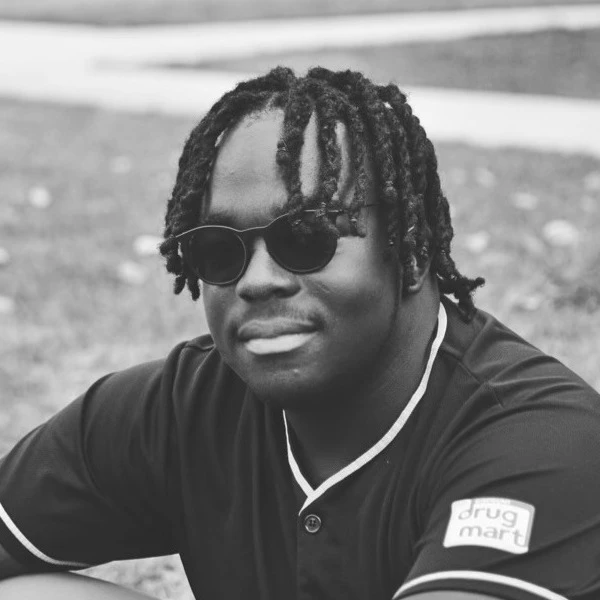
My name is Millard Morgan. I am an Electrical Engineering student at The Ohio State University, deeply influenced by my background as a Columbus native. My approach to engineering education is distinct, enriched by the unique cultural context of my hometown.
Education
Ohio State University-Main Campus
Bachelor's degree programMajors:
- Engineering, Other
Licking Heights High School
High SchoolMiscellaneous
Desired degree level:
Bachelor's degree program
Graduate schools of interest:
Transfer schools of interest:
Majors of interest:
- Electrical, Electronics, and Communications Engineering
- Political Science and Government
- Philosophy, Politics, and Economics
Career
Dream career field:
Consumer Electronics
Dream career goals:
Network Install Intern
OARnet2025 – Present1 year
Sports
Powerlifting
Club2024 – Present2 years
Track & Field
Varsity2020 – 20244 years
Arts
Social Media
Cinematography2024 – PresentHigh School
Videography2024 – 2024
Public services
Public Service (Politics)
Franklin County Board of Elections — Poll Worker2024 – 2025
RonranGlee Literary Scholarship
I read “The Tipping Point” by Malcolm Gladwell in two weeks. I have to say that this is the most confusing book I have had the pleasure of reading, but in a good way. Reading this book is like having those deep talks you have with your friends late at night to see how they view life. This book challenges you to think about every significant decision you make in your life and think of where you could be if you make the wrong decision. The book uses examples like a few people can make massive decisions over the many, and how that can lead to an unbalanced power dynamic that makes everyone’s decisions for them. I want to give Malcolm Gladwell’s book an overview because it helped me understand what the book was saying.
Malcolm Timothy Gladwell was born on September 3, 1963, in Fareham, England. His mother was a psychotherapist, and his father was a mathematics professor. Malcolm moved to Canada at a young age, growing up in Ontario. Malcolm says that his most significant role model when it comes to writing is his mother. When he was young, he was walking around at the University where his father was teaching. Going to the offices and libraries helped him find his love for reading. Malcolm later graduated from the University of Toronto in 1984 with a bachelor’s degree in History. When Malcolm was writing this book, he lived in New York City. At the time, the crime rates were falling using a crime theory called the broken windows theory. It works from the idea that crime makes an ecosystem that encourages crime further. The policy that follows this theory is the famous “Stop and Frisk” that New York Police officers enforced. The AIDS Epidemic was still going on, and the name of the book comes from the term tipping point in an epidemic when it reaches critical mass and spreads faster than before. Looking back at his life and the current events that were going on around him at the time of his writing, this book helped me understand the theme of the book.
These factors make the theme change from viewing every decision as a tipping point. We live in a world where your minor decisions can be someone else's tipping point. Like an officer stopping to check a teenager on the streets. A minor stop to him, but a tipping point for the teen on how they view life. Another example is if you don't want to wash your hands. This can be a little choice to you, but a tipping point for someone who has health issues. A tipping point, in my eyes, would be a point at which you are a fundamental point. Every choice you make in response to this predicament will change something about you. The theme makes you think about your little choices and how they can cause a person to make a tipping point decision. And suppose you look at ideas from a socioeconomic lens. In that case, someone with a worse socioeconomic background makes them have to make more tipping point choices to improve their socioeconomic conditions. Applying this book to our world in 2021 years later makes it scarce with how the world is now.
In 2021, we have seen that we must make more tipping point decisions as a society to improve and function on this planet. In the past 20 years, we have seen massive human rights violations worldwide, especially in some of the most powerful nations around the world. Wars that feel as if there is no end in sight, making us numb to death. More people are falling into poverty as few influential people choose not to help and make the planet worse for humanity. We have chosen to pass on the tipping point answer to the next generation, saying that we are too divided, and it is past our time to make a change. Those with privilege have made their little choices not to let someone do something for whatever bias they have to become that person's tipping point. We must see that the world as we understand it is an artificial tipping point that we caused, and that we must fix to stop more people from making tipping point decisions for small things.
Looking at this world through the lens of this book that came out in 2000. We look back at the book and how it looks at the world, going back to the inspiration for this book. The Broken Windows theory is now widely accepted as effective when trying to fight crime. It does not talk about someone’s condition in their choices in committing a crime. Malcolm later admitted that being too fixated with the theory would cause him to rewrite part of the book. He also says that this box feels different from the theme, and he would like to touch it up a bit, but does not hate the book’s central theme. I feel as if it is excellent, but you can tell that the book was written in a time that has passed. I felt that the theory made the book muddy, as if it was not about the decisions and more about crime. Nevertheless, I would recommend it to anyone who wants to understand why people do some things and how to help them make good choices.
Mohamed Magdi Taha Memorial Scholarship
To me, the key to being an ‘up-stander’ is in the name, to help someone up to stand proud and strong. Knowing that lending a hand to the person can not only be temporary aid for a moment, but can also permanently aid them is all the reason I need to give back. It would be hypocritical of me if I didn't know the role others in my village helped grow into the man I am today. Even in a field of study like Engineering, I want to provide the tools and knowledge to those who don't have hot or have been starved of it, so everyone in my community can grow and give back.
I have been fortunate to have access to technology from an early age compared to many young black men, and from the moment I was gifted an iPod Touch, I wanted to understand it. Clear case on any device was my style, just to see what made it tick. My parents would find any tech with exposed screws partially taken apart, about which may or may not work. When someone needs something with a screen and battery fixed, they would contact me. But through all of this curiosity, I discovered that the technology I was studying and fixing in my communities was much older than the stuff I was watching being worked on in YouTube videos and wealthier places. And there is only so much fixing you can do to older technology. Slowly, every holiday season, the gap between newer and older devices began to mirror the wealth gap that funded it.
I want to be able to have a voice in those rooms to make sure those people are seen and are provided for, so as the world advances, they advance as well.
There are penalties of untapped potential in these spaces that goes unseen, as they don't have the tools to fine-tune their skills, as they are seen as “unfit”. Potential Photographers, journalists, and scholars are being starved of the technologies they need. Think of the news that has yet to be broken, a photo that will never be taken, and knowledge unknown because many of the devices needed for these things are seen as unnatural in hands that look mine. Hands like mine are only 10.7 percent of all Computer Engineers in the nation, yet hands like mine are the ones who starved from the Technology they want and needed. And I believe getting this scholarship will allow me to focus on my studies and my overall goal of providing for my communities, to gain access to those rooms, and have my input heard. Maybe then we can see the untapped potential of we have been missing out on because of it.
Bright Lights Scholarship
My plans after college are to become a computer engineer in consumer and or Communications technologies. I've always enjoyed gaming, photography, and anything that involves a computer in some way, shape, or form.
I want to provide these technologies to those who are less fortunate than myself, coming from a diverse background. I can see the effects of a lack of technology and a lack of access for many people who look like me, and how many of the major brands and organizations leave them behind as more and more of these technologies get more and more advanced.
I have been fortunate to have access to technology from an early age compared to many young black men, and from the moment I was gifted an iPod Touch, I wanted to understand it. Clear case on any device was my style, just to see what made it tick. My parents would find any tech with exposed screws partially taken apart, about which may or may not work. When someone needs something with a screen and battery fixed, they would contact me. But through all of this curiosity, I discovered that the technology I was studying and fixing in my communities was much older than the stuff I was watching being worked on in YouTube videos and wealthier places. And there is only so much fixing you can do to older technology. Slowly, every holiday season, the gap between newer and older devices began to mirror the wealth gap that funded it.
I want to be able to have a voice in those rooms to make sure those people are seen and are provided for, so as the world advances, they advance as well.
There are penalties of untapped potential in these spaces that goes unseen, as they don't have the tools to fine-tune their skills, as they are seen as “unfit”. Potential Photographers, journalists, and scholars are being starved of the technologies they need. Think of the news that has yet to be broken, a photo that will never be taken, and knowledge unknown because many of the devices needed for these things are seen as unnatural in hands that look mine. Hands like mine are only 10.7 percent of all Computer Engineers in the nation, yet hands like mine are the ones who starved from the Technology they want and needed. And I believe getting this scholarship will allow me to focus on my studies and my overall goal of providing for my communities, to gain access to those rooms, and have my input heard. Maybe then we can see the untapped potential of we have been missing out on because of it.
Anthony Belliamy Memorial Scholarship for Students in STEAM
From the final bell of eighth grade to the desolate void of Zoom, my transition to high school amidst a pandemic spun my world into an unexpected whirlwind. As I grappled with complex coursework in isolation and watched cherished opportunities evaporate, I discovered the true test wasn't just in adapting to a new learning style, but in finding resilience when the world hit pause. I had to learn advanced-level material over a computer, detached from viable guidance. My last day of regular schooling was a Friday before Ohio closed schools; I spent most of the day getting massive packets of work for my “extended spring break”. Little did I know that would be my last day as a middle schooler in person. Trying to understand how to block out distractions in my room and studying in my home made for a strenuous time. I had to understand my advanced high school algebra and Spanish with little instruction, after taking notes, pre-pandemic, from an in-person lecture with the opportunity to ask questions. My middle school life was not just cut short academically, but socially, as my club events and sports team were lost to COVID. Importantly for me, Junior Ohio Model United Nations was canceled for that spring, right before the major event in Columbus, which concluded the program. I lost the opportunity to represent my mother’s home country of Liberia, which was important to me.
Additionally, COVID-19 set back my athletic life, as I missed my chance to play baseball for my school in the spring after failing to make the team in my seventh-grade year. In the winter of 2019, I trained for the team the next year to show that I’m academically and athletically strong. I made the team in my 8th-grade year, but after my first practice, COVID-19 was major news, and the season was canceled.
The challenge of the transition only became more difficult as I entered high school as a Freshman. It was very difficult adapting to honors high school-level coursework, with an accelerated learning style well beyond the pace of my middle school classes. This made for a challenging beginning in high school.
Furthermore, due to social distancing, all clubs I wanted to participate in were canceled. But as freshman year ended, my perspective on my challenges changed as I began to view them as mere setbacks. Entering my sophomore year, my parents wanted me to take fewer changing classes, but I believed that going back to some idea of “in-person” learning, I would jump over this hurdle. We settled on no APs my sophomore year and one general class; the rest were honors. If I failed to get As and Bs in the first quarter, I had to drop all my honors classes. I was nervous that I might not be able to meet that standard by that deadline; however, I shot past their expectations and was even able to get more challenging classes for my junior year.
My parents saw how my freshman year was simply a setback for me to learn from as I became a young man. Ultimately, I hadn’t dealt with an issue that rattled me so much in my life at that point, but I understood that failure is normal and can lead to valuable lessons for the future if you don't wallow in the negative emotions at hand. I had to take one step back to take ten steps to realize that challenging things will happen. I didn't let these hurdles stop my progress; they merely postponed it. I had not just to grasp that challenges and setbacks are constant for everyone, but I also control how deeply they affect me, and how I can take and make something of great value from the experience to aid me in the future.
As I begin to apply for Internships and long-term employment, this lesson of recovery and overcoming setbacks will steer me in the direction of employers with growth in their workplace culture. Finding a place that allows me to fail early and often in hopes of discovering something unique that would not have been found if I hadn’t failed. The goal is to find a place that welcomes challenges and setbacks, as those are the moments when great things happen.
Zedikiah Randolph Memorial Scholarship
My plans after college are to become a computer engineer in consumer and or Communications technologies. I've always enjoyed gaming, photography, and anything that involves a computer in some way, shape, or form.
I want to provide these technologies to those who are less fortunate than myself, coming from a diverse background. I can see the effects of a lack of technology and a lack of access for many people who look like me, and how many of the major brands and organizations leave them behind as more and more of these technologies get more and more advanced.
I have been fortunate to have access to technology from an early age compared to many young black men, and from the moment I was gifted an iPod Touch, I wanted to understand it. Clear case on any device was my style, just to see what made it tick. My parents would find any tech with exposed screws partially taken apart, about which may or may not work. When someone needs something with a screen and battery fixed, they would contact me. But through all of this curiosity, I discovered that the technology I was studying and fixing in my communities was much older than the stuff I was watching being worked on in YouTube videos and wealthier places. And there is only so much fixing you can do to older technology. Slowly, every holiday season, the gap between newer and older devices began to mirror the wealth gap that funded it.
I want to be able to have a voice in those rooms to make sure those people are seen and are provided for, so as the world advances, they advance as well.
There are penalties of untapped potential in these spaces that goes unseen, as they don't have the tools to fine-tune their skills, as they are seen as “unfit”. Potential Photographers, journalists, and scholars are being starved of the technologies they need. Think of the news that has yet to be broken, a photo that will never be taken, and knowledge unknown because many of the devices needed for these things are seen as unnatural in hands that look mine. Hands like mine are only 10.7 percent of all Computer Engineers in the nation, yet hands like mine are the ones who starved from the Technology they want and needed. And I believe getting this scholarship will allow me to focus on my studies and my overall goal of providing for my communities, to gain access to those rooms, and have my input heard. Maybe then we can see the untapped potential of we have been missing out on because of it, planting a tree for all of us to eat from and plant saplings for the future.
Kim Moon Bae Underrepresented Students Scholarship
I was conceived in Jackson, Mississippi, and born in Columbus, Ohio; my mother is from Liberia, Africa, and my father is from Chicago, Illinois. I live at the crossroads of the middle passage, important milestones of American history, and am positioned in the current globalization, which Covid-19 made even clearer.
Diversity is natural for me because throughout my life, diversity has surrounded me. This broad background has challenged my values, customs, and quest for equity. Being the son of a Liberian immigrant and an American father who moved to Ohio when he was thirteen has led me to embrace different cultures. This spectrum has impacted my life choices, from food to politics. My plurality of cultures has influenced my academic path. As I have gotten older and expanded intellectually, I intentionally sought out my connection to my Liberian heritage, and my link to my African roots has grown stronger, especially after my mother visited Liberia in 2019 for the first time since her childhood. Her journey home made me look at her past and the family legacy I inherited through my grandparents in new ways.
Beyond family, it was actually in 4th grade that I began to grasp how important diversity is to learning. That year, I was recommended by my principal to participate in Envisions NYLF Pathways STEM Camp in Washington, D.C. I was ecstatic to attend, and within weeks, I was off to the Nation’s capital for a weeklong science camp. There, I met and roomed with students from diverse states, who, like me, had a passion for studying various branches of STEM. We also explored non-STEM-related topics, like popular cartoons. This educational experience helped me better appreciate the diversity at my school. I came to discover in my drive to be a scholar how my school was a great cultural and academic resource for diversity. And as I matriculated, my school became ever more diverse.
In middle school, I joined the debate club and the Ohio Model United Nations; both allowed me to learn more innovative ways to explore diversity. This UN leadership experience helped me discover issues that plague different nations and creative solutions from my peers who presented inspiring resolutions. During my time with Model UN, I represented diverse nations such as the Solomon Islands, Turkey, and Liberia. While time didn’t allow us to represent people from every nation, the experience of hearing stories other than my own gave me a better understanding of global issues, and helped expand my horizons to have a new empathy with others, and see how my African and American heritage connects with students in my school, city, state, and America.
As a high school student, attending classes and social activities with many students born in Africa, Asia, Central America, Europe, and from various socio-economic backgrounds in America has allowed me to better understand how different cultures think, communicate, and create versatile cultural and learning environments.
Ryan T. Herich Memorial Scholarship
My name is Millard Morgan, I'm grew up in Columbus, Ohio and love debate and political thought. I believe that integrating the lessons learned from these disciplines can pave the way for positive change in the world. In my time engaging in political ideas, I have seen a concerning amount of my peers shift their thinking to more polarizing ideologies. They are viewing their TikTok to feed a gospel for toxic ways to look at women and minority groups. The Far right makes an area for men that damages their minds by telling them these ideas will give them a great life but fail to deliver and hurts them with that failure, leaders will make it the community's fault for lack of progress. This cycle makes the men feel worse about themselves compared to when they first joined the movement. This shift in thinking in young men is high-end by the shift in think in women. Since the 70s, women's why of thing has been branching out from base feminist theory to allow for women to learn and understand other ways of thinking. This has lead to new ideas enter the world of innovation that other wish won't have existed. So, how do we do this for young men in 2024 how it was done for young women in the 70s. Well, there are two sides to the problem that can be fixed to stop the process of radicalization. One is to target the social media companies that are responsible for allowing these ideals to grow on their platform. Enacting regulation with the F.C.C. (Federal Communications Commission) that attaches penalties to social media platforms that let dangerous ideas grow and spread to the American population. Or simply pressure these companies with the threat of higher taxes or antitrust laws, this can push the companies to enact this on their own. Regulation like this has a history of working for other monopolies, like with standard oil having to break up into many smaller companies. Forcing the companies to act is the best choice we have to solve the pipeline. Another solution is to better provide the context of issues that give some men this anxiety that is linked to them going to the far right in these pipelines. Helping men understand how feminism does not aim to hurt men and can actually help men when talking about men's issues like suicide.