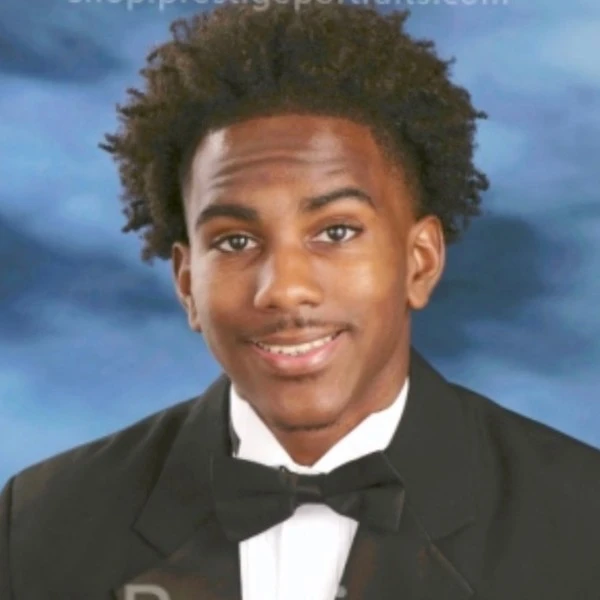
Mikhi Williams
1x
FinalistMikhi Williams
1x
FinalistBio
Hello! I am an aspiring Mechanical Engineer who is headed to Ohio State University in the fall of 2026. I am very excited for the experiences, lessons, friendships, and opportunities that college offers. While I understand there will be challenges, with focus, consistency and determination, I can work to overcome anything that comes my way.
Education
Baldwin Senior High School
High SchoolMiscellaneous
Desired degree level:
Bachelor's degree program
Majors of interest:
- Mechanical Engineering
- Business, Management, Marketing, and Related Support Services, Other
Career
Dream career field:
Mechanical or Industrial Engineering
Dream career goals:
Drone Programmer Intern
Hempstead Works2025 – 2025
Sports
Football
Varsity2022 – 20264 years
Awards
- Game Captain
Track & Field
Varsity2022 – 20264 years
Awards
- County Champion
- Confrence Champion
Public services
Volunteering
The Life Chapel — Audio Engineer & Digital Content Manager2022 – Present
K-POP Fan No-Essay Scholarship
Hearts on Sleeves, Minds in College Scholarship
During AP Seminar, I never expected to become the person everyone intentionally excluded from group projects. Focused on securing high grades, my classmates overlooked me, treating my intelligence as a joke and assuming I wasn't capable enough. They formed exclusive groups while I watched from the sidelines, dismissed as the "football kid" who was "smart as a pile of rocks." In those moments, I struggled to use my voice. I wanted to speak up, to tell them they were wrong about me, to demand a chance to prove myself. But the words caught in my throat. I felt invisible, and I didn't know how to make myself heard.
Instead of finding my voice through confrontation, I found it through action. I couldn't force them to include me, but I could prove them wrong through my work. I stayed after school for extra help, asked questions during office hours, and pushed myself harder on individual assignments than I ever had before. When group projects came, I worked with whoever was left, building genuine relationships by listening to their ideas, celebrating small wins, and making sure everyone felt valued. Slowly, my voice emerged, not through volume, but through consistency and results.
When AP exam scores arrived, I had outscored those same peers who excluded me. The validation felt incredible, but more importantly, the experience taught me something profound about communication and confidence. I learned that sometimes your voice isn't about speaking the loudest or demanding attention. It's about showing up, doing the work, and letting your actions speak when words fail. I also learned that having a voice means using it to amplify others who feel silenced, not just defending myself.
That lesson transformed how I led. As track team captain, when a new teammate joined as one of the smallest and slowest athletes, I remembered what it felt like to be overlooked. Instead of letting him fade into the background, I used my voice to advocate for him. I organized extra training sessions, celebrated his progress publicly, and made sure he knew his effort mattered. He became one of our fastest runners and told me after our championship, "If it wasn't for you, I don't think I would be where I am now." That moment showed me the real power of voice: using it to ensure others don't have to struggle with silence the way I did.
Moving forward, I plan to use my voice to create impact in multiple ways. In my engineering career, I'll advocate for affordable technologies that serve underserved communities, ensuring people who are often overlooked have a seat at the table when decisions are made. I'll lead STEM outreach programs in Black and underrepresented communities, using my voice to show young students that engineering careers are attainable for them. Most importantly, I'll continue creating spaces where everyone's voice is heard, where no one has to sit silently on the sidelines feeling invisible.
That AP Seminar class taught me that struggling to use your voice isn't a weakness. It's an opportunity to discover what your voice truly means and how powerful it becomes when you finally find it.
Evangelist Nellie Delores Blount Boyce Scholarship
I hate long-distance races. As I approach the starting line, it feels as though I have miles upon miles to go. I’ve always loved track and running; despite my aversion to long-distance races, track had always been the foundation of my bond with my sister because we spent hours training, laughing, and pushing each other forward, which made us inseparable. At the championship race, I hear the whispers and glances from others, saying “You're not built for this,” yet, something already feels off. This is my first competition without my partner, my sister. But, I've trained for this moment; I’m ready to prove them wrong. The gun goes off, BLAM, and we're off.
My sister and I are two years apart, but growing up, we were joined at heart, sharing everything, especially our love for track. When she left for college, it felt like I’d lost my lifeline. At first, I didn’t know how to navigate life without my partner in crime beside me. To fill this void, I involved myself in various extracurriculars. I found myself drawn back to my trumpet, practicing for hours and eventually earning a spot in the band’s most prestigious group and also joined the robotics club where I discovered an unexpected interest in technology and problem solving. I remember hours spent troubleshooting a robot that refused to follow simple coding. Each failed attempt forced me to rethink my approach until finally, the robot used our mechanism to extend its arm to different heights. Witnessing the robot function properly was very satisfying and showed the importance of persevering even when you fail. As a result, these experiences not only helped me find my own sense of independence, but they also showed me where my true passions lie, in creativity and persistence.
With my own stride finally forming, I began the next lap, not against the runners beside me, but against the shadow of my accomplished siblings. At first, I felt overlooked, as though my effort didn’t matter. That frustration became a turning point. I grew more resilient by silencing the voices that discouraged me and focused on the work itself until we succeeded. I tapped into leadership skills, becoming more dedicated and focusing more on helping my teammates improve their skills and work ethic which led our track team to win consecutive championships. I also allowed my intellectual curiosity to push me not only in the classroom, but also in obtaining my Part 107 drone pilot license, further solidifying my passion to pursue engineering. Through these newly discovered traits, I stepped out of my comfort zone and embraced my unique self. No longer comparing myself to others, I began to run my own race at my own pace. With that realization, I finally outran the shadow and reached the last stretch of the race.
As the final lap approaches, I’m running fully in my own lane and embracing the victories I have earned for myself along the way. Growth didn’t come from a sudden burst to the front, but from a smooth, steady rhythm. That confidence helped me find my voice and taught me the importance of celebrating my progress on my own terms. My race was never about keeping up with others. It was about learning to set my own pace, embracing my flaws, and finding joy in the journey. Through higher education, I will bring persistence, leadership, and collaboration to every challenge, treating each complex problem as a new race, both in the classroom and beyond, striving to create a lasting impact in the communities I join.
Emerging Leaders in STEM Scholarship
I hate long-distance races. As I approach the starting line, it feels as though I have miles upon miles to go. At the championship race, I hear whispers saying, "You're not built for this." Yet something feels off. This is my first competition without my partner, my sister. But I've trained for this moment. The gun goes off, BLAM, and we're off.
My sister and I are two years apart, but growing up, we were joined at heart, sharing everything, especially our love for track. When she left for college, it felt like I'd lost my lifeline. To fill this void, I joined the robotics club where I discovered an unexpected interest in technology and problem-solving. I remember hours spent troubleshooting a robot that refused to follow simple coding. Each failed attempt forced me to rethink my approach until finally, the robot functioned properly. That success showed me the importance of persevering even when you fail. This experience helped me find my independence and revealed where my true passion lies, in creativity and persistence.
With my own stride forming, I began the next lap, not against the runners beside me, but against the shadow of my accomplished siblings. At first, I felt overlooked, as though my effort didn't matter. That frustration became a turning point. I grew more resilient by silencing discouraging voices and focusing on the work itself. I tapped into leadership skills, helping my teammates improve, which led our track team to win consecutive championships. I also obtained my Part 107 drone pilot license, further solidifying my passion to pursue mechanical engineering. I stepped out of my comfort zone and embraced my unique self. No longer comparing myself to others, I began to run my own race at my own pace. With that realization, I finally outran the shadow.
My interest in engineering stems from those robotics lab hours, learning that failure isn't the end but the beginning of innovation. I'm drawn to mechanical engineering because it allows me to transform imagination into reality while solving real-world problems. I want to develop low-cost prosthetics and medical devices accessible to underserved communities and create sustainable transportation solutions that reduce costs for people who need them most. Beyond technical innovation, I hope to make an impact through STEM outreach programs in Black and underrepresented communities, showing young students that engineering careers are attainable regardless of their background. Just as my sister's departure forced me to find my own path, I want to help others discover their potential.
The adversity of feeling overlooked in my siblings' shadows taught me resilience. The challenge of losing my training partner taught me independence. The frustration of failed robotics experiments taught me persistence. Growth came from steady rhythm, not sudden bursts. That confidence helped me find my voice and celebrate progress on my own terms. Whether debugging code, developing collision avoidance systems for drones, or leading teammates through workouts, I've learned that growth comes from building steadily, one step at a time. Now, I bring these lessons to every challenge, treating each engineering problem as a new race, striving to create lasting impact while inspiring others to discover their own stride.
Pastor Thomas Rorie Jr. Christian Values Scholarship
I'll never forget sitting in church, phone in hand, barely listening to the pastor while my mom sat beside me with tears in her eyes. We had just hit rock bottom financially. Bills were piling up, stress filled our home, and nothing felt guaranteed anymore. But the one thing that remained absolutely certain was that we were going to church every Sunday. No matter how difficult things got, we showed up. At the time, I didn't understand why that consistency mattered. I was just a kid scrolling through my phone, hoping time would pass faster. Looking back now, those Sundays were the foundation that would carry us through our darkest period.
Going to church during our lowest point gave us more than faith that we'd climb out of that financial hole. It gave us strength to face whatever obstacles came next. Week after week, the pastor's messages reminded us to stay strong in faith and trust that everything happens for a reason. Slowly, that message started sinking in. When I faced challenges, whether struggling through a difficult physics test or losing an important race, I'd think back to those words. I learned to trust God's plan even when I couldn't see the path forward. That shift marked when my faith stopped being something my family did and became something deeply personal.
My relationship with God has deepened significantly as I've grown older. In middle school, I didn't take church seriously. I sat there either sleeping or playing on my phone, treating it like an obligation. But as I navigated high school with its academic pressures, personal relationships, and competitive sports, I realized I needed something stronger than myself to lean on. Now I see God as my spiritual leader and personal confidant. I've learned that when I pray for something, God gives me only what's right for me, even if the answer isn't what I initially wanted. That trust has transformed how I approach every challenge. Instead of being consumed with anxiety over outcomes that I can't control, I focus on the work and trust that God is guiding me. This faith has helped me navigate everything from difficult courses to leadership responsibilities, transforming me into the young man I am today.
The transformation in my faith naturally led to a transformation in how I see my future. As God became more real to me, so did my purpose. I started noticing the struggles around me differently, not just as unfortunate circumstances, but as problems I might one day help solve. Watching my mom choose between paying bills and her car payments while my classmates worried about which car to buy really showed me how drastically different people's realities can be. My faith taught me that God doesn't waste our pain, He uses it to prepare us for our purpose. Those experiences are now driving me toward mechanical engineering, where I can develop affordable solutions for communities that face the same barriers my family did.
With my engineering degree, I plan to develop low-cost prosthetics and medical devices accessible to underserved communities. I want to work on sustainable transportation solutions that reduce costs for people who need them most. Beyond technical innovation, I'll lead STEM outreach programs in Black and underrepresented communities, showing young students that engineering careers are attainable regardless of their background. I want to plant the seeds of possibility in the next generation.
This scholarship would be transformative in helping me achieve these goals. The financial burden of college brings back memories of those uncertain middle school years. This scholarship would allow me to focus fully on my engineering studies without constant stress about affording tuition and books. It would give me more time to mentor younger students and lead community outreach, continuing the service my faith calls me toward. Most importantly, it would be confirmation that staying faithful during our lowest point, trusting God's plan even when nothing felt certain, was preparing me for this exact moment.
My journey from a kid scrolling through his phone during service to someone who sees God as his spiritual leader has shaped who I am. That faith, combined with my passion for engineering and commitment to serving others, drives me toward a future where I use technology to uplift communities. With this scholarship's support, I'm ready to transform faith into action, building solutions that matter while ensuring no one feels as uncertain as my family once did.
Julia Elizabeth Legacy Scholarship
The first time I crashed my drone into a concrete wall at over 40 mph, most people would have seen failure. I saw possibility. Standing there looking at the shattered frame and broken propellers, all I could think was, "How can I make it go faster? How can I design a stronger, lighter frame?" That moment sparked my passion for mechanical engineering, but it also revealed something crucial about diverse representation in STEM. My approach to problem-solving, shaped by years of adapting with limited resources, brings perspectives that many traditional engineers might never consider.
During a robotics competition when our robot malfunctioned minutes before our match, I stayed calm while teammates panicked. That ability to adapt under pressure, shaped by navigating systems not built for people like me, is exactly the kind of perspective STEM needs. Black students bring unique problem-solving approaches because we've spent our lives finding creative solutions with limited resources and overcoming obstacles others never face.
Diverse representation in STEM careers matters because innovation requires perspectives shaped by different lived experiences. As a Black man pursuing engineering, I've realized how few people who look like me are in labs making decisions about medical innovations that directly impact Black communities facing health disparities.
When I look at advanced STEM classes or read about engineering leaders, I rarely see people who look like me. This absence limits what problems get solved and how. Engineers from privileged backgrounds might overlook the everyday challenges facing underserved communities. But engineers who've experienced these struggles firsthand, whether it's limited transportation, unreliable internet access, or financial barriers, inherently understand how to design solutions that actually serve everyone, not just those who can afford them.
With my engineering degree, I plan to develop low-cost prosthetics and sustainable transportation solutions for underserved communities. Beyond my individual contributions, I'll lead STEM outreach programs specifically in Black communities, showing young students that engineering careers are attainable for them. I'll mentor the next generation, creating pathways for students who might otherwise believe STEM isn't for people like us.
Having diverse representation in STEM isn't just about filling seats or checking boxes. It's about ensuring technology serves all communities. It's about bringing Black perspectives to fields where our absence means problems affecting our communities get overlooked. It's about young Black students seeing engineers who look like them and understanding their potential is limitless. As a Black man in STEM, I'm committed to ensuring technology serves all communities while inspiring young Black students to see themselves as the engineers and innovators of tomorrow.
Learner Tutoring Innovators of Color in STEM Scholarship
The first time I crashed my drone into a concrete wall at over 40 mph, most people would have seen failure. I saw possibility. Standing there looking at the shattered frame and broken propellers scattered across the pavement, all I could think was, "How can I make it go faster? How can I design a stronger, lighter frame? How can I improve as a pilot?" That moment sparked my passion for mechanical engineering and showed me that the best innovations come from embracing failure as part of the process.
Growing up watching Iron Man, I was fascinated by Tony Stark's ability to use technology to solve impossible problems. But it wasn't until I attended Brown University's Nanotechnology Pre-College Program that I realized engineering wasn't just about building cool machines. I watched researchers work with particles smaller than a human hair to target cancer cells while ignoring healthy tissue. That experience opened my eyes to engineering's real power: using technology to create meaningful change that improves people's lives.
As a Black man entering STEM, I'm aware of the representation gap in engineering fields. When I look at advanced STEM classes or read about engineering leaders, I rarely see people who look like me. This reality doesn't discourage me, it motivates me. I want to pursue mechanical engineering not just for my own success, but to be the representation I wished I had seen growing up. The kids in my community need to see that Black men can be engineers, innovators, and problem solvers. They need to see that being Black in STEM isn't a barrier to overcome, it's a strength that brings unique insights to solving real-world problems.
This motivation connects directly to my lived experiences. Growing up in a financially struggling household taught me that many people in communities like mine face barriers to accessing basic resources. Walking miles as my primary transportation while watching classmates complain about gas prices showed me how these limitations restrict people's lives. These experiences fuel my passion for developing sustainable, affordable solutions that serve communities often overlooked by innovation. I understand these problems personally because I've lived them, and that perspective will make me a better engineer.
My commitment to uplifting communities is already visible in my actions. For three years, I've volunteered with my community's little league football program, mentoring young athletes. When one player told me, "When I get to high school, I want to make one-handed catches just like you," I realized I was showing the next generation that someone from their neighborhood who looks like them can succeed. As track team captain, I organized extra training for a teammate others overlooked. He became one of our fastest runners and told me after our championship, "If it wasn't for you, I don't think I would be where I am now."
With my engineering degree, I want to work on sustainable transportation solutions that reduce costs for people who need them most. Beyond technical innovation, I'll lead STEM outreach programs specifically in Black and underrepresented communities, showing young students that engineering careers are attainable for them. I'll mentor the next generation, creating pathways for students who might otherwise believe STEM isn't for people like us.
As a Black man in STEM, I'm ready to transform my curiosity, persistence, and experiences into innovations that truly matter, ensuring that technology serves all communities while inspiring young Black students to see themselves as the engineers and innovators of tomorrow.
Kenneth R. Vessey Jr. Robotics Scholarship
During a critical robotics competition, our robot malfunctioned minutes before our match. As my team members panicked around me, frantically pointing fingers and shouting conflicting solutions, I realized something important. Leadership isn't just about technical knowledge. It's about managing both the problem and the people simultaneously, especially when everything is falling apart.
Instead of trying to fix everything myself or joining the chaos, I took a breath and divided responsibilities based on each person's strengths. I focused on diagnosing the sensor issue while assigning teammates to repair vital components, recharge the battery, and adjust coding errors. This systematic approach kept everyone productive rather than spiraling deeper into anxiety.
We discovered a sensor connection had loosened mid-match. Though we couldn't fully repair it in time, we modified the code to run with degraded sensors. We didn't win that competition, but we ranked top 15. More importantly, that pressure-filled moment revealed something about myself I hadn't recognized. I stay calm under pressure and think clearly in chaos. While others panicked, I found clarity. The competition showed me that the most valuable innovations are like good backup plans. They don't need everything to go perfectly, they just need to adapt when things go wrong.
Beyond technical skills, FRC taught me that diverse perspectives create stronger solutions. Our team consisted of people with different engineering backgrounds. Some excelled at coding while others dominated mechanical design and strategic planning. Working alongside teammates who approached problems completely differently than I did taught me techniques I never would have discovered alone. That collaboration produced better results than either of us could have achieved alone.
These lessons directly influence my future plans. I want to work at companies like Tesla or Mercedes-Benz developing advanced transportation safety systems, building on everything FRC taught me about creating resilient technology under pressure. But my goals extend beyond technical innovation. I plan to mentor the next generation of engineers, especially students from underrepresented communities who might not see themselves in STEM fields. Just as my robotics teammates taught me the value of diverse perspectives, I want to create opportunities for students who bring different backgrounds and approaches to problem-solving.
FRC Robotics showed me that a leader's greatest achievement isn't avoiding failure. It's building teams resilient enough to thrive when things go wrong. That philosophy will guide everything I do moving forward, from designing autonomous systems that adapt to unexpected conditions, to mentoring young engineers who need someone to believe in. The robot may have malfunctioned that day, but the experience built something far more valuable. It built the engineer and leader I'm becoming.
Stephan L. Daniels Lift As We Climb Scholarship
The first time I crashed my drone into a concrete wall at over 40 mph, most people would have seen failure. I saw possibility. Standing there looking at the shattered frame and broken propellers scattered across the pavement, all I could think was, "How can I make it go faster? How can I design a stronger, lighter frame? How can I improve as a pilot?" That moment sparked my passion for mechanical engineering and showed me that the best innovations come from embracing failure as part of the process.
Growing up watching Iron Man, I was fascinated by Tony Stark's ability to use technology to solve impossible problems. But it wasn't until I attended Brown University's Nanotechnology Pre-College Program that I realized engineering wasn't just about building cool machines. I watched researchers work with particles smaller than a human hair to target cancer cells while ignoring healthy tissue. That experience opened my eyes to engineering's real power: using technology to create meaningful change that improves people's lives.
As a Black man entering STEM, I'm aware of the representation gap in engineering fields. When I look at advanced STEM classes or read about engineering leaders, I rarely see people who look like me. This reality doesn't discourage me, it motivates me. I want to pursue mechanical engineering not just for my own success, but to be the representation I wished I had seen growing up. The kids in my community need to see that Black men can be engineers, innovators, and problem solvers. They need to see that being Black in STEM isn't a barrier to overcome, it's a strength that brings unique insights to solving real-world problems.
This motivation connects directly to my lived experiences. Growing up in a financially struggling household taught me that many people in communities like mine face barriers to accessing basic resources. Walking miles as my primary transportation while watching classmates complain about gas prices showed me how these limitations restrict people's lives. These experiences fuel my passion for developing sustainable, affordable solutions that serve communities often overlooked by innovation. I understand these problems personally because I've lived them, and that perspective will make me a better engineer.
My commitment to uplifting communities is already visible in my actions. For three years, I've volunteered with my community's little league football program, mentoring young athletes. When one player told me, "When I get to high school, I want to make one-handed catches just like you," I realized I was showing the next generation that someone from their neighborhood who looks like them can succeed. As track team captain, I organized extra training for a teammate others overlooked. He became one of our fastest runners and told me after our championship, "If it wasn't for you, I don't think I would be where I am now."
With my engineering degree, I want to work on sustainable transportation solutions that reduce costs for people who need them most. Beyond technical innovation, I'll lead STEM outreach programs specifically in Black and underrepresented communities, showing young students that engineering careers are attainable for them. I'll mentor the next generation, creating pathways for students who might otherwise believe STEM isn't for people like us.
As a Black man in STEM, I'm ready to transform my curiosity, persistence, and experiences into innovations that truly matter, ensuring that technology serves all communities while inspiring young Black students to see themselves as the engineers and innovators of tomorrow.
Overcoming Adversity - Jack Terry Memorial Scholarship
I'll never forget the day my AP Seminar classmates deliberately formed their groups while I sat there watching, excluded. They called me the "football kid" who was "smart as a pile of rocks" and made it clear they didn't want me dragging down their grades. That rejection stung deeply, but it taught me something powerful about adversity that connects directly to Jack Terry's incredible story.
Jack Terry's life demonstrates that our circumstances don't define our potential. Our response to adversity does. At 15, arriving in America with only an elementary education and no English, Jack chose resilience over despair. He transformed his suffering into purpose by becoming an engineer, physician, and mentor who spent his later years sharing hope with students. His journey proves that education combined with helping others can turn personal hardship into something meaningful. My own adversity shaped who I am today. Growing up in a financially struggling household, walking became my primary transportation by necessity, not choice. While classmates debated which car to drive, I calculated bus fare versus walking miles home.
Being excluded in AP Seminar while struggling financially created painful isolation. Like Jack facing language barriers and limited education in a new country, I confronted barriers others didn't see or understand. Instead of accepting that narrative, I channeled rejection into motivation. I worked harder, sought help during office hours, and proved my abilities through consistent results. When AP exam scores came back, I had outscored those same peers. The experience taught me what Jack's emphasizes that adversity reveals not our limitations, but our capacity to overcome.
That lesson transformed how I approach leadership and service. I realized that if I felt overlooked, others around me probably did too. As track team captain, when a new teammate joined as one of the smallest and slowest athletes, I saw myself in him. I organized extra training sessions and supported him through every practice. He became one of our fastest runners and helped us win consecutive county championships. After our final victory, he told me, "If it wasn't for you, I don't think I would be where I am now." Like Jack sharing his story to spread hope, I discovered my greatest achievement wasn't my own success but creating environments where others could discover their strengths.
Jack Terry transformed his experiences into dual careers, first as an engineer solving practical problems, then as a psychoanalyst healing others. I want to follow a similar path through mechanical engineering, developing accessible technologies like low-cost prosthetics and sustainable transportation solutions for underserved communities. Beyond technical work, I'll mentor students from underrepresented backgrounds and lead STEM outreach programs showing young people their potential is limitless regardless of financial circumstances.
This scholarship would honor Jack's legacy by helping me focus on engineering studies without constant financial stress while dedicating more time to mentoring and community service. Like Jack, I've learned that adversity builds resilience, education transforms lives, and our greatest responsibility is ensuring others don't face their challenges alone.
Matthew E. Minor Memorial Scholarship
Growing up in a single-parent household where financial struggles were a constant reality shaped who I am today. My mom works tirelessly to provide for our family, but making less than $40,000 a year and supporting multiple kids doesn't leave room for anything extra. Walking became my primary transportation not by choice but by necessity. While my classmates debated which car to drive, I calculated whether I could afford bus fare or needed to walk miles home. College represents an opportunity to break this cycle, but the financial burden feels overwhelming. Between tuition, housing, books, and basic living expenses, I'm looking at costs my family simply cannot afford without significant scholarship support. This scholarship would be transformative, allowing me to focus on my education and community service rather than constant financial stress.
My passion for keeping youth safe comes directly from being bullied myself. During AP Seminar, I became the person everyone intentionally excluded from group projects. My classmates called me the "football kid" who was "smart as a pile of rocks" and formed their own groups while I sat there watching. The isolation hurt deeply and made me question my own worth. I know firsthand how exclusion and verbal bullying damage a young person's confidence and make them feel completely invisible.
That painful experience changed how I mentor others, especially on my school's track team where I am team captain. When a new runner joined as one of the smallest and slowest athletes, most people overlooked him. I organized extra training sessions and made sure he felt valued at every single practice. He ended up becoming one of our fastest runners and helped us win consecutive county championships. After our final victory, he pulled me aside and said, "If it wasn't for you, I don't think I would be where I am now." That conversation taught me something important. Preventing harm to youth isn't just about stopping bullies when you see them. It's about creating cultures of belonging so strong that bullying struggles to even take root.
Cyberbullying is even harder to combat because kids can't escape it when they go home. The bullying follows them through their phones into spaces that should feel safe. I've seen how group chats turn toxic quickly when someone screenshots an embarrassing moment from practice and suddenly twenty kids are laughing at one person. I try to lead by example with my own social media, posting encouragement about my teammates' achievements and celebrating their progress instead of anything negative or exclusive. The younger kids watch what we older athletes do online, and I want them to see that you can use social media to build people up instead of tearing them down.
Financial limitations shouldn't determine who gets to pursue higher education and keep serving their community. With this scholarship support, I can continue my education while mentoring youth and building safe spaces where every young person knows they matter. I'll use my own painful experiences with exclusion to make sure no one else has to face those challenges alone.
Dr. Michal Lomask Memorial Scholarship
The first time I crashed my drone into a concrete wall flying at over 40 mph, I became more fascinated by the project, eager to understand what went wrong and how to improve. Studying the damaged frames and propellers taught me to see failure through the lens of an engineer and motivated me to keep pushing beyond my boundaries. All I could think about was, "How can I make it go faster? How can I design a stronger, lighter frame? How can I improve as a pilot?" That crash sparked my passion for understanding how materials, aerodynamics, and designs work together.
This is when I first experienced the flow state, building, testing, and rebuilding my drone in my garage workshop. Surrounded by scattered propellers, loose screws, and half-assembled frames, the world narrows to just my hands and the components before me. Hours vanish without notice. My fingers move instinctively between the soldering iron and wire cutters, each motion triggering the next without conscious thought. I feel the satisfying click of a motor mounting into place, the resistance of a screw threading perfectly. My mind races through calculations, weight distribution, propeller pitch, battery capacity, all processing simultaneously yet clearly. The outside world fades completely. There's only the problem, the solution emerging piece by piece, and the quiet satisfaction of each breakthrough leading to the next challenge.
This flow state taught me that I learn best through physical engagement and iterative problem-solving, staying immersed in the process until solutions emerge. This realization shapes my entire educational philosophy. True mastery comes not from memorizing theories, but from immersing yourself so deeply in a challenge that solutions emerge organically. When I'm in flow, learning doesn't feel like work, it feels like the most natural thing in the world.
College offers the perfect environment to sustain and expand this learning approach. Hands-on engineering facilities would let me enter flow states regularly, transforming classroom concepts into tangible projects. With access to advanced tools and AI-powered simulations, I could push beyond manual iteration to data-driven design while still keeping hands-on work central to the process. Undergraduate research programs would allow me to dive even deeper, spending extended time fully immersed in projects that bridge mechanical engineering with real-world applications in autonomous systems and collision avoidance technology. A focused academic environment would let me engage deeply with complex problems, have access to mentorship, and pursue ambitious projects that require sustained flow states to achieve breakthrough solutions.
In college, I'll cultivate the conditions for flow that lead to meaningful innovation, spending countless hours in labs with my hands busy and mind fully engaged, pushing the boundaries of what autonomous systems can achieve. A senior thesis will represent the culmination of this approach, a deep dive into a significant challenge where I can lose myself completely in the problem and emerge with solutions that matter. I'm ready to transform my garage workshop flow state into a sustained practice of discovery, building technologies that solve real-world challenges while inspiring others to find their own flow state where learning, creating, and growing become one seamless experience.
Scorenavigator Financial Literacy Scholarship
My brother taught me about money management without ever sitting me down for "the talk." Instead, I watched him balance his college tuition with living expenses, making sacrifices I didn't fully understand until I set my own financial goal, buying a car. While many people see cars as accessories, to me, it represents independence and freedom from struggle. Walking as my everyday transportation has become a burden, a constant reminder of limitations I'm determined to overcome.
Growing up with two older siblings who attended college before me, I saw firsthand how managing money wisely determines whether you can seize opportunities. My older brother's journey particularly showed me that education creates opportunities, but financial literacy makes them accessible. His experience shaped my personal approach to finances and taught me that financial independence requires difficult sacrifices and disciplined planning.
Setting my car goal forced me to think seriously about money management for the first time. I realized I couldn't just wish for it. I needed a concrete financial plan. I started maintaining strong academics to secure scholarships that would reduce my tuition burden, allowing me to save money faster rather than taking on excessive student debt. I'm also seeking part-time work, learning that consistent small contributions build toward big achievements. This goal transformed abstract financial concepts into real-world planning.
However, I quickly discovered that traditional education largely ignores financial literacy. Throughout high school, I've maintained a 3.9 unweighted GPA while earning my AP Capstone Diploma, taking rigorous courses that taught me physics, calculus, and chemistry, but nobody ever explained how to create a budget, understand interest rates, or distinguish between good and bad debt. I've had to educate myself through online resources, conversations with my brother about his financial experiences, and learning from my own trial and error. When I started thinking about college costs and work, I had to figure out on my own how much to save versus spend, how to prioritize expenses, and how to resist impulse purchases that would derail my goals.
Moving forward, I plan to use what I've learned about financial management to build a stable foundation for my engineering career. I understand that student loans are often necessary, but I'm committed to minimizing debt through scholarships and part-time work during college. I've learned the importance of emergency funds after watching unexpected expenses impact family plans, so I plan to prioritize building savings even as a student. Most importantly, I've learned that financial security creates freedom, the freedom to pursue innovation and give back to my community without constant financial stress.
My goal is to graduate with minimal debt, secure a position at companies like Tesla or Mercedes-Benz where I can do meaningful work advancing transportation safety through autonomous systems and collision avoidance technology, and use that financial stability to mentor students from underrepresented communities who face similar financial barriers. Financial education isn't just about personal wealth; it's about creating opportunities to lift others while building the life you want to live. Understanding money management will allow me to focus on innovation and service rather than survival, transforming financial literacy into a tool for both personal success and community impact.
Chris Ford Scholarship
I'm a mechanical engineering student who learns best by building, breaking, and rebuilding things. The first time I crashed my drone into a concrete wall flying at over 40 mph, I became fascinated by understanding what went wrong and how to improve. That experience taught me to see failure as an opportunity rather than a setback, sparking my passion for understanding how materials, aerodynamics, and designs work together. Throughout high school, I've maintained a 3.9 unweighted GPA while earning my AP Capstone Diploma, but my real education has come from hands-on projects like robotics competitions and drone building. During Brown University's Nanotechnology Pre-College Program, I explored real-world applications like targeted drug delivery and sustainable energy systems, which opened my eyes to how engineering creates meaningful change beyond just building machines.
Growing up watching Iron Man, I was fascinated by Tony Stark's ability to innovate under pressure and use technology to solve complex problems. That curiosity has driven me to push beyond my boundaries, whether debugging code during robotics competitions or redesigning drone frames to withstand higher speeds. As track team captain, I've learned that leadership isn't about individual success, it's about creating environments where everyone can thrive. I organized additional training sessions and supported struggling teammates, watching one of our smallest and slowest athletes transform into one of our fastest runners. When he told me, "If it wasn't for you, I don't think I'd be where I am now," I realized that helping others discover their potential means as much to me as my own achievements.
My career goal is to advance transportation safety by developing autonomous systems and collision avoidance technology at companies like Tesla or Mercedes-Benz. The same curiosity that drove me to rebuild my drone after each crash now motivates me to create technologies that prevent accidents and save lives. Every year, thousands of people die in preventable accidents caused by human error and delayed reaction times. Through autonomous navigation systems and real-time collision detection, I can help eliminate these tragedies and fundamentally transform transportation safety.
Beyond developing these technologies, I'm committed to expanding access to STEM careers. Having experienced exclusion myself during AP Seminar when classmates dismissed me as just the "football kid" who was "smart as a pile of rocks," I understand what it feels like to be overlooked. Instead of accepting that narrative, I channeled rejection into motivation, ultimately outscoring those same peers on AP exams. That experience taught me that others' opinions don't define your potential, your response to adversity does. Through my career, I plan to mentor students from underrepresented communities, showing them that engineering is attainable and their potential is limitless. I want to create pathways for the next generation to enter fields where they're currently underrepresented.
My vision combines technical innovation with social responsibility. Success for me means both creating breakthrough technologies that save lives and opening doors for others to discover their capabilities. Having once felt invisible myself, I strive to ensure others feel seen, supported, and inspired. I plan to continue building collaborative teams to solve complex challenges while ensuring no one gets left behind, transforming curiosity into innovations that matter while helping the next generation stand where I stand.
Nabi Nicole Grant Memorial Scholarship
For as long as I can remember, attending church every Sunday has been more than just routine, it's been something that really shapes how I live. The pastor's message always gives me peace and confidence that I can't find anywhere else. His words taught me to stay strong in faith and remember that everything happens for a reason. But I didn't really understand what that meant until junior year when everything seemed to fall apart at once.
I was taking AP Physics and also trying to be a good track team captain. After weeks of studying, I completely bombed a major physics exam that was going to mess up my grade pretty badly. That same week, I lost an important race that I'd been training for months to win. I felt like I was failing at everything that mattered to me. The disappointment hit hard, and I started questioning whether I could actually handle everything I was trying to do.
That Sunday, I sat in church feeling completely defeated. I could barely focus because all I could think about was how badly I'd messed up. But then the pastor started talking about perseverance through hard times and trusting that God's plan works out in His timing, not ours. He said that setbacks aren't punishments, they're actually opportunities to grow and learn. That's when something clicked. I'd heard messages like this my whole life, but this time it really hit different. Everything happens for a reason.
I realized I'd been so worried about the results that I forgot about actually learning and improving. My faith helped me see these failures differently, not as the end of the world, but as a chance to get better. I went back to physics with a completely different attitude. I started going to office hours and actually asked my classmates to study together. For track, I talked to my coach about what I needed to work on and changed how I was training. Instead of being scared to fail again, I trusted that these challenges were making me stronger.
I didn't get a perfect score on the physics retake, but I did way better and honestly understood the material so much more. In track, I didn't win every race after that, but I became a better leader by showing my teammates that it's okay to struggle and that bouncing back matters more than being perfect. My faith reminded me that success isn't just about wins and A's, it's about how you handle things when they don't go your way.
After that experience, I started volunteering behind the camera at church to record services for people who can't make it in person. It's a small thing, but it's my way of giving back to the place that helped me when I needed it most. It showed me that you don't have to do something huge to make a difference.
My commitment to church provides spiritual guidance that shapes how I deal with every challenge. Looking back, I realize that growth happens when you keep showing up, even when things are tough. Every Sunday renews my mindset and reminds me that my purpose will reveal itself through hard work and faith. That lesson from one of my lowest moments still guides me whenever I face something difficult, helping me trust that every obstacle is preparing me for something better.
Sunshine Legall Scholarship
The first time I crashed my drone into a concrete wall flying at over 40 mph, I became more fascinated by the project, eager to understand what went wrong and how to improve. Studying the damaged frame and propellers taught me to see failure first-hand through the lens of an engineer and motivated me to keep pushing beyond my boundaries. All I could think about was, “How can I make it faster? How can I design a stronger, lighter frame? How can I improve as a pilot?” That crash sparked my passion for understanding how I could apply this to my academics, help make a change for my peers, and impact my community.
This curiosity and resilience shaped how I approached school. Throughout high school, I have embraced challenges with that mindset, maintaining a 3.9 unweighted GPA while taking the most rigorous courses available. I earned my AP Capstone Diploma and passed all my AP exams with scores of three or higher, not by isolating myself but by collaborating with peers in our many study sessions that lasted an eternity. In AP Seminar, our group projects were both demanding and time sensitive. Initially, I preferred working alone, but I quickly realized that success came from combining our strengths. That was where I learned that two minds are better than one.
Leadership emerged when I became team captain of the track team. Instead of focusing solely on winning my individual races, I organized additional training sessions and supported struggling teammates through practices. I learned that true leadership means recognizing everyone's potential and creating environments where others can discover their strength. When a teammate told me, “If it wasn't for you, I don’t think I’d be where I am now,” I understood that leadership's greatest achievement is helping others find their voice. Our consecutive county championships were an amazing achievement, but building a culture where every runner felt valued even more.
Civic engagement, to me, is leadership in action. Volunteering with my community’s little league football program allowed me to mentor younger athletes. We taught them tackling techniques, catching drills, and teamwork through mini-games. Watching their excitement reminded me how much influence role models have. When one player said, “When I get to high school, I want to make one-handed catches like you,” I realized we were planting seeds of confidence for the next generation, not just coaching. That experience deepened my commitment to serve and uplift others.
This philosophy of character, leadership, and service has shaped who I am. Having once felt invisible myself, I strive to ensure others feel seen, supported, and inspired. In college and beyond, I plan to continue building collaborative teams to solve real-world problems, whether developing sustainable energy solutions or leading outreach initiatives. My goal is to grow as a leader who champions teamwork, inclusivity, and impact, investing in a culture of service and helping others discover the power of working and succeeding together.