Hobbies and interests
Advocacy And Activism
Reading
Cookbooks
Adventure
Art
Crafts
Drama
Gothic
I read books daily
Mikela Soriano Marras
1x
Finalist
Mikela Soriano Marras
1x
FinalistBio
Aloha mai kākou!
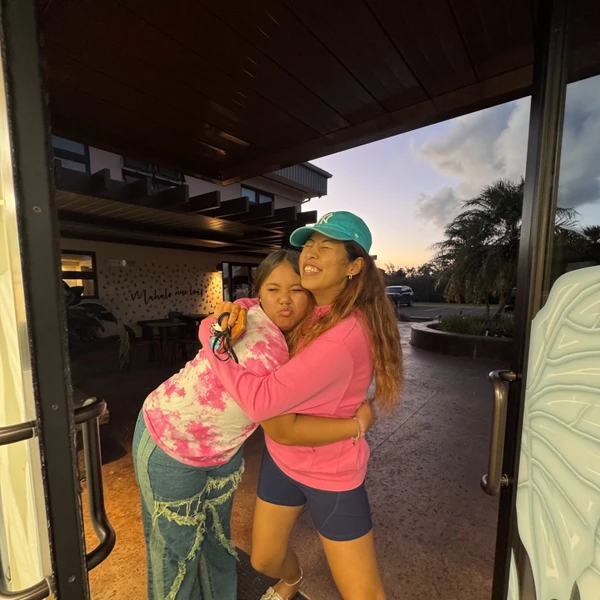
My name is Mikela, a student based in Hawaii. I'm passionate about Culinary Arts, and I enjoy cooking. I have experience in Digital Media, and I am currently working on a Color Walk. In my free time, you'll usually find me skating or surfing. My goal is to find the best in life.
Education
Kahuku High & Intermediate School
High SchoolMiscellaneous
Desired degree level:
Associate's degree program
Majors of interest:
- Cooking and Related Culinary Arts, General
Career
Dream career field:
- Food Production
Dream career goals:
cashier
UNREAL Boba2023 – 20252 years
Sports
Football
Junior Varsity2026 – 2026
Research
Business, Management, Marketing, and Related Support Services, Other
Maui Research & Technology Center2021 – 2023
Arts
Ho'o La Na Pua
Photography2025 – Present
Public services
Volunteering
JustServe — direct service provider2025 – PresentVolunteering
Best Buddies — advocate for social schedule2024 – 2026
Future Interests
Advocacy
Volunteering
Philanthropy
Elijah's Helping Hand Scholarship Award
It’s a strange feeling, standing on the edge of seventeen and realizing I actually want to see what eighteen looks like. For the longest time, my life felt like a movie that had been paused on the saddest scene, and I didn't think I had the power to hit play again. Being a Kānaka Maoli girl in a world that tries to shrink you into a stereotype—or worse, a ghost—is exhausting. Between the "not smart enough" labels at school and the heavy silence of my own house after losing my mom when I was five, it was easy to let Major Depressive Disorder and Generalized Anxiety become my entire identity.
By the time I hit my sophomore year, I was a ghost inhabiting my own body. I felt like I was failing my ancestors and my older brother, who had sacrificed everything to raise me. I carried the trauma of sexual assault like a secret weight, and because I didn't have the words to describe how much I was hurting, I turned that pain inward. I used addiction and self-harm as a way to scream without making a sound. I was convinced that I was just a "broken" version of a girl, sitting in the back of the classroom in an oversized hoodie, trying to disappear into the pages of Girl in Pieces. I thought my story was already over.
But the most gut-wrenching and beautiful part of recovery is the moment you realize you’re still here. It’s like finally breaking the surface of the water after you’ve been sinking for miles. I had to realize that my worth isn’t a democracy; it isn’t up for a vote by people who don’t understand my history or my heart. I had to stop apologizing for existing and start reclaiming my voice. My survival isn't just a lucky break—it's a form of resistance. My ancestors were master navigators who traversed the vast Pacific using nothing but the stars, and I realized that same resilience is literally woven into my DNA.
Today, I’m no longer defined by a collection of past traumas or the things I did just to survive the dark. I’m a senior with big, loud dreams about nutrition and food science. My past with an eating disorder has morphed into a mission: I want to make the "food world" a place where teenage girls, especially those from Indigenous or non-traditional backgrounds, can feel safe and nourished without the toxic noise of diet culture. I want to bridge the gap between mental health and how we fuel our bodies.
I’ve traded my "invisible" hoodies for a version of myself that takes up space. I’m finally living my own story, and for the first time, the ending isn't written in shadows—it’s wide open and full of light. Being sensitive isn't my weakness; it's my superpower. I’m seventeen, I’m Kānaka Maoli, I’m gay, and I’m vibrant. I am staying for the whole story.
Resilient Scholar Award
When people ask about my upbringing, I usually see them brace themselves for a tragedy. It’s a heavy thing to explain that by the time I was five, my world had already fractured: my mom passed away, and my father was never a presence in my life. But the story of my childhood isn’t defined by who left; it’s defined by who stayed. My older brother stepped into a role he was never supposed to have, becoming my guardian and raising me essentially by himself.
Growing up with my brother as my primary parent shaped me in ways I’m only beginning to grasp now that I’m actually seventeen. Our house was different from my friends’. There wasn’t always a perfect routine or home-cooked three-course meals, but there was a fierce, unspoken loyalty. He was young, figuring out his own life while trying to make sure I did my homework, had clean clothes, and felt safe. Because of this, I grew up fast. I saw the sacrifices he made—the shifts he took, the sleep he lost—and I felt a constant pressure to be "easy" for him. I didn't want to be a burden, so I kept my struggles quiet.
This self-imposed silence eventually took its toll. By tenth grade, I was drowning in Major Depressive Disorder and GAD. I felt like a failure because I couldn't just "be okay" after everything my brother had done for me. I spiraled into addiction and NSSI, thinking I was protecting him by hiding my pain, when in reality, I was just disappearing. I felt like I wasn't smart enough to handle life, and that the "brokenness" of my family tree was my destiny.
The realization that changed everything happened during a particularly low point in my junior year. I had been so focused on not being a "burden" that I had forgotten we were a team. One night, after he found me at my absolute worst, we finally really talked. I realized that my brother didn't stay and raise me so that I could be a "perfect, easy kid"—he did it so I could have a chance to actually be a kid.
This led to a new understanding of myself and the people who love me. I realized that asking for help wasn't a sign that I was failing him; it was a sign that I trusted him. My accomplishment hasn't been a trophy or a high grade—though I’ve worked hard to prove I’m "smart enough" for college—it’s been the act of choosing to heal.
Today, as a high school senior, I understand that my upbringing gave me a unique kind of resilience. Being raised by my brother taught me that family isn't about traditional structures; it's about who shows up. I am a proud Kānaka Maoli woman, a sister, and a survivor. I no longer see myself as a collection of tragedies, but as a person who has the power to define her own worth.
Simon Strong Scholarship
Growing up as a Kānaka Maoli girl in a world that often views my culture through the lens of a postcard, I learned early on that people had a very specific box waiting for me. In my high school, there was a quiet, persistent assumption that because of my Indigenous Hawaiian ancestry and my reserved nature, I wasn't "academic material." I was treated like a background character—someone to be passed along, but never truly heard or challenged. This dismissal created a perfect storm of Major Depressive Disorder (MDD) and Generalized Anxiety Disorder (GAD).
For a long time, I leaned into the "failure" everyone expected. I spiraled into a world of addiction, using substances to numb the sting of being underestimated. I turned my pain inward, using NSSI and the dark, heavy weight of suicidal ideation to cope with a world that felt like it had no room for my light. I was the girl in the oversized hoodie, sitting in the back of the class, disappearing into the pages of Girl in Pieces because the characters there were the only ones who seemed to understand my fragmentation. The adversity wasn't just the mental illness; it was the crushing weight of being deemed "not smart enough" to have a future worth fighting for.
Overcoming this didn't happen in a single, cinematic moment; it was a slow, gut-wrenching process of reclaiming my own narrative. The turning point came when I realized that by disappearing, I was validating every person who had ever doubted me. I started by returning to the ‘āina (land)—spending hours by the ocean, not to look for an exit, but to remember that I am a descendant of navigators who crossed the Pacific using nothing but the stars. I realized that my silence wasn't a lack of intelligence; it was a soul-deep exhaustion from trying to fit into a system that wasn't built for me.
I began to trade the fog of addiction for the clarity of my own history. I started writing—not for a grade or for a teacher’s approval, but to give a voice to the girl who had been silenced. I sought professional help and committed to the difficult work of sitting with my own mind without trying to escape it. I found peace in the realization that I didn't need to be "smart enough" by their narrow standards; I was already enough by my own. I stopped asking for permission to exist and started taking up space.
This adversity shaped me by teaching me that my value is not a democracy. It isn't up for a vote by people who don't care or a system that expects me to fail. I realized that the "not smart enough" label was just a tool used to keep me quiet. I have learned to view my sensitivity as a strength and my heritage as an anchor. I am seventeen now, and I no longer accept the version of myself that lives in other people’s heads.
To anyone facing these same circumstances—especially my fellow Indigenous youth who feel silenced or underestimated—my advice is this: You are not the labels people project onto you. When the world tries to tell you that you aren't capable, remember that their low expectations are a reflection of their limitations, not yours. Find your own version of peace, whether it’s in your culture, your art, or your own quiet resilience. Most importantly, stay. Stay to see the version of yourself that finally gets to breathe.
David Foster Memorial Scholarship
High school halls are often filled with noise, gossip, and judging glances as I walk through. But for many years, my world was a silent vacuum. At fifteen, I felt like a ghost in a body I didn’t want, drifting through days I didn't plan to finish. I never thought I’d see seventeen. Back then, my skin showed signs of internal battles I was losing, and my mind was a place I often checked out of.
Then, along came Ms. Shankar.
I entered her eleventh-grade English class expecting another adult who would ignore me. I was the girl in a big hoodie sitting in the back, creating a barrier of invisibility. Every day, I kept my head down, reading Girl in Pieces like a survival guide, my fingers touching the cover as if the ink could ground me. I tried to be subtle about my clothes hanging loose or spending lunch in her classroom to dodge judgment.
Ms. Shankar didn't break my isolation nor demand I participate. She simply observed with quiet grace. One afternoon, as students hurried out after class, she leaned against her desk and softly said, "That’s a heavy story to carry every day, isn’t it? Both the one in the book, and the one you’re living." She didn't pity me; she recognized me with a terrifying clarity.
The Moment of Truth
What makes being loved by someone like Ms. Shankar so heartbreaking is that it makes it impossible to stay invisible. She saw what I thought I hid: my trembling hands, the sadness behind my silence, and the scars under my sleeves. But what she found most alarming was my escape—the pills I took just to numb the pain of a world that felt too sharp.
The breaking point was a Tuesday in November. I was in the library corner, late to her class, feeling the familiar fog from the high that dulled the urge to self-harm. I thought I was alone until I heard the chair scrape nearby.
She didn't scream or call security. She looked at the small bottle of Benadryl and then at me. Her eyes didn't hold anger; they held deep, devastating grief.
"I’ve been looking for you," she said, her voice a crack. "Not because you're late, but because I feared you were slipping away. I can’t let you disappear, even if you believe that’s what you want."
I broke down and told her everything—the addiction that was my only way to breathe, the eating disorder that gave me control, and the constant noise of suicidal thoughts. She stayed with me on the library floor for an hour, listening until I ran out of words. She told me my life wasn't a burden but a story that deserved a better ending.
A New Perspective
Ms. Shankar didn't just "fix" me; she stayed through the struggle. She helped me find professional support and checked on me every morning with, "How is your heart today?" Through her, I learned:
- The power of presence: being "okay" isn't the goal—being present is.
- Radical kindness: treating me with compassion taught me to treat myself the same.
- The vocabulary of hope: recovery isn't linear but a series of daily choices.
Now, at seventeen, I still have bad days, but the silence is gone. It’s gut-wrenching to realize how close I came to missing out on the rest of my life. Thanks to Ms. Shankar, I face the world with fierce, protective gratitude. She didn't just teach me English; she showed me I’m worth staying alive.
Aserina Hill Memorial Scholarship
Growing up on Maui, the ocean was my first teacher, but grief was my second. When I was five years old, I lost my mother. At that age, you don’t have the vocabulary for that kind of heartbreak, but you feel the weight of the silence it leaves behind. Growing up in the islands, I learned early on that aloha isn’t just a greeting; it’s the way a community gathers around you when your world falls apart. That early loss, and my own journey through mental health struggles, have shaped my perspective, teaching me that while life is fragile, the connections we build are what keep us afloat.
Now, as a senior at Kahuku High and Intermediate School on Oahu, I’ve traded the valleys of Maui for the rugged North Shore. That sense of resilience has stayed with me. Whether I’m dropping into a wave, cruising on my skateboard, or competing on the girls' flag football field, I’m constantly reminded of the strength it takes to keep moving forward.
When the world feels loud, I head to the kitchen. Baking has become my therapy—a way of creating something sweet out of raw ingredients. It’s a literal and metaphorical way of finding balance and sharing a bit of warmth with those around me.
My commitment to giving back is rooted in the empathy I gained from my own journey. I’ve been an active member of the JustServe program and a dedicated part of Best Buddies since my sophomore year. Working with Best Buddies taught me a fundamental truth: everyone, regardless of their challenges or how they process the world, deserves to be treated with the same dignity and respect. It’s about recognizing the inherent worth in every person and realizing we are all on the same team.
Looking ahead, my path leads to Kapiolani Community College, where I plan to earn my Associate’s degree in Culinary Arts. I want to turn my passion for baking into a career that nourishes others. I’ve seen how a simple meal or a shared treat can bridge gaps, and I want to use my skills to give back to the islands that raised me.
Because I have personally struggled with my own mental health, my ultimate goal is to address the invisible battles I see my peers fighting. If I were to start my own charity, my mission would be to provide the specialized guidance and support that mentally ill teenagers deserve.
The charity would serve youth navigating their darkest chapters, specifically those in mental health hospitals or intensive treatment programs who often feel forgotten by the outside world.
The heart of this organization would be its volunteers. They wouldn't just offer sympathy; they would offer a lifeline. Volunteers would:
Visit mental health hospitals to provide human connection and mentorship.
Teach coping mechanisms through creative workshops like mine.
Help rediscover purpose by showing teens that life is still worth living and that their diagnosis does not define their future.
By sharing the tools that helped me find my way back to the light, I want to ensure that no teen feels they have to walk their path alone. From the shores of Maui to the halls of Kahuku, my life has been about finding resilience, and I am ready to help others do the same.
Mikey Taylor Memorial Scholarship
My Journey Through the Shadows
If you’d told me freshman year that I’d be hyped for graduation—or even alive to see it—I would’ve rolled my eyes. For a long time, my life felt like a radio stuck on static. I live with Major Depressive Disorder (MDD) and Generalized Anxiety Disorder (GAD), and I struggled deeply with self-harm (NSSI). My brain was a battlefield, and I was losing every day.
The low points weren’t just "bad days"; I was drowning. My life was defined by a constant urge to end it all because I didn’t think I deserved a future. But looking at myself now, I see a completely different person. The girl who used to pray for the end is now the girl who prays for more time.
The biggest shift came when I stopped carrying the weight of these diagnoses alone. Through the support of my church, Word of Life, I finally turned to God. Honestly, I was a skeptic. I thought people would judge my scars or panic attacks, but they did the opposite. They held space for me when I couldn’t stand. They didn't see a project; they saw a person worthy of love.
Finding my faith changed my "why me?" into "what’s next?" I stopped feeling like a cosmic accident and realized I have a purpose. I moved from constant survival to actually living for myself. I finally realized my breath is a miracle, not a burden.
My relationships also did a total 180. When you’re struggling, you often settle for people who mirror the chaos inside you. My old friendships were unbearable—toxic, draining, and heavy. I felt I had to "perform" just to be liked.
Now, things are different. By setting boundaries and surrounding myself with people who reflect the love I found in my faith, my relationships have become fruitful and loving. I’ve learned I don't have to settle for "unhealthy" just because I feel "broken." My friends now are the kind of people who sit on the floor and pray with me when my anxiety spikes, rather than making me feel like a burden.
I also wouldn’t be here without Ms. Shankar. In the noise of high school, she was a constant. She didn’t just see a "struggling student"—she saw me. Ms. Shankar helped me find a path of light when I was convinced I was stuck in the dark forever. She taught me that my voice matters, even when it shakes.
My journey has reshaped my future. Before, I couldn’t plan a week; now, I have goals that get me out of bed. I feel a pull toward ministry, counseling, or social work to focus on:
Advocacy: Breaking mental health stigmas in religious spaces.
Empathy: Using my history with GAD and MDD to show others they aren’t alone.
Healing: Helping others find their own "full 180."
I’m not "cured"—mental health is a lifelong journey—but the girl who wanted to give up is gone. I’m choosing life every day, and the view from 12th grade is finally amazing.
Ethel Hayes Destigmatization of Mental Health Scholarship
For a long time, the world felt like I was looking at it through a cracked lens—distorted, sharp, and hard to navigate. When you’re dealing with the weight of Major Depressive Disorder (MDD) and Generalized Anxiety Disorder (GAD), life isn't just something you live; it’s something you’re constantly trying to survive. My name is Mikela, and for years, I let those clinical labels define who I was. But through a messy, non-linear journey of healing, I’ve realized that these struggles, as much as they hurt, actually forced me to grow. My experience with mental health has totally rewired my goals, turned my relationships into a "found family," and changed my view of the world from something dark and scary into something I actually have the power to change.
In my darkest moments, my goals were honestly pretty tragic. When depression takes over, you stop thinking about high school graduation or what you’re going to do with your life. The future doesn't feel like a horizon; it feels like a wall. At my lowest points, I wasn't looking for ways to succeed—I was looking for ways out. I was focused on short-term escapes and ways to die because I literally couldn't imagine a version of the future where I felt okay.
That part of my journey also forced me to face the reality of suicidality and self-harm. For a long time, hurting myself felt like the only way to make the invisible pain inside me feel "real" or to get the noise in my head to shut up for five seconds. Healing meant breaking that cycle and realizing that my body didn't deserve to be the outlet for my pain. It meant moving past the shame of my scars and learning how to protect myself, even when my brain was telling me not to.
Once I started getting help and actually working on recovery, my goals completely flipped. I went from seeking an end to seeking a new beginning. Now, I’m focused on longevity and helping others. My experiences made me realize I want to pursue higher education so I can support people who are stuck in the same dark hallways I was. I don’t just want to "fix" my own life anymore; I want to help build a world where wellness is a real thing for everyone.
Mental health struggles have a way of acting like a filter for the people in your life. In the beginning, a lot of my relationships were pretty toxic or just unbearable because I didn't know how to ask for help, and they didn't know how to give it. Anxiety made me feel like everyone was judging me, and depression made me want to rot in my room alone, which just pushed people away.
But through the wreckage of those old friendships, I discovered the idea of "found family." I learned that the people who show up for you when you're at your absolute worst are the ones who actually matter. By being honest about my "glitchy" brain, I started attracting people who lead with empathy instead of judgment.
My community has become my backbone. They’ve shown me that being vulnerable isn't a weakness—it's actually a superpower that connects you to others. These people have helped me become a better version of myself. I’ve gone from feeling like a burden to being someone who actively contributes to our collective wellness. My relationships aren't just about "surviving" anymore; they’re about growing together.
The biggest shift has been in how I see the world around me. I used to think the world was just a fundamentally terrible place, like it was a machine designed to make me miserable. I realize now that was just the "depression brain" talking—a total cognitive distortion that painted everything in shades of gray.
Through therapy and a lot of self-reflection, I hit on a pretty life-changing truth: the world isn't static, and I’m not just a background character in my own life. I might not be able to control when a panic attack hits or when the depression gets heavy, but I can control how I respond to it.
"I learned that I can change in every single moment, and that gives me the power to make the world better, bit by bit."
This realization changed me from being a victim of my circumstances to an architect of my own life. Making the world better doesn't have to be some huge, cinematic gesture; it happens in the small choices I make every day to stay healthy, be kind, and keep showing up.
It sounds weird to call a mental health struggle a "blessing," but for me, it honestly is. Without going through the absolute trenches with MDD and GAD, I never would have found out how resilient I actually am. I wouldn’t have this amazing found family, and I wouldn’t have a clear mission to go to college and help others.
My journey has been a total 180—from looking for an exit to looking for progress. I’m Mikela, and I’m not defined by my diagnosis; I’m defined by the fact that I’m still here and I’m still fighting. I’m moving forward knowing that healing is possible, that community is everything, and that every day is a chance to turn my old pain into something that helps someone else.
Jeanne Murphy Scholarship: Compassion in Action
Compassion, for me, isn’t just an abstract idea—it’s something I carry every day, shaped by my own story of loss. When my mom died, and I was just five, I didn’t fully understand what was missing, but I felt it deeply. As I grew up, I was lucky to have a handful of kind women step in, each in their own way. They didn’t just show me how to be compassionate; they lived it, in small, everyday gestures. It was in their hugs on hard days, their willingness to listen, and their steady presence that I learned compassion means showing up for others, especially when it’s hard. I’ve come to believe that the best way to honor my mom’s memory is to pour that same love and gentleness into the world.
These days, I try to put a bit of that spirit into everyday moments. Real compassion isn’t loud or showy—it’s in the small things that often go unnoticed. Here’s what that looks like for me:
Protecting the Vulnerable: I have a deep love for animals and believe that how we treat creatures who cannot speak for themselves reflects our true character. I make it a point to be kind and protective toward all living things.
Inclusivity and Respect: I am intentional about being friendly and supportive toward people with special needs or disabilities. In a world that often moves too fast or overlooks those facing different challenges, I prioritize ensuring everyone feels seen, heard, and valued.
Patience in the Little Things: Sometimes, compassion is as simple as showing patience in the little things. Whether it is letting someone go in front of me in line or on the road, or simply offering a smile to someone having a hard day, I believe in "paying it forward" without expecting anything in return.
As I look to the future, I plan to continue showing compassion by making it the center of my professional and personal life. In college and beyond, I want to be the person who builds community rather than just participating in it. Losing my mother so young taught me how fragile life is, and it gave me a unique perspective on the importance of support systems. I plan to utilize the resilience I’ve gained to serve as a "motherly figure" or a mentor to others who are struggling, ensuring that the cycle of kindness I was shown continues to grow. By living with Ahonui (patience) and Akahai (kindness), I hope to make my mother and my community proud by being a constant source of light.
Rev. Ethel K. Grinkley Memorial Scholarship
Compassion is often described as a feeling, but for me, it is a lived experience that began in the midst of profound loss. I learned the true meaning of empathy and kindness at a very young age, specifically after my mother passed away when I was only five years old. Growing up without her was one of the greatest challenges of my life, but in that void, I was blessed with incredible motherly figures who stepped in to guide me. Through their grace and strength, I learned that compassion is not just an emotion—it is a choice we make every day to care for those around us. These women showed me that even in the face of grief, you can find the strength to be soft, and that the best way to honor those we have lost is to pour love back into the world.
Today, I exemplify compassion in action by weaving the spirit of Aloha into the small, everyday moments that others might overlook. To me, compassion is most powerful when it is quiet and consistent. I strive to show this by:
Protecting the Vulnerable: I have a deep love for animals and believe that how we treat creatures who cannot speak for themselves reflects our true character. I make it a point to be kind and protective toward all living things.
Inclusivity and Respect: I am intentional about being friendly and supportive toward people with special needs or disabilities. In a world that often moves too fast or overlooks those facing different challenges, I prioritize ensuring everyone feels seen, heard, and valued.
Patience in the Little Things: Sometimes, compassion is as simple as showing patience. Whether it is letting someone go in front of me in line or in traffic, or simply offering a smile to someone having a hard day, I believe in "paying it forward" without expecting anything in return.
As I look toward the future, I intend to continue exemplifying compassion by making it the center of my professional and personal life. In college and beyond, I want to be the person who builds community rather than just participating in it. Losing my mother so young taught me how fragile life is, and it gave me a unique perspective on the importance of support systems. I plan to use the resilience I’ve gained to be a "motherly figure" or a mentor to others who are struggling, ensuring that the cycle of kindness I was shown continues to grow. By living with Ahonui (patience) and Akahai (kindness), I hope to make my mother and my community proud by being a constant source of light.
Hawai'i Island Sunset Scholarship
Growing up in Hawaii, my life has always been defined by the rhythm of the ocean surrounding me. Some of my earliest and most prominent memories are from days spent at the beach with my thoughts. In the islands, the beach isn't just a place to swim; it is where we connect, share meals, and remember who we are. These moments taught me the true meaning of ’ohana—that it isn't just about the people you are related to by blood, but the people who show up for you.
While the ocean provided my backyard, the Word of Life church provided my foundation. My relationship with Jesus has been the light throughout my adolescence. The church didn’t just offer me spiritual guidance; it was the support system that helped raise me. Through the youth programs and the mentorship of my church leaders, I learned how to identify my true ’ohana and understand my purpose. They taught me that I have a responsibility to be a leader and a servant to others. This spiritual upbringing instilled in me a deep sense of kuleana, especially regarding the ’āina. To keep our island safe and thriving, we have to be conscious of our impact, and I carry that environmental and social consciousness with me as I look toward my future.
I am passionate about pursuing a college degree, largely because I want to prove what is possible. As a first-generation college student, I am walking a path that no one in my immediate family has traveled before. To me, college is more than just a series of classes; it is an amazing opportunity to seek a better life and open doors that have previously been closed to my family.
My passion for excellence also extends to the court and the field. Throughout high school, volleyball and flag football have been my life. Being an athlete has taught me:
Discipline: Balancing practice, games, and schoolwork.
Resilience: Learning how to bounce back after a tough loss.
Teamwork: Understanding that we only succeed when we move as one unit.
I plan to continue my athletic journey in college. The team-building skills I’ve gained from sports are exactly what I need to thrive in a rigorous academic environment. I know how to work with different personalities to achieve a common goal, which is a skill that will serve me well in group projects and campus leadership.
My next step is to attend Kapi’olani Community College. I chose KCC because it offers a bridge between the comforts of home and the challenges of a new environment, allowing me to focus on my degree while staying connected to my roots. However, the transition to higher education comes with significant hurdles.
While I am blessed with a spiritual and emotional support system that is second to none, my family lacks the financial means to fully fund my education. This scholarship is the missing piece of the puzzle. It would provide the financial stability I need to focus entirely on my studies and my sport, rather than worrying about how to afford tuition or books.
By supporting my journey, you are not just investing in a student; you are investing in a first-generation pioneer who is determined to give back to the islands. I want to use my education to ensure that the Hawai’i I love stays safe and beautiful for the generations that come after me. With your help, I can prove that with faith, a strong ’ohana, and hard work, a kid from Hawaii can achieve anything.