Hobbies and interests
African American Studies
Baking
Beading
Basketball
Art
Coding And Computer Science
Carpentry
Computer Science
FBLA
Fishing
Gaming
Gender Studies
Graphic Design
Greek
Jiu Jitsu
Information Technology (IT)
JROTC
Law
Mock Trial
National Honor Society (NHS)
Music
Reading
Cultural
I read books multiple times per week
Miechelle Petty
3x
Finalist1x
WinnerMiechelle Petty
3x
Finalist1x
WinnerBio
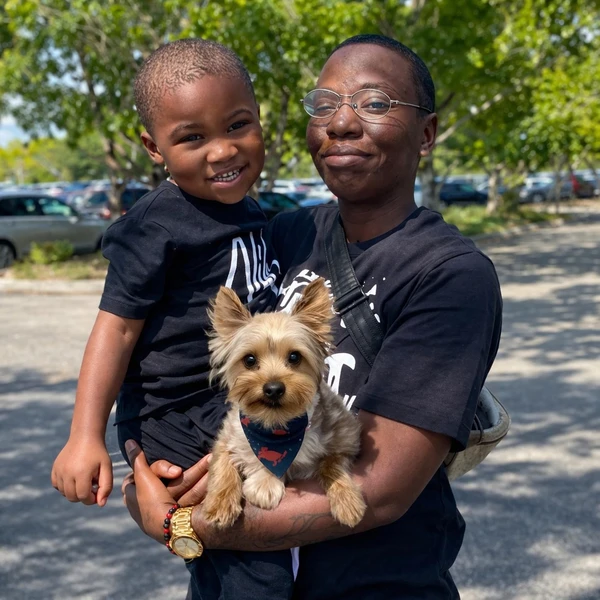
I strive to be a strong role model for my younger brother, now my legally adopted son, who inspires my commitment to academic and personal growth. As a Political Science student planning to pursue a Juris Doctorate, I am passionate about parenting, legal advocacy, civic engagement, and youth-focused initiatives in education and the arts. My journey—rooted in resilience, responsibility, and purpose—fuels my ambition to advance justice, address social inequities, and create empowering spaces for marginalized communities.
Education
University of Maine at Presque Isle
Bachelor's degree programMajors:
- History and Political Science
Minors:
- History and Political Science
Barry University
Bachelor's degree programMajors:
- Law
Post University
Bachelor's degree programMajors:
- Legal Professions and Studies, Other
Miscellaneous
Desired degree level:
Doctoral degree program (PhD, MD, JD, etc.)
Graduate schools of interest:
Transfer schools of interest:
Majors of interest:
- Law
Career
Dream career field:
- Law Practice
Dream career goals:
Graphic designer
2009 – Present17 years
Sports
Basketball
Junior Varsity1995 – 19994 years
Awards
- mvp
Research
Legal Professions and Studies, Other
Student2022 – Present
Arts
- Painting2022 – Present
- Graphic Art2005 – Present
Public services
Advocacy
FLUX (South Florida Chapter) — Media & Graphic Design Chair2025 – PresentAdvocacy
Visibility365, Inc. — Vice President2024 – PresentVolunteering
The Smile Trust — Volunteer2021 – PresentVolunteering
Habitat for Humanity — Volunteer1994 – Present
Cooper Congress Scholarship
2. Policy and Government Aspirations:
I didn’t come to policy through theory. I came to it through survival.
I’ve lived what it means to rely on systems that don’t always show up as they should. As a trans masculine student and as someone navigating an acquired disability after being the victim of a federal crime, I’ve experienced firsthand how policy decisions shape real life, not in abstract terms, but in quiet, high-stakes moments where access, safety, and dignity are on the line. I am also raising my sibling, a young person with special needs, and that responsibility has completely remodeled the way I think of education, healthcare, and stability. It is one thing to encounter barriers personally, but carrying the responsibility of someone else’s future while navigating them is on another level. I have personally witnessed that systemic gaps don't exist in isolation. They compound into financial strain, limited access, and a lack of support, culminating to a point where moving forward requires more than just effort.
It requires structure, coordination, and intentional policy design. And it is that reality that draws me to legislative and policy work. For people like me, policy is not theoretical. It determines who has access, who is protected, and who is left to navigate systems on their own. Effective policy must do three things. It must anticipate real-world barriers, align resources across systems, and hold institutions accountable for outcomes, not just intent. I am currently pursuing my bachelor’s degree and will attend law school, where I will fortify my foundation in legal advocacy and legislative reform. My goal is to work at both the state and federal levels because I understand how policy moves. State-level decisions shape immediate access, including education, healthcare, housing, and civil rights. Federal policy defines the baseline protections that determine equity nationwide. I intend to work in both spaces, where policy is implemented and where it is codified.
Equitable access to education has directly shaped my path. I have maintained strong academic performance and earned honors recognition, but I have also had to make decisions about my education based on cost, decisions driven by financial reality rather than potential. There are many students like me, capable, disciplined, and determined, yet forced to adjust or delay our goals due to caregiving responsibilities, financial constraints, or unexpected life circumstances. When opportunity becomes conditional, it is not a reflection of individual effort. It reflects the faults in policy design because how we create policy matters just as much as the policies themselves. Civil discourse is essential, but it must be paired with rigor and accountability. Progress requires the discipline to listen, engage across differences, and translate lived experience into actionable solutions. I aim to be a leader who bridges divides not by diluting core principles, but by building policies that are informed, precise, and enforceable.
My goal is not simply to enter law or government. It is to use those institutions to expand access, protect rights, and build systems that respond to the realities people are actually living. I know what it feels like to navigate systems that were not built with you in mind, and I am committed to helping change that.
Sturz Legacy Scholarship
I once created a full interior signage system for a luxury residential development, and watched someone else take credit for my work.
At the time, I worked in graphic design, and this wasn’t just another small project. I developed an all-inclusive signage package, including everything from fitness center rules and ADA-compliant signs to management office displays and branded interior pieces. These weren’t concepts that sat in a folder. They were produced, installed, and used across multiple properties, which made the project feel real in a way that most design work doesn’t. I invested a lot of creativity and time into that project, both on and off the clock, because I knew it mattered. I remember going through draft after draft, adjusting layouts, spacing, and typography, trying to get everything just right. I paid attention to details most people wouldn’t notice, like alignment, readability, and consistency. I wanted the signage to feel like it belonged in the space, not just placed there. It had to match the builder’s brand while still feeling elevated enough for a luxury environment. It wasn’t just about aesthetics. I designed it to function in real life, for people actually using those spaces every day.
Once I submitted my work, it went through the usual review process. Our art director examined it, gave feedback, and approved the final versions. That part was expected. Her role was mainly to review and approve, not to create. But when the project was approved, produced, and rolled out, it was presented as if it were her work. She didn’t acknowledge my contribution. She didn’t mention who designed the signage. Instead, she attached her name to something I had built from the ground up. There was no conversation about it, no clarification, just silence and then recognition going somewhere else.
At the time, I stayed silent too. I wish I could say I spoke up, either because I was being strategic or because I was trying to take the high road. The truth is, I just wasn’t comfortable advocating for myself yet. I second-guessed whether it was worth creating tension. I didn’t want to come across as difficult. I told myself it wasn’t a big deal and that my work would speak for itself. But it didn’t feel right, and that feeling didn’t go away. Even now, I still see those signs around town. New developments go up, and I recognize my layouts, my structure, and my design choices still being used. It’s a strange mix of pride and frustration. I’m proud because I know what went into that work, but I also remember how it felt to be overlooked. It made me question, at the time, whether my effort actually mattered in environments where recognition wasn’t guaranteed.
That experience stayed with me more than I expected. It made me realize that working hard doesn’t always guarantee recognition. You can put in the time, effort, and care and still be overlooked if you don’t speak up. At that point in my life, I wasn’t ready to do that. Since then, I’ve grown. Through my personal and academic experiences, I’ve learned how to advocate for myself, even when it feels uncomfortable. I’ve learned that being assertive doesn’t mean being confrontational. It means being clear about your contributions. There is a difference between arrogance and honesty, and understanding that difference has been important for me. I’ve also learned that advocating for yourself early can prevent situations like this from happening again.
If I were in that situation today, I would handle it differently. I wouldn’t approach it with anger or make it a bigger issue than it needs to be, but I would have a direct, professional conversation to clarify my role and make sure my work is properly recognized. Not to take credit away from someone else, but to make sure the truth is acknowledged. Because I’ve learned that if you don’t advocate for yourself, there is no guarantee anyone else will. That experience changed how I approach work and how I move through life. As I continue my education and prepare for a future in law, I understand that advocacy starts with me. If I want to stand up for others, I have to be willing to stand up for myself first.
Even now, when I see those signs around town, they remind me of two things. What I created, and what I learned from it. Recognition matters. Integrity matters. And my voice matters. Next time, I will use it and ensure my efforts are at least acknowledged.
Simon Strong Scholarship
The moment my life changed, it didn’t come with warning or preparation—it came all at once.
I survived a violent crime that left me permanently blind in my right eye. In an instant, everything I once took for granted—my vision, my sense of safety, even my confidence—was disrupted. Tasks that used to feel simple became exhausting. Reading for long periods caused pain. Bright light became overwhelming. At the same time, I was navigating the emotional aftermath of trauma, including PTSD and depression.
What made this adversity even more challenging was that life did not slow down to give me time to adjust.
I still had responsibilities. I still had goals. And eventually, I became a parent—someone who needed to show up consistently, regardless of what I was going through internally. That reality forced a decision: I could let my circumstances define my limits, or I could learn to adapt and move forward anyway.
I chose to adapt.
Overcoming adversity did not happen all at once. It was built through small, consistent actions. I returned to school, even when focusing was difficult. I advocated for accommodations, even when it felt uncomfortable. I learned to study differently, manage my environment, and pace myself in ways that worked with my limitations rather than against them.
Through that process, I earned recognition on the President’s List and Provost’s List and completed my undergraduate certificate in Paralegal Studies. I am now continuing my bachelor’s degree with plans to attend law school.
But the greatest impact of this experience was not academic—it was personal.
Adversity reshaped how I see myself and others. It taught me that resilience is not about being unaffected by hardship—it is about continuing despite it. It also deepened my sense of empathy. I understand what it feels like to navigate systems that are not built for you, to feel overwhelmed, and to need support without always knowing how to ask for it.
That understanding is what drives my future goals. I plan to become an attorney who advocates for underserved communities—especially individuals who feel unheard or unsupported within complex systems. I want to be someone who not only understands the law but also understands people.
If I could advise someone facing adversity, it would be this:
Do not measure your progress against who you were before everything changed.
Growth after hardship looks different. It may be slower, quieter, and less visible—but it is still progress. Permit yourself to adapt. Advocate for what you need, even when it feels uncomfortable. And most importantly, do not let your current circumstances convince you that your future is limited.
Adversity may change your path, but it does not erase your purpose.
My experience did not break me—it rebuilt me into someone more resilient, more aware, and more determined to create impact.
And that is the version of myself I am choosing to move forward with.
Lippey Family Scholarship
The first time I realized that hard work alone would not be enough was after I lost vision in my right eye.
Before that, I approached challenges with a simple mindset: work harder, push through, and you will succeed. But after surviving a violent crime that left me permanently blind in one eye, everything about how I learned and functioned changed. Reading for long periods became painful. Bright light triggered discomfort. Depth perception issues made even simple tasks more mentally exhausting. On top of that, I was navigating PTSD and depression—challenges that affected my focus, memory, and overall ability to engage in academic work the way I once had.
For the first time, effort alone did not feel like enough.
That was the challenge that forced me to grow.
I had to learn how to work differently, not just harder. I began advocating for myself—something that did not come naturally to me at first. I sought accommodations, adjusted my study habits, and learned how to break down large tasks into manageable pieces. I explored assistive strategies like managing lighting, taking structured breaks, and adapting how I processed information. Instead of forcing myself into environments that did not work for me, I started building systems that did.
That shift changed everything.
I went from feeling limited by my circumstances to learning how to navigate them. I stopped viewing my challenges as barriers that disqualified me from success and started seeing them as factors I could work with, not against.
The result was not just survival—it was growth.
I earned recognition on the President’s List and Provost’s List and completed my undergraduate certificate in Paralegal Studies. These accomplishments mean more to me because they were not achieved under ideal conditions. They were achieved through adaptation, persistence, and a willingness to approach learning in a new way.
More importantly, this experience reshaped how I see myself.
I am not someone who succeeds because things are easy. I am someone who succeeds because I am willing to adjust, to advocate, and to keep going even when the path requires more effort than expected.
That perspective will carry with me into law school and my future career.
As I pursue a legal education, I will continue to advocate—not just for myself, but for others who may feel limited by learning differences, disabilities, or systemic barriers. I understand how discouraging it can be to feel like the environment was not built with you in mind. I also understand the power of having the right support and strategies in place.
This challenge did not just change how I learn—it changed how I lead, how I advocate, and how I define success.
Growth, for me, was not about overcoming the challenge entirely. It was about learning how to rise within it.
And that is exactly what I will continue to do.
Brooks Martin Memorial Scholarship
I still remember the quiet.
Not the kind that feels peaceful, but the kind that feels heavy—like something is missing that should still be there. That is what it felt like after I lost my dog, Adonis.
To some, he may have just been a pet. But to me, Adonis was constant. He was there during some of the most difficult periods of my life—after I survived a violent crime that permanently changed my vision, during moments when I struggled with PTSD and depression, and throughout the process of rebuilding my life. He didn’t need explanations. He didn’t ask questions. He just stayed.
Losing him felt like losing a piece of stability I didn’t realize I depended on so deeply.
Grief has a way of slowing everything down. It forces you to sit with emotions you can’t rush past. For me, that loss brought a kind of stillness that made me reflect on what truly matters—time, presence, and the people (and beings) who walk through life with you.
But more than anything, it taught me about love and responsibility.
As a parent, I am constantly thinking about how to show up, be present, and create a sense of safety and consistency. Losing Adonis reinforced how important those things are. It reminded me that the smallest moments—routine, companionship, simply being there—are often the most meaningful.
That loss also reshaped how I approach challenges.
I’ve faced significant obstacles in my life, but grief taught me a different kind of strength. Not the kind that pushes through quickly, but the kind that allows you to feel deeply and still choose to keep going. It taught me that resilience is not about ignoring pain—it is about carrying it in a way that still allows you to move forward.
That perspective has directly influenced my goals.
As I work toward my bachelor’s degree and prepare for law school, I carry a deeper sense of purpose. I want to become an attorney who understands that behind every case is a person experiencing something real—loss, fear, uncertainty. I want to advocate in a way that is not only effective but also compassionate. Because I know what it feels like to lose something that cannot be replaced, and to still be expected to function, to show up, and to move forward.
My outlook on life has shifted because of that experience.
I no longer take time or connection for granted. I move with more intention. I value presence over perfection. And I understand that strength is not always loud—it is often quiet, steady, and persistent.
Losing Adonis did not just teach me about grief.
It taught me how to carry love forward, even after loss.
And that is something I will bring with me into every space I enter, every goal I pursue, and every person I have the opportunity to serve.
Nabi Nicole Grant Memorial Scholarship
I remember sitting in the dark because the light hurt too much to keep it on, holding my head in my hands, wondering how I was supposed to keep going.
Just weeks earlier, I had survived a violent crime that left me permanently blind in my right eye. My world shifted overnight. Simple things—walking through a room, focusing on a page, even stepping outside—felt unfamiliar and overwhelming. In the aftermath, I was trying to adjust not only to the physical loss of vision but also to the emotional weight of trauma, fear, and uncertainty about what my future would look like.
Then, one year later to the day, Maxwell was born.
His birth did not erase what had happened to me, but it gave me a reason to keep reaching for healing. Becoming his parent changed the way I saw my life. I no longer had the option of staying stuck in fear or despair. I had someone to love, protect, and show up for every day. In many ways, Maxwell became a reminder that even after deep pain, God can still bring purpose, love, and new life into the same space where there was once only hurt.
That is when my faith became real.
I did not always have the strength to make long-term plans or fully process everything I had gone through, but I could pray. Not always for answers, but for strength. Strength to get through the next day, then the next, and then the next. My faith taught me that I did not need to see the whole path ahead—I just needed to trust God enough to take the next step.
Faith, for me, became action.
It looked like returning to school, even when my vision made reading difficult. It looked like advocating for accommodations when it felt uncomfortable. It looked like continuing to pursue my goals while raising my son and rebuilding my confidence. Through that process, I earned recognition on the President’s List and Provost’s List, completed my undergraduate certificate in Paralegal Studies, and continued working toward my bachelor’s degree with plans to attend law school.
My faith did not remove my challenges—it gave me the resilience to rise through them.
That resilience now shapes the way I want to serve others. Like Nabi Nicole, whose faith led her to uplift people in her community, I want my life and career to reflect both faith and service. I plan to use my legal education to advocate for victims of crime, underserved families, and people who feel unheard in systems that are often intimidating and difficult to navigate.
I also want to mentor young people and first-generation students who need encouragement, direction, and someone who understands what it means to fight for a better future. I know what it feels like to need hope, and I want to become a source of that hope for others.
I overcame one of the hardest seasons of my life not because I had all the answers, but because I trusted that God still had a purpose for me.
And as I move forward, I will continue to live out that faith in how I serve, lead, and advocate for others.
Because my faith did not just carry me through—it taught me how to help carry others too.
GD Sandeford Memorial Scholarship
GD Sandeford Memorial Scholarship Essay (Refined Version)
I learned early that success, for someone like me, would never be a straight path—it would be something I had to build, piece by piece, often without a roadmap.
As a first-generation African American college student, I am not just pursuing a degree—I am navigating spaces that were not designed with people like me in mind. At the same time, I am raising my younger brother, now my legally adopted son, while rebuilding my life after surviving a violent crime that left me permanently blind in my right eye. These experiences forced me to grow quickly, advocate for myself, and learn how to navigate systems that can be overwhelming without guidance.
That journey showed me something powerful: the difference between those who succeed and those who struggle is often not ability—it is access.
That is why my degree is not just for me—it is a tool I intend to use to create access for others.
I am currently completing my bachelor’s degree with plans to attend law school, and my long-term goal is to serve underserved communities through both legal advocacy and community-based initiatives. I want to work directly with individuals and families who are navigating complex legal and educational systems, ensuring they have the knowledge and support needed to make informed decisions.
Beyond my legal career, I plan to develop and participate in mentorship and outreach programs specifically for first-generation students. I envision hosting community workshops focused on college readiness, financial aid literacy, and self-advocacy—areas where many students are left to figure things out alone. I also want to partner with local schools and community organizations to provide resources and guidance to families who may not have experience navigating higher education or legal systems.
Leadership, to me, is not about titles—it is about responsibility. It is about using what you have learned to create opportunities for others.
Service is already a part of who I am, and it will continue to guide my work. Whether through volunteering, mentorship, or pro bono legal services in the future, I am committed to showing up for my community in meaningful and consistent ways. I understand what it feels like to need support and not know where to turn, and I am determined to be a resource for others in those moments.
The impact I hope to make is both immediate and lasting: helping individuals access opportunities today, while also contributing to long-term change in how systems serve underserved communities.
Earning my degree is not the finish line—it is the foundation.
I am building a future where access replaces uncertainty, where knowledge replaces barriers, and where success is not limited by where you start.
And as I move forward, I will make sure I am not the only one moving forward with it.
Tandy Law Firm Scholarship
My decision to pursue a career in law was not born in a classroom—it was shaped by lived experience, responsibility, and a clear understanding of how much the legal system impacts real people’s lives.
I was the victim of a violent crime that left me permanently blind in my right eye. In the aftermath, I was forced to navigate the legal system not as a student, but as someone directly affected by it. What I experienced was both eye-opening and overwhelming. Legal processes that should provide clarity often felt complex, intimidating, and emotionally draining. In that moment, I realized how critical it is to have advocates who not only understand the law but also understand people.
That realization stayed with me.
At the same time, I stepped into the role of primary caregiver for my younger brother, who is now my legally adopted son. Navigating school systems, advocating for his educational needs, and ensuring he had access to the resources he deserved further reinforced how essential strong, informed advocacy is—especially for those who may not have the knowledge or support to navigate these systems alone.
These experiences did more than inspire me—they defined my purpose.
I am currently completing my bachelor’s degree while building a foundation in legal studies through my undergraduate certificate in Paralegal Studies. I have been recognized on the President’s List and Provost’s List, not because the journey has been easy, but because I have been intentional. I understand what is at stake—not just for myself, but for the people I hope to serve.
I am pursuing law because I want to be the kind of advocate I once needed.
My goal is to use my legal education to serve individuals and communities that are often overlooked or underserved. I am particularly passionate about supporting victims of crime, families navigating complex legal systems, and individuals who feel intimidated or silenced within legal spaces. Too often, people are reduced to case numbers rather than treated as human beings with real experiences and valid concerns. I intend to change that.
Making a difference in my community starts with accessibility. I want to help bridge the gap between legal systems and the people they are meant to serve by providing clear guidance, strong representation, and compassionate advocacy. Whether through direct legal practice, community outreach, or pro bono work, I plan to ensure that people understand their rights and feel empowered to assert them.
I also recognize that impact extends beyond individual cases. The legal profession has the power to shape policies, influence systems, and address inequities at a broader level. I am committed to using my voice and my education to contribute to a more just and equitable legal system—one that not only functions but truly serves.
Law is more than a career path for me—it is a commitment to advocacy, to justice, and to meaningful change.
I am not simply pursuing a law degree. I am preparing to use it.
Jack Saunders Memorial Scholarship
The greatest challenge I have faced was not a single event—it was rebuilding my life after everything changed, while refusing to lower my expectations for what I could still become.
I am a survivor of a violent crime that left me permanently blind in my right eye. In an instant, I lost not only part of my vision, but also my sense of normalcy. I had to relearn how to navigate the world—physically adjusting to monocular vision, while also confronting the psychological aftermath of PTSD and severe depression. Environments I once navigated with ease became obstacles. Light became painful. Focus became difficult. Stability felt uncertain.
But what made this challenge defining was not just the trauma itself—it was what came next.
At the same time, I stepped into the role of primary caregiver for my younger brother, who is now my legally adopted son. There was no option to pause, no space to fall apart fully. I had someone depending on me. I had to show up—not just physically, but emotionally, consistently, and with strength I did not yet feel.
That responsibility forced a decision: I could let my circumstances set my limits, or I could redefine them.
I chose to redefine them.
Winning, for me, was not immediate or effortless. I build it every day through discipline, persistence, and refusal to quit. I returned to school despite visual limitations and mental health challenges. I advocated for accommodations in systems that are not always designed for people like me. I earned recognition on the President’s List and Provost’s List and completed my undergraduate certificate in Paralegal Studies. I continue progressing toward my bachelor’s degree with a clear goal: law school.
I did not succeed because the path became easier. I succeeded because I became stronger.
This experience reshaped how I see the legal system. I understand the overwhelming feeling of navigating complex, intimidating processes and the need for someone who not only understands the law but is willing to stand beside you with clarity and conviction. That is the kind of attorney I intend to be.
My adversity did more than test me—it sharpened my purpose. I am committed to advocating for those who feel unseen, particularly victims of crime and individuals navigating systems that often fail to center their humanity. I will bring not only legal knowledge, but lived experience, resilience, and an unwavering commitment to justice.
I did not “win” by erasing hardship. I won by transforming it into momentum.
I rebuilt. I advanced. And I refused to settle.
That is the mindset I carry forward—and it is exactly what I will bring to the legal profession.
LegalMatch.com's Legal Futures Initiative Scholarship
My journey toward law school has been shaped not only by academic ambition, but by lived experience, resilience, and a deep commitment to justice. As a Political Science student and aspiring attorney, I have learned that the law is not just about statutes and procedures—it is about people. It is about understanding their stories, advocating for their rights, and ensuring that their voices are not lost in systems that can often feel impersonal or inaccessible.
I am currently completing my bachelor’s degree while raising my younger brother, who is now my legally adopted son. Stepping into this role at a young age required me to develop patience, empathy, and strong communication skills in ways that no classroom ever could. Navigating educational systems, advocating for his needs, and supporting his growth has given me firsthand insight into how critical it is to truly listen—especially to those who may struggle to be heard.
My desire to attend law school is rooted in both personal experience and professional aspiration. As someone who has been directly impacted by the criminal justice system as a victim, I have seen how overwhelming and isolating legal processes can be. That experience solidified my commitment to becoming an attorney who not only understands the law but also approaches clients with compassion and respect. I want to practice law in a way that prioritizes human dignity, particularly for individuals from marginalized communities who often face systemic barriers to justice.
Kindness, listening, and empathy are not weaknesses in the legal profession—they are essential tools. Too often, clients enter legal spaces feeling intimidated, dismissed, or misunderstood. I intend to create an environment where clients feel safe, respected, and empowered. This begins with active listening: taking the time to fully understand a client’s circumstances, concerns, and goals without judgment. By doing so, I can provide representation that is not only legally sound but also personally meaningful.
Empathy will guide my approach to advocacy. Understanding a client’s lived experience allows for more effective legal strategies and stronger attorney-client relationships. Whether working in litigation, advocacy, or public service, I will ensure that my clients feel seen and valued—not just as cases, but as individuals.
Kindness, in practice, means treating every client with dignity regardless of their background or situation. It also extends to how I interact with colleagues, opposing counsel, and the court. The legal system can be adversarial, but professionalism rooted in respect can help foster more constructive outcomes and, ultimately, a more equitable system.
My goal is to use my legal education to advocate for fairness, accessibility, and justice. I am particularly passionate about issues affecting families, victims of crime, and underserved communities. By combining strong legal training with genuine compassion, I hope to contribute to a legal system that not only upholds the law but also serves humanity.
Law school is the next step in a journey defined by perseverance and purpose. I am committed to becoming an attorney who listens deeply, acts with empathy, and leads with kindness—because justice should not only be pursued, it should be felt.
Hearts on Sleeves, Minds in College Scholarship
For a long time, my voice mostly stayed in my head. I learned early on that speaking up could cause conflict, make people uncomfortable, or even lead to rejection. So I became quiet, observant, and careful. I convinced myself that staying small was how I survived.
But everything changed when I decided to publicly speak out for LGBTQ+ rights in my community. I’ve always believed in fairness and treating everyone with dignity, but believing in something and actually saying it out loud are two very different things. I remember sitting at my laptop, hands hovering over the keyboard, heart pounding. I wanted to share my story and my perspective, but fear kept holding me back. What if people judged me? What if I lost friends? What if my voice didn’t matter at all? It took me almost an hour just to write a simple post.
When I finally clicked “publish,” I felt exposed—like I’d stepped onto a stage without knowing my lines. I was terrified of what might happen next. And sure enough, some negativity came. There were people who didn’t understand, who disagreed, and who made sure I knew it. But then something unexpected happened. Quiet messages started to appear in my inbox. People thanked me. Some said I made them feel less alone. Others told me they admired my courage.
That moment taught me something important: my voice isn’t just about me. It has the power to reach people I’ll never meet and remind them they matter. It didn’t erase my fear, but it changed how I see it. I learned that confidence isn’t about not feeling scared; it’s about choosing to speak anyway. I also realized that communication isn’t about being the loudest in the room. It’s about being honest, intentional, and willing to stand behind your words.
Since then, I’ve used my voice more intentionally. I co-founded an advocacy organization, served on nonprofit boards, and committed myself to a future in law. Every step has pushed me to speak up—sometimes in rooms where I felt out of place, sometimes when I doubted myself. But each time I’ve chosen to speak, my voice has grown a little stronger.
Looking ahead, I want to use my voice as a lawyer and advocate—especially for those who feel invisible or unheard. I know what it’s like to believe your voice doesn’t matter. That’s why I want to spend my life making sure others are listened to, respected, and protected.
That first post? It didn’t feel heroic. It felt terrifying. But it taught me something I carry with me every day: your voice doesn’t have to be perfect or powerful to make a difference. It just has to be honest. And sometimes, honesty is the strongest thing you can give the world.
Debra S. Jackson New Horizons Scholarship
I am on a Journey of Resilience, Responsibility, and Purpose. Life has a way of testing our strength, forging our character, and shaping our vision for the future. My story is no different. Growing up in Dania Beach, Florida, I faced hardships that many might see as barriers, but I chose to see them as catalysts for growth. From humble beginnings with a single mother working tirelessly to provide stability, to surviving a violent attack that changed my life forever, each experience has instilled in me a profound sense of responsibility, resilience, and purpose.
My childhood was marked by instability—my father’s struggles with addiction and the upheaval that came with divorce. Yet, amidst these challenges, my mother’s determination and the support of my community, particularly Habitat for Humanity, showed me the power of collective effort and giving back. I learned early on that service isn’t just an act; it’s a way of life. Assisting in building homes for others reinforced my belief that everyone deserves stability and dignity—values that continue to guide my actions today.
During high school, I developed leadership skills through JROTC, student government, and sports. These roles taught me discipline, teamwork, and perseverance—principles that have helped me navigate life's setbacks, including a life-altering assault that resulted in the loss of my right eye. Despite this trauma, I refused to let violence define me. Instead, I used it as motivation to rebuild and focus on my goals.
My journey through higher education has been one of persistence. Though financial barriers paused my studies at FAMU, I did not allow disappointment to deter me. I earned a paralegal certificate at Post University and am currently pursuing a degree at Barry University, driven by a passion for law and justice. My academic pursuits are fueled by a desire to advocate for vulnerable communities, especially children impacted by systemic issues like substance exposure and poverty.
Becoming a father on the anniversary of my attack transformed my purpose entirely. My son’s arrival gave me a newfound motivation to break cycles of hardship and provide him with stability, love, and opportunity. Parenthood has deepened my commitment to community service and advocacy, as I understand firsthand how systems can both uplift and fail families. I am committed to using my education to create positive change—whether through legal advocacy, community engagement, or policy work—that safeguards and empowers those who are most vulnerable.
The Debra S. Jackson New Horizons Scholarship represents more than financial support; it’s an affirmation of resilience and a catalyst for my aspirations. With this scholarship, I will be better equipped to complete my education and continue my journey of service. My goal is to advocate for equitable access to resources, influence policies that protect children and families, and serve as a role model for others facing adversity.
In every challenge, I have found purpose. My life’s work is rooted in responsibility—to my family, my community, and myself. I believe that education is the key to transforming hardship into hope, and I am committed to using my knowledge and experiences to make a lasting, positive impact. This scholarship will bring me closer to that reality, empowering me to turn my vision into action and serve as a voice for those who need it most.
Champions for Intellectual Disability Scholarship
My decision to pursue a career supporting the intellectual and developmental disability community is rooted in both personal experience and profound purpose. As the mother of a child with Autism Spectrum Disorder, I live every day inside a world where patience, advocacy, and understanding are not optional—they are essential. Loving and raising my son has opened my eyes, reshaped my values, and inspired a commitment to this field that goes far beyond academic interest. This work is personal to me, and I am determined to be part of creating the kind of world he deserves.
Before becoming a mother, I understood disability only in the abstract. But from the moment I realized my son was developing differently, I knew I had to become his voice, his protector, and his fiercest advocate. I have navigated evaluations, therapies, insurance battles, school meetings, and the emotional weight that comes with wanting the best for your child while fighting systems that aren’t always designed for him. I’ve seen firsthand how deeply a diagnosis impacts not only the individual, but the entire family unit—and how isolating it can feel when resources are limited or difficult to access.
Although there have been challenges, my son has been my greatest teacher. He has shown me how much joy exists in small victories, how creativity thrives where communication barriers exist, and how much strength lies in doing things at one’s own pace. Most importantly, he has taught me to view the world through a different lens—one that values individuality, celebrates neurodiversity, and recognizes that intelligence, expression, and connection come in many forms. His presence in my life is the reason I am committed to supporting the intellectual disability community with both skill and compassion.
My relationship with my son has profoundly shaped my educational goals. I want to gain the training and expertise needed to advocate for families like ours—families who are trying their best to navigate complex systems while ensuring their loved one is understood, supported, and given opportunities to thrive. I hope to work in the field of developmental services, family advocacy, or disability policy, where I can help remove barriers, expand access to resources, and ensure that people with intellectual and developmental disabilities are treated with dignity and respect.
Beyond supporting my own child, I want to be part of building a community where no parent feels alone, where every child is seen for their strengths, and where support systems are designed to empower rather than limit. I hope to challenge misconceptions, help families find the services they need, and contribute to creating environments where neurodivergent individuals can succeed academically, socially, and emotionally.
Receiving the Champions for Intellectual Disability Scholarship would make a tremendous difference in my journey. As a single mother balancing school, caregiving, and financial responsibilities, tuition and education-related expenses can be overwhelming. This scholarship would relieve significant financial pressure and allow me to focus more fully on my studies and fieldwork, rather than constantly worrying about how to afford the next semester.
My dream is to use my education to create real, lasting change—for my son, for families like ours, and for every individual whose voice has gone unheard. With your support, I can take the next step toward becoming the advocate and professional I am committed to being.
Rainbow Futures Scholarship
Being a member of the LGBTQ+ community has shaped my life in ways that are both challenging and deeply empowering. My journey hasn’t always been easy. I’ve had to navigate moments where I felt misunderstood, unsupported, or pressured to shrink myself in order to make other people comfortable. But every step—even the difficult ones—has taught me to stand in my truth with more confidence, more compassion, and more purpose than I ever thought possible.
Growing up, I learned early that being different could make you a target. I struggled with feeling like I didn’t fit the expectations placed on me, both inside and outside my home. There were days when silence felt safer than honesty, and when trying to blend in seemed easier than accepting who I really was. But hiding who you are comes with its own kind of pain. Over time, I realized that living authentically—even when others don’t understand—is the only way to truly breathe.
As I got older, I built the courage to step into my identity fully. That courage didn’t come all at once; it grew through small moments and quiet victories. It grew through heartbreak, through rebuilding, through finding community, and through discovering that my identity is not something to survive—it’s something to celebrate. Every challenge I faced made me stronger. And every time I overcame something, I found myself wanting to help others do the same.
That desire is a major part of why I’m pursuing higher education. I don’t just want a degree—I want the skills, knowledge, and platform to create meaningful change. I want to use my education to advocate for LGBTQ+ rights, especially for those who still feel voiceless, unseen, or silenced in their own families and communities. My goal is to work in a field where I can uplift marginalized voices, challenge harmful policies, and create safe spaces where people don’t have to hide who they are to feel worthy or welcome.
I want to be someone who stands up for others the way I once wished someone would stand up for me. Advocacy, visibility, and empathy are at the center of everything I hope to build in my future career. Whether that’s through community work, legal advocacy, mental health support, or public policy, I want to be a part of the movement that pushes equality forward. I want my work to reflect the belief that every LGBTQ+ person deserves safety, opportunity, and dignity.
Receiving the Rainbow Futures Scholarship would make an enormous difference in my ability to pursue these goals. As someone managing financial responsibilities on my own, the cost of tuition, books, and basic living expenses can feel overwhelming. This scholarship would ease that burden and allow me to focus fully on my education instead of constantly worrying about how to make ends meet. It would give me the stability and support I need to continue growing, learning, and preparing for the impact I want to make.
I am committed to using my voice and my education to help build a future where LGBTQ+ people can thrive—not just survive. With your support, I can continue that journey with confidence and purpose.
Bick First Generation Scholarship
Being a first-generation college student means carrying dreams that didn’t start with me but finally have the chance to be fulfilled through me. It means stepping into rooms no one in my family has ever stepped into, learning systems no one prepared me for, and figuring things out as I go. It also means carrying my family’s hopes and sacrifices—not as a burden, but as motivation. I am the first to do this, but I refuse to be the last.
Growing up, college always felt like a distant idea, something meant for people who had resources, guidance, or a clear roadmap. My family worked hard, but higher education wasn’t something they knew how to navigate. So when it came time for me to pursue it, I had to learn everything on my own—financial aid, enrollment, academic planning, even how to balance school with real-life responsibilities. There was no one I could call at home to ask, “What do I do next?”
Because of that, my journey has had its share of challenges. I’ve faced moments where money was tight, where childcare competed with class schedules, and where doubt made me question whether I could finish what I started. I’ve had to push through late nights, early mornings, and times when giving up seemed easier than continuing. But each challenge forced me to grow. I learned how to advocate for myself, how to ask questions, and how to keep moving forward even when I felt overwhelmed. Most importantly, I learned that “first-generation” doesn’t mean unprepared—it means trailblazer.
Overcoming these obstacles has shaped my goals in a powerful way. I don’t take my education for granted because I know how hard I’ve worked to earn it. My dream is to build a stable, meaningful career that creates long-term security for my family and allows me to uplift others who feel lost in the same ways I once did. I want to show my child—and the rest of my family—that education is possible, worth fighting for, and capable of rewriting our narrative.
What drives me is simple: I want a future where struggle isn’t the default, where opportunities aren’t out of reach, and where my family can look at me and say, “She opened the door for all of us.” Every class I take and every step toward my degree is part of that purpose.
Receiving this scholarship would make a real difference in my journey. It would ease the financial strain that often stands between first-generation students and their goals. It would allow me to focus more on my coursework and less on juggling bills or stretching every dollar just to stay enrolled. Most of all, it would bring me closer to proving that being first-generation isn’t a limitation—it’s the start of a legacy.
I’m determined to finish what I started, and with this scholarship, I can continue moving toward the future I’ve been working so hard to create.
Purple Dream Scholarship
My journey as a single mother returning to higher education has been anything but straightforward. It has been messy at times, exhausting at others, but always meaningful. When I look back, I can see how many moments I pushed through simply because I didn’t have the option to fall apart. Being a single parent means you’re the anchor, the provider, the comfort, and the fighter—all in one. And while that responsibility can be heavy, it has also shaped me into someone who understands the power of perseverance.
I didn’t step away from school because I wanted to. I stepped away because life came at me fast—financial challenges, childcare issues, and situations completely outside of my control. There were days when I barely had time to breathe, let alone study. But even during the most overwhelming phases, the desire to finish my education never left. It stayed tucked inside me like a quiet promise I made to myself and to my child: that I would find my way back.
When I finally returned to school, I came back with a different mindset. I wasn’t doing this to prove anything to anyone else. I was doing it because I wanted a more stable future—one where I didn’t have to constantly worry about bills, emergencies, or whether I was giving my child the opportunities they deserved. Being in school as a single mother changes the way you see everything. You learn to study during nap times, write papers late at night, and show up to class even when you’re emotionally worn out. But you also learn what it feels like to be proud of yourself again.
This experience has reshaped my goals and my values. I’ve learned to prioritize what truly matters: building a secure life, providing emotional and financial stability, and creating a foundation that my child can build on. My goals are bigger now, but they are also clearer. I want a career that gives me both purpose and stability, and I want my education to serve as the bridge to that future. More than anything, I want to break cycles—cycles of struggle, cycles of instability, cycles of feeling like survival is the only option.
Returning to school has also made me more compassionate. I understand what it feels like to carry responsibilities that are invisible to others. I understand the doubts and the exhaustion that come with being a single parent who refuses to give up. And I want to use my education to help others who feel stuck or overlooked. I want my story to remind someone else that starting over is not a setback—it’s strength.
Receiving the Purple Dream Scholarship would be a turning point for me. It would ease the financial pressure that makes it hard to focus on school, especially as the sole provider in my home. It would allow me to put more energy into advancing my education rather than constantly worrying about how to stretch every dollar. Most importantly, it would bring me closer to the future I’m working so hard to build—a future defined by stability, opportunity, and hope.
I’m not just going back to school for myself. I’m doing it for my child, for our future, and for the belief that we both deserve more than just surviving. With this scholarship, I can continue turning that belief into reality.
Dream BIG, Rise HIGHER Scholarship
Education has never just been something I was told I should pursue; it’s been what has kept me going through some of the hardest moments of my life. As someone who has survived violence, navigated life as a first-generation college student, and dreams of becoming a lawyer, I see education as more than just a path, it's a lifeline that has helped me find my way back when all felt lost.
Growing up, I didn’t always believe college was within my reach. My life was often shaped by circumstances I couldn’t control—financial struggles, family challenges, and personal traumas that felt like they might break me. For a long time, I thought success was something reserved for others—people with backgrounds more stable, more fortunate. But I soon learned that education is one of the few tools that can break those cycles, rebuild identity, and open doors I never thought possible. When I stepped onto a college campus, it wasn’t just a change of scenery, it was a transformation in how I saw myself and what I could achieve.
One of the most defining moments in my journey was surviving a violent crime. The aftermath left me with fear, distrust, and a feeling that my voice no longer mattered. Healing was a long and difficult process—some days, just getting out of bed was an achievement. But school became my anchor. It gave me something to hold onto—a space where I could channel my pain into purpose. With every class I took, every paper I wrote, I was slowly rebuilding my confidence, reclaiming my voice, and reminding myself that I was more than my trauma.
Education became my safe space, a place where I could rediscover my strength. It sparked a passion for the law and justice, especially understanding how systems can protect or harm people. I realized that my experiences didn’t define me, they could serve as fuel to fight for others who feel unheard or invisible.
Becoming an aspiring lawyer wasn’t part of my original plan. It was something I discovered along the way—especially after seeing how the justice system can be intimidating, especially for those without support or knowledge. My own encounters with legal processes showed me how many are left to navigate trauma alone, especially marginalized communities and victims of violence. That realization fueled my desire to help others find the justice and dignity they deserve. I want to be the advocate I once needed—someone who listens, stands up, and fights to ensure no one slips through the cracks.
But this journey hasn’t been easy. Balancing college, work, financial worries, and healing from deep personal wounds often felt overwhelming. There were semesters when I wondered if I could keep going. Life threw unexpected challenges, family struggles, moments of doubt, and yet, I refused to give up. Each obstacle became a reason to push harder, to prove to myself that resilience is about rising every time you fall. Over time, I learned to see these challenges not as barriers but as proof of my strength. I built routines, reached out for support, and prioritized my mental health. My passion for law and advocacy kept me grounded. These experiences taught me that perseverance isn’t about never falling; it’s about rising every single time.
Now, as I look ahead, I am more motivated than ever. My dream is to attend law school and become an attorney specializing in victims’ rights, civil rights, or public interest law. I want to work with people who feel ignored, misunderstood, or left behind. I want to ensure that survivors of violence, especially from marginalized backgrounds, have someone fighting for them.
I also want to use my education to challenge the larger systems that create inequalities. Whether through policy, community outreach, or reform, I believe real change begins when people with lived experience have the tools and voice to shape a better future.
This scholarship means more than financial support. It’s hope—hope that I can continue my education without the constant worry of how I will pay for it. It’s a chance to fully focus on my goals, to prepare for law school, and to keep fighting for the future I believe in. Most of all, it’s a step toward becoming the kind of lawyer who fights for others the way I had to fight for myself. I want my story to show others—especially young survivors, first-generation students, and anyone who feels their circumstances define them—that their journey isn’t over. Education can open new doors, create new possibilities, and start new chapters filled with hope.
The Dream BIG, Rise HIGHER Scholarship isn’t just about me. It’s about believing in the power of resilience, hope, and the idea that adversity doesn’t disqualify someone from achieving their dreams. Rising higher isn’t just a dream—it’s a choice I am ready to make, for myself and for those I will one day serve.
Kalia D. Davis Memorial Scholarship
I'm a Black trans man, father, survivor, and future criminal justice reform attorney. I'm also a full-time undergraduate student, maintaining a 3.8 GPA, raising my adopted son, and working daily to turn my pain into power—not just for myself, but for others whom broken systems have left behind.
When I read about Kalia's life, I saw reflections of the same values that guide mine: discipline, service, excellence, and joy. She lived fully, led with kindness, and left an impact that continues after her passing. That's the kind of legacy I want to build, and it's an honor to apply for a scholarship that carries her name.
In 2017, I survived a violent crime that left me permanently blind in one eye. The trauma didn't just impact my body—it pulled me into a long fight with PTSD and depression. But I chose to show up. I sought therapy. I returned to school. I earned my Paralegal Certificate and enrolled in honors-level legal courses while balancing single parenthood and full-time study. I refuse to let what I've survived define me—I'm using it to fuel my future.
In 2018, my younger paternal sibling, Maxwell, was born drug-exposed and placed into foster care. We don't share the same mother—my mother never used drugs and worked tirelessly to raise my older brother and me in our father's absence. When Maxwell entered the system, I fought to have him placed with me through a relative caregiver arrangement. After three months in foster care, the court approved it. About a year later, once the juvenile dependency courts terminated our father's and Maxwell's mother's parental rights, I legally adopted him.
Maxwell is mildly autistic and absolutely brilliant. He calls me Dad, and raising him has been one of my greatest privileges. Through this process, I saw firsthand how complex and impersonal our child welfare systems can be—especially for children with complex needs. That experience sharpened my purpose and pushed me to pursue legal advocacy for families like mine.
That's why I'm studying legal studies and preparing for law school. I want to specialize in criminal justice reform and advocate for communities who've been neglected, mislabeled, or pushed aside—especially Black and LGBTQ+ individuals, families navigating the child welfare system, and people impacted by trauma and poverty. I've volunteered at legal clinics, supported pro se litigants in court, and co-founded a nonprofit to uplift marginalized voices in South Florida.
Outside of academics and advocacy, I've always stayed active. I ran track in high school and continued training independently to remain grounded during recovery. Movement helped me rebuild both physically and emotionally. That discipline—and the joy of pushing my body—still fuels my routine today.
This scholarship would make a real difference in my life. As a student-parent, I balance tuition, textbooks, and basic needs. I've come this far on determination and grit. Financial support like this would allow me to focus more fully on my studies and community work. It would take weight off my shoulders and help me keep building toward my dream: becoming an attorney who leads with compassion and conviction.
I'm not just working toward a degree—I'm working toward impact. Like Kalia, I believe in showing up with everything I've got, in every space I enter. I want my life's work to reflect the same joy, purpose, and strength she carried. I want to leave a legacy—not just for my son, but for the countless others whose voices still go unheard.
Thank you for considering me. I hope to carry forward Kalia's legacy by living fully, loving deeply, laughing often, always learning—and leading toward a more just world.
Patrick Roberts Scholarship for Aspiring Criminal Justice Professionals
Real Justice Requires Real Reform — and I'm Not Waiting to Be Invited In
One of the biggest issues in the criminal justice system today is its failure to protect vulnerable people. As an unapologetically Black trans man and a survivor of a violent federal crime, I've lived that failure. This system often refuses to see the whole picture—how identity, trauma, and justice collide. I plan to change that. I won't speak for the underrepresented. I'll make sure they're heard, respected, and defended.
On December 12, 2017, I survived a brutal crime that left me permanently blind and ultimately with just one eye. The federal case records entitled the United States v. Deandre Darryl Smith show up and have been cited in many cases that followed, but those papers don't reflect what actually happened, nor the aftermath. I spent years battling PTSD, depression, and adjusting to life with acquired monocular vision. I was misgendered, ignored, and retraumatized by a system that cares more about paperwork than people. I couldn't wait for someone to save me. I did the work. I fought to reclaim my life—and I'm still fighting.
What's broken isn't just individual cases—it's the culture. Survivors are often forced to choose between being believed and being seen. If you're poor, a member of the LGBTQ plus community, Black, disabled, have special needs —or any mix of those above—you're more likely to be punished or ignored than protected. That's not justice. That's abandonment. I'm determined to push back—through legal advocacy, direct action, and representation in rooms where people like me have never been welcomed.
That's why I went back to school, pushed myself to do more than keep up, earned my Paralegal Certificate, and took on honors-level legal studies, while raising my paternal sibling, who is now my son, continuing my healing, and maintaining a 3.8 GPA. I've supported attorneys by drafting pleadings, prepping discovery, and working on probate and family law cases. But I'm not in this just for the technical skills. I'm here because this system is crushing real people. And I want to stand beside them—not just with knowledge, but with lived experience.
My little brother is a massive part of this story. I was able to get him placed in my care in 2019, and adopt him less than a year later when the state took custody of him shortly after his birth due to prenatal exposure to illegal substances. He's my superhero, mildly autistic, sharp, hilarious, and calls me "Dad" all day! He reminds me why this work matters! Navigating a full course load, IEP meetings, early intervention services, and public school bureaucracy isn't easy! It has shown me firsthand how systems fail families, too. I haven't just learned policy—I lived it. And I keep showing up. His autism isn't a limitation; it's his superpower. Parenting him makes me a better advocate and a stronger future lawyer.
Along the way, I've volunteered at community legal clinics, helped pro se litigants in family court, and worked closely with low-income clients trying to access basic services. I also co-founded a nonprofit that lifts marginalized voices—and I regularly use my platform to speak on issues like equity, trauma, gender identity, and legal access. I don't just care about change. I'm already creating it.
I plan to attend law school and specialize in criminal justice reform. I'm especially drawn to wrongful conviction work and policy advocacy. But I also want to mentor trans youth—especially those who don't think a courtroom is a place where someone like them belongs. I want to stand up in court one day and say," Your Honor, my client matters, " and have that truth backed by my legal skills and my lived reality.
I know what it means to be dismissed, mislabeled, and underestimated. But I also know how to rise—and keep growing. I don't approach this work as an outsider looking in—I'm already in it. I've already paid the price. And I'm not here to ask permission. I'm here to lead.
Justice doesn't live in philosophical ideals or textbooks. It is a virtue that lives in how we treat people and fight for those no one else shows up for. My life, my story, and my purpose all lead to this: I'm not just preparing for a career in criminal justice. I'm preparing to help rebuild it—from the inside out.
Because justice shouldn't be a privilege, it should be a promise. And I'm here to make sure it finally is.
Miguel Mendez Social Justice Scholarship
WinnerAs Vice President of Visibility365, I work to positively impact the world by striving to provide brave and safe spaces for Black transgender, gender nonconforming, and non-binary individuals and youth to preserve, create, share, explore, and express their stories. Visibility365 was founded in Florida and is a collective dedicated to showcasing the triumphs of Black, Indigenous, and people of color (BIPOC) innovators, disruptors, and change agents within the trans and gender nonconforming (TGNC) community. Our mission is to shed light on the critical issues marginalized individuals face while fostering connections among youth, individuals, communities, and allies. By offering fresh, insightful content and creative programming, we aim to enhance internal and external community engagement and empower the BIPOC TGNC community to combat the negative narrative perpetuated by unauthorized storytellers. Through our efforts, we strive to break the cycle of poverty and marginalization by empowering individuals with the knowledge, inspiration, and tools to create meaningful change in their lives and communities. Thus driving a societal shift that builds empathy, champions rights, and promotes equality, inclusion, and access for the BIPOC TGNC community.
At the beginning of 2024, Florida became the political hotbed and ground zero for anti-trans and anti-black legislation after eleven anti-trans bills impacted several areas, including employment, civil rights, incarceration, healthcare, and child abuse, were passed by the current governor and his supporters, after successfully carrying out a strategic plan to strip certain medical professionals from providing life-saving, gender-affirming care for youth and consequently affecting adults. Schools, which were once safe havens for youth to confide in guidance counselors, teachers, and other trusted staff, have shifted into “Don’t tell” institutions. Support no longer exists for in-school TLGBQ+ student-led
organizations and youth are left to figure out how to support themselves without resources. Our state has also removed diversity, equity, and inclusion programs in Higher Education, banned sex education in all public schools, banned critical race theory, and banned more books than any other state in their extreme right-wing “Stop Woke” brigade.
Through my efforts at Visibility365 and the work of many other trans organizations who are stepping outside of their silos and beginning to understand the importance of collaboration. Our community is resilient, and we are not only calling out the LGBT community but calling them in to be our accomplices while having conversations about how these political attacks affect all of us as we are all connected. Through my work efforts at Visibility365, I aim to satisfy the hunger for uplifting messages and manifestations while amplifying and preserving the voices of those yearning to express their authentic selves.
Our very first collaboration was with UWC, based out of California. When we teamed up to feature black transgender individuals on social media daily during black history month, it was through this collaboration that Visibility365 was birthed. Our future plan includes strategizing, marketing and social media strategy, building a budget for equipment and software, and networking. We have collaborations lined up with local black-led trans and LGBQ+ organizations, and we are also building our email and contact list.
Gender Expansive & Transgender Scholarship
1.) As a black, gender-expansive trans-man, I am often faced with significant and multifaceted barriers to educational support and access. I've encountered professors who did not understand or accept gender-expansive identities, instructors with inadequate training on gender diversity, gender expression, and how to create an inclusive environment for all students, as well as misgendering and gendered assumptions at the hands of instructors, peers, and administration. I’ve even faced discrimination and harassment from peers, teachers, and administrators, which created a hostile learning environment. Unfortunately, some of these experiences have temporarily impacted my academic performance and mental health. Others have even managed to affect my overall well-being because the extreme lack of support and acceptance at times expands my stress, anxiety, and depression just that much. To this day, I face bureaucratic obstacles with my name and pronouns on official records, ID cards, or other documents, and the lack of inclusive policies in the educational system offers no protection for my rights and well-being, which leaves me vulnerable to intolerance, bigotry, and discrimination in the future. There have also been times when I was tokenized and stereotyped as an example of "diversity" rather than being seen as the unique individual I am with individual needs.
2.) My major is Pre-Law, and my educational goal is to earn a juris doctorate.
3.) My career goal is to sit for the Florida Bar Exam and become a Public Interest Attorney who collaborates with non-profit organizations, government agencies, or advocacy groups focused on civil rights and public policy regarding the LGBTQ community.
4.) To address these barriers and positively impact the LGBTQ community, after completing my education, I will continue my efforts as the vice president of Visibility365, a non-profit organization working to positively impact the world by striving to provide brave and safe spaces for Black transgender, gender nonconforming, and non-binary individuals and youth to preserve, create, share, explore, and express their stories. Visibility365 was founded in Florida and is a collective dedicated to showcasing the triumphs of Black, Indigenous, and people of color (BIPOC) innovators, disruptors, and change agents within the trans and gender nonconforming (TGNC) community. Our mission is to shed light on the critical issues marginalized individuals face while fostering connections among youth, individuals, communities, and allies. By offering fresh, insightful content and creative programming, we aim to enhance internal and external community engagement and empower the BIPOC TGNC community to combat the negative narrative perpetuated by unauthorized storytellers. Through our efforts, we strive to break the cycle of poverty and marginalization by empowering individuals with the knowledge, inspiration, and tools to create meaningful change in their lives and communities. Thus driving a societal shift that builds empathy, champions rights, and promotes equality, inclusion, and access for the BIPOC TGNC community.
CATALYSTS Scholarship
As Vice President of Visibility365, I work to positively impact the world by striving to provide brave and safe spaces for Black transgender, gender nonconforming, and non-binary individuals and youth to preserve, create, share, explore, and express their stories. Visibility365 was founded in Florida and is a collective dedicated to showcasing the triumphs of Black, Indigenous, and people of color (BIPOC) innovators, disruptors, and change agents within the trans and gender nonconforming (TGNC) community. Our mission is to shed light on the critical issues marginalized individuals face while fostering connections among youth, individuals, communities, and allies. By offering fresh, insightful content and creative programming, we aim to enhance internal and external community engagement and empower the BIPOC TGNC community to combat the negative narrative perpetuated by unauthorized storytellers. Through our efforts, we strive to break the cycle of poverty and marginalization by empowering individuals with the knowledge, inspiration, and tools to create meaningful change in their lives and communities. Thus driving a societal shift that builds empathy, champions rights, and promotes equality, inclusion, and access for the BIPOC TGNC community.
At the beginning of 2024, Florida became the political hotbed and ground zero for anti-trans and anti-black legislation after eleven anti-trans bills impacted several areas, including employment, civil rights, incarceration, healthcare, and child abuse, were passed by the current governor and his supporters, after successfully carrying out a strategic plan to strip certain medical professionals from providing life-saving, gender-affirming care for youth and consequently affecting adults. Schools, which were once safe havens for youth to confide in guidance counselors, teachers, and other trusted staff, have shifted into “Don’t tell” institutions. Support no longer exists for in-school TLGBQ+ student-led
organizations and youth are left to figure out how to support themselves without resources. Our state has also removed diversity, equity, and inclusion programs in Higher Education, banned sex education in all public schools, banned critical race theory, and banned more books than any other state in their extreme right-wing “Stop Woke” brigade.
Through my efforts at Visibility365 and the work of many other trans organizations who are stepping outside of their silos and beginning to understand the importance of collaboration. Our community is resilient, and we are not only calling out the LGBT community but calling them in to be our accomplices while having conversations about how these political attacks affect all of us as we are all connected. Through my work efforts at Visibility365, I aim to satisfy the hunger for uplifting messages and manifestations while amplifying and preserving the voices of those yearning to express their authentic selves.
Our very first collaboration was with UWC, based out of California. When we teamed up to feature black transgender individuals on social media daily during black history month, it was through this collaboration that Visibility365 was birthed. Our future plan includes strategizing, marketing and social media strategy, building a budget for equipment and software, and networking. We have collaborations lined up with local black-led trans and LGBQ+ organizations, and we are also building our email and contact list.
Tracey Johnson-Webb Adult Learners Scholarship
Simon Strong Scholarship
My life journey and experiences thus far have been filled with diverse situations and opportunities that have shaped my values and goals. With the education I plan to pursue, I aim to make a difference by utilizing my knowledge and skills to address pressing social issues, contribute to innovative solutions, and empower marginalized communities. This scholarship will provide much needed financial support and resources to help me achieve my goals and create a positive impact in the world. I come from a black, low-income, single-parent household and have faced challenges accessing equal higher education opportunities all my life. Without faith, grit, conscious effort, and sheer determination, it is impossible to remain motivated when facing adversity, and today, I am a product of my hard work and dedication. Despite life's obstacles, I am determined to make something of myself. I persevere and work hard to improve my worth. I will be a second-generation college graduate very soon. I have made it my mission to help others in similar situations gain access to more opportunities than I had. Education is the key to success, and I am committed to ensuring others like myself have the chance to succeed. I cannot count the times I have had to "P.U.S.H.," literally get down on my knees and Pray Until Something Happens just to stay focused on obtaining my juris doctorate and practicing law one day. Currently, I am the adoptive parent of my five-year-old autistic brother, an adult learner with a 3.76 GPA, a surviving federal victim witness with monocular vision as a result of the injuries I sustained during the incident, and nearing the federal loan limit. Despite life's challenges, I show up and remain determined to positively impact marginalized and underserved communities through art, which allowed me to begin the process and afforded me the courage to testify in federal court against my attacker, prompting me to return to college and become a lawyer so that I could use legal advocacy, and community engagement to create a philanthropic initiative focused on educating youth in the community where I lost my right eye. I aim to make a meaningful difference in the lives of those in need; utilizing my resilience, determination, and commitment through legal advocacy and community engagement, I plan to continue serving the community and making a meaningful difference. I will always advocate for my community to ensure its voices are heard, and our rights are respected while using my platform to raise awareness of the challenges marginalized and underserved communities face. I will ensure that these communities can access adequate resources to help them achieve their goals. I will also work to create opportunities for collaboration and partnership and create a safe space for dialogue. Finally, I will empower those most affected by these issues and provide them with the tools and support necessary to succeed. In this way, I hope to foster an equitable and inclusive society for all.
Debra S. Jackson New Horizons Scholarship
My life journey and experiences thus far have been filled with diverse situations and opportunities that have shaped my values and goals. With the education I plan to pursue, I aim to make a difference by utilizing my knowledge and skills to address pressing social issues, contribute to innovative solutions, and empower marginalized communities. This scholarship will provide much needed financial support and resources to help me achieve my goals and create a positive impact in the world. I come from a black, low-income, single-parent household and have faced challenges accessing equal higher education opportunities all my life. Without faith, grit, conscious effort, and sheer determination, it is impossible to remain motivated when facing adversity, and today, I am a product of my hard work and dedication.
Despite life's obstacles, I am determined to make something of myself. I persevere and work hard to improve my worth. I will be a second-generation college graduate very soon. I have made it my mission to help others in similar situations gain access to more opportunities than I had. Education is the key to success, and I am committed to ensuring others like myself have the chance to succeed. I cannot count the times I have had to "P.U.S.H.," literally get down on my knees and Pray Until Something Happens just to stay focused on obtaining my juris doctorate and practicing law one day. Currently, I am the adoptive parent of my five-year-old autistic brother, an adult learner with a 3.76 GPA, a surviving federal victim witness with monocular vision as a result of the injuries I sustained during the incident, and nearing the federal loan limit. Despite life's challenges, I show up and remain determined to positively impact marginalized and underserved communities through art, which allowed me to begin the process and afforded me the courage to testify in federal court against my attacker, prompting me to return to college and become a lawyer so that I could use legal advocacy, and community engagement to create a philanthropic initiative focused on educating youth in the community where I lost my right eye.
I aim to make a meaningful difference in the lives of those in need; utilizing my resilience, determination, and commitment through legal advocacy and community engagement, I plan to continue serving the community and making a meaningful difference. I will always advocate for my community to ensure its voices are heard, and our rights are respected while using my platform to raise awareness of the challenges marginalized and underserved communities face. I will ensure that these communities can access adequate resources to help them achieve their goals. I will also work to create opportunities for collaboration and partnership and create a safe space for dialogue. Finally, I will empower those most affected by these issues and provide them with the tools and support necessary to succeed. In this way, I hope to foster an equitable and inclusive society for all.
Henry Bynum, Jr. Memorial Scholarship
I come from a black, low-income, single-parent household and have faced challenges accessing equal higher education opportunities all my life. Without faith, grit, conscious effort, and sheer determination, it is impossible to remain motivated when facing adversity. I am a product of my own hard work and dedication. Despite the obstacles, I was determined to make something of myself. I persevere and work hard to improve my worth. I will be a second-generation college graduate very soon. I have made it my mission to help others in similar situations gain access to more opportunities than I had.
Education is the key to success, and I am committed to ensuring others like myself have the chance to succeed. I cannot count the times I have had to "P.U.S.H.," literally get down on my knees and Pray Until Something Happens just to stay focused on obtaining my juris doctorate and practicing law one day. Currently, I am the adoptive parent of my five-year-old autistic brother, an adult learner with a 3.76 GPA, a surviving federal victim witness with monocular vision as a result of the injuries I sustained during the incident, and nearing the federal loan limit. Despite life's challenges, I show up and remain determined to positively impact marginalized and underserved communities through art, which allowed me to begin the process and afforded me the courage to testify in federal court against my attacker, prompting me to return to college and become a lawyer so that I could use legal advocacy, and community engagement to create a philanthropic initiative focused on educating youth in the community where I lost my right eye.
I aim to make a meaningful difference in the lives of those in need; utilizing my resilience, determination, and commitment through legal advocacy and community engagement, I plan to continue serving the community and making a meaningful difference. I will always advocate for my community to ensure its voices are heard, and our rights are respected while using my platform to raise awareness of the challenges marginalized and underserved communities face. I will ensure that these communities can access adequate resources to help them achieve their goals. I will also work to create opportunities for collaboration and partnership and create a safe space for dialogue. Finally, I will empower those most affected by these issues and provide them with the tools and support necessary to succeed. In this way, I hope to foster an equitable and inclusive society for all.
Justice Adolpho A. Birch Jr. Scholarship
Question 1. As a transfer student with a 3.76 GPA. I have applied to the University of Central Florida and Barry University and heard back from both institutions. On May 23, 2024, I remitted the required seat deposit to Barry University because, thanks to the Barry University Department of History and Political Science and the Dwayne O. Andreas School of Law, I will earn a combined Pre Law Bachelor of Arts and Juris Doctor Degree via the accelerated 3 + 3 program. My core undergraduate requirements will be completed in the spring of 2025, and my senior undergraduate year will also be my first year of law school.
Question 2. My thirst for knowledge and scholarly growth cannot be quenched, so the walls of formal education can not confine me; I am always seeking opportunities to advance by attending developmental workshops and seminars, reading books and articles, engaging in discussions and debates as well as painting which challenges the norms of intellectual development. I also actively participate in online study groups and courses to gain access to new information and seek guidance, mentorship, advice, and feedback on my development. At the same time, I take full advantage of my network of peers and professionals because they provide valuable insights and perspectives that prompt new challenges and opportunities to stretch my knowledge and skills—an example of how this pursuit shapes your legal aspirations is how it allowed me to develop a comprehensive understanding of the legal field and hone my skills to become a more well-rounded professional. It also enabled me to build a strong network of contacts that I can use to stay ahead of the competition.
Question 3. As someone raised with a solid foundation of morals and values, I have done my best to avoid situations that cause moral dilemmas. To this day, I am persistent in upholding my values, so strategizing is not a significant concern. Still, when I was younger, I faced an instance regarding whether to stand up for a friend being bullied or to remain silent and avoid getting involved. Ultimately, I chose to defend my friend, even though it meant potentially facing the same mistreatment, which was a difficult decision. Still, it taught me the importance of loyalty and standing up for what is right.
Question 4. Suppose I had the resources to create a philanthropic initiative, the cause it would support would be youth and art-focused and centered on engaging and educating the underserved community in the direct vicinity of two superfund sites near the city where I grew up and lost my right eye after being robbed while working in 2017, where the negative socioeconomic impacts of formerly contaminated land are still present to this day. It is art's extraordinary ability to evoke emotions, spark conversations, and create a profound connection between individuals and the environment that allowed me to begin the process of healing. I firmly believe that Art’s potent ability to increase awareness while fostering emotional connections and motivating efforts to tackle crises that afforded me the courage to testify in federal court against my attacker, and that experience prompted me to go back to college and become a lawyer. As it stands, the city council would rather regentrify the area and make it far too expensive for locals to continue living in the region rather than adhere to terms of environmental justice, which encourages fair treatment and meaningful involvement of all people regardless of race, color, national origin, or income concerning the development, implementation, and enforcement of envenvironmental laws, regulations, and policies and the equitable distribution of environmental benefits.