
Hobbies and interests
Dance
Mathematics
Medicine
Advocacy And Activism
Research
STEM
Michelle Andal
1x
Finalist1x
Winner
Michelle Andal
1x
Finalist1x
WinnerBio
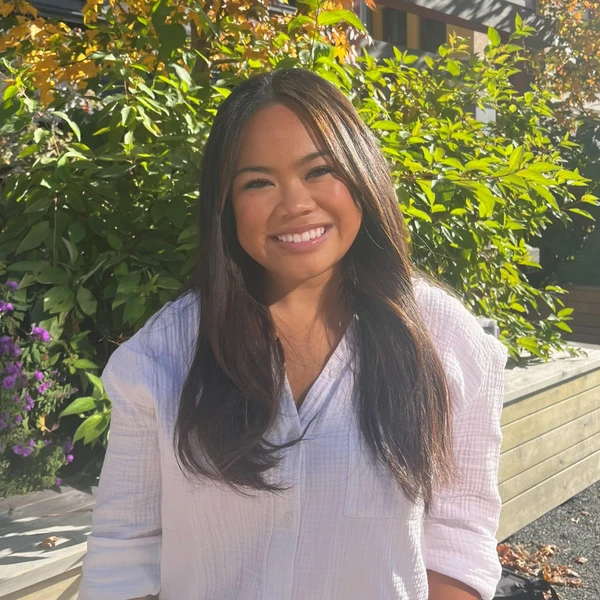
Hello! My name is Michelle Andal, an undergraduate student at Brown University interested in concentrating in Applied Math-Biology on a Pre-Medicine track. I am passionate about people and hope to use my education to better bridge the communication gap between people and STEM. I believe that medicine is not just about the ability to help patients physically but to also take care of patients in their worst emotional states. This is why I view communication as the most important facet of everyday life, both professionally and personally.
Education
Brown University
Bachelor's degree programMajors:
- Biology, General
- Applied Mathematics
Carondelet High School
High SchoolMiscellaneous
Desired degree level:
Doctoral degree program (PhD, MD, JD, etc.)
Graduate schools of interest:
Transfer schools of interest:
Majors of interest:
- Applied Mathematics
Career
Dream career field:
Medicine
Dream career goals:
Resident Assistant
Brown University Office of Residential Life2025 – Present1 yearStudent CNA
Pleasanton Nursing and Rehabilitation Center2025 – 2025
Sports
Dancing
Varsity2020 – Present6 years
Awards
- National Championships in Pom ('23/'24) and Jazz ('22/'23/'24)
- Team Captain ('23/'24)
Research
Medicine
Center for Behavioral and Preventative Medicine at Brown University — Undergraduate Research Assistant2026 – PresentBiomathematics, Bioinformatics, and Computational Biology
UC Davis Young Scholars Program — Student Researcher2022 – 2023
Public services
Advocacy
For Her Fund — Co-Founder2020 – 2023
Future Interests
Advocacy
Volunteering
Philanthropy
De Los Santos Family Scholarship
Winner1. The summer after my sophomore year, I was selected to conduct a research project in the field of bioinformatics. As a part of the Young Scholars Program at UC Davis, I spent six weeks trying to find answers in an environment where answers were not always concrete or existing. I entered a world in which I knew nothing while having to keep up with students who seemed to know everything. In this program, I was tasked to predict tyrosine sulfation in voltage-gated potassium channels by writing an 18-page long research paper and presenting this research to a symposium filled with professors, graduate student researchers, and my peers. However, in the beginning, I did not know the difference between a potassium channel and a banana. I had not yet taken biology, but I was expected to find information through scientific research papers that were written for people who were experts in their field.
I realized that in order to be successful in this program, I had to take action. I took responsibility for my learning by filling in the gaps in my biology knowledge with videos, research papers, and textbooks in my spare time. I knew that I had to do everything I could to reach my research mentor’s expectations. I improved after each presentation and I expanded my knowledge of voltage-gated potassium channels. After six weeks in the program and over 50 hours spent going back to the lab on weekends to continue my research, I read over 50 published papers, exhausting the academic database.
The Young Scholars Program showed me that a reward (or in my case finding a mutation) is more valuable when I am able to collaborate. My peers created a space where each of us pushed one another to be more curious and more thoughtful, not only in science but in life. This experience taught me to see learning in everything—how to tackle a challenge, how to overcome imposter syndrome, and how to make lifelong friends in six weeks. More importantly, it ignited a renewed enthusiasm within me to seek opportunities for learning in and outside of the classroom.
2. As a part of a Filipino family in the primarily white city of Reno, Nevada, I always wondered why my parents were excited that a new student was Asian, or why my dad came home with $50 for me from my so-called “tita”. We didn’t have any relatives nearby.
Once we moved to the Bay Area and I saw five other Filipinos in my class, I was instantly welcomed into a community I did not have to create or seek. Recognizing the joy this brought me, I created inclusion for others in the same way my classmates did for me. Being Filipino has taught me that with enough effort and courage, strangers become family.
To this day, I continue to extend community to others by leading the Asian Pacific Islander Club at my high school. During potlucks, traditional dance lessons, and games, I see my culture spark excitement and pride, feelings I rarely felt as a young girl. Each meeting, I see my past happiness reciprocated in the faces of people from different backgrounds, heritages, and ages, finding community with people who do and do not look like themselves.
As a person who knows how to seek out and create community, I will continue to help others find the joy of belonging. I now know that it is my responsibility as a Filipino-American, to not only challenge my perspectives but to create environments, where my peers also feel comfortable in expanding their viewpoints.